Writing is integral to my teaching process and practice. When I publish, it is a privilege to share.
Pennyblackmusic.co.uk runs a regular feature called Discography Hagiography. In which, as the name suggests, music nerds get to publicly worship bands they love.
Imagine my delight when editor John Clarkson gave me the nod to write about Suede on the occasion of the band’s 30th anniversary and mind-bendingly good LP, Autofiction.
Writing this brought me joy. May reading it bring you joy.
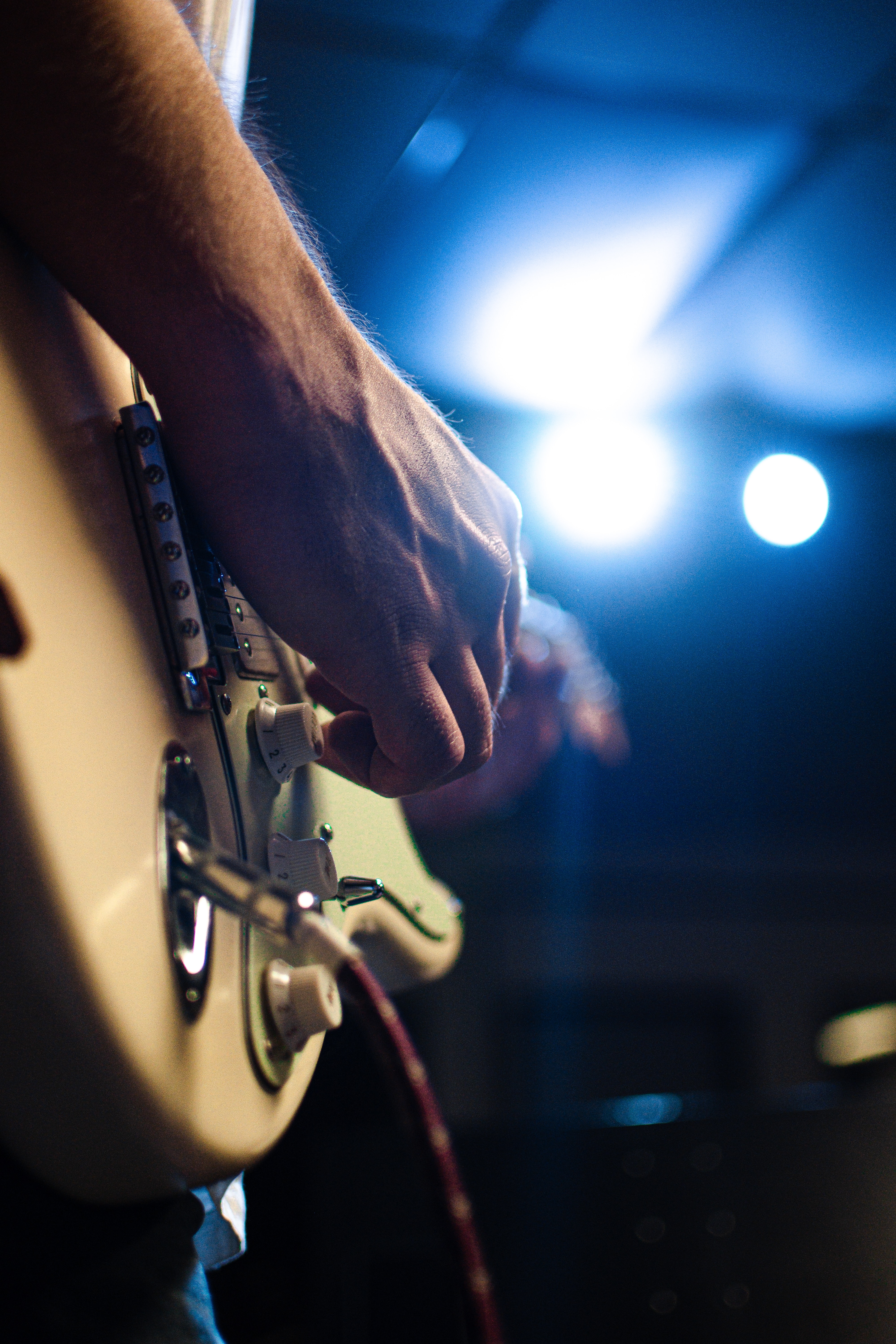
(Below, an excerpt. Full article here. Photos are illustrative, not of Suede.)

Suede: Discography Hagiography
In 1998, I walked into a record shop on Philadelphia’s South Street to return a damaged Bush Sixteen Stone CD.
No refunds, the proprietor said, pick something in exchange.
Crouched on the wooden floor, I scanned the bottom shelf. The London Suede rang a bell. I studied the androgynous/ambiguous nude puddled in ghastly underwater green. On the back, the name ‘New Generation’ popped (it was on a mix CD from my brother). Sold.
This was the start of a semi-obsessive love affair, a fact I offer as an excuse for my inability to present a concise career appraisal of Britpop’s most reckless proponents. This will be a true hagiography, with the irrationality and ellipses that veneration of a saint implies.
Suede shook my foundations the same way some people have: not love at first sight, exactly, but recognition – an undefinable, undeniable, life-altering entrance into the presence of one who is known and knows in return.
Brett Anderson was the first person I heard pronounce ‘mascara’ mass-kah-rah; I had no idea what a pebble-dash grave might be nor, for that matter, an estate car. But Suede stirred my emotions and imagination long before any first-hand experience of strobe-lit nightclubs, ecstasy-blown pupils or the grey lassitude of Home Counties Sunday mornings.
It is hard for me to see beyond the moments of delicious chaos to which Suede was the soundtrack to consider its oeuvre. Nevertheless, stepping back so the wheat field emerges from the golden streaks, yields an equal reward. Suede’s motifs are plainer at arm’s length; Brett Anderson’s lyrical fixations and vocal affections more obvious; but they are the beloved particularities of an old friend.
Listening to the albums chronologically, it is striking how well Suede wire walks between internal consistency and rote predictability. The Suedeness rarely drifts into play-by-numbers or self-parody. While contemporaries like Blur and Oasis lean on nostalgia or WWF-style public spats to generate attention, Suede stormed into its 30th anniversary year with the irresistible Autofiction and a tour that had the oft-contrarian music press singing from the same hymn sheet:
- “Brett Anderson is absolutely mesmerising. You can’t take your eyes off him” (Taylor, The Mancunion).
- “If this really were an unknown new band with no reputation to trade on… you’d tell your friends they’ll go far” (Lynskey, Guardian).
- “Perhaps it’s possible to will a transcendent experience into existence, but this Suede concert fulfilled 25 years of dreaming” (Harris, Spectrum Culture).
Suede (Nude) 1993
That Suede managed to live up to the hype preceding its eponymous debut is impressive; as is the fact that the curse of the Mercury Music Prize has yet to catch the band, three decades on.
Suede invited its audience into a claustrophobic, chemical-laced neverland built on the post-Thatcherian ashes of Britain’s social contract. There is no overt politicking; the lyrical bleakness speaks for itself: ‘in your council home/he jumped on your bones’ (‘Animal Nitrate’) to ‘in the car he couldn’t afford/they found his made-up name/on her ankle chain’ (She’s Not Dead’).
Brett Anderson embodied a sleazy-sexy interface of frustration and hedonism, offering a Wildean aestheticisation of ennui, deprivation and dead-ends that is as hypnotic – and apropos – in the 2020s as it was in the early ‘90s. ‘The Drowners’ is an apt term for the generation coming of age to Brexit, Covid and Toryism. As a debut single, ‘The Drowners’ is also an effervescent blast of indie power-pop that, for its four-minute duration, erases everything except what matters: sex and music.
Like Wilde, Anderson intuited that power aligns against truth, beauty and self-expression. Defiance ain’t much, but sometimes it’s all you’ve got. Hence the avant-garde sexual ambiguity, charity shop-chic shrunken white shirts and midriff-baring pleather and gilt pirate hoops framing diamond-cutter cheekbones. Live performances from 1993 (check out ‘My Insatiable One’ from the Casino de Paris; ‘Animal Nitrate’ from Brixton, London) are fresh and daring. (It is hard to imagine that The 1975’s Matty Healy doesn’t owe at least some of his hyper-emotional, dissolute, sexually fluid stage persona to Anderson.)
Track after track, Suede rings true, powered by Bernard Butler’s starry guitar, bassist Mat Osman, drummer Simon Gilbert and keyboardist Neil Codling. From the wistful ‘Breakdown’ (‘if you were the one/would I even notice, now my mind is gone?’) to the menacing glam stomp of ‘Metal Mickey’ – a song that deserves to be danced to in gold DeHavillands if ever one did – it retains a zest and urgency that belies its age.
Dog Man Star (Nude) 1994
This was my gateway Suede album; ‘New Generation’ on repeat, chasing the dopamine rush of its glittering opening riff (cherish those riffs – this was Butler’s last proper album with Suede; nobody did it better). ‘New Generation’ is the highlight of a record that suits melancholic adolescence but, to my adult ears, could do with rigorous editing. Or, perhaps, it would be more accurate (fairer) to say that the range of situations in which Dog Man Star’s emotional tenor feels relevant and urgent has narrowed with age.
The excellent ‘Heroine’ is more than a track, it’s an atmosphere. Anderson’s drug use has been chronicled ad nauseam, so I shan’t bother, but chaos and indulgence cast distorting shadows over tracks like ‘Daddy’s Speeding’, ‘This Hollywood Life’ and ‘Asphalt World’ – the latter a sublime four-minute ballad that meanders for more than nine minutes. (Nick Duerden called the album, ‘the most pompous, overblown British rock record of the decade.)
When restraint is exercised, the results are timeless: the raw snarl of ‘Introducing the Band’, whose Winterland reference introduced me to a seminal moment in punk history; ‘The Wild Ones’, a downbeat beauty that sound-tracked a number of my heartbreaks; and the hauntingly sweet piano lament ‘The 2 of Us’, which makes you want a broken heart, just to enjoy it properly.
Considering it appeared just 18 months after Suede’s debut, Dog Man Star attests to the raw brilliance of a band that was driving with both feet on the accelerator and only the occasional hand on the wheel.
…
Autofiction (BMG) 2022
The image of a nude with back turned to the viewer is a throwback to Dog Man Star but there are important differences: the lens is closer so the body fills the frame; the lines of muscle and bone are clear and vigorous; instead of awkwardly bent, the arms hug the torso in a gesture of comfort or reassurance. Instead of disaffection and despair, the black-and-white shot evokes vulnerability tempered with strength; containment rather than dissolution.
Suede’s ninth studio album delivers on the implicit promise of its striking cover: intimate, strong, self-contained, vulnerable, bold. Opener and first single ‘She Still Leads Me On’ took a few listens to worm into my neurons; it is now embedded there and generates the same dopaminergic kick as vintage favourites like ‘New Generation’ or ‘Killing of a Flash Boy.’
True to form, the next two tracks keep the intensity at a killing pitch: ‘Personality Disorder’ is a cocky, raucous snarl that pulls off the not-easy feat of wedding spoken-word verses with an arena-sized chorus. Then Anderson snaps into ‘15 Again’ with the whip-crack lyric: ‘Nothing is as bad as the time we kill/ sitting in the bathroom in kitten heels’.
Praise be. The band is back, as and how and when we need it most: dripping sweat, spitting defiance, yielding and pushing, feeling with us how it feels ‘on the black ice with no headlights/ with our hands off the wheel’ (‘Black Ice’).
From the soaring ‘Shadow Self’ to the full-throated stomper ‘That Boy on the Stage’ to the pensive ‘Drive Myself Home’ the album flows between moods and moments with cohesion and conviction. If the first act of adulthood is renouncing childish ways, the second is realising that the kid inside never goes away; maturity is integrating all the aspects of self without apology.
Anderson and co. have done so and created a truly mature album, buoyant with the shimmer and swagger of youth yet sober with the wisdom of years. ‘I’m not the kind of person who never feels uncertain/ so many ways to do what I do wrong’, Anderson muses (‘The Only Way I Can Love You…’) but – however many ways there are to do what he does wrong – he does none of them here. Autofiction is, quite simply, a triumph.
After spending several weeks immersed in Suede, two things remain to say: 1) if Autofiction were the last album, it would be the pièce de résistance of a luminous career; 2) I’m pretty sure it won’t be. And that is good news.
What’s the band that changed your life? Share in the comments!
 Cila Warncke Writer