How to Make your Best Students Better

The one percent

As a kid, and through high school, I loved standardized tests. Because I was the maddening specimen who scored in the 99th percentile without a flicker of effort.

Given the bias in standardized tests, it’s not surprising. I was a white kid who had been reading voraciously since age four. I was going to ace anything that measured “verbal” skills, which are, of course, in the context of the tests, reading and writing skills.

Being a killer test taker had advantages. My high school SAT and ACT scores got me into an Ivy League university, and scooped a National Merit Scholarship to help pay for it. Not bad for a poor kid from a decaying seaside town in Oregon.

test.jpg

Photo by Ben Mullins on Unsplash

Feeding the need

Being Little Miss 99th Percentile felt good. My teachers liked it because I brought up the class average. I liked it because it got me positive attention. My parents? They didn’t care, which is perhaps why cared so much. Acing those tests was more than an academic achievement, it was much-needed validation. Terrified of losing that, I gravitated towards subjects that came easy: English, history, communication, psychology.

Unfortunately, one thing they didn’t teach in first-year psych was that effort counts for more than “intelligence”. Though, to be fair, the results of Claudia Mueller and Carol Dweck’s landmark study on the relationship between praise and motivation weren’t published till 1998, my second year of college.

Mueller and Dweck gave kids a series of tests. One group was praised for their intelligence, the other for their effort. They found that the children who were praised for intelligence were reluctant to try more difficult tests, while those praised for effort were eager to try harder tasks.

Kids singled out for “intelligence” were afraid of doing anything that might show them up. Like those kids, I avoided challenges, got good grades and learned almost nothing.

Opportunities lost

Each month, as I make my student loan payment (still chipping away at that. Thank you American tertiary education system), I think about the classes I avoided: Spanish, math, organic chemistry. I went to university planning to major in chemistry and go on to med school. Sophomore year, I changed to English lit.

It was the right decision, made for the wrong reasons. My motivation wasn’t love of literature and language but fear of math and science. If I couldn’t waltz into an exam and out with an A, I wasn’t even going to try.

teaching.jpg

Photo by NeONBRAND on Unsplash

The teacher’s view

Looking back, I wish teachers had pushed me more — especially in the subjects I was good at. Maybe, then, I would have realized my skills weren’t “innate” and would have learned to apply myself.

But, as a teacher myself, I can’t blame them. Having a “good” student, one who enjoys and seems to effortlessly absorb the material, is a treat. S/he is one student you don’t have to worry about, one whose enthusiasm and aptitude makes you feel good about yourself as an educator, even if you don’t really deserve the credit. It is tempting to praise the student and more or less leave them to his/her/their own devices.

Tempting, but an abdication of responsibility. Perhaps the student is doing well because h/s/t are an adept learner. In that case, you should see the work gradually improve. If you don’t, chances are they’re coasting on an existing skill set. And without intervention, they may well be self-limiting to stay within that safety zone.

Breaking out of the success trap

How do you challenge a student in an area where they excel? Here are three ideas:

Process

Once, in a job interview, I was asked: “How do you write?”

It was the first time anyone had asked about my process. Formulating an answer made me realize that I had one, and that it could be applied to other tasks.

If you have a student who shines at art, trigonometry, whatever, as them how. They might think it’s a dumb question (I did) but they will discover the work that goes into their accomplishments. Recognizing their own effort and process will help them see themselves as learners, and start to generalize those skills.

Cross-pollination

Use your students strengths to address their weaknesses. If, for example, your  student loves history but hates math, have them research the history of a mathematical concept, e.g. Who was Pythagoras and how did he come up with his theory? Thus tackling something hard becomes a chance to show off what they are good at.

Let them be the expert

Once your students have assessed their own process, reinforce that by giving them an opportunity to be the expert. Pair or small group work is a good setting to allow students to display their strengths. Set up assignments where they teach each other and grade them on how well their classmates do.

learning.jpg

Photo by JESHOOTS.COM on Unsplash

Life-long learning

We tend to think of “life-long learning” in terms of adults but, to deserve the title, it has to start in childhood. The best, that is highest-achieving, students are necessarily the best learners. They may, in extreme cases, be learning very little.

Helping them uncover their process, use their skills to address new challenges, and share their strategies with others will develop those crucial skills.




10 Things I Love about “The Bold Type”

I’ve just finished binge watching all three series of The Bold Type. The only thing between me and mourning is the news that it’s been renewed for a fourth season.

Because this show won me over like no glossy American TV drama ever has. (I loved The Wire but glossy that ain’t).

For someone who veers inflexibly towards cynicism, The Bold Type might seem an odd affection. It is relentlessly, almost Pollyanna-ishly upbeat. Every problem is solvable with a bit of elbow grease and woman power, within the span of 41 minutes.

That should annoy me. Or I feel like it should annoy me. But it doesn’t. In a world where basically all news is bad news, and humanity is collectively excavating to find a new rock bottom, believing problems can be solved is a radical notion.

Believing that, as The Bold Type holds, love, friendship, integrity, hard work and learning from your mistakes is enough to craft a meaningful life verges on revolutionary.

I love me some revolution.

So here, in no particular order, are 10 things I love about The Bold Type.

  1. Sisters doing it for themselves

    Praise be: A show with three female leads whose priorities are A) career and B) friendships; and who are actually making a go of it. Disaster comedy is a dime a dozen (though, Fleabag…) but I cannot think of another female-focused show where the main characters are so functional. Jane, Sutton and Kat have their moments of doubt and despair but mostly, they have their shit together. And when it gets out of hand, they huddle in the fashion closet and figure out how to fix it. And do.

  2. Sisters doing it with each other (oh, and Lesbian. Muslim. Artist.)

    The Kat-who-thinks-she’s-straight-figures-out-she’s-not-by-falling-in-love-with-a-lesbian-Muslim-artist story-line makes me happier than a hamper of spaniel puppies. Everything about this is amazing, from how hard Adena rocks a turban to Kat’s punching a racist guy in the face for hassling her. The scene where Adena calls her out for not going down on her, followed by a conversation where cunnilingus is not a punch line should be required viewing.

    kissing.jpg

    Photo by Juliette F on Unsplash

  3. The powerful lady boss is not a bitch

    As a newbie journalist, I would have given my left leg for a boss as wise, fierce, insightful and supportive as Jacqueline Carlyle. I still would. Scarlet’s editor is an ideal we’re too rarely shown: a take charge, takes-no-prisoners woman who is also compassionate, self-aware and able to admit her mistakes. Oh, and she has a handsome, adoring husband and a couple of cute kids. Hey, girls, you can have it all.

  4. Old white guys are the enemy

    When trouble comes to Scarlet it’s usually because of the board. A coterie of aging white men who don’t understand women, media, or social media — yet hold disproportionate sway over all three. Since forever, unless you were a rich white due, rich white dudes were there to do you harm. The Bold Type accurately reflects this universal experience, yet holds out hope.

  5. They say “I love you” a lot

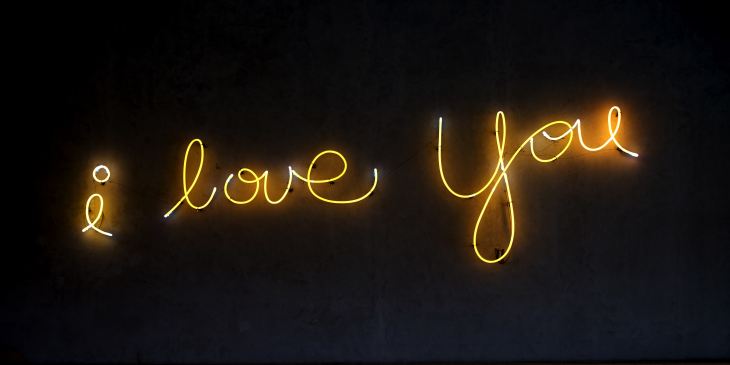
    Kat, Sutton and Jane are always saying: “I love you” — to each other. Which I love. How often do we hear platonic female friends say, “I love you”? Not often enough. How often do we say it to our platonic female friends? Not often enough. If you take nothing else from The Bold Type, take this: Say “I love you” to the people you love, say it when you’re happy or sad, when they’re happy or sad. There is nothing going on in the world that won’t be improved by sharing the love.

    love you

    Photo by Ali Yahya on Unsplash

  6. Nobody runs to mommy & daddy

    Sutton, Kat and Jane are each other’s biggest support. Kat’s therapist parents pay bills, but not much more. Sutton’s mom is an alcoholic with money issues. Jane’s mom is dead. This feels a lot more real than shows where benign parents lurk in the background, waiting to pick up the pieces. For me, and most people I know, parents ranged from merely absent to active liabilities. That reality shaped our lives, and it’s nice to see it reflected on screen.

  7. Supportive boyfriends

    Shows about asshole guys and terrible dating experiences are amusing. For a while. Then they are just discouraging. The Bold Type skips this trope entirely. Jane has an a douchey ex but in no time she gets over him with a gorgeous, clever man who proceeds to become a better person, fall in love with her and write a hit novel. Sutton is dating a company lawyer, 15 years her senior, who is respectful, supportive, and worships the ground she walks on (as he should!) Loving, equal, communicative, positive on-screen partnerships are the hens’ teeth in popular entertainment. The Bold Type is poultry dentures.

    love hands

    Photo by Kristina Litvjak on Unsplash

  8. Open relationships

    Speaking of positive relationship portrayals — Kat and Adena’s open relationship story-line is just. so. fucking.cool. A mainstream TV show portraying an open lesbian relationship as intimate, wholesome, and empowering? Yes!
    Honestly, if I hadn’t seen it, I wouldn’t have believed.

  9. Body positivity

    This one is almost there. Kat, Jane and Sutton are all conventionally slender and feminine with curves in the approved places. Nevertheless, the show makes a point to discuss body positivity in so many words, with a story where the girls pose for a fashion shoot showing off their scars, freckles, stretchmarks. Better still, their colleague, Scarlet’s sex columnist is heavyset and mousy — a face and figure that would relegate her to “fat friend” status in a standard rom-com. Instead, she’s the one having the hottest sex and dishing the most divine gossip.

    wine.jpg

    Photo by Matthieu Joannon on Unsplash

  10. Booze

    When the going get tough, the tough knock back some white wine. Or tequila. Or mix a little whisky into their ice cream. America is stupidly puritanical about alcohol, and especially about women drinking. It is refreshing to see characters who can raise a glass to commiserate, or celebrate, without the next plot point involving rehab. They’re young, fun, gorgeous women who like a drink. And that’s cool. Gorgeous Muslim lesbian artist Adena doesn’t drink, and that’s cool too. Which makes the whole thing extra fucking cool.

Go on then, what’s your latest televisual delight? 


Should I Have Come Out to My Students?

“Do you consider yourself part of the LGBTQ community?”

The text caught me off guard. Of course. Then I realized: Why would he know — I never said anything. 

I’d shared a link to an article about queer culture witha former English students (let’s call him Jay). He’d responded with an applause emoji — and the question.

Jay is out and proud as a Catholic teenager in a small, conservative Spanish town. His joie de vivre made every class a delight. I admired the hell out of him, but never said anything about being bi.

born this way.jpg

Photo by Levi Saunders on Unsplash

Playing safe

I’ll just be supportive, I thought.

So I taught poems by Mary Oliver and CP Cavafy, brought Attitude magazine to class along with Vogue and Wanderlust, and expressed due reverence for the fierceness of Queen Bey and Lady Gaga. That’s cool, right?

Keeping quiet

Jay’s question got under my skin because, really, he shouldn’t have had to ask.

“Definitely,” I responded. “Wasn’t quite sure about bringing it up in class.”

The more I’ve thought about it (and it’s been a lot) the poorer an excuse that seems.

I didn’t want to distract from class. My personal life isn’t important. Blah blah.

Yet I had no qualms talking about my husband, or dating men. I just elided the fact I also date women. That’s not being “appropriate”, it’s cowardice.

Taking it easy

Truth is, being straight is easy. Despite short hair and a penchant for Doc Martens I am a cis woman married to a cis man. That is so socially acceptable it obscures anything ambiguous or complicated. It brings the perpetual temptation to not mention anything that would threaten my hetero privilege.

Once, a woman I was seeing was verbally attacked over her holiday plans. My date said she would feel uncomfortable going to Russia. Instead of sympathizing this woman railed at my friend for trying to “flaunt her lifestyle”. Basically, she thought if my girl didn’t fake straightness for the benefit of Russian bigots she deserved to be gay bashed.

This conversation, which took place at a party in Ibiza, shook me. If people are like that on an island renowned for anything-goes hedonism, I don’t want to know what the rest of the world is like. So, it was/is, easier to don the invisibility cloak of straightness.

cloak.jpg

Photo by Tomas Robertson on Unsplash

What makes an ally?

Self-identifying as queer and a queer ally to myself means jack if I play it straight to the world at large. My silence amplifies jerks who think love is “flaunting your lifestyle”.

Don’t get me wrong: I’m proud of introducing my students to Cavafy and Oliver, of watching Gaga videos with them and discussing gay representation in mainstream media. But it wasn’t enough.

If I were 100% straight, it might be. As a (married) bi woman, I have a responsibility.

Cleaning out my closet

Being married is part of what stopped me from saying anything. If I were single, or dating, saying “I’m bi” probably wouldn’t raise too many awkward questions.

But I could imagine…

Wait, aren’t you married? Does your husband know? Is he bi? Do you date other people? Does that mean…? 

My students are sharp — a thousand times more woke and with it than I was at their age (or a decade later). They could have asked questions that I don’t have answers for.

That unnerved me. Which is precisely why I should have opened up.

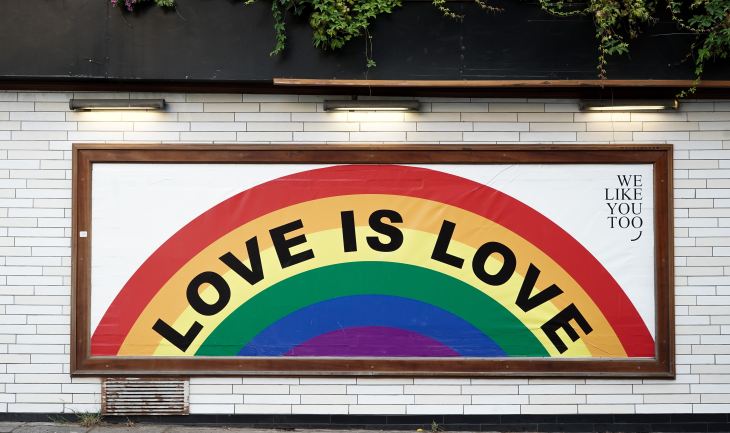
love is love.jpg

Photo by yoav hornung on Unsplash

A real education

Being a good teacher means not pretending to know all the answers. I’m comfortable not knowing a grammar construct, or the meaning of a word, so why so awkward about admitting I haven’t solved the mysteries of love?

I’ve asked myself over and over, Should I have come out to my students? The answer is, insistently, yes.

Not just because Jay deserved to know I consider myself part of the LGBTQ community, as he gracefully put it, but because they all deserve to know that love and attraction are fluid and multi-faceted. They deserve to know that you can try things, change your mind, fall in love with one person and still be attracted to others. They deserve to know that you never have to stop exploring, questioning, loving. They deserve to know that marriage doesn’t have to be a house in the ‘burbs and 2.4 kids (though that’s available).

Like I said, they’re sharp. Chances are they already know (or suspect) much of this. Nevertheless, that doesn’t make it okay for me to sit back like, you’re on your own. 

Be there for each other

We all need allies. Every single day. And in our increasingly mean-tempered world, unity and kindness are the life-rings we have to throw to each other.

That means owning who we are, in all its delicious complexity, so others (especially, if we’re teachers, our students) have space to claim their own delicious, complicated selves.

banner.jpg

Photo by Mercedes Mehling on Unsplash