Covid Against the Music

The following is an excerpt from a feature I wrote for Pennyblackmusic about Covid’s devastating effect on the live music industry. You can read the full feature at Pennyblackmusic.co.uk

“When COVID-19 mushroomed into a global pandemic, production work disappeared almost overnight. It is impossible to predict when it might return, or grasp the full repercussions for crews, artists, venues or fans. This article attempts neither to summarise nor forecast, but to reflect on the early days of this crisis in the hope we can look back on it from a better place.” -excerpt from ‘Production Crew Confront Coronavirus’, Pennyblackmusic, April 2020.
Photo: Cila Warncke

2021

London: 11 February, 10:30AM Matt ‘Tag’ Tagliaferro adjusts his Airpods. Wet snow clings to the pavements outside his north London home. It is three degrees Celsius above freezing. “With these, I can get something done while I’m on the phone,” he says. “My screen time is way up this past year.”

Memphis, Tennessee: 5 March, 11:00AM “It felt good to have a break for a minute, but that got old.” Matt Brown gets up to refill his blue ceramic mug, and clears his throat. Later, he’ll strap on a parachute, grab a camera and follow tandem jumpers out of a plane, trying to hold the student’s awed face in frame as gravity hauls them all down.

London: 8 March, 10:00AM The phone screen shows him smiling, an old WhatsApp profile picture. “January was particularly hard,” Will Paterson says. “There was no sign of a return. Even the most motivated people had hard moments.”

Phoenix, Arizona: 13 March, 5:50AM The paper Holiday Inn coffee cups are stamped: “Start Fresh”. Chris Hall is trying. In half an hour, he’ll walk into the hotel conference room for the final written exams in his truck-driver training course.

There are two things that all these people have in common: They used to work in live music production. They never expected to be where they are now.

A year ago, we daydreamed that Covid-19 would vanish with the summer sun. What vanished instead was hope of a quick fix. Optimism became synonymous with magical thinking. The industry shutdown persisted like tinnitus.

According to trade publication Pollstar, the live music industry lost $30 billion of revenue in 2020. In Britain, some 10,000 people worked in music production, says Andy Lenthall, general manager of trade body the Production Services Association. In the United States, there were millions of such jobs. In the UK, the US and around the globe, most production workers lost their livelihoods.

The Lows

“When it first happened, I felt numb, panicked. I watched the news all the time.” Nevertheless, Brighton-based publicist Nikki McNeill told her clients, which include Serbia’s Exit Festival, the Amsterdam Dance Event, Secret Solstice in Iceland and the Netherlands’ Lowlands Festival, that she would keep working with them, budget or no.

After the initial blow, ripples of Covid distortion kept spreading. “So much of life has changed,” Will Paterson, head of sales for several London music venues, reflects. “Nobody would have thought we’d curtail our lives the way we have.”

Tagliaferro, erstwhile touring guitar tech, and his partner split up, “a Covid casualty, I guess.”

Audio technician Matt Brown says: “The biggest challenge is boredom. I’m still learning to write code, trying to stay busy.”

Another audio tech (and my partner), Chris Hall has put in his share of 200,000-mile travel years. Suddenly, the world shrank to the distance to the nearest grocery store. Mundane tasks became big deals. His neck and back locked up in the winter chill.

“Some people found purpose in spending time with their partners and kids,” Lenthall says. “But being at home is a problem for people who aren’t used to being at home. There are a lot of single people in the business, a lot of people who are always on tour. Their flat is where they repack their suitcase.”
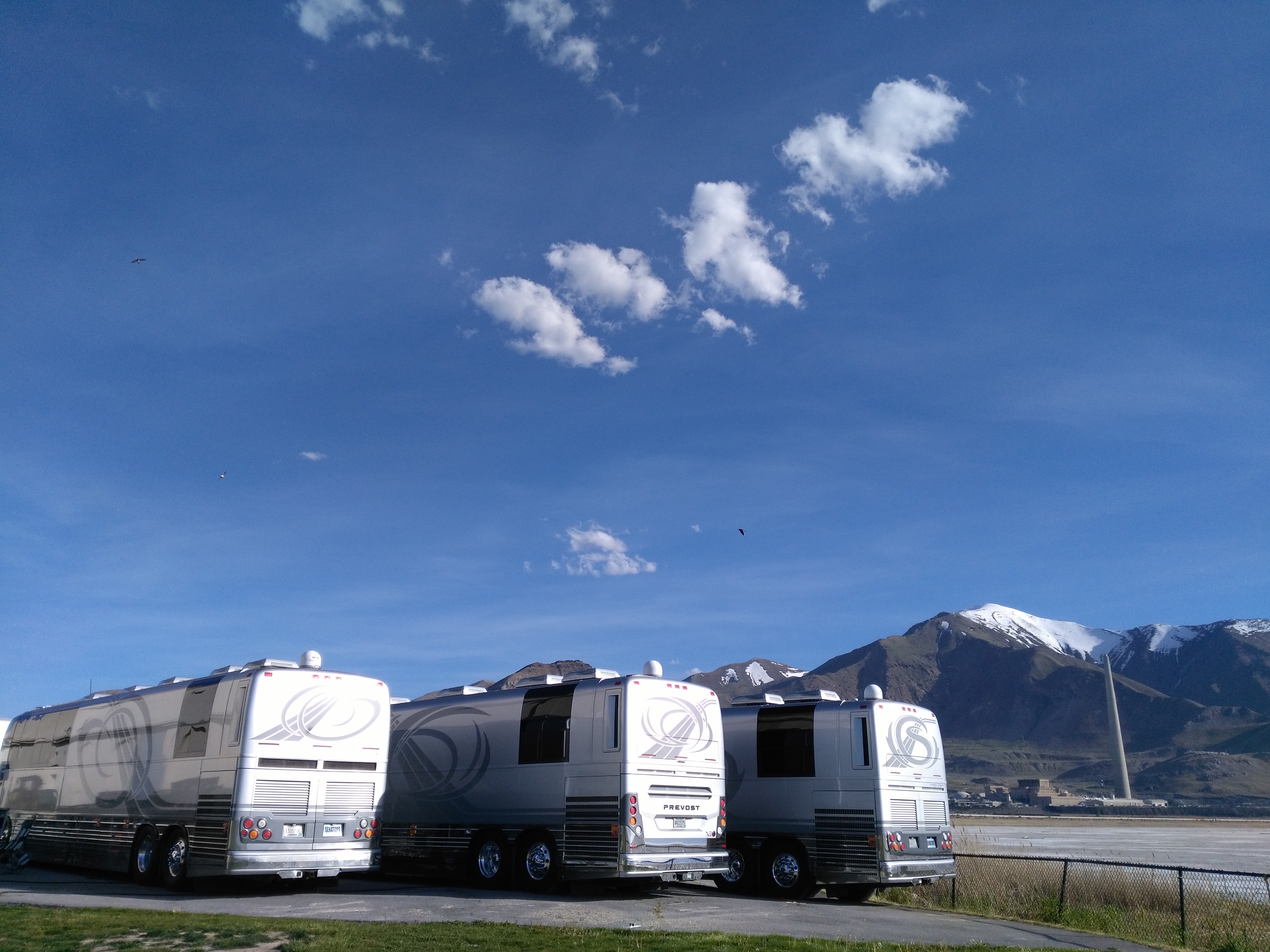
Photo: Cila Warncke

A Different Beat

Odd pockets of production work still exist: Brown kept his job at local church which started streaming its services. Photographer Andy Cotterill has spent more than two decades shooting music royalty. His portfolio runs from Public Enemy and Lee ‘Scratch’ Perry to Jarvis Cocker and Vivienne Westwood. Yet surviving Covid required other skills: “I was a top-grade student in woodworking at school so I did a few projects. People loved it. Someone asked me to do their kitchen, then a loft conversion. Before, if I’d done something else, I’d have felt like I failed at photography. I don’t think like that any more.”

Tagliaferro carried on fixing guitars. People who had guitars but never played them wanted them strung and tuned, bands stuck in London who’d started making new music, musicians whose prized instruments were in warehouses or shipping containers dug out beaters for an overhaul. “North London seemed to have a musical renaissance,” he says. “People wanted to do something productive and creative. It got to a point I couldn’t do it in my kitchen, so I rented a little space, built a few workbenches and fell into business, much like I fell into [touring] 15 years ago.”

This can-do, will-do attitude is characteristic. “You don’t want touring crew on the job market,” says Lenthall. “They are tenacious, hard working, they will get the job before you.” Delivery and logistics have absorbed a lot of bodies. “I’ve had groceries delivered by a lighting guy I know,” Lenthall remarks. “We have world-class production managers coordinating vaccination centres. [Telecom company] Openreach has production crew tackling its fibre optic installation backlog.”

Paterson has spent the past year overhauling everything from venue websites to internal communications to plumbing. “It has been a split,” he says. “Those who’ve had stuff to do – well, work helps. People who couldn’t work, like the operations staff, have done all sorts of things that have nothing to do with music, just to give themselves a purpose.”
Photo: Cila Warncke

Patchy Safety Nets

Many cannot step into new roles, though, whether for health or other reasons, and driving a delivery van doesn’t come close to replacing tour wages. Government support has not been universally sufficient or effective. “Through multiple technicalities, I don’t qualify for anything,” says Tagliaferro. “I’ve never heard the phrase, ‘sorry, you fall through the cracks’ so often.” He reckons half the industry people he knows don’t qualify for assistance.

Perhaps not coincidentally, Paterson says half the people he knows have left music.

In the US, aid is on a state-by-state basis. Brown got a small grant, about enough to cover three months’ rent in his neighborhood. He was on unemployment, briefly, until Tennessee reinstated a work-search requirement, with no exceptions for those whose industry had vanished. “What was I going to do? Work at the supermarket? Those jobs were already taken.”

Like so much related to Covid, a lot came down to chance. “I was lucky. The way my company is set up meant I qualified for government grants,” says McNeill. “I have friends who do the same thing but are excluded [from help] because of how they set up their business. It’s hard.”
Continue reading at Pennyblackmusic

Wine Words: Left Coast Estate

Catching up with wine-maker Joe Wright and CEO Taylor Pfaff of the exceptional, eco-pioneering Willamette Valley winery, Left Coast Estate.

Read the full story at Vinediction.com

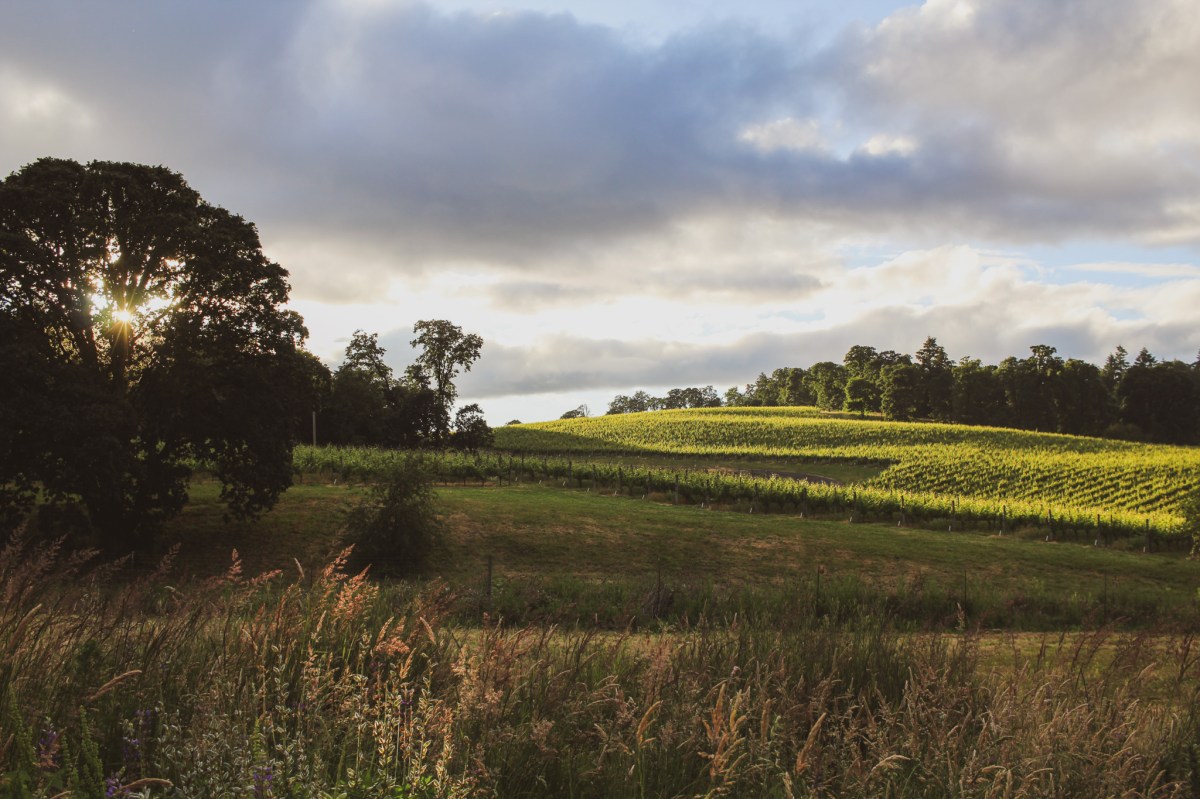
Photo courtesy Left Coast

Taylor Pfaff, the son of founders Bob E Pfaff and Suzanne Larson, is CEO and general manager; his landscape architect sister Cali (for whom the marvelous Cali’s Cuvee is named) is the winery’s creative director. Joe Wright remains head wine maker. One thing that hasn’t changed is Wright’s chronic self-effacement: “Taylor tells me what [wine] they need, by when and I make sure it’s grown, produced and available.”

When asked if it isn’t more complicated than that, he doubles down: “I have spread sheets: vines per acre, shoots per vine, clusters per shoot.” He pauses: “We get pretty close every year, barring gnarly weather.”

Barring, say, freak wildfires?

Left Coast Cellars, like so many Willamette Valley wineries, fell under a funereal smoke shroud in September 2020. “It was disgusting. There was nowhere to go. The fire was from central California to British Columbia, inland all the way to the Rockies. Really gross.”

Wright and the team opted to make wine regardless.“The fires affected how we made them, trying to mediate smoke taint,” Wright says. “The wines are not my usual style, so they feel a little alien but, smoke aside, it was an incredible vintage.” An early crop contributed to “low yields, wonderful concentration; stunning, electric wines.”

Still, 30% less volume than in 2019, plus the minor matter of Covid. “In March, April [2020] we had no idea what was happening,” Taylor Pfaff says. “We had throw our budget out the window. It’s been triage planning.”

Two catastrophes in a 12 months is beyond the reach of planning. But Left Coast has two long-term projects propelling it forward. First, restoring 40 acres of old oak savanna; second, purchasing and planting a new vineyard.

I recall the sentinel oaks around the tasting room, a deer grazing between them, pretty as a Disney scene. “We always appreciated the trees but didn’t understand how ecologically important they are,” says Pfaff. “Only three percent of the Willamette Valley’s historic oak forest remains, and we have a big section of it.”

These acres had been overrun by “a 16-foot tall wall”, as Wright puts it, of invasive species like hawthorn, blackberries, Scotch broom and poison oak. “The Natives would burn, let things burn,” he adds. “The trees would survive but the under-story would get cleared out. That’s the regenerative effect of fire.”

These days, people are more concerned with fire’s destructive effect and indigenous-style land management is prohibited. Clearing the savanna was a slog of cutting, digging and hauling followed by seeding native grasses and flowers to create a “gorgeous, open, wild space.”

It was to this space Left Coast turned when Covid restrictions hit indoor operations. The tasting room became reservation-only and the oak savanna bloomed as a picnic spot. Guests could roll up with chairs, blankets, snacks and glasses, buy a bottle of wine and retreat to the leaf-dappled grass. “We wanted people to go out and enjoy the beautiful, quiet corners of the property and Covid kind of forced that,” Pfaff says. “Customers started to spread out and utilize the land. We are excited to see people enjoy the outdoor spaces.”

Photo courtesy Left Coast

Dr King and Economic Justice

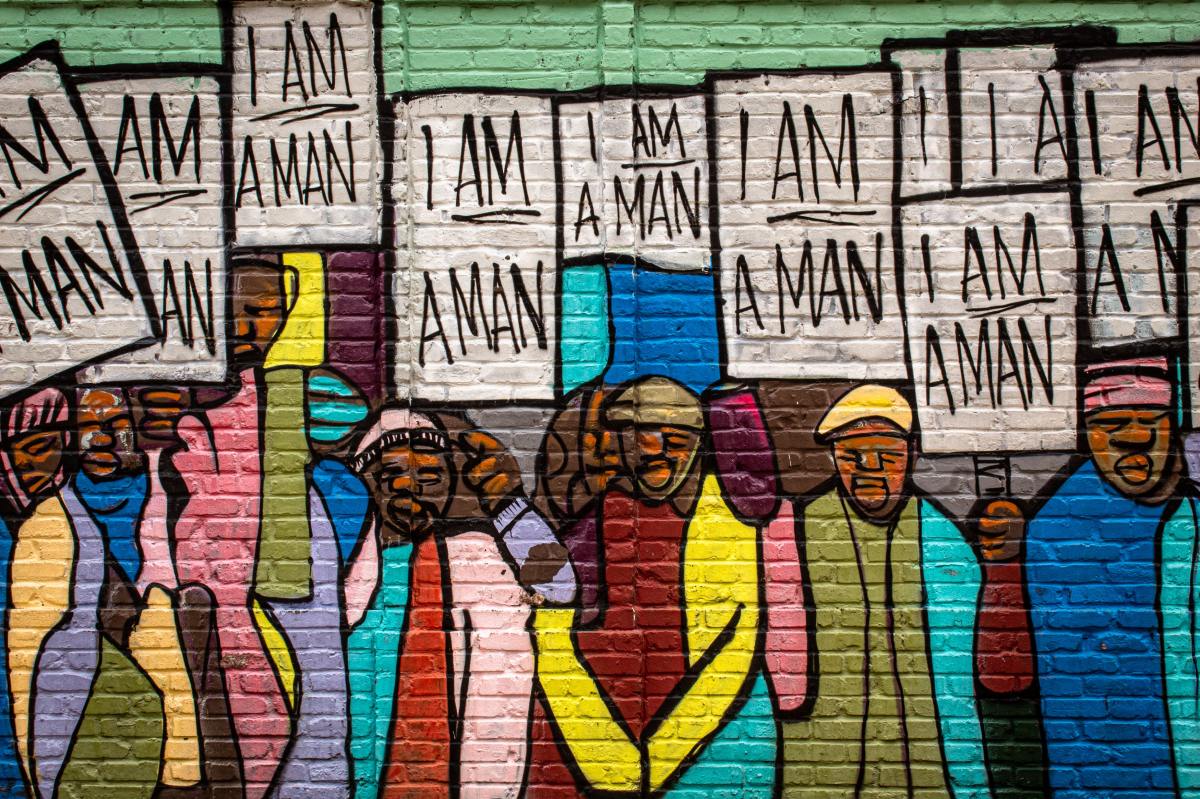
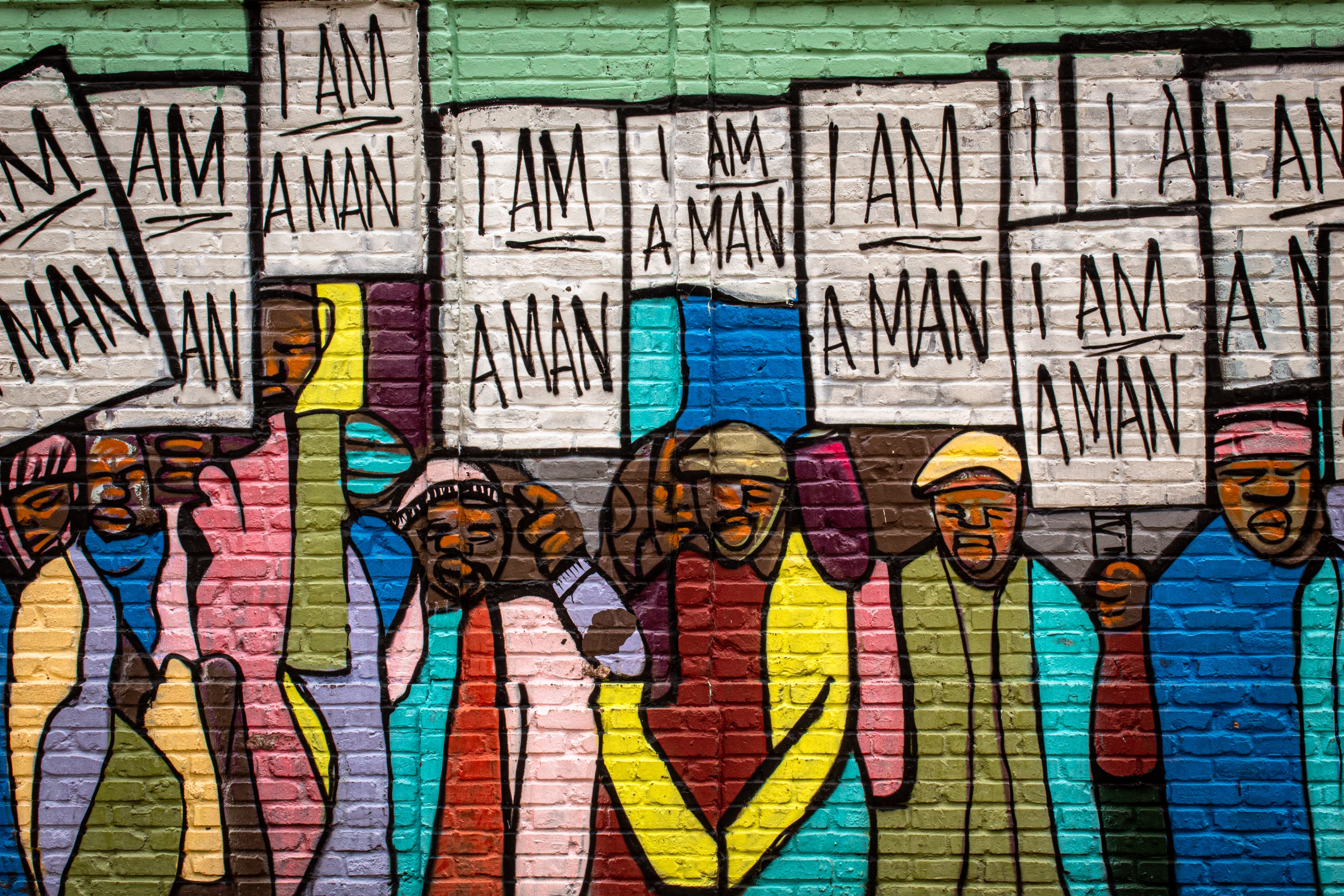
Fifty-three years ago Dr Martin Luther King Jr was assassinated in Memphis. He was in the city to support striking sanitation workers who marched carrying signs that bore a simple statement: I am a man. The slogan was chosen, striker Elmore Nickleberry told NPR, because “most of the time they’d call us boys.”

The night before his death, which was the night before a protest march, Dr King gave a speech famed for its rousing finale: ” I just want to do God’s will. And He’s allowed me to go up to the mountain. And I’ve looked over. And I’ve seen the Promised Land. I may not get there with you. But I want you to know tonight, that we, as a people, will get to the promised land!”

Each term I share this speech with my students as a masterpiece of rhetoric, a master class in persuasive writing. I ask them to listen to the whole speech, including the less-often quoted part that made Dr King’s existence a threat to a certain segment of society.

***

“Now the other thing we’ll have to do is this. Always anchor our external direct action with the power of economic withdrawal…

“We don’t have to argue with anybody. We don’t have to curse and go around acting bad with our words. We don’t need any bricks and bottles. We don’t need any Molotov cocktails. We just need to go around to these stores, and to these massive industries in our country, and say,

“God sent us by here, to say to you that you’re not treating his children right. And we’ve come by here to ask you to make the first item on your agenda fair treatment, where God’s children are concerned. Now, if you are not prepared to do that, we do have an agenda that we must follow. And our agenda calls for withdrawing economic support from you.”

And so, as a result of this, we are asking you tonight, to go out and tell your neighbors not to buy Coca-Cola in Memphis. Go by and tell them not to buy Sealtest milk. Tell them not to buy — what is the other bread? — Wonder Bread. And what is the other bread company, Jesse? Tell them not to buy Hart’s bread. As Jesse Jackson has said, up to now, only the garbage men have been feeling pain; now we must kind of redistribute the pain. We are choosing these companies because they haven’t been fair…

But not only that, we’ve got to strengthen black institutions. I call upon you to take your money out of the banks downtown and deposit your money in Tri-State Bank. We want a “bank-in” movement in Memphis. Go by the savings and loan association. I’m not asking you something that we don’t do ourselves at SCLC. Judge Hooks and others will tell you that we have an account here in the savings and loan association from the Southern Christian Leadership Conference. We are telling you to follow what we are doing. Put your money there. You have six or seven black insurance companies here in the city of Memphis. Take out your insurance there. We want to have an “insurance-in.”

***

Photo by Project 290 on Unsplash

‘I have a dream’? Cool. Black kids and white kids joining hands? Fine.

Black citizens boycotting racist corporations and seeking economic empowerment? That’s dangerous talk.

When we honor Dr King, let’s honor him as a warrior for economic justice. He knew there was no chance of equality, freedom or social justice in a system predicated on economic oppression.

Listen to Dr King’s speech today. The truths and challenges he speaks are still with us.

“We mean business now, and we are determined to gain our rightful place in God’s world,” he said that fateful night. “And that’s all this whole thing is about. We aren’t engaged in any negative protest and in any negative arguments with anybody. We are saying that we are determined to be men. We are determined to be people. We are saying that we are God’s children. And that we are God’s children, we don’t have to live like we are forced to live.”