On Generous Writing

Photo by Ben White on Unsplash

Life never ceases to be difficult, to paraphrase Rilke. Amidst its slings and arrows, there is often little to comfort and guide.

Without generous writers, there would be almost nothing.

Among recent difficulties faced by myself, or someone I love: bereavement, major surgery, significant medical diagnoses, divorce, conflict with parents, conflict with children, unemployment.

These are not remarkable events, statistically. Yet, to the individual, they are as life-altering as Krakatoa. If anything, the cognitive dissonance of knowing the event to be universal versus the all-consuming personal experience of trauma makes it harder to cope.

We need wise friends to walk these dark halls. But unless we’re lucky, and our friends unlucky, we are not likely to find the necessary wisdom in our immediate social circle. Shared experience can as easily drive a wedge as forge a bond.

Into this gap step writers whose words offer perspective without judgment, comfort without reciprocity and infinite patience. They sit at our bedside in the small hours, walk with us, accompany us raging, glum, drunk, frustrated or frightened.

Their generosity lies in a willingness to delve into the most difficult parts of their lives and, through grit and creativity, distill their thumb-screwed wisdom into something readers can use.

Photo by Wai Siew on Unsplash

Imagine being lost at sea on a leaky boat. Most of us would consider feel heroic merely staying alive. But a writer would be thinking: how can I help the next person who finds themselves out here?

They would be jotting notes about tides and winds, describing how to make a fishing line out of dental floss, giving tips on bailing and load-balancing.

Although this sense of purpose may be sustaining, it does not mean the work is easy. The generosity of writers lies in their willingness to labor during their most difficult experiences to give hope to those caught in similar currents.

The following are seven books that exemplify this generosity: all by women, whose emotional work is routinely undervalued, on the page and elsewhere.

Seven Generous Books

The Elements by Kat Lister
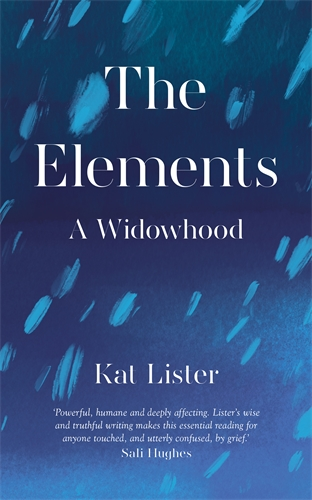
Most couples in their 30s are settling into their first homes, thinking about kids; Kat Lister and her husband, Pat Long, did those against the ticking clock of his brain tumor, which was discovered before their wedding. They lived the few years they had together with uplifting, illuminating grace. When he died, Lister was left to navigate the anachronisms of young widowhood, a trial by water she recounts here with bold, Didion-esque honesty.

Buy

Transcendent Kingdom by Yaa Gyasi

Generosity is not constrained by genre. While we may assume that memoir has the most to teach, the ruthless craft required of good fiction offers equal — or even greater — opportunities. This novel, which begs to be described by its titular adjective, unpicks grief, addiction, survivor’s guilt, and the complicated strands of rejection, assimilation, belonging and othering woven into immigration, racism and religion.

Buy

A Three Dog Life by Abigail Thomas

Perhaps the only thing more appalling than the death of a partner is losing a partner in mind, not body. Thomas’s memoir invites the reader into the Kafka-couldn’t-dream it surreality of life following her husband’s traumatic brain injury (TBI). Along with grief, come care decisions, guilt, frustration, and no one to share the challenges.

Buy

Why be Happy When You Could be Normal? by Jeanette Winterson

Read this with its fictional counterpart, Winterson’s debut novel, Oranges Are Not the Only Fruit, to fully appreciate her generosity and courage. By the time she wrote this memoir, Winterson was a revered literary figure and bona fide success story. To admit, from that height, to the haunting power of childhood trauma could have seemed an admission of weakness. Her vulnerability is potent and empowering.

Buy

Nomadland: Surviving American in the 21st Century by Jessica Bruder

Please read the book; the film (brilliance of Frances McDormand notwithstanding) does it no justice. Nomadland exhibits another form of authorial generosity: the willingness to put one’s life aside to bear witness to the lives of others that would otherwise go unrecorded. The crushing, mechanistic cruelty of late capitalism comes to vivid life through Bruder’s painstakingly reported account of life on the dusty, bald-tire fringes of the so-called American dream.

Buy

A Manual for Cleaning Women by Lucia Berlin

Every time I pick up A Manual, I wind up reading it all the way through. Berlin’s autofiction is enthralling, terrifying, devastating on multiple levels. The writing is almost too sharp and bright to look at (forget window pane, this is prose as emergency flare) which is necessary magic given the gut-punch tales it tells. Stuff that in lesser hands, or played straight, would be unendurable, is transmuted into stories that soar and hover on the thermals of your mind.

Buy

Foreverland: On the Divine Tedium of Marriage by Heather Havrilesky
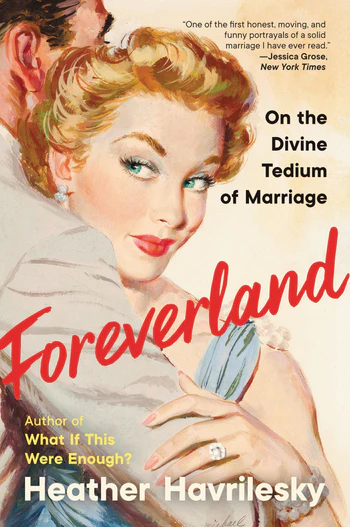
It is one of life’s slipperiest tricks that the things we’re taught to crave and cherish are (surprise!) headaches too. Marriage, at least happy marriage, is perhaps the quintessential sacred cow; the immutable good thing one should pursue without question. Thank goddess, then, for Havrilesky who seems to operate from the position that sacred cows are best served medium-rare. Her brave assertion of the inconvenient truth that true love and explosive exasperation are not mutually exclusive is a pinpoint of light in what might otherwise be a suffocating dimness.

Buy

What are your life-boat books? Share in the comments!
On Memoir with Cheryl Strayed

This interview originally appeared on the excellent but now defunct Ideas Tap website. The organization, which was dedicated to supporting young people pursuing creative careers, closed in 2015 due to lack of funding. Plus ca change.

Strayed was a warm, thoughtful and inquisitive subject. A rare working class hero and, rarer still, someone whose giddy ascent to Oprah-adjacent fame hadn’t uncalibrated her ethical compass.

It was a privilege to speak to her, and a pleasure to republish her timeless wisdom.

***

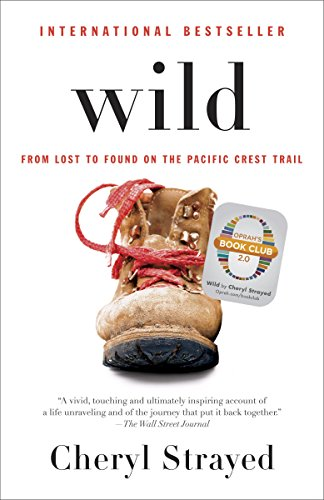
After writing her first novel, Cheryl Strayed turned to memoir and wrote her New York Times bestselling book Wild, about her 1,100-mile hike along the Pacific Crest Trail in the wake of her mother’s death. Here, Cheryl talks about mining memory and sets us to work with a writing exercise…

How does the emotional experience differ between writing fiction and memoir?

It doesn’t. To write fiction well you have to inhabit the consciousness of the characters you’ve created. With non-fiction there’s an extra layer of intensity because the character you’re building is yourself.

When writing memoir, how do you build yourself as a character?

The only way you can build yourself is to dismantle yourself. To take apart who you are, what your assumptions have been, what you hope people think of you. You can’t write: “I’m pretty and cool and awesome and interesting” because everyone would hate you. You have to say: “I’m human. Here are positive things about me. Here are negative things about me. And here are things that don’t make sense, don’t add up, and I’m going to present them to you”. Writing is like the deep work you do in the course of therapy where you take yourself apart.

What memory aids do you use?

I naturally have a very good memory – I think a lot of writers do. I kept a journal through my 20s and 30s. That helped me a lot in writing Wild. I do research where I can, going back and looking at pictures for example. When most people imagine what a memoirist does, they think: “I don’t remember anything from high school, from 20 years ago”. But they do remember – they just think they don’t.

How can writers elicit those memories?

The process of writing is re-conjuring memories. It’s doing things so more memories come to you. Even looking at a photo can allow you to remember something accurately. The process is like running into an old friend from back in the day, somebody you knew 20 years ago. When you first start talking you only know a few things about each other. But as you talk and go deeper into your lives you remember things you thought you had forgotten. Just because you haven’t thought of something for years doesn’t mean you don’t remember it, it just means it takes a little work to access it. When I was writing Wild I’d think, “I don’t remember, I just walked” but once I started writing my mind would open up to specific memories.

Do you draw heavily on your own life for your fiction?

You’ll see a lot of details from my life. My next novel is set in Portland [where I live]. None of the characters in the book are me but there are all these little tendrils of the story that you can trace back to me.

How do you deal with writer’s block?

I never call it “writer’s block” but I always have trouble beginning. Writing is hard. I resist writing. I run from it. If I am left alone with a laptop I flounder for an hour or two, then I sink in and I’m in the zone. When I get stuck I go for a walk, come back and try again. I don’t force it. If something isn’t coming, I move on; that’s a good strategy for me.

How long did it take to write your first book, Torch?

Your first book is so hard because you don’t know how to write a book and there is no way for anyone to tell you. It turns out the only way to learn how to write a book is to write a book. I avoided finishing [Torch] for fear of failure, until the point where the fear of failing to finish was bigger than the fear of finishing a book that was terrible. I worked on it for about ten years in total, three years really diligently.

How did you overcome that fear of failure?

Once I let go of the idea that I was going to write a great book, I was able to write a book. I let go of any ego or fear or shame. That was an important moment in my writing life. None of us really knows what kind of book we’re writing. A lot of people think they’re writing brilliant books and they’re terrible. And the reverse is true too. It isn’t up to us to judge our books; it’s up to the people who read them.

In Focus: Writing exercise using objects

I take random objects out of my handbag like lipstick, a ten-euro note, and a pair of sunglasses, and tell my students to pick one and write a story about it.

To begin writing you begin with an image. You begin with a feeling. I encourage people to start writing and not think about it too much. Even if you have a good idea, usually once you start writing it will become something else.

I could do that same exercise with the world’s Nobel Literature Prize winners and something would come of it. Perhaps what came of it would be better than what comes to my students, but that’s how the [Nobel Prize winners] do it too – they begin with something then they make something else.

On Primary Sources with Katherine Cottle

Welcome to ‘Between the Lines’ – interviews with teachers, writers and writing teachers on specific aspects of their craft.

Photo courtesy Katherine Cottle

In this week’s interview, author and Goucher College writing professor Katherine Cottle discusses the practice and possibilities of primary source research in creative and critical projects, which is embodied in several of her five books, including The Hidden Heart of Charm City: Baltimore Letters and Lives, I Remain Yours: Secret Mission Love Letters of My Mormon Great-Grandparents: 1900-1903, and Baltimore Side Show.

According to her bio, she two “feisty” children and a propensity for burning dinner (“I’m a horrible cook,” she assures me cheerfully). Cottle also writes poetry, non-fiction, cultural criticism, essays and reviews.

An Expanding World of Words

Growing up in a “farm-like” conservancy area of Baltimore County, Maryland, Cottle – the eldest of three children – sought out nooks behind rose bushes or slices of space between buildings where she could spin yarns in peace. “I was very quiet, externally. More of a listener,” she recalls. “But I was wordy internally: talking to myself, making observations, telling stories. I was writing, mentally.”

Cottle had the good fortune to attend a public high school which offered creative writing courses (“now, you’re lucky to get a unit, much less a whole class”). Her creative writing teacher, with whom she is still in touch, encouraged students to enter competitions and submit work for publication. This was important for Cottle, who was 14 years old when her first piece appeared in the local paper: “It was a big deal to have readers outside my ninth grade classroom.”

Building on her positive high school experience, Cottle went on to earn a B.A. in English from Goucher College, an M.F.A. in creative writing from the University of Maryland at College Park, and a Ph.D. in English/Professional Writing and American Literature from Morgan State University.

Paths and Possibilities

Asked what steered her toward teaching writing, Cottle chuckles: “It wasn’t, ‘this is what I’m going to do with the rest of my life’. I still don’t know that. But no matter what I’ve done, writing has pulled me in its direction.”

Although she has not always, or exclusively, taught, Cottle has educated writers from early teens to adulthood, in settings ranging from intensive summer programs, to tutoring, to middle and high schools, to her current full-time role at Goucher.

There, she teaches courses including first-year writing, poetry, professional writing and senior capstone courses, allowing Cottle guide students from the beginning to the end of their undergraduate studies. “Every class, every semester is a new experience,” she says. “You are starting a new adventure every time – every class, every day. That requires strength, enthusiasm and a positive attitude.”

Strength, enthusiasm and a positive attitude are rewarded by reciprocal learning. Cottle cherishes interaction with students and colleagues as means to cultivate her own practice. “It allows me to reflect on my own work [at] a helpful disconnect. I have to step back and recognise where I am in that picture.”

Her goal as an educator is to pay forward the “gifts I got from my mentors… to inspire others to develop the command and craft of their work so they feel confident as writers. Whether first year or senior capstone, [I want them] to feel that what they’re learning will help them beyond the classroom. Hopefully they see how writing will play a role in their life, how communication will help them going forward.”

On Primary Source Research in Creative and Critical Projects

Q: What is primary source research in this context?

A: Opening your research lens beyond the standard scholarly essay. It means looking for non-traditional sources, things you won’t find in Google. Some might not be valued by the academy, but provide scope for humanities documentation. For example, my dissertation focused on intimate letters from 1850-1950 in Baltimore. Some [were] online, some I had to go to a physical place to see. Others cannot be found, because they were hidden or destroyed.

Q: Why is this type of research significant in critical and creative contexts?

A: It adds unfiltered content. It allows voices which might not typically be found in public settings to be brought to the surface and validates genres beyond the scope of traditional research.

Q: How does one begin?

A: Think of yourself as your own search engine, and create an algorithm. You can start on the internet, but usually you have to go to physical locations, or call or write people to find out if something is in an archive; you might open your research to living sources.

Q: How did you approach researching the intimate letters?

A: My focus was on historical figures. I asked mentors at my university, then cast a wide net to see what I could find. After that, I decided to focus on a particular time period. There were a variety of ways to go about finding letters. Some were available online. Some were in archives. Others were archived but not accessible to the public. I contacted writers who’d been immersed in particular figures and asked them. Part of the excitement of doing a primary source search is that the process becomes part of the journey. You document the search as much as what you find. I wound up with a chapter on letters that we’ll never find, even if they exist.

Q: How do you avoid drowning in details?

A: Set parameters as you go along: here’s where I am, here’s what I found, here’s what I’m going to continue, here’s what I’m going to put off for another time.

Staying within those parameters is useful, but you need to start the process first. It’s a little messy in the beginning, but human beings are messy.

Q: How might a teacher structure a primary source research assignment?

A: I teach a 200-level writing course with units on sources such as diaries, photographs, maps, children’s books, recipes, oral histories, etc. We focus on one genre a week, look at examples, do some practice.

We usually start with photographs. First, students observe exactly what is in the frame. Next is the reflective lens when the student considers what they bring to the image as a viewer. Then they apply an analytical lens to think about the picture’s social significance.

We apply this metaphorical frame to other types of sources, asking: What’s there? What [do I] bring? Why is this important to our world?

Cottle Recommends

Q: An author who does primary source research well?

A: Rebecca Skloot, author of The Immortal Life of Henrietta Lacks. There’s a set of photographs in the middle, you can start the framing there; but the whole book is full of primary sources, [Skloot] pieces together Lacks’ life through research. Plus [she] has such a connection to Baltimore. I like to use articles or examples connected to place, so if students are local it gives them another perspective.

Q: A piece of writing that changed your life?

A: Good Woman: Poems and a Memoir 1969-1980 by Lucille Clifton. Hers was one of the first readings I went to; she had such humor, her work was so in-depth and thoughtful. But she was also unapologetic about loving The Price is Right. It showed me you could be a writer and be real, you could bring your strengths to writing in a way that was unique to you.

Q: A classic you love to teach?

A: Poets like Lucille Clifton, Anne Sexton, Tyehimba Jess – I’m not sure I could pick just one. A collection of women’s poetry from the late 20th century would be perfect.

Q: A contemporary work you love to teach?

A: I enjoy Billy Collins work. There is a simplicity about it, with a deep foundation, but also wit. He takes the human experience seriously and not seriously at the same time.

Q: A book about writing every writing student should read?

A: Bird by Bird: Some Notes on Writing and Life by Anne Lamott. Students connect with it.

Q: A living writer you’d love to hang out with?

A: Jeanette Winterson. I’ve only read two or three of her books, including Written on the Body and The Passion, but they left a physical feeling. The impact lingers, they are so powerful. She and Toni Morrison have that – they are in a whole ‘nother category. It is hard to find the language to describe, but you feel it at a cellular level.

Q: Your perfect writing space?

A: After going through the pandemic, it’s definitely not being home all the time. I work well in an outside environment, like a coffee shop, where there is human movement or discussion, but in the background. And a comfortable spot to sit.

Q: If you could publish anything, what would it be?

A: Right now, I’m working on [a book of] recipe poems. My brother-in-law is an incredible cook and has everyone over for dinner once a week. But during the pandemic, he couldn’t. We talked about writing a cookbook, but quickly realised it wouldn’t be typical. Each recipe is a tribute to a friend or family member who attends his dinners, so different people, different types of food; each will include a narrative about the person who makes, brings or requests the food.

I like blending genres. For example, my friend and I self-published a book of illustrated poetry. Even my memoir and nonfiction include other genres.

Connect

Shop

On Revision with Elisabeth Dahl

Welcome to ‘Between the Lines’ – interviews with teachers, writers and writing teachers on specific aspects of their craft.

In this week’s conversation, Elisabeth Dahl (no, no relation) discusses the transformative power of words, with a special focus on teaching revision.

Photo courtesy Elisabeth Dahl

‘I worry for people who don’t write’

Author, illustrator, editor, educator: Elisabeth Dahl’s writing experience spans genres and professions. The through line quickly emerges in conversation – a deftness with, and delight in, words that is as contagious as a yawn. And a knack for detail that brimfills anecdotes with life and color.

The Baltimore, Maryland native grew up near Johns Hopkins’ main campus, where she completed her undergraduate degree. She returned to the city as an adult, and lives a few miles from the hospital where she was born.

“As a child, I loved school right from the start,” she writes in her online bio. “By the time I was in ninth or tenth grade, one thing had become clear: Analyzing stories and crafting sentences lit me up in a way that history, math, and the rest did not.”

Speaking on the phone, Dahl credits this to her high school teacher Joyce Brown (with whom she still exchanges emails). “She approached us as if we were college students. When we started [James] Joyce’s Portrait of the Artist as a Young Man, we spent 20-30 minutes talking about his decision to use ‘the artist’ instead of ‘an artist’. To think this was even a question! It would have been one thing to debate writer versus artist, but to look at the article – the versus an – was incredible. As it turns out, [Ms Brown] led us to understand it made quite a big difference.”

Understanding the big differences a small lexical choice can makes is a sine qua non for a writer-educator. “I’m a better writer because I’ve taught writing,” says Dahl, who worked for Johns Hopkins’ Center for Talented Youth for the better part of a decade. “I was still making the same mistakes emerging writers were making: the stakes weren’t high enough, or I was padding the stories. Seeing these problems [as a teacher] was sort of teaching myself at the same time. It helped me incorporate the lessons into my own writing.”

Textures of language

For Dahl, a reciprocal relationship between teaching and literature was established early; her mother and grandmother (with whom they lived until Dahl was eight) were elementary school teachers who made reading a central part of her young life. They also gifted her with a fascination for the stories embedded in artifacts and moments. Her favorite space, as a child, was her grandmother’s walk-in closet. “It smelled like mothballs but had its own, not just aroma – aura. It had a history. It was a special occasion if I got to try on old dresses, like the one my mother wore to her junior prom. There was a scarlet red [dress], like what a Spanish dancer would wear, with tiers, strapless. It didn’t look like any of the other clothes in there. Jane Eyre had her red room; I had this red dress.”

The aural and visual qualities of words beguiled her: “I liked that if you said a word like ‘fork’ or ‘salad’ 25 times to yourself, it became nonsense, weird, you could almost hallucinate about it”. Another female relative, an aunt, was a graphic designer. Tracing pages in her books on hand-lettering introduced Dahl to the “tactile aspect” of language.

These formative experiences of words and stories as real and imaginative, concrete and abstract, primed Dahl to thrill to the challenge when Ms Brown assigned Herman Melville’s Bartleby, the Scrivener. “A light had turned on. I remember standing in her empty classroom, during a free period, talking about it with her, totally energized. I [still] don’t know if I know what the story means,” she says cheerfully. “But I love it. It’s like a Rorschach test.”

Inspired by Ms Brown’s example, Dahl prioritizes space for students to encounter epiphanies by “helping them get a new perspective, become a better observer, or express themselves better. As a teacher, you’re another voice in this person’s head. You have to take it seriously. You don’t know the other voices in their lives, all you can do is be respectful and help them grow.”

But why learn to write any more – aren’t there machines for that?

“Because to have a good relationship with writing is to have a good relationship with your own mind, your history, the world around you,” Dahl responds. “I worry about people who don’t write regularly. The memoir I’m working on has taught me so much about things I’ve been thinking about for 54 years. By laying out the words, revising the words, reconsidering the words, I’ve developed new attitudes towards certain moments, and people. It’s wonderful to be able to do that.”

Photo by Annie Spratt on Unsplash

On Revision

How do you create an open, accepting environment where students think beyond the binary of right/wrong?

One assignment I designed is based on Amelia Gray’s short story ‘Monument’. In it, the people of a town came to clean up a graveyard, then something changes, and they start destroying the graveyard, almost like Shirley Jackson’s ‘The Lottery’. I had students pick a character and rewrite the [third-person] story in the first person. We talked about what that changed, what opportunities it created, what it shut down.

This helped them realize that a piece of writing is many, many choices. It loosened students up. It was an act of playing around, like they might approach improv.

How do you push students beyond ‘good enough’?

Try to present revision as an opportunity. What if you wrote in a different point of view? What if you sprinkled some of these details throughout the story?

For students who are good but could be better, I call upon their sense of a challenge, their curiosity, intrigue. If a student is a tennis player, or pianist, say, I remind them how many hours they spend on the court or at the keyboard. Writing requires the same. It’s a lot of time, a lot of effort, yes.

I always tried to teach that we’re all on the same continuum. We’re writing. We’re writers. Getting started, revising, these things are always challenging.

How can students develop a feel for revision?

They need to be reading, copying out passages as a way of internalizing what good writing is. I encounter people who say, ‘I know I could write a novel’, then you ask what they are reading and they ‘don’t really read’. That’s never going to work.

How does revision differ between fiction and non-fiction?

With non-fiction you have to think about fact checking, accuracy, but the process is not all that different. You’re still asking about tone, voice, consistency, how the narrative is laid out, what is the best way to tell the story, whether you’ve grabbed the reader…

How do you approach teaching revision with different age groups?

With younger students, don’t talk down to them. With all ages, nurture their curiosity about where a piece of writing might go. Again, trying to relate writing to other endeavors, whether playing sports, or working at a grocery story. Remind people that revision isn’t just something we do in writing. We’re always revising things, always being asked to spend more time perfecting or altering, it’s part of being human.

What is a sign that the process is working?

When students say, this went a different direction, or, the character surprised me by doing this. That is exciting. It shows they are engaging on another level, not just trying to bang out the essay or the story.

Dahl recommends:

The piece of writing that changed your life as an adult?

Fun Home: A Family Tragicomic by Alison Bechdel. She explores, in a graphic novel, growing up, the truths that were presented to her and the truths she had to discover later. It was fascinating, her level of honesty. I get most of my books out of the library, but I went straight to the book store and bought that one for full price.

A classic you love to teach?

‘Why I Live at the PO’ by Eudora Welty. It’s an unreliable narrator story, very subtle, hard to pull off. Every time I read it, I see new things.

A book about writing every writing student should read?

On Writing by Stephen King. Although I’m not a King fan, this book is so good, especially if students are interested in writing books and getting into publishing. It is full of good advice, very practical.

A book + film adaptation combo you love?

Ian McEwan’s Atonement – that was a great movie and a very good book.

A living writer you’d love to hang out with?

Ann Patchett. She co-owns a book store called Parnassus Books in Nashville; she has a wonderful personality, she’s smart, she’s a good writer.

Your perfect writing space?

My house, where I live and write, is suburban, there are beautiful trees but always people walking past. I like to have people around.

If you could publish anything, what would it be and why?

It would be nice if the memoir I’m writing eventually becomes a book. What got me started was realizing how much I loved reading memoir. There is something about a well-crafted, honest memoir that stands out; they are always engaging.

Connect

Buy