Seven Lessons from the School Year

My full-time teaching year has just wrapped for the summer. After the hectic, emotional final weeks and days, it is time to pause and take stock.

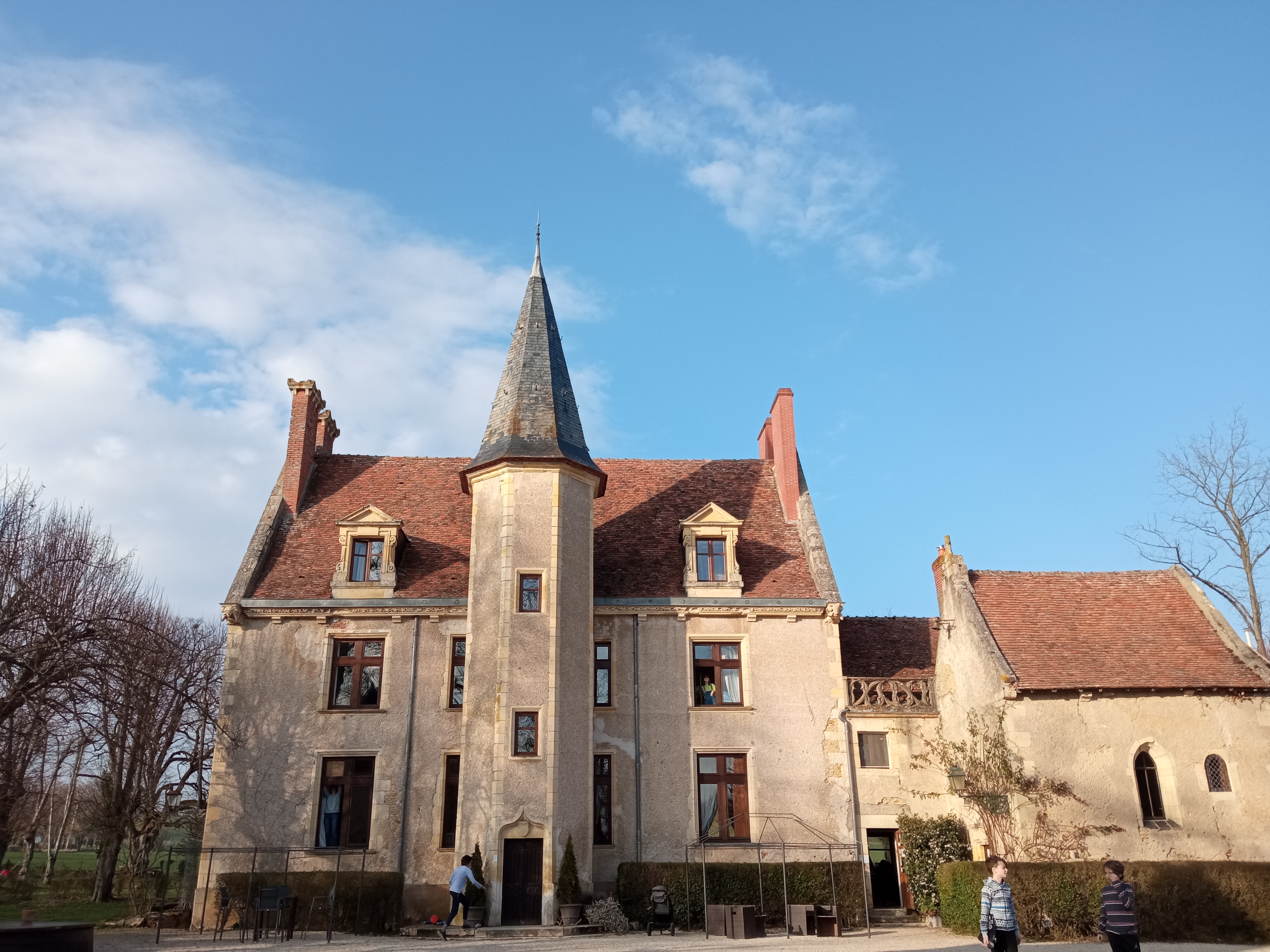
This was my second year as World Literature and English Language teacher at Le Sallay Academy. In my previous life, as a music journalist, we bandied the phrase ‘difficult second album’. Nobody mentioned there would be a ‘difficult second year’ in teaching. Now I know.

We should embrace the difficult, Rilke advised. He is right.

Part of the difficulty of the year was my egotistical/oblivious assumption that everything would run on tracks — after all, I’d done it before. That made some things easier, sure. But nowhere near everything.

Each year, each class, each assignment, each student is a new opportunity and learning curve. Rather than expect (naively) to rewind and press play, it is better to figure out what works in broad terms, and use that as a springboard for the next fresh start.

Because I’m a geek and like mnemonics, I boiled down seven key lessons from the past school year into the word ACCLAIM — something all teachers want (right?). And all students deserve.
Adapt

I like planning, making lists, ticking things off. When preparing lessons, I get a kick out of an orderly progression. What feels like orderly progression to me, though, can seem incomprehensible or plain boring to my students. One of the important things I learned this year was that to be effective meant to adapt. Sometimes, this meant tossing out a whole assignment; sometimes it meant an in-class pivot when an activity sank like undercooked souffle; sometimes it meant adding materials or exercises to ensure an individual student had what they needed to succeed.

One example of an individual adaptation that benefited the whole class was when student said they were struggling to follow the plot of All Quiet on the Western Front. This alerted me that the dense, gun-smoke swirl of memories that carry the reader from the battlefield to the intimate reaches of Paul’s life were a lot for a less-experienced reader to follow, so I created a chapter by chapter summary/study guide that included plot points, key characters and vocabulary lists. By reading the summary in advance of the chapter, students were able to track the main events of the novel, learn vocab and better understand the narrative arc.

Challenge

Adapt works both ways: sometimes it is appropriate to summarize and simplify; sometimes, students need to be challenged. Doing this right, means they should be at the edge of — or just beyond — their comfort zone, but in a situation where they have tools to address the task.

For example, my sixth grade students learned what Shakespearean sonnets are, then wrote them. This challenge worked because we defined everything: iambic pentameter, rhyme scheme, volta, etc. Once they understood how a sonnet was constructed, we read humorous contemporary examples that showed how the form, however strict, could be applied to any topic. Then we worked through each student draft together, line by line, counting syllables, testing rhymes, reinforcing by repetition while also having fun.

Co-create

Students are only going to be participants in their learning if they are allowed to participate. For me, this means letting go of my ideas about perfectly formatted assignments and visually pleasing presentations and letting students co-create with me, and with each other.

Midway through the year we trialled collaborative Google Slides presentations, where students contributed their efforts to a single presentation. Initially, I created the presentation and turned them loose on it. By the end of the year, they were setting up the joint presentations themselves.

For final writing projects, there was a co-creation element, as students were given the option of choosing a set question or pitching their own big idea. Most students choose to come up with their own topics, with me as a consultant to ensure their ideas were appropriate to the scope of work.
Link

One of the things I love best about teaching literature is tracking ideas, themes and debates across epochs and regions. Without this connectivity, literature would just be words on a page — who cares? Only by helping students identify and explore the links can they truly appreciate the scope and magic of the written word. This is critically important at the ages I teach: 11-15. Kids are teetering towards independence, trying to understand the world they find themselves a part of; they haven’t yet claimed their literary heritage. So it is imperative to make explicit connections they might not see otherwise: historical, economic, social, topical.

For instance, when studying Frankenstein by Mary Shelley, my students read Jeanette Winterson’s essay, ‘Love(lace) Actually’ which links Shelley with pioneering machine-maker Ada Lovelace with Alan Turing, and Frankenstein’s monster with modern technology. We also dipped into The Heart of Darkness for another example of a frame narrative, establishing thematic and stylistic links to anchor the text in broader conversations. Also, I introduced Romanticism by showing them Meatloaf’s ‘I Would Do Anything for Love’ video. Let’s just say, there were no new Meatloaf fans after that. Maybe you have to be a child of the 80s to dig that OTT?

Aim

Have a target. Make sure students know what it is and how to hit it.

This is a work in progress for me, but I can confidently say that classes run more smoothly when everyone knows what we’re doing and why. Sometimes the why might sound arbitrary, e.g. we’re reading this book because it is a great example of X (notwithstanding all the other perfectly good literary examples) but even so, it is worthwhile to articulate the class aims and repeat as needed.

As a student, I hated fuzzy assignments or vague grading standards. How do you know what you’re supposed to be doing if the aim is undefined?

As a teacher, I want to protect my students from that frustration, and myself from their excuses (‘but I didn’t understand…’). Clear, concise goal setting, including deadlines, frees up everyone’s brain space to focus on what matters. For example, each classes final writing project was scheduled, broken down into steps with individual deadlines and students were given the rubric and grading standards in advance. (This might sound over-prescriptive, but middle school is where structure needs to happen so students can break free of it in secondary and further education.) Obviously, how (and to what extent) students hit the aims varied, but they had a clear, fair, impartial structure to work within.

Iterate

My expectation that year two would be easy was based, in part, on the assumption that I could wholesale reuse materials and texts from the previous year. That was lazy thinking.

This year was better was when I rejigged, or even started from scratch. Though working with the same broad themes and literary time periods, there was massive opportunity to iterate and improve. For example, instead of using Strange Tales from a Chinese Studio by Pu Songling as a main text, I selected a handful of stories and wove them into reading Grace Lin’s stunning novel When the Sea Turned to Silver, which weaves Chinese folklore into a zesty YA adventure story. My students were far more immersed in the novel than the would have been in the stories alone, and they were able to see the link between Songling’s 18th century work and contemporary Chinese writing and traditions.

Model

This year, I’ve been more open about my geekiness, quicker to say how crazy in love I am with an author or text. Do my students think I’m weird, or maybe should get out more? Possibly. But they also seem to respect my passion for literature and language, even if they don’t understand or share it.

To me, this is what modelling is all about. How can I persuade students to love words, or to push themselves on an assignment, if my example is meh?

If I want students to be excited about books, I need to be excited about books. If I want them to take risks, I have to take risks. If I want them to make and learn from mistakes, I need to make and learn from mistakes. If I want them to discover joy, I need to embody the joy that awaits discovery.

The vast importance of modelling hit me when I realized that I remember a mere handful of books I read prior to high school graduation: To Kill a Mockingbird in 9th grade, The Odyssey and something by Shakespeare in 12th grade. That is it. And I love literature and lived for those classes. So, realistically, even my most engaged students will remember between one and zero of the books they are assigned.

What I do remember about literature classes? My teachers and how damn much they cared about words and writing, and how those models encouraged me to believe these were things to cherish and celebrate.

That’s what I want for my students. Any year I succeed in communicating that will be a good year.

What are some of the key things you learned this year, as a teacher? Share in the comments or Tweet @CilaWarncke

On Primary Sources with Katherine Cottle

Welcome to ‘Between the Lines’ – interviews with teachers, writers and writing teachers on specific aspects of their craft.

Photo courtesy Katherine Cottle

In this week’s interview, author and Goucher College writing professor Katherine Cottle discusses the practice and possibilities of primary source research in creative and critical projects, which is embodied in several of her five books, including The Hidden Heart of Charm City: Baltimore Letters and Lives, I Remain Yours: Secret Mission Love Letters of My Mormon Great-Grandparents: 1900-1903, and Baltimore Side Show.

According to her bio, she two “feisty” children and a propensity for burning dinner (“I’m a horrible cook,” she assures me cheerfully). Cottle also writes poetry, non-fiction, cultural criticism, essays and reviews.

An Expanding World of Words

Growing up in a “farm-like” conservancy area of Baltimore County, Maryland, Cottle – the eldest of three children – sought out nooks behind rose bushes or slices of space between buildings where she could spin yarns in peace. “I was very quiet, externally. More of a listener,” she recalls. “But I was wordy internally: talking to myself, making observations, telling stories. I was writing, mentally.”

Cottle had the good fortune to attend a public high school which offered creative writing courses (“now, you’re lucky to get a unit, much less a whole class”). Her creative writing teacher, with whom she is still in touch, encouraged students to enter competitions and submit work for publication. This was important for Cottle, who was 14 years old when her first piece appeared in the local paper: “It was a big deal to have readers outside my ninth grade classroom.”

Building on her positive high school experience, Cottle went on to earn a B.A. in English from Goucher College, an M.F.A. in creative writing from the University of Maryland at College Park, and a Ph.D. in English/Professional Writing and American Literature from Morgan State University.

Paths and Possibilities

Asked what steered her toward teaching writing, Cottle chuckles: “It wasn’t, ‘this is what I’m going to do with the rest of my life’. I still don’t know that. But no matter what I’ve done, writing has pulled me in its direction.”

Although she has not always, or exclusively, taught, Cottle has educated writers from early teens to adulthood, in settings ranging from intensive summer programs, to tutoring, to middle and high schools, to her current full-time role at Goucher.

There, she teaches courses including first-year writing, poetry, professional writing and senior capstone courses, allowing Cottle guide students from the beginning to the end of their undergraduate studies. “Every class, every semester is a new experience,” she says. “You are starting a new adventure every time – every class, every day. That requires strength, enthusiasm and a positive attitude.”

Strength, enthusiasm and a positive attitude are rewarded by reciprocal learning. Cottle cherishes interaction with students and colleagues as means to cultivate her own practice. “It allows me to reflect on my own work [at] a helpful disconnect. I have to step back and recognise where I am in that picture.”

Her goal as an educator is to pay forward the “gifts I got from my mentors… to inspire others to develop the command and craft of their work so they feel confident as writers. Whether first year or senior capstone, [I want them] to feel that what they’re learning will help them beyond the classroom. Hopefully they see how writing will play a role in their life, how communication will help them going forward.”

On Primary Source Research in Creative and Critical Projects

Q: What is primary source research in this context?

A: Opening your research lens beyond the standard scholarly essay. It means looking for non-traditional sources, things you won’t find in Google. Some might not be valued by the academy, but provide scope for humanities documentation. For example, my dissertation focused on intimate letters from 1850-1950 in Baltimore. Some [were] online, some I had to go to a physical place to see. Others cannot be found, because they were hidden or destroyed.

Q: Why is this type of research significant in critical and creative contexts?

A: It adds unfiltered content. It allows voices which might not typically be found in public settings to be brought to the surface and validates genres beyond the scope of traditional research.

Q: How does one begin?

A: Think of yourself as your own search engine, and create an algorithm. You can start on the internet, but usually you have to go to physical locations, or call or write people to find out if something is in an archive; you might open your research to living sources.

Q: How did you approach researching the intimate letters?

A: My focus was on historical figures. I asked mentors at my university, then cast a wide net to see what I could find. After that, I decided to focus on a particular time period. There were a variety of ways to go about finding letters. Some were available online. Some were in archives. Others were archived but not accessible to the public. I contacted writers who’d been immersed in particular figures and asked them. Part of the excitement of doing a primary source search is that the process becomes part of the journey. You document the search as much as what you find. I wound up with a chapter on letters that we’ll never find, even if they exist.

Q: How do you avoid drowning in details?

A: Set parameters as you go along: here’s where I am, here’s what I found, here’s what I’m going to continue, here’s what I’m going to put off for another time.

Staying within those parameters is useful, but you need to start the process first. It’s a little messy in the beginning, but human beings are messy.

Q: How might a teacher structure a primary source research assignment?

A: I teach a 200-level writing course with units on sources such as diaries, photographs, maps, children’s books, recipes, oral histories, etc. We focus on one genre a week, look at examples, do some practice.

We usually start with photographs. First, students observe exactly what is in the frame. Next is the reflective lens when the student considers what they bring to the image as a viewer. Then they apply an analytical lens to think about the picture’s social significance.

We apply this metaphorical frame to other types of sources, asking: What’s there? What [do I] bring? Why is this important to our world?

Cottle Recommends

Q: An author who does primary source research well?

A: Rebecca Skloot, author of The Immortal Life of Henrietta Lacks. There’s a set of photographs in the middle, you can start the framing there; but the whole book is full of primary sources, [Skloot] pieces together Lacks’ life through research. Plus [she] has such a connection to Baltimore. I like to use articles or examples connected to place, so if students are local it gives them another perspective.

Q: A piece of writing that changed your life?

A: Good Woman: Poems and a Memoir 1969-1980 by Lucille Clifton. Hers was one of the first readings I went to; she had such humor, her work was so in-depth and thoughtful. But she was also unapologetic about loving The Price is Right. It showed me you could be a writer and be real, you could bring your strengths to writing in a way that was unique to you.

Q: A classic you love to teach?

A: Poets like Lucille Clifton, Anne Sexton, Tyehimba Jess – I’m not sure I could pick just one. A collection of women’s poetry from the late 20th century would be perfect.

Q: A contemporary work you love to teach?

A: I enjoy Billy Collins work. There is a simplicity about it, with a deep foundation, but also wit. He takes the human experience seriously and not seriously at the same time.

Q: A book about writing every writing student should read?

A: Bird by Bird: Some Notes on Writing and Life by Anne Lamott. Students connect with it.

Q: A living writer you’d love to hang out with?

A: Jeanette Winterson. I’ve only read two or three of her books, including Written on the Body and The Passion, but they left a physical feeling. The impact lingers, they are so powerful. She and Toni Morrison have that – they are in a whole ‘nother category. It is hard to find the language to describe, but you feel it at a cellular level.

Q: Your perfect writing space?

A: After going through the pandemic, it’s definitely not being home all the time. I work well in an outside environment, like a coffee shop, where there is human movement or discussion, but in the background. And a comfortable spot to sit.

Q: If you could publish anything, what would it be?

A: Right now, I’m working on [a book of] recipe poems. My brother-in-law is an incredible cook and has everyone over for dinner once a week. But during the pandemic, he couldn’t. We talked about writing a cookbook, but quickly realised it wouldn’t be typical. Each recipe is a tribute to a friend or family member who attends his dinners, so different people, different types of food; each will include a narrative about the person who makes, brings or requests the food.

I like blending genres. For example, my friend and I self-published a book of illustrated poetry. Even my memoir and nonfiction include other genres.

Connect

Shop

On Revision with Elisabeth Dahl

Welcome to ‘Between the Lines’ – interviews with teachers, writers and writing teachers on specific aspects of their craft.

In this week’s conversation, Elisabeth Dahl (no, no relation) discusses the transformative power of words, with a special focus on teaching revision.

Photo courtesy Elisabeth Dahl

‘I worry for people who don’t write’

Author, illustrator, editor, educator: Elisabeth Dahl’s writing experience spans genres and professions. The through line quickly emerges in conversation – a deftness with, and delight in, words that is as contagious as a yawn. And a knack for detail that brimfills anecdotes with life and color.

The Baltimore, Maryland native grew up near Johns Hopkins’ main campus, where she completed her undergraduate degree. She returned to the city as an adult, and lives a few miles from the hospital where she was born.

“As a child, I loved school right from the start,” she writes in her online bio. “By the time I was in ninth or tenth grade, one thing had become clear: Analyzing stories and crafting sentences lit me up in a way that history, math, and the rest did not.”

Speaking on the phone, Dahl credits this to her high school teacher Joyce Brown (with whom she still exchanges emails). “She approached us as if we were college students. When we started [James] Joyce’s Portrait of the Artist as a Young Man, we spent 20-30 minutes talking about his decision to use ‘the artist’ instead of ‘an artist’. To think this was even a question! It would have been one thing to debate writer versus artist, but to look at the article – the versus an – was incredible. As it turns out, [Ms Brown] led us to understand it made quite a big difference.”

Understanding the big differences a small lexical choice can makes is a sine qua non for a writer-educator. “I’m a better writer because I’ve taught writing,” says Dahl, who worked for Johns Hopkins’ Center for Talented Youth for the better part of a decade. “I was still making the same mistakes emerging writers were making: the stakes weren’t high enough, or I was padding the stories. Seeing these problems [as a teacher] was sort of teaching myself at the same time. It helped me incorporate the lessons into my own writing.”

Textures of language

For Dahl, a reciprocal relationship between teaching and literature was established early; her mother and grandmother (with whom they lived until Dahl was eight) were elementary school teachers who made reading a central part of her young life. They also gifted her with a fascination for the stories embedded in artifacts and moments. Her favorite space, as a child, was her grandmother’s walk-in closet. “It smelled like mothballs but had its own, not just aroma – aura. It had a history. It was a special occasion if I got to try on old dresses, like the one my mother wore to her junior prom. There was a scarlet red [dress], like what a Spanish dancer would wear, with tiers, strapless. It didn’t look like any of the other clothes in there. Jane Eyre had her red room; I had this red dress.”

The aural and visual qualities of words beguiled her: “I liked that if you said a word like ‘fork’ or ‘salad’ 25 times to yourself, it became nonsense, weird, you could almost hallucinate about it”. Another female relative, an aunt, was a graphic designer. Tracing pages in her books on hand-lettering introduced Dahl to the “tactile aspect” of language.

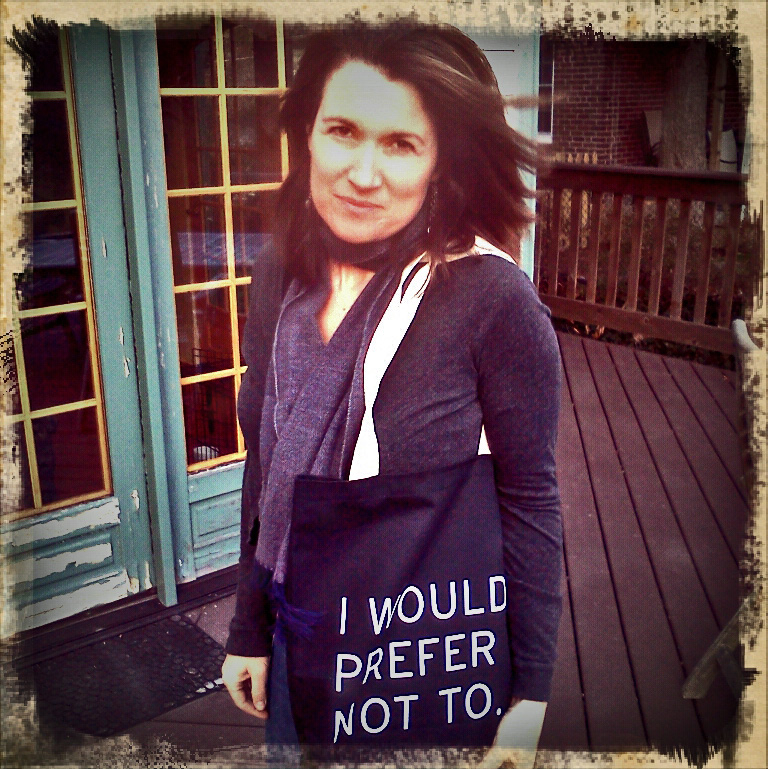
These formative experiences of words and stories as real and imaginative, concrete and abstract, primed Dahl to thrill to the challenge when Ms Brown assigned Herman Melville’s Bartleby, the Scrivener. “A light had turned on. I remember standing in her empty classroom, during a free period, talking about it with her, totally energized. I [still] don’t know if I know what the story means,” she says cheerfully. “But I love it. It’s like a Rorschach test.”

Inspired by Ms Brown’s example, Dahl prioritizes space for students to encounter epiphanies by “helping them get a new perspective, become a better observer, or express themselves better. As a teacher, you’re another voice in this person’s head. You have to take it seriously. You don’t know the other voices in their lives, all you can do is be respectful and help them grow.”

But why learn to write any more – aren’t there machines for that?

“Because to have a good relationship with writing is to have a good relationship with your own mind, your history, the world around you,” Dahl responds. “I worry about people who don’t write regularly. The memoir I’m working on has taught me so much about things I’ve been thinking about for 54 years. By laying out the words, revising the words, reconsidering the words, I’ve developed new attitudes towards certain moments, and people. It’s wonderful to be able to do that.”

Photo by Annie Spratt on Unsplash

On Revision

How do you create an open, accepting environment where students think beyond the binary of right/wrong?

One assignment I designed is based on Amelia Gray’s short story ‘Monument’. In it, the people of a town came to clean up a graveyard, then something changes, and they start destroying the graveyard, almost like Shirley Jackson’s ‘The Lottery’. I had students pick a character and rewrite the [third-person] story in the first person. We talked about what that changed, what opportunities it created, what it shut down.

This helped them realize that a piece of writing is many, many choices. It loosened students up. It was an act of playing around, like they might approach improv.

How do you push students beyond ‘good enough’?

Try to present revision as an opportunity. What if you wrote in a different point of view? What if you sprinkled some of these details throughout the story?

For students who are good but could be better, I call upon their sense of a challenge, their curiosity, intrigue. If a student is a tennis player, or pianist, say, I remind them how many hours they spend on the court or at the keyboard. Writing requires the same. It’s a lot of time, a lot of effort, yes.

I always tried to teach that we’re all on the same continuum. We’re writing. We’re writers. Getting started, revising, these things are always challenging.

How can students develop a feel for revision?

They need to be reading, copying out passages as a way of internalizing what good writing is. I encounter people who say, ‘I know I could write a novel’, then you ask what they are reading and they ‘don’t really read’. That’s never going to work.

How does revision differ between fiction and non-fiction?

With non-fiction you have to think about fact checking, accuracy, but the process is not all that different. You’re still asking about tone, voice, consistency, how the narrative is laid out, what is the best way to tell the story, whether you’ve grabbed the reader…

How do you approach teaching revision with different age groups?

With younger students, don’t talk down to them. With all ages, nurture their curiosity about where a piece of writing might go. Again, trying to relate writing to other endeavors, whether playing sports, or working at a grocery story. Remind people that revision isn’t just something we do in writing. We’re always revising things, always being asked to spend more time perfecting or altering, it’s part of being human.

What is a sign that the process is working?

When students say, this went a different direction, or, the character surprised me by doing this. That is exciting. It shows they are engaging on another level, not just trying to bang out the essay or the story.

Dahl recommends:

The piece of writing that changed your life as an adult?

Fun Home: A Family Tragicomic by Alison Bechdel. She explores, in a graphic novel, growing up, the truths that were presented to her and the truths she had to discover later. It was fascinating, her level of honesty. I get most of my books out of the library, but I went straight to the book store and bought that one for full price.

A classic you love to teach?

‘Why I Live at the PO’ by Eudora Welty. It’s an unreliable narrator story, very subtle, hard to pull off. Every time I read it, I see new things.

A book about writing every writing student should read?

On Writing by Stephen King. Although I’m not a King fan, this book is so good, especially if students are interested in writing books and getting into publishing. It is full of good advice, very practical.

A book + film adaptation combo you love?

Ian McEwan’s Atonement – that was a great movie and a very good book.

A living writer you’d love to hang out with?

Ann Patchett. She co-owns a book store called Parnassus Books in Nashville; she has a wonderful personality, she’s smart, she’s a good writer.

Your perfect writing space?

My house, where I live and write, is suburban, there are beautiful trees but always people walking past. I like to have people around.

If you could publish anything, what would it be and why?

It would be nice if the memoir I’m writing eventually becomes a book. What got me started was realizing how much I loved reading memoir. There is something about a well-crafted, honest memoir that stands out; they are always engaging.

Connect

Buy

On Ungrading with Anthony Lince

This is the debut post of ‘Between the Lines’ – interviews with teachers, writers and writing teachers on specific aspects of their craft.

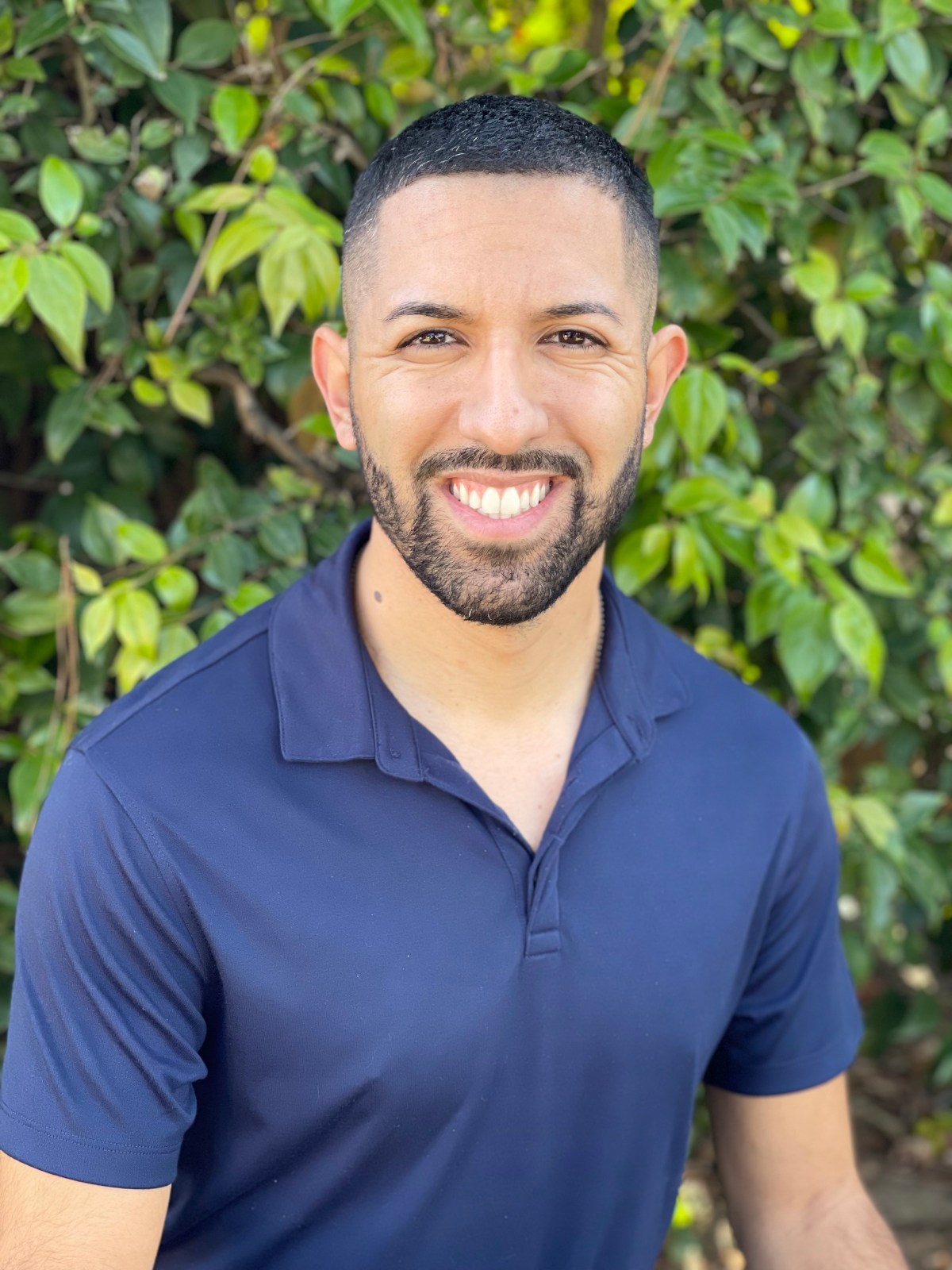
This week’s interview is with Anthony Lince, per his online bio ‘a Latinx educator and scholar who teaches first-year writing courses at UC San Diego and local community colleges.’

Photo courtesy Anthony Lince

Writing: From ‘terrified’ to teacher

In conversation, Lince has a ready beam and belies several notions of what a scholar of writing looks like. Figuratively, anyway. The dun-colored, round-neck sweater is classic English teacher chic, but he is quick to undercut the notion that he is a born wordsmith.

Growing up, San Diego, California Lince was happiest on the basketball court, running plays as a point guard through his high school years.

‘I was terrified of writing,’ he confesses, still smiling. ‘I loved to read, but as far as writing went, I never felt confident.’

Writing at all, much less teaching writing was so far out of mind as to be out of sight. After high school, Lince joined the Army and served as a military police officer. When he enrolled in college, aged 25, he planned to study criminal justice.

So where did writing come in?

‘Professor Bustos, who taught my first-year writing course. There were texts by Mexican-American writers like Pat Mora and Sandra Cisneros, which I connected with as a Mexican-American. And the Professor let me know he enjoyed my work.’

Despite struggling with imposter syndrome at the unexpected praise, Lince trusted his teacher enough to take a job at the writing center, at Bustos’ recommendation. There, he discovered he liked helping peers. His confidence in his own writing grew; he became an English major.

Lince didn’t set aside his thirst for justice, though: ‘As I started to get an education in the humanities, I saw a lot of injustices that needed work.’

Towards more equitable education

Lince is passionate about opening doors. One of the reasons he practices ungrading is to ‘create a positive, less-anxious, equitable, and antiracist learning environment’ (more on all that in a moment).

Lince was the first in his family to complete college. He understands the challenges and subtle (or blatant) inequities that non-traditional students, or those from marginalized communities, face. ‘It was unfamiliar terrain,’ he recalls of undergraduate study. ‘Take office hours – I had no idea you could go talk to professors. Things like figuring out a financial aid are hard if you don’t know anyone who’s done it before.’

After finishing his BA in English with an emphasis on Teaching, Lince qualified as a teacher and spent a year working in a high school before completing an MA in English with an emphasis on Rhetoric and Writing Studies. He graduated in 2022 with a thesis on labor-based grading.

Though peer-reviewed articles and conference proceedings sprout like kudzu on Lince’s academic CV, his primary goal is to lead by example. ‘I try teach from the perspective of authentic writing practices and share with students from the point of authorial expertise. If someone were a dance teacher, you’d expect them to be a dancer, right? So when I go into a classroom, I let them know I write academic articles, book chapters, blog posts, that I’m working on a book. By bringing this into the classroom, they see how writing works outside the classroom.’

Though he doesn’t use the word, Lince’s teaching practice is grounded in respect. Addressing students as fellow-practitioners of the craft is mark of respect. Seeking to ‘be equitable in my assessment and grading practices so students know they are having a fair education,’ is another mark of respect.

‘I want students to see that they are important. That they matter,’ he says. ‘I want them to be confident at writing. And to be able to spot potential injustices or biases that play out in writing.’

On Ungrading

  1. What is ‘ungrading’?

Moving away from traditional numbers and letters and moving towards authentic ways of assessment. Take my own experiences as reference points; when I write for publication, or even for fun, I don’t receive numbers or letter grades, assessment happens through feedback.

  1. Your Master’s thesis is on ‘labor-based grading’ – what is that?

There are a lot of sections under the umbrella of ungrading, one of which is labor-based grading. This method only uses a student’s labor to calculate their final course grade.

At the start of the course, students sign up for the grade they want. I tell them, you want a B, you need to do these things. If you want an A, you have to do all the B labor, plus more, to get the A.

All the activities [they complete] are based on the writing process: peer review, conferencing, visiting the writing center, drafting, revision. Students can complete more elements, or go more in depth, to get a higher grade.

  1. How did you become interested in ungrading?

When I taught high school, students were primarily focused the grade. I’d give feedback and they would just ask for a grade. During my Master’s, when I was teaching first-year students, I didn’t want them to be so focused on grades so started looking for an alternative. I was the first at San Diego State to implement ungrading, but it’s started to spread. It was great to see students come to conferences and listen to feedback, not just ask for a grade.

  1. Which student demographics does this technique best suit?

If the conditions are right, it could work for high school students. College [university], for sure.

Photo by Unseen Studio on Unsplash
  1. How do students respond to ungrading?

Sometimes there is confusion in terms of not seeing a grade, they’ll ask ‘how do I know how I’m really doing?’

But most students don’t like grades, so we discuss it. They start to see how this can work for them. And I check in throughout the term to see how they’re doing.

  1. How does ungrading promote an antiracist environment?

Biases can enter into grading practices and, even if unconscious, negatively impact students. A study was done of two students in 2nd grade, one called Johnny and the other Malik. Their papers were given to various teachers and Malik’s paper was consistently marked lower. The twist was the papers were identical; the only difference was the name.

If this happens in second grade, third, fifth, high school and into college it can negatively impact that student. With labor-based grading, that sort of judgement goes away because if the student does the work, they get the credit. The classroom becomes a space where students don’t have to worry about biases or subjectivities.

  1. What other benefits do you see in the classroom?

The hierarchy of A student/C student breaks down, it becomes a place of collaboration. When students ask for feedback, they’ll ask about specific parts of the writing, which is a very different conversation from talking about a grade.

  1. How do students get a grade for their GPA?

They get a letter grade at the end of the semester, per college rules. If someone signs up for a B, I’m checking throughout the term to see if they complete the agreed work. If they do, they get the grade they signed up for.

Lince recommends

  1. The piece of writing that changed your life before age 18?

The Fellowship of the Ring. I read it when I was nine and was so taken by the way the world was created, the multitude of characters, the important quest. It ignited my love of reading.

  1. The piece of writing that changed your life as an adult?

Anne Lamott on first drafts [in Bird by Bird: Some Notes on Writing and Life]. It let me know that all writers struggle, and that struggle is perfectly normal. I assign it to my students to show that they aren’t alone.

  1. A classic you love to teach?

George Orwell’s 1984. I teach a unit on surveillance and I like showing students this idea of a surveillance state.

  1. A contemporary work you love to teach?

I bring poetry into my classes, just to share. Shel Silverstein has some fantastic poems that are applicable to the writing classroom. Also, Percival Everett [a novelist The New Yorker describes as having ‘one of the best poker faces in contemporary American literature’]. He just won the PEN/Jean Stein Award for Doctor No, a satire on the James Bond trope.

  1. A book about writing every writing student should read?

Writing With Style by John R Trimble. It isn’t really well-known but he writes in a conversational tone students can relate to it.

  1. A book + film adaptation combo you love?

Peter Jackson’s Lord of the Rings trilogy was phenomenal. It was true to the essence of the books.

  1. A living writer you’d love to hang out with?

Percival Everett. I’d love to pick his brain, get a sense of his process and writing style. It also seems, from interviews, we have somewhat similar personalities.

  1. A writing tool?

Scrivener. It takes everything away from the screen so you’re only focused on the text. With so many distractions, its cool to have everything fade in the background.

Looking forward

Lince is at work on his first book, a writing guide tentative titled Questions to Ask for Becoming a Better Writer. Look for it in autumn 2024.

Connect

On Freedom From Religion

Photo by Aaron Burden on Unsplash

BELIEVE AND YE SHALL BE SAVED?

Do parents have the right to indoctrinate their children?

For millennia, most cultures have acted as if the answer is ‘yes’ — using everything from physical violence to threats of damnation to ensure each successive generation followed like sheep.

Now, finally, someone, somewhere has said, ‘no’.

In December 2022, Japan announced a law to protect children from parental religious fanaticism. The law would protect kids from being a) forced to participate in religious activities, b) refused medical treatment, educational or social opportunities based on their parents’ religious beliefs and c) protect them from religious coercion, i.e. being pressured by parents threatening them with hellfire.

My husband, brought up Southern Baptist, and I (Evangelical then Seventh-Day Adventist) raised our eyebrows: if only.

To quote ‘Giest’, discussing the Japanese legislation on r/atheism: “Most Americans would loose their shit over this. Forcing religion on kids is a big part of our culture.”

FREEDOM FOR SOME

The United States gets mentioned a lot in the reddit thread because perhaps no other country so full-throatedly proclaims its hypocrisies. Individual personal freedom, including freedom of religion, is enshrined in the First Amendment to the Constitution but few other nations match the United States’ fanatical zeal for enforcing minority religious practices on everyone.

Texas just passed a law demanding that the Biblical Ten Commandments be posted in a ‘conspicuous place’ in every classroom in the state. Florida wants to ban any mention of menstruation before sixth grade (12 years old), though which chapter of the Bible supports that blend of misogyny, gynophoby and science-loathing is not specified.

As anyone with two brain cells to rub together can see, the US Right believes only in the absolute personal freedom of wealthy, fanatical, embittered, power-drunk, humanity-hating men. The rest of us be dammed.

Hence the chances of laws to protect children from emotional, psychological and physical abuse in the name of God will remain unwritten and unenacted.

PERSON OR PROPERTY?

This isn’t just a United States problem, though; nor is it only a problem of religion in the States.

The real but unarticulated debate is this: are children people, entitled to the rights and privileges of personhood? Or are they, as the American Right, and so many other cultures construct them, property?

How a society answers this question is of existential importance for the simple reason that children become adults.

A culture, religious or national, that views children as property cannot prepare them for a successful adulthood. Responsibility, the ability to carry oneself in the world, cannot be conferred at an arbitrary age: 18, 21, whatever.

Children who are controlled, brain-washed, browbeaten throughout their youth aren’t going to suddenly blossom into self-sufficient, competent adults. Instead, they are turned loose on society as adult-sized toddlers, prone to tantrums and destruction.

I don’t believe it is any coincidence that the United States combines high rates of religious fundamentalism with catastrophic rates of interpersonal violence. Should we be surprised that children denied agency and personhood seek extreme and harmful outlets as older teenagers and adults? Is anyone surprised when a beaten dog bites?

Photo by Artem Kniaz on Unsplash

TOUGHER. BETTER.

The only way to rear children to become full citizens of humanity is to, quelle surprise, treat them like human beings. From their first breath onwards.

“Childhood is a time for gathering and developing the assets necessary for full autonomy,” writes Hollingsworth (2013). Developing the capacity for full autonomy requires independent trial-and-error, in the same way developing the capacity to ride a bike requires time spent wobbling up and down the street.

Adults can screw this up in so many ways: laziness, authoritarianism, over-protectiveness.

It is tougher to co-regulate, discuss, take time to listen to a child than it is to demand compliance, or at least the appearance of it.

But it is better.

Children learn respect by example. If we want them to grow into adults who respect the opinions, privacy and autonomy of others, we had better show them how its done. Treating children as full-fledged human beings is the best way to inoculate them against hateful ideologies that thrive on repression: nationalism, racism, sexism, transphobia, homophobia and the like.

As educators, we have the extra privilege and responsibility of making our classrooms safe for ideas and self-expression. When children express ideas we find difficult (as they will) we have to model an appropriate, adult, respectful response.

Once, I was teaching English to a group of 14-and-15-year-old Spanish kids. One of them came out in support of Vox, the ultra-nationalist, uber-misogynist far-Right party that had formed recently.

My kneejerk response was: ‘We’ll have none of that in here.

But I pulled myself together and asked why he supported them, and we had a class discussion. Who knows whether he changed his mind about Vox, then or later, but at least he had a chance to participate in a respectful debate, instead of being shut down.

Teachers, and parents, have to model the behaviours and responses they hope to see in children. If we want kids to become thoughtful, compassionate, self-respecting, respectful global citizens we better start working on ourselves.

How do you support your students/kids to develop autonomy? Share in the comments or Tweet @CilaWarncke
On Animal Welfare Education

Photo by Matt Seymour on Unsplash

Last November, I read about New Zealand children being taught to trap and kill rats. The story has nagged me ever since.

The child killers were ostensibly working towards the laudable goal of protecting native fauna.

What I have a hard time with is the gleeful tone of the kids, and adults, involved (quoted by McClure, 2022):

  • “My trap, basically the whole thing’s a layer of blood,” grins one enthusiastic vermin-slayer.”
  • “Even the five-year-olds are really into the idea. They know the end goal: they want kiwis back in their back yards,” said Emma Jenkinson, chair of the school’s board of trustees, who helped organise the competition.”

Do the five-year-olds really want kiwis back in their yards? Or are they learning a dangerous lesson?

Teaching cruelty

Research beginning in the 1960s has found consistent strong links between childhood animal cruelty and adult interpersonal violence (Holoyda & Newman, 2016; Glayzer, et al., 2002).

This is so well-established, Holoyda and Newman (2016) note, that: “Cruelty to animals entered the Diagnostic and Statistical Manual of Mental Disorders in the revised third edition (American Psychiatric Association, 1987) as a criterion for conduct disorder, the childhood precursor to antisocial personality disorder.”

But it’s rats, you may say. Vermin.

Rats — like it or not — are living creatures capable of feeling pain.

In April, 2023 New Zealand was prepared to offer children under 14 cash prizes for killing ‘feral’ cats. Fortunately there was enough public outcry to force the organizers to rescind the reward.

My point is, the category of vermin is dangerously prone to expansion.

It is a hallmark of genocide that perpetrators classify the objects of their violence as pestilential, invasive, repulsive.

“In the apocalyptic Nazi vision, these putative enemies of civilization [Jews] were represented as parasitic organisms — as leeches, lice, bacteria, or vectors of contagion,” writes David Livingston Smith, author of Less Than Human: Why We Demean, Enslave and Exterminate Others. He also notes that during the genocide in Rawanda Hutus referred to their Tutsi victims as “cockroaches.”

To be clear, I am NOT equating killing rats or cats with killing humans. That would be absurd and offensive.

What I AM arguing is that humans can be conditioned to treat other living creatures with regard, or the opposite, and that training children to delight in the death and suffering of any living being paves the way for insensitivity to other living beings.

If we teach kids it’s okay to torment and kill one animal, what’s to stop the category of vermin expanding? Again, numerous studies across more than half a century have found strong correlations between childhood animal cruelty and adult violence.

Taking responsibility

Another problematic fact of the New Zealand slaughter campaigns (at least as reported) is the lack of acknowledgement of how the problem started.

Neither cats nor rats are native to New Zealand, and they didn’t swim there. Humans brought rats to the islands (Innes, et al., 1995), and doubtless brought cats to kill the rats, in nursery rhyme fashion.

Photo by Jinen Shah on Unsplash

If anyone is to blame for endangering native fauna, it is the colonizers and invaders who arrived with these animals. It may be necessary and appropriate to take protective measures now, but any engagement children have with the issue should be framed in terms of human responsibility for the initial problem.

This means that adults need to deal with the situation instead of outsourcing killing to children. If culling seems the only way to protect endangered native species it should be done as humanely as possible by trained adult professionals.

Animal welfare education

Schools can, and should, educate children about animal welfare. At this point in human history, it is less about kindness than about a last-gasp chance to save ourselves from self-inflicted environmental meltdown.

We cannot slow the headlong rush to planet-scale destruction by continuing with the same mindset that got us into it — the mindset that says: when an animal (or plant, or person) inconveniences us, let’s call them a pest and kill them.

Educating children to treat other living beings and ecosystems with respect and consideration is a step towards self-preservation, in the immediate and (if we’re lucky) long term.

Immediate impacts include reducing interpersonal violence. Scheib, Roeper and Hametter (2010) found that children who taught about animal welfare, “acquire social competences such as empathy, consideration, and responsibilities. Thus, Animal Welfare Education plays an important role in preventing violence in schools.”

Tarazona, Ceballos and Broom (2020) argue for far-reaching benefits to animal welfare education, writing: “The basic concepts of biology, welfare, and health are the same for humans and all other animals. Human actions have wide consequences and we need to change the way we interact with other living beings. … Animal welfare should always be considered in our relationships with animals, not only for direct impacts, e.g., manipulations, but also for indirect effects, e.g., on the environment, disease spread, natural resource availability, culture, and society.”

Interdisciplinary connections

To avoid this outcome, teachers in all disciplines need to participate.

As long as environmental or animal-related topics are confined to science classes, they will remain easy for students to compartmentalize. And a thing that can be compartmentalized can be ignored most of the time.

What can I do, as an English teacher?

For starters, I can highlight relevant themes in texts. One of my classes just finished reading Doris Lessing’s striking debut novel The Grass is Singing, a book in which the physical environment plays an outsized role in the social, emotional and psychological environment. It explicitly deals with themes like land exploitation, too, and highlighting them initiated a thoughtful discussion.

I also love to draw from authors like Henry David Thoreau, Charles Darwin and Margaret Mead.

History class is another fantastic place to educate students about the environment. We should consider and highlight the impact of social change, war, technology, etc. on animals and the wider environment.

Math teachers can use problems that engage with the natural world, ranging from population expansion to epidemiology.

Children who don’t understand that all life is fundamentally connected will grow into adults who won’t see how their actions and choices affect their environment. They will be, in a profound sense, irresponsible. And it will be our fault for not having taught them better.

What is your view on animal welfare education? Have could it best be integrated into curricula? Share your thoughts in the comments or Tweet @CilaWarncke

Why Assessment Trumps Judgment

For slightly convoluted reasons (suffice to say a Kindle subscription was involved, which I don’t recommend on either moral or practical grounds) I’ve found myself reading Daniel Kahneman’s doorstop Thinking, Fast and Slow. It merits the description perennial best-seller, though my guess is it is more widely acquired than read, but this isn’t a book review.

Among the many (interminably many) fascinating titbits Kahneman doles out is a story about interviewing soldiers in an effort to forecast future military performance.

Initially, he and his team conducted brief, routine interviews. The trained interviewers would then offer their judgments about the recruits’ likely outcomes. “Unfortunately,” Kahneman notes, “follow-up evaluations had already indicated that this interview procedure was almost useless for predicting the future success of recruits.”

So he designed an interview method that ignored the future but assessed past form on a selected set of traits (responsibility, sociability, etc.).

“I composed for each trait,” Kahneman writes, “a series of factual questions about the individual’s life before his enlistment, including the number of different jobs he had held, how regular and punctual he had been in his work and studies, the frequency of his interactions with friends, and his interest and participation in sports, among others.”

After conducting a few hundred interviews with this new assessment, performance evaluations showed that the questionnaires “predicted soldiers’ performance much more accurately than the global evaluations of the previous interviewing method, though far from perfectly. We had progressed from ‘completely useless’ to ‘moderately useful.'”

This may seem an intuitive finding to anyone who’s heard, much less repeated, the much bandied quote from the philosopher Will Durant: “We are what we repeatedly do. Excellence, then, is not an act but a habit.”

But how many of us — especially teachers — are guilty of acting contrary to common sense and relying on subjective judgments instead of thoughtful assessments?

Every educator has encountered students who have potential. We see flashes of brilliance and judge what a student might do. This is probably most widespread when it comes to writing recommendations. In fact, most standard forms ask teachers to predict how a student will perform in future.

If we trust Kahneman’s research even a little bit, we should be much more circumspect about prognostication and base our predictions, if we must make them, on students’ demonstrated performance.

Intellectual capacity, even if it is extraordinary, only yields positive outcomes when applied. A genius student who spends class time scrolling Instagram or staring into space is unlikely to outperform a hard-working average student.

Photo by Luca Bravo on Unsplash

Take as an example my dear brother, the closest person to a real-life genius I know. He dropped out of high school because he was bored and skated through a BS in Economics without buying the textbooks. Inauspicious, to be sure. But he had a track record of deep, almost obsessive dives into topics that fascinated him; his laser focus, coupled with his intellectual gifts, meant he could take on any subject and become an expert once he applied himself. Eventually, he applied that ability to programming and has developed a robust, well-remunerated career.

It wasn’t sheer brainpower, although he has that in abundance, it was his capacity for work and focus that transformed talent into expertise.

To be blunt: smarts are nothing without elbow grease.

It is a pleasure to encounter gifted students. But it is our job as educators to live and breathe the message that being ‘gifted’ isn’t enough. Habits of work are more important to eventual success than the ability to quickly and easily complete a particular academic task. In fact, ease is probably the worst enemy of growth.

Didactic and assessment methods that reward superficial ‘mastery’ are likely to encourage poor work habits, hampering students’ chances of excelling as they continue their studies and move into adulthood.

As educators, it is incumbent upon us to challenge gifted learners, to ensure they experience authentic difficulties and even (whisper it) the occasional failure. Ultimately, diligence and a growth mind-set are more valuable than a few good grades.

How do you help students develop good habits of work? Share in the comments or Tweet @CilaWarncke
Let’s Talk About Sex Education

Photo by Gaelle Marcel on Unsplash

Last year, for the first time, I taught about gender and sexuality in literature. My kneejerk reaction was, I can’t talk about sex to teenagers. Arrggh!

On reflection, this reaction had everything to do with my hangups (to use a good old-fashioned word) and nothing to do with my students’ needs.

This is a common problem in sex education, with the current brouhaha in the United Kingdom serving as an example.

British prime minister Rishi Sunak has, according to the Guardian, “asked the Department for Education to “ensure schools are not teaching inappropriate or contested content” in the subject of relationships, sex and health education… Sunak confirmed the review… after a Tory MP, Miriam Cates, said children were being exposed to sex education classes that were “age-inappropriate, extreme, sexualising and inaccurate”.”

Numerous Tory MPs are on board, one of their complaints being that young people are being taught about oral sex — a classic case of adult prudishness being prioritized over teen well-being.

Chambers et al. (2004) is quoted by Leung et al., 2019 saying Britain’s “value-led approach [to sex education] merely reflects the interests and principles of stakeholders, while overlooking the actual needs and wellbeing of youths.”

Sex ed in the internet age

Does anyone with two brain cells to rub together think not discussing oral sex, or any other sexual act, proclivity or topic, is going to prevent kids from knowing what it is, discussing it, watching it and even doing it?

Children are handed internet-connected screen devices almost as soon as their chubby baby fingers can hold them, in many cases.

Statista data show that 58% of British children own a smartphone by age 8; by age 12, that jumps to 93%. You can bet the farm they aren’t just using it to watch Sesame Street.

Sexuality isn’t a switch that flips at puberty. Sexual behaviors and curiosity are apparent in early childhood.

This might make grown-ups uncomfortable, but our discomfort isn’t useful. Parents and teachers have a duty to help kids navigate this vital part of life.

If we don’t step up, the internet will.

Student needs versus teacher discomfort

In an op-ed, 25-year-old journalist and editor Sasha Mistlan writes (re: Andrew Tate and the importance of proactive sex education): “My friends and I didn’t get any proper education about sex, consent or relationships until we were 13, by which time we had learned it all from internet porn and lads’ mags.”

How can educators ignore this need?

I am a literature teacher; the biology of the birds and bees are beyond my remit. But it isn’t the birds and bees that students need to know about.

They need models of relationships and ways of relating that affirm sexuality as an important (but not overwhelming), natural part of adult life, and of sex as a source of joy and connection. They need love stories with happy endings. They need, also, stories that are unhappy or ambiguous; stories that show mistakes and heartbreaks as a navigable part of human sexual experience, not reasons to drink poison.

However awkward I may feel, students need a safe space for curiosity and discussion. Because lord only knows, they are talking about sex outside the classroom.

Sex positive education

Does the phrase ‘sex positive education’ make you a little uncomfortable?

It does me.

But what does the alternative imply? Sex negative education doesn’t prevent young people from having sex.

Data from the worryingly puritanical United States show that even students who promise to abstain from premarital sex… don’t.

Research published by the American Academy of Pediatrics peer-reviewed journal Pediatrics found: “Five years after the pledge [to abstain from sex], 82% of pledgers denied having ever pledged. Pledgers and matched nonpledgers did not differ in premarital sex, sexually transmitted diseases, and anal and oral sex variables. Pledgers… did not differ in lifetime sexual partners and age of first sex. Fewer pledgers than matched nonpledgers used birth control and condoms.”

Scaring teenagers away from sex has never worked; ignoring sex in the hope teenagers won’t notice it is ludicrous.

The best, bravest, least-comfortable option is to say: hey, sex is a huge part of life, however whenever wherever and with whomever you do it (or don’t), and it can be one of the most joyous parts of life, or one of the most damaging. Let’s talk about how to make it joyful, empowering, pleasurable, safe and beautiful.

Affirmative literature

As a literature teacher, I can do my part by teaching texts that articulate the delights and challenges of sexuality and sexual identity, and working with my colleagues in health, science and psychology to create a safe, affirmative atmosphere for conversations about love, sex and gender.

This requires making careful choices about what my students read. Many of the canonical ‘love stories’ of European literature are anything but — think Wuthering Heights or Romeo and Juliet where ‘love’ and violence are inextricably mixed.

The search for affirmative literature requires looking beyond the cano and seeking stories that reflect a variety of experiences, cultures, orientations and gender identities.

Next week, I’ll share a list of powerful literature that treats sex with the openness, thoughtfulness, honesty and sensitivity it merits.

Suggest your favorite teen-appropriate, sex-affirmative story, poem or film in the comments or Tweet @CilaWarncke

On Leading by Example

Teachers, like writers, should show not tell (as much as possible).

As a writing teacher, it is imperative that I set an example as a writer.

My first gig outside of the university newspaper was Pennyblackmusic.co.uk — an independent online music magazine and shop that has outlasted countless best-selling, robustly funded publications.

Though not continuously, I’ve written for Pennyblackmusic for more than 20 years. In slow, desultory fashion it’s become a modest but valued body of work, and a chance to keep my journo skills sharp.

One of the regular features is called ‘Ten Songs That Made Me Love…’

Here are my contributions to the long-running series:

Photo by Jay Wennington on Unsplash

Echo & The Bunnymen

“Some bands are linked to an event or time in life; others, to a person. Echo & The Bunnymen entered my consciousness when I was about eight, via an album cover pinned to my brother’s bedroom wall. ‘Echo & the Bunnymen’, their eponymous 1987 album – was to the right of U2’s ‘The Unforgettable Fire’ and above Depeche Mode’s ‘Some Great Reward’. In grainy black-and-white, Ian McCulloch’s inkwell-explosion hair, eyes downcast beneath thick brows, gave a general impression of dark wool and wind-chill. Yet the music encoded in that vinyl dazzled. It made sense that my brother, the coolest person I knew, bought an overcoat and grew his hair. Who wouldn’t want to be them?

My brother moved out when I was 12; for the next few years we saw little of each other. I bought Sting’s ‘Fields of Gold’. Possibly in despair, he compiled CDs for me. Those songs – Echo, New Order, Depeche Mode – were the basis for a new relationship. More than siblings, we became musical co-conspirators. These 10 songs, only a sliver of Echo’s expansive oeuvre, encode a deep friendship. Apart from their personal significance their freshness, verve and originality make a case that Echo were the seminal New Wave band. Let’s run with those dancing horses.”

Read the full article

Patti Smith

The first time I saw Patti Smith it was like seeing a flesh-and-blood human after a lifetime among holograms. In a world where everyone is obsessed with image Patti is always, ever and gloriously who she is. Poet, rebel, musician, mother, artist, crusader, writer, warrior, deity of rock’n’roll and inventor of herself, Patti never wanted to be anyone else, never pandered, never tried to please.

Her music reaches deep places because it is born from an authentic self, and that’s why it will last.

Read the full article

Pulp

“It’s not chocolate boxes and roses/ It’s something darker/ Like a small animal that only comes out at night”. Jarvis Cocker’s memorable assessment of the titular emotion in ‘F.E.E.L.I.N.G.C.A.L.L.E.D.L.O.V.E’ (surely one of the Top 10 most awkwardly titled songs pop history) is a perfect epithet for the bands’ oeuvre.

The magic of Pulp is the mingling of sharp, danceable guitar pop with lyrics that veer from cynical to downright sinister. Their most radio-friendly hits are rife with violence (‘Joyriders’ “Mister, we just want your car/ ‘Cos we’re taking a girl to the reservoir”) and voyeurism (“I wanted to see as well as hear and so I hid inside her wardrobe,” in ‘Babies’). Love songs in Pulp world include lyrics like: “You are the last drink I should have ever drunk/ You are the body hidden in the trunk” (‘Like a Friend’).

Studying the arc of their career, it’s clear ‘Different Class’s’ arrival in Cool Britannia was coincidence; the subsequent lumping of Pulp with Britpop a music journalists’ convenience. Pulp never shared Blur’s mockney smuggery nor Oasis’ apolitical performance of working classness. Pulp was on a different trajectory: one that began in Sheffield in 1978, contained more than a decade of obscurity, and survived Britpop notoriety to deliver an acerbic welcome to the new millennium.

Its curve is marked by a rare, unflinching insight into the human psyche. Pulp takes love as a subject but, unlike most pop confectioners, doesn’t sugar-coat it. Cocker sees love as a slippery amalgam of baser needs: status, self-worth, revenge, amusement, actualisation, to see the darkest parts of ourselves reflected in another. Attraction doesn’t lead through flower-dappled fields at sunset but down gnarled alleys stale with fag smoke, booze and latent violence.

Rarer still, Cocker understands that society is an echo chamber of our dark hearts: it isn’t just individuals who behave in warped, self-defeating ways, but our whole culture.

Read the full article

Photo by Chris Bair on Unsplash

Memphis Soul

Ibiza, October 2016: What was left of my library was stacked on a slat-wood shelf awaiting collection; the clothes worth taking were crammed into a scuffed purple nylon suitcase; my car was one signature short of belonging to my ex-boyfriend, who was also adopting my cat.

In a few days I would embark for Memphis, Tennessee, a city I best knew as home of Sun Records. To pass time, I was reading ‘Respect Yourself’ (a loan from my Memphis-based boyfriend).

Robert Gordon’s meticulous account of the rise/fall/slip/slide of Stax Records was the history of an alien land and culture. ‘(Sittin’ on) The Dock of the Bay’ rang a bell, maybe ‘Shaft’, but my knowledge of Memphis soul ended there. Embarrassment at this ignorance was a welcome distraction from more immediate anxieties.

Those anxieties faded but the embarrassment clings; as a born-and-raised Yankee, a music journalist no less, it is shaming to have been oblivious to one of the richest seams of my country’s musical culture. Shaming because – as ‘Respect Yourself’ and history report – it is no accident that Black musicians have been, and remain, ghettoised, denigrated, alienated.

That’s not why anyone should listen to Memphis soul though; not to pay tribute or broaden horizons. Listen to be immersed in music that grabs your gut and nether-parts. Listen to the sound of something at stake. Listen because, as the following 10 songs prove, it’ll turn you on and take you higher.

Read the full article

As an educator, how do you lead by example? Share in the comments or Tweet @CilaWarncke

On Reading Aloud to Older Students

Reading aloud is like breast feeding: everyone agrees it is vital for the very young, but past a certain age it gets side-eye.

There is ample research on how reading aloud supports early literacy (Wiseman, 2010; Lennox, 2013, etc.).

What about reading to older students though?

Should story-time, like nursing, be confined to the earliest stages of life, or should it continue beyond the point kids can autonomously digest texts?

Photo by Annie Spratt on Unsplash

If primary function of reading aloud is to support literacy, research shows that reading to older learners “boosts their reading comprehension, increases their vocabularies, and helps them become better writers. In fact, students who are read to are more motivated to read themselves” (Blessing, 2005).

Zehr (2010) reported that, “teachers found by trial and error that reading aloud worked for adding interesting content or making literature come alive for students. And some educators say they read to their classes to model good reading, such as by asking comprehension questions as they go along.”

It is always gratifying when research supports my predilections, but I’ve been reading to older students — including adult learners — for as long as I’ve been teaching. Partly, it’s a failure of imagination: I loved being read to, cannot imagine anyone disliking it.

To be clear: my childhood pleasure in hearing books aloud had nothing to do with lack of independent reading skills. I could read by age four and would compete with myself to see how many pages I could read in a day. My record was 1,000. It was a 1,000 pages of the Paddington Bear series — not War and Peace — but the point is I read like a my life depended on it.

The pleasure of being read to was something else. Books I could (and did) read myself were still a joy to hear being read by my older sister, or one of my parents. We also tuned in to read-aloud radio programs, memorably The Hitchhiker’s Guide to the Galaxy and Jeeves and Wooster.

***

What makes reading aloud so marvelous? And why should it be part of every literature and language teacher’s repertoire?

To get another perspective, I interviewed Andie Yellott, a lifetime English teacher, former Johns Hopkins Center for Talented Youth Writing Program supervisor and parent of a child with dyslexia.

  1. Should reading aloud be continued beyond reading competence?
    Yes. Absolutely. When my son was in fourth grade, I would go in for one hour during lunchtime and read to his class. It was the highlight of the week, they told me. They loved it. They always wanted one more chapter.
  2. How did reading aloud support your son with dyslexia?
    He could not have gotten through school without me reading to him. I read everything, even the godawful high school health book. One of the advantages to reading aloud is you can stop and springboard off into other paths, other conversations, which you wouldn’t do if the kid was reading alone. And if you want a kid to do well on a standardized test, read, read, read.
  3. How did reading to your dyslexic son facilitate his communicative abilities?
    He’s got a huge vocabulary. I’d read to him, stop, ask what a word meant, try to figure it out contextually. Reading aloud to him made a difference. He thought he couldn’t write; now, he’s one of the best writers I know.

Like Yellott, I’ve had lots of student enthusiasm for reading aloud. It is more than just fun, though. Reading aloud supports specific skills, depending on whether the teacher or learner is reading aloud. Here are six benefits observed in my classrooms.

Photo by Photo by Tom Hermans on Unsplash

Teacher-led Reading

Improve pronunciation

Native and non-native speakers alike struggle with the whimsy of English pronunciation. In extreme cases, this can lead to students understanding spoken words but not being able to identify them in print, or vice versa. Reading aloud while students follow along in a text is a straightforward way to ensure that kids are matching the right groupings of letters to the sounds they hear. This is especially important for those who struggle with reading and/or are learning English as an additional language.

Build vocabulary

When students are reading independently it is difficult to gauge how well they comprehend individual words. Students may grasp the main idea of a text but miss important vocabulary. As Yellott said, reading aloud is an opportunity to identify and define unfamiliar words in context. While reading to my students, I pause frequently to check comprehension. If they don’t know a word, we search for context clues, then look up the definition to verify our deduction. This is also a great opportunity to reinforce knowledge of parts of speech, e.g. ‘this is the noun fly; what does it mean when we use it as a verb?’

Create community

Reading is too often solitary and functional, the vegetable kids have to eat before dessert. We need to remember: independently reading printed texts is a novelty. For most of homo sapiens‘ time on the planet, stories were oral. People gathered around fires, or beneath fearfully and wonderfully made cathedral ceilings, to listen to a bard/priest/storyteller. Being read to was the only way most people could experience books until the advent of mass public education, which wasn’t all that long ago.

Reading aloud in the classroom reclaims the power of the story to articulate fears, hopes and desires; to delve and reveal. Students who have a chance to respond verbally to a book: express how they feel, ask clarification questions and debate it with their peers, are axiomatically more engaged than those who skim it in lonely silence.

Learner-led Reading

Correct decoding errors

Even competent readers often make decoding errors such as ‘stared’ for ‘started’. If a student is reading silently, there is no chance to identify and correct these slips that, as they accumulate, affect comprehension. Younger and/or less able readers are more likely to make these mistakes, so reading aloud is an ideal tool to support their literacy.

Understand punctuation

If Emily Dickenson was right and “a word is dead./When it is said” then spare a thought for punctuation. Students can learn the function of commas, colons, etc. through direct instruction but that doesn’t automatically translate to competent — much less creative — usage in their writing. One of the best (only?) ways to understand the delicious possibilities of punctuation is to read aloud. By treating the punctuation as a kind of score — lift the voice here, pause, slow down, shout! — students develop the ear for punctuation that every good writer must have.

Improve verbal fluency and confidence

We tend to think of fluency in the context of learning an additional language, but it isn’t just language learners who need to practice this skill. Learning difficulties, lack of a richly verbal home life and shyness are a few of the reasons native speakers may struggle to express themselves fluently in their language. For students who struggle to articulate, whether because they are acquiring the language or for some other reason, reading aloud takes the pressure off of deciding what to say, and allows them to focus on how to say. Reading well-written texts gives students a chance to see how successful communication sounds; they can practice pronunciation, enunciation and tone without the risk of error. Ideally, they can inhabit the voice of the text and, in bringing it to life, experience the possibilities of their own voice.

Parting thought

In Sense and Sensibility the ‘sensible’ (i.e. sensitive) sister Marianne falls in love with Willoughby in part because “he read with all the sensibility and spirit” his rival lacked. In Jane Austen’s time, to read aloud well and fluently was a mark of refinement and good taste. As our world becomes more digitized, text-driven and fragmented, reading aloud is due a renaissance. Anyone can jab out a text; to read a book with eloquence and feeling, though? That’s magic.

How do you feel about reading aloud to older students? What benefits/challenges have you observed? Share in the comments or Tweet @CilaWarncke