The following presentation on culturally responsive teaching was written for, and delivered at, Le Sallay Academy’s January 2023 conference on blended learning.
The term culturally responsive teaching was coined by Geneva Gay. It entails crafting and delivering curricula that is relevant to students’ lived experiences. The aim is to engage students with material that is “personally meaningful” in order to pique their interest and motivation to learn (Gay, 2002).
My interest in culturally responsive teaching and culturally sustaining pedagogy (which I didn’t have the time to get into in this talk) springs from the cultural homogeneity of my own education. As a high school student and undergraduate I read, mostly, books, stories and poems by white male Europeans.
Students deserve better. They deserve to be introduced to a rich, multicultural world of literary experiences and they deserve to see themselves represented in what they read. As a teacher, its my job to think about students’ intersecting identities: nationality, language, gender, ethnicity, class, faith, etc.
This presentation focuses on language as a form of cultural and self-identity, and the importance of representing multiple Englishes within an English Language Arts curriculum. This was highly relevant because the students in this class hailed from several countries and spoke more than a dozen languages.
Including world Englishes within a literature/language arts program is something I feel strongly about because, 1) it’s good for students and 2) it’s fun. Some of the fabulous things about the English language are the richness of its vocabulary (much of it borrowed from other languages), how its (relative) grammatical simplicity sparks creativity and the way it has been adapted/refined/altered by linguistic communities around the globe.
There are more great presentations from the conference available at the Le Sallay website.
Culturally Responsive Teaching in Blended Learning: A Case Study
Share your thoughts and ideas on CRT/CST in the comments or Tweet @CilaWarncke
Recently, I binge-watched Netflix’s relationship reality show The Ultimatum: Queer Love.
If you haven’t seen it, the show features five lesbian couples that split up and reshuffle. One partner in each wants to get married, the other isn’t sure; the show is a chance to figure out now, forever, or never.
The premise is whatever but it was transfixing to watch a show where queer was the default. There was none of the usual exception signaling or tokenism of shows with only a few queer participants/characters; no hetero normativity. Instead of being Other the participants just were.
Soapy plot-lines aside, it was cool and refreshing to see queer women flirt, do their make-up, argue, shuffle around in slippers, make romantic gestures, walk their dogs, pitch fits, drink too much.
It should NOT be revelatory that queer people are human too, but, watching The Ultimatum, made it clear that what we are presented with as normal is in fact (hetero)normative. This doesn’t reflect reality but constructs an image that we are taught to accept as real.
Resisting the norm
Michel Foucault’s concept of normalization, the process by which ideas or ways of being come to be taken for granted, is pertinent. As educators, we are immersed in normalizing messaging, as are our students. They can be as invisible and pervasive as the air we breathe. Like tainted air, they are dangerous. Sociocultural imperatives about normalcy or (worse) naturalness — often deployed around subjects like sex, gender, social roles, economics, etc. — have the potential to do massive harm. Even when they seem innocuous, they put a subtle curb on imagination.
Resistance is the only antidote. According to Foucault scholar Dianna Taylor, “Refusing to simply accept what is presented as natural, necessary, and normal – like the ideas of sex and the norm itself – presents possibilities for engaging in and expanding the practice of freedom.”
Positive normalization
Humans are neophobic, shying away from the unfamiliar. This calls for conscious effort to challenge unhelpful or restrictive norms with positive normalization, i.e. not of a particular way of being but of an open, curious approach to life.
Replacing an old norm with a new norm simply shuffles the exclusion tiles. What we need, and we as educators should model, is normalizing acceptance, inquisitiveness and respect towards what is unfamiliar but not harmful.* Nobody is obliged to embrace someone else’s way of living, but a good education should provide them with the self-awareness and self-confidence to live and let live.
*By all means, resist and reject ideas and actions that harm oneself or others.
Making mistakes: Students are under mad pressure about grades, achievements, performance, etc. This fuels counterproductive perfectionism and alienates kids from their greatest learning tool: mistakes. As I wrote in ‘On Screwing Up‘: “You can’t learn what you already know… Existing expertise may gratify the ego, but it doesn’t grow the intellect.”
Asking for help: Along with making mistakes, it is critical to encourage students to ask for help. Teachers are not (or shouldn’t be) remote judges, hovering only to instruct and assess: we should be there to solve the problems before we grade the answers. We have to resist the Anglo-American individualist tradition and remind kids that asking for help is a sign of intelligence, not weakness.
Discussing problematic language: As a literature teacher, problematic language is an all-the-time issue. How do we understand Jean Toomer’s use of the n-word in Cane? Is it ever acceptable to use the r-word? What about swearing? How do we get better at remembering people’s pronouns? Teachers cannot protect students from problematic language, nor prevent them from using it. What we can do is explore why words or phrases are problematic, how they got to be that way, and what using them really means. We can educate students about the power of words and help them understand what their word choices say about them, and how their use of language affects others.
Talking about intersectional privilege/disadvantage: There is no contradiction in urging students to treat everyone they meet as a unique individual and teaching them about how individuals are shaped by intersectional privilege or disadvantage. It is fact, not indoctrination, to articulate that white females have different experiences than white males, cis people different experiences than trans people, people of color different experiences than white, etc. Yes, people are more than the sum of their identities, but those identities matter and by understanding them we gain greater understanding of those around us — and ourselves.
Fluid gender and sexual identities: The majority of literature portrays a limited range of gender and sexual and identities. There is no getting around that, although the canon is growing joyously year by year. What I can do as a teacher is A) bring in as much LGBTQ+ literature as possible and B) teach texts in context, i.e. the couple in Guy de Maupassant’s ‘The Necklace’ are a man and a woman not because that is ‘normal’ but because it reflects the gender roles and romantic partnerships of that time and place. Typing that, I see how reductive it sounds. Yes, it is an imperfect approach, but it at least opens discussions about how gender roles and sexual identities have changed over time.
What would you like to normalize in your classroom (or world)? Share in the comments!
My full-time teaching year has just wrapped for the summer. After the hectic, emotional final weeks and days, it is time to pause and take stock.
This was my second year as World Literature and English Language teacher at Le Sallay Academy. In my previous life, as a music journalist, we bandied the phrase ‘difficult second album’. Nobody mentioned there would be a ‘difficult second year’ in teaching. Now I know.
We should embrace the difficult, Rilke advised. He is right.
Part of the difficulty of the year was my egotistical/oblivious assumption that everything would run on tracks — after all, I’d done it before. That made some things easier, sure. But nowhere near everything.
Each year, each class, each assignment, each student is a new opportunity and learning curve. Rather than expect (naively) to rewind and press play, it is better to figure out what works in broad terms, and use that as a springboard for the next fresh start.
Because I’m a geek and like mnemonics, I boiled down seven key lessons from the past school year into the word ACCLAIM — something all teachers want (right?). And all students deserve.
Adapt
I like planning, making lists, ticking things off. When preparing lessons, I get a kick out of an orderly progression. What feels like orderly progression to me, though, can seem incomprehensible or plain boring to my students. One of the important things I learned this year was that to be effective meant to adapt. Sometimes, this meant tossing out a whole assignment; sometimes it meant an in-class pivot when an activity sank like undercooked souffle; sometimes it meant adding materials or exercises to ensure an individual student had what they needed to succeed.
One example of an individual adaptation that benefited the whole class was when student said they were struggling to follow the plot of All Quiet on the Western Front. This alerted me that the dense, gun-smoke swirl of memories that carry the reader from the battlefield to the intimate reaches of Paul’s life were a lot for a less-experienced reader to follow, so I created a chapter by chapter summary/study guide that included plot points, key characters and vocabulary lists. By reading the summary in advance of the chapter, students were able to track the main events of the novel, learn vocab and better understand the narrative arc.
Challenge
Adapt works both ways: sometimes it is appropriate to summarize and simplify; sometimes, students need to be challenged. Doing this right, means they should be at the edge of — or just beyond — their comfort zone, but in a situation where they have tools to address the task.
For example, my sixth grade students learned what Shakespearean sonnets are, then wrote them. This challenge worked because we defined everything: iambic pentameter, rhyme scheme, volta, etc. Once they understood how a sonnet was constructed, we read humorous contemporary examples that showed how the form, however strict, could be applied to any topic. Then we worked through each student draft together, line by line, counting syllables, testing rhymes, reinforcing by repetition while also having fun.
Co-create
Students are only going to be participants in their learning if they are allowed to participate. For me, this means letting go of my ideas about perfectly formatted assignments and visually pleasing presentations and letting students co-create with me, and with each other.
Midway through the year we trialled collaborative Google Slides presentations, where students contributed their efforts to a single presentation. Initially, I created the presentation and turned them loose on it. By the end of the year, they were setting up the joint presentations themselves.
For final writing projects, there was a co-creation element, as students were given the option of choosing a set question or pitching their own big idea. Most students choose to come up with their own topics, with me as a consultant to ensure their ideas were appropriate to the scope of work.
Link
One of the things I love best about teaching literature is tracking ideas, themes and debates across epochs and regions. Without this connectivity, literature would just be words on a page — who cares? Only by helping students identify and explore the links can they truly appreciate the scope and magic of the written word. This is critically important at the ages I teach: 11-15. Kids are teetering towards independence, trying to understand the world they find themselves a part of; they haven’t yet claimed their literary heritage. So it is imperative to make explicit connections they might not see otherwise: historical, economic, social, topical.
For instance, when studying Frankenstein by Mary Shelley, my students read Jeanette Winterson’s essay, ‘Love(lace) Actually’ which links Shelley with pioneering machine-maker Ada Lovelace with Alan Turing, and Frankenstein’s monster with modern technology. We also dipped into The Heart of Darkness for another example of a frame narrative, establishing thematic and stylistic links to anchor the text in broader conversations. Also, I introduced Romanticism by showing them Meatloaf’s ‘I Would Do Anything for Love’ video. Let’s just say, there were no new Meatloaf fans after that. Maybe you have to be a child of the 80s to dig that OTT?
Aim
Have a target. Make sure students know what it is and how to hit it.
This is a work in progress for me, but I can confidently say that classes run more smoothly when everyone knows what we’re doing and why. Sometimes the why might sound arbitrary, e.g. we’re reading this book because it is a great example of X (notwithstanding all the other perfectly good literary examples) but even so, it is worthwhile to articulate the class aims and repeat as needed.
As a student, I hated fuzzy assignments or vague grading standards. How do you know what you’re supposed to be doing if the aim is undefined?
As a teacher, I want to protect my students from that frustration, and myself from their excuses (‘but I didn’t understand…’). Clear, concise goal setting, including deadlines, frees up everyone’s brain space to focus on what matters. For example, each classes final writing project was scheduled, broken down into steps with individual deadlines and students were given the rubric and grading standards in advance. (This might sound over-prescriptive, but middle school is where structure needs to happen so students can break free of it in secondary and further education.) Obviously, how (and to what extent) students hit the aims varied, but they had a clear, fair, impartial structure to work within.
Iterate
My expectation that year two would be easy was based, in part, on the assumption that I could wholesale reuse materials and texts from the previous year. That was lazy thinking.
This year was better was when I rejigged, or even started from scratch. Though working with the same broad themes and literary time periods, there was massive opportunity to iterate and improve. For example, instead of using Strange Tales from a Chinese Studio by Pu Songling as a main text, I selected a handful of stories and wove them into reading Grace Lin’s stunning novel When the Sea Turned to Silver, which weaves Chinese folklore into a zesty YA adventure story. My students were far more immersed in the novel than the would have been in the stories alone, and they were able to see the link between Songling’s 18th century work and contemporary Chinese writing and traditions.
Model
This year, I’ve been more open about my geekiness, quicker to say how crazy in love I am with an author or text. Do my students think I’m weird, or maybe should get out more? Possibly. But they also seem to respect my passion for literature and language, even if they don’t understand or share it.
To me, this is what modelling is all about. How can I persuade students to love words, or to push themselves on an assignment, if my example is meh?
If I want students to be excited about books, I need to be excited about books. If I want them to take risks, I have to take risks. If I want them to make and learn from mistakes, I need to make and learn from mistakes. If I want them to discover joy, I need to embody the joy that awaits discovery.
The vast importance of modelling hit me when I realized that I remember a mere handful of books I read prior to high school graduation: To Kill a Mockingbird in 9th grade, The Odyssey and something by Shakespeare in 12th grade. That is it. And I love literature and lived for those classes. So, realistically, even my most engaged students will remember between one and zero of the books they are assigned.
What I do remember about literature classes? My teachers and how damn much they cared about words and writing, and how those models encouraged me to believe these were things to cherish and celebrate.
That’s what I want for my students. Any year I succeed in communicating that will be a good year.
What are some of the key things you learned this year, as a teacher? Share in the comments or Tweet @CilaWarncke
This week I’m going to share a podcast recorded last summer (on one very HOT afternoon) for Le Sallay Academy. It features a conversation between myself and the wise, incisive author/journalist/memoirist Kat Lister.
It is shared with the kind permission of Le Sallay, which facilitated and hosted the podcast as part of its Le Sallay Talks series.
It’s very hard even for those working in the industry to navigate such a fast-changing landscape, and I don’t think there is any one person who is doing it perfectly. And the way that we learn and grow, and familiarize ourselves is by having conversations like this, which have to be very open about the downfalls of social media, but also about what the positives are, and what we can gain from it.
It’s not going anywhere. None of these platforms is going anywhere. The only thing that can change is our relationship with it and that can seem quite chaotic nowadays: it can be a hard place to navigate, it can be a hard place to verify. What is news? What is fake news?
The best way to make our way through this is to think about the original source. You see a video shared a gazillion times on Twitter, and that almost immediately verifies it in your mind, but actually, that’s not the asset to look at. I often have to double-check myself, because I will be almost hitting retweet, and then I’ll be like, hang on a second, where was the video filmed, who filmed it, where was it filmed, are the details correct? Is the date right? Contextualizing tweets or videos on TikTok or wherever you happen to find yourself, is tremendously important. We’ve all become fact-checkers in a way, and that’s an incredible responsibility not only on the content creators but also the responsibility of the readers, on the audience. As we are saying, look at things more critically, and now, more than ever that’s become quite urgent. And it’s not something any of us are doing in a perfect way, I don’t think.
Cila Warncke on teaching
Yes, these are the traditional 5 W-s: When, Where, When, Who, and Why. And this is something that as a Literature teacher I really emphasize, continually asking students: “Okay, what’s the context of this? Whether it’s an article or a short story, make sure you understand where this is coming from. There is a direct relationship between that kind of critical reading of anything and the ability to navigate the news.”
This is an article I wrote several years ago, based on interviews with three brilliant, inspiring writers. It is worth revisiting.
_____________________________________________
“It is impossible to become a writer without reading,” says Paul Hendrickson, writing professor at the University of Pennsylvania and award-winning author of numerous books including Hemingway’s Boat.
There is a relationship between quality of reading and quality of writing. And a distinction between reading for pleasure and reading like a writer. The difference involves attitude, approach and appreciation. Michael Schmidt, poet, professor and author of The Novel: A Biography recommends reading, “with eyes wide open, full of anticipation.”
With this in mind, here are seven ways to read like a writer:
1. Compulsively
“You can’t be a writer unless you have a hunger for print,” says Nick Lezard, Guardian literary critic and author of Bitter Experience Has Taught Me. “I was the kid who sat at the table and read the side of the cereal packet.” In Nick’s case, the lust for literature paved the way for a career as a book reviewer. But regardless of the genre or field to which you aspire, all writers are readers first. And “it doesn’t matter whether the medium is the side of the cereal packet or a screen,” Nick says.
2. Slowly
Cereal-packet readers tend to wolf words like they do breakfast. This is a trait writers should train themselves out of – at least sometimes. Paul defines reading like a writer as slow reading: dawdling on the page, delving, soaking in the style and rhythm. Don’t read everything this way, though. “I don’t read the newspaper ‘like a writer’,” he notes. “I don’t have time. Nobody does.”
3. Broadly
Time is of the essence for the reading writer, but that doesn’t mean you should ignore everything apart from the classics. There are, to borrow Orwell’s term, good bad books. Nick mentions Ian Fleming as an example of compelling though less-than-literary fiction. Paul gives a nod to Raymond Chandler, saying writers can learn from his “hardboiled, imagistic lines.”
4. Selectively
That said, don’t make the mistake of reading widely but not too well. “Reading crap is no good for the eye or ear,” says Michael. “Read only the best, and read it attentively. See how it relates to the world it depicts, or grows out of.”
Nick, who has read his share of bad books as a reviewer, concurs: “If you just read books like 50 Shades of Grey or Dan Brown, you’re going to wind up spewing out a string of miserable clichés.”
5. Attentively
You get the most out of good writing by reading it with real attention. Michael advises writers to pay heed to metaphor, characters’ voices, how the author develops those voices and how they change. He recommends Christina Stead’s The Man Who Loved Children as a rewarding subject of attentive reading: “There is a strong sense of development, nothing static there. I can think of no better pattern book for a would-be writer.”
6. Fearlessly
Reading like a writer means going out of your comfort zone. When Nick was in his teens he tackled James Joyce’s Ulysses. “It was a struggle,” he recalls. “It took me a year or two. But that’s how you [learn] – you find stuff that’s above your level.”
7. Imaginatively
Reading above your level is valuable, in part, because it challenges your imagination. Paul talks about savoring the terse beauty of poetry and imagining “everything that’s between the spaces of the words, the spaces of the lines.” By observing the work of your own imagination you gain insight into how writers evoke images and emotions.
You don’t have to read every book (or cereal box) like a writer. But the more you immerse yourself in words and cultivate these seven skills, the better your writing will be. “If you are writing a potboiler, imagine how wonderful it will be if the work you produce is actually a proper novel,” says Michael. “Read the best, and read the best in your elected genre.”
This is the debut post of ‘Between the Lines’ – interviews with teachers, writers and writing teachers on specific aspects of their craft.
This week’s interview is with Anthony Lince, per his online bio ‘a Latinx educator and scholar who teaches first-year writing courses at UC San Diego and local community colleges.’
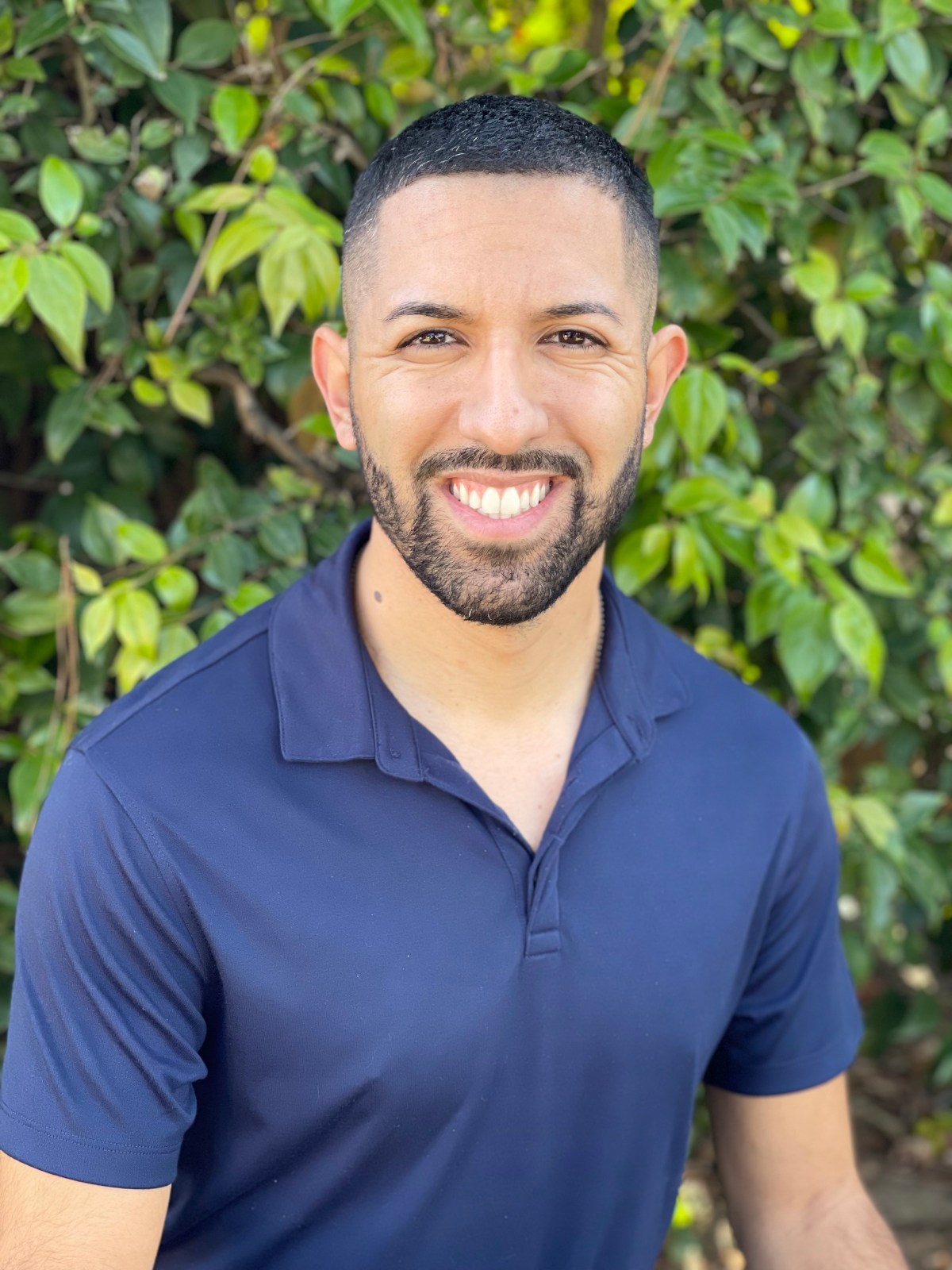
Photo courtesy Anthony Lince
Writing: From ‘terrified’ to teacher
In conversation, Lince has a ready beam and belies several notions of what a scholar of writing looks like. Figuratively, anyway. The dun-colored, round-neck sweater is classic English teacher chic, but he is quick to undercut the notion that he is a born wordsmith.
Growing up, San Diego, California Lince was happiest on the basketball court, running plays as a point guard through his high school years.
‘I was terrified of writing,’ he confesses, still smiling. ‘I loved to read, but as far as writing went, I never felt confident.’
Writing at all, much less teaching writing was so far out of mind as to be out of sight. After high school, Lince joined the Army and served as a military police officer. When he enrolled in college, aged 25, he planned to study criminal justice.
So where did writing come in?
‘Professor Bustos, who taught my first-year writing course. There were texts by Mexican-American writers like Pat Mora and Sandra Cisneros, which I connected with as a Mexican-American. And the Professor let me know he enjoyed my work.’
Despite struggling with imposter syndrome at the unexpected praise, Lince trusted his teacher enough to take a job at the writing center, at Bustos’ recommendation. There, he discovered he liked helping peers. His confidence in his own writing grew; he became an English major.
Lince didn’t set aside his thirst for justice, though: ‘As I started to get an education in the humanities, I saw a lot of injustices that needed work.’
Towards more equitable education
Lince is passionate about opening doors. One of the reasons he practices ungrading is to ‘create a positive, less-anxious, equitable, and antiracist learning environment’ (more on all that in a moment).
Lince was the first in his family to complete college. He understands the challenges and subtle (or blatant) inequities that non-traditional students, or those from marginalized communities, face. ‘It was unfamiliar terrain,’ he recalls of undergraduate study. ‘Take office hours – I had no idea you could go talk to professors. Things like figuring out a financial aid are hard if you don’t know anyone who’s done it before.’
After finishing his BA in English with an emphasis on Teaching, Lince qualified as a teacher and spent a year working in a high school before completing an MA in English with an emphasis on Rhetoric and Writing Studies. He graduated in 2022 with a thesis on labor-based grading.
Though peer-reviewed articles and conference proceedings sprout like kudzu on Lince’s academic CV, his primary goal is to lead by example. ‘I try teach from the perspective of authentic writing practices and share with students from the point of authorial expertise. If someone were a dance teacher, you’d expect them to be a dancer, right? So when I go into a classroom, I let them know I write academic articles, book chapters, blog posts, that I’m working on a book. By bringing this into the classroom, they see how writing works outside the classroom.’
Though he doesn’t use the word, Lince’s teaching practice is grounded in respect. Addressing students as fellow-practitioners of the craft is mark of respect. Seeking to ‘be equitable in my assessment and grading practices so students know they are having a fair education,’ is another mark of respect.
‘I want students to see that they are important. That they matter,’ he says. ‘I want them to be confident at writing. And to be able to spot potential injustices or biases that play out in writing.’
On Ungrading
What is ‘ungrading’?
Moving away from traditional numbers and letters and moving towards authentic ways of assessment. Take my own experiences as reference points; when I write for publication, or even for fun, I don’t receive numbers or letter grades, assessment happens through feedback.
Your Master’s thesis is on ‘labor-based grading’ – what is that?
There are a lot of sections under the umbrella of ungrading, one of which is labor-based grading. This method only uses a student’s labor to calculate their final course grade.
At the start of the course, students sign up for the grade they want. I tell them, you want a B, you need to do these things. If you want an A, you have to do all the B labor, plus more, to get the A.
All the activities [they complete] are based on the writing process: peer review, conferencing, visiting the writing center, drafting, revision. Students can complete more elements, or go more in depth, to get a higher grade.
How did you become interested in ungrading?
When I taught high school, students were primarily focused the grade. I’d give feedback and they would just ask for a grade. During my Master’s, when I was teaching first-year students, I didn’t want them to be so focused on grades so started looking for an alternative. I was the first at San Diego State to implement ungrading, but it’s started to spread. It was great to see students come to conferences and listen to feedback, not just ask for a grade.
Which student demographics does this technique best suit?
If the conditions are right, it could work for high school students. College [university], for sure.
Sometimes there is confusion in terms of not seeing a grade, they’ll ask ‘how do I know how I’m really doing?’
But most students don’t like grades, so we discuss it. They start to see how this can work for them. And I check in throughout the term to see how they’re doing.
How does ungrading promote an antiracist environment?
Biases can enter into grading practices and, even if unconscious, negatively impact students. A study was done of two students in 2nd grade, one called Johnny and the other Malik. Their papers were given to various teachers and Malik’s paper was consistently marked lower. The twist was the papers were identical; the only difference was the name.
If this happens in second grade, third, fifth, high school and into college it can negatively impact that student. With labor-based grading, that sort of judgement goes away because if the student does the work, they get the credit. The classroom becomes a space where students don’t have to worry about biases or subjectivities.
What other benefits do you see in the classroom?
The hierarchy of A student/C student breaks down, it becomes a place of collaboration. When students ask for feedback, they’ll ask about specific parts of the writing, which is a very different conversation from talking about a grade.
How do students get a grade for their GPA?
They get a letter grade at the end of the semester, per college rules. If someone signs up for a B, I’m checking throughout the term to see if they complete the agreed work. If they do, they get the grade they signed up for.
Lince recommends
The piece of writing that changed your life before age 18?
The Fellowship of the Ring. I read it when I was nine and was so taken by the way the world was created, the multitude of characters, the important quest. It ignited my love of reading.
The piece of writing that changed your life as an adult?
Anne Lamott on first drafts [in Bird by Bird: Some Notes on Writing and Life]. It let me know that all writers struggle, and that struggle is perfectly normal. I assign it to my students to show that they aren’t alone.
A classic you love to teach?
George Orwell’s 1984. I teach a unit on surveillance and I like showing students this idea of a surveillance state.
A contemporary work you love to teach?
I bring poetry into my classes, just to share. Shel Silverstein has some fantastic poems that are applicable to the writing classroom. Also, Percival Everett [a novelist The New Yorker describes as having ‘one of the best poker faces in contemporary American literature’]. He just won the PEN/Jean Stein Award for Doctor No, a satire on the James Bond trope.
A book about writing every writing student should read?
Writing With Style by John R Trimble. It isn’t really well-known but he writes in a conversational tone students can relate to it.
A book + film adaptation combo you love?
Peter Jackson’s Lord of the Rings trilogy was phenomenal. It was true to the essence of the books.
A living writer you’d love to hang out with?
Percival Everett. I’d love to pick his brain, get a sense of his process and writing style. It also seems, from interviews, we have somewhat similar personalities.
A writing tool?
Scrivener. It takes everything away from the screen so you’re only focused on the text. With so many distractions, its cool to have everything fade in the background.
Looking forward
Lince is at work on his first book, a writing guide tentative titled Questions to Ask for Becoming a Better Writer. Look for it in autumn 2024.
Do parents have the right to indoctrinate their children?
For millennia, most cultures have acted as if the answer is ‘yes’ — using everything from physical violence to threats of damnation to ensure each successive generation followed like sheep.
Now, finally, someone, somewhere has said, ‘no’.
In December 2022, Japan announced a law to protect children from parental religious fanaticism. The law would protect kids from being a) forced to participate in religious activities, b) refused medical treatment, educational or social opportunities based on their parents’ religious beliefs and c) protect them from religious coercion, i.e. being pressured by parents threatening them with hellfire.
My husband, brought up Southern Baptist, and I (Evangelical then Seventh-Day Adventist) raised our eyebrows: if only.
To quote ‘Giest’, discussing the Japanese legislation on r/atheism: “Most Americans would loose their shit over this. Forcing religion on kids is a big part of our culture.”
FREEDOM FOR SOME
The United States gets mentioned a lot in the reddit thread because perhaps no other country so full-throatedly proclaims its hypocrisies. Individual personal freedom, including freedom of religion, is enshrined in the First Amendment to the Constitution but few other nations match the United States’ fanatical zeal for enforcing minority religious practices on everyone.
As anyone with two brain cells to rub together can see, the US Right believes only in the absolute personal freedom of wealthy, fanatical, embittered, power-drunk, humanity-hating men. The rest of us be dammed.
Hence the chances of laws to protect children from emotional, psychological and physical abuse in the name of God will remain unwritten and unenacted.
PERSON OR PROPERTY?
This isn’t just a United States problem, though; nor is it only a problem of religion in the States.
The real but unarticulated debate is this: are children people, entitled to the rights and privileges of personhood? Or are they, as the American Right, and so many other cultures construct them, property?
How a society answers this question is of existential importance for the simple reason that children become adults.
A culture, religious or national, that views children as property cannot prepare them for a successful adulthood. Responsibility, the ability to carry oneself in the world, cannot be conferred at an arbitrary age: 18, 21, whatever.
Children who are controlled, brain-washed, browbeaten throughout their youth aren’t going to suddenly blossom into self-sufficient, competent adults. Instead, they are turned loose on society as adult-sized toddlers, prone to tantrums and destruction.
I don’t believe it is any coincidence that the United States combines high rates of religious fundamentalism with catastrophic rates of interpersonal violence. Should we be surprised that children denied agency and personhood seek extreme and harmful outlets as older teenagers and adults? Is anyone surprised when a beaten dog bites?
The only way to rear children to become full citizens of humanity is to, quelle surprise, treat them like human beings. From their first breath onwards.
“Childhood is a time for gathering and developing the assets necessary for full autonomy,” writes Hollingsworth (2013). Developing the capacity for full autonomy requires independent trial-and-error, in the same way developing the capacity to ride a bike requires time spent wobbling up and down the street.
Adults can screw this up in so many ways: laziness, authoritarianism, over-protectiveness.
It is tougher to co-regulate, discuss, take time to listen to a child than it is to demand compliance, or at least the appearance of it.
But it is better.
Children learn respect by example. If we want them to grow into adults who respect the opinions, privacy and autonomy of others, we had better show them how its done. Treating children as full-fledged human beings is the best way to inoculate them against hateful ideologies that thrive on repression: nationalism, racism, sexism, transphobia, homophobia and the like.
As educators, we have the extra privilege and responsibility of making our classrooms safe for ideas and self-expression. When children express ideas we find difficult (as they will) we have to model an appropriate, adult, respectful response.
Once, I was teaching English to a group of 14-and-15-year-old Spanish kids. One of them came out in support of Vox, the ultra-nationalist, uber-misogynist far-Right party that had formed recently.
My kneejerk response was: ‘We’ll have none of that in here.
But I pulled myself together and asked why he supported them, and we had a class discussion. Who knows whether he changed his mind about Vox, then or later, but at least he had a chance to participate in a respectful debate, instead of being shut down.
Teachers, and parents, have to model the behaviours and responses they hope to see in children. If we want kids to become thoughtful, compassionate, self-respecting, respectful global citizens we better start working on ourselves.
How do you support your students/kids to develop autonomy? Share in the comments or Tweet @CilaWarncke
When I was 12 or 13, an older girl at my school taught me to run.
Like any kid, I was familiar with the concept of moving my feet faster when being chased, but she taught me to run with intent, to pick up my knees and let my body slope on uphills, to relax on the downhills, to keep my elbows light and my shoulders back.
Like the givers of most priceless gift, she never got a proper thanks. Thinking of it now, I’m touched and amazed a 15-year-old took the time to hang out with a chubby, socially awkward new kid.
Exercise is more than just a ‘good to have’ — especially for students who struggle. Depression, anxiety, body image issues and low self-esteem are just a few of the struggles running has helped me manage.
It didn’t surprise me, then, when I started reading about the effect of exercise on attention–deficit/hyperactivity disorder (ADHD). My assumption was that ADHD, like so many other physical and mental health challenges, would respond positively to exercise.
Research overwhelmingly bears this out.
Studies on ADHD and Exercise
Silva et al. (2015), who found that “groups of volunteers with ADHD who performed exercise (GE-EF) showed improved performance for the tasks that require attention with a difference of 30.52% compared with the volunteers with ADHD who did not perform the exercise (GE). The (GE-EF) group showed similar performance (2.5% difference) with the volunteers in the (GC) group who have no ADHD symptoms and did not exercise. This study shows that intense exercise can improve the attention of children with ADHD and may help their school performance.”
Haffner et al. (2006) studied yoga as a treatment for children with ADHD: “All children showed sizable reductions in symptoms over time, and at the end of the study, the group means for the ADHD scales did not differ significantly from those for a representative control group.”
Systematic literature reviews
Ng et al. (2017) conducted a review of 30 studies of exercise and ADHD found, “Both short-term and long-term studies support the clinical benefits of physical activity for individuals with ADHD. Cognitive, behavioural and physical symptoms of ADHD were alleviated in most instances… Physical activity, in particular moderate-to-intense aerobic exercise, is a beneficial and well-tolerated intervention for children and adolescents with ADHD.”
Den Heijer et al. (2017) reviewed 29 studies and reported, “the reviewed studies describe acute as well as chronic beneficial effects of cardio exercise on a wide variety of cognitive and behavioral functions in children with ADHD.” For example: “Sibley and Etnier (2003) observed acute as well as chronic effects of various cardio and non-cardio exercises on perceptual skills, intelligence, academic achievement, developmental level and performance on verbal and mathematic tests in children and adolescents (4–18 years). Furthermore, improvements of executive functions of children have been demonstrated following cardio exercise (Best 2010).”
Furthermore, a literature review of 91 studies (Suchert, Hanewinkel, Isensee, 2015) found, “strong evidence that high levels of screen time were associated with more hyperactivity/inattention problems”.
This should be of particular concern to those of us educators who teach online. For all the benefits and conveniences remote learning offers, we should bear in mind the potential negative effects.
Is it ever fair to ask a child to sit still for six to eight hours a day? No.
But at least in physical schools there are halls to run in, playgrounds, a gym, a playing field. Online schooling asks a lot of kids, in terms of attention, and paradoxically the screen we rely on might make ADHD symptoms worse.
As online teachers, we have a limited influence on students’ activities once they log out of our classroom. This means we need to work with parents and make the most of online opportunities to support student activity. Here’s how that might look:
1. Inform and engage parents
All students benefit from physical activity, so the message should go to all parents. Teachers and administrators can communicate the benefits of sports and exercise through routine conversations, newsletters, blog posts, etc.
Educators should ask what sports students do and offer flexibility for training and competitions. If a kid has to miss class for a clinic, or to travel to a match, we should support that. It is a simple, practical way to commit to holistic wellness and development.
2. Make ‘movement moments’
There are plenty of exercises that can be done in front of a computer. Take a minute at the beginning or end of class to lead students in a yoga pose, do a dozen star jumps (jumping jacks, to my Stateside friends), throw a few jabs or march in place. The kids might think it’s weird at first, but they’re bound to appreciate the chance to bounce around.
3. Talk about exercise and mind-body wellness
Share your positive experiences with exercise (and if you don’t have any, please make time to cultivate some). With younger students you can make straightforward recommendations like, If you’re having trouble concentrating, try running up and down the garden really fast 10 times then go back to your homework. Older students will be able to understand and discuss in greater depth the benefits of exercise and strategize about how to include it in their daily routines.
4. Create opportunities for student sharing and leadership
Be a good example, but don’t hog the floor. Invite students who play sports to give presentations about them, or share their experiences of learning a new physical skill. Ask for volunteers to lead in-class ‘movement minutes’. Encourage students to keep exercise diaries or step counts — you could even make a chart where they can post their weekly totals!
5. Be positive, not preachy
Tone matters. Exercise can easily feel like another demand to over-taxed students. Kids with ADHD are likely more impulsive, more emotional, less able to maintain healthy routines; adding another weight to their shoulders isn’t a kindness, so don’t preach. Model positive wellness behaviors; verbally support students; encourage parents to prioritize physical activity; praise success; praise mistakes. When exercise is a low-risk, fun, habitual activity we all win.
How do you encourage kids to stay active? Share in the comments or Tweet @CilaWarncke
For slightly convoluted reasons (suffice to say a Kindle subscription was involved, which I don’t recommend on either moral or practical grounds) I’ve found myself reading Daniel Kahneman’s doorstop Thinking, Fast and Slow. It merits the description perennial best-seller, though my guess is it is more widely acquired than read, but this isn’t a book review.
Among the many (interminably many) fascinating titbits Kahneman doles out is a story about interviewing soldiers in an effort to forecast future military performance.
Initially, he and his team conducted brief, routine interviews. The trained interviewers would then offer their judgments about the recruits’ likely outcomes. “Unfortunately,” Kahneman notes, “follow-up evaluations had already indicated that this interview procedure was almost useless for predicting the future success of recruits.”
So he designed an interview method that ignored the future but assessed past form on a selected set of traits (responsibility, sociability, etc.).
“I composed for each trait,” Kahneman writes, “a series of factual questions about the individual’s life before his enlistment, including the number of different jobs he had held, how regular and punctual he had been in his work and studies, the frequency of his interactions with friends, and his interest and participation in sports, among others.”
After conducting a few hundred interviews with this new assessment, performance evaluations showed that the questionnaires “predicted soldiers’ performance much more accurately than the global evaluations of the previous interviewing method, though far from perfectly. We had progressed from ‘completely useless’ to ‘moderately useful.'”
This may seem an intuitive finding to anyone who’s heard, much less repeated, the much bandied quote from the philosopher Will Durant: “We are what we repeatedly do. Excellence, then, is not an act but a habit.”
But how many of us — especially teachers — are guilty of acting contrary to common sense and relying on subjective judgments instead of thoughtful assessments?
Every educator has encountered students who have potential. We see flashes of brilliance and judge what a student might do. This is probably most widespread when it comes to writing recommendations. In fact, most standard forms ask teachers to predict how a student will perform in future.
If we trust Kahneman’s research even a little bit, we should be much more circumspect about prognostication and base our predictions, if we must make them, on students’ demonstrated performance.
Intellectual capacity, even if it is extraordinary, only yields positive outcomes when applied. A genius student who spends class time scrolling Instagram or staring into space is unlikely to outperform a hard-working average student.
Take as an example my dear brother, the closest person to a real-life genius I know. He dropped out of high school because he was bored and skated through a BS in Economics without buying the textbooks. Inauspicious, to be sure. But he had a track record of deep, almost obsessive dives into topics that fascinated him; his laser focus, coupled with his intellectual gifts, meant he could take on any subject and become an expert once he applied himself. Eventually, he applied that ability to programming and has developed a robust, well-remunerated career.
It wasn’t sheer brainpower, although he has that in abundance, it was his capacity for work and focus that transformed talent into expertise.
To be blunt: smarts are nothing without elbow grease.
It is a pleasure to encounter gifted students. But it is our job as educators to live and breathe the message that being ‘gifted’ isn’t enough. Habits of work are more important to eventual success than the ability to quickly and easily complete a particular academic task. In fact, ease is probably the worst enemy of growth.
Didactic and assessment methods that reward superficial ‘mastery’ are likely to encourage poor work habits, hampering students’ chances of excelling as they continue their studies and move into adulthood.
As educators, it is incumbent upon us to challenge gifted learners, to ensure they experience authentic difficulties and even (whisper it) the occasional failure. Ultimately, diligence and a growth mind-set are more valuable than a few good grades.
How do you help students develop good habits of work? Share in the comments or Tweet @CilaWarncke
Reading aloud is like breast feeding: everyone agrees it is vital for the very young, but past a certain age it gets side-eye.
There is ample research on how reading aloud supports early literacy (Wiseman, 2010; Lennox, 2013, etc.).
What about reading to older students though?
Should story-time, like nursing, be confined to the earliest stages of life, or should it continue beyond the point kids can autonomously digest texts?
If primary function of reading aloud is to support literacy, research shows that reading to older learners “boosts their reading comprehension, increases their vocabularies, and helps them become better writers. In fact, students who are read to are more motivated to read themselves” (Blessing, 2005).
Zehr (2010) reported that, “teachers found by trial and error that reading aloud worked for adding interesting content or making literature come alive for students. And some educators say they read to their classes to model good reading, such as by asking comprehension questions as they go along.”
It is always gratifying when research supports my predilections, but I’ve been reading to older students — including adult learners — for as long as I’ve been teaching. Partly, it’s a failure of imagination: I loved being read to, cannot imagine anyone disliking it.
To be clear: my childhood pleasure in hearing books aloud had nothing to do with lack of independent reading skills. I could read by age four and would compete with myself to see how many pages I could read in a day. My record was 1,000. It was a 1,000 pages of the Paddington Bear series — not War and Peace — but the point is I read like a my life depended on it.
The pleasure of being read to was something else. Books I could (and did) read myself were still a joy to hear being read by my older sister, or one of my parents. We also tuned in to read-aloud radio programs, memorably The Hitchhiker’s Guide to the Galaxy and Jeeves and Wooster.
***
What makes reading aloud so marvelous? And why should it be part of every literature and language teacher’s repertoire?
To get another perspective, I interviewed Andie Yellott, a lifetime English teacher, former Johns Hopkins Center for Talented Youth Writing Program supervisor and parent of a child with dyslexia.
Should reading aloud be continued beyond reading competence? Yes. Absolutely. When my son was in fourth grade, I would go in for one hour during lunchtime and read to his class. It was the highlight of the week, they told me. They loved it. They always wanted one more chapter.
How did reading aloud support your son with dyslexia? He could not have gotten through school without me reading to him. I read everything, even the godawful high school health book. One of the advantages to reading aloud is you can stop and springboard off into other paths, other conversations, which you wouldn’t do if the kid was reading alone. And if you want a kid to do well on a standardized test, read, read, read.
How did reading to your dyslexic son facilitate his communicative abilities? He’s got a huge vocabulary. I’d read to him, stop, ask what a word meant, try to figure it out contextually. Reading aloud to him made a difference. He thought he couldn’t write; now, he’s one of the best writers I know.
Like Yellott, I’ve had lots of student enthusiasm for reading aloud. It is more than just fun, though. Reading aloud supports specific skills, depending on whether the teacher or learner is reading aloud. Here are six benefits observed in my classrooms.
Native and non-native speakers alike struggle with the whimsy of English pronunciation. In extreme cases, this can lead to students understanding spoken words but not being able to identify them in print, or vice versa. Reading aloud while students follow along in a text is a straightforward way to ensure that kids are matching the right groupings of letters to the sounds they hear. This is especially important for those who struggle with reading and/or are learning English as an additional language.
Build vocabulary
When students are reading independently it is difficult to gauge how well they comprehend individual words. Students may grasp the main idea of a text but miss important vocabulary. As Yellott said, reading aloud is an opportunity to identify and define unfamiliar words in context. While reading to my students, I pause frequently to check comprehension. If they don’t know a word, we search for context clues, then look up the definition to verify our deduction. This is also a great opportunity to reinforce knowledge of parts of speech, e.g. ‘this is the noun fly; what does it mean when we use it as a verb?’
Create community
Reading is too often solitary and functional, the vegetable kids have to eat before dessert. We need to remember: independently reading printed texts is a novelty. For most of homo sapiens‘ time on the planet, stories were oral. People gathered around fires, or beneath fearfully and wonderfully made cathedral ceilings, to listen to a bard/priest/storyteller. Being read to was the only way most people could experience books until the advent of mass public education, which wasn’t all that long ago.
Reading aloud in the classroom reclaims the power of the story to articulate fears, hopes and desires; to delve and reveal. Students who have a chance to respond verbally to a book: express how they feel, ask clarification questions and debate it with their peers, are axiomatically more engaged than those who skim it in lonely silence.
Learner-led Reading
Correct decoding errors
Even competent readers often make decoding errors such as ‘stared’ for ‘started’. If a student is reading silently, there is no chance to identify and correct these slips that, as they accumulate, affect comprehension. Younger and/or less able readers are more likely to make these mistakes, so reading aloud is an ideal tool to support their literacy.
Understand punctuation
If Emily Dickenson was right and “a word is dead./When it is said” then spare a thought for punctuation. Students can learn the function of commas, colons, etc. through direct instruction but that doesn’t automatically translate to competent — much less creative — usage in their writing. One of the best (only?) ways to understand the delicious possibilities of punctuation is to read aloud. By treating the punctuation as a kind of score — lift the voice here, pause, slow down, shout! — students develop the ear for punctuation that every good writer must have.
Improve verbal fluency and confidence
We tend to think of fluency in the context of learning an additional language, but it isn’t just language learners who need to practice this skill. Learning difficulties, lack of a richly verbal home life and shyness are a few of the reasons native speakers may struggle to express themselves fluently in their language. For students who struggle to articulate, whether because they are acquiring the language or for some other reason, reading aloud takes the pressure off of deciding what to say, and allows them to focus on how to say. Reading well-written texts gives students a chance to see how successful communication sounds; they can practice pronunciation, enunciation and tone without the risk of error. Ideally, they can inhabit the voice of the text and, in bringing it to life, experience the possibilities of their own voice.
Parting thought
In Sense and Sensibility the ‘sensible’ (i.e. sensitive) sister Marianne falls in love with Willoughby in part because “he read with all the sensibility and spirit” his rival lacked. In Jane Austen’s time, to read aloud well and fluently was a mark of refinement and good taste. As our world becomes more digitized, text-driven and fragmented, reading aloud is due a renaissance. Anyone can jab out a text; to read a book with eloquence and feeling, though? That’s magic.
How do you feel about reading aloud to older students? What benefits/challenges have you observed? Share in the comments or Tweet @CilaWarncke

















 Cila Warncke Writer