On Cultural Cross-Pollination

One of the things that has been (is) vital to my success as a writer and educator is the fact that, from a freakishly young age, I’ve read everything.

Nutritional information. Ancient magazines in waiting rooms. Bumper stickers. Barbara Tuchman. The Lord of the Rings. Gossip magazines. Feminist blogs. Not-so-feminist blogs. James Baldwin. Germaine Greer. Cormac McCarthy. Joan Didion (again and again and again). Orwell. Eliot. Hardy. All the Brontes. Shakespeare. Jack Gilbert. The Bible. The Odyssey. Ulysses. Greek myths. Native American myths. Books on veganism, endurance running, Arctic exploration, gardening, history, booze, the Spanish civil war.

The more I read, the more visible the threads that twitch through the living fabric of literature: allusion, image, theme; the homage, the salute, the nod, the whisper from dead to living to the spirits.

Reading like a starving person at a buffet cultivates a literary meta-perception I cannot imagine arriving at any other way. It leads along skewed yet sound philosophical paths, such as the one that follows.

***

Q: What’s the difference between Charlie Brooker and a Buddhist nun?

A: Not much, it turns out.

For those of you who aren’t familiar, Charlie Brooker is a British writer, satirist (tough job these days), and broadcaster. He dislikes most things and swears a lot. The nun I have in mind is Pema Chodron, an American Buddhist teacher and author.

How did I arrive at this improbable conclusion that these unlike people are very much alike? It started with binge-reading Pema Chodron. Sometimes books, like people, appear in your life and you wonder how you lived without them. They bring a fundamental shift of energy and wisdom that kicks down a door in your brain, shines light into a black room and blows away the dust.
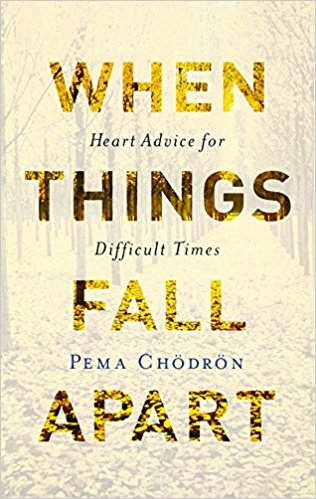
One of Chodron’s books cropped up on the shelf of an Airbnb in rural Arkansas. Stealing it seemed like bad karma, so I went to Amazon for When Things Fall Apart and The Wisdom of No Escape. I was reading the latter on a flight to London, trying to jog myself out of a weird funk. The world felt like it was shrinking around me. Telltale clumsiness had emerged: dropping things, taking wrong turns, sending idiotic emails, all the usual signs of a swerve into depression. I needed to hear something good.

Chodron writes things like:

Our wisdom is all mixed up with what we call our neurosis. Our brilliance, our juiciness, our spiciness, is all mixed up with our craziness and our confusion, and therefore it doesn’t do any good to try to get rid of our so-called negative aspects, because in that process we also get rid of our basic wonderfulness.

Don’t you feel better, saner, more worthy, just reading that?

How about:

Loving-kindness — maitri — towards ourselves doesn’t mean getting rid of anything. Maitri means that we can still be crazy after all these years. We can still be angry after all these years. We can still be timid or jealous or full of feelings of unworthiness. The point is not to try to change ourselves. Mediation practice isn’t about trying to throw ourselves away and become something better. It’s about befriending who we are already.

That’s how she thinks, speaks, writes. Chodron exudes calm. Her philosophy is that people are basically good and need only to wake up that inner goodness.

Charlie Brooker begs to differ. “I don’t get people,” he writes. “What’s their appeal, precisely? They waddle around with their haircuts on, cluttering the pavement like gormless, farting skittles. They’re awful.”

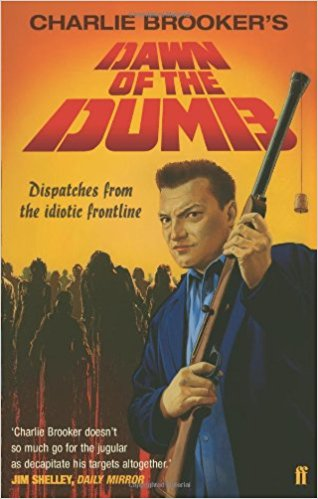
That’s from Dawn of the Dumb, a collection of his “Screen Burn” columns for the Guardian from October 2004 to June 2007. The dates are significant because that was the pinnacle of my London music journalist/gadabout phase. It spanned my final year at Q, another year on a now defunct music magazine, and a stint as a promotions coordinator for a megalomaniac.
Good years, spent in a delicious, mindless haze of 9-to-5, city breaks, cohabiting, cult TV, and the Saturday Guardian: a newspaper that was the lynch-pin of a way of life, shorthand for everything that was important at the time: London, media, “culture”, aspirational cooking, self-conscious irony.

We didn’t watch loads of TV, but what we did was almost exactly what Charlie Brooker was writing about in “Screen Burn” (with the exception of The Apprentice, which I could never stomach). It wasn’t a matter of seeking out the shows he reviewed, more that he unerringly targeted the excruciating and gawp-worthy. Which we happened to watch for those precise reasons.

Finding Dawn of the Dumb amidst the pile of discarded holiday reads in the foyer of our building was like discovering a time capsule from that slice of my life. It took me back to an innocent time when the prospect of David Cameron as prime minister was just a horrible fantasy, and Big Brother still launched careers (if you can call them that). To my surprise, I still remember most of the BB contestants he skewers, a decade later, not to mention various X-Factor one-hit wonders.

Brooker makes it worth revisiting. He can make almost anything funnier and more vivid than real life. Take his description of Glastonbury music festival:

Once you’re in, the sheer scale of it is initially overwhelming. Imagine forcing the cast of Emmerdale to hurriedly construct Las Vegas at gunpoint in the rain. Then do it again. And once more for luck. That’s Glastonbury: a cross between a medieval refugee camp and a recently detonated circus.

As a veteran Glasto-goer, I promise that is the best description of it you will ever read.

I also watched the pilot of Prison Break, which he summarises thus:

Prison Break is possibly the dumbest story ever told. It makes 24 look like cinéma vérité. It’s as realistic as a cotton-wool tiger riding a tractor through a teardrop. I’ve played abstract Japanese platform games with more convincing storylines.

Brooker writes like a butcher dismembering a cow and most of the time his (metaphorical) knife is hacking at a hapless reality show contestant or D-list presenter. Not, you might think, of a piece with Chodron’s all-embracing gentleness.

Yet through them both runs a thread of intense compassion. Brooker’s rage isn’t at individuals, per se, it’s at the cruelty, greed or stupidity they manifest on TV. His purest vitriol is aimed at psychics that prey on the “grieving and desperate”. No matter how artfully furious, his columns boil down to one message repeated over and over: The world’s a mess, people are a mess, we need to be better and nicer to each other if we’re going to get through.

Charlie Brooker may disagree with this characterisation of his intent, but read the books: it’s there. Like Pema Chodron, he believes people can be better if they just wake up. His method is bucket of ice over the head accompanied by a swift kick to the kidneys versus her cultivate mindfulness and be friendly to yourself but they point the same direction.

This proves Chodron’s point about brilliance/craziness. There is no single right way to do things. You can sit in meditation and learn to love each out-breath. You can also sit, shrieking, in front of crap TV. It’s not just what you do — it is the intent and spirit in which it is done.

The corollary to that is you can learn from all sorts of things. Laughing till I cried over Dawn of the Dumb was as mind-altering as mulling The Wisdom of No Escape. Don’t shut things down, they both counsel. Keep your eyes and mind wide open, and try to laugh.

What is a culture-clash that inspired you? Share in the comments!

Seven Lessons from the School Year

My full-time teaching year has just wrapped for the summer. After the hectic, emotional final weeks and days, it is time to pause and take stock.

This was my second year as World Literature and English Language teacher at Le Sallay Academy. In my previous life, as a music journalist, we bandied the phrase ‘difficult second album’. Nobody mentioned there would be a ‘difficult second year’ in teaching. Now I know.

We should embrace the difficult, Rilke advised. He is right.

Part of the difficulty of the year was my egotistical/oblivious assumption that everything would run on tracks — after all, I’d done it before. That made some things easier, sure. But nowhere near everything.

Each year, each class, each assignment, each student is a new opportunity and learning curve. Rather than expect (naively) to rewind and press play, it is better to figure out what works in broad terms, and use that as a springboard for the next fresh start.

Because I’m a geek and like mnemonics, I boiled down seven key lessons from the past school year into the word ACCLAIM — something all teachers want (right?). And all students deserve.

Adapt

I like planning, making lists, ticking things off. When preparing lessons, I get a kick out of an orderly progression. What feels like orderly progression to me, though, can seem incomprehensible or plain boring to my students. One of the important things I learned this year was that to be effective meant to adapt. Sometimes, this meant tossing out a whole assignment; sometimes it meant an in-class pivot when an activity sank like undercooked souffle; sometimes it meant adding materials or exercises to ensure an individual student had what they needed to succeed.

One example of an individual adaptation that benefited the whole class was when student said they were struggling to follow the plot of All Quiet on the Western Front. This alerted me that the dense, gun-smoke swirl of memories that carry the reader from the battlefield to the intimate reaches of Paul’s life were a lot for a less-experienced reader to follow, so I created a chapter by chapter summary/study guide that included plot points, key characters and vocabulary lists. By reading the summary in advance of the chapter, students were able to track the main events of the novel, learn vocab and better understand the narrative arc.

Challenge

Adapt works both ways: sometimes it is appropriate to summarize and simplify; sometimes, students need to be challenged. Doing this right, means they should be at the edge of — or just beyond — their comfort zone, but in a situation where they have tools to address the task.

For example, my sixth grade students learned what Shakespearean sonnets are, then wrote them. This challenge worked because we defined everything: iambic pentameter, rhyme scheme, volta, etc. Once they understood how a sonnet was constructed, we read humorous contemporary examples that showed how the form, however strict, could be applied to any topic. Then we worked through each student draft together, line by line, counting syllables, testing rhymes, reinforcing by repetition while also having fun.

Co-create

Students are only going to be participants in their learning if they are allowed to participate. For me, this means letting go of my ideas about perfectly formatted assignments and visually pleasing presentations and letting students co-create with me, and with each other.

Midway through the year we trialled collaborative Google Slides presentations, where students contributed their efforts to a single presentation. Initially, I created the presentation and turned them loose on it. By the end of the year, they were setting up the joint presentations themselves.

For final writing projects, there was a co-creation element, as students were given the option of choosing a set question or pitching their own big idea. Most students choose to come up with their own topics, with me as a consultant to ensure their ideas were appropriate to the scope of work.

Link

One of the things I love best about teaching literature is tracking ideas, themes and debates across epochs and regions. Without this connectivity, literature would just be words on a page — who cares? Only by helping students identify and explore the links can they truly appreciate the scope and magic of the written word. This is critically important at the ages I teach: 11-15. Kids are teetering towards independence, trying to understand the world they find themselves a part of; they haven’t yet claimed their literary heritage. So it is imperative to make explicit connections they might not see otherwise: historical, economic, social, topical.

For instance, when studying Frankenstein by Mary Shelley, my students read Jeanette Winterson’s essay, ‘Love(lace) Actually’ which links Shelley with pioneering machine-maker Ada Lovelace with Alan Turing, and Frankenstein’s monster with modern technology. We also dipped into The Heart of Darkness for another example of a frame narrative, establishing thematic and stylistic links to anchor the text in broader conversations. Also, I introduced Romanticism by showing them Meatloaf’s ‘I Would Do Anything for Love’ video. Let’s just say, there were no new Meatloaf fans after that. Maybe you have to be a child of the 80s to dig that OTT?

Aim

Have a target. Make sure students know what it is and how to hit it.

This is a work in progress for me, but I can confidently say that classes run more smoothly when everyone knows what we’re doing and why. Sometimes the why might sound arbitrary, e.g. we’re reading this book because it is a great example of X (notwithstanding all the other perfectly good literary examples) but even so, it is worthwhile to articulate the class aims and repeat as needed.

As a student, I hated fuzzy assignments or vague grading standards. How do you know what you’re supposed to be doing if the aim is undefined?

As a teacher, I want to protect my students from that frustration, and myself from their excuses (‘but I didn’t understand…’). Clear, concise goal setting, including deadlines, frees up everyone’s brain space to focus on what matters. For example, each classes final writing project was scheduled, broken down into steps with individual deadlines and students were given the rubric and grading standards in advance. (This might sound over-prescriptive, but middle school is where structure needs to happen so students can break free of it in secondary and further education.) Obviously, how (and to what extent) students hit the aims varied, but they had a clear, fair, impartial structure to work within.

Iterate

My expectation that year two would be easy was based, in part, on the assumption that I could wholesale reuse materials and texts from the previous year. That was lazy thinking.

This year was better was when I rejigged, or even started from scratch. Though working with the same broad themes and literary time periods, there was massive opportunity to iterate and improve. For example, instead of using Strange Tales from a Chinese Studio by Pu Songling as a main text, I selected a handful of stories and wove them into reading Grace Lin’s stunning novel When the Sea Turned to Silver, which weaves Chinese folklore into a zesty YA adventure story. My students were far more immersed in the novel than the would have been in the stories alone, and they were able to see the link between Songling’s 18th century work and contemporary Chinese writing and traditions.

Model

This year, I’ve been more open about my geekiness, quicker to say how crazy in love I am with an author or text. Do my students think I’m weird, or maybe should get out more? Possibly. But they also seem to respect my passion for literature and language, even if they don’t understand or share it.

To me, this is what modelling is all about. How can I persuade students to love words, or to push themselves on an assignment, if my example is meh?

If I want students to be excited about books, I need to be excited about books. If I want them to take risks, I have to take risks. If I want them to make and learn from mistakes, I need to make and learn from mistakes. If I want them to discover joy, I need to embody the joy that awaits discovery.

The vast importance of modelling hit me when I realized that I remember a mere handful of books I read prior to high school graduation: To Kill a Mockingbird in 9th grade, The Odyssey and something by Shakespeare in 12th grade. That is it. And I love literature and lived for those classes. So, realistically, even my most engaged students will remember between one and zero of the books they are assigned.

What I do remember about literature classes? My teachers and how damn much they cared about words and writing, and how those models encouraged me to believe these were things to cherish and celebrate.

That’s what I want for my students. Any year I succeed in communicating that will be a good year.

What are some of the key things you learned this year, as a teacher? Share in the comments or Tweet @CilaWarncke

Let’s Talk About Sex Education

Photo by Gaelle Marcel on Unsplash

Last year, for the first time, I taught about gender and sexuality in literature. My kneejerk reaction was, I can’t talk about sex to teenagers. Arrggh!

On reflection, this reaction had everything to do with my hangups (to use a good old-fashioned word) and nothing to do with my students’ needs.

This is a common problem in sex education, with the current brouhaha in the United Kingdom serving as an example.

British prime minister Rishi Sunak has, according to the Guardian, “asked the Department for Education to “ensure schools are not teaching inappropriate or contested content” in the subject of relationships, sex and health education… Sunak confirmed the review… after a Tory MP, Miriam Cates, said children were being exposed to sex education classes that were “age-inappropriate, extreme, sexualising and inaccurate”.”

Numerous Tory MPs are on board, one of their complaints being that young people are being taught about oral sex — a classic case of adult prudishness being prioritized over teen well-being.

Chambers et al. (2004) is quoted by Leung et al., 2019 saying Britain’s “value-led approach [to sex education] merely reflects the interests and principles of stakeholders, while overlooking the actual needs and wellbeing of youths.”

Sex ed in the internet age

Does anyone with two brain cells to rub together think not discussing oral sex, or any other sexual act, proclivity or topic, is going to prevent kids from knowing what it is, discussing it, watching it and even doing it?

Children are handed internet-connected screen devices almost as soon as their chubby baby fingers can hold them, in many cases.

Statista data show that 58% of British children own a smartphone by age 8; by age 12, that jumps to 93%. You can bet the farm they aren’t just using it to watch Sesame Street.

Sexuality isn’t a switch that flips at puberty. Sexual behaviors and curiosity are apparent in early childhood.

This might make grown-ups uncomfortable, but our discomfort isn’t useful. Parents and teachers have a duty to help kids navigate this vital part of life.

If we don’t step up, the internet will.

Student needs versus teacher discomfort

In an op-ed, 25-year-old journalist and editor Sasha Mistlan writes (re: Andrew Tate and the importance of proactive sex education): “My friends and I didn’t get any proper education about sex, consent or relationships until we were 13, by which time we had learned it all from internet porn and lads’ mags.”

How can educators ignore this need?

I am a literature teacher; the biology of the birds and bees are beyond my remit. But it isn’t the birds and bees that students need to know about.

They need models of relationships and ways of relating that affirm sexuality as an important (but not overwhelming), natural part of adult life, and of sex as a source of joy and connection. They need love stories with happy endings. They need, also, stories that are unhappy or ambiguous; stories that show mistakes and heartbreaks as a navigable part of human sexual experience, not reasons to drink poison.

However awkward I may feel, students need a safe space for curiosity and discussion. Because lord only knows, they are talking about sex outside the classroom.

Sex positive education

Does the phrase ‘sex positive education’ make you a little uncomfortable?

It does me.

But what does the alternative imply? Sex negative education doesn’t prevent young people from having sex.

Data from the worryingly puritanical United States show that even students who promise to abstain from premarital sex… don’t.

Research published by the American Academy of Pediatrics peer-reviewed journal Pediatrics found: “Five years after the pledge [to abstain from sex], 82% of pledgers denied having ever pledged. Pledgers and matched nonpledgers did not differ in premarital sex, sexually transmitted diseases, and anal and oral sex variables. Pledgers… did not differ in lifetime sexual partners and age of first sex. Fewer pledgers than matched nonpledgers used birth control and condoms.”

Scaring teenagers away from sex has never worked; ignoring sex in the hope teenagers won’t notice it is ludicrous.

The best, bravest, least-comfortable option is to say: hey, sex is a huge part of life, however whenever wherever and with whomever you do it (or don’t), and it can be one of the most joyous parts of life, or one of the most damaging. Let’s talk about how to make it joyful, empowering, pleasurable, safe and beautiful.

Affirmative literature

As a literature teacher, I can do my part by teaching texts that articulate the delights and challenges of sexuality and sexual identity, and working with my colleagues in health, science and psychology to create a safe, affirmative atmosphere for conversations about love, sex and gender.

This requires making careful choices about what my students read. Many of the canonical ‘love stories’ of European literature are anything but — think Wuthering Heights or Romeo and Juliet where ‘love’ and violence are inextricably mixed.

The search for affirmative literature requires looking beyond the cano and seeking stories that reflect a variety of experiences, cultures, orientations and gender identities.

Next week, I’ll share a list of powerful literature that treats sex with the openness, thoughtfulness, honesty and sensitivity it merits.

Suggest your favorite teen-appropriate, sex-affirmative story, poem or film in the comments or Tweet @CilaWarncke

PDX Indie Bookstores

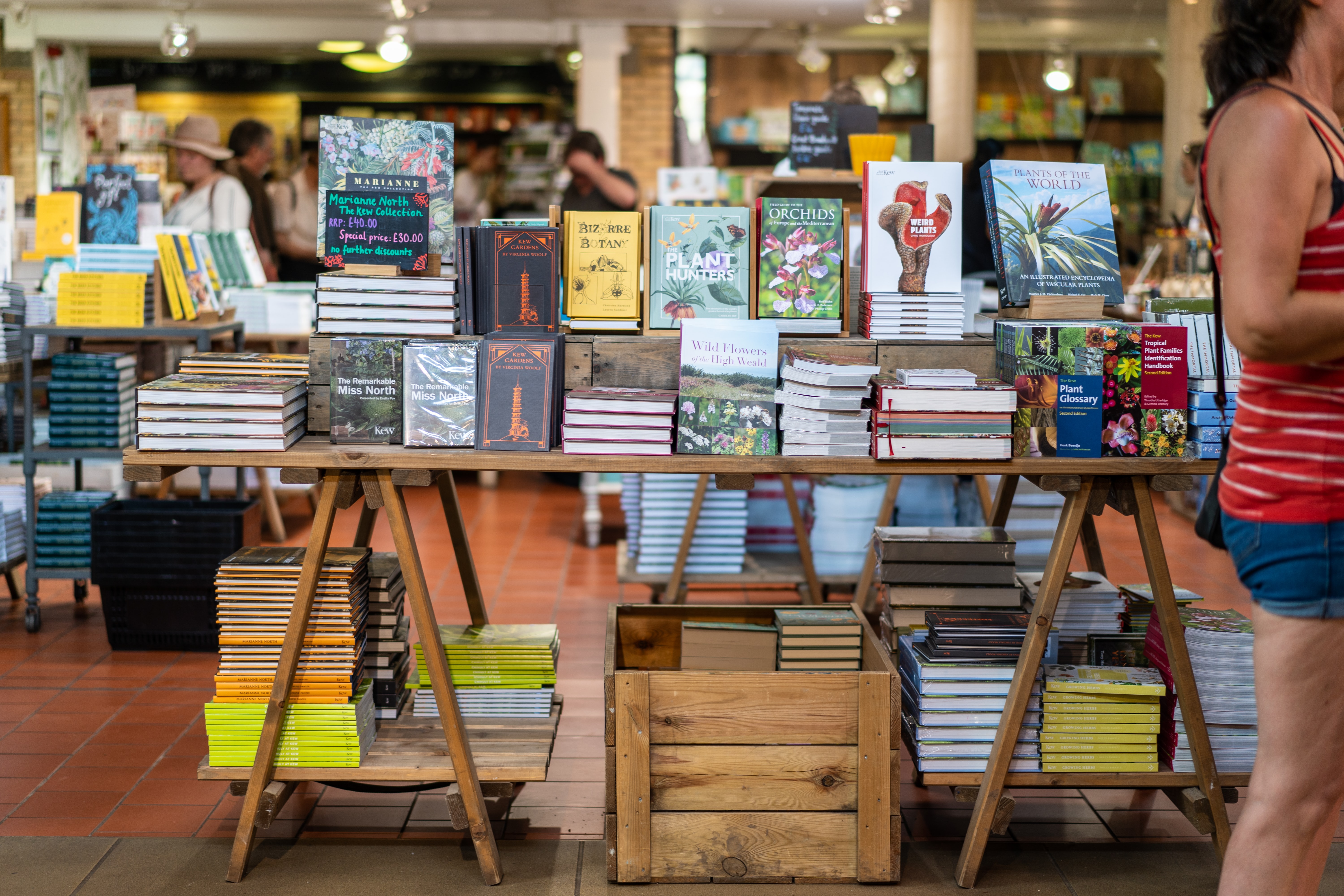
Portland, Oregon has a well-deserved reputation as a bookish city. Its literary climate springs, in part, from its actual climate. During the months of interminable rain it is natural to retreat to bookstores and libraries, or curl up at home with a favorite volume. The city’s creative energy, fueled by coffee, craft beer and local wine, helps foment works of imagination by local writers. Harvest the fruit of their labors at these book stores.

Photo by Rumman Amin on Unsplash

Annie Bloom’s Books

http://www.annieblooms.com

This small but venerable indie bookstore in the heart of Multnomah Village, on the west side, has been dishing out literary goodness since 1978. It sells new books, with a focus on fiction, children’s and young adult, travel, current events, and cooking. Plus it is a great space to browse for magazines, art supplies, puzzles, and cards.

Broadway Books

http://www.broadwaybooks.net

503-284-1726

This Northeast Portland stalwart is particularly strong on stocking local writers. Subject matter is wide open, with offerings of fiction, non-fiction, poetry, graphic novels and more. You will find personalized material from local authors like Cheryl Strayed, who has the honor of a section dedicated to signed copies of her work.

Powell’s City of Books

http://www.powells.com

No mention of the PDX literary scene would be complete without a nod to Powells’s, City of Books. As the biggest thing in local literary retail it is a huge draw for both writers and readers alike, who can spend happy hours browsing its immense color-coded collections. I’ve been hanging out at Powell’s since I was a kid (when I gravitated to Nancy Drew mysteries and Marguerite Henry horse stories). Whatever you go looking for, you generally come out with something different, which is most of the fun of it.

Wallace Books

https://www.facebook.com/wallacebooks

The most adorably clapboard, overstuffed used bookshop imaginable, Wallace Books is a throwback to the eclectic, eccentric wonderful bookstores of my childhood. Its charming exterior beckons you in and its sprawling collection rewards languid browsing. Take your time.

What’s your favorite indie bookshop? Big it up in the comments!

21 – Free Thinking in Myanmar

This article about my trip to the 2012 Irrawaddy Literary Festival in Myanmar was written for the Free Word Centre. Recent events there show that freedom is as tenuous as it is precious.

Photo: Cila Warncke

Free Thinking from the Irrawaddy Literature Festival

At the beginning of February 2013, the Irrawaddy Literature Festival drew readers and writers from around the world to the city of Yangon in Myanmar. In a country which has lived under the rule of a repressive military junta for more than half a century, it was a cultural and political landmark that allowed writers to gather, speak and exchange ideas freely for the first time in recent history. Cila Warnke visited the festival to see how a country crippled by censorship is starting to find its voice.

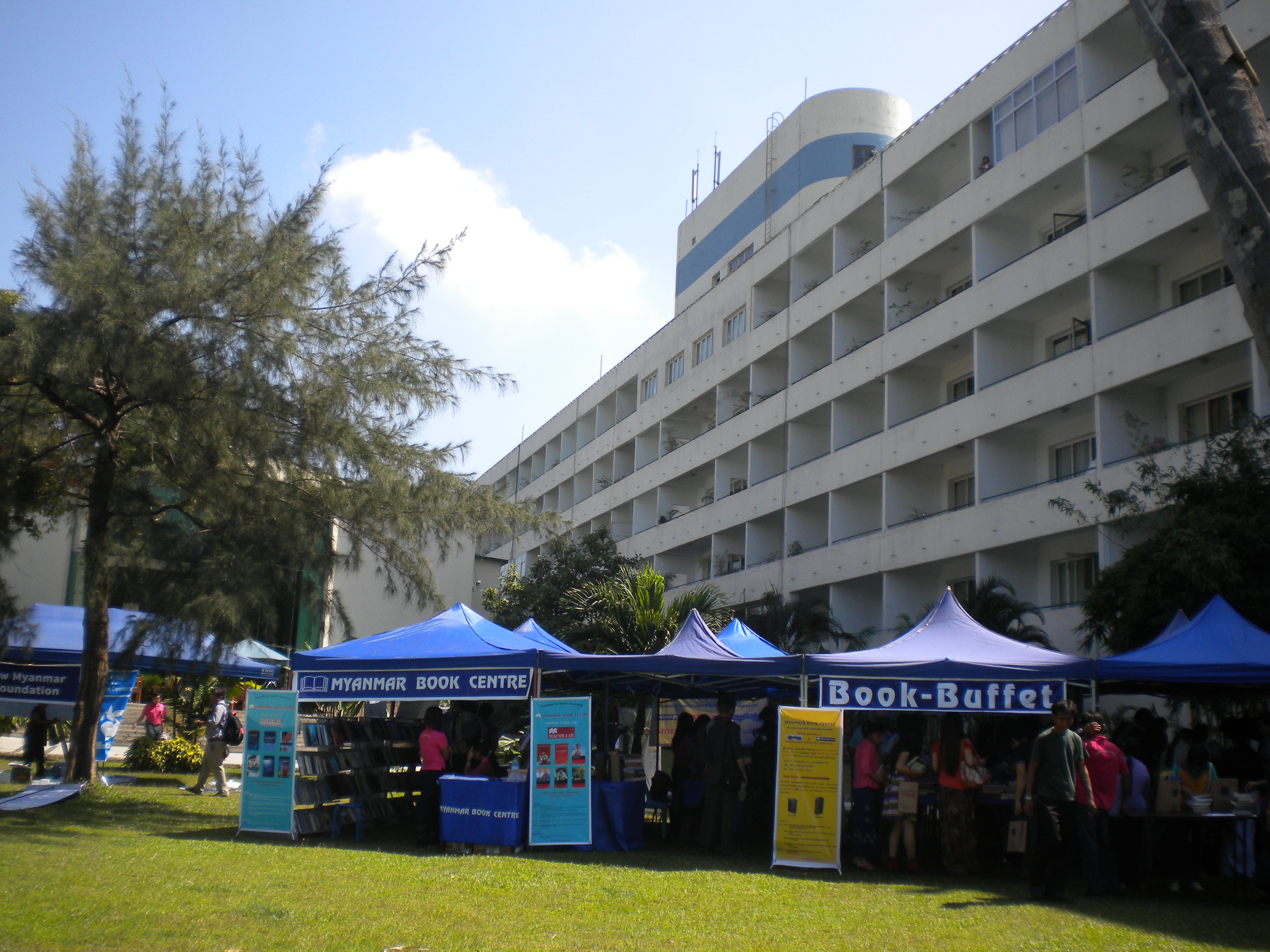
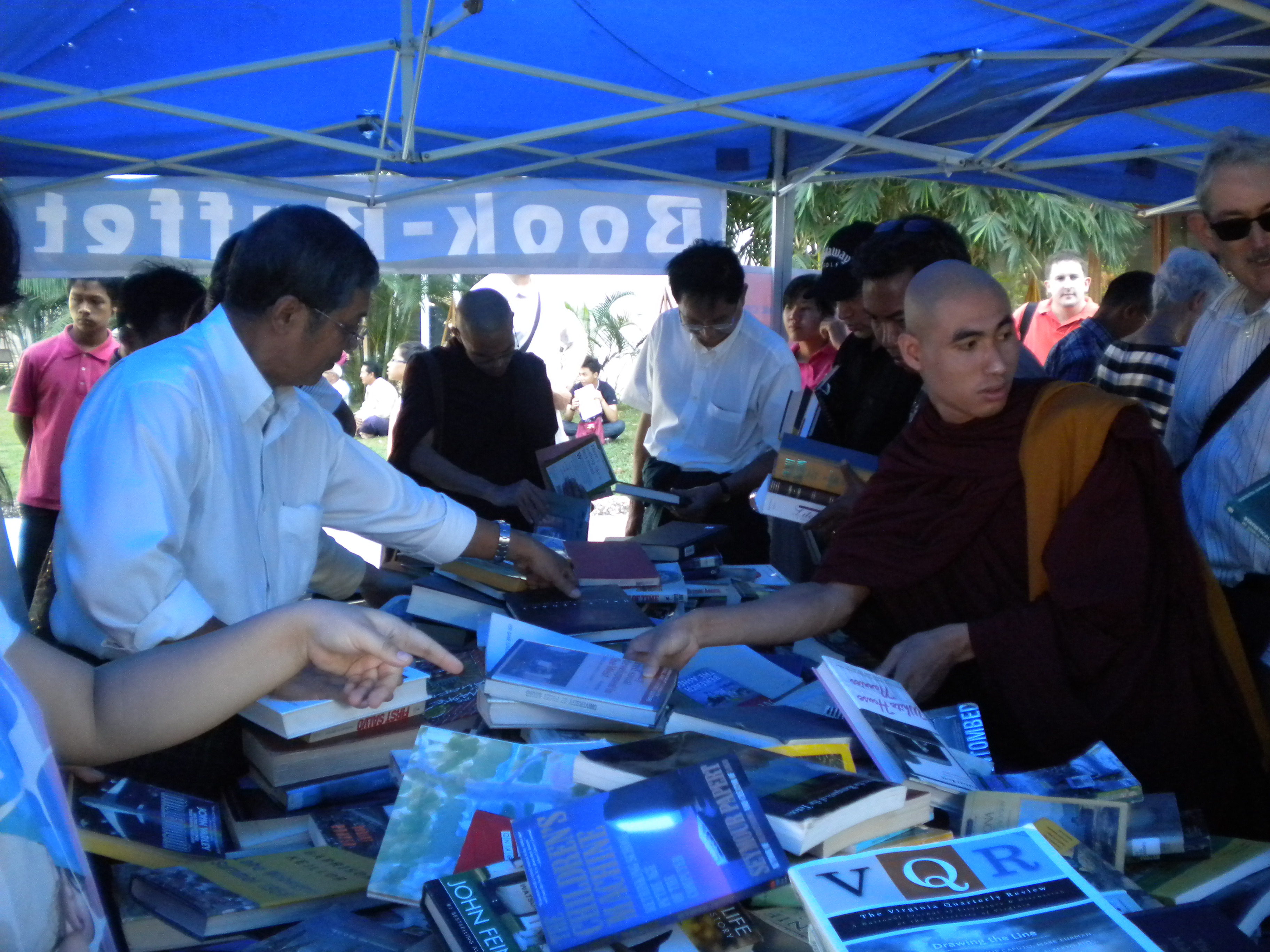
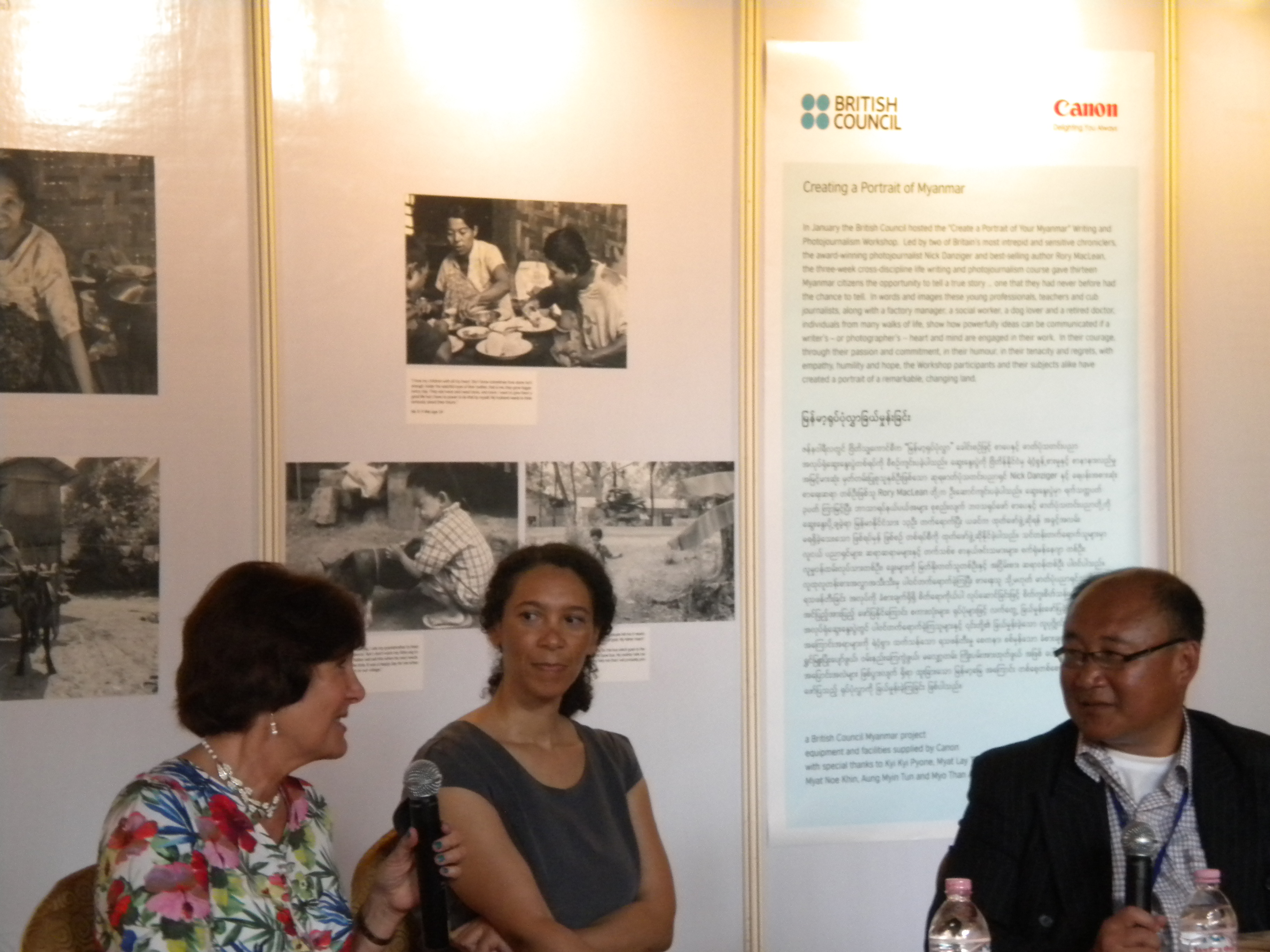
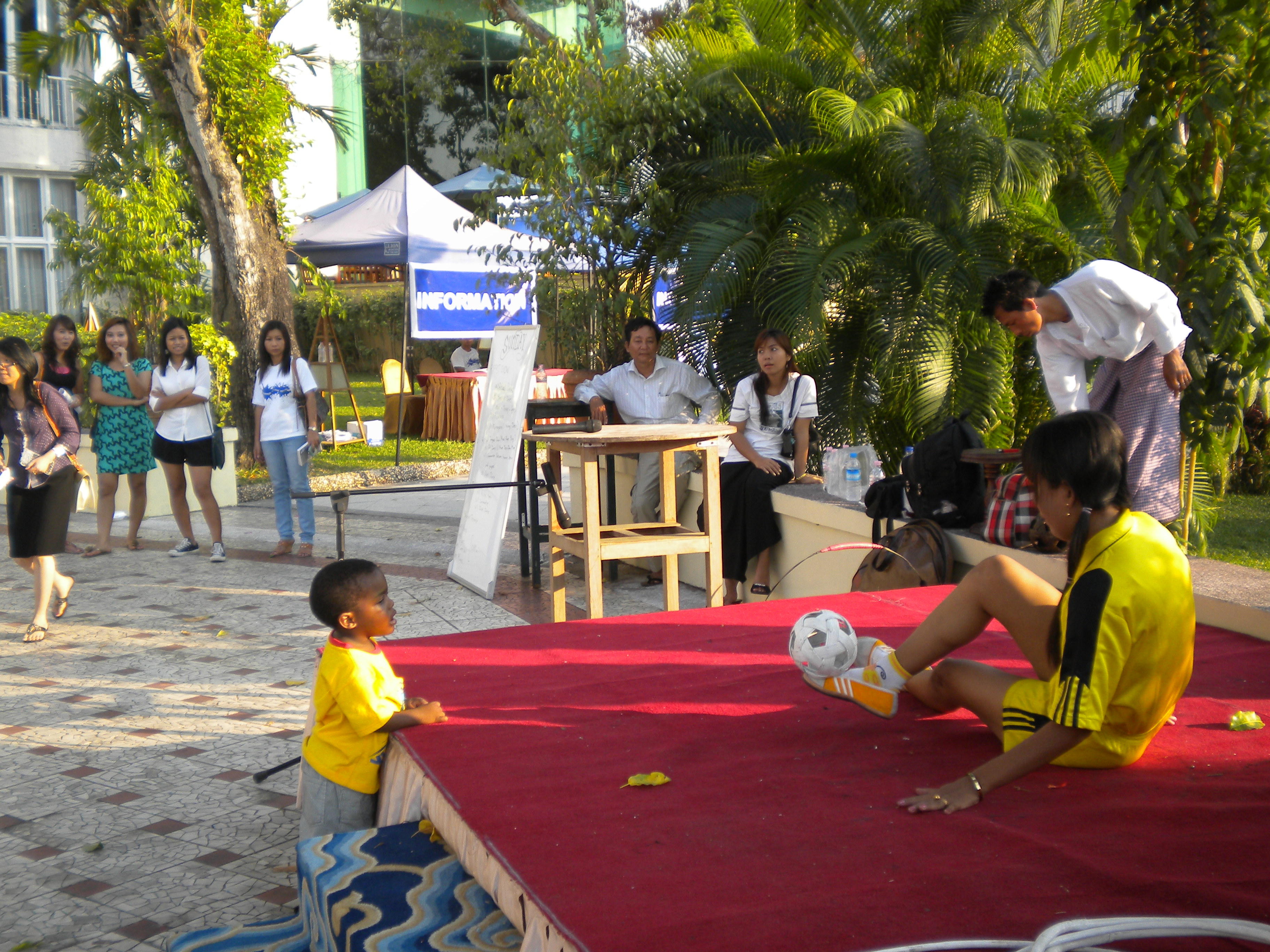
It was, in many respects, a literary festival like any other. There were book signings and a photo exhibition. Puppets for the children and grown-ups drinking lager on the verandah. Book stalls bursting with everything from Beatrix Potter to physics texts. On a sweep of grass between the Inya Lake and the hotel were tents where you could buy journals and newspapers, join charitable organisations or get a bite to eat. There were little differences, though. Buddhist monks in brick-red robes chatted as they sifted through volumes. The food stands offered rice noodle salad sprinkled with pungent dried shrimps. Women and men alike drifted through the heat in the traditional longyi – an ankle-length wrap skirt knotted at the waist.

In the cool interior of the Cold War-era hotel (a gift to the government of Myanmar from Nikita Kruschev) other, subtler, differences became apparent. Prior to the event, co-organiser Giles Fitzherbert voiced his hope that the festival would “open a window that has been half-shut for so long… [and] help turn Burma from an inward looking country into an outward looking country.” This sense of purpose was the thread that linked panel discussions about library usage, memoirs, debates about literary developments, and conversations about how a nation successfully transitions from censorship and repression to freedom of thought.

Democratic political reform has given Myanmar new hope after nearly fifty years under an ugly-minded military junta, but achieving openness is a complex, multi-faceted task . At the Irrawaddy Literary Festival four things emerged as preconditions to lasting change: political freedom, education, economics and international cooperation.

Photo: Cila Warncke

Political Freedom

One of the liveliest speakers at the festival was Jung Chang, author of Wild Swans, which tells of life during China’s Cultural Revolution. Though many of her anecdotes were hilarious (she told of accosting sailors in bars to practice her English – “You can imagine what they were thinking!”) but the bones of her tale are tragic. She was exiled at age 16; her father was forced to burn his beloved library; she was denied education. In the darkest days of Mao’s war on intellectuals there was no reason to hope. It was only when the violence eased and Mao reopened the universities that she was able to study, winning a scholarship to study in Britain.

As Chang’s story vividly illustrates, without political freedom there can be no intellectual or literary liberty. Jean Seaton, director of The Orwell Prize, spoke of being “blessed to live in peace and freedom” – a sentiment shared by the event’s other Western attendees. For those of us accustomed to freedom of expression, censorship is unimaginable. But for many of the authors at the festival it is the only reality they know. The Myanmar government lifted censorship in 2012, meaning that for the first time in 50 years writers and journalists did not have to submit their work for approval prior to publication. In January 2013 the censorship board was disbanded.

That the government could, with the stroke of a pen, abolish this long-standing apparatus of oppression is both heartening and cautionary. What can be done can be undone, and Myanmar writers acknowledged that a true end to censorship lies in the future. “We used to say, ‘the censor has moved into our head with his chair and desk, and lives there,’” said Pe Myint, author of more than 40 books. Silencing their internal censors is a struggle that every writer will face in the coming years. Myint also raised the prospect of tacit or post-publication censorship, even if the letter of the law remains on the side of press freedom.

Photo: Cila Warncke

Education

The late dictator Ne Win banned the teaching of English in the 1960s. He eventually rescinded his ban but not before a generation or two grew up without learning a word. This makes it almost impossible to communicate with ordinary Myanmar.

On the first day of the festival we set off for Inya Lake, armed with a map clearly marked with our destination. Our taxi driver didn’t speak or understand English, but he examined it, nodded and we set off through the sticky morning smog. After twenty minutes, he pulled up in front of a hotel and gestured hopefully. It wasn’t Inya Lake. Another consultation with the map and off we went again. After some quality time in one of Yangon’s ubiquitous traffic jams we arrived at another hotel. Also not Inya Lake. I was fizzing with frustration at this point. Finally, after another turn around the centre of town and several stops for directions wefinally reached our destination. Only later did it occur to me that the English place names on our map were probably as incomprehensible to our driver as Myanmar script is to me.

This was just the first of dozens of encounters, inciting varying levels of frustration, that hammered home the importance of a lingua franca. The woeful state of English language skills is the most obvious manifestation of Myanmar’s overall educational deficit. One of the military junta’s favourite repression tactics was closing the universities. Students were sent to rural areas, or assigned home studies, to supress political action. Writing in The Irrawaddy, Denis D. Gray notes that “Burma is saddled with two generations of chemistry professors who have never conducted a proper laboratory experiment and mechanical engineers yet to handle hands-on equipment.” Another journalist I met remarked there are probably no more than five psychologists in the whole country.

There was much discussion at the literary festival about how to overcome these barriers. Local libraries, such as those attached to the United Nations and the American Centre, are working hard with limited resources. They offer books, journals and space where people can come and use computers. Perhaps more importantly, they give training in how to use libraries and computers. Thant Thaw Kaung, who helps create village libraries, noted that, as in the West, TV, mobile phones and the internet compete for people’s time and attention. In his words, “we have to support the reading habit.”

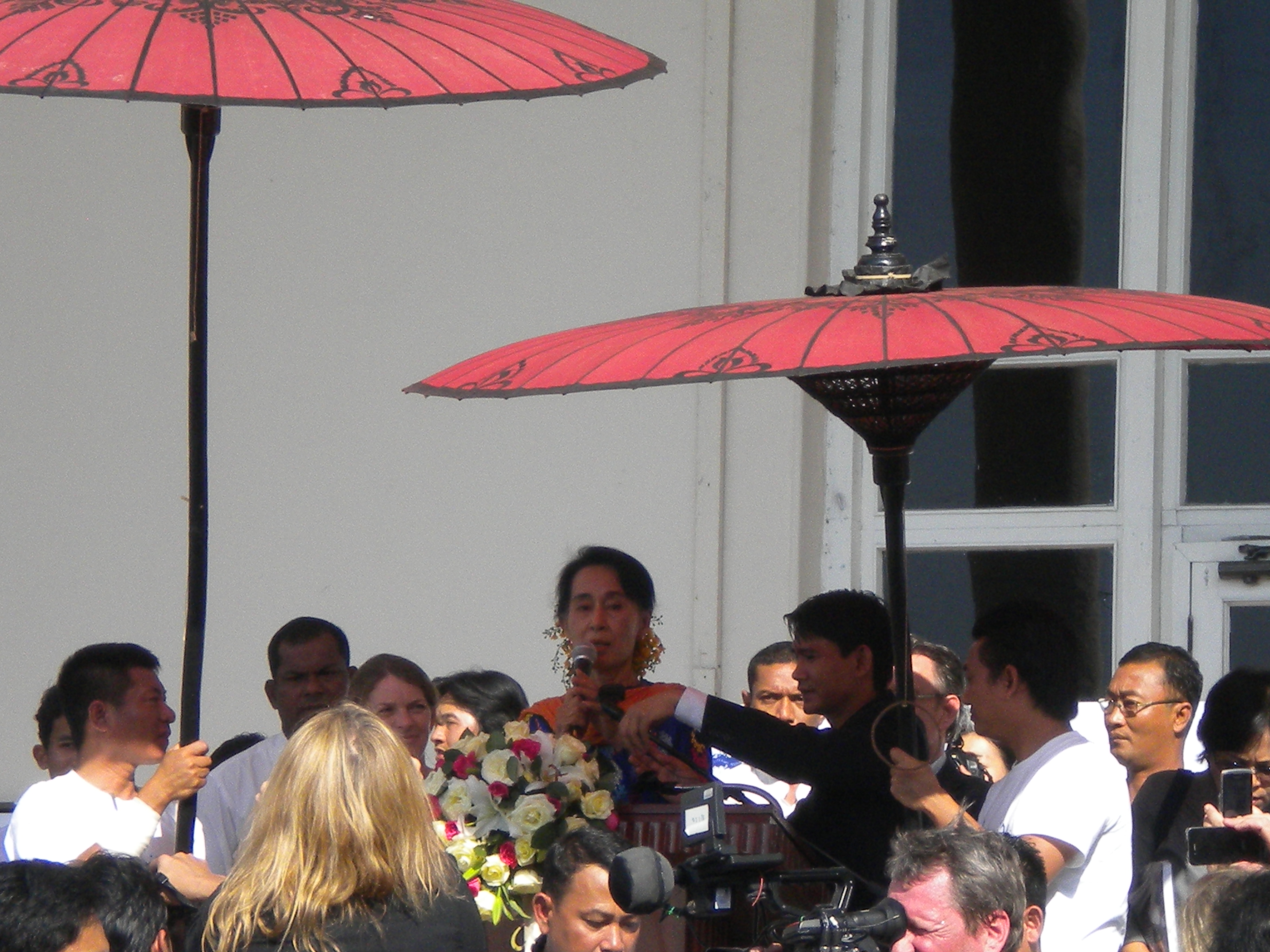
Aung San Suu Kyi speaks at the launch of the Irrawaddy Iterary Festival. Aung San Suu Kyi speaks at the launch of the Irrawaddy Iterary Festival.

Photo: Cila Warncke

Economics

Dr. Thant Myant-U, author of the superb Myanmar history The River of Lost Footsteps, spoke at the festival in his capacity as founder and director of the Yangon Heritage Trust, which aims to preserve the city’s unique Colonial architecture, as well as promote much-needed improvements to planning and infrastructure. Yangon’s crumbling buildings and surreal pavements testify to decades when the military rulers exploited the country’s natural resources for their own benefit and poured up to a quarter of the national budget into arms.

Neglecting the basic needs of their cities and citizens had a predicitable impact on education and welfare, too. Alex Mackenzie, of the British Council, said that poorer children often leave education after primary school to work, a fact attested to by the city’s hordes of awfully young waiters, shop assistants and street vendors. Human infrastructure, even more than the buildings, is crying out for proper investment and planning. Clearly there will not be any improvement in education until the economic barriers are removed, which means legislating school attendance and funding child welfare. Broad, systemtic changes have to come from the goverment but private initiative has a role to play as well. Aung San Suu Kyi and the British Ambassador, Andrew Heyn, announced two scholarships and presented prizes to the winners of an essay contest.

Photo: Cila Warncke

International Exchange

It is easy to look at a patchily-developed country with a rocky history and conclude it needs the wealth and wisdom of the West. After a fortnight in Myanmar, I’m not convinced that they need us more than we need them. Yes, foreign investment is good for the economy, and will hopefully aid development and raise living standards, but it would be arrogant to think of ourselves as benfactors. As Alex Mackenzie put it: “Myanmar doesn’t need things, it needs the exchange of ideas.”

Myanmar is tough and self-sufficient. Many of its citizens have endured suffering we can only imagine. They are under no illusions about who they are or their place in the world, and they are not looking for charity. The literary festival was more than half funded by local businesses, and organisers Jane Heyn and Giles Fitzherbert, as well as patron Aung San Suu Kyi, expressed the hope that future festivals will be run entirely by local organisations.

This is a modest ambition. Despite its political, educational and economic challenges, Myanmar has an air of resiliance. The mere fact that just two years into its transition to democracy it is almost impossible to imagine the previous repression shows a laudable refusal to wallow. The literary festival is a product of this new freedom. It is also testament to hope for the future. According to Daw Suu Kyi, “literature is not just for fun, or to pass the time. It is a learning process.”

If there is a lesson to draw from the Irrawaddy Literary Festival it is that this process takes place in surprising ways, under even the toughest of circumstances, and as long as it does there is always hope for the future.

Photo: Cila Warncke

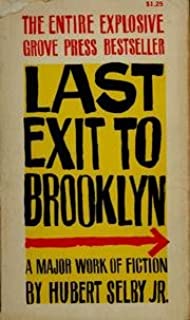
13- Last Exit to Brooklyn Film Review

Though by no means a film buff, I love writing reviews. When the chance to review a DVD release of Last Exit to Brooklyn arose, I took it. Like the novel it is based on, it is harrowing, and worth it because it is.

Roger Ebert said in his 1990 review: “The movie takes place in one of the gloomiest and most depressing urban settings I’ve seen in a movie. These streets aren’t mean, they’re unforgiving. Vast blank warehouse walls loom over the barren pavements, and vacant lots are filled with abandoned cars where mockeries of love take place…. Most people hate movies like this. I think perhaps it is because no attempt is being made to force the characters and stories into comforting endings.”

Last Exit To Brooklyn DVD (18)

Dir: Uli Edel, 1989, USA/UK/Germany, 102 mins

Cast: Stephen Lang, Jennifer Jason Leigh, Peter Dobson, Burt Young

Last Exit To Brooklyn is set during the Korean War, in the early 1950s. The first characters you see are a trio of soldiers, cock-of-the-walking their way back to barracks after a night out. For a few, deceptive seconds this might be a war film, in the conventional sense. Then the real soldiers, fighting the real war, bowl on screen: a gang of roughneck wops, spoiling for action. A brief, brutal, beautifully choreographed beating later you’re in their world, to stay.

Based on the novel by Hubert Selby (author of Requiem For A Dream), the film is a raw, artful, unsparing look at raggle taggle Brooklyn life. The endless parade of soldiers who straggle through the film getting mugged, propositioned, beaten up, or otherwise damaged in their exchanges on this lawless patch are stand-ins for the audience – sucked into a world that is short on narrative arc and long on impulse, where the only constant is violence. At the centre of this universe of quicksand is Tralala (Leigh), a mouthy hooker with a finely tuned survival instinct, and her occasional partners in crime, Vinnie (Dobson) and Sal (Stephen Baldwin). Their buddy, Harry (Lang), is a shop steward, and head of the strike office, making free with his union expense account as the community struggles through a long strike against the bosses of the local metalworks.

Though a stunningly filmed late-night clash between police and strikers provides the visual epicentre of the film, social issues never eclipse the individual. Rather, the big picture stuff (war, labour disputes, family relationships) is backdrop to the intensely felt experiences of the characters. In sharp contrast to films that look back at the ‘50s through a spyglass of modern mores, Last Exit is perfectly self-absorbed. When shop boss Harry falls hard for a fey, selfish little queen called Regina (Bernard Zette) it would be easy for the film to make a statement about contemporary sexuality, or life in the closet. But it doesn’t, because the point is not what we think of Harry, but how he feels. Instead of glib commentary, there is real pathos. A theme that is repeated in the subplot of transvestite Georgette (Alexis Arquette) and her unrequited love for good-looking thug Vinnie (ringleader of the tormenters in the opening scene). Any kind of vulnerability can be fatal in Last Exit’s testosterone-fuelled landscape, especially for dainty queens, which makes Georgette’s flirtation watch-through-fingers stuff.

Frankly, it’s a miserable film. Yet so lovingly shot and acted you can’t help being drawn in. These are characters so small, sharp, closed and ugly they wouldn’t ever get an airing elsewhere, but the strong cast (including an excellent young Sam Rockwell) render them painfully alive. Leigh, in particular, pulls off an extraordinarily difficult role with power and panache. They elicit compassion when they shouldn’t and they provoke empathy at the unlikeliest moments. And while they’re trapped, you can leave, which gives this film its lingering, bittersweet edge.

Last Exit To Brooklyn