This week I’m going to share a podcast recorded last summer (on one very HOT afternoon) for Le Sallay Academy. It features a conversation between myself and the wise, incisive author/journalist/memoirist Kat Lister.
It is shared with the kind permission of Le Sallay, which facilitated and hosted the podcast as part of its Le Sallay Talks series.
It’s very hard even for those working in the industry to navigate such a fast-changing landscape, and I don’t think there is any one person who is doing it perfectly. And the way that we learn and grow, and familiarize ourselves is by having conversations like this, which have to be very open about the downfalls of social media, but also about what the positives are, and what we can gain from it.
It’s not going anywhere. None of these platforms is going anywhere. The only thing that can change is our relationship with it and that can seem quite chaotic nowadays: it can be a hard place to navigate, it can be a hard place to verify. What is news? What is fake news?
The best way to make our way through this is to think about the original source. You see a video shared a gazillion times on Twitter, and that almost immediately verifies it in your mind, but actually, that’s not the asset to look at. I often have to double-check myself, because I will be almost hitting retweet, and then I’ll be like, hang on a second, where was the video filmed, who filmed it, where was it filmed, are the details correct? Is the date right? Contextualizing tweets or videos on TikTok or wherever you happen to find yourself, is tremendously important. We’ve all become fact-checkers in a way, and that’s an incredible responsibility not only on the content creators but also the responsibility of the readers, on the audience. As we are saying, look at things more critically, and now, more than ever that’s become quite urgent. And it’s not something any of us are doing in a perfect way, I don’t think.
Cila Warncke on teaching
Yes, these are the traditional 5 W-s: When, Where, When, Who, and Why. And this is something that as a Literature teacher I really emphasize, continually asking students: “Okay, what’s the context of this? Whether it’s an article or a short story, make sure you understand where this is coming from. There is a direct relationship between that kind of critical reading of anything and the ability to navigate the news.”
Welcome to ‘Between the Lines’ – interviews with teachers, writers and writing teachers on specific aspects of their craft.
In this week’s conversation, Elisabeth Dahl (no, no relation) discusses the transformative power of words, with a special focus on teaching revision.
Photo courtesy Elisabeth Dahl
‘I worry for people who don’t write’
Author, illustrator, editor, educator: Elisabeth Dahl’s writing experience spans genres and professions. The through line quickly emerges in conversation – a deftness with, and delight in, words that is as contagious as a yawn. And a knack for detail that brimfills anecdotes with life and color.
The Baltimore, Maryland native grew up near Johns Hopkins’ main campus, where she completed her undergraduate degree. She returned to the city as an adult, and lives a few miles from the hospital where she was born.
“As a child, I loved school right from the start,” she writes in her online bio. “By the time I was in ninth or tenth grade, one thing had become clear: Analyzing stories and crafting sentences lit me up in a way that history, math, and the rest did not.”
Speaking on the phone, Dahl credits this to her high school teacher Joyce Brown (with whom she still exchanges emails). “She approached us as if we were college students. When we started [James] Joyce’s Portrait of the Artist as a Young Man, we spent 20-30 minutes talking about his decision to use ‘the artist’ instead of ‘an artist’. To think this was even a question! It would have been one thing to debate writer versus artist, but to look at the article – the versus an – was incredible. As it turns out, [Ms Brown] led us to understand it made quite a big difference.”
Understanding the big differences a small lexical choice can makes is a sine qua non for a writer-educator. “I’m a better writer because I’ve taught writing,” says Dahl, who worked for Johns Hopkins’ Center for Talented Youth for the better part of a decade. “I was still making the same mistakes emerging writers were making: the stakes weren’t high enough, or I was padding the stories. Seeing these problems [as a teacher] was sort of teaching myself at the same time. It helped me incorporate the lessons into my own writing.”
Textures of language
For Dahl, a reciprocal relationship between teaching and literature was established early; her mother and grandmother (with whom they lived until Dahl was eight) were elementary school teachers who made reading a central part of her young life. They also gifted her with a fascination for the stories embedded in artifacts and moments. Her favorite space, as a child, was her grandmother’s walk-in closet. “It smelled like mothballs but had its own, not just aroma – aura. It had a history. It was a special occasion if I got to try on old dresses, like the one my mother wore to her junior prom. There was a scarlet red [dress], like what a Spanish dancer would wear, with tiers, strapless. It didn’t look like any of the other clothes in there. Jane Eyre had her red room; I had this red dress.”
The aural and visual qualities of words beguiled her: “I liked that if you said a word like ‘fork’ or ‘salad’ 25 times to yourself, it became nonsense, weird, you could almost hallucinate about it”. Another female relative, an aunt, was a graphic designer. Tracing pages in her books on hand-lettering introduced Dahl to the “tactile aspect” of language.
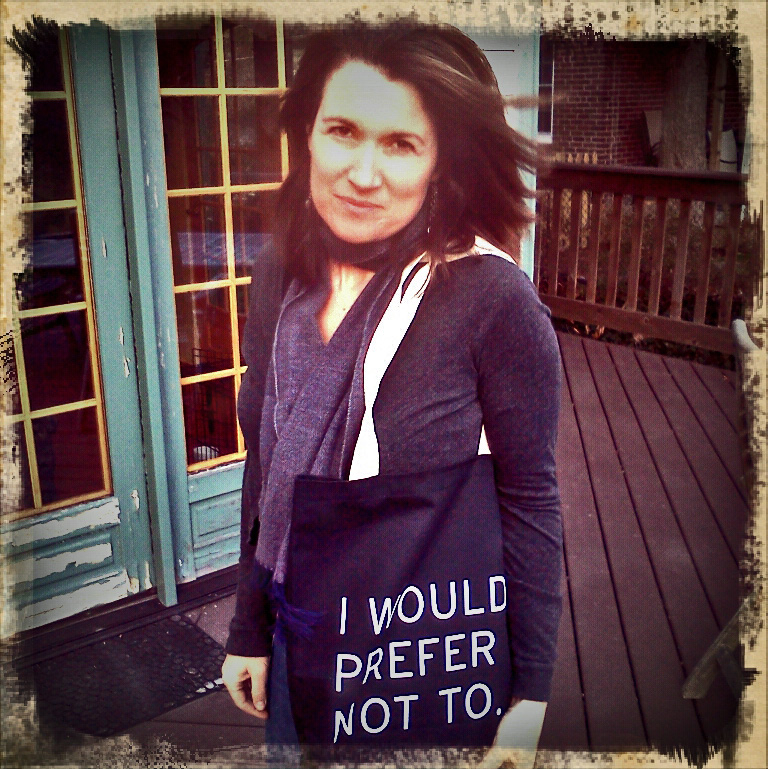
These formative experiences of words and stories as real and imaginative, concrete and abstract, primed Dahl to thrill to the challenge when Ms Brown assigned Herman Melville’s Bartleby, the Scrivener. “A light had turned on. I remember standing in her empty classroom, during a free period, talking about it with her, totally energized. I [still] don’t know if I know what the story means,” she says cheerfully. “But I love it. It’s like a Rorschach test.”
Inspired by Ms Brown’s example, Dahl prioritizes space for students to encounter epiphanies by “helping them get a new perspective, become a better observer, or express themselves better. As a teacher, you’re another voice in this person’s head. You have to take it seriously. You don’t know the other voices in their lives, all you can do is be respectful and help them grow.”
But why learn to write any more – aren’t there machines for that?
“Because to have a good relationship with writing is to have a good relationship with your own mind, your history, the world around you,” Dahl responds. “I worry about people who don’t write regularly. The memoir I’m working on has taught me so much about things I’ve been thinking about for 54 years. By laying out the words, revising the words, reconsidering the words, I’ve developed new attitudes towards certain moments, and people. It’s wonderful to be able to do that.”
How do you create an open, accepting environment where students think beyond the binary of right/wrong?
One assignment I designed is based on Amelia Gray’s short story ‘Monument’. In it, the people of a town came to clean up a graveyard, then something changes, and they start destroying the graveyard, almost like Shirley Jackson’s ‘The Lottery’. I had students pick a character and rewrite the [third-person] story in the first person. We talked about what that changed, what opportunities it created, what it shut down.
This helped them realize that a piece of writing is many, many choices. It loosened students up. It was an act of playing around, like they might approach improv.
How do you push students beyond ‘good enough’?
Try to present revision as an opportunity. What if you wrote in a different point of view? What if you sprinkled some of these details throughout the story?
For students who are good but could be better, I call upon their sense of a challenge, their curiosity, intrigue. If a student is a tennis player, or pianist, say, I remind them how many hours they spend on the court or at the keyboard. Writing requires the same. It’s a lot of time, a lot of effort, yes.
I always tried to teach that we’re all on the same continuum. We’re writing. We’re writers. Getting started, revising, these things are always challenging.
How can students develop a feel for revision?
They need to be reading, copying out passages as a way of internalizing what good writing is. I encounter people who say, ‘I know I could write a novel’, then you ask what they are reading and they ‘don’t really read’. That’s never going to work.
How does revision differ between fiction and non-fiction?
With non-fiction you have to think about fact checking, accuracy, but the process is not all that different. You’re still asking about tone, voice, consistency, how the narrative is laid out, what is the best way to tell the story, whether you’ve grabbed the reader…
How do you approach teaching revision with different age groups?
With younger students, don’t talk down to them. With all ages, nurture their curiosity about where a piece of writing might go. Again, trying to relate writing to other endeavors, whether playing sports, or working at a grocery story. Remind people that revision isn’t just something we do in writing. We’re always revising things, always being asked to spend more time perfecting or altering, it’s part of being human.
What is a sign that the process is working?
When students say, this went a different direction, or, the character surprised me by doing this. That is exciting. It shows they are engaging on another level, not just trying to bang out the essay or the story.
Dahl recommends:
The piece of writing that changed your life as an adult?
Fun Home: A Family Tragicomic by Alison Bechdel. She explores, in a graphic novel, growing up, the truths that were presented to her and the truths she had to discover later. It was fascinating, her level of honesty. I get most of my books out of the library, but I went straight to the book store and bought that one for full price.
A classic you love to teach?
‘Why I Live at the PO’ by Eudora Welty. It’s an unreliable narrator story, very subtle, hard to pull off. Every time I read it, I see new things.
A book about writing every writing student should read?
On Writing by Stephen King. Although I’m not a King fan, this book is so good, especially if students are interested in writing books and getting into publishing. It is full of good advice, very practical.
A book + film adaptation combo you love?
Ian McEwan’s Atonement – that was a great movie and a very good book.
A living writer you’d love to hang out with?
Ann Patchett. She co-owns a book store called Parnassus Books in Nashville; she has a wonderful personality, she’s smart, she’s a good writer.
Your perfect writing space?
My house, where I live and write, is suburban, there are beautiful trees but always people walking past. I like to have people around.
If you could publish anything, what would it be and why?
It would be nice if the memoir I’m writing eventually becomes a book. What got me started was realizing how much I loved reading memoir. There is something about a well-crafted, honest memoir that stands out; they are always engaging.
Yesterday brought a Guardian article to my inbox: How ultra-processed foods took over your shopping cart. In it Bee Wilson recalls eating slice after slice of buttered white bread, and whole tubes of sour cream and onion Pringles. It struck a chord: those were two of the specific staples of my late-teens/early-twenties diet – along with SuperNoodles, PopTarts, Papa John’s, Taco Bell, chicken cheesesteaks, Dunkin’ Donuts and frozen pizza. These are, Wilson explains, ultra-processed foods: manufactured edibles made from other manufactured items. Their role in the global obesity and disease crisis is emerging, and it fascinates me because, though I’ve eaten my share of them, I didn’t grow up eating them – which has perhaps made all the difference.
There was a lot of strange in my childhood, ranging from benign to destructive. Yet, at the other end of the teeter-totter (as we called the wooden seesaw my father carved and balanced on an salvaged driftwood log), were a few quirks for which I’m grateful. My parents’ stopped-clock moments, I’ve dubbed them, undertaken at random, or for the wrong reasons, but nonetheless beneficial. No TV was one – the edict that set me on the path to becoming a writer.
The other is harder to sum in a phrase, no junk food? No processed food? Plain food only?
Whatever they might have called it, if asked, the food ethos of my childhood was that anything artificially colored or flavored, anything with cartoon characters or superheroes, anything that could be put in a toaster or microwave, was essentially forbidden. My mother is, by her own admission, not much of a cook. Nor was her mother. What she knew about cooking she must have learned from fellow drifters (hippies, in a loose sense) when my siblings were young and from my grandmother, a reluctant emigre of East Prussian farm stock.
We were also poor – for most of my childhood I thought Food Stamps were colored money – and my father was ardently interested in Eastern spirituality, yoga, tai chi, and Transcendentalism.
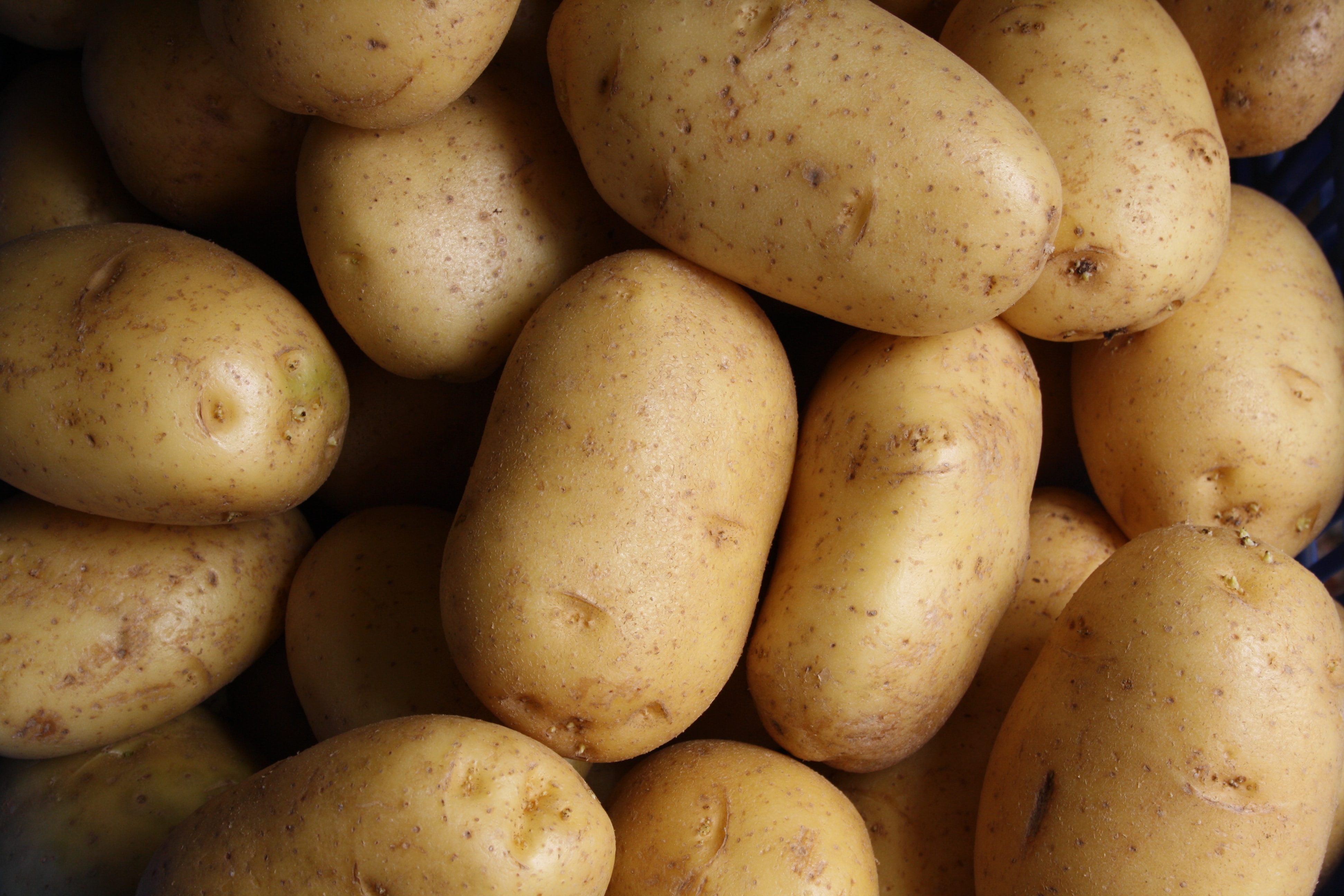
Somehow, this combined to determine that childhood meals consisted of variations on the following: potatoes (which they grew in humped rows on the east side of the house), brown rice, beans, carrots, peas, broccoli, zucchini, beans, milk, and cheese.
My mother baked whole wheat bread, brushing the crust with melted butter as it came out of the oven so the thick brown dome gleamed. Her signature dish was spinach souffle, made with a dozen eggs and two frozen bricks of greens. She also made vegetarian chilli with kidney, pinto and black beans, and fresh tortillas to go with it. I’d slice tomatoes, then get out the orange block of Tillamook cheddar and grate a golden mountain that melted through the bowl in unctuous swirls.
Dairy in everything must have come from my grandmother, whose cooking was as weighty as her Lutheran faith. When we visited my grandparents in California, or they came to Oregon, she’d make pound cake and what we called crumb cake. I have no idea of its proper name, but its flavor is ineradicable: dense, slightly sweet base topped with melt-in-the-mouth crumbs of hard-packed butter and sugar. Perhaps it is not surprising my grandmother wound up having quadruple bypass surgery and evenutally died of cardiac-related causes. What is curious, though, is that she was always slim. To my memory, thin, even. Though stockily build, my grandfather, who never missed his afternoon coffee and cake, was fit and vigorous well into his 80s.
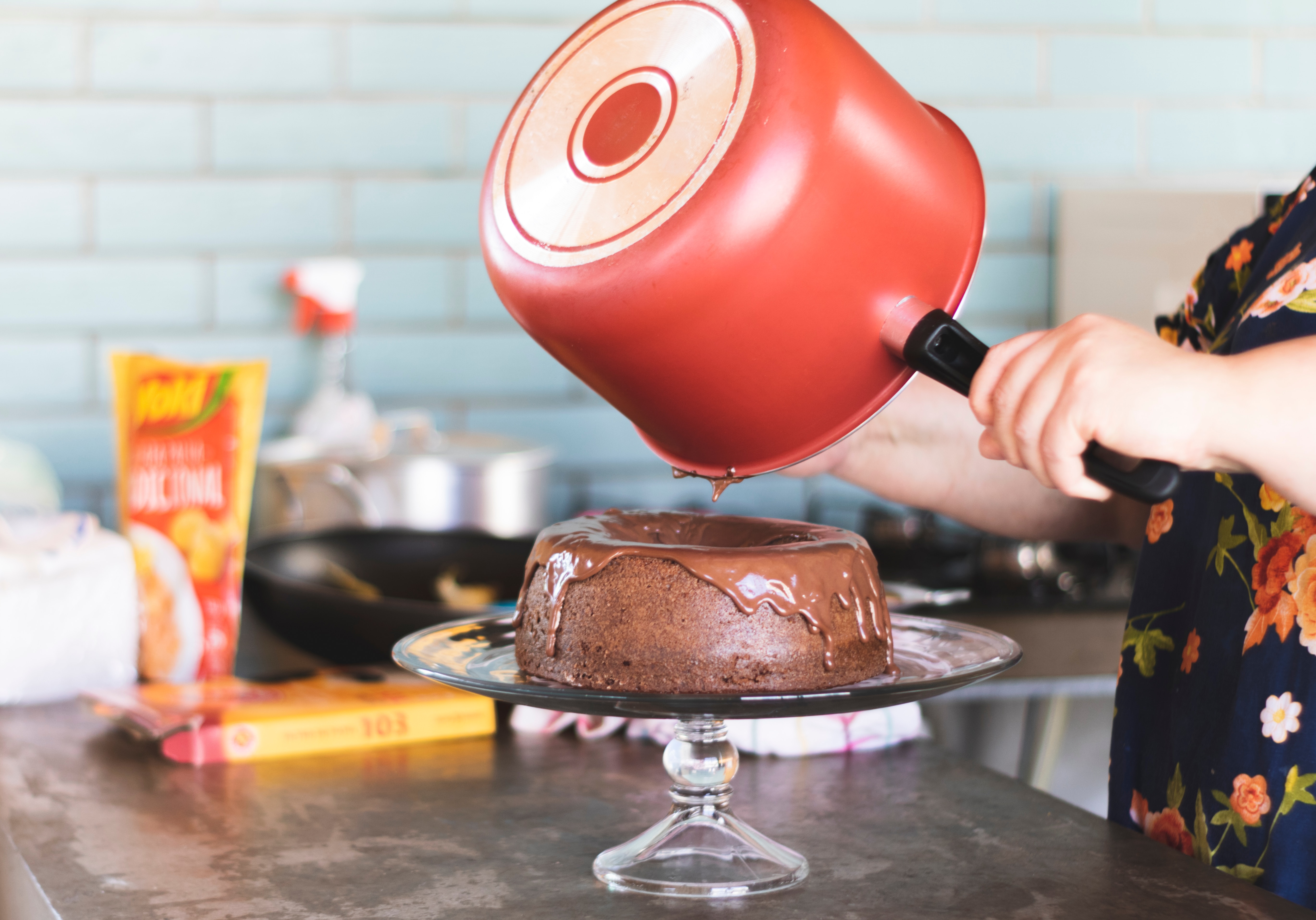
Despite the abundance of milk, cheese and ice cream in our diet (my mother was deeply brand loyal to Tillamook Dairy) we rarely ate conventional processed foods. Sweets, apart from ice cream, were limited to elaborate home-made birthday cakes. The most popular among my siblings and I was a chocolate cake covered in chocolate ganache, layered and adorned with chocolate buttercream frosting, and wrapped in a marzipan bow. Its creation was a day-long process, at minimum. The marzipan alone required almonds to be blanched in boiling water, peeled (accomplished by pinching the fat end until the point broke the skin and the nut shot forth), cooled, and milled in an orange-plastic and stainless steel hand grinder before being mixed with the appropriate ratio of powdered sugar.
Even store-bought goodies, as we called them, were outside the usual realm. On our weekly shopping trip to Trillium, a wooden-floored, patchouli-scented health food shop where my mom bought bulk grains and beans, we were allowed to choose a treat: either a peach frozen yogurt pop that you pushed up through a blue-and-white cardboard tube, or a paper-shrouded, sticky-edged frozen sandwich: ice cream between two chocolate graham crackers. These were flavored with carob rather than cocoa, a trend which extended to my mother’s version of hot chocolate: bitter, clumpy powdered carob boiled with hot milk and laced with honey – an anti-indulgence that left me with little taste for the real thing. Other dishes we experienced only in health-food form included chow mein (tofu) and burgers (veggie).
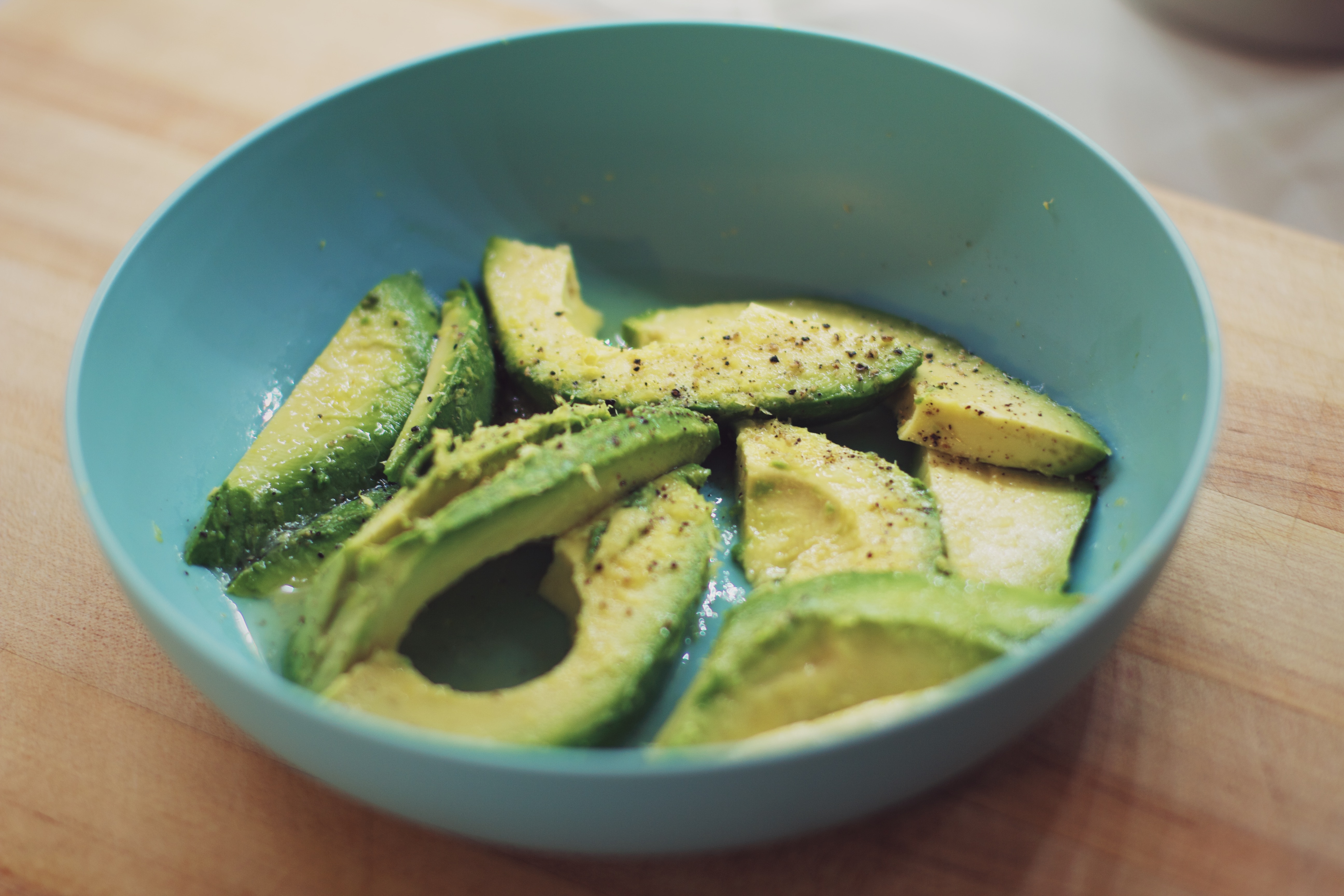
This food ethos felt oppressive, restrictive as the Biblical edicts we were fed each Sunday – and, like any good American child, I craved Wonder Bread, Hamburger Helper, Kraft Singles, Snickers, and Capri Sun. Even without a TV, food advertising found me; the slogan – M&Ms melt in your mouth, not in your hand – has been jingling in my head since I was about six. The difference was, my parents were stubborn/mean/enlightened/impoverished (delete as required) enough to make me to eat boiled carrots and broccoli, brown rice and potatoes regardless. In another twist, they introduced me to foods like hummus and avocados, things my working class British friends didn’t experience as kids.
Plus I had the tremendous fortune of a big sister who loves to cook, is good at cooking, and helped me discover the joy in food that was the missing ingredient in my childhood. My mom did her best, according to her lights, but daily life was too tense and unhappy for eating to be the celebration it should. One peculiar feature of her cooking was a lack of seasoning. My father didn’t like salt (or perhaps didn’t approve of it; he was a man who could be hostile to a condiment). Herbs, spices, chilli, vinegar – I don’t recall any of them. It was a relvelation to learn how fantastic vegetables can taste when slathered in olive oil, roasted, spiked with rosemary and chilli, sprinkled with lemon, sea salt and coarse black pepper. Like many aspects of growing up, the food could have been brightened, mitigated, with a little effort.
Between then and now, I spent many years in food deserts, actual and self-constructed. Unhappiness shaped my relationship with food and my body yet, simmering beneath, were memories of a worthwhile conjunction of effort and occasion.

 Cila Warncke Writer