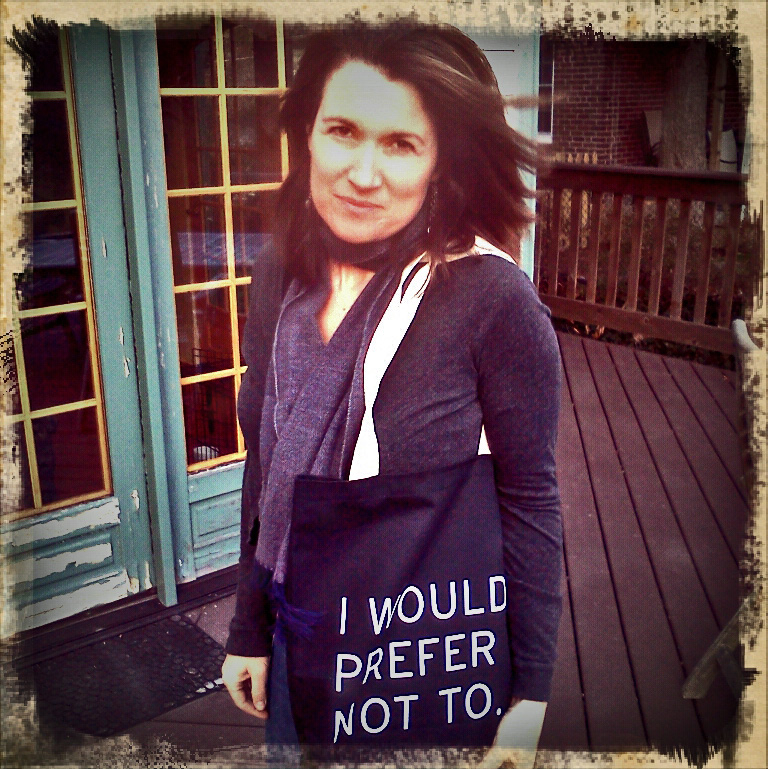
On Memoir with Cheryl Strayed

This interview originally appeared on the excellent but now defunct Ideas Tap website. The organization, which was dedicated to supporting young people pursuing creative careers, closed in 2015 due to lack of funding. Plus ca change.

Strayed was a warm, thoughtful and inquisitive subject. A rare working class hero and, rarer still, someone whose giddy ascent to Oprah-adjacent fame hadn’t uncalibrated her ethical compass.

It was a privilege to speak to her, and a pleasure to republish her timeless wisdom.

***
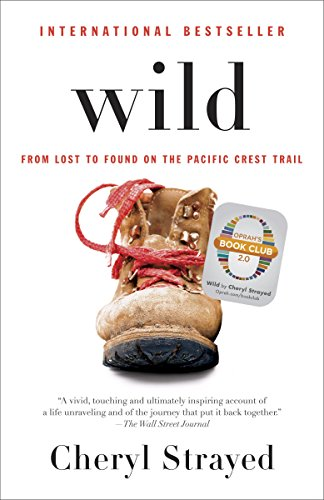
After writing her first novel, Cheryl Strayed turned to memoir and wrote her New York Times bestselling book Wild, about her 1,100-mile hike along the Pacific Crest Trail in the wake of her mother’s death. Here, Cheryl talks about mining memory and sets us to work with a writing exercise…

How does the emotional experience differ between writing fiction and memoir?

It doesn’t. To write fiction well you have to inhabit the consciousness of the characters you’ve created. With non-fiction there’s an extra layer of intensity because the character you’re building is yourself.

When writing memoir, how do you build yourself as a character?

The only way you can build yourself is to dismantle yourself. To take apart who you are, what your assumptions have been, what you hope people think of you. You can’t write: “I’m pretty and cool and awesome and interesting” because everyone would hate you. You have to say: “I’m human. Here are positive things about me. Here are negative things about me. And here are things that don’t make sense, don’t add up, and I’m going to present them to you”. Writing is like the deep work you do in the course of therapy where you take yourself apart.

What memory aids do you use?

I naturally have a very good memory – I think a lot of writers do. I kept a journal through my 20s and 30s. That helped me a lot in writing Wild. I do research where I can, going back and looking at pictures for example. When most people imagine what a memoirist does, they think: “I don’t remember anything from high school, from 20 years ago”. But they do remember – they just think they don’t.

How can writers elicit those memories?

The process of writing is re-conjuring memories. It’s doing things so more memories come to you. Even looking at a photo can allow you to remember something accurately. The process is like running into an old friend from back in the day, somebody you knew 20 years ago. When you first start talking you only know a few things about each other. But as you talk and go deeper into your lives you remember things you thought you had forgotten. Just because you haven’t thought of something for years doesn’t mean you don’t remember it, it just means it takes a little work to access it. When I was writing Wild I’d think, “I don’t remember, I just walked” but once I started writing my mind would open up to specific memories.

Do you draw heavily on your own life for your fiction?

You’ll see a lot of details from my life. My next novel is set in Portland [where I live]. None of the characters in the book are me but there are all these little tendrils of the story that you can trace back to me.

How do you deal with writer’s block?

I never call it “writer’s block” but I always have trouble beginning. Writing is hard. I resist writing. I run from it. If I am left alone with a laptop I flounder for an hour or two, then I sink in and I’m in the zone. When I get stuck I go for a walk, come back and try again. I don’t force it. If something isn’t coming, I move on; that’s a good strategy for me.

How long did it take to write your first book, Torch?

Your first book is so hard because you don’t know how to write a book and there is no way for anyone to tell you. It turns out the only way to learn how to write a book is to write a book. I avoided finishing [Torch] for fear of failure, until the point where the fear of failing to finish was bigger than the fear of finishing a book that was terrible. I worked on it for about ten years in total, three years really diligently.

How did you overcome that fear of failure?

Once I let go of the idea that I was going to write a great book, I was able to write a book. I let go of any ego or fear or shame. That was an important moment in my writing life. None of us really knows what kind of book we’re writing. A lot of people think they’re writing brilliant books and they’re terrible. And the reverse is true too. It isn’t up to us to judge our books; it’s up to the people who read them.

In Focus: Writing exercise using objects

I take random objects out of my handbag like lipstick, a ten-euro note, and a pair of sunglasses, and tell my students to pick one and write a story about it.

To begin writing you begin with an image. You begin with a feeling. I encourage people to start writing and not think about it too much. Even if you have a good idea, usually once you start writing it will become something else.

I could do that same exercise with the world’s Nobel Literature Prize winners and something would come of it. Perhaps what came of it would be better than what comes to my students, but that’s how the [Nobel Prize winners] do it too – they begin with something then they make something else.

On Primary Sources with Katherine Cottle

Welcome to ‘Between the Lines’ – interviews with teachers, writers and writing teachers on specific aspects of their craft.

Photo courtesy Katherine Cottle

In this week’s interview, author and Goucher College writing professor Katherine Cottle discusses the practice and possibilities of primary source research in creative and critical projects, which is embodied in several of her five books, including The Hidden Heart of Charm City: Baltimore Letters and Lives, I Remain Yours: Secret Mission Love Letters of My Mormon Great-Grandparents: 1900-1903, and Baltimore Side Show.

According to her bio, she two “feisty” children and a propensity for burning dinner (“I’m a horrible cook,” she assures me cheerfully). Cottle also writes poetry, non-fiction, cultural criticism, essays and reviews.

An Expanding World of Words

Growing up in a “farm-like” conservancy area of Baltimore County, Maryland, Cottle – the eldest of three children – sought out nooks behind rose bushes or slices of space between buildings where she could spin yarns in peace. “I was very quiet, externally. More of a listener,” she recalls. “But I was wordy internally: talking to myself, making observations, telling stories. I was writing, mentally.”

Cottle had the good fortune to attend a public high school which offered creative writing courses (“now, you’re lucky to get a unit, much less a whole class”). Her creative writing teacher, with whom she is still in touch, encouraged students to enter competitions and submit work for publication. This was important for Cottle, who was 14 years old when her first piece appeared in the local paper: “It was a big deal to have readers outside my ninth grade classroom.”

Building on her positive high school experience, Cottle went on to earn a B.A. in English from Goucher College, an M.F.A. in creative writing from the University of Maryland at College Park, and a Ph.D. in English/Professional Writing and American Literature from Morgan State University.

Paths and Possibilities

Asked what steered her toward teaching writing, Cottle chuckles: “It wasn’t, ‘this is what I’m going to do with the rest of my life’. I still don’t know that. But no matter what I’ve done, writing has pulled me in its direction.”

Although she has not always, or exclusively, taught, Cottle has educated writers from early teens to adulthood, in settings ranging from intensive summer programs, to tutoring, to middle and high schools, to her current full-time role at Goucher.

There, she teaches courses including first-year writing, poetry, professional writing and senior capstone courses, allowing Cottle guide students from the beginning to the end of their undergraduate studies. “Every class, every semester is a new experience,” she says. “You are starting a new adventure every time – every class, every day. That requires strength, enthusiasm and a positive attitude.”

Strength, enthusiasm and a positive attitude are rewarded by reciprocal learning. Cottle cherishes interaction with students and colleagues as means to cultivate her own practice. “It allows me to reflect on my own work [at] a helpful disconnect. I have to step back and recognise where I am in that picture.”

Her goal as an educator is to pay forward the “gifts I got from my mentors… to inspire others to develop the command and craft of their work so they feel confident as writers. Whether first year or senior capstone, [I want them] to feel that what they’re learning will help them beyond the classroom. Hopefully they see how writing will play a role in their life, how communication will help them going forward.”

On Primary Source Research in Creative and Critical Projects

Q: What is primary source research in this context?

A: Opening your research lens beyond the standard scholarly essay. It means looking for non-traditional sources, things you won’t find in Google. Some might not be valued by the academy, but provide scope for humanities documentation. For example, my dissertation focused on intimate letters from 1850-1950 in Baltimore. Some [were] online, some I had to go to a physical place to see. Others cannot be found, because they were hidden or destroyed.

Q: Why is this type of research significant in critical and creative contexts?

A: It adds unfiltered content. It allows voices which might not typically be found in public settings to be brought to the surface and validates genres beyond the scope of traditional research.

Q: How does one begin?

A: Think of yourself as your own search engine, and create an algorithm. You can start on the internet, but usually you have to go to physical locations, or call or write people to find out if something is in an archive; you might open your research to living sources.

Q: How did you approach researching the intimate letters?

A: My focus was on historical figures. I asked mentors at my university, then cast a wide net to see what I could find. After that, I decided to focus on a particular time period. There were a variety of ways to go about finding letters. Some were available online. Some were in archives. Others were archived but not accessible to the public. I contacted writers who’d been immersed in particular figures and asked them. Part of the excitement of doing a primary source search is that the process becomes part of the journey. You document the search as much as what you find. I wound up with a chapter on letters that we’ll never find, even if they exist.

Q: How do you avoid drowning in details?

A: Set parameters as you go along: here’s where I am, here’s what I found, here’s what I’m going to continue, here’s what I’m going to put off for another time.

Staying within those parameters is useful, but you need to start the process first. It’s a little messy in the beginning, but human beings are messy.

Q: How might a teacher structure a primary source research assignment?

A: I teach a 200-level writing course with units on sources such as diaries, photographs, maps, children’s books, recipes, oral histories, etc. We focus on one genre a week, look at examples, do some practice.

We usually start with photographs. First, students observe exactly what is in the frame. Next is the reflective lens when the student considers what they bring to the image as a viewer. Then they apply an analytical lens to think about the picture’s social significance.

We apply this metaphorical frame to other types of sources, asking: What’s there? What [do I] bring? Why is this important to our world?

Cottle Recommends

Q: An author who does primary source research well?

A: Rebecca Skloot, author of The Immortal Life of Henrietta Lacks. There’s a set of photographs in the middle, you can start the framing there; but the whole book is full of primary sources, [Skloot] pieces together Lacks’ life through research. Plus [she] has such a connection to Baltimore. I like to use articles or examples connected to place, so if students are local it gives them another perspective.

Q: A piece of writing that changed your life?

A: Good Woman: Poems and a Memoir 1969-1980 by Lucille Clifton. Hers was one of the first readings I went to; she had such humor, her work was so in-depth and thoughtful. But she was also unapologetic about loving The Price is Right. It showed me you could be a writer and be real, you could bring your strengths to writing in a way that was unique to you.

Q: A classic you love to teach?

A: Poets like Lucille Clifton, Anne Sexton, Tyehimba Jess – I’m not sure I could pick just one. A collection of women’s poetry from the late 20th century would be perfect.

Q: A contemporary work you love to teach?

A: I enjoy Billy Collins work. There is a simplicity about it, with a deep foundation, but also wit. He takes the human experience seriously and not seriously at the same time.

Q: A book about writing every writing student should read?

A: Bird by Bird: Some Notes on Writing and Life by Anne Lamott. Students connect with it.

Q: A living writer you’d love to hang out with?

A: Jeanette Winterson. I’ve only read two or three of her books, including Written on the Body and The Passion, but they left a physical feeling. The impact lingers, they are so powerful. She and Toni Morrison have that – they are in a whole ‘nother category. It is hard to find the language to describe, but you feel it at a cellular level.

Q: Your perfect writing space?

A: After going through the pandemic, it’s definitely not being home all the time. I work well in an outside environment, like a coffee shop, where there is human movement or discussion, but in the background. And a comfortable spot to sit.

Q: If you could publish anything, what would it be?

A: Right now, I’m working on [a book of] recipe poems. My brother-in-law is an incredible cook and has everyone over for dinner once a week. But during the pandemic, he couldn’t. We talked about writing a cookbook, but quickly realised it wouldn’t be typical. Each recipe is a tribute to a friend or family member who attends his dinners, so different people, different types of food; each will include a narrative about the person who makes, brings or requests the food.

I like blending genres. For example, my friend and I self-published a book of illustrated poetry. Even my memoir and nonfiction include other genres.

Connect

Shop

On Revision with Elisabeth Dahl

Welcome to ‘Between the Lines’ – interviews with teachers, writers and writing teachers on specific aspects of their craft.

In this week’s conversation, Elisabeth Dahl (no, no relation) discusses the transformative power of words, with a special focus on teaching revision.

Photo courtesy Elisabeth Dahl

‘I worry for people who don’t write’

Author, illustrator, editor, educator: Elisabeth Dahl’s writing experience spans genres and professions. The through line quickly emerges in conversation – a deftness with, and delight in, words that is as contagious as a yawn. And a knack for detail that brimfills anecdotes with life and color.

The Baltimore, Maryland native grew up near Johns Hopkins’ main campus, where she completed her undergraduate degree. She returned to the city as an adult, and lives a few miles from the hospital where she was born.

“As a child, I loved school right from the start,” she writes in her online bio. “By the time I was in ninth or tenth grade, one thing had become clear: Analyzing stories and crafting sentences lit me up in a way that history, math, and the rest did not.”

Speaking on the phone, Dahl credits this to her high school teacher Joyce Brown (with whom she still exchanges emails). “She approached us as if we were college students. When we started [James] Joyce’s Portrait of the Artist as a Young Man, we spent 20-30 minutes talking about his decision to use ‘the artist’ instead of ‘an artist’. To think this was even a question! It would have been one thing to debate writer versus artist, but to look at the article – the versus an – was incredible. As it turns out, [Ms Brown] led us to understand it made quite a big difference.”

Understanding the big differences a small lexical choice can makes is a sine qua non for a writer-educator. “I’m a better writer because I’ve taught writing,” says Dahl, who worked for Johns Hopkins’ Center for Talented Youth for the better part of a decade. “I was still making the same mistakes emerging writers were making: the stakes weren’t high enough, or I was padding the stories. Seeing these problems [as a teacher] was sort of teaching myself at the same time. It helped me incorporate the lessons into my own writing.”

Textures of language

For Dahl, a reciprocal relationship between teaching and literature was established early; her mother and grandmother (with whom they lived until Dahl was eight) were elementary school teachers who made reading a central part of her young life. They also gifted her with a fascination for the stories embedded in artifacts and moments. Her favorite space, as a child, was her grandmother’s walk-in closet. “It smelled like mothballs but had its own, not just aroma – aura. It had a history. It was a special occasion if I got to try on old dresses, like the one my mother wore to her junior prom. There was a scarlet red [dress], like what a Spanish dancer would wear, with tiers, strapless. It didn’t look like any of the other clothes in there. Jane Eyre had her red room; I had this red dress.”

The aural and visual qualities of words beguiled her: “I liked that if you said a word like ‘fork’ or ‘salad’ 25 times to yourself, it became nonsense, weird, you could almost hallucinate about it”. Another female relative, an aunt, was a graphic designer. Tracing pages in her books on hand-lettering introduced Dahl to the “tactile aspect” of language.

These formative experiences of words and stories as real and imaginative, concrete and abstract, primed Dahl to thrill to the challenge when Ms Brown assigned Herman Melville’s Bartleby, the Scrivener. “A light had turned on. I remember standing in her empty classroom, during a free period, talking about it with her, totally energized. I [still] don’t know if I know what the story means,” she says cheerfully. “But I love it. It’s like a Rorschach test.”

Inspired by Ms Brown’s example, Dahl prioritizes space for students to encounter epiphanies by “helping them get a new perspective, become a better observer, or express themselves better. As a teacher, you’re another voice in this person’s head. You have to take it seriously. You don’t know the other voices in their lives, all you can do is be respectful and help them grow.”

But why learn to write any more – aren’t there machines for that?

“Because to have a good relationship with writing is to have a good relationship with your own mind, your history, the world around you,” Dahl responds. “I worry about people who don’t write regularly. The memoir I’m working on has taught me so much about things I’ve been thinking about for 54 years. By laying out the words, revising the words, reconsidering the words, I’ve developed new attitudes towards certain moments, and people. It’s wonderful to be able to do that.”

Photo by Annie Spratt on Unsplash

On Revision

How do you create an open, accepting environment where students think beyond the binary of right/wrong?

One assignment I designed is based on Amelia Gray’s short story ‘Monument’. In it, the people of a town came to clean up a graveyard, then something changes, and they start destroying the graveyard, almost like Shirley Jackson’s ‘The Lottery’. I had students pick a character and rewrite the [third-person] story in the first person. We talked about what that changed, what opportunities it created, what it shut down.

This helped them realize that a piece of writing is many, many choices. It loosened students up. It was an act of playing around, like they might approach improv.

How do you push students beyond ‘good enough’?

Try to present revision as an opportunity. What if you wrote in a different point of view? What if you sprinkled some of these details throughout the story?

For students who are good but could be better, I call upon their sense of a challenge, their curiosity, intrigue. If a student is a tennis player, or pianist, say, I remind them how many hours they spend on the court or at the keyboard. Writing requires the same. It’s a lot of time, a lot of effort, yes.

I always tried to teach that we’re all on the same continuum. We’re writing. We’re writers. Getting started, revising, these things are always challenging.

How can students develop a feel for revision?

They need to be reading, copying out passages as a way of internalizing what good writing is. I encounter people who say, ‘I know I could write a novel’, then you ask what they are reading and they ‘don’t really read’. That’s never going to work.

How does revision differ between fiction and non-fiction?

With non-fiction you have to think about fact checking, accuracy, but the process is not all that different. You’re still asking about tone, voice, consistency, how the narrative is laid out, what is the best way to tell the story, whether you’ve grabbed the reader…

How do you approach teaching revision with different age groups?

With younger students, don’t talk down to them. With all ages, nurture their curiosity about where a piece of writing might go. Again, trying to relate writing to other endeavors, whether playing sports, or working at a grocery story. Remind people that revision isn’t just something we do in writing. We’re always revising things, always being asked to spend more time perfecting or altering, it’s part of being human.

What is a sign that the process is working?

When students say, this went a different direction, or, the character surprised me by doing this. That is exciting. It shows they are engaging on another level, not just trying to bang out the essay or the story.

Dahl recommends:

The piece of writing that changed your life as an adult?

Fun Home: A Family Tragicomic by Alison Bechdel. She explores, in a graphic novel, growing up, the truths that were presented to her and the truths she had to discover later. It was fascinating, her level of honesty. I get most of my books out of the library, but I went straight to the book store and bought that one for full price.

A classic you love to teach?

‘Why I Live at the PO’ by Eudora Welty. It’s an unreliable narrator story, very subtle, hard to pull off. Every time I read it, I see new things.

A book about writing every writing student should read?

On Writing by Stephen King. Although I’m not a King fan, this book is so good, especially if students are interested in writing books and getting into publishing. It is full of good advice, very practical.

A book + film adaptation combo you love?

Ian McEwan’s Atonement – that was a great movie and a very good book.

A living writer you’d love to hang out with?

Ann Patchett. She co-owns a book store called Parnassus Books in Nashville; she has a wonderful personality, she’s smart, she’s a good writer.

Your perfect writing space?

My house, where I live and write, is suburban, there are beautiful trees but always people walking past. I like to have people around.

If you could publish anything, what would it be and why?

It would be nice if the memoir I’m writing eventually becomes a book. What got me started was realizing how much I loved reading memoir. There is something about a well-crafted, honest memoir that stands out; they are always engaging.

Connect

Buy

On Reading Like a Writer

This is an article I wrote several years ago, based on interviews with three brilliant, inspiring writers. It is worth revisiting.

_____________________________________________

boat

“It is impossible to become a writer without reading,” says Paul Hendrickson, writing professor at the University of Pennsylvania and award-winning author of numerous books including Hemingway’s Boat.

novel

There is a relationship between quality of reading and quality of writing. And a distinction between reading for pleasure and reading like a writer. The difference involves attitude, approach and appreciation. Michael Schmidt, poet, professor and author of The Novel: A Biography recommends reading, “with eyes wide open, full of anticipation.”

With this in mind, here are seven ways to read like a writer:

1. Compulsively

“You can’t be a writer unless you have a hunger for print,” says Nick Lezard, Guardian literary critic and author of Bitter Experience Has Taught Me. “I was the kid who sat at the table and read the side of the cereal packet.” In Nick’s case, the lust for literature paved the way for a career as a book reviewer. But regardless of the genre or field to which you aspire, all writers are readers first.  And “it doesn’t matter whether the medium is the side of the cereal packet or a screen,” Nick says.

bitter

2. Slowly

Cereal-packet readers tend to wolf words like they do breakfast. This is a trait writers should train themselves out of – at least sometimes. Paul defines reading like a writer as slow reading: dawdling on the page, delving, soaking in the style and rhythm. Don’t read everything this way, though. “I don’t read the newspaper ‘like a writer’,” he notes. “I don’t have time. Nobody does.”

3. Broadly

farewell-arms

Time is of the essence for the reading writer, but that doesn’t mean you should ignore everything apart from the classics. There are, to borrow Orwell’s term, good bad books. Nick mentions Ian Fleming as an example of compelling though less-than-literary fiction. Paul gives a nod to Raymond Chandler, saying writers can learn from his “hardboiled, imagistic lines.”

4. Selectively

That said, don’t make the mistake of reading widely but not too well. “Reading crap is no good for the eye or ear,” says Michael. “Read only the best, and read it attentively. See how it relates to the world it depicts, or grows out of.”

Nick, who has read his share of bad books as a reviewer, concurs: “If you just read books like 50 Shades of Grey or Dan Brown, you’re going to wind up spewing out a string of miserable clichés.”

 5. Attentively

stein

You get the most out of good writing by reading it with real attention. Michael advises writers to pay heed to metaphor, characters’ voices, how the author develops those voices and how they change. He recommends Christina Stead’s The Man Who Loved Children as a rewarding subject of attentive reading: “There is a strong sense of development, nothing static there. I can think of no better pattern book for a would-be writer.”    

6. Fearlessly

ulysses

Reading like a writer means going out of your comfort zone. When Nick was in his teens he tackled James Joyce’s Ulysses. “It was a struggle,” he recalls. “It took me a year or two. But that’s how you [learn] – you find stuff that’s above your level.”

7. Imaginatively

Reading above your level is valuable, in part, because it challenges your imagination. Paul talks about savoring the terse beauty of poetry and imagining “everything that’s between the spaces of the words, the spaces of the lines.” By observing the work of your own imagination you gain insight into how writers evoke images and emotions.

You don’t have to read every book (or cereal box) like a writer. But the more you immerse yourself in words and cultivate these seven skills, the better your writing will be. “If you are writing a potboiler, imagine how wonderful it will be if the work you produce is actually a proper novel,” says Michael. “Read the best, and read the best in your elected genre.”

lighthouse

Writers’ Recommended Reading:

Ulysses – James Joyce
To The Lighthouse –Virginia Woolf
A Farewell to Arms – Ernest Hemingway 
Three Lives – Gertrude Stein
New York Review of Books

10 Sex Affirmative Books for English Language Arts

Following on from my previous post on the importance of affirmative sex education, here are 10 books English Language Arts teachers can reach for to open conversations about love, relationships, gender and sexuality.

These works were chosen because they treat sex with the openness, thoughtfulness, honesty and sensitivity it merits.

Photo by CHUTTERSNAP on Unsplash

Letters to a Young Poet by Rainer Maria Rilke

This brief, moving book touches an many aspects of life: education, self-discovery, solitude, family relationships, etc. but Rilke’s comments about love and sex shine. Don’t be satisfied with conventional definitions of what a relationship ‘should’ look like, he advises. Instead, seek to develop yourself as an individual so you can truly respect and cherish the individuality of another person. It is humane, wise, timely wisdom framed in sublime prose.

Get it here

Frankly In Love by David Yoon

This YA novel centers on Frank Li, the teenage son of Korean immigrants, who finds himself trying to navigate the challenges of new love while wrestling with contradictory cultural expectations. Fast, good-humored and, well, frank, it highlights the importance of being honest with oneself and others — in life and in love.

Get it here

Cool for the Summer by Dahlia Adler

With a nod to Demi Lovato, this novel explores how issues of class and privilege complicate the already complicated issues of love and sexual identity. Are Lara and Jasmine really falling in love, or are they just cool for the summer? And what happens if Lara chases the hunky Chase…? A touch frothy, but heartfelt and affirmative of love, wherever one finds it.

Get it here

Lawn Boy by Jonathan Evison

This Bildungsroman set in a well-to-do Pacific Northwest community hit home with me (though the community I grew up in wasn’t quite so well-to-do). In addition to being a welcome, thoughtful discussion of class, poverty and family tension, it has a romantic twist that is sure to get students talking.

Get it here

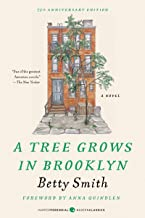
A Tree Grows in Brooklyn by Betty Smith

Smith’s beloved coming-of-age tale set in early 20th century Brooklyn is refreshingly forthright about sex. It handles both positive and negative aspects of love and sexuality (including an attempted sexual assault) with a calm directness that can set the tone for open, non-judgmental classroom conversations.

Get it here

Giovanni’s Room by James Baldwin

Baldwin is perhaps my favorite writer on sex; certainly, the rare (American) author who understands and treats sex as the physical act of love. This short novel is appropriate for older teenagers, say 16-18, and explores the tragic consequences of prioritising social conventions over human relationships. To paraphrase Baldwin, the protagonist’s problem isn’t his homosexuality, it’s that his capacity for love has been crippled by his anxiety about what people might think.

Get it here

Genderqueer: A Memoir by Maia Kobabe

Contemporary writers are creating a robust canon of books about gender identity and nonconformity. I love this graphic memoir for its matter-of-fact tone and authenticity. It highlights that gender identity is fluid and finding one’s path isn’t necessarily a linear journey — nor does it need to be.

Get it here

Persepolis 2: The Story of a Return by Marjane Satrapi

Lest you get the wrong impression about the back-to-back graphic memoir recommendations, let me quote one of my students when asked if he liked graphic texts: ‘No!’

He and I share the view that other people’s pictures get in the way of the (superior) moving pictures in our heads.

That notwithstanding, Persepolis 2 is an evocative, eye-level portrait of Satrapi’s struggles with language, culture, love and sexuality after she moved from Iran to Germany. This is a particularly strong choice for children who have immigrated or come from a cultural/familial context that distinguishes them from their classmates.

Get it here

Zenobia July by Lisa Bunker

For younger readers, this is a charming, uplifting novel about a trans girl coming into her own. Details like Zenobia stressing out about which restroom to use add verisimilitude and the plot touches on vital issues like deadnaming, cyberbullying and the importance of community without ever feeling preachy.

Get it here

When I Grow Up I Want to Be a List of Further Possibilities by Chen Chen

Sometimes, I read a book and think, wow, that was brilliant.

Sometimes, I read a book and think, wow, that was brilliant and I really want to be friends with the author.

When I Grow Up… is in the latter category. His poems about growing up as the child of immigrants, cultural tension, sexual identity, homophobia and the search for love are surpassingly deft, raw, funny, tragic, playful and defiant. They also communicate (don’t ask me how) a deep, fundamental good-personness. In a perfect parallel universe, Chen and I would go for drinks.

Get it here

What texts would you add to a literary discussion of love, gender and sexuality? Share in the comments or Tweet @CilaWarncke

10 Books About People and Movement

My students and I are about to start a unit studying people and movement. Every new course and group is a fresh challenge in curriculum development: identifying and sourcing appropriate texts, deciding on writing exercises, linking new material to previous learning.

People and movement is a tough remit for its sheer breadth. From the wanderings that brought homo sapiens from its ancestral home in Africa to the current heartbreak and chaos that reign at ultra-militarized human-made borders, there is much to absorb, understand, reflect on and debate.

And of course, movement is more than just physical displacement. People and movement must consider emotional and spiritual journeys, economic trajectories, the currents that flow between lovers or haters, the passage from ignorance to enlightenment. Movement is life: heart blood nerve impulse digestive contraction sperm meets egg infant traverses birth canal. We only stop moving when we’re dead.

Looking back at my reading list of the past few months, almost every book could be profitably analyzed through the lens of movement. The following 10 books — a mix of fiction, memoir, verse and biography — give particular insight into human dynamics, visible and invisible. Without further ado, the people and movement reading list.

Without a Net: The Female Experience of Growing Up Working Class edited by Michelle Tea

As culture gets less equal, movement between social classes becomes as fetishized as it is remote. An antidote to the reams written about the poor — Without A Net, edited by Michelle Tea — is by the poor, or the formerly poor. Though one of the key features of the essays in this book is the disabuse of the notion that someone can transcend deprivation simply by making a bit of money. Lack (of cash, of security, of stability, of self-confidence) is a persistent challenge and the writers in this anthology challenge the notion that there is a quick fix for what Richard Sennett memorably termed ‘the hidden injuries of class’.

Get it here

A Small Place by Jamaica Kincaid

Brief yet lacerating, Kincaid’s dissection of colonialism ancient and modern demands an analysis of the privilege of movement. People of certain countries, cultures and backgrounds can move freely, either as conquerors or (almost as problematically) consumers of less-privileged places. The use of the second-person pushes the reader to question their identification and position in the hierarchy of movement.

Get it here

The 1619 Project: A New Origin Story edited by Nikole Hannah-Jones

This anthology includes the longform pieces written as part of the New York Times 1619 Project, plus new essays. It examines the way catastrophic, criminal displacements of people underlie and shape United States’ culture. Kidnapping, transporting and enslaving Africans plus genocidal clearances of Native peoples created a nation that has yet to come to terms with the implications and outcomes of its past.

Get it here

Elusive: How Peter Higgs Solved the Mystery of Mass by Frank Close

Some people look outwards to understand the world, but the movement towards greater understanding often requires turning in. In the case of Peter Higgs and scores of scientists across decades, the journey was ever-deeper into the realm of subatomic particles, resulting in the eventual discovery of the Higgs boson — a particle whose movement is fundamental to the shape of our universe.

Get it here

Lowborn: Growing Up, Getting Away and Returning to Britain’s Poorest Towns by Kerry Hudson

Another intense exploration of the potential and limitations of moving between social classes. Hudson was the English equivalent of poor white trash, a circumstance which meant she spent her childhood moving from one precarious, uncomfortable, humiliating physical and social environment to another. Revisiting old haunts as a successful adult, she is confronted by how little some things have moved on.

Get it here

All the Broken Pieces by Ann E. Burg

This novel in verse is aimed at middle-grade readers but it made me weep. Told in the first-person by a Vietnamese boy who was adopted, after the war, by a couple from the United States, it gets to broken heart of violent displacement and alienation from home and culture. It also (ambitiously, deftly) addresses the emotional and physical trauma of returning veterans.

Get it here

Gravel Heart by Abdulrazak Gurnah

Nobel Prize-winning novelist Gurnah is always writing about movement; his characters roam, seek, sometimes return, are rarely satisfied. This richly textured story follows a seemingly successful immigrant who cannot outrun the pain of a mysterious childhood separation or the complexities of a family where movement failed to heal deep fissures.

Get it here

Down and Out in Paris and London by George Orwell

From scuttling frantically through the subterranean corridors of a posh Paris hotel to tramping the dusty byways of the Home Counties in search of a place to sleep and a spare meal, Orwell’s foray into poverty is marked by movement. Though distinct from his working-class counterparts by education, the young writer genuinely struggled, which — although he couldn’t help but see himself as in the world but not of it — still stands as an honest and compassionate account of poverty.

Get it here

The Island of Missing Trees by Elif Sharak

This novel was recommended by Nobel Prize-winning author Wole Soyinka, who praised its intensity and clarity. The story of lives split and twisted by tribal violence on Cyprus, it explores the penalties of flight, what it means to be rooted, and the long arc of coming to terms with the things that cannot be eluded.

Get it here

The Wonderful Adventure of Nils by Selma Lagerlof

For a final Nobel Prize name drop, this slightly surreal and unsentimental story of Nils the goose boy who accidentally gets turned into a tiny elf. Lagerlof won the literature prize in 1909, the crowning achievement of a career that included poetry, adult fiction and this classic children’s story. Bold and vivid, the tale of Nils illustrates the critical role movement can play in self-discovery and insight. At home, Nils was cruel, spoiled and selfish; after traversing the skies with a flock of migrant geese, he comes to understand kindness and survival in a new way.

Get it here

On Reading Aloud to Older Students

Reading aloud is like breast feeding: everyone agrees it is vital for the very young, but past a certain age it gets side-eye.

There is ample research on how reading aloud supports early literacy (Wiseman, 2010; Lennox, 2013, etc.).

What about reading to older students though?

Should story-time, like nursing, be confined to the earliest stages of life, or should it continue beyond the point kids can autonomously digest texts?

Photo by Annie Spratt on Unsplash

If primary function of reading aloud is to support literacy, research shows that reading to older learners “boosts their reading comprehension, increases their vocabularies, and helps them become better writers. In fact, students who are read to are more motivated to read themselves” (Blessing, 2005).

Zehr (2010) reported that, “teachers found by trial and error that reading aloud worked for adding interesting content or making literature come alive for students. And some educators say they read to their classes to model good reading, such as by asking comprehension questions as they go along.”

It is always gratifying when research supports my predilections, but I’ve been reading to older students — including adult learners — for as long as I’ve been teaching. Partly, it’s a failure of imagination: I loved being read to, cannot imagine anyone disliking it.

To be clear: my childhood pleasure in hearing books aloud had nothing to do with lack of independent reading skills. I could read by age four and would compete with myself to see how many pages I could read in a day. My record was 1,000. It was a 1,000 pages of the Paddington Bear series — not War and Peace — but the point is I read like a my life depended on it.

The pleasure of being read to was something else. Books I could (and did) read myself were still a joy to hear being read by my older sister, or one of my parents. We also tuned in to read-aloud radio programs, memorably The Hitchhiker’s Guide to the Galaxy and Jeeves and Wooster.
***

What makes reading aloud so marvelous? And why should it be part of every literature and language teacher’s repertoire?

To get another perspective, I interviewed Andie Yellott, a lifetime English teacher, former Johns Hopkins Center for Talented Youth Writing Program supervisor and parent of a child with dyslexia.

  1. Should reading aloud be continued beyond reading competence?
    Yes. Absolutely. When my son was in fourth grade, I would go in for one hour during lunchtime and read to his class. It was the highlight of the week, they told me. They loved it. They always wanted one more chapter.
  2. How did reading aloud support your son with dyslexia?
    He could not have gotten through school without me reading to him. I read everything, even the godawful high school health book. One of the advantages to reading aloud is you can stop and springboard off into other paths, other conversations, which you wouldn’t do if the kid was reading alone. And if you want a kid to do well on a standardized test, read, read, read.
  3. How did reading to your dyslexic son facilitate his communicative abilities?
    He’s got a huge vocabulary. I’d read to him, stop, ask what a word meant, try to figure it out contextually. Reading aloud to him made a difference. He thought he couldn’t write; now, he’s one of the best writers I know.

Like Yellott, I’ve had lots of student enthusiasm for reading aloud. It is more than just fun, though. Reading aloud supports specific skills, depending on whether the teacher or learner is reading aloud. Here are six benefits observed in my classrooms.

Photo by Photo by Tom Hermans on Unsplash

Teacher-led Reading

Improve pronunciation

Native and non-native speakers alike struggle with the whimsy of English pronunciation. In extreme cases, this can lead to students understanding spoken words but not being able to identify them in print, or vice versa. Reading aloud while students follow along in a text is a straightforward way to ensure that kids are matching the right groupings of letters to the sounds they hear. This is especially important for those who struggle with reading and/or are learning English as an additional language.

Build vocabulary

When students are reading independently it is difficult to gauge how well they comprehend individual words. Students may grasp the main idea of a text but miss important vocabulary. As Yellott said, reading aloud is an opportunity to identify and define unfamiliar words in context. While reading to my students, I pause frequently to check comprehension. If they don’t know a word, we search for context clues, then look up the definition to verify our deduction. This is also a great opportunity to reinforce knowledge of parts of speech, e.g. ‘this is the noun fly; what does it mean when we use it as a verb?’

Create community

Reading is too often solitary and functional, the vegetable kids have to eat before dessert. We need to remember: independently reading printed texts is a novelty. For most of homo sapiens‘ time on the planet, stories were oral. People gathered around fires, or beneath fearfully and wonderfully made cathedral ceilings, to listen to a bard/priest/storyteller. Being read to was the only way most people could experience books until the advent of mass public education, which wasn’t all that long ago.

Reading aloud in the classroom reclaims the power of the story to articulate fears, hopes and desires; to delve and reveal. Students who have a chance to respond verbally to a book: express how they feel, ask clarification questions and debate it with their peers, are axiomatically more engaged than those who skim it in lonely silence.

Learner-led Reading

Correct decoding errors

Even competent readers often make decoding errors such as ‘stared’ for ‘started’. If a student is reading silently, there is no chance to identify and correct these slips that, as they accumulate, affect comprehension. Younger and/or less able readers are more likely to make these mistakes, so reading aloud is an ideal tool to support their literacy.

Understand punctuation

If Emily Dickenson was right and “a word is dead./When it is said” then spare a thought for punctuation. Students can learn the function of commas, colons, etc. through direct instruction but that doesn’t automatically translate to competent — much less creative — usage in their writing. One of the best (only?) ways to understand the delicious possibilities of punctuation is to read aloud. By treating the punctuation as a kind of score — lift the voice here, pause, slow down, shout! — students develop the ear for punctuation that every good writer must have.

Improve verbal fluency and confidence

We tend to think of fluency in the context of learning an additional language, but it isn’t just language learners who need to practice this skill. Learning difficulties, lack of a richly verbal home life and shyness are a few of the reasons native speakers may struggle to express themselves fluently in their language. For students who struggle to articulate, whether because they are acquiring the language or for some other reason, reading aloud takes the pressure off of deciding what to say, and allows them to focus on how to say. Reading well-written texts gives students a chance to see how successful communication sounds; they can practice pronunciation, enunciation and tone without the risk of error. Ideally, they can inhabit the voice of the text and, in bringing it to life, experience the possibilities of their own voice.

Parting thought

In Sense and Sensibility the ‘sensible’ (i.e. sensitive) sister Marianne falls in love with Willoughby in part because “he read with all the sensibility and spirit” his rival lacked. In Jane Austen’s time, to read aloud well and fluently was a mark of refinement and good taste. As our world becomes more digitized, text-driven and fragmented, reading aloud is due a renaissance. Anyone can jab out a text; to read a book with eloquence and feeling, though? That’s magic.

How do you feel about reading aloud to older students? What benefits/challenges have you observed? Share in the comments or Tweet @CilaWarncke

10 Great Novels for Teen Readers

Great books help develop strong readers. And strong readers are capable of learning just about anything.

One of the joys and challenges of my job as a literature teacher is to continuously find exciting, engaging stories that will resonate with teen readers. To that end I read A LOT and am always on the look out for recommendations (if you have any, please jump to the comments and share!)

In 2022, I read more than 120 books. These 10 stood out as great novels for teenagers.

A Tree Grows in Brooklyn

by Betty Smith

Somehow, I missed this classic coming of age story when I was a kid. Shame. A Tree Grows in Brooklyn is a startling, unsentimental portrait of growing up poor in Brooklyn in the first years of the 20th century (the book ends with rumors of war). It doesn’t gloss the ugliness of abject poverty, alcoholism, sexual violence and ethnic conflicts yet it neither preachy nor maudlin. The characters are given the dignity of being complex, alive and changeable. Unmissable.

Cool for the Summer

by Dahlia Adler

This contemporary novel about a teenager girl exploring her sexuality is the best of a whole bunch I read on said theme. Middle schoolers desperately need affirmative, healthy messages about sex and sexual identity. The protagonist of Cool for the Summer is awkward, confused, obnoxious and authentic. She drinks, she swears, she screws up. She starts to figure out how to figure it out. When she finally kisses her new girlfriend at the end, there is a satisfying sense of hard-won self-awareness and acceptance.

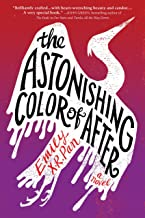
The Astonishing Color of After

by Emily X.R. Pan

Apparently, this novel about a girl coping with the aftermath of her mother’s suicide is ‘magical realism’, a genre I would cross the road in front of a speeding semitruck to avoid, in most instances. In this instance, the fantastic and surreal are an effective (perhaps essential) means for communicating the displacement of grief. The protagonist’s gradual immersion in her mother’s language (Mandarin) and birthplace (Taiwan) offers hope and challenge, and, for the reader, insight into the complexities of biracial identity.

Long Way Down

by Jason Reynolds

This novel-in-verse won all the awards, and rightly so. It follows the 15-year-old protagonist as he takes a long, slow elevator ride towards destiny. Will he use the gun tucked in the back of his trousers to avenge his brother’s violent death? Or will he break The Rules? The pacing is taut, the use of language superb, and the voices unforgettable.

A Single Shard

by Linda Sue Park

This was officially my first foray into historical fiction about 12th century Korea. Let it be yours. The amount of research packed into every page makes me quiver with admiration for its author. Middle school kids probably won’t notice or care about all the work behind the scenes, though, they’ll be too busy chewing through the crisp, lovely prose about a young orphan’s apprenticeship to a master potter and the tough choices he has to make.

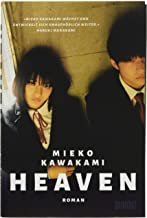
Heaven

by Mieko Kawakami

I’m not sure if this is properly an adult novel with YA characters, or a YA novel. In any case, it’s fantastic for 8th graders, as it is a tough, unsparing exploration of issues that many kids face: bullying, divorce, parental absence, social awkwardness, sexual frustration and suicidal ideation. Don’t be misled though; it is anything but grim. There is life, and hope, which feels all the more authentic for being complicated.

All the Broken Pieces

by Ann E. Burg

Another novel-in-verse, told in the first person by a Vietnamese boy who was adopted by a couple in the United States after the war. The struggles with traumatic memories, guilt, racism and alienation are predictable. What is not is the heart-rending yet uplifting way he learns to cope, with a little help from his parents, a disabled baseball coach and a room full of veterans.

Frankly in Love

by David Yoon

This is just your typical hyper-ambitious YA novel that deals with racism, immigration, generational conflict, sex, friendship, LGBTQ+ identity and academic pressures. Just kidding. There is nothing typical about this fast, funny but also totally serious novel about a boy leading a double life: calculus-conquering son of Korean immigrants by day and kinda clueless, hopped-on-hormones American teenager who just wants to have fun.

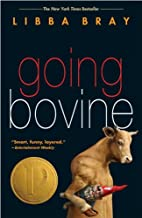
Going Bovine

by Libba Bray

To paraphrase Hunter Thompson, when the going gets weird, the weird go bovine. I stumbled across this while looking for postmodernist teen fiction and boy, is it that. A fast-and-loose riff on Don Quixote, it is packed with drugs, sex, bad decisions, talking garden gnomes, fatal neurological conditions, magical jazz artists and… really, just read it. Preferably in one sitting. It’s louche, loud and OTT: perfect for older teens.

The Story that Cannot be Told

by J. Kasper Kramer

Inspired by Romanian history and folklore, this ode to the power of words follows a girl growing up in the insane reality of the late days of Ceaușescu’s dictatorship. Peril is always close to hand, often due to her innocent mistakes, but stories have a way of helping make sense of things. And of changing the endings of real-life situations. This is a perfect book for kids who like historical fiction, folktales and fantasy.

Recommend a great book for middle schoolers in the comments, or Tweet @CilaWarncke

PDX Indie Bookstores

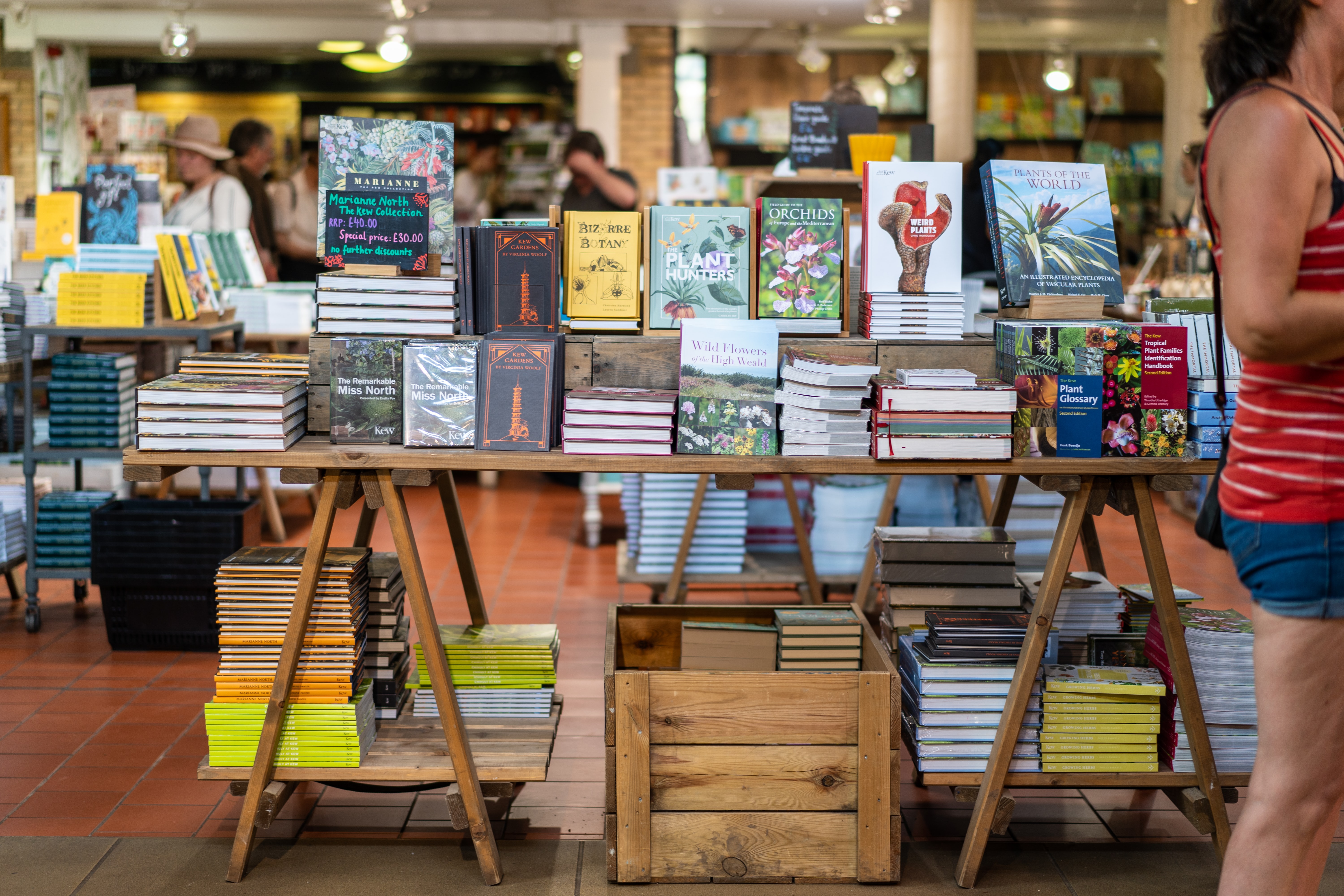
Portland, Oregon has a well-deserved reputation as a bookish city. Its literary climate springs, in part, from its actual climate. During the months of interminable rain it is natural to retreat to bookstores and libraries, or curl up at home with a favorite volume. The city’s creative energy, fueled by coffee, craft beer and local wine, helps foment works of imagination by local writers. Harvest the fruit of their labors at these book stores.

Photo by Rumman Amin on Unsplash

Annie Bloom’s Books

http://www.annieblooms.com

This small but venerable indie bookstore in the heart of Multnomah Village, on the west side, has been dishing out literary goodness since 1978. It sells new books, with a focus on fiction, children’s and young adult, travel, current events, and cooking. Plus it is a great space to browse for magazines, art supplies, puzzles, and cards.

Broadway Books

http://www.broadwaybooks.net

503-284-1726

This Northeast Portland stalwart is particularly strong on stocking local writers. Subject matter is wide open, with offerings of fiction, non-fiction, poetry, graphic novels and more. You will find personalized material from local authors like Cheryl Strayed, who has the honor of a section dedicated to signed copies of her work.

Powell’s City of Books

http://www.powells.com

No mention of the PDX literary scene would be complete without a nod to Powells’s, City of Books. As the biggest thing in local literary retail it is a huge draw for both writers and readers alike, who can spend happy hours browsing its immense color-coded collections. I’ve been hanging out at Powell’s since I was a kid (when I gravitated to Nancy Drew mysteries and Marguerite Henry horse stories). Whatever you go looking for, you generally come out with something different, which is most of the fun of it.

Wallace Books

https://www.facebook.com/wallacebooks

The most adorably clapboard, overstuffed used bookshop imaginable, Wallace Books is a throwback to the eclectic, eccentric wonderful bookstores of my childhood. Its charming exterior beckons you in and its sprawling collection rewards languid browsing. Take your time.

What’s your favorite indie bookshop? Big it up in the comments!

36 – Audre Lorde

This brief tribute to poet and activist Audre Lord was originally published on Medium.

Image for post
Lorde’s essays and non-fiction

Bio:

Audre Lorde blazed into my consciousness, a star whose light reached my world after she was dead. Only, she’s not dead. Lorde lives in her resounding words; lives in her multiple consciousnesses as a “black, lesbian, mother, warrior, poet”; lives as an embodiment of unflinching personal and political courage.

My first approach to her was slant — the final line Ta-Nehisi Coates’ “Acting French” in which he declared “Sometimes you do need the master’s tools to dismantle his house.” I scribbled it down, the pearl amidst the sludge of half-developed ideas.

Months later, when I realise he’d cribbed Lorde’s “the master’s tools will never dismantle the master’s house” I was ashamed of my ignorance, ashamed I had accidentally attributed to a man the words of a wiser and more powerful woman. I was angry, too. He should have acknowledged her, not assumed (or pretended to assume) that a white audience would recognise the words of a black, lesbian, mother, warrior, poet.

It’s the kind of slight (mine, his) that Lorde knew all too well. The kind of diminishing by accident or design that she wrote about with immaculate precision and righteous anger.

Lorde knew all about injustice but never let herself accept or become accustomed to it. This shines in her writing and the boldness of her life. She refused categories, as an artist or a human being. She married a (white) man, had two children, left her marriage and had a long-term partnership with a (white) woman. Her poetry can be excoriating, her prose comforting, her voice demanding.

What remains, along with her words, is the sense that she was a whole woman — undivided from herself, despite the complexities that other, less aware (less courageous?) people compartmentalize. Humming like a live wire through her work is this message: live your life, as yourself.

Image for post
Lorde’s poems

In her own words:

“Those of us who stand outside the circle of this society’s definition of acceptable women; those of us who have been forged in the crucibles of difference — those of us who are poor, who are lesbians, who are Black, who are older — know that survival is not an academic skill. It is learning how to stand alone, unpopular and sometimes reviled, and how to make common cause with those others identified as outside the structures in order to define and seek a world in which we can all flourish. It is learning how to take our differences and make them strengths. For the master’s tools will never dismantle the master’s house. They may allow us temporarily to beat him at his own game, but they will never enable us to bring about genuine change. And this fact is only threatening to those women who still define the master’s house as their only source of support.” — “The Master’s Tools Will Never Dismantle the Master’s House”

“A policeman who shot down a ten year old in Queens
stood over the boy with his cop shoes in childish blood
and a voice said “Die you little motherfucker” and
there are tapes to prove it. At his trial
this policeman said in his own defense
“I didn’t notice the size nor nothing else
only the color”. And
there are tapes to prove that, too.

Today that 37 year old white man
with 13 years of police forcing
was set free
by eleven white men who said they were satisfied
justice had been done”
– from “Power

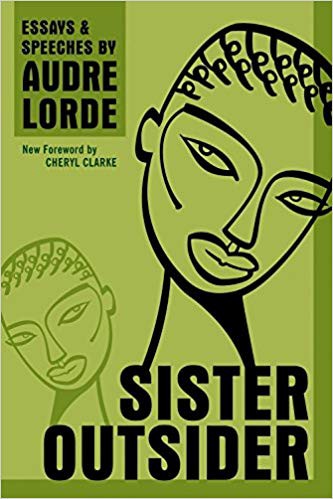
“The quality of light by which we scrutinize our lives has direct bearing upon the product which we live, and upon the changes we hope to bring about in those lives… As we learn to bear the intimacy of scrutiny and to flourish within it, as we learn to use the products of that scrutiny for power within our living, those fears which rule our lives and form our silences begin to lose their control over us.” — from Sister Outsider

“I have been woman
for a long time
beware my smile
I am treacherous with old magic
and the noon’s new fury
with all your wide futures
promised
I am
woman
and not white.
– from “A Woman Speaks”

Further reading:

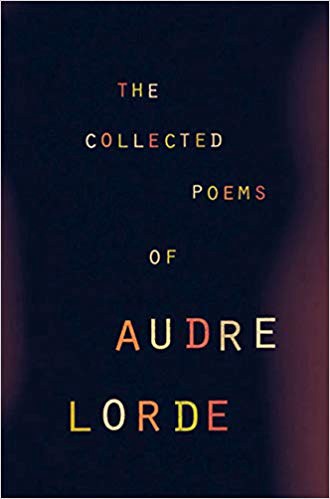
The Collected Poems of Audre Lorde
Sister Outsider: Essays and Speeches
The Cancer Journals