

Life never ceases to be difficult, to paraphrase Rilke. Amidst its slings and arrows, there is often little to comfort and guide.
Without generous writers, there would be almost nothing.
Among recent difficulties faced by myself, or someone I love: bereavement, major surgery, significant medical diagnoses, divorce, conflict with parents, conflict with children, unemployment.
These are not remarkable events, statistically. Yet, to the individual, they are as life-altering as Krakatoa. If anything, the cognitive dissonance of knowing the event to be universal versus the all-consuming personal experience of trauma makes it harder to cope.
We need wise friends to walk these dark halls. But unless we’re lucky, and our friends unlucky, we are not likely to find the necessary wisdom in our immediate social circle. Shared experience can as easily drive a wedge as forge a bond.
Into this gap step writers whose words offer perspective without judgment, comfort without reciprocity and infinite patience. They sit at our bedside in the small hours, walk with us, accompany us raging, glum, drunk, frustrated or frightened.
Their generosity lies in a willingness to delve into the most difficult parts of their lives and, through grit and creativity, distill their thumb-screwed wisdom into something readers can use.

Imagine being lost at sea on a leaky boat. Most of us would consider feel heroic merely staying alive. But a writer would be thinking: how can I help the next person who finds themselves out here?
They would be jotting notes about tides and winds, describing how to make a fishing line out of dental floss, giving tips on bailing and load-balancing.
Although this sense of purpose may be sustaining, it does not mean the work is easy. The generosity of writers lies in their willingness to labor during their most difficult experiences to give hope to those caught in similar currents.
The following are seven books that exemplify this generosity: all by women, whose emotional work is routinely undervalued, on the page and elsewhere.
Seven Generous Books
The Elements by Kat Lister
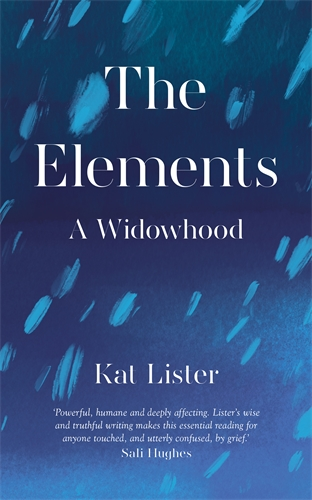
Most couples in their 30s are settling into their first homes, thinking about kids; Kat Lister and her husband, Pat Long, did those against the ticking clock of his brain tumor, which was discovered before their wedding. They lived the few years they had together with uplifting, illuminating grace. When he died, Lister was left to navigate the anachronisms of young widowhood, a trial by water she recounts here with bold, Didion-esque honesty.
Transcendent Kingdom by Yaa Gyasi
Generosity is not constrained by genre. While we may assume that memoir has the most to teach, the ruthless craft required of good fiction offers equal — or even greater — opportunities. This novel, which begs to be described by its titular adjective, unpicks grief, addiction, survivor’s guilt, and the complicated strands of rejection, assimilation, belonging and othering woven into immigration, racism and religion.
A Three Dog Life by Abigail Thomas
Perhaps the only thing more appalling than the death of a partner is losing a partner in mind, not body. Thomas’s memoir invites the reader into the Kafka-couldn’t-dream it surreality of life following her husband’s traumatic brain injury (TBI). Along with grief, come care decisions, guilt, frustration, and no one to share the challenges.
Why be Happy When You Could be Normal? by Jeanette Winterson
Read this with its fictional counterpart, Winterson’s debut novel, Oranges Are Not the Only Fruit, to fully appreciate her generosity and courage. By the time she wrote this memoir, Winterson was a revered literary figure and bona fide success story. To admit, from that height, to the haunting power of childhood trauma could have seemed an admission of weakness. Her vulnerability is potent and empowering.
Nomadland: Surviving American in the 21st Century by Jessica Bruder
Please read the book; the film (brilliance of Frances McDormand notwithstanding) does it no justice. Nomadland exhibits another form of authorial generosity: the willingness to put one’s life aside to bear witness to the lives of others that would otherwise go unrecorded. The crushing, mechanistic cruelty of late capitalism comes to vivid life through Bruder’s painstakingly reported account of life on the dusty, bald-tire fringes of the so-called American dream.
A Manual for Cleaning Women by Lucia Berlin
Every time I pick up A Manual, I wind up reading it all the way through. Berlin’s autofiction is enthralling, terrifying, devastating on multiple levels. The writing is almost too sharp and bright to look at (forget window pane, this is prose as emergency flare) which is necessary magic given the gut-punch tales it tells. Stuff that in lesser hands, or played straight, would be unendurable, is transmuted into stories that soar and hover on the thermals of your mind.
Foreverland: On the Divine Tedium of Marriage by Heather Havrilesky
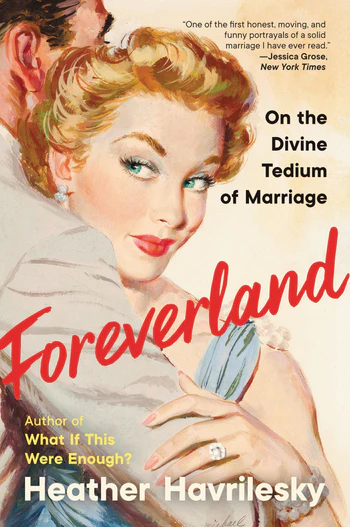
It is one of life’s slipperiest tricks that the things we’re taught to crave and cherish are (surprise!) headaches too. Marriage, at least happy marriage, is perhaps the quintessential sacred cow; the immutable good thing one should pursue without question. Thank goddess, then, for Havrilesky who seems to operate from the position that sacred cows are best served medium-rare. Her brave assertion of the inconvenient truth that true love and explosive exasperation are not mutually exclusive is a pinpoint of light in what might otherwise be a suffocating dimness.
What are your life-boat books? Share in the comments!










 Cila Warncke Writer