On Cultural Cross-Pollination

One of the things that has been (is) vital to my success as a writer and educator is the fact that, from a freakishly young age, I’ve read everything.

Nutritional information. Ancient magazines in waiting rooms. Bumper stickers. Barbara Tuchman. The Lord of the Rings. Gossip magazines. Feminist blogs. Not-so-feminist blogs. James Baldwin. Germaine Greer. Cormac McCarthy. Joan Didion (again and again and again). Orwell. Eliot. Hardy. All the Brontes. Shakespeare. Jack Gilbert. The Bible. The Odyssey. Ulysses. Greek myths. Native American myths. Books on veganism, endurance running, Arctic exploration, gardening, history, booze, the Spanish civil war.

The more I read, the more visible the threads that twitch through the living fabric of literature: allusion, image, theme; the homage, the salute, the nod, the whisper from dead to living to the spirits.

Reading like a starving person at a buffet cultivates a literary meta-perception I cannot imagine arriving at any other way. It leads along skewed yet sound philosophical paths, such as the one that follows.

***

Q: What’s the difference between Charlie Brooker and a Buddhist nun?

A: Not much, it turns out.

For those of you who aren’t familiar, Charlie Brooker is a British writer, satirist (tough job these days), and broadcaster. He dislikes most things and swears a lot. The nun I have in mind is Pema Chodron, an American Buddhist teacher and author.

How did I arrive at this improbable conclusion that these unlike people are very much alike? It started with binge-reading Pema Chodron. Sometimes books, like people, appear in your life and you wonder how you lived without them. They bring a fundamental shift of energy and wisdom that kicks down a door in your brain, shines light into a black room and blows away the dust.
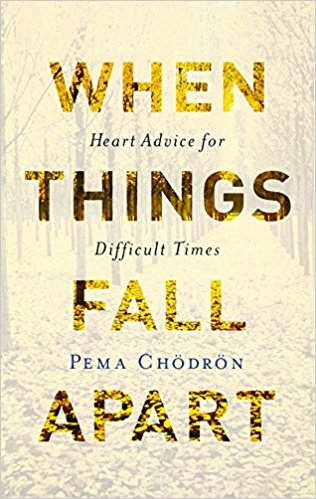
One of Chodron’s books cropped up on the shelf of an Airbnb in rural Arkansas. Stealing it seemed like bad karma, so I went to Amazon for When Things Fall Apart and The Wisdom of No Escape. I was reading the latter on a flight to London, trying to jog myself out of a weird funk. The world felt like it was shrinking around me. Telltale clumsiness had emerged: dropping things, taking wrong turns, sending idiotic emails, all the usual signs of a swerve into depression. I needed to hear something good.

Chodron writes things like:

Our wisdom is all mixed up with what we call our neurosis. Our brilliance, our juiciness, our spiciness, is all mixed up with our craziness and our confusion, and therefore it doesn’t do any good to try to get rid of our so-called negative aspects, because in that process we also get rid of our basic wonderfulness.

Don’t you feel better, saner, more worthy, just reading that?

How about:

Loving-kindness — maitri — towards ourselves doesn’t mean getting rid of anything. Maitri means that we can still be crazy after all these years. We can still be angry after all these years. We can still be timid or jealous or full of feelings of unworthiness. The point is not to try to change ourselves. Mediation practice isn’t about trying to throw ourselves away and become something better. It’s about befriending who we are already.

That’s how she thinks, speaks, writes. Chodron exudes calm. Her philosophy is that people are basically good and need only to wake up that inner goodness.

Charlie Brooker begs to differ. “I don’t get people,” he writes. “What’s their appeal, precisely? They waddle around with their haircuts on, cluttering the pavement like gormless, farting skittles. They’re awful.”

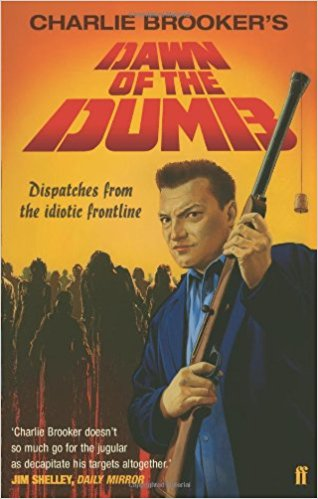
That’s from Dawn of the Dumb, a collection of his “Screen Burn” columns for the Guardian from October 2004 to June 2007. The dates are significant because that was the pinnacle of my London music journalist/gadabout phase. It spanned my final year at Q, another year on a now defunct music magazine, and a stint as a promotions coordinator for a megalomaniac.
Good years, spent in a delicious, mindless haze of 9-to-5, city breaks, cohabiting, cult TV, and the Saturday Guardian: a newspaper that was the lynch-pin of a way of life, shorthand for everything that was important at the time: London, media, “culture”, aspirational cooking, self-conscious irony.

We didn’t watch loads of TV, but what we did was almost exactly what Charlie Brooker was writing about in “Screen Burn” (with the exception of The Apprentice, which I could never stomach). It wasn’t a matter of seeking out the shows he reviewed, more that he unerringly targeted the excruciating and gawp-worthy. Which we happened to watch for those precise reasons.

Finding Dawn of the Dumb amidst the pile of discarded holiday reads in the foyer of our building was like discovering a time capsule from that slice of my life. It took me back to an innocent time when the prospect of David Cameron as prime minister was just a horrible fantasy, and Big Brother still launched careers (if you can call them that). To my surprise, I still remember most of the BB contestants he skewers, a decade later, not to mention various X-Factor one-hit wonders.

Brooker makes it worth revisiting. He can make almost anything funnier and more vivid than real life. Take his description of Glastonbury music festival:

Once you’re in, the sheer scale of it is initially overwhelming. Imagine forcing the cast of Emmerdale to hurriedly construct Las Vegas at gunpoint in the rain. Then do it again. And once more for luck. That’s Glastonbury: a cross between a medieval refugee camp and a recently detonated circus.

As a veteran Glasto-goer, I promise that is the best description of it you will ever read.

I also watched the pilot of Prison Break, which he summarises thus:

Prison Break is possibly the dumbest story ever told. It makes 24 look like cinéma vérité. It’s as realistic as a cotton-wool tiger riding a tractor through a teardrop. I’ve played abstract Japanese platform games with more convincing storylines.

Brooker writes like a butcher dismembering a cow and most of the time his (metaphorical) knife is hacking at a hapless reality show contestant or D-list presenter. Not, you might think, of a piece with Chodron’s all-embracing gentleness.

Yet through them both runs a thread of intense compassion. Brooker’s rage isn’t at individuals, per se, it’s at the cruelty, greed or stupidity they manifest on TV. His purest vitriol is aimed at psychics that prey on the “grieving and desperate”. No matter how artfully furious, his columns boil down to one message repeated over and over: The world’s a mess, people are a mess, we need to be better and nicer to each other if we’re going to get through.

Charlie Brooker may disagree with this characterisation of his intent, but read the books: it’s there. Like Pema Chodron, he believes people can be better if they just wake up. His method is bucket of ice over the head accompanied by a swift kick to the kidneys versus her cultivate mindfulness and be friendly to yourself but they point the same direction.

This proves Chodron’s point about brilliance/craziness. There is no single right way to do things. You can sit in meditation and learn to love each out-breath. You can also sit, shrieking, in front of crap TV. It’s not just what you do — it is the intent and spirit in which it is done.

The corollary to that is you can learn from all sorts of things. Laughing till I cried over Dawn of the Dumb was as mind-altering as mulling The Wisdom of No Escape. Don’t shut things down, they both counsel. Keep your eyes and mind wide open, and try to laugh.

What is a culture-clash that inspired you? Share in the comments!

On Suede (band, not shoes)

Writing is integral to my teaching process and practice. When I publish, it is a privilege to share.

Pennyblackmusic.co.uk runs a regular feature called Discography Hagiography. In which, as the name suggests, music nerds get to publicly worship bands they love.

Imagine my delight when editor John Clarkson gave me the nod to write about Suede on the occasion of the band’s 30th anniversary and mind-bendingly good LP, Autofiction.

Writing this brought me joy. May reading it bring you joy.

(Below, an excerpt. Full article here. Photos are illustrative, not of Suede.)

Photo by Chris Spalton on Unsplash

Suede: Discography Hagiography

In 1998, I walked into a record shop on Philadelphia’s South Street to return a damaged Bush Sixteen Stone CD.

No refunds, the proprietor said, pick something in exchange.

Crouched on the wooden floor, I scanned the bottom shelf. The London Suede rang a bell. I studied the androgynous/ambiguous nude puddled in ghastly underwater green. On the back, the name ‘New Generation’ popped (it was on a mix CD from my brother). Sold.

This was the start of a semi-obsessive love affair, a fact I offer as an excuse for my inability to present a concise career appraisal of Britpop’s most reckless proponents. This will be a true hagiography, with the irrationality and ellipses that veneration of a saint implies.

Suede shook my foundations the same way some people have: not love at first sight, exactly, but recognition – an undefinable, undeniable, life-altering entrance into the presence of one who is known and knows in return.

Brett Anderson was the first person I heard pronounce ‘mascara’ mass-kah-rah; I had no idea what a pebble-dash grave might be nor, for that matter, an estate car. But Suede stirred my emotions and imagination long before any first-hand experience of strobe-lit nightclubs, ecstasy-blown pupils or the grey lassitude of Home Counties Sunday mornings.

It is hard for me to see beyond the moments of delicious chaos to which Suede was the soundtrack to consider its oeuvre. Nevertheless, stepping back so the wheat field emerges from the golden streaks, yields an equal reward. Suede’s motifs are plainer at arm’s length; Brett Anderson’s lyrical fixations and vocal affections more obvious; but they are the beloved particularities of an old friend.

Listening to the albums chronologically, it is striking how well Suede wire walks between internal consistency and rote predictability. The Suedeness rarely drifts into play-by-numbers or self-parody. While contemporaries like Blur and Oasis lean on nostalgia or WWF-style public spats to generate attention, Suede stormed into its 30th anniversary year with the irresistible Autofiction and a tour that had the oft-contrarian music press singing from the same hymn sheet:

  • “Brett Anderson is absolutely mesmerising. You can’t take your eyes off him” (Taylor, The Mancunion).
  • “If this really were an unknown new band with no reputation to trade on… you’d tell your friends they’ll go far” (Lynskey, Guardian).
  • “Perhaps it’s possible to will a transcendent experience into existence, but this Suede concert fulfilled 25 years of dreaming” (Harris, Spectrum Culture).

Suede (Nude) 1993

That Suede managed to live up to the hype preceding its eponymous debut is impressive; as is the fact that the curse of the Mercury Music Prize has yet to catch the band, three decades on.

Suede invited its audience into a claustrophobic, chemical-laced neverland built on the post-Thatcherian ashes of Britain’s social contract. There is no overt politicking; the lyrical bleakness speaks for itself: ‘in your council home/he jumped on your bones’ (‘Animal Nitrate’) to ‘in the car he couldn’t afford/they found his made-up name/on her ankle chain’ (She’s Not Dead’).

Brett Anderson embodied a sleazy-sexy interface of frustration and hedonism, offering a Wildean aestheticisation of ennui, deprivation and dead-ends that is as hypnotic – and apropos – in the 2020s as it was in the early ‘90s. ‘The Drowners’ is an apt term for the generation coming of age to Brexit, Covid and Toryism. As a debut single, ‘The Drowners’ is also an effervescent blast of indie power-pop that, for its four-minute duration, erases everything except what matters: sex and music.

Like Wilde, Anderson intuited that power aligns against truth, beauty and self-expression. Defiance ain’t much, but sometimes it’s all you’ve got. Hence the avant-garde sexual ambiguity, charity shop-chic shrunken white shirts and midriff-baring pleather and gilt pirate hoops framing diamond-cutter cheekbones. Live performances from 1993 (check out ‘My Insatiable One’ from the Casino de Paris; ‘Animal Nitrate’ from Brixton, London) are fresh and daring. (It is hard to imagine that The 1975’s Matty Healy doesn’t owe at least some of his hyper-emotional, dissolute, sexually fluid stage persona to Anderson.)

Track after track, Suede rings true, powered by Bernard Butler’s starry guitar, bassist Mat Osman, drummer Simon Gilbert and keyboardist Neil Codling. From the wistful ‘Breakdown’ (‘if you were the one/would I even notice, now my mind is gone?’) to the menacing glam stomp of ‘Metal Mickey’ – a song that deserves to be danced to in gold DeHavillands if ever one did – it retains a zest and urgency that belies its age.

Dog Man Star (Nude) 1994

This was my gateway Suede album; ‘New Generation’ on repeat, chasing the dopamine rush of its glittering opening riff (cherish those riffs – this was Butler’s last proper album with Suede; nobody did it better). ‘New Generation’ is the highlight of a record that suits melancholic adolescence but, to my adult ears, could do with rigorous editing. Or, perhaps, it would be more accurate (fairer) to say that the range of situations in which Dog Man Star’s emotional tenor feels relevant and urgent has narrowed with age.

The excellent ‘Heroine’ is more than a track, it’s an atmosphere. Anderson’s drug use has been chronicled ad nauseam, so I shan’t bother, but chaos and indulgence cast distorting shadows over tracks like ‘Daddy’s Speeding’, ‘This Hollywood Life’ and ‘Asphalt World’ – the latter a sublime four-minute ballad that meanders for more than nine minutes. (Nick Duerden called the album, ‘the most pompous, overblown British rock record of the decade.)

When restraint is exercised, the results are timeless: the raw snarl of ‘Introducing the Band’, whose Winterland reference introduced me to a seminal moment in punk history; ‘The Wild Ones’, a downbeat beauty that sound-tracked a number of my heartbreaks; and the hauntingly sweet piano lament ‘The 2 of Us’, which makes you want a broken heart, just to enjoy it properly.

Considering it appeared just 18 months after Suede’s debut, Dog Man Star attests to the raw brilliance of a band that was driving with both feet on the accelerator and only the occasional hand on the wheel.

Autofiction (BMG) 2022

The image of a nude with back turned to the viewer is a throwback to Dog Man Star but there are important differences: the lens is closer so the body fills the frame; the lines of muscle and bone are clear and vigorous; instead of awkwardly bent, the arms hug the torso in a gesture of comfort or reassurance. Instead of disaffection and despair, the black-and-white shot evokes vulnerability tempered with strength; containment rather than dissolution.

Suede’s ninth studio album delivers on the implicit promise of its striking cover: intimate, strong, self-contained, vulnerable, bold. Opener and first single ‘She Still Leads Me On’ took a few listens to worm into my neurons; it is now embedded there and generates the same dopaminergic kick as vintage favourites like ‘New Generation’ or ‘Killing of a Flash Boy.’

True to form, the next two tracks keep the intensity at a killing pitch: ‘Personality Disorder’ is a cocky, raucous snarl that pulls off the not-easy feat of wedding spoken-word verses with an arena-sized chorus. Then Anderson snaps into ‘15 Again’ with the whip-crack lyric: ‘Nothing is as bad as the time we kill/ sitting in the bathroom in kitten heels’.

Praise be. The band is back, as and how and when we need it most: dripping sweat, spitting defiance, yielding and pushing, feeling with us how it feels ‘on the black ice with no headlights/ with our hands off the wheel’ (‘Black Ice’).

From the soaring ‘Shadow Self’ to the full-throated stomper ‘That Boy on the Stage’ to the pensive ‘Drive Myself Home’ the album flows between moods and moments with cohesion and conviction. If the first act of adulthood is renouncing childish ways, the second is realising that the kid inside never goes away; maturity is integrating all the aspects of self without apology.

Anderson and co. have done so and created a truly mature album, buoyant with the shimmer and swagger of youth yet sober with the wisdom of years. ‘I’m not the kind of person who never feels uncertain/ so many ways to do what I do wrong’, Anderson muses (‘The Only Way I Can Love You…’) but – however many ways there are to do what he does wrong – he does none of them here. Autofiction is, quite simply, a triumph.

After spending several weeks immersed in Suede, two things remain to say: 1) if Autofiction were the last album, it would be the pièce de résistance of a luminous career; 2) I’m pretty sure it won’t be. And that is good news.

What’s the band that changed your life? Share in the comments!

On Beginnings with Melissa Madenski, Pt 1

Welcome to ‘Between the Lines’ – interviews with teachers, writers and writing teachers on specific aspects of their craft. This interview will be split into two posts to do justice to Madenski’s generous sharing of time and wisdom. Part 1 covers her biography and writer’s origin story. Part 2 will focus on craft and teaching.

Full disclosure: Melissa and I have known of each other since I was growing up in Lincoln City, Oregon; her children attended my mother’s day care. About a decade ago, I reached out and shared some of my writing. She responded with characteristic generosity and has become a dear friend, mentor, exemplar.

Photo: Hallie Madenski

“I’ve had everything in my life I wanted, but not one thing went according to plan.”

Melissa Madenski delivers this statement with poise that belies the extraordinariness of the claim.

White hair frames dark tortoiseshell glasses and silver hoop earrings. A boho-chic bob to make Anna Wintour green. The kindled joy in her eyes refracts through the the kitchen-dining-living space of her Portland, Oregon home, which is as spare, chic and elegant as she: drip coffee-maker, glass-fronted book shelves, black-and-white prints on crisp white walls.

Elsewhere, these might be bland markers of commodified good taste. But they are Madenski’s tools: functional and essential as carpenter’s adze or blacksmith’s tongs.

Born and raised in Portland, Madenski moved to the Oregon coast as a young woman, taught school, married, had children. One imagines a life rich in the delights of partnership and parenthood: time-poor, perhaps, but abundant in laughter. A time to make one say, “I’ve had everything I wanted.”

But: “Not one thing went according to plan.” The rosy narrative ended in a thunderclap moment when Melissa’s husband, Mark, died, aged 34. Their children, Hallie and Dylan, were one and six years old; their hand-built wooden house in the Siuslaw Forest unfinished.

“My healthy, athletic husband had simply stopped breathing,” she wrote in her 2015 essay, ‘Starting Over.‘ “We would soon learn that an arrhythmia shook his heart until it stopped.”

Such an unthinkable, unspeakable loss can drive unbelievers to their knees and turn Christian soldiers into atheists. How many people, in that crucible, muster the grace to craft an original response?

Madenski mustered — no — created that grace.

“That’s when I started to write every morning,” she recalls. “I missed Mark very, very much; I held onto writing for my sanity. I’m not an early riser, but I’d set my alarm for 4:30. It was a wood-heated house, so, freezing. I’d stick my head under well water – also freezing – make a latte, then shut myself in my office.”

Deep roots

Though Madenski traces her deliberate writing practice to the cataclysm of loss, its roots reach across generations and oceans.

The youngest daughter of a traveling salesman and a homemaker, Madenski grew up in Portland, happy to daydream alone beneath a spruce tree in their yard. Her grandmother, an immigrant from Norway, lived with them. “I credit her with raising me. She told me lots of stories.”

They were the stories of a vibrant and spirited woman who “hiked, rode horses, lived in logging camps.” A woman who knew, too, what it was to be struck by fate.

A burst appendix led to an infection that ruined her grandmother’s hip. In an era before accessible replacement surgery, this irredeemably altered the last 30 years of her life.

“She lost everything that she loved.” Madenski sits with her memories for a moment, then continues. “My grandmother been a seamstress, so my mother would bring her thread and fabric. She sowed until the last three days of her life. It was like writing: the one thing no one can take away.”

Another thing no one can take away: the example of a woman who chose not to be defined by suffering, but to — Penelope-like — stich and unpick, stitch and unpick, until the stitching and the unpicking became a new tale.

Meandering path

Though “drawn to stories,” Madenski didn’t want to be a writer. “As a kid, I only wanted to imagine. I would go to bed early, lay there and create stories where I was always the heroine.”

Madenski was a voracious reader. But it wasn’t until high school that writing began to glow as an idea.

“I had a magnificent teacher, Ruth Strong. She was a botanist as well, who after she retired wrote Seeking Western Waters – the Lewis and Clark Trail from the Rockies to the Pacific.

She was the first person who said I was a writer; the first person to believe in me as a writer. There was no big lineage: I kept a boring diary, which thankfully was lost in a house fire, but what I’ve come to believe is that so much of writing is story. We are wired for narrative. We’re wired for beginning middle and end.”

Despite the brush with inspiration, Madenski began “a traditional path”, earning a degree in elementary and special education from Portland State University.

Her first job, age 22, was teaching second grade in a public elementary school. “It was hell,” she says. Disadvantaged students. A teachers’ strike. The inevitable tribulations of being green and unschooled. “It was trial by fire. I witnessed things I’d never seen. I had to learn to report abuse. Teaching wasn’t teaching, it was trying to keep people’s head above water.”

The steeliness of her working-class Scandinavian ancestry flashed when she refused to sign a contract for the following year until the principal promised things would change.

After fulfilling her childhood dream of moving to the beach, Madenski taught at Oceanlake Elementary in Lincoln City and at a private school in Neskowin. Although she calls the freedom and miniscule class sizes of independent schools “heaven,” she is quick to say, “I believe in public schools.” Only there did she find the diversity that stretches and challenges.

Photo by Chris Henry on Unsplash

Beginning (Again)

Mark’s death precipitated her out of conventional classrooms. “There are single women who could raise kids and teach, but I couldn’t. I had some insurance money and the house, and thought, I’m going to piece things together.”

Her next first job was driving to Hebo Ranger Station to teach English to migrants employed in the local dairy industry. “It was a good time to not be alone. I was in grief, but so were they,” she muses. “Dairy milking is a hard job, they were sending money home to Mexico, but they had the most wonderful stories.”

Teaching English became one of the legs of the “three-legged stool” required to stay afloat in the Oregon Coast’s parlous tourist economy.

It was then, too, Madenski began the cold-water morning writing practice that she maintains to this day (“I wake up at 5AM, come to the table and write. It’s home to me. It’s stability”).

Her most lucrative year as a writer brought in $6,000. (“It wasn’t enough, but it was a leg.”)

Other legs included teaching at the NW Writing Institute at Lewis & Clark College, founded by friend and fellow author Kim Stafford; running adult literacy programs in libraries; leading writing programs for children; teaching citizenship classes to immigrants; mentoring young authors; and creating her own writing workshops.

“These jobs I pieced together didn’t give me a big retirement or benefits,” she says, matter-of-fact, “but they gave me a lot of experience.”

To anyone who says, experience don’t pay the bills, Madenski’s life is an emphatic beg to differ.

Experience can make the difference between between resilience and collapse.

A couple of years ago, Madenski had hip surgery, then broke her femur in a fall. Cue months of pain, compromised mobility, physical therapy; Covid and long Covid. A downward-rushing torrent that could sweep a person away.

“I was trying to keep going as before, and I kept falling. So I learned to say ‘no’ so I could say ‘yes’… yes to friends, family, writing. I don’t expect to grow old without pain; it doesn’t shock me or surprise me.”

The simple lucidity of the statement is a gong.

It doesn’t surprise me.

The voice of experience.

“I am at peace,” Madenski adds, stating what shines in every plane of her face and every gesture. “That’s a skill for life: not to take things personally that are not. Life teaches you what is personal. Death is not. It happens to everybody. The world is completely sorrow woven with happiness. I’ve learned not to forget that all day long.”

Connect

Web:

Books:

Look out for Part 2 of the interview, where Melissa shares her insights on teaching writing.

Journalism’s Role in Teaching Critical Thinking

This week I’m going to share a podcast recorded last summer (on one very HOT afternoon) for Le Sallay Academy. It features a conversation between myself and the wise, incisive author/journalist/memoirist Kat Lister.

It is shared with the kind permission of Le Sallay, which facilitated and hosted the podcast as part of its Le Sallay Talks series.

Reach Kat Lister on LinkedIn or via Blake Friedmann Literary Agency

***

Here are some highlights from the conversation:

Kat Lister on navigating the media of today

It’s very hard even for those working in the industry to navigate such a fast-changing landscape, and I don’t think there is any one person who is doing it perfectly. And the way that we learn and grow, and familiarize ourselves is by having conversations like this, which have to be very open about the downfalls of social media, but also about what the positives are, and what we can gain from it.

It’s not going anywhere. None of these platforms is going anywhere. The only thing that can change is our relationship with it and that can seem quite chaotic nowadays: it can be a hard place to navigate, it can be a hard place to verify. What is news? What is fake news?

The best way to make our way through this is to think about the original source. You see a video shared a gazillion times on Twitter, and that almost immediately verifies it in your mind, but actually, that’s not the asset to look at. I often have to double-check myself, because I will be almost hitting retweet, and then I’ll be like, hang on a second, where was the video filmed, who filmed it, where was it filmed, are the details correct? Is the date right?
Contextualizing tweets or videos on TikTok or wherever you happen to find yourself, is tremendously important. We’ve all become fact-checkers in a way, and that’s an incredible responsibility not only on the content creators but also the responsibility of the readers, on the audience. As we are saying, look at things more critically, and now, more than ever that’s become quite urgent. And it’s not something any of us are doing in a perfect way, I don’t think.

Cila Warncke on teaching

Yes, these are the traditional 5 W-s: When, Where, When, Who, and Why. And this is something that as a Literature teacher I really emphasize, continually asking students: “Okay, what’s the context of this? Whether it’s an article or a short story, make sure you understand where this is coming from. There is a direct relationship between that kind of critical reading of anything and the ability to navigate the news.”

Click here to listen to the full podcast

My Life in Music

Photo by Hennie Stander on Unsplash

As mentioned in a previous post, I have written for online indie zine Pennyblackmusic for the better part of a couple of decades. One of my recent projects was a series of interviews about my fellow writers, which concluded with one of my fellow writers interviewing me. As my editor, John Clarkson, put it:

“For the last two years in her ‘A Life in Music’ column Cila Warncke has talked to several of our writers and photographers about how music has affected and influenced them. We were interested in finding out in ‘A Life in Music’ what ignited a bunch of obsessives’ passion for music, and discovered that much of our team had lead lives that were just as fascinating as many of the bands. Now that column is coming to an end, and in the last in the series we have turned the tables on Cila and Nick Dent-Robinson has spoken to her about her ‘Life in Music’.”

This may well be the first time I’ve been interviewed in print so thought I’d share.

Cila Warncke: A Life in Music by Nick Dent-Robinson

Cila Warncke is one of the earliest contributors to Penny Black Music magazine, having started writing for them more than two decades ago. Penny Black founder and editor John Clarkson recalls that Cila’s first interview for the magazine was with Cinerama about their “Disco Volante” album. She was the magazine’s first female writer and, as John Clarkson says, he is proud that Cila paved the way for many more excellent female music writers in Penny Black Music over the coming years – as rock music writing was notorious for being too much of a “boys’ club”.

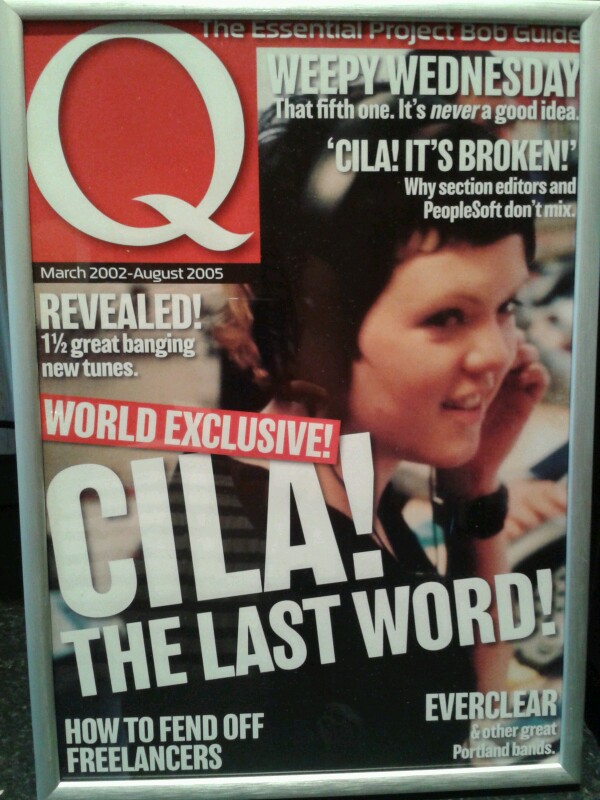
As a professional journalist, Cila says she was attracted by the scope for originality and independence (and lack of male chauvinism) at PBM – and she has produced a fascinating range of articles over her time there. Although she left Penny Black Music in the early 2000s and worked on the glossy London-based music magazine, ‘Q” she was welcomed back in 2012 and has been a regular contributor since then. She has written about the impact of the pandemic on those working behind the scenes in the world of live music, about the eventual demise of ‘Q’ magazine and she wrote a very thoughtful piece about Marilyn Manson. Plus she has produced excellent articles on so many other diverse topics.

Cila also originated the ‘A Life In Music’ series where she probed fellow contributors to PBM about their musical tastes, background and aspirations. – All done with great tact, sensitivity and diplomacy plus insight – key hallmarks of Cila’s style. That series is now drawing towards its conclusion – but not before we turn the tables and seize the opportunity to ask Cila about her own ‘Life In Music”’

Born in 1980 and raised in a small town in Oregon over on the West side of the USA, in her late teens Cila moved to the East Coast to study English at the University of Pennsylvania in Philadelphia – an esteemed Ivy League institution. Subsequently she moved to London to undertake further studies at King’s College before becoming a journalist. She thrived in the UK, enjoying all the many cultural opportunities available just after the turn of the millennium as well as the proximity to Europe. She and her fellow-American husband Chris Hall, a production audio technician in the world of live music, have travelled widely and have now made their permanent base in Valencia, Spain. Cila was at her home in Valencia when I started to ask about her ‘Life in Music’.

What are some of her earliest musical memories?

“Well, my parents weren’t musicians and because my mother was an Evangelical Christian, anything that wasn’t a hymn or soft God-rock was not too popular. It was a cool, rebellious thing to listen to anything other than that. My sister and I would listen to local radio, though and so I got some of the sound of late 80s/early 90s rock and pop culture through that. But my brother – who is around 6 years older than I – loved The Smiths, The Cure and some of the other British post-punk/new wave bands. I enjoyed that sound and I recall some of the record sleeves up on my brother’s wall – brilliant images which made a lasting impression.

The first (non-Christian!) record I remember buying when I was 13 or 14 was Sting’s “Fields of Gold…Best of: 1984-94” and my sister (who was 8 years older and much cooler, always) bought me Green Day’s ‘Dookie’ – which I still think is a great record!”

Read the rest of the interview at Pennyblackmusic.co.uk

On Leading by Example

Teachers, like writers, should show not tell (as much as possible).

As a writing teacher, it is imperative that I set an example as a writer.

My first gig outside of the university newspaper was Pennyblackmusic.co.uk — an independent online music magazine and shop that has outlasted countless best-selling, robustly funded publications.

Though not continuously, I’ve written for Pennyblackmusic for more than 20 years. In slow, desultory fashion it’s become a modest but valued body of work, and a chance to keep my journo skills sharp.

One of the regular features is called ‘Ten Songs That Made Me Love…’

Here are my contributions to the long-running series:

Photo by Jay Wennington on Unsplash

Echo & The Bunnymen

“Some bands are linked to an event or time in life; others, to a person. Echo & The Bunnymen entered my consciousness when I was about eight, via an album cover pinned to my brother’s bedroom wall. ‘Echo & the Bunnymen’, their eponymous 1987 album – was to the right of U2’s ‘The Unforgettable Fire’ and above Depeche Mode’s ‘Some Great Reward’. In grainy black-and-white, Ian McCulloch’s inkwell-explosion hair, eyes downcast beneath thick brows, gave a general impression of dark wool and wind-chill. Yet the music encoded in that vinyl dazzled. It made sense that my brother, the coolest person I knew, bought an overcoat and grew his hair. Who wouldn’t want to be them?

My brother moved out when I was 12; for the next few years we saw little of each other. I bought Sting’s ‘Fields of Gold’. Possibly in despair, he compiled CDs for me. Those songs – Echo, New Order, Depeche Mode – were the basis for a new relationship. More than siblings, we became musical co-conspirators. These 10 songs, only a sliver of Echo’s expansive oeuvre, encode a deep friendship. Apart from their personal significance their freshness, verve and originality make a case that Echo were the seminal New Wave band. Let’s run with those dancing horses.”

Read the full article

Patti Smith

The first time I saw Patti Smith it was like seeing a flesh-and-blood human after a lifetime among holograms. In a world where everyone is obsessed with image Patti is always, ever and gloriously who she is. Poet, rebel, musician, mother, artist, crusader, writer, warrior, deity of rock’n’roll and inventor of herself, Patti never wanted to be anyone else, never pandered, never tried to please.

Her music reaches deep places because it is born from an authentic self, and that’s why it will last.

Read the full article

Pulp

“It’s not chocolate boxes and roses/ It’s something darker/ Like a small animal that only comes out at night”. Jarvis Cocker’s memorable assessment of the titular emotion in ‘F.E.E.L.I.N.G.C.A.L.L.E.D.L.O.V.E’ (surely one of the Top 10 most awkwardly titled songs pop history) is a perfect epithet for the bands’ oeuvre.

The magic of Pulp is the mingling of sharp, danceable guitar pop with lyrics that veer from cynical to downright sinister. Their most radio-friendly hits are rife with violence (‘Joyriders’ “Mister, we just want your car/ ‘Cos we’re taking a girl to the reservoir”) and voyeurism (“I wanted to see as well as hear and so I hid inside her wardrobe,” in ‘Babies’). Love songs in Pulp world include lyrics like: “You are the last drink I should have ever drunk/ You are the body hidden in the trunk” (‘Like a Friend’).

Studying the arc of their career, it’s clear ‘Different Class’s’ arrival in Cool Britannia was coincidence; the subsequent lumping of Pulp with Britpop a music journalists’ convenience. Pulp never shared Blur’s mockney smuggery nor Oasis’ apolitical performance of working classness. Pulp was on a different trajectory: one that began in Sheffield in 1978, contained more than a decade of obscurity, and survived Britpop notoriety to deliver an acerbic welcome to the new millennium.

Its curve is marked by a rare, unflinching insight into the human psyche. Pulp takes love as a subject but, unlike most pop confectioners, doesn’t sugar-coat it. Cocker sees love as a slippery amalgam of baser needs: status, self-worth, revenge, amusement, actualisation, to see the darkest parts of ourselves reflected in another. Attraction doesn’t lead through flower-dappled fields at sunset but down gnarled alleys stale with fag smoke, booze and latent violence.

Rarer still, Cocker understands that society is an echo chamber of our dark hearts: it isn’t just individuals who behave in warped, self-defeating ways, but our whole culture.

Read the full article

Photo by Chris Bair on Unsplash

Memphis Soul

Ibiza, October 2016: What was left of my library was stacked on a slat-wood shelf awaiting collection; the clothes worth taking were crammed into a scuffed purple nylon suitcase; my car was one signature short of belonging to my ex-boyfriend, who was also adopting my cat.

In a few days I would embark for Memphis, Tennessee, a city I best knew as home of Sun Records. To pass time, I was reading ‘Respect Yourself’ (a loan from my Memphis-based boyfriend).

Robert Gordon’s meticulous account of the rise/fall/slip/slide of Stax Records was the history of an alien land and culture. ‘(Sittin’ on) The Dock of the Bay’ rang a bell, maybe ‘Shaft’, but my knowledge of Memphis soul ended there. Embarrassment at this ignorance was a welcome distraction from more immediate anxieties.

Those anxieties faded but the embarrassment clings; as a born-and-raised Yankee, a music journalist no less, it is shaming to have been oblivious to one of the richest seams of my country’s musical culture. Shaming because – as ‘Respect Yourself’ and history report – it is no accident that Black musicians have been, and remain, ghettoised, denigrated, alienated.

That’s not why anyone should listen to Memphis soul though; not to pay tribute or broaden horizons. Listen to be immersed in music that grabs your gut and nether-parts. Listen to the sound of something at stake. Listen because, as the following 10 songs prove, it’ll turn you on and take you higher.

Read the full article

As an educator, how do you lead by example? Share in the comments or Tweet @CilaWarncke

Covid Against the Music

The following is an excerpt from a feature I wrote for Pennyblackmusic about Covid’s devastating effect on the live music industry. You can read the full feature at Pennyblackmusic.co.uk

“When COVID-19 mushroomed into a global pandemic, production work disappeared almost overnight. It is impossible to predict when it might return, or grasp the full repercussions for crews, artists, venues or fans. This article attempts neither to summarise nor forecast, but to reflect on the early days of this crisis in the hope we can look back on it from a better place.” -excerpt from ‘Production Crew Confront Coronavirus’, Pennyblackmusic, April 2020.

Photo: Cila Warncke

2021

London: 11 February, 10:30AM Matt ‘Tag’ Tagliaferro adjusts his Airpods. Wet snow clings to the pavements outside his north London home. It is three degrees Celsius above freezing. “With these, I can get something done while I’m on the phone,” he says. “My screen time is way up this past year.”

Memphis, Tennessee: 5 March, 11:00AM “It felt good to have a break for a minute, but that got old.” Matt Brown gets up to refill his blue ceramic mug, and clears his throat. Later, he’ll strap on a parachute, grab a camera and follow tandem jumpers out of a plane, trying to hold the student’s awed face in frame as gravity hauls them all down.

London: 8 March, 10:00AM The phone screen shows him smiling, an old WhatsApp profile picture. “January was particularly hard,” Will Paterson says. “There was no sign of a return. Even the most motivated people had hard moments.”

Phoenix, Arizona: 13 March, 5:50AM The paper Holiday Inn coffee cups are stamped: “Start Fresh”. Chris Hall is trying. In half an hour, he’ll walk into the hotel conference room for the final written exams in his truck-driver training course.

There are two things that all these people have in common: They used to work in live music production. They never expected to be where they are now.

A year ago, we daydreamed that Covid-19 would vanish with the summer sun. What vanished instead was hope of a quick fix. Optimism became synonymous with magical thinking. The industry shutdown persisted like tinnitus.

According to trade publication Pollstar, the live music industry lost $30 billion of revenue in 2020. In Britain, some 10,000 people worked in music production, says Andy Lenthall, general manager of trade body the Production Services Association. In the United States, there were millions of such jobs. In the UK, the US and around the globe, most production workers lost their livelihoods.

The Lows

“When it first happened, I felt numb, panicked. I watched the news all the time.” Nevertheless, Brighton-based publicist Nikki McNeill told her clients, which include Serbia’s Exit Festival, the Amsterdam Dance Event, Secret Solstice in Iceland and the Netherlands’ Lowlands Festival, that she would keep working with them, budget or no.

After the initial blow, ripples of Covid distortion kept spreading. “So much of life has changed,” Will Paterson, head of sales for several London music venues, reflects. “Nobody would have thought we’d curtail our lives the way we have.”

Tagliaferro, erstwhile touring guitar tech, and his partner split up, “a Covid casualty, I guess.”

Audio technician Matt Brown says: “The biggest challenge is boredom. I’m still learning to write code, trying to stay busy.”

Another audio tech (and my partner), Chris Hall has put in his share of 200,000-mile travel years. Suddenly, the world shrank to the distance to the nearest grocery store. Mundane tasks became big deals. His neck and back locked up in the winter chill.

“Some people found purpose in spending time with their partners and kids,” Lenthall says. “But being at home is a problem for people who aren’t used to being at home. There are a lot of single people in the business, a lot of people who are always on tour. Their flat is where they repack their suitcase.”

Photo: Cila Warncke

A Different Beat

Odd pockets of production work still exist: Brown kept his job at local church which started streaming its services. Photographer Andy Cotterill has spent more than two decades shooting music royalty. His portfolio runs from Public Enemy and Lee ‘Scratch’ Perry to Jarvis Cocker and Vivienne Westwood. Yet surviving Covid required other skills: “I was a top-grade student in woodworking at school so I did a few projects. People loved it. Someone asked me to do their kitchen, then a loft conversion. Before, if I’d done something else, I’d have felt like I failed at photography. I don’t think like that any more.”

Tagliaferro carried on fixing guitars. People who had guitars but never played them wanted them strung and tuned, bands stuck in London who’d started making new music, musicians whose prized instruments were in warehouses or shipping containers dug out beaters for an overhaul. “North London seemed to have a musical renaissance,” he says. “People wanted to do something productive and creative. It got to a point I couldn’t do it in my kitchen, so I rented a little space, built a few workbenches and fell into business, much like I fell into [touring] 15 years ago.”

This can-do, will-do attitude is characteristic. “You don’t want touring crew on the job market,” says Lenthall. “They are tenacious, hard working, they will get the job before you.” Delivery and logistics have absorbed a lot of bodies. “I’ve had groceries delivered by a lighting guy I know,” Lenthall remarks. “We have world-class production managers coordinating vaccination centres. [Telecom company] Openreach has production crew tackling its fibre optic installation backlog.”

Paterson has spent the past year overhauling everything from venue websites to internal communications to plumbing. “It has been a split,” he says. “Those who’ve had stuff to do – well, work helps. People who couldn’t work, like the operations staff, have done all sorts of things that have nothing to do with music, just to give themselves a purpose.”

Photo: Cila Warncke

Patchy Safety Nets

Many cannot step into new roles, though, whether for health or other reasons, and driving a delivery van doesn’t come close to replacing tour wages. Government support has not been universally sufficient or effective. “Through multiple technicalities, I don’t qualify for anything,” says Tagliaferro. “I’ve never heard the phrase, ‘sorry, you fall through the cracks’ so often.” He reckons half the industry people he knows don’t qualify for assistance.

Perhaps not coincidentally, Paterson says half the people he knows have left music.

In the US, aid is on a state-by-state basis. Brown got a small grant, about enough to cover three months’ rent in his neighborhood. He was on unemployment, briefly, until Tennessee reinstated a work-search requirement, with no exceptions for those whose industry had vanished. “What was I going to do? Work at the supermarket? Those jobs were already taken.”

Like so much related to Covid, a lot came down to chance. “I was lucky. The way my company is set up meant I qualified for government grants,” says McNeill. “I have friends who do the same thing but are excluded [from help] because of how they set up their business. It’s hard.”

Continue reading at Pennyblackmusic

10 songs… Memphis Soul

The original version of this is published on Pennyblackmusic.co.uk — check it out.

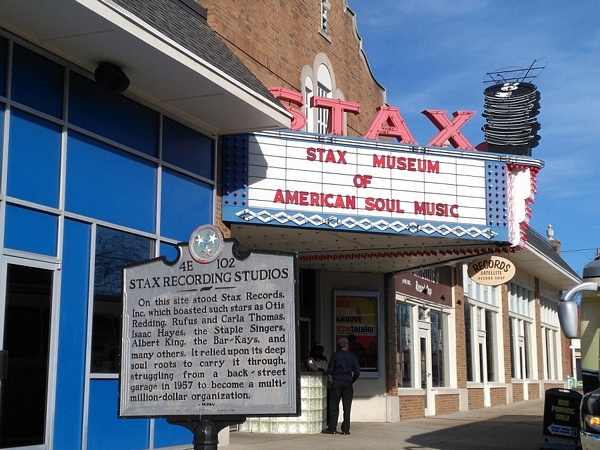
Stax Museum, south Memphis, Tennessee

Ibiza, October 2016: What was left of my library was stacked on a slat-wood shelf awaiting collection; the clothes worth taking were crammed into a scuffed purple nylon suitcase; my car was one signature short of belonging to my ex-boyfriend, who was also adopting my cat.

In a few days I would embark for Memphis, Tennessee, a city I best knew as home of Sun Records. To pass time, I was reading ‘Respect Yourself’ (a loan from my Memphis-based boyfriend).

Robert Gordon’s meticulous account of the rise/fall/slip/slide of Stax Records was the history of an alien land and culture. ‘(Sittin’ on) The Dock of the Bay’ rang a bell, maybe ‘Shaft’, but my knowledge of Memphis soul ended there. Embarrassment at this ignorance was a welcome distraction from more immediate anxieties.

Those anxieties faded but the embarrassment clings; as a born-and-raised Yankee, a music journalist no less, it is shaming to have been oblivious to one of the richest seams of my country’s musical culture. Shaming because – as ‘Respect Yourself’ and history report – it is no accident that Black musicians have been, and remain, ghettoised, denigrated, alienated.

That’s not why anyone should listen to Memphis soul though; not to pay tribute or broaden horizons. Listen to be immersed in music that grabs your gut and nether-parts. Listen to the sound of something at stake. Listen because, as the following 10 songs prove, it’ll turn you on and take you higher.

1. Sam & Dave – ‘Hold On, I’m Coming’

One of Stax’s most emblematic artists, Sam Moore and Dave Prater likely gave ‘soul’ its name with their hit ‘Soul Man’ whose irresistible rhythm, honking horns and gospel-inflected vocals characterised the genre. But it’s the brash, brassy ‘Hold On’ that sticks most in my mind. The playful entendre of the lyrics and opulent arrangements make it as endlessly rewarding as a good single malt.

2. William Bell – ‘You Don’t Miss Your Water’

In 2013 the Obamas hosted a celebration of Memphis soul at the White House. One of the luminaries who performed was William Bell, singing a crème caramel rendition of his 1961 debut single, ‘You Don’t Miss Your Water’. A plaintive meditation on lost love, thematically, it embraces the blues but the shuffling percussion, Hammond organ and brass adornment mark it as a soul staple.

3. Staple Singers – ‘A Hard Rain’s Gonna Fall’

Bob Dylan has spoken of his fascination with an early Staple Singers song, ‘Uncloudy Day,’ saying: “it was the most mysterious thing I’d ever heard. It was like the fog rolling in…. It just went through me like my body was invisible.”

The father-daughter quintet of Roebuck ‘Pops’ Staples and Mavis, Cleotha, Pervis and Yvonne returned the respect with this stark cover. Released in 1968, following the many violent oppressions of the Civil Rights movement, the Staple Singers’ voices invest Dylan’s words of warning with an implacable knowledge won of hard experience.

4. Ann Peebles – ‘Can’t Stand the Rain’

Royal Studios, the erstwhile home of Hi Records, which birthed this sublime heartbreak soul, still stands proud in south Memphis. About the size and shape of a brick cereal box, it’s a wonder Royal could contain much less capture the power and clarity of Peebles’ unadorned voice as it weaves through the echoing percussion and slow-finger bass crawl of this melancholy gem.

5. Otis Redding – ‘(Sittin’ on) The Dock of the Bay’

Familiarity can make this song easy to not hear, make it easy to overlook its lyrical heft and musical daring. Recorded not long before Redding died in a plane crash, ‘Rolling Stone’ reported that some of his label mates, his manager and even Stax boss Jim Stewart thought it was too great a stylistic leap. Instead, the wistful evocation of blighted hopes and faded promise became a posthumous Billboard number one and million-selling single, fulfilling Redding’s prediction.

6. Al Green – ‘Tired of Being Alone’

The first of a string of gold records Al Green cut at Hi Records, ‘Tired of Being Alone’ is 2:43 of pure sensuality. With deep roots in gospel (there are half-a-dozen churches within a couple blocks of Royal Studios), the best soul music brazenly blurred the line between sacred and sexual. Few did it better than this satin-tongued singer, and rarely better than on this unapologetic pitch for carnal comfort. Though Green went on to become an ordained minister, his catalogue makes a strong case for the devil having the best music.

7. Johnnie Taylor – ‘Who’s Making Love’

It is worth watching the video to fully appreciate the wit and influences of Taylor’s 1968 chart-topper which became the Stax stalwart’s iconic hit. Wearing a sharp green suit and Cuban heels, Taylor looks straight to camera and, like a preacher addressing his flock, begins: “. The rhythm and delivery is pure gospel. The question, rather more earthy, is posed to men who are out catting around: “Who’s making love to your old lady, while you’re out making love?”

8. Albert King – ‘Born Under a Bad Sign’

A transcendent fusion of blues and soul, ‘Born…’ is a perfect example of the musical fertility of Stax Records. Co-written by William Bell and Booker T. Jones, leader of Stax’ house band, Booker T. & the M.G.s, it was a minor Billboard hit on its 1967 release and gained wider notoriety when Cream released a version in 1968. Dozens of artists have covered it since, including Jimi Hendrix, Nina Simone, MC5 and Rita Coolidge. One of the most affecting is Bell’s 2016 interpretation on his album, ‘This is Where I Live’.

9. Booker T & the MG’s – ‘Green Onions’

In fewer than three minutes this instrumental, penned by a 17-year-old Booker T., announced the arrival of an epoch-defining musical talent and proved, by the by, that a Hammond organ can rock a party. Anchored by a blues bassline, the Hammond burbles while horns blurt above the simmering musical stew, embodying the genius amalgamation of blues, funk and gospel that is soul.

10. Isaac Hayes & Rev. Jesse Jackson — ‘If I Had a Hammer’ (Live)

In 1972 Stax Records hosted Wattstax, a day-long festival in Los Angeles honouring the rise of Watts from the ashes of the 1965 riots. Isaac Hayes closed his set with the Pete Seeger-pinned ‘If I Had A Hammer’ (also a hit for Peter, Paul & Mary). With the help of Jimmy Jones, Hayes transformed it into a Black power anthem. The track opens with five and a half minutes of Rev. Jesse Jackson, hypnotic as falling rain and electrifying as adrenaline, exhorting his people to pride and strength. As a sinuous, eerie organ melody burbles Jackson cries, “If I had a hammer, I’d ring out justice. If I had a hammer tonight our people would be respected and protected…”.

Amen.

39 – Prince Tribute

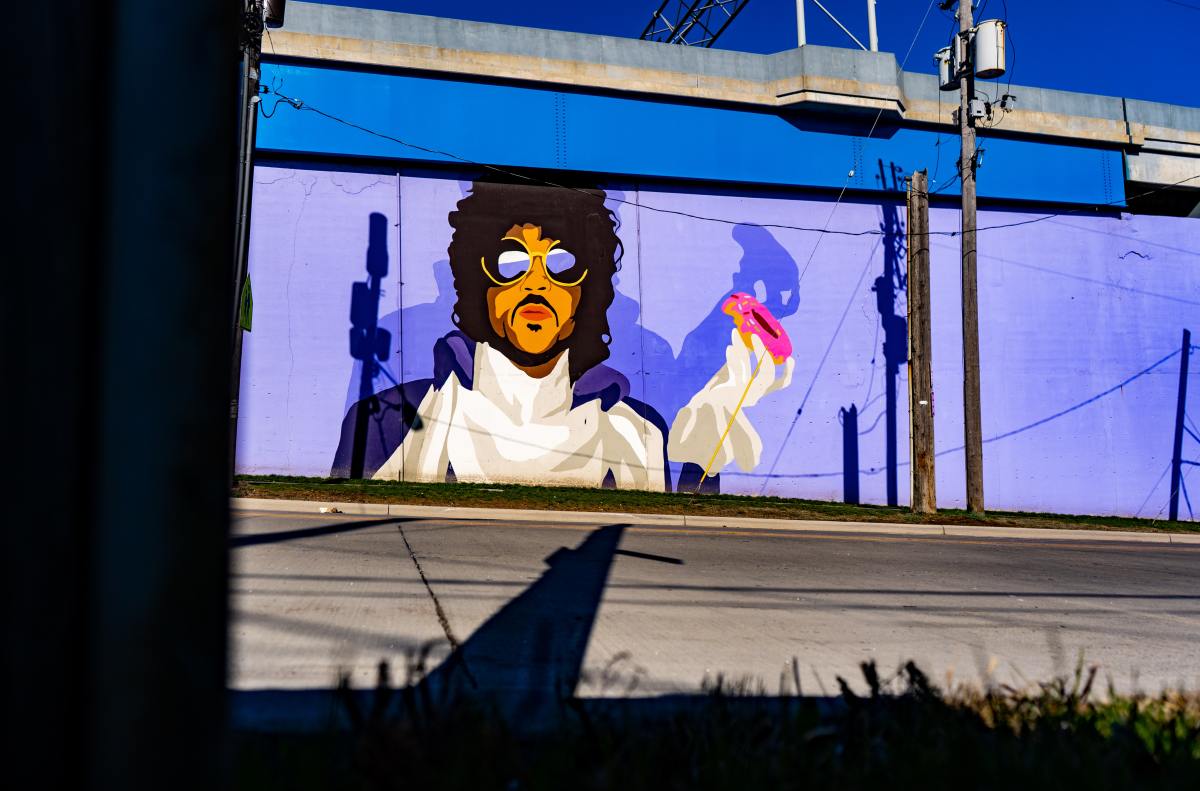
This was published by Pennyblackmusic.co.uk after Prince died in 2016. One of the hardest pieces I’ve written.

Photo by DJ Johnson on Unsplash

Only an idiot would volunteer to write about Prince. This thought dogged me after my Tempranillo-fuelled email late on 21 April 2016, begging for precisely that privilege. It was an impulse a part of me regrets because no words that rise from a primordial emotional stew of disenfranchised grief, disbelief, nostalgia, and adoration will come close to doing him justice. Paying tribute to Prince is like holding a candle to the sun.

There is much we don’t know about Prince, including how he died [at the time, we didn’t. Now we do and it’s sadder still]. The one thing everyone knows, from fellow musicians or far-removed fans, is that he was the best. Genius is a word rendered thin and flavourless by overuse; as are icon, legend, unique, and inimitable. That doesn’t make them any less true when applied to Prince.

My private theory, long-held, is that the only reason he didn’t supplant Jimi Hendrix in music mythology as the ultimate guitar god is that he was too sexy, too queer in the old fashioned sense for the (mostly) straight, white male rock journalists who oversee the beatification of six-string saints. The marvel is: Prince was so good he forced them to pronounce his brilliance despite the yellow laser-cut trouser suit he wore to perform ‘Gett Off’ at the 1991 MTV Music Awards, and his lavish lyrical praise of women who really, really like sex.

Pre-Prince, men had a monopoly on the pocket full of Trojans (some of them used). Then an androgynous imp who played every instrument, arranged every note, and took no shit from anyone came straight outta Minneapolis and turned the world upside down. He made people nervous. Most famously, Tipper Gore whose horror at Nikki masturbating with a magazine birthed the ‘Parental Warning: Explicit Content’ label.

From ‘Darling Nikki’ to ‘Raspberry Beret’ to ‘Cream’ to ‘Peach’ to ‘Head’ to ‘When You Were Mine’ Prince sang about women who dug sex and had fun doing it. He unapologetically refused to adopt the rock’n’roll paradigm where men are Subjects and women are Objects (in the De Beauvoirian sense).

Refusing assent was one of the many things Prince did better than anyone else. From Warner Brothers to the internet, there was no Goliath he wouldn’t sling a pebble at. He didn’t always win these battles, but he never lost. In the end, the record labels, the critics, and the world wide web kowtowed to his sublime talent and awesome willfulness.

This we must celebrate. There aren’t many artists like that. Even, or especially, the most successful musicians play the game. They get slick, learn to give the right answers, straighten their teeth, take up knitting, buy trout farms, get into right-wing politics, advertise butter. Prince, though, never played the game by anyone’s rules but his own.

Magnificently onery to the end, he holed up at Paisley Park, recording, performing, throwing dance parties, hosting movie nights for the assortment of musicians, protegees, sound engineers and technicians who he routinely sacrificed on the altar of musical perfectionism. “The thing about Prince,” one of them told me, “Is that he was better than everyone, at everything.”

I can’t think of one lick of evidence to the contrary. Can you?

Which is why only an idiot would volunteer to write about Prince, or sing a Prince song, or play a Prince riff. Maybe that’s the point though. To get through this thing called life we have to do our best when we’re not the best. We have to trudge while other soar. We have to accept that flowers wither; stars burn out; that perfection isn’t proof against death.

My gut feeling is Prince knew this better than anyone. And that it kept him from giving too much of a fuck. Nobody is ever going to sound as good or be as good as Prince. No one can recreate his magic. What we can do is let that show us how to live, take courage, let his music and spirit infuse us. Let’s be idiots for the things we love. Prince would approve.

38 – 10 Songs That Made Me Love Pulp

This article appears on Pennyblackmusic.co.uk. Check it out in its original form.

Photo by freestocks on Unsplash
“It’s not chocolate boxes and roses/ It’s something darker/ Like a small animal that only comes out at night”. Jarvis Cocker’s memorable assessment of the titular emotion in ‘F.E.E.L.I.N.G.C.A.L.L.E.D.L.O.V.E’ (surely one of the Top 10 most awkwardly titled songs pop history) is a perfect epithet for the bands’ oeuvre.

The magic of Pulp is the mingling of sharp, danceable guitar pop with lyrics that veer from cynical to downright sinister. Their most radio-friendly hits are rife with violence (‘Joyriders’ “Mister, we just want your car/ ‘Cos we’re taking a girl to the reservoir”) and voyeurism (“I wanted to see as well as hear and so I hid inside her wardrobe,” in ‘Babies’). Love songs in Pulp world include lyrics like: “You are the last drink I should have ever drunk/ You are the body hidden in the trunk” (‘Like a Friend’).

Studying the arc of their career, it’s clear ‘Different Class’s’ arrival in Cool Britannia was coincidence; the subsequent lumping of Pulp with Britpop a music journalists’ convenience. Pulp never shared Blur’s mockney smuggery nor Oasis’ apolitical performance of working classness. Pulp was on a different trajectory: one that began in Sheffield in 1978, contained more than a decade of obscurity, and survived Britpop notoriety to deliver an acerbic welcome to the new millennium.

Its curve is marked by a rare, unflinching insight into the human psyche. Pulp takes love as a subject but, unlike most pop confectioners, doesn’t sugar-coat it. Cocker sees love as a slippery amalgam of baser needs: status, self-worth, revenge, amusement, actualisation, to see the darkest parts of ourselves reflected in another. Attraction doesn’t lead through flower-dappled fields at sunset but down gnarled alleys stale with fag smoke, booze and latent violence.

Rarer still, Cocker understands that society is an echo chamber of our dark hearts: it isn’t just individuals who behave in warped, self-defeating ways, but our whole culture.


1. ‘I Want You’ (‘Freaks’, 1987)

Released almost a decade into their existence, this marked Pulp’s unsteady progress from post-punk acolytes to popstars. Early on, they could have been The Fall’s slightly more socially adept younger sibling. While this is still true of ‘Freaks’ portentous opener ‘Fairground’, ‘I Want You’ has all the raw material of a lo-fi pop hit, laced with Cocker’s cyanide romanticism. Melodic guitars provide a distractingly pretty backdrop to the declaration: “I’ll break you because I lose myself inside you… Yes, you’re all that I ever desired/ Still I’ll kill you in the end.”

2. ‘Do You Remember the First Time’ (‘His ‘n’ Hers’, 1994)

What saved Pulp from permanent obscurity was a realisation (conscious or not) that matching the music to the dissonance of the lyrics made them inaccessible, to say the least. Polished pop chords were the Trojan Horse that could carry Cocker’s devastating aperçus into halls of residence and suburban discos. The diatribe of a man watching his ex-lover (?) go home to someone else (“You bought a toy that can reach/ The places he never goes… At least you never have to face up to the night on your own”) comes wrapped in layers of chiming guitar and a danceable groove.

3. ‘Mis-Shapes’ (‘Different Class’, 1995)

The opening track of ‘Different Class’ is Cocker spitting the accumulated bile of a decade and half of Tory rule. The opening phrase: “Raised on a diet of broken biscuits” attests to his talent for evoking the circumstances of a life in a single stark image. The embittered, bright working class protagonists of the song “learned to much at school now… We can’t help but see that the future that you’ve got mapped out is nothing much to shout about.” Tellingly, the words still speak for Britain’s (young) people struggling with debt, gutted public services, and the crass Conservative war against social cohesion.

4. ‘Common People’ (‘Different Class’, 1995)

Pulp’s biggest hit, the evergreen indie disco floorfiller ‘Common People’, drips with Maoist levels of vitriolic class consciousness. The (presumably autobiographic) account of a working-class kid who becomes the object of an art school student’s urge to slum it reeks with pent frustration, envy, longing and a paradoxical sense of superiority. “Everybody hates a tourist,” Cocker sneers. “Especially one who thinks it all such a laugh/ And the chip stains and grease will come out in the bath.” But he still drinks the rum ‘n’ coca cola.

5. ‘Pencil Skirt’ (‘Different Class’, 1995)

It is a testimony to Pulp’s genius that a song that disturbed my mother when I was a teenager is as tantalizingly twisted two decades later. (It is also supports the strong argument that the first five tracks of ‘Different Class’ is one of the greatest sustained opening album sequences in 20th Century pop.) Cocker renders scenes with novelistic precision, using simple statements and objects to evoke dark knots of emotion. From the moment “You raise your pencil skirt, like a veil before my eyes” through the point where the adulterous lover declares “I’ve kissed your mother twice, and I’m working on your dad” the whole greedy, sordid, ignoble (in other words, ordinary) affair unfolds like exquisite tapestry.

6. ‘Sorted for Es and Wizz’ (‘Different Class’, 1995)

The original single artwork was a premeditated equivalent of Cocker’s subsequent bum-wagging stage invasion of the Brits in 1996. That the cheeky ‘Here’s how to make a wrap kids’ got the predictable response from the red tops, merely affirmed the incisiveness of Jarvis’ social sensibility. ‘Sorted for Es and Wizz’ is so relentlessly specific that it attains to the universal. You don’t have to have ever “Lost an important part of your brain somewhere in a field in Hampshire” to appreciate the youthful recklessness and yearning it evokes.

7. ‘The Fear’ (‘This is Hardcore’, 1998)

Other bands might have clung to their moment in the sun, retreading the formula, but not Pulp. As the ‘90s waned they released the ultimate comedown album (the only one I know, anyway, that reeks with the jaded wisdom and lack of regret of those who are able to give up chemical indulgences without disavowing them). Cocker isn’t naive enough to think repentance will buy off The Fear. He studies it, inviting the listener along with the minor-key reassurance: “When you’re no longer searching for beauty or love/ Just some kind of life with the edges taken off/ When you can’t even define what it/ is that you are frightened of/ This song will be here.”

8. ‘Glory Days’ (‘This is Hardcore’, 1998)

The apotheosis of Pulp’s genius for making the borderline tragic sound bright, ‘Glory Days’ is a sing-along anthem that captures ‘Mis-Shapes’ broken-biscuit eaters a decade later – undefeated but far from triumphant. “We were brought up on the space race/Now they expect you to clean toilets/ When you’ve seen how big the world is/ How can you make do with this?” Cocker rails. Then adds: “If you want me, I’ll be sleeping in.” It is righteous outrage against The System tempered by the mature realisation that The System is also us. No one is innocent. (We never, were. Were we, Jarvis?)

9. ‘Weeds, (‘We Love Life’, 2001)

Arguably, every song he’s ever written was a protest song, but ‘Weeds’ is a rare example of Jarvis tackling capital-P politics with his usual lacerating observations. Narrated from the perspective of refugees, it snarls with frustration and a loathing of smug privilege. “Make believe you’re turned on by planting trees and shrubs/ But you come round to visit us when you fancy booze ‘n’ drugs.”

10. ‘C**ts are Still Running the World’ (‘Jarvis’, 2006)

Technically not a Pulp song but possibly the greatest Pulp song ever written. Jarvis’ censor-baiting analysis of modern ‘meritocratic’ Britain is par with Leonard Cohen’s ‘You Want it Darker’ as a coda for our times. The only thing tarnishing the splendour of his cutting couplets (“The working classes are obsolete/ Surplus to society’s needs/ So let them all kill each other/ And get it made overseas”) is the fact that the song is more documentary than fiction.


It would be unfair to end on a down-note because Pulp is a fundamentally joy-making band – but I don’t believe Jarvis would see ‘C**ts…’ as a downer. The world may be, to put it politely, screwed but Pulp proved it can’t steal our spirit unless we let it. Be dumb, be furious, be disappointed, be fatalistic; even if you never set your sights higher than avoiding the dog turd outside the corner shop, be proud. As Henry David Thoreau advised: “However mean your life is, meet and live it.”