On Generous Writing

Photo by Ben White on Unsplash

Life never ceases to be difficult, to paraphrase Rilke. Amidst its slings and arrows, there is often little to comfort and guide.

Without generous writers, there would be almost nothing.

Among recent difficulties faced by myself, or someone I love: bereavement, major surgery, significant medical diagnoses, divorce, conflict with parents, conflict with children, unemployment.

These are not remarkable events, statistically. Yet, to the individual, they are as life-altering as Krakatoa. If anything, the cognitive dissonance of knowing the event to be universal versus the all-consuming personal experience of trauma makes it harder to cope.

We need wise friends to walk these dark halls. But unless we’re lucky, and our friends unlucky, we are not likely to find the necessary wisdom in our immediate social circle. Shared experience can as easily drive a wedge as forge a bond.

Into this gap step writers whose words offer perspective without judgment, comfort without reciprocity and infinite patience. They sit at our bedside in the small hours, walk with us, accompany us raging, glum, drunk, frustrated or frightened.

Their generosity lies in a willingness to delve into the most difficult parts of their lives and, through grit and creativity, distill their thumb-screwed wisdom into something readers can use.

Photo by Wai Siew on Unsplash

Imagine being lost at sea on a leaky boat. Most of us would consider feel heroic merely staying alive. But a writer would be thinking: how can I help the next person who finds themselves out here?

They would be jotting notes about tides and winds, describing how to make a fishing line out of dental floss, giving tips on bailing and load-balancing.

Although this sense of purpose may be sustaining, it does not mean the work is easy. The generosity of writers lies in their willingness to labor during their most difficult experiences to give hope to those caught in similar currents.

The following are seven books that exemplify this generosity: all by women, whose emotional work is routinely undervalued, on the page and elsewhere.

Seven Generous Books

The Elements by Kat Lister
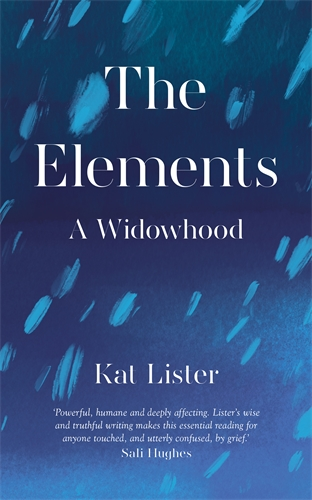
Most couples in their 30s are settling into their first homes, thinking about kids; Kat Lister and her husband, Pat Long, did those against the ticking clock of his brain tumor, which was discovered before their wedding. They lived the few years they had together with uplifting, illuminating grace. When he died, Lister was left to navigate the anachronisms of young widowhood, a trial by water she recounts here with bold, Didion-esque honesty.

Buy

Transcendent Kingdom by Yaa Gyasi

Generosity is not constrained by genre. While we may assume that memoir has the most to teach, the ruthless craft required of good fiction offers equal — or even greater — opportunities. This novel, which begs to be described by its titular adjective, unpicks grief, addiction, survivor’s guilt, and the complicated strands of rejection, assimilation, belonging and othering woven into immigration, racism and religion.

Buy

A Three Dog Life by Abigail Thomas

Perhaps the only thing more appalling than the death of a partner is losing a partner in mind, not body. Thomas’s memoir invites the reader into the Kafka-couldn’t-dream it surreality of life following her husband’s traumatic brain injury (TBI). Along with grief, come care decisions, guilt, frustration, and no one to share the challenges.

Buy

Why be Happy When You Could be Normal? by Jeanette Winterson

Read this with its fictional counterpart, Winterson’s debut novel, Oranges Are Not the Only Fruit, to fully appreciate her generosity and courage. By the time she wrote this memoir, Winterson was a revered literary figure and bona fide success story. To admit, from that height, to the haunting power of childhood trauma could have seemed an admission of weakness. Her vulnerability is potent and empowering.

Buy

Nomadland: Surviving American in the 21st Century by Jessica Bruder

Please read the book; the film (brilliance of Frances McDormand notwithstanding) does it no justice. Nomadland exhibits another form of authorial generosity: the willingness to put one’s life aside to bear witness to the lives of others that would otherwise go unrecorded. The crushing, mechanistic cruelty of late capitalism comes to vivid life through Bruder’s painstakingly reported account of life on the dusty, bald-tire fringes of the so-called American dream.

Buy

A Manual for Cleaning Women by Lucia Berlin

Every time I pick up A Manual, I wind up reading it all the way through. Berlin’s autofiction is enthralling, terrifying, devastating on multiple levels. The writing is almost too sharp and bright to look at (forget window pane, this is prose as emergency flare) which is necessary magic given the gut-punch tales it tells. Stuff that in lesser hands, or played straight, would be unendurable, is transmuted into stories that soar and hover on the thermals of your mind.

Buy

Foreverland: On the Divine Tedium of Marriage by Heather Havrilesky
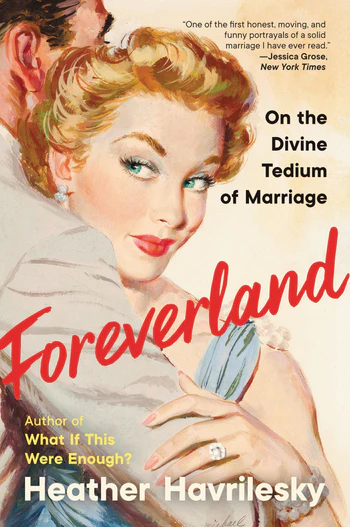
It is one of life’s slipperiest tricks that the things we’re taught to crave and cherish are (surprise!) headaches too. Marriage, at least happy marriage, is perhaps the quintessential sacred cow; the immutable good thing one should pursue without question. Thank goddess, then, for Havrilesky who seems to operate from the position that sacred cows are best served medium-rare. Her brave assertion of the inconvenient truth that true love and explosive exasperation are not mutually exclusive is a pinpoint of light in what might otherwise be a suffocating dimness.

Buy

What are your life-boat books? Share in the comments!
Flashback: My 2016 Reading Highlights

Joan Didion said it was a good idea to stay acquainted with the people you used to be, even if you don’t much like them anymore.

It’s good advice.

In 2016, life was changing so fast my head spun. I met my now-husband in December 2015 and the next year was spent jumping on planes to get to him, culminating in a move from Ibiza to Memphis, Tennessee. Small wonder it was a year of comfort-reading favorite books in snatched moments.

Here’s what I read, and why I read it.

***

If, like me, you have a voice in your head that tells you off for paying attention to your own life, for saving boarding passes and scribbled-upon napkins, for stopping to write love letters in the sand, ignore it.

img_20161113_151120

Happiness and creativity depend on valuing our lives. They depend on listening, watching, recording, remembering. It is easy to envy other people’s lives — so exciting! Such superior children/holidays/houses/jobs/wardrobes/sex lives! Such a torrent of fabulous Instagram photos and witty Facebook status updates. We get so caught up peering through the virtual window of our neighbours’ lives we forget to look at our own. We don’t see the pathos, adventure, and pleasure of our own existence because we’re not looking.

Two years ago I started a keeping a list of all the books I read. It seemed like a self-indulgent tic indicative of an unhealthy level of ego. Or, worse, a pointless exercise (who cares?) My delight in list-making narrowly trumped these niggles. Now a blue virtual post-it on my home screen contains a list of all the books I read in 2016.

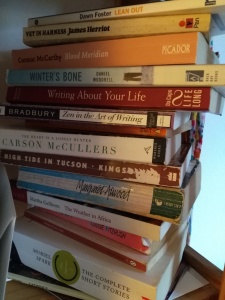
The list reminds me not only what I’ve read, but how I read. It is a snapshot of the ebb and flow of time and energy. January 2016 was a book-heavy month, gobbling up a glut of Christmas goodies and biding a lot of time until my second date with the soon-to-be boyfriend. February was a respectable showing. March, the month I spent between London, Dominican Republic and Brussels, I read almost nothing. The next two months were spent in a miserable, unsuccessful attempt to assimilate into a receptionist job at an overrated luxury agrotourismo in Ibiza — it was bad enough I only read a book and a half. Finishing Anna Karenina took me through June. The rest of the year I read in fits and starts. What jumped out, reviewing the list, was how many books I reread. And, with the exception of High Tide in Tucson and Jane Eyre, not just for the second time.

Looking over my top ten rereads reminds me what I value and crave. The books on this list all offer, directly or through illustration, wisdom and encouragement to those trying hard to live by their own lights. From the esoteric musings of the Glass siblings to the tough-love advice of Cheryl Strayed, each book is, in its own way, a tonic. They were rocks in the fast-moving stream of a year where everything changed, stepping stones to a new life.

Franny & Zooey, JD Salinger

franny

The summer I was 15 I lived with my older sister and worked at Wendy’s. Every day on my break I hunkered down in store cupboard and read Franny & Zooey. To this day I’m not sure where I got the book, or why it grabbed me. What I do know is I’ve read it somewhere between 30-50 times, can quote entire sections of it verbatim, and reread it at least twice a year. In part it’s the reflection of myself I see in Zooey who says “I’m sick to death of waking up furious every morning and going to bed furious at night”, an echo of my relationship with my siblings in the narrator’s aside that the Glass siblings share a “semantic geometry where the shortest distance between two points is a fullish circle”, or descriptions like, “the Jewish-Irish Mohican scout who died in your arms at the roulette table in Monte Carlo.” In part, because the wildly verbose, witty, strangely timeless sentences still reveal new flashes of character. The narrator says it is a “compound or multiple love story, pure and complicated” which is a fine description of the writing, too.

Bird by Bird, Anne Lamott

Ostensibly a book about writing, Bird by Bird is a wise, funny, heart-rending guide to living life when you don’t fit in a box. The combination of Lamott’s acerbic yet self-deprecating turns of phrase coupled with her palpable compassion is almost unbearable. I cry every time I read it, even though I’ve read it so many times I well up in anticipation. It makes me want to walk around hugging everyone and at the same time makes me want to be a blazing good writer. Every chapter is a gem, but “Jealousy” and “KFKD” are maybe the best things you’ll ever read on, respectively, the eponymous emotion and self-doubt. And her advice about avoiding libel charges is hilarious, priceless, and involves the memorable comparison of a penis to a baby bird in its nest.

letters

Letters to a Young Poet, Rilke

This I plucked off a library shelf in Tigard, OR on the strength of the fact that Lady Gaga has a Rilke quote tattooed on her upper arm — it reads in part, “confess to yourself that you would die if you were forbidden to write”. The line, it transpires, is from Letters To A Young Poet which is so rich in exquisitely worded wisdom it flays me. Rilke’s advice on sex, solitude, and seeking ones calling is so incisive it takes my breath away. And, as a poet, he makes every word count, crafting artful sentences that blow my mind on both a philosophical and aesthetic basis. I love it so much, I read it aloud and sent the recording as a gift to a friend.

A Room of One’s Own, Virginia Woolf

Woolf’s trenchant analysis of what women writers need is as relevant today as when she delivered the lectures from which it was drawn in 1928. We may have “come a long way, baby” but women are still underpaid, overworked, and too often cut off from the privileges that enrich men’s prospects. Sexism may not be as crude as the beadle who ordered her out of the Oxford library, but it thrives in a thousand insidious ways that women internalise or ignore at their own risk. I also love Woolf’s dazzling prose, which gave us, “one can not think well, love well, sleep well, if one has not dined well.”

Tiny Beautiful Things, Cheryl Strayed

This collection of Strayed’s advice columns written for The Rumpus’s Dear Sugar column breaks my heart wide open. I’m sobbing by the time I get through the second or third letter, whichever it is that is from the women who suffered a late-term miscarriage. It is hard to put my finger exactly on what it is about Tiny Beautiful Things that makes me gasp. Mostly, it’s Strayed’s unflinching willingness to examine the hardest things in her own life. She doesn’t rush through awfulness, or glide past suffering, she stays, unafraid to study it and claim who and what she is in the wake of it. This solipsism is unexpectedly comforting. By inhabiting and sharing her experience she makes it okay to inhabit and unpick my experience. Line by line, she demonstrates the potential for growth and change in every life. If one is willing to embrace an almost Stoic determination to live well by doing what’s right.

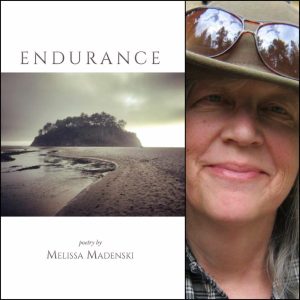
Endurance, Melissa Madenski

endurance

In 2015 I committed to memorising a poem per month, and did. Not all of them have remained word-perfect in my head, but it was an incredible experience with language. When you learn something by heart, you discover things. Cadence, repetition, punctuation, imagery all become vivid in an unpredictable way. I didn’t set out to memorise poetry in 2016 but I read a lot of it — including fantastic collections by Jack Gilbert and CP Cavafy. My favourite reread, though, was this slender chapbook by an Oregon writer. She lost her husband to an unexpected heart attack when she was in her 30s with two young children and the grief of that loss reverberates through Endurance. These are poems about learning to live with the worst case, not with resignation but with courage and, ultimately, joy. It’s another one I can’t make it through without tears, but they’re cathartic.

Jane Eyre, Charlotte Bronte

Of all the my rereads, this was the most fun because it was so different from my memory of it. I must have been 12 or 13 when I read Jane Eyre and I was bored witless. Years later, I read Wuthering Heights and hated it, confirming my prejudice against their weird, masochistic and wildly overrated Brontë sisters. Then on a whim I read Anne Brontë’s Tenant of Wildfell Hall and liked it. And somewhere I heard that Jane Eyre was feminist. So I gave it another shot and fell in love. Bold feminism plus a terrific yarn? Brilliant. Free Kindle edition

Long Quiet Highway, Natalie Goldberg

I reread at least one or two of Goldberg’s books each year. Most often Writing Down the Bones or Wild Mind, but this time I went for The Long Quiet Highway which is mostly about her study of Zen Buddhism over the years. Which of course means it is about writing, being, meaning, truth, acceptance, and everything else that matters. Writing is Zen; Zen is writing. Whatever we do is meditation if we allow it to be. The subtitle is Waking Up in America which is  nearly what I named this blog because that’s what I’m trying to do: wake up in a country I left 16 years ago; figure out what it means to be me in America in 2017, and how to do something good here.

Treasure Island, Robert Louis Stevenson

Treasure Island has been a staple of my literary diet since I was 15 or so. I was a precocious reader, but not above devouring whatever I could get my hands on, and this yarn of seafaring and daring-do always hit the spot. Years later, when I moved to Ibiza, I started to think of it as treasure island — a supposed paradise guarded by dead men’s bones and half-crazed exiles. Overly dramatic personal parallels aside, it is a fantastically fun book and an excellent template for writers looking to craft a fast-paced, unforgettable story. Free Kindle edition

High Tide in Tucson, Barbara Kingsolver

Kingsolver is the most recent addition to my pantheon of southern American writers (Carson McCullers, Hunter S Thompson, Eudora Welty, Truman Capote, etc.) and possibly the one I’d Most Like To Meet. Writing implacably reveals character and every word I’ve read of Kingsolver makes me think she is a Good Person, smart as hell, and cracking company on a night out. Her fiction boggles me and this book of essays is one of the finest, sharpest, most humane collections I’ve had the pleasure of reading. The title essay alone is worth the price of admission; Buster the stranded hermit crab may change your life.

What books to you read over and over? Share in the comments or Tweet @CilaWarncke

On Writing and Mental Health with Anise Eden


Welcome to ‘Between the Lines’ – interviews with teachers, writers and writing teachers on specific aspects of their craft.

Photo courtesy Anise Eden. Copyright OC Photography

Five years ago, author Anise Eden traded the hectic, emotionally demanding life of a mental health social worker in Baltimore, MD for a slower-paced existence in Mallow, County Cork. “The lifestyle here suits me,” she says, a fact evident in her warmth, ready smile and enthusiasm.

The move forced a career adjustment, too, as her US qualifications and role were not transferable. While she navigated retraining and finding a place in the Irish social work system, Eden, who leaned to poetry, began writing prose.

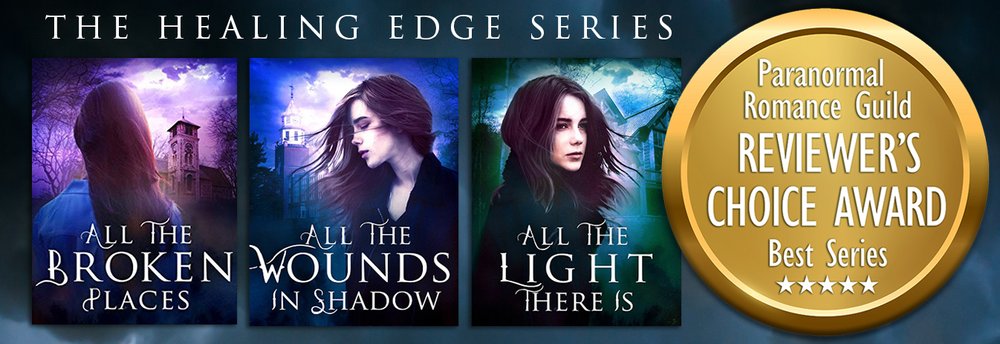
Her debut, The Healing Edge trilogy, won the Paranormal Romance Guild Reviewer’s Choice Award for Best Series.Dead Keen, the second instalment of her second series, The Things Unseen thriller trilogy,is released on 10 August 2023.

The common thread is that all of Eden’s heroines are mental health social workers. “What I’m interested in is exploring the intersections of faith, love, belief and mental health,” she explains, “and how that collides with the real world.”

From the beginning

There were early signs Eden would become a prolific writer: her penchant for “throwing five or six-syllable words I’d heard into a sentence, even though I didn’t know what they meant”; her propensity for drifting through the woods behind her house, making up stories; avid reading. That her work would be driven by caring and curiosity was likewise evident: when developers cleared part of her “sacred” forest, a 10-year-old Eden and her friend shoved sticks into bulldozer treads, hoping to sabotage the operation.

“If I hadn’t had such understanding, loving, accepting parents and teachers I would probably have gotten into a lot of trouble,” she admits. “I was a handful, but a people-pleasing handful.”

Eden was recently diagnosed with ADHD, which “explains a lot of my childhood.” It has also heightened her desire to educate people about mental health and advocate for robust self care and social care.

​Life and flow

In addition to addressing mental health themes in fiction, Eden teaches social workers and researches women’s mental health. She sees these as complimentary endeavours, though admits that juggling them is “constant negotiation. It’s like water flowing into different containers; it goes where it needs to go.”

Wherever the water flows, Eden prioritizes her mental well-being. This should be axiomatic for any writer, any person, but writerly misery is a stubborn tradition. As Hemingway may have said: “There is nothing to writing. All you do is sit down at a typewriter and bleed” (the Hemingway Society explains why he probably didn’t) – and the implication that suffering equals significance has proven hard to shake.

Eden resists this, personally and professionally. Her Mac is unsanguineous. Her home writing space comforts and inspires. “I’m looking out into the back of a house across the way, an empty lot with wildflowers, trees and above that sky,” she reports. “The sky is dramatic in Ireland; there is always something going on with the clouds. On my wall, works of art from friends and pictures of my family; when I need to be inspired I can look over and be reminded there are people who love me.”

In career terms, she ignores unhelpful advice. “Anyone who says, ‘you shouldn’t be doing it if you’re not making money,’ knows nothing about writing and publishing. If I pinned my confidence or motivation on money, that would be sad indeed.”

Eden knows from experience that confidence and motivation are hard, and hard won. Far from being dispirited, she relishes the opportunity to make mental health a focal point. It is part of an ethos of care: care for writing, care for readers and care for writers.

​On writing & mental health

What mental health challenges can writing pose?

It’s a solitary activity. You are the writer, and you have to do the writing. You can collaborate, you can talk about your plot, you can workshop, but ultimately it’s you with your screen, or notebook.

Also, there is no real mechanism for feedback until you get published. There can be years and years of toil before you get feedback. In other creative fields where you have an audience – music, theatre – you can put out pieces, get feedback, adjust; it gives you confidence. With writing there is more lag time between when you start working and when you get feedback. You won’t get people cheering you on. It’s just you. A lot of writers have imposter syndrome as a result. Passion and grit is required to pull through, which can be asking too much. A lot of people don’t start, or don’t continue.

Once you publish, or are in a workshop, it can be difficult to take feedback. What you write is personal; it’s your heart, brain, mind. It can be hard to take the slings and arrows of criticism if you’re not mentally prepared. It takes learning to develop perspective on what you’re hearing.

What types of writing can be particularly challenging?

Not that the stories are autobiographical, but I draw on my emotional experiences. In my last book, Dead Sound, the protagonist is with her ex-boyfriend. She’s having a flashback to the moment they broke up. He hit her in that scene and he’s now gaslighting her, telling her it didn’t happen. And she’s questioning herself. That is something that happened to me, and I wanted to write about it for the readers who might be wondering if they had suffered abuse. In order to do that, I had to revisit those experiences. Reliving something difficult or painful is difficult and painful. I have to have self-care in place for during and after. While writing, I have my dog, my coffee, my music; afterwards I might need to go out.

How has writing affected your mental health?

I didn’t write prose until I was 39. Before that, I wrote poetry, which is very therapeutic. It is a direct line to heart, soul, mind; it pulls everything together. I’d start a poem with a dilemma or problem, and by the end I’d solve it. Poetry was like mini therapy sessions. I stopped writing when I became a therapist. I was putting all my creative energy into helping my clients.

It was during a period of unemployment that I wrote my first novel, which started as a way to answer a question for myself about mental health, and the challenges of the work. For an ADHD person, [writing] is the perfect hobby. You can go on any adventures you want.

What do you make of the trope that depression and misery spur great writing?

[Reading her work] I got the feeling Sylvia Plath would have loved to be mentally healthy. She was someone who would have loved to be happy. She would never have romanticised [her struggles]. It ended in tragedy.

What can trigger mental health difficulties?

A mental health issue arises from a mixture of factors, not just genetics or circumstance. Political factors, economic factors, physical issues, how resilient individuals are based on genetics and upbringing. For writers in particular, how we deal with isolation and criticism are important.

What resources can writers use to protect their mental health?

Having other writers in your friend group is huge. Being a part of a writing program, a workshop, or reaching out to writers on social media can lead to friendships. There was a Facebook group I joined of 10 debut novelists, all our books were coming out the same year. We were going through the same stuff for the first time, at the same time. We could compare notes, kvetch, problem solve. Nobody apart from other writers really knows what it’s like.

One of the things I tell my students in social work, and I would say to writers: we are the tools of our trade. You have to take good care of your tools. If you don’t, your work isn’t going to be great.

Eden recommends

The piece of writing that changed your life before age 18?

Madeleine L’Engle’s A Wrinkle in Time – it was science, philosophy and faith mixed together in a book that was suspenseful and thrilling, that tapped into emotional truths. I wasn’t being patronized or condescended to. I try to do that with my books: include science, philosophy, relationships; I do a lot of research to make sure it’s right.

The piece of writing that changed your life as an adult?

Wally Lamb, She’s Come Undone changed my life for the better. I was a young woman suffering depression, feeling lost, at a loss, which is the situation the heroine finds herself in at the beginning of the book. Several things [in it] helped me. One was feeling seen in a positive way: the character’s mental health struggles are not stigmatized or romanticized. There was also seeing her recover, seeing there was a point of feeling better.

A classic you could read over and over?

Catch-22 by Joseph Heller. It’s hilarious. It’s insightful. What can I say? It’s reality. With our changing world, it is more and more relevant.

A contemporary book you wish you’d written?

Outlander by Diana Gabaldon. The poetry of it is so unexpected, in a way that only poetry can be. It’s like reading a novel that’s a poem, and a poem that’s a novel. And the love story is massively compelling. The characters are so real and complex that they can carry an incredibly complicated story line.

A book about writing you recommend?

I Give you my Body…”: How I Write Sex Scenes by Diana Gabaldon. I don’t even write sex scenes, but she gives fantastic advice in general.

Who would you cast as the lead if your forthcoming novel, Dead Keen, were filmed?

Katherine Langford as [the protagonist] Neve. For the main male character, Con, Jason O’Mara; it is important to have an Irish actor.

What’s next?

The 10 August launch of Dead Keen. My writing group, the Mallow Scribes, is going to do a dramatic reading. We’ve been rehearsing for weeks.

Connect

On Reading Like a Writer

This is an article I wrote several years ago, based on interviews with three brilliant, inspiring writers. It is worth revisiting.

_____________________________________________

boat

“It is impossible to become a writer without reading,” says Paul Hendrickson, writing professor at the University of Pennsylvania and award-winning author of numerous books including Hemingway’s Boat.

novel

There is a relationship between quality of reading and quality of writing. And a distinction between reading for pleasure and reading like a writer. The difference involves attitude, approach and appreciation. Michael Schmidt, poet, professor and author of The Novel: A Biography recommends reading, “with eyes wide open, full of anticipation.”

With this in mind, here are seven ways to read like a writer:

1. Compulsively

“You can’t be a writer unless you have a hunger for print,” says Nick Lezard, Guardian literary critic and author of Bitter Experience Has Taught Me. “I was the kid who sat at the table and read the side of the cereal packet.” In Nick’s case, the lust for literature paved the way for a career as a book reviewer. But regardless of the genre or field to which you aspire, all writers are readers first.  And “it doesn’t matter whether the medium is the side of the cereal packet or a screen,” Nick says.

bitter

2. Slowly

Cereal-packet readers tend to wolf words like they do breakfast. This is a trait writers should train themselves out of – at least sometimes. Paul defines reading like a writer as slow reading: dawdling on the page, delving, soaking in the style and rhythm. Don’t read everything this way, though. “I don’t read the newspaper ‘like a writer’,” he notes. “I don’t have time. Nobody does.”

3. Broadly

farewell-arms

Time is of the essence for the reading writer, but that doesn’t mean you should ignore everything apart from the classics. There are, to borrow Orwell’s term, good bad books. Nick mentions Ian Fleming as an example of compelling though less-than-literary fiction. Paul gives a nod to Raymond Chandler, saying writers can learn from his “hardboiled, imagistic lines.”

4. Selectively

That said, don’t make the mistake of reading widely but not too well. “Reading crap is no good for the eye or ear,” says Michael. “Read only the best, and read it attentively. See how it relates to the world it depicts, or grows out of.”

Nick, who has read his share of bad books as a reviewer, concurs: “If you just read books like 50 Shades of Grey or Dan Brown, you’re going to wind up spewing out a string of miserable clichés.”

 5. Attentively

stein

You get the most out of good writing by reading it with real attention. Michael advises writers to pay heed to metaphor, characters’ voices, how the author develops those voices and how they change. He recommends Christina Stead’s The Man Who Loved Children as a rewarding subject of attentive reading: “There is a strong sense of development, nothing static there. I can think of no better pattern book for a would-be writer.”    

6. Fearlessly

ulysses

Reading like a writer means going out of your comfort zone. When Nick was in his teens he tackled James Joyce’s Ulysses. “It was a struggle,” he recalls. “It took me a year or two. But that’s how you [learn] – you find stuff that’s above your level.”

7. Imaginatively

Reading above your level is valuable, in part, because it challenges your imagination. Paul talks about savoring the terse beauty of poetry and imagining “everything that’s between the spaces of the words, the spaces of the lines.” By observing the work of your own imagination you gain insight into how writers evoke images and emotions.

You don’t have to read every book (or cereal box) like a writer. But the more you immerse yourself in words and cultivate these seven skills, the better your writing will be. “If you are writing a potboiler, imagine how wonderful it will be if the work you produce is actually a proper novel,” says Michael. “Read the best, and read the best in your elected genre.”

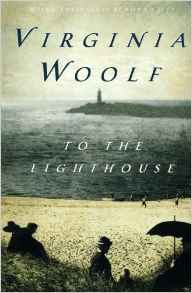
lighthouse

Writers’ Recommended Reading:

Ulysses – James Joyce
To The Lighthouse –Virginia Woolf
A Farewell to Arms – Ernest Hemingway 
Three Lives – Gertrude Stein
New York Review of Books

10 Sex Affirmative Books for English Language Arts

Following on from my previous post on the importance of affirmative sex education, here are 10 books English Language Arts teachers can reach for to open conversations about love, relationships, gender and sexuality.

These works were chosen because they treat sex with the openness, thoughtfulness, honesty and sensitivity it merits.

Photo by CHUTTERSNAP on Unsplash

Letters to a Young Poet by Rainer Maria Rilke

This brief, moving book touches an many aspects of life: education, self-discovery, solitude, family relationships, etc. but Rilke’s comments about love and sex shine. Don’t be satisfied with conventional definitions of what a relationship ‘should’ look like, he advises. Instead, seek to develop yourself as an individual so you can truly respect and cherish the individuality of another person. It is humane, wise, timely wisdom framed in sublime prose.

Get it here

Frankly In Love by David Yoon

This YA novel centers on Frank Li, the teenage son of Korean immigrants, who finds himself trying to navigate the challenges of new love while wrestling with contradictory cultural expectations. Fast, good-humored and, well, frank, it highlights the importance of being honest with oneself and others — in life and in love.

Get it here

Cool for the Summer by Dahlia Adler

With a nod to Demi Lovato, this novel explores how issues of class and privilege complicate the already complicated issues of love and sexual identity. Are Lara and Jasmine really falling in love, or are they just cool for the summer? And what happens if Lara chases the hunky Chase…? A touch frothy, but heartfelt and affirmative of love, wherever one finds it.

Get it here

Lawn Boy by Jonathan Evison

This Bildungsroman set in a well-to-do Pacific Northwest community hit home with me (though the community I grew up in wasn’t quite so well-to-do). In addition to being a welcome, thoughtful discussion of class, poverty and family tension, it has a romantic twist that is sure to get students talking.

Get it here

A Tree Grows in Brooklyn by Betty Smith

Smith’s beloved coming-of-age tale set in early 20th century Brooklyn is refreshingly forthright about sex. It handles both positive and negative aspects of love and sexuality (including an attempted sexual assault) with a calm directness that can set the tone for open, non-judgmental classroom conversations.

Get it here

Giovanni’s Room by James Baldwin

Baldwin is perhaps my favorite writer on sex; certainly, the rare (American) author who understands and treats sex as the physical act of love. This short novel is appropriate for older teenagers, say 16-18, and explores the tragic consequences of prioritising social conventions over human relationships. To paraphrase Baldwin, the protagonist’s problem isn’t his homosexuality, it’s that his capacity for love has been crippled by his anxiety about what people might think.

Get it here

Genderqueer: A Memoir by Maia Kobabe

Contemporary writers are creating a robust canon of books about gender identity and nonconformity. I love this graphic memoir for its matter-of-fact tone and authenticity. It highlights that gender identity is fluid and finding one’s path isn’t necessarily a linear journey — nor does it need to be.

Get it here

Persepolis 2: The Story of a Return by Marjane Satrapi

Lest you get the wrong impression about the back-to-back graphic memoir recommendations, let me quote one of my students when asked if he liked graphic texts: ‘No!’

He and I share the view that other people’s pictures get in the way of the (superior) moving pictures in our heads.

That notwithstanding, Persepolis 2 is an evocative, eye-level portrait of Satrapi’s struggles with language, culture, love and sexuality after she moved from Iran to Germany. This is a particularly strong choice for children who have immigrated or come from a cultural/familial context that distinguishes them from their classmates.

Get it here

Zenobia July by Lisa Bunker

For younger readers, this is a charming, uplifting novel about a trans girl coming into her own. Details like Zenobia stressing out about which restroom to use add verisimilitude and the plot touches on vital issues like deadnaming, cyberbullying and the importance of community without ever feeling preachy.

Get it here

When I Grow Up I Want to Be a List of Further Possibilities by Chen Chen

Sometimes, I read a book and think, wow, that was brilliant.

Sometimes, I read a book and think, wow, that was brilliant and I really want to be friends with the author.

When I Grow Up… is in the latter category. His poems about growing up as the child of immigrants, cultural tension, sexual identity, homophobia and the search for love are surpassingly deft, raw, funny, tragic, playful and defiant. They also communicate (don’t ask me how) a deep, fundamental good-personness. In a perfect parallel universe, Chen and I would go for drinks.

Get it here

What texts would you add to a literary discussion of love, gender and sexuality? Share in the comments or Tweet @CilaWarncke

10 Books About People and Movement

My students and I are about to start a unit studying people and movement. Every new course and group is a fresh challenge in curriculum development: identifying and sourcing appropriate texts, deciding on writing exercises, linking new material to previous learning.

People and movement is a tough remit for its sheer breadth. From the wanderings that brought homo sapiens from its ancestral home in Africa to the current heartbreak and chaos that reign at ultra-militarized human-made borders, there is much to absorb, understand, reflect on and debate.

And of course, movement is more than just physical displacement. People and movement must consider emotional and spiritual journeys, economic trajectories, the currents that flow between lovers or haters, the passage from ignorance to enlightenment. Movement is life: heart blood nerve impulse digestive contraction sperm meets egg infant traverses birth canal. We only stop moving when we’re dead.

Looking back at my reading list of the past few months, almost every book could be profitably analyzed through the lens of movement. The following 10 books — a mix of fiction, memoir, verse and biography — give particular insight into human dynamics, visible and invisible. Without further ado, the people and movement reading list.

Without a Net: The Female Experience of Growing Up Working Class edited by Michelle Tea

As culture gets less equal, movement between social classes becomes as fetishized as it is remote. An antidote to the reams written about the poor — Without A Net, edited by Michelle Tea — is by the poor, or the formerly poor. Though one of the key features of the essays in this book is the disabuse of the notion that someone can transcend deprivation simply by making a bit of money. Lack (of cash, of security, of stability, of self-confidence) is a persistent challenge and the writers in this anthology challenge the notion that there is a quick fix for what Richard Sennett memorably termed ‘the hidden injuries of class’.

Get it here

A Small Place by Jamaica Kincaid

Brief yet lacerating, Kincaid’s dissection of colonialism ancient and modern demands an analysis of the privilege of movement. People of certain countries, cultures and backgrounds can move freely, either as conquerors or (almost as problematically) consumers of less-privileged places. The use of the second-person pushes the reader to question their identification and position in the hierarchy of movement.

Get it here

The 1619 Project: A New Origin Story edited by Nikole Hannah-Jones

This anthology includes the longform pieces written as part of the New York Times 1619 Project, plus new essays. It examines the way catastrophic, criminal displacements of people underlie and shape United States’ culture. Kidnapping, transporting and enslaving Africans plus genocidal clearances of Native peoples created a nation that has yet to come to terms with the implications and outcomes of its past.

Get it here

Elusive: How Peter Higgs Solved the Mystery of Mass by Frank Close

Some people look outwards to understand the world, but the movement towards greater understanding often requires turning in. In the case of Peter Higgs and scores of scientists across decades, the journey was ever-deeper into the realm of subatomic particles, resulting in the eventual discovery of the Higgs boson — a particle whose movement is fundamental to the shape of our universe.

Get it here

Lowborn: Growing Up, Getting Away and Returning to Britain’s Poorest Towns by Kerry Hudson

Another intense exploration of the potential and limitations of moving between social classes. Hudson was the English equivalent of poor white trash, a circumstance which meant she spent her childhood moving from one precarious, uncomfortable, humiliating physical and social environment to another. Revisiting old haunts as a successful adult, she is confronted by how little some things have moved on.

Get it here

All the Broken Pieces by Ann E. Burg

This novel in verse is aimed at middle-grade readers but it made me weep. Told in the first-person by a Vietnamese boy who was adopted, after the war, by a couple from the United States, it gets to broken heart of violent displacement and alienation from home and culture. It also (ambitiously, deftly) addresses the emotional and physical trauma of returning veterans.

Get it here

Gravel Heart by Abdulrazak Gurnah

Nobel Prize-winning novelist Gurnah is always writing about movement; his characters roam, seek, sometimes return, are rarely satisfied. This richly textured story follows a seemingly successful immigrant who cannot outrun the pain of a mysterious childhood separation or the complexities of a family where movement failed to heal deep fissures.

Get it here

Down and Out in Paris and London by George Orwell

From scuttling frantically through the subterranean corridors of a posh Paris hotel to tramping the dusty byways of the Home Counties in search of a place to sleep and a spare meal, Orwell’s foray into poverty is marked by movement. Though distinct from his working-class counterparts by education, the young writer genuinely struggled, which — although he couldn’t help but see himself as in the world but not of it — still stands as an honest and compassionate account of poverty.

Get it here

The Island of Missing Trees by Elif Sharak

This novel was recommended by Nobel Prize-winning author Wole Soyinka, who praised its intensity and clarity. The story of lives split and twisted by tribal violence on Cyprus, it explores the penalties of flight, what it means to be rooted, and the long arc of coming to terms with the things that cannot be eluded.

Get it here

The Wonderful Adventure of Nils by Selma Lagerlof

For a final Nobel Prize name drop, this slightly surreal and unsentimental story of Nils the goose boy who accidentally gets turned into a tiny elf. Lagerlof won the literature prize in 1909, the crowning achievement of a career that included poetry, adult fiction and this classic children’s story. Bold and vivid, the tale of Nils illustrates the critical role movement can play in self-discovery and insight. At home, Nils was cruel, spoiled and selfish; after traversing the skies with a flock of migrant geese, he comes to understand kindness and survival in a new way.

Get it here

10 Great Novels for Teen Readers

Great books help develop strong readers. And strong readers are capable of learning just about anything.

One of the joys and challenges of my job as a literature teacher is to continuously find exciting, engaging stories that will resonate with teen readers. To that end I read A LOT and am always on the look out for recommendations (if you have any, please jump to the comments and share!)

In 2022, I read more than 120 books. These 10 stood out as great novels for teenagers.

A Tree Grows in Brooklyn

by Betty Smith

Somehow, I missed this classic coming of age story when I was a kid. Shame. A Tree Grows in Brooklyn is a startling, unsentimental portrait of growing up poor in Brooklyn in the first years of the 20th century (the book ends with rumors of war). It doesn’t gloss the ugliness of abject poverty, alcoholism, sexual violence and ethnic conflicts yet it neither preachy nor maudlin. The characters are given the dignity of being complex, alive and changeable. Unmissable.

Cool for the Summer

by Dahlia Adler

This contemporary novel about a teenager girl exploring her sexuality is the best of a whole bunch I read on said theme. Middle schoolers desperately need affirmative, healthy messages about sex and sexual identity. The protagonist of Cool for the Summer is awkward, confused, obnoxious and authentic. She drinks, she swears, she screws up. She starts to figure out how to figure it out. When she finally kisses her new girlfriend at the end, there is a satisfying sense of hard-won self-awareness and acceptance.

The Astonishing Color of After

by Emily X.R. Pan

Apparently, this novel about a girl coping with the aftermath of her mother’s suicide is ‘magical realism’, a genre I would cross the road in front of a speeding semitruck to avoid, in most instances. In this instance, the fantastic and surreal are an effective (perhaps essential) means for communicating the displacement of grief. The protagonist’s gradual immersion in her mother’s language (Mandarin) and birthplace (Taiwan) offers hope and challenge, and, for the reader, insight into the complexities of biracial identity.

Long Way Down

by Jason Reynolds

This novel-in-verse won all the awards, and rightly so. It follows the 15-year-old protagonist as he takes a long, slow elevator ride towards destiny. Will he use the gun tucked in the back of his trousers to avenge his brother’s violent death? Or will he break The Rules? The pacing is taut, the use of language superb, and the voices unforgettable.

A Single Shard

by Linda Sue Park

This was officially my first foray into historical fiction about 12th century Korea. Let it be yours. The amount of research packed into every page makes me quiver with admiration for its author. Middle school kids probably won’t notice or care about all the work behind the scenes, though, they’ll be too busy chewing through the crisp, lovely prose about a young orphan’s apprenticeship to a master potter and the tough choices he has to make.

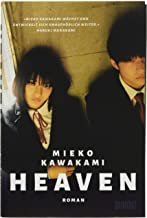
Heaven

by Mieko Kawakami

I’m not sure if this is properly an adult novel with YA characters, or a YA novel. In any case, it’s fantastic for 8th graders, as it is a tough, unsparing exploration of issues that many kids face: bullying, divorce, parental absence, social awkwardness, sexual frustration and suicidal ideation. Don’t be misled though; it is anything but grim. There is life, and hope, which feels all the more authentic for being complicated.

All the Broken Pieces

by Ann E. Burg

Another novel-in-verse, told in the first person by a Vietnamese boy who was adopted by a couple in the United States after the war. The struggles with traumatic memories, guilt, racism and alienation are predictable. What is not is the heart-rending yet uplifting way he learns to cope, with a little help from his parents, a disabled baseball coach and a room full of veterans.

Frankly in Love

by David Yoon

This is just your typical hyper-ambitious YA novel that deals with racism, immigration, generational conflict, sex, friendship, LGBTQ+ identity and academic pressures. Just kidding. There is nothing typical about this fast, funny but also totally serious novel about a boy leading a double life: calculus-conquering son of Korean immigrants by day and kinda clueless, hopped-on-hormones American teenager who just wants to have fun.

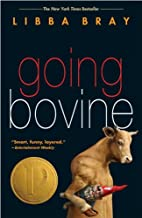
Going Bovine

by Libba Bray

To paraphrase Hunter Thompson, when the going gets weird, the weird go bovine. I stumbled across this while looking for postmodernist teen fiction and boy, is it that. A fast-and-loose riff on Don Quixote, it is packed with drugs, sex, bad decisions, talking garden gnomes, fatal neurological conditions, magical jazz artists and… really, just read it. Preferably in one sitting. It’s louche, loud and OTT: perfect for older teens.

The Story that Cannot be Told

by J. Kasper Kramer

Inspired by Romanian history and folklore, this ode to the power of words follows a girl growing up in the insane reality of the late days of Ceaușescu’s dictatorship. Peril is always close to hand, often due to her innocent mistakes, but stories have a way of helping make sense of things. And of changing the endings of real-life situations. This is a perfect book for kids who like historical fiction, folktales and fantasy.

Recommend a great book for middle schoolers in the comments, or Tweet @CilaWarncke

PDX Indie Bookstores

Portland, Oregon has a well-deserved reputation as a bookish city. Its literary climate springs, in part, from its actual climate. During the months of interminable rain it is natural to retreat to bookstores and libraries, or curl up at home with a favorite volume. The city’s creative energy, fueled by coffee, craft beer and local wine, helps foment works of imagination by local writers. Harvest the fruit of their labors at these book stores.

Photo by Rumman Amin on Unsplash

Annie Bloom’s Books

http://www.annieblooms.com

This small but venerable indie bookstore in the heart of Multnomah Village, on the west side, has been dishing out literary goodness since 1978. It sells new books, with a focus on fiction, children’s and young adult, travel, current events, and cooking. Plus it is a great space to browse for magazines, art supplies, puzzles, and cards.

Broadway Books

http://www.broadwaybooks.net

503-284-1726

This Northeast Portland stalwart is particularly strong on stocking local writers. Subject matter is wide open, with offerings of fiction, non-fiction, poetry, graphic novels and more. You will find personalized material from local authors like Cheryl Strayed, who has the honor of a section dedicated to signed copies of her work.

Powell’s City of Books

http://www.powells.com

No mention of the PDX literary scene would be complete without a nod to Powells’s, City of Books. As the biggest thing in local literary retail it is a huge draw for both writers and readers alike, who can spend happy hours browsing its immense color-coded collections. I’ve been hanging out at Powell’s since I was a kid (when I gravitated to Nancy Drew mysteries and Marguerite Henry horse stories). Whatever you go looking for, you generally come out with something different, which is most of the fun of it.

Wallace Books

https://www.facebook.com/wallacebooks

The most adorably clapboard, overstuffed used bookshop imaginable, Wallace Books is a throwback to the eclectic, eccentric wonderful bookstores of my childhood. Its charming exterior beckons you in and its sprawling collection rewards languid browsing. Take your time.

What’s your favorite indie bookshop? Big it up in the comments!
33 – Married Folk Blues

This short story appears in the Erotic Review, where you’ll have to go to read the saucy bits.

Photo by Hannah Dean on Unsplash

Abe remembered as he pulled into the rest area. Too late. Sixteen years of habit die slow. He rested his right palm on the frayed Navajo-style passenger seat-cover, feeling the faint prickle of Geordie’s short, coarse hair trapped in the rough weave. It felt like the spiky-soft tips of grass sprouting on the grave beneath the ash tree.

Killing the engine, Abe shut his eyes. Geordie always smelled like swamp water. For the first weeks Abe was convinced the pup snuck into things: drains, garbage cans, trash heaps. But patient stalking revealed no miscreance. The goofy mutt was just an eventual 97 pounds of slobbering, soft-hearted, small-bladdered stinker. Picked a winner, Hazel would tease.

He was though: loyal, tireless, curious, protective, the folds of his part-boxer, part-hound face arranged in a permanent tragicomic mask that could make Abe smile on the worst days. Of course, Hazel was the one who cared for Geordie weeks at a stretch. He wished he’d been there more.

Dusk was bleeding the day of its heat but remnants splashed Abe’s legs as he crossed to the cafe-slash-convenience store. He went to pee, more out of habit than necessity, then bought a bottle of Dr Pepper and a pack of beef jerky, not admitting to himself that would probably be dinner.

Gnawing a stick of dried meat, he paused short of his truck. Someone had pulled in at a 40 degree angle, the vintage blue Corolla’s bumper almost nuzzling his door. Faded Mississippi plates, long deep scratches above the rear wheel, a palm-sized patch of bare metal on the hatchback, no driver, a jumble of boxes and plastic crates stacked to the ceiling. Someone in a hurry all right. Abe could think of a few reasons why that might be, none of which he wanted to get involved with.

Hazel had laughed at his proclivity for rescuing things: Geordie, abandoned cats (usually pregnant), injured birds, hitch-hikers, drifters. But he was tired. He could climb in the passenger side and go.

“Please, Shooter, come on. Please.”

Click to continue reading

28 – The Stowaway’s Secret

In 2009 I took a shot at writing a children’s mystery of the sort I grew up on (Nancy Drew, Trixie Belden, The Hardy Boys, etc). Revisiting it, I was as much in thrall to J.D. Salinger as to Carolyn Keene. It remains unfinished but I’m open to offers 😉

Intro

Benjamin Riddle-Smith wasn’t happy. His summer had started badly, and right now it was sunk deep in the doldrums. I feel like this stupid yacht, he thought, staring across the deck from his lounge chair, stuck here boiling under the sun and never getting anywhere. Benjamin’s face folded down into a deep frown as he remembered the events of the final few days of school, which had cost him his freedom this summer.

Despite their looming eleven-plus exams he and his best friend Tod had been having a jolly time. They were both sport mad, and spent every spare moment climbing, swimming, and playing rugby or tennis. That wasn’t a problem until their housemaster decided on long, boring mandatory study sessions in preparation for their eleven-pluses.

Tod and Benjamin had never seen eye to eye with the headmaster on the subject of studying versus sport, so they shouldn’t have really been surprised when he took a dim view of them sneaking out to play games during library hour. The more Mr. Hawkins watched them, the harder they tried to get around his rules, until one night they executed a daring free climb right up the stone and ivy façade of Ashford House.

Worst of all, they made it cleanly to the second floor, and were only feet from the safety of their shared room when their prank was discovered. They were at the room next door, to be precise, and Thomas Smyth’s shriek of surprise as they tumbled through his open window had woken most of the corridor. Mr. Hawkins would have dearly loved to see the two mischief makers gone for good. But luckily Benjamin’s father Alfred Riddle was an extremely wealthy and persuasive man, and Tod’s nearest relative was his elderly uncle – a close friend of the queen’s.

There had been a lot of fuss about it, but in the end the real punishment didn’t come from grumpy Mr. Hawkins but from Benjamin’s parents who agreed that instead of spending the summer with his mother in Switzerland he would spend it with his father on his yacht, the Icarus. It was a huge, triple deck floating palace, packed with gadgets, and Benjamin enjoyed spending the occasional weekend there. But eight hot weeks? No thanks! Ben loved climbing more than anything. Now, after months of waiting for summer in the Swiss Alps, where he could climb every single day, he couldn’t believe he was stuck baking slowly on deck.

He stood up and shuffled over to the edge of the pool. The water was perfectly still. Peeling off his tee shirt he dove into the pool and started swimming lengths. It wasn’t as much fun as climbing, but he’d been swimming since before he could walk and he liked the steady rhythm of his arms and legs. Plus, his little sister Jasmin couldn’t keep up with him, so the swimming pool was about the only place he could get a minute’s peace.

Chapter One

It never lasted long though. No sooner had Ben gotten back to his cabin, changed, and settled down to tackle the next level of Prince Of Persia than she came running. “Benjamin! Bennnn-ja-miiiin!” Her high-pitched voice carried through the corridors and portholes till it bored right through the door. Benjamin was squinting in concentration, but his thumb slipped and his lifeline fell into the red. With a grunt of irritation he put down his PSP. There wouldn’t have a moment’s peace until he answered Jasmin’s piercing call.

“What?!” he shouted, pulling open his cabin door with a bang, “I’m down here. What is it?” A minute later his seven-year-old sister came flying down the passageway, bare feet slapping like wet towels against the polished surface.

“Daddy says you’re to come up to the third deck, aft, as soon as possible. She-hike Sullyman is visiting and Daddy wants you to come greet him.”

Benjamin let out a very deep sigh. Along with Jasmin he spent his summer holidays with his father. Being called to meet and greet an assortment of politicians, business moguls, and celebrities was inevitable. Since Father had bought Icarus there had been a lot more visitors like Sheik Suliman.

“Honestly,” he said, thinking out loud. “You’d think the Sheik would have seen enough yachts – what with having three of his own – that he wouldn’t need to come and snoop around ours.”

“Come on Benj,” Jasmin whined. “Daddy told me to tell you to hurry up!”

“Ok, ok,” he replied, “just a second.” He saved his game, switched off the PSP, then locked the door and pocketed the key before following the slap-slap-slap of his sister’s footsteps.