On Suede (band, not shoes)

Writing is integral to my teaching process and practice. When I publish, it is a privilege to share.

Pennyblackmusic.co.uk runs a regular feature called Discography Hagiography. In which, as the name suggests, music nerds get to publicly worship bands they love.

Imagine my delight when editor John Clarkson gave me the nod to write about Suede on the occasion of the band’s 30th anniversary and mind-bendingly good LP, Autofiction.

Writing this brought me joy. May reading it bring you joy.

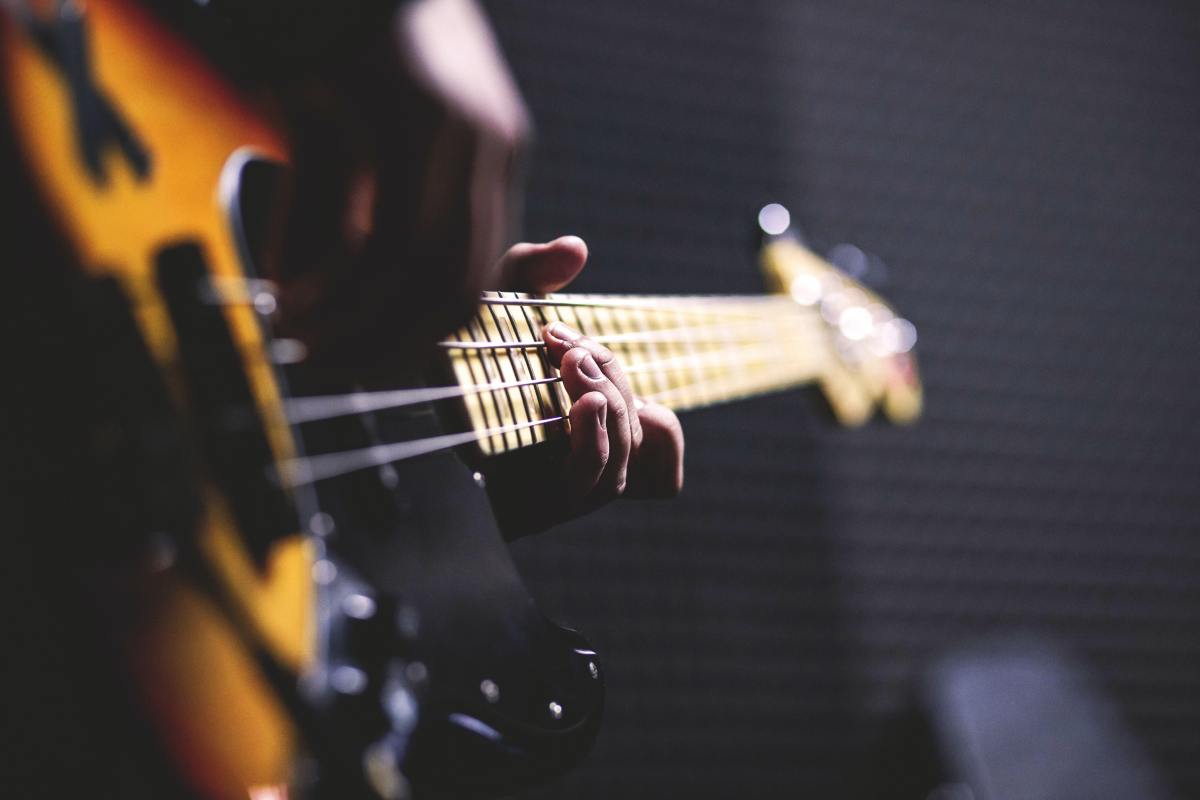
(Below, an excerpt. Full article here. Photos are illustrative, not of Suede.)

Photo by Chris Spalton on Unsplash

Suede: Discography Hagiography

In 1998, I walked into a record shop on Philadelphia’s South Street to return a damaged Bush Sixteen Stone CD.

No refunds, the proprietor said, pick something in exchange.

Crouched on the wooden floor, I scanned the bottom shelf. The London Suede rang a bell. I studied the androgynous/ambiguous nude puddled in ghastly underwater green. On the back, the name ‘New Generation’ popped (it was on a mix CD from my brother). Sold.

This was the start of a semi-obsessive love affair, a fact I offer as an excuse for my inability to present a concise career appraisal of Britpop’s most reckless proponents. This will be a true hagiography, with the irrationality and ellipses that veneration of a saint implies.

Suede shook my foundations the same way some people have: not love at first sight, exactly, but recognition – an undefinable, undeniable, life-altering entrance into the presence of one who is known and knows in return.

Brett Anderson was the first person I heard pronounce ‘mascara’ mass-kah-rah; I had no idea what a pebble-dash grave might be nor, for that matter, an estate car. But Suede stirred my emotions and imagination long before any first-hand experience of strobe-lit nightclubs, ecstasy-blown pupils or the grey lassitude of Home Counties Sunday mornings.

It is hard for me to see beyond the moments of delicious chaos to which Suede was the soundtrack to consider its oeuvre. Nevertheless, stepping back so the wheat field emerges from the golden streaks, yields an equal reward. Suede’s motifs are plainer at arm’s length; Brett Anderson’s lyrical fixations and vocal affections more obvious; but they are the beloved particularities of an old friend.

Listening to the albums chronologically, it is striking how well Suede wire walks between internal consistency and rote predictability. The Suedeness rarely drifts into play-by-numbers or self-parody. While contemporaries like Blur and Oasis lean on nostalgia or WWF-style public spats to generate attention, Suede stormed into its 30th anniversary year with the irresistible Autofiction and a tour that had the oft-contrarian music press singing from the same hymn sheet:

  • “Brett Anderson is absolutely mesmerising. You can’t take your eyes off him” (Taylor, The Mancunion).
  • “If this really were an unknown new band with no reputation to trade on… you’d tell your friends they’ll go far” (Lynskey, Guardian).
  • “Perhaps it’s possible to will a transcendent experience into existence, but this Suede concert fulfilled 25 years of dreaming” (Harris, Spectrum Culture).

Suede (Nude) 1993

That Suede managed to live up to the hype preceding its eponymous debut is impressive; as is the fact that the curse of the Mercury Music Prize has yet to catch the band, three decades on.

Suede invited its audience into a claustrophobic, chemical-laced neverland built on the post-Thatcherian ashes of Britain’s social contract. There is no overt politicking; the lyrical bleakness speaks for itself: ‘in your council home/he jumped on your bones’ (‘Animal Nitrate’) to ‘in the car he couldn’t afford/they found his made-up name/on her ankle chain’ (She’s Not Dead’).

Brett Anderson embodied a sleazy-sexy interface of frustration and hedonism, offering a Wildean aestheticisation of ennui, deprivation and dead-ends that is as hypnotic – and apropos – in the 2020s as it was in the early ‘90s. ‘The Drowners’ is an apt term for the generation coming of age to Brexit, Covid and Toryism. As a debut single, ‘The Drowners’ is also an effervescent blast of indie power-pop that, for its four-minute duration, erases everything except what matters: sex and music.

Like Wilde, Anderson intuited that power aligns against truth, beauty and self-expression. Defiance ain’t much, but sometimes it’s all you’ve got. Hence the avant-garde sexual ambiguity, charity shop-chic shrunken white shirts and midriff-baring pleather and gilt pirate hoops framing diamond-cutter cheekbones. Live performances from 1993 (check out ‘My Insatiable One’ from the Casino de Paris; ‘Animal Nitrate’ from Brixton, London) are fresh and daring. (It is hard to imagine that The 1975’s Matty Healy doesn’t owe at least some of his hyper-emotional, dissolute, sexually fluid stage persona to Anderson.)

Track after track, Suede rings true, powered by Bernard Butler’s starry guitar, bassist Mat Osman, drummer Simon Gilbert and keyboardist Neil Codling. From the wistful ‘Breakdown’ (‘if you were the one/would I even notice, now my mind is gone?’) to the menacing glam stomp of ‘Metal Mickey’ – a song that deserves to be danced to in gold DeHavillands if ever one did – it retains a zest and urgency that belies its age.

Dog Man Star (Nude) 1994

This was my gateway Suede album; ‘New Generation’ on repeat, chasing the dopamine rush of its glittering opening riff (cherish those riffs – this was Butler’s last proper album with Suede; nobody did it better). ‘New Generation’ is the highlight of a record that suits melancholic adolescence but, to my adult ears, could do with rigorous editing. Or, perhaps, it would be more accurate (fairer) to say that the range of situations in which Dog Man Star’s emotional tenor feels relevant and urgent has narrowed with age.

The excellent ‘Heroine’ is more than a track, it’s an atmosphere. Anderson’s drug use has been chronicled ad nauseam, so I shan’t bother, but chaos and indulgence cast distorting shadows over tracks like ‘Daddy’s Speeding’, ‘This Hollywood Life’ and ‘Asphalt World’ – the latter a sublime four-minute ballad that meanders for more than nine minutes. (Nick Duerden called the album, ‘the most pompous, overblown British rock record of the decade.)

When restraint is exercised, the results are timeless: the raw snarl of ‘Introducing the Band’, whose Winterland reference introduced me to a seminal moment in punk history; ‘The Wild Ones’, a downbeat beauty that sound-tracked a number of my heartbreaks; and the hauntingly sweet piano lament ‘The 2 of Us’, which makes you want a broken heart, just to enjoy it properly.

Considering it appeared just 18 months after Suede’s debut, Dog Man Star attests to the raw brilliance of a band that was driving with both feet on the accelerator and only the occasional hand on the wheel.

Autofiction (BMG) 2022

The image of a nude with back turned to the viewer is a throwback to Dog Man Star but there are important differences: the lens is closer so the body fills the frame; the lines of muscle and bone are clear and vigorous; instead of awkwardly bent, the arms hug the torso in a gesture of comfort or reassurance. Instead of disaffection and despair, the black-and-white shot evokes vulnerability tempered with strength; containment rather than dissolution.

Suede’s ninth studio album delivers on the implicit promise of its striking cover: intimate, strong, self-contained, vulnerable, bold. Opener and first single ‘She Still Leads Me On’ took a few listens to worm into my neurons; it is now embedded there and generates the same dopaminergic kick as vintage favourites like ‘New Generation’ or ‘Killing of a Flash Boy.’

True to form, the next two tracks keep the intensity at a killing pitch: ‘Personality Disorder’ is a cocky, raucous snarl that pulls off the not-easy feat of wedding spoken-word verses with an arena-sized chorus. Then Anderson snaps into ‘15 Again’ with the whip-crack lyric: ‘Nothing is as bad as the time we kill/ sitting in the bathroom in kitten heels’.

Praise be. The band is back, as and how and when we need it most: dripping sweat, spitting defiance, yielding and pushing, feeling with us how it feels ‘on the black ice with no headlights/ with our hands off the wheel’ (‘Black Ice’).

From the soaring ‘Shadow Self’ to the full-throated stomper ‘That Boy on the Stage’ to the pensive ‘Drive Myself Home’ the album flows between moods and moments with cohesion and conviction. If the first act of adulthood is renouncing childish ways, the second is realising that the kid inside never goes away; maturity is integrating all the aspects of self without apology.

Anderson and co. have done so and created a truly mature album, buoyant with the shimmer and swagger of youth yet sober with the wisdom of years. ‘I’m not the kind of person who never feels uncertain/ so many ways to do what I do wrong’, Anderson muses (‘The Only Way I Can Love You…’) but – however many ways there are to do what he does wrong – he does none of them here. Autofiction is, quite simply, a triumph.

After spending several weeks immersed in Suede, two things remain to say: 1) if Autofiction were the last album, it would be the pièce de résistance of a luminous career; 2) I’m pretty sure it won’t be. And that is good news.

What’s the band that changed your life? Share in the comments!
38 – 10 Songs That Made Me Love Pulp

This article appears on Pennyblackmusic.co.uk. Check it out in its original form.

Photo by freestocks on Unsplash
“It’s not chocolate boxes and roses/ It’s something darker/ Like a small animal that only comes out at night”. Jarvis Cocker’s memorable assessment of the titular emotion in ‘F.E.E.L.I.N.G.C.A.L.L.E.D.L.O.V.E’ (surely one of the Top 10 most awkwardly titled songs pop history) is a perfect epithet for the bands’ oeuvre.

The magic of Pulp is the mingling of sharp, danceable guitar pop with lyrics that veer from cynical to downright sinister. Their most radio-friendly hits are rife with violence (‘Joyriders’ “Mister, we just want your car/ ‘Cos we’re taking a girl to the reservoir”) and voyeurism (“I wanted to see as well as hear and so I hid inside her wardrobe,” in ‘Babies’). Love songs in Pulp world include lyrics like: “You are the last drink I should have ever drunk/ You are the body hidden in the trunk” (‘Like a Friend’).

Studying the arc of their career, it’s clear ‘Different Class’s’ arrival in Cool Britannia was coincidence; the subsequent lumping of Pulp with Britpop a music journalists’ convenience. Pulp never shared Blur’s mockney smuggery nor Oasis’ apolitical performance of working classness. Pulp was on a different trajectory: one that began in Sheffield in 1978, contained more than a decade of obscurity, and survived Britpop notoriety to deliver an acerbic welcome to the new millennium.

Its curve is marked by a rare, unflinching insight into the human psyche. Pulp takes love as a subject but, unlike most pop confectioners, doesn’t sugar-coat it. Cocker sees love as a slippery amalgam of baser needs: status, self-worth, revenge, amusement, actualisation, to see the darkest parts of ourselves reflected in another. Attraction doesn’t lead through flower-dappled fields at sunset but down gnarled alleys stale with fag smoke, booze and latent violence.

Rarer still, Cocker understands that society is an echo chamber of our dark hearts: it isn’t just individuals who behave in warped, self-defeating ways, but our whole culture.


1. ‘I Want You’ (‘Freaks’, 1987)

Released almost a decade into their existence, this marked Pulp’s unsteady progress from post-punk acolytes to popstars. Early on, they could have been The Fall’s slightly more socially adept younger sibling. While this is still true of ‘Freaks’ portentous opener ‘Fairground’, ‘I Want You’ has all the raw material of a lo-fi pop hit, laced with Cocker’s cyanide romanticism. Melodic guitars provide a distractingly pretty backdrop to the declaration: “I’ll break you because I lose myself inside you… Yes, you’re all that I ever desired/ Still I’ll kill you in the end.”

2. ‘Do You Remember the First Time’ (‘His ‘n’ Hers’, 1994)

What saved Pulp from permanent obscurity was a realisation (conscious or not) that matching the music to the dissonance of the lyrics made them inaccessible, to say the least. Polished pop chords were the Trojan Horse that could carry Cocker’s devastating aperçus into halls of residence and suburban discos. The diatribe of a man watching his ex-lover (?) go home to someone else (“You bought a toy that can reach/ The places he never goes… At least you never have to face up to the night on your own”) comes wrapped in layers of chiming guitar and a danceable groove.

3. ‘Mis-Shapes’ (‘Different Class’, 1995)

The opening track of ‘Different Class’ is Cocker spitting the accumulated bile of a decade and half of Tory rule. The opening phrase: “Raised on a diet of broken biscuits” attests to his talent for evoking the circumstances of a life in a single stark image. The embittered, bright working class protagonists of the song “learned to much at school now… We can’t help but see that the future that you’ve got mapped out is nothing much to shout about.” Tellingly, the words still speak for Britain’s (young) people struggling with debt, gutted public services, and the crass Conservative war against social cohesion.

4. ‘Common People’ (‘Different Class’, 1995)

Pulp’s biggest hit, the evergreen indie disco floorfiller ‘Common People’, drips with Maoist levels of vitriolic class consciousness. The (presumably autobiographic) account of a working-class kid who becomes the object of an art school student’s urge to slum it reeks with pent frustration, envy, longing and a paradoxical sense of superiority. “Everybody hates a tourist,” Cocker sneers. “Especially one who thinks it all such a laugh/ And the chip stains and grease will come out in the bath.” But he still drinks the rum ‘n’ coca cola.

5. ‘Pencil Skirt’ (‘Different Class’, 1995)

It is a testimony to Pulp’s genius that a song that disturbed my mother when I was a teenager is as tantalizingly twisted two decades later. (It is also supports the strong argument that the first five tracks of ‘Different Class’ is one of the greatest sustained opening album sequences in 20th Century pop.) Cocker renders scenes with novelistic precision, using simple statements and objects to evoke dark knots of emotion. From the moment “You raise your pencil skirt, like a veil before my eyes” through the point where the adulterous lover declares “I’ve kissed your mother twice, and I’m working on your dad” the whole greedy, sordid, ignoble (in other words, ordinary) affair unfolds like exquisite tapestry.

6. ‘Sorted for Es and Wizz’ (‘Different Class’, 1995)

The original single artwork was a premeditated equivalent of Cocker’s subsequent bum-wagging stage invasion of the Brits in 1996. That the cheeky ‘Here’s how to make a wrap kids’ got the predictable response from the red tops, merely affirmed the incisiveness of Jarvis’ social sensibility. ‘Sorted for Es and Wizz’ is so relentlessly specific that it attains to the universal. You don’t have to have ever “Lost an important part of your brain somewhere in a field in Hampshire” to appreciate the youthful recklessness and yearning it evokes.

7. ‘The Fear’ (‘This is Hardcore’, 1998)

Other bands might have clung to their moment in the sun, retreading the formula, but not Pulp. As the ‘90s waned they released the ultimate comedown album (the only one I know, anyway, that reeks with the jaded wisdom and lack of regret of those who are able to give up chemical indulgences without disavowing them). Cocker isn’t naive enough to think repentance will buy off The Fear. He studies it, inviting the listener along with the minor-key reassurance: “When you’re no longer searching for beauty or love/ Just some kind of life with the edges taken off/ When you can’t even define what it/ is that you are frightened of/ This song will be here.”

8. ‘Glory Days’ (‘This is Hardcore’, 1998)

The apotheosis of Pulp’s genius for making the borderline tragic sound bright, ‘Glory Days’ is a sing-along anthem that captures ‘Mis-Shapes’ broken-biscuit eaters a decade later – undefeated but far from triumphant. “We were brought up on the space race/Now they expect you to clean toilets/ When you’ve seen how big the world is/ How can you make do with this?” Cocker rails. Then adds: “If you want me, I’ll be sleeping in.” It is righteous outrage against The System tempered by the mature realisation that The System is also us. No one is innocent. (We never, were. Were we, Jarvis?)

9. ‘Weeds, (‘We Love Life’, 2001)

Arguably, every song he’s ever written was a protest song, but ‘Weeds’ is a rare example of Jarvis tackling capital-P politics with his usual lacerating observations. Narrated from the perspective of refugees, it snarls with frustration and a loathing of smug privilege. “Make believe you’re turned on by planting trees and shrubs/ But you come round to visit us when you fancy booze ‘n’ drugs.”

10. ‘C**ts are Still Running the World’ (‘Jarvis’, 2006)

Technically not a Pulp song but possibly the greatest Pulp song ever written. Jarvis’ censor-baiting analysis of modern ‘meritocratic’ Britain is par with Leonard Cohen’s ‘You Want it Darker’ as a coda for our times. The only thing tarnishing the splendour of his cutting couplets (“The working classes are obsolete/ Surplus to society’s needs/ So let them all kill each other/ And get it made overseas”) is the fact that the song is more documentary than fiction.


It would be unfair to end on a down-note because Pulp is a fundamentally joy-making band – but I don’t believe Jarvis would see ‘C**ts…’ as a downer. The world may be, to put it politely, screwed but Pulp proved it can’t steal our spirit unless we let it. Be dumb, be furious, be disappointed, be fatalistic; even if you never set your sights higher than avoiding the dog turd outside the corner shop, be proud. As Henry David Thoreau advised: “However mean your life is, meet and live it.”

15 – Saveur Ibiza Restaurant Guide

This feature was for Saveur magazine in 2011. You can read the full article here.

Ibiza Town. Photo: Cila Warncke

Ibiza may be best known as a party hot spot for all-night clubbing, but its rich history belies its boozy reputation. First settled around 4500 BC, Ibiza (‘Eivissa’ in Catalan) was ruled by Phoenicians, Carthaginians, Romans, Moors and, since 1235, Catalans. The key to its desirability is ses Salinas – the salt flats which have provided seasoning to surrounding countries for three millennia. (Don’t leave without picking up a sachet of Sal de Ibiza, the source of the nickname “the White Island.”)

But salt isn’t Ibiza’s only gustatory delight. Its hilly, pine-scented interior boasts brick-red soil where citrus, carob, figs, olives, peppers, squash, tomatoes, melons and herbs thrive, and the turquoise sea yields exquisite fish – get up early one day and go to the port to watch the fishermen offload the night’s catch. Dining in Ibiza is relaxed; don’t mistake the leisurely pace of service for indolence, since the concept of ‘turning a table’ has yet to take hold, and wait staff expect you to linger. You can eat wonderfully well in Ibiza Town alone, but to appreciate the diversity of Ibicenco cuisine, hire a car to explore the seaside chiringuitos and country restaurants. A final tip: be sure to say si when offered a chupito de hierbas – a shot of the strangely addictive local liqueur is the perfect way to finish your meal.

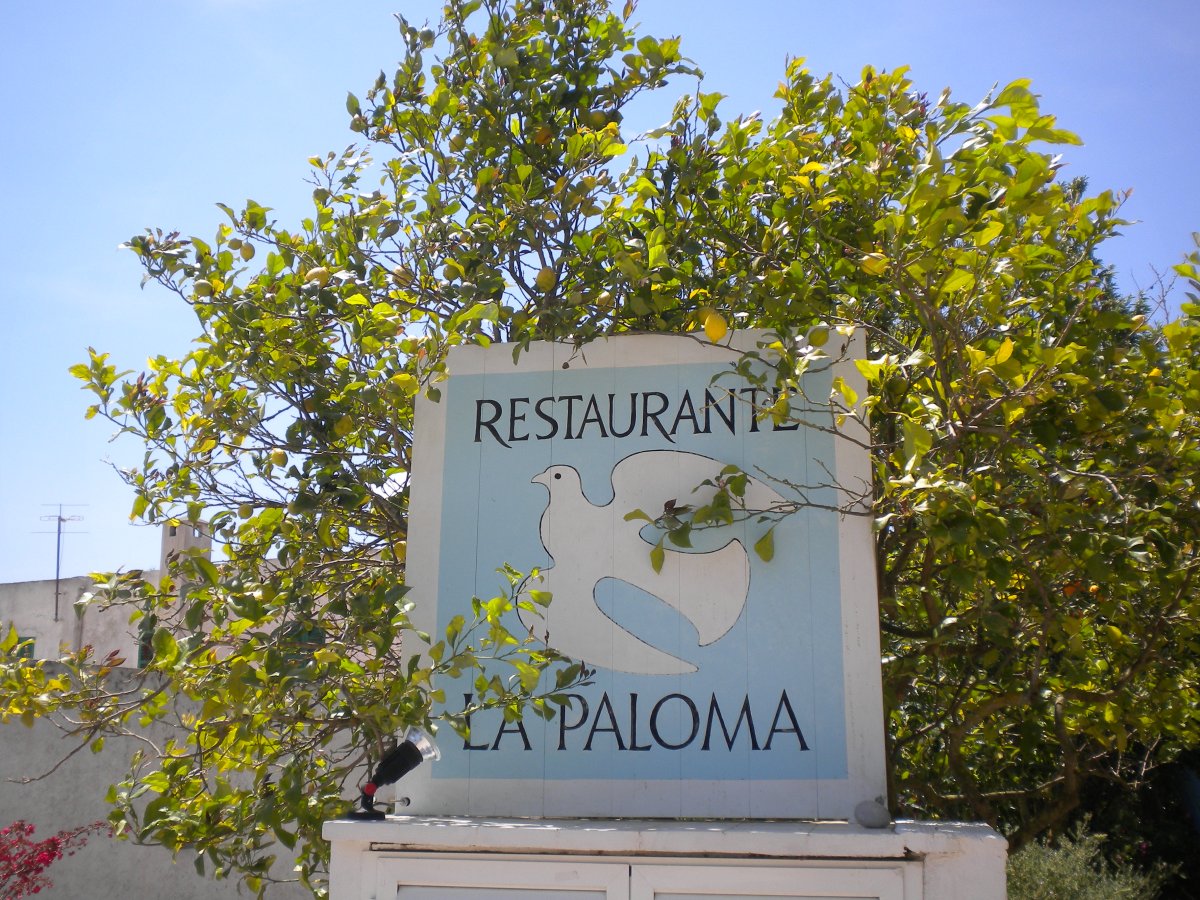
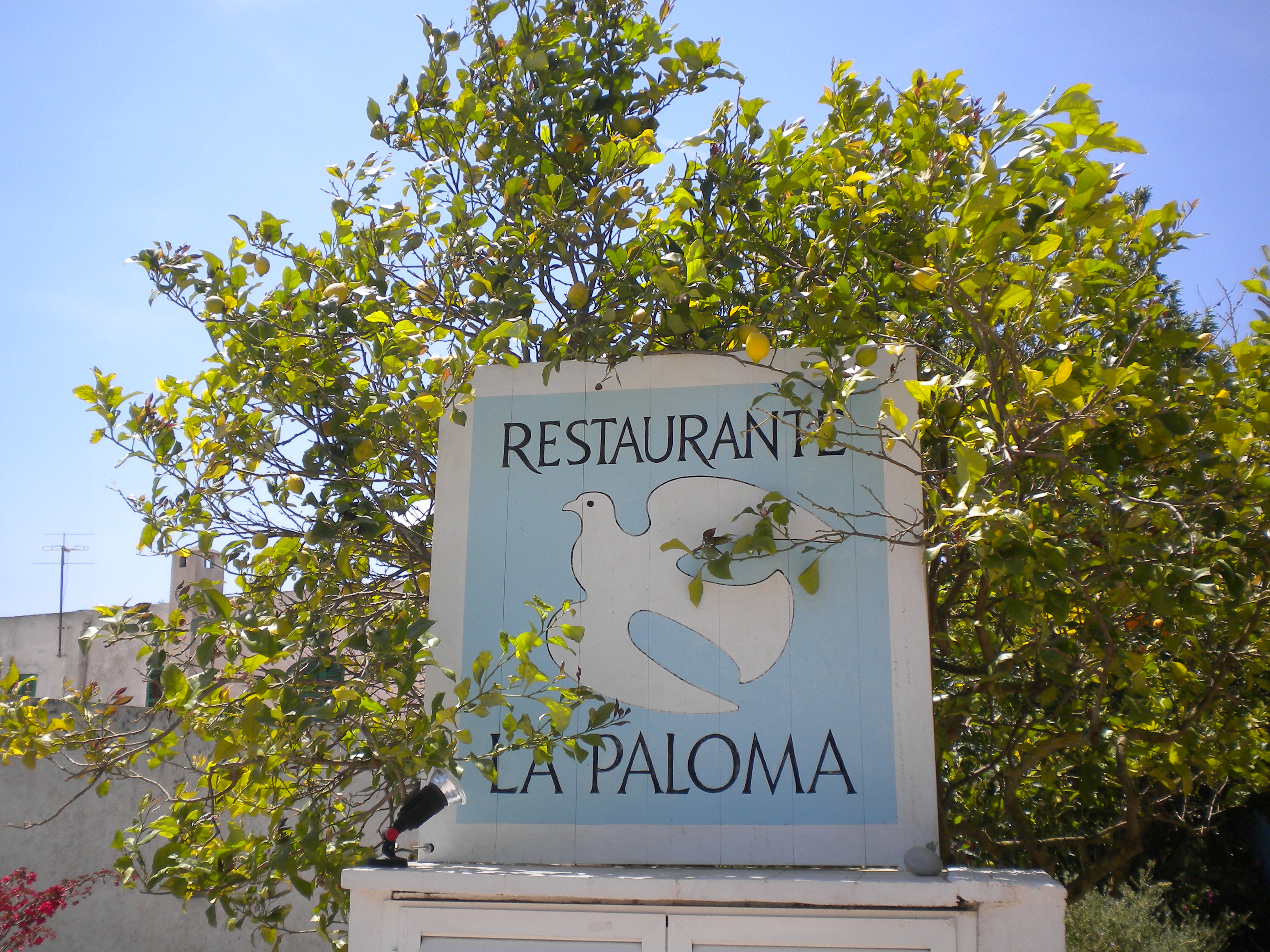
La Paloma
Run by two generations of an Italian family, La Paloma is almost unbearably charming. Set in a citrus-fringed corner of the village of Sant Lorenc it is also one of the island’s few vegetarian-friendly spots. The birds and flowers that dance across the walls were hand-painted by local doyenne Orietta, and the food is created with equal love and attention. Lunches are simple affairs: salads bursting with tomatoes, lettuce and herbs from their organic garden; sandwiches on freshly baked focaccia; and crudites served with the sublime hummus. Dinner is simple and robust: steak; risotto; an organic, vegan option that changes daily; fresh fish; and sumptuous desserts.

Es Boldado
One absolute must-see is Es Vedra, a limestone islet just off the southwest coast. Reputedly the third most magnetic place on earth, semi-spooky stories abound featuring underwater lights, hovering aircraft, and converging ley lines. Even skeptics admit there is something otherworldly about Es Vedra’s imposing white flanks and one of the best views is from Es Boldado, above the beach of Cala d’Hort. A no-frills fish restaurant, Es Boldado serves up the fattest mussels I’ve ever eaten, paella, its own-recipe seafood stew, and impeccably fresh fish. The cliff-top perch makes it an ideal place to enjoy a glass of wine and watch the sunset.

El Olivo
Meals at El Olivo have a delightfully playful sense of occasion, thanks to its prime people-watching location in Dalt Vila’s bustling Plaza de Vila—though once you’re seated, you may have a hard time tearing your eyes away from the feast before you. Chef Frederic uses local produce to create unforgettable dishes like fresh-caught skate with capers and butter sauce, rabbit stew with pickled lemons, and a goat’s cheese stuffed fillet of pork. Like many Ibicenco restaurants it is oblivious to vegetarianism: If you don’t eat meat or fish, you’ll have to make do with just bread, salad, and dessert.

Comidas San Juan
It doesn’t take reservations, doesn’t make substitutions, and the staff could care less if you’re surprised to find chunks of sausage in your vegetable stew, but to know Comidas San Juan is to love it. For one thing, it’s ridiculously cheap: a three course meal, with wine, is under €15. For another, everyone is crammed together at communal tables, turning dinner into a polyglot social adventure. Rounding out its rustic charm is the fact the hand-scrawled menu is only in Catalan. Fortunately there is no such thing as a bad dish – even if you don’t know exactly what you’re eating, you’re bound to enjoy it.

Photo: Cila Warncke