On Generous Writing

Photo by Ben White on Unsplash

Life never ceases to be difficult, to paraphrase Rilke. Amidst its slings and arrows, there is often little to comfort and guide.

Without generous writers, there would be almost nothing.

Among recent difficulties faced by myself, or someone I love: bereavement, major surgery, significant medical diagnoses, divorce, conflict with parents, conflict with children, unemployment.

These are not remarkable events, statistically. Yet, to the individual, they are as life-altering as Krakatoa. If anything, the cognitive dissonance of knowing the event to be universal versus the all-consuming personal experience of trauma makes it harder to cope.

We need wise friends to walk these dark halls. But unless we’re lucky, and our friends unlucky, we are not likely to find the necessary wisdom in our immediate social circle. Shared experience can as easily drive a wedge as forge a bond.

Into this gap step writers whose words offer perspective without judgment, comfort without reciprocity and infinite patience. They sit at our bedside in the small hours, walk with us, accompany us raging, glum, drunk, frustrated or frightened.

Their generosity lies in a willingness to delve into the most difficult parts of their lives and, through grit and creativity, distill their thumb-screwed wisdom into something readers can use.

Photo by Wai Siew on Unsplash

Imagine being lost at sea on a leaky boat. Most of us would consider feel heroic merely staying alive. But a writer would be thinking: how can I help the next person who finds themselves out here?

They would be jotting notes about tides and winds, describing how to make a fishing line out of dental floss, giving tips on bailing and load-balancing.

Although this sense of purpose may be sustaining, it does not mean the work is easy. The generosity of writers lies in their willingness to labor during their most difficult experiences to give hope to those caught in similar currents.

The following are seven books that exemplify this generosity: all by women, whose emotional work is routinely undervalued, on the page and elsewhere.

Seven Generous Books

The Elements by Kat Lister
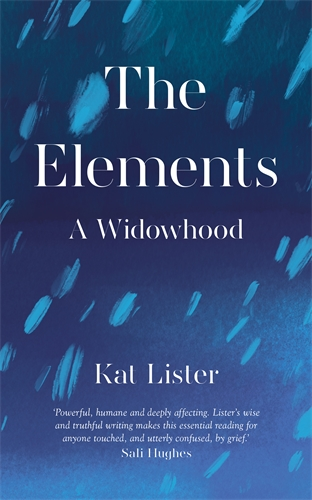
Most couples in their 30s are settling into their first homes, thinking about kids; Kat Lister and her husband, Pat Long, did those against the ticking clock of his brain tumor, which was discovered before their wedding. They lived the few years they had together with uplifting, illuminating grace. When he died, Lister was left to navigate the anachronisms of young widowhood, a trial by water she recounts here with bold, Didion-esque honesty.

Buy

Transcendent Kingdom by Yaa Gyasi

Generosity is not constrained by genre. While we may assume that memoir has the most to teach, the ruthless craft required of good fiction offers equal — or even greater — opportunities. This novel, which begs to be described by its titular adjective, unpicks grief, addiction, survivor’s guilt, and the complicated strands of rejection, assimilation, belonging and othering woven into immigration, racism and religion.

Buy

A Three Dog Life by Abigail Thomas

Perhaps the only thing more appalling than the death of a partner is losing a partner in mind, not body. Thomas’s memoir invites the reader into the Kafka-couldn’t-dream it surreality of life following her husband’s traumatic brain injury (TBI). Along with grief, come care decisions, guilt, frustration, and no one to share the challenges.

Buy

Why be Happy When You Could be Normal? by Jeanette Winterson

Read this with its fictional counterpart, Winterson’s debut novel, Oranges Are Not the Only Fruit, to fully appreciate her generosity and courage. By the time she wrote this memoir, Winterson was a revered literary figure and bona fide success story. To admit, from that height, to the haunting power of childhood trauma could have seemed an admission of weakness. Her vulnerability is potent and empowering.

Buy

Nomadland: Surviving American in the 21st Century by Jessica Bruder

Please read the book; the film (brilliance of Frances McDormand notwithstanding) does it no justice. Nomadland exhibits another form of authorial generosity: the willingness to put one’s life aside to bear witness to the lives of others that would otherwise go unrecorded. The crushing, mechanistic cruelty of late capitalism comes to vivid life through Bruder’s painstakingly reported account of life on the dusty, bald-tire fringes of the so-called American dream.

Buy

A Manual for Cleaning Women by Lucia Berlin

Every time I pick up A Manual, I wind up reading it all the way through. Berlin’s autofiction is enthralling, terrifying, devastating on multiple levels. The writing is almost too sharp and bright to look at (forget window pane, this is prose as emergency flare) which is necessary magic given the gut-punch tales it tells. Stuff that in lesser hands, or played straight, would be unendurable, is transmuted into stories that soar and hover on the thermals of your mind.

Buy

Foreverland: On the Divine Tedium of Marriage by Heather Havrilesky
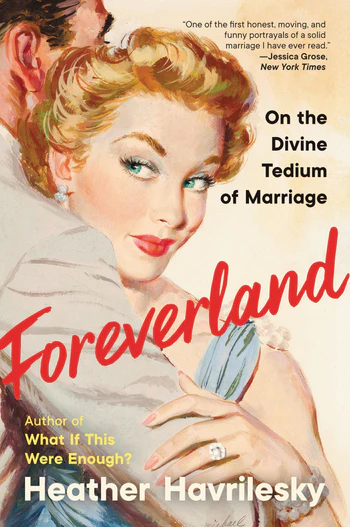
It is one of life’s slipperiest tricks that the things we’re taught to crave and cherish are (surprise!) headaches too. Marriage, at least happy marriage, is perhaps the quintessential sacred cow; the immutable good thing one should pursue without question. Thank goddess, then, for Havrilesky who seems to operate from the position that sacred cows are best served medium-rare. Her brave assertion of the inconvenient truth that true love and explosive exasperation are not mutually exclusive is a pinpoint of light in what might otherwise be a suffocating dimness.

Buy

What are your life-boat books? Share in the comments!
On Cultural Cross-Pollination

One of the things that has been (is) vital to my success as a writer and educator is the fact that, from a freakishly young age, I’ve read everything.

Nutritional information. Ancient magazines in waiting rooms. Bumper stickers. Barbara Tuchman. The Lord of the Rings. Gossip magazines. Feminist blogs. Not-so-feminist blogs. James Baldwin. Germaine Greer. Cormac McCarthy. Joan Didion (again and again and again). Orwell. Eliot. Hardy. All the Brontes. Shakespeare. Jack Gilbert. The Bible. The Odyssey. Ulysses. Greek myths. Native American myths. Books on veganism, endurance running, Arctic exploration, gardening, history, booze, the Spanish civil war.

The more I read, the more visible the threads that twitch through the living fabric of literature: allusion, image, theme; the homage, the salute, the nod, the whisper from dead to living to the spirits.

Reading like a starving person at a buffet cultivates a literary meta-perception I cannot imagine arriving at any other way. It leads along skewed yet sound philosophical paths, such as the one that follows.

***

Q: What’s the difference between Charlie Brooker and a Buddhist nun?

A: Not much, it turns out.

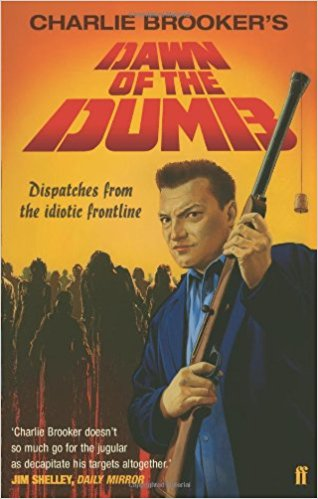
For those of you who aren’t familiar, Charlie Brooker is a British writer, satirist (tough job these days), and broadcaster. He dislikes most things and swears a lot. The nun I have in mind is Pema Chodron, an American Buddhist teacher and author.

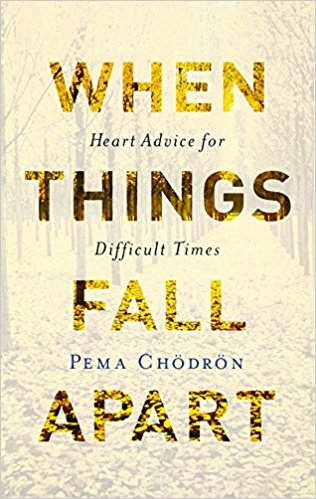
How did I arrive at this improbable conclusion that these unlike people are very much alike? It started with binge-reading Pema Chodron. Sometimes books, like people, appear in your life and you wonder how you lived without them. They bring a fundamental shift of energy and wisdom that kicks down a door in your brain, shines light into a black room and blows away the dust.

One of Chodron’s books cropped up on the shelf of an Airbnb in rural Arkansas. Stealing it seemed like bad karma, so I went to Amazon for When Things Fall Apart and The Wisdom of No Escape. I was reading the latter on a flight to London, trying to jog myself out of a weird funk. The world felt like it was shrinking around me. Telltale clumsiness had emerged: dropping things, taking wrong turns, sending idiotic emails, all the usual signs of a swerve into depression. I needed to hear something good.

Chodron writes things like:

Our wisdom is all mixed up with what we call our neurosis. Our brilliance, our juiciness, our spiciness, is all mixed up with our craziness and our confusion, and therefore it doesn’t do any good to try to get rid of our so-called negative aspects, because in that process we also get rid of our basic wonderfulness.

Don’t you feel better, saner, more worthy, just reading that?

How about:

Loving-kindness — maitri — towards ourselves doesn’t mean getting rid of anything. Maitri means that we can still be crazy after all these years. We can still be angry after all these years. We can still be timid or jealous or full of feelings of unworthiness. The point is not to try to change ourselves. Mediation practice isn’t about trying to throw ourselves away and become something better. It’s about befriending who we are already.

That’s how she thinks, speaks, writes. Chodron exudes calm. Her philosophy is that people are basically good and need only to wake up that inner goodness.

Charlie Brooker begs to differ. “I don’t get people,” he writes. “What’s their appeal, precisely? They waddle around with their haircuts on, cluttering the pavement like gormless, farting skittles. They’re awful.”

That’s from Dawn of the Dumb, a collection of his “Screen Burn” columns for the Guardian from October 2004 to June 2007. The dates are significant because that was the pinnacle of my London music journalist/gadabout phase. It spanned my final year at Q, another year on a now defunct music magazine, and a stint as a promotions coordinator for a megalomaniac.

Good years, spent in a delicious, mindless haze of 9-to-5, city breaks, cohabiting, cult TV, and the Saturday Guardian: a newspaper that was the lynch-pin of a way of life, shorthand for everything that was important at the time: London, media, “culture”, aspirational cooking, self-conscious irony.

We didn’t watch loads of TV, but what we did was almost exactly what Charlie Brooker was writing about in “Screen Burn” (with the exception of The Apprentice, which I could never stomach). It wasn’t a matter of seeking out the shows he reviewed, more that he unerringly targeted the excruciating and gawp-worthy. Which we happened to watch for those precise reasons.

Finding Dawn of the Dumb amidst the pile of discarded holiday reads in the foyer of our building was like discovering a time capsule from that slice of my life. It took me back to an innocent time when the prospect of David Cameron as prime minister was just a horrible fantasy, and Big Brother still launched careers (if you can call them that). To my surprise, I still remember most of the BB contestants he skewers, a decade later, not to mention various X-Factor one-hit wonders.

Brooker makes it worth revisiting. He can make almost anything funnier and more vivid than real life. Take his description of Glastonbury music festival:

Once you’re in, the sheer scale of it is initially overwhelming. Imagine forcing the cast of Emmerdale to hurriedly construct Las Vegas at gunpoint in the rain. Then do it again. And once more for luck. That’s Glastonbury: a cross between a medieval refugee camp and a recently detonated circus.

As a veteran Glasto-goer, I promise that is the best description of it you will ever read.

I also watched the pilot of Prison Break, which he summarises thus:

Prison Break is possibly the dumbest story ever told. It makes 24 look like cinéma vérité. It’s as realistic as a cotton-wool tiger riding a tractor through a teardrop. I’ve played abstract Japanese platform games with more convincing storylines.

Brooker writes like a butcher dismembering a cow and most of the time his (metaphorical) knife is hacking at a hapless reality show contestant or D-list presenter. Not, you might think, of a piece with Chodron’s all-embracing gentleness.

Yet through them both runs a thread of intense compassion. Brooker’s rage isn’t at individuals, per se, it’s at the cruelty, greed or stupidity they manifest on TV. His purest vitriol is aimed at psychics that prey on the “grieving and desperate”. No matter how artfully furious, his columns boil down to one message repeated over and over: The world’s a mess, people are a mess, we need to be better and nicer to each other if we’re going to get through.

Charlie Brooker may disagree with this characterisation of his intent, but read the books: it’s there. Like Pema Chodron, he believes people can be better if they just wake up. His method is bucket of ice over the head accompanied by a swift kick to the kidneys versus her cultivate mindfulness and be friendly to yourself but they point the same direction.

This proves Chodron’s point about brilliance/craziness. There is no single right way to do things. You can sit in meditation and learn to love each out-breath. You can also sit, shrieking, in front of crap TV. It’s not just what you do — it is the intent and spirit in which it is done.

The corollary to that is you can learn from all sorts of things. Laughing till I cried over Dawn of the Dumb was as mind-altering as mulling The Wisdom of No Escape. Don’t shut things down, they both counsel. Keep your eyes and mind wide open, and try to laugh.

What is a culture-clash that inspired you? Share in the comments!

Flashback: My 2016 Reading Highlights

Joan Didion said it was a good idea to stay acquainted with the people you used to be, even if you don’t much like them anymore.

It’s good advice.

In 2016, life was changing so fast my head spun. I met my now-husband in December 2015 and the next year was spent jumping on planes to get to him, culminating in a move from Ibiza to Memphis, Tennessee. Small wonder it was a year of comfort-reading favorite books in snatched moments.

Here’s what I read, and why I read it.

***

If, like me, you have a voice in your head that tells you off for paying attention to your own life, for saving boarding passes and scribbled-upon napkins, for stopping to write love letters in the sand, ignore it.

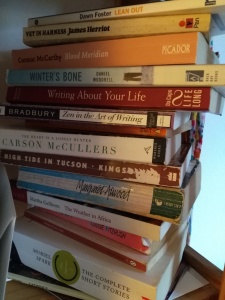
img_20161113_151120

Happiness and creativity depend on valuing our lives. They depend on listening, watching, recording, remembering. It is easy to envy other people’s lives — so exciting! Such superior children/holidays/houses/jobs/wardrobes/sex lives! Such a torrent of fabulous Instagram photos and witty Facebook status updates. We get so caught up peering through the virtual window of our neighbours’ lives we forget to look at our own. We don’t see the pathos, adventure, and pleasure of our own existence because we’re not looking.

Two years ago I started a keeping a list of all the books I read. It seemed like a self-indulgent tic indicative of an unhealthy level of ego. Or, worse, a pointless exercise (who cares?) My delight in list-making narrowly trumped these niggles. Now a blue virtual post-it on my home screen contains a list of all the books I read in 2016.

The list reminds me not only what I’ve read, but how I read. It is a snapshot of the ebb and flow of time and energy. January 2016 was a book-heavy month, gobbling up a glut of Christmas goodies and biding a lot of time until my second date with the soon-to-be boyfriend. February was a respectable showing. March, the month I spent between London, Dominican Republic and Brussels, I read almost nothing. The next two months were spent in a miserable, unsuccessful attempt to assimilate into a receptionist job at an overrated luxury agrotourismo in Ibiza — it was bad enough I only read a book and a half. Finishing Anna Karenina took me through June. The rest of the year I read in fits and starts. What jumped out, reviewing the list, was how many books I reread. And, with the exception of High Tide in Tucson and Jane Eyre, not just for the second time.

Looking over my top ten rereads reminds me what I value and crave. The books on this list all offer, directly or through illustration, wisdom and encouragement to those trying hard to live by their own lights. From the esoteric musings of the Glass siblings to the tough-love advice of Cheryl Strayed, each book is, in its own way, a tonic. They were rocks in the fast-moving stream of a year where everything changed, stepping stones to a new life.

Franny & Zooey, JD Salinger

franny

The summer I was 15 I lived with my older sister and worked at Wendy’s. Every day on my break I hunkered down in store cupboard and read Franny & Zooey. To this day I’m not sure where I got the book, or why it grabbed me. What I do know is I’ve read it somewhere between 30-50 times, can quote entire sections of it verbatim, and reread it at least twice a year. In part it’s the reflection of myself I see in Zooey who says “I’m sick to death of waking up furious every morning and going to bed furious at night”, an echo of my relationship with my siblings in the narrator’s aside that the Glass siblings share a “semantic geometry where the shortest distance between two points is a fullish circle”, or descriptions like, “the Jewish-Irish Mohican scout who died in your arms at the roulette table in Monte Carlo.” In part, because the wildly verbose, witty, strangely timeless sentences still reveal new flashes of character. The narrator says it is a “compound or multiple love story, pure and complicated” which is a fine description of the writing, too.

Bird by Bird, Anne Lamott

Ostensibly a book about writing, Bird by Bird is a wise, funny, heart-rending guide to living life when you don’t fit in a box. The combination of Lamott’s acerbic yet self-deprecating turns of phrase coupled with her palpable compassion is almost unbearable. I cry every time I read it, even though I’ve read it so many times I well up in anticipation. It makes me want to walk around hugging everyone and at the same time makes me want to be a blazing good writer. Every chapter is a gem, but “Jealousy” and “KFKD” are maybe the best things you’ll ever read on, respectively, the eponymous emotion and self-doubt. And her advice about avoiding libel charges is hilarious, priceless, and involves the memorable comparison of a penis to a baby bird in its nest.

letters

Letters to a Young Poet, Rilke

This I plucked off a library shelf in Tigard, OR on the strength of the fact that Lady Gaga has a Rilke quote tattooed on her upper arm — it reads in part, “confess to yourself that you would die if you were forbidden to write”. The line, it transpires, is from Letters To A Young Poet which is so rich in exquisitely worded wisdom it flays me. Rilke’s advice on sex, solitude, and seeking ones calling is so incisive it takes my breath away. And, as a poet, he makes every word count, crafting artful sentences that blow my mind on both a philosophical and aesthetic basis. I love it so much, I read it aloud and sent the recording as a gift to a friend.

A Room of One’s Own, Virginia Woolf

Woolf’s trenchant analysis of what women writers need is as relevant today as when she delivered the lectures from which it was drawn in 1928. We may have “come a long way, baby” but women are still underpaid, overworked, and too often cut off from the privileges that enrich men’s prospects. Sexism may not be as crude as the beadle who ordered her out of the Oxford library, but it thrives in a thousand insidious ways that women internalise or ignore at their own risk. I also love Woolf’s dazzling prose, which gave us, “one can not think well, love well, sleep well, if one has not dined well.”

Tiny Beautiful Things, Cheryl Strayed

This collection of Strayed’s advice columns written for The Rumpus’s Dear Sugar column breaks my heart wide open. I’m sobbing by the time I get through the second or third letter, whichever it is that is from the women who suffered a late-term miscarriage. It is hard to put my finger exactly on what it is about Tiny Beautiful Things that makes me gasp. Mostly, it’s Strayed’s unflinching willingness to examine the hardest things in her own life. She doesn’t rush through awfulness, or glide past suffering, she stays, unafraid to study it and claim who and what she is in the wake of it. This solipsism is unexpectedly comforting. By inhabiting and sharing her experience she makes it okay to inhabit and unpick my experience. Line by line, she demonstrates the potential for growth and change in every life. If one is willing to embrace an almost Stoic determination to live well by doing what’s right.

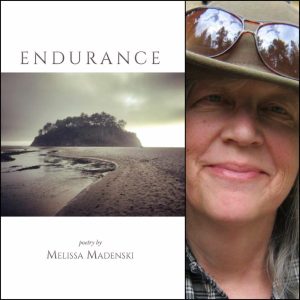
Endurance, Melissa Madenski

endurance

In 2015 I committed to memorising a poem per month, and did. Not all of them have remained word-perfect in my head, but it was an incredible experience with language. When you learn something by heart, you discover things. Cadence, repetition, punctuation, imagery all become vivid in an unpredictable way. I didn’t set out to memorise poetry in 2016 but I read a lot of it — including fantastic collections by Jack Gilbert and CP Cavafy. My favourite reread, though, was this slender chapbook by an Oregon writer. She lost her husband to an unexpected heart attack when she was in her 30s with two young children and the grief of that loss reverberates through Endurance. These are poems about learning to live with the worst case, not with resignation but with courage and, ultimately, joy. It’s another one I can’t make it through without tears, but they’re cathartic.

Jane Eyre, Charlotte Bronte

Of all the my rereads, this was the most fun because it was so different from my memory of it. I must have been 12 or 13 when I read Jane Eyre and I was bored witless. Years later, I read Wuthering Heights and hated it, confirming my prejudice against their weird, masochistic and wildly overrated Brontë sisters. Then on a whim I read Anne Brontë’s Tenant of Wildfell Hall and liked it. And somewhere I heard that Jane Eyre was feminist. So I gave it another shot and fell in love. Bold feminism plus a terrific yarn? Brilliant. Free Kindle edition

Long Quiet Highway, Natalie Goldberg

I reread at least one or two of Goldberg’s books each year. Most often Writing Down the Bones or Wild Mind, but this time I went for The Long Quiet Highway which is mostly about her study of Zen Buddhism over the years. Which of course means it is about writing, being, meaning, truth, acceptance, and everything else that matters. Writing is Zen; Zen is writing. Whatever we do is meditation if we allow it to be. The subtitle is Waking Up in America which is  nearly what I named this blog because that’s what I’m trying to do: wake up in a country I left 16 years ago; figure out what it means to be me in America in 2017, and how to do something good here.

Treasure Island, Robert Louis Stevenson

Treasure Island has been a staple of my literary diet since I was 15 or so. I was a precocious reader, but not above devouring whatever I could get my hands on, and this yarn of seafaring and daring-do always hit the spot. Years later, when I moved to Ibiza, I started to think of it as treasure island — a supposed paradise guarded by dead men’s bones and half-crazed exiles. Overly dramatic personal parallels aside, it is a fantastically fun book and an excellent template for writers looking to craft a fast-paced, unforgettable story. Free Kindle edition

High Tide in Tucson, Barbara Kingsolver

Kingsolver is the most recent addition to my pantheon of southern American writers (Carson McCullers, Hunter S Thompson, Eudora Welty, Truman Capote, etc.) and possibly the one I’d Most Like To Meet. Writing implacably reveals character and every word I’ve read of Kingsolver makes me think she is a Good Person, smart as hell, and cracking company on a night out. Her fiction boggles me and this book of essays is one of the finest, sharpest, most humane collections I’ve had the pleasure of reading. The title essay alone is worth the price of admission; Buster the stranded hermit crab may change your life.

What books to you read over and over? Share in the comments or Tweet @CilaWarncke

On Memoir with Cheryl Strayed

This interview originally appeared on the excellent but now defunct Ideas Tap website. The organization, which was dedicated to supporting young people pursuing creative careers, closed in 2015 due to lack of funding. Plus ca change.

Strayed was a warm, thoughtful and inquisitive subject. A rare working class hero and, rarer still, someone whose giddy ascent to Oprah-adjacent fame hadn’t uncalibrated her ethical compass.

It was a privilege to speak to her, and a pleasure to republish her timeless wisdom.

***

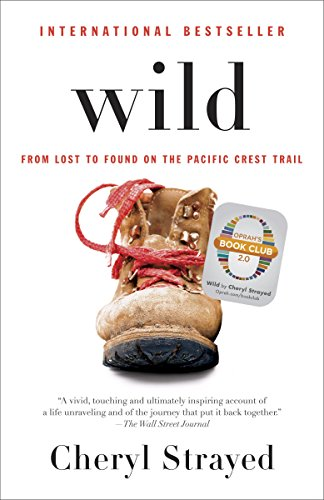
After writing her first novel, Cheryl Strayed turned to memoir and wrote her New York Times bestselling book Wild, about her 1,100-mile hike along the Pacific Crest Trail in the wake of her mother’s death. Here, Cheryl talks about mining memory and sets us to work with a writing exercise…

How does the emotional experience differ between writing fiction and memoir?

It doesn’t. To write fiction well you have to inhabit the consciousness of the characters you’ve created. With non-fiction there’s an extra layer of intensity because the character you’re building is yourself.

When writing memoir, how do you build yourself as a character?

The only way you can build yourself is to dismantle yourself. To take apart who you are, what your assumptions have been, what you hope people think of you. You can’t write: “I’m pretty and cool and awesome and interesting” because everyone would hate you. You have to say: “I’m human. Here are positive things about me. Here are negative things about me. And here are things that don’t make sense, don’t add up, and I’m going to present them to you”. Writing is like the deep work you do in the course of therapy where you take yourself apart.

What memory aids do you use?

I naturally have a very good memory – I think a lot of writers do. I kept a journal through my 20s and 30s. That helped me a lot in writing Wild. I do research where I can, going back and looking at pictures for example. When most people imagine what a memoirist does, they think: “I don’t remember anything from high school, from 20 years ago”. But they do remember – they just think they don’t.

How can writers elicit those memories?

The process of writing is re-conjuring memories. It’s doing things so more memories come to you. Even looking at a photo can allow you to remember something accurately. The process is like running into an old friend from back in the day, somebody you knew 20 years ago. When you first start talking you only know a few things about each other. But as you talk and go deeper into your lives you remember things you thought you had forgotten. Just because you haven’t thought of something for years doesn’t mean you don’t remember it, it just means it takes a little work to access it. When I was writing Wild I’d think, “I don’t remember, I just walked” but once I started writing my mind would open up to specific memories.

Do you draw heavily on your own life for your fiction?

You’ll see a lot of details from my life. My next novel is set in Portland [where I live]. None of the characters in the book are me but there are all these little tendrils of the story that you can trace back to me.

How do you deal with writer’s block?

I never call it “writer’s block” but I always have trouble beginning. Writing is hard. I resist writing. I run from it. If I am left alone with a laptop I flounder for an hour or two, then I sink in and I’m in the zone. When I get stuck I go for a walk, come back and try again. I don’t force it. If something isn’t coming, I move on; that’s a good strategy for me.

How long did it take to write your first book, Torch?

Your first book is so hard because you don’t know how to write a book and there is no way for anyone to tell you. It turns out the only way to learn how to write a book is to write a book. I avoided finishing [Torch] for fear of failure, until the point where the fear of failing to finish was bigger than the fear of finishing a book that was terrible. I worked on it for about ten years in total, three years really diligently.

How did you overcome that fear of failure?

Once I let go of the idea that I was going to write a great book, I was able to write a book. I let go of any ego or fear or shame. That was an important moment in my writing life. None of us really knows what kind of book we’re writing. A lot of people think they’re writing brilliant books and they’re terrible. And the reverse is true too. It isn’t up to us to judge our books; it’s up to the people who read them.

In Focus: Writing exercise using objects

I take random objects out of my handbag like lipstick, a ten-euro note, and a pair of sunglasses, and tell my students to pick one and write a story about it.

To begin writing you begin with an image. You begin with a feeling. I encourage people to start writing and not think about it too much. Even if you have a good idea, usually once you start writing it will become something else.

I could do that same exercise with the world’s Nobel Literature Prize winners and something would come of it. Perhaps what came of it would be better than what comes to my students, but that’s how the [Nobel Prize winners] do it too – they begin with something then they make something else.

Journalism’s Role in Teaching Critical Thinking

This week I’m going to share a podcast recorded last summer (on one very HOT afternoon) for Le Sallay Academy. It features a conversation between myself and the wise, incisive author/journalist/memoirist Kat Lister.

It is shared with the kind permission of Le Sallay, which facilitated and hosted the podcast as part of its Le Sallay Talks series.

Reach Kat Lister on LinkedIn or via Blake Friedmann Literary Agency

***

Here are some highlights from the conversation:

Kat Lister on navigating the media of today

It’s very hard even for those working in the industry to navigate such a fast-changing landscape, and I don’t think there is any one person who is doing it perfectly. And the way that we learn and grow, and familiarize ourselves is by having conversations like this, which have to be very open about the downfalls of social media, but also about what the positives are, and what we can gain from it.

It’s not going anywhere. None of these platforms is going anywhere. The only thing that can change is our relationship with it and that can seem quite chaotic nowadays: it can be a hard place to navigate, it can be a hard place to verify. What is news? What is fake news?

The best way to make our way through this is to think about the original source. You see a video shared a gazillion times on Twitter, and that almost immediately verifies it in your mind, but actually, that’s not the asset to look at. I often have to double-check myself, because I will be almost hitting retweet, and then I’ll be like, hang on a second, where was the video filmed, who filmed it, where was it filmed, are the details correct? Is the date right?
Contextualizing tweets or videos on TikTok or wherever you happen to find yourself, is tremendously important. We’ve all become fact-checkers in a way, and that’s an incredible responsibility not only on the content creators but also the responsibility of the readers, on the audience. As we are saying, look at things more critically, and now, more than ever that’s become quite urgent. And it’s not something any of us are doing in a perfect way, I don’t think.

Cila Warncke on teaching

Yes, these are the traditional 5 W-s: When, Where, When, Who, and Why. And this is something that as a Literature teacher I really emphasize, continually asking students: “Okay, what’s the context of this? Whether it’s an article or a short story, make sure you understand where this is coming from. There is a direct relationship between that kind of critical reading of anything and the ability to navigate the news.”

Click here to listen to the full podcast

On Revision with Elisabeth Dahl

Welcome to ‘Between the Lines’ – interviews with teachers, writers and writing teachers on specific aspects of their craft.

In this week’s conversation, Elisabeth Dahl (no, no relation) discusses the transformative power of words, with a special focus on teaching revision.

Photo courtesy Elisabeth Dahl

‘I worry for people who don’t write’

Author, illustrator, editor, educator: Elisabeth Dahl’s writing experience spans genres and professions. The through line quickly emerges in conversation – a deftness with, and delight in, words that is as contagious as a yawn. And a knack for detail that brimfills anecdotes with life and color.

The Baltimore, Maryland native grew up near Johns Hopkins’ main campus, where she completed her undergraduate degree. She returned to the city as an adult, and lives a few miles from the hospital where she was born.

“As a child, I loved school right from the start,” she writes in her online bio. “By the time I was in ninth or tenth grade, one thing had become clear: Analyzing stories and crafting sentences lit me up in a way that history, math, and the rest did not.”

Speaking on the phone, Dahl credits this to her high school teacher Joyce Brown (with whom she still exchanges emails). “She approached us as if we were college students. When we started [James] Joyce’s Portrait of the Artist as a Young Man, we spent 20-30 minutes talking about his decision to use ‘the artist’ instead of ‘an artist’. To think this was even a question! It would have been one thing to debate writer versus artist, but to look at the article – the versus an – was incredible. As it turns out, [Ms Brown] led us to understand it made quite a big difference.”

Understanding the big differences a small lexical choice can makes is a sine qua non for a writer-educator. “I’m a better writer because I’ve taught writing,” says Dahl, who worked for Johns Hopkins’ Center for Talented Youth for the better part of a decade. “I was still making the same mistakes emerging writers were making: the stakes weren’t high enough, or I was padding the stories. Seeing these problems [as a teacher] was sort of teaching myself at the same time. It helped me incorporate the lessons into my own writing.”

Textures of language

For Dahl, a reciprocal relationship between teaching and literature was established early; her mother and grandmother (with whom they lived until Dahl was eight) were elementary school teachers who made reading a central part of her young life. They also gifted her with a fascination for the stories embedded in artifacts and moments. Her favorite space, as a child, was her grandmother’s walk-in closet. “It smelled like mothballs but had its own, not just aroma – aura. It had a history. It was a special occasion if I got to try on old dresses, like the one my mother wore to her junior prom. There was a scarlet red [dress], like what a Spanish dancer would wear, with tiers, strapless. It didn’t look like any of the other clothes in there. Jane Eyre had her red room; I had this red dress.”

The aural and visual qualities of words beguiled her: “I liked that if you said a word like ‘fork’ or ‘salad’ 25 times to yourself, it became nonsense, weird, you could almost hallucinate about it”. Another female relative, an aunt, was a graphic designer. Tracing pages in her books on hand-lettering introduced Dahl to the “tactile aspect” of language.

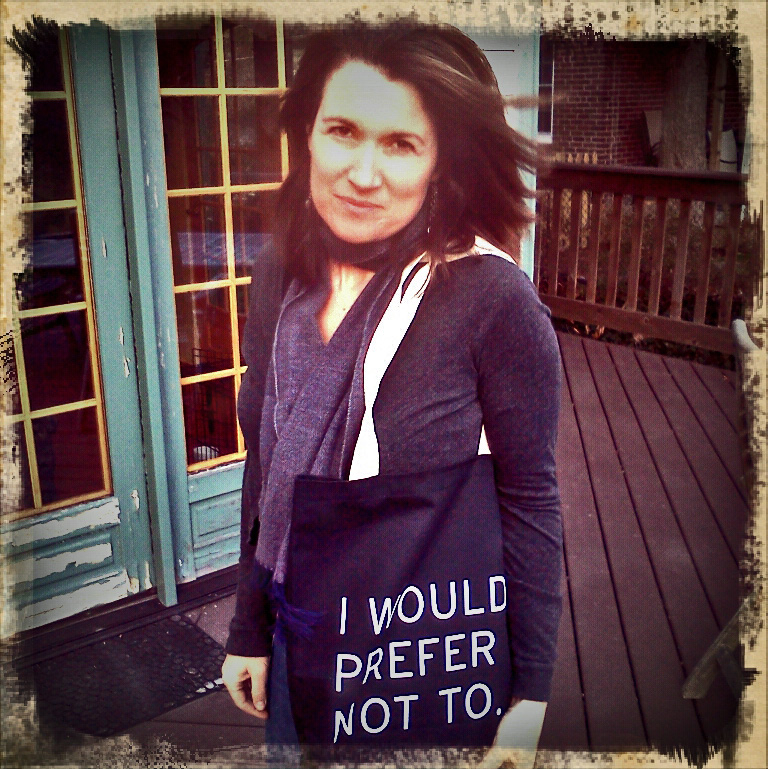
These formative experiences of words and stories as real and imaginative, concrete and abstract, primed Dahl to thrill to the challenge when Ms Brown assigned Herman Melville’s Bartleby, the Scrivener. “A light had turned on. I remember standing in her empty classroom, during a free period, talking about it with her, totally energized. I [still] don’t know if I know what the story means,” she says cheerfully. “But I love it. It’s like a Rorschach test.”

Inspired by Ms Brown’s example, Dahl prioritizes space for students to encounter epiphanies by “helping them get a new perspective, become a better observer, or express themselves better. As a teacher, you’re another voice in this person’s head. You have to take it seriously. You don’t know the other voices in their lives, all you can do is be respectful and help them grow.”

But why learn to write any more – aren’t there machines for that?

“Because to have a good relationship with writing is to have a good relationship with your own mind, your history, the world around you,” Dahl responds. “I worry about people who don’t write regularly. The memoir I’m working on has taught me so much about things I’ve been thinking about for 54 years. By laying out the words, revising the words, reconsidering the words, I’ve developed new attitudes towards certain moments, and people. It’s wonderful to be able to do that.”

Photo by Annie Spratt on Unsplash

On Revision

How do you create an open, accepting environment where students think beyond the binary of right/wrong?

One assignment I designed is based on Amelia Gray’s short story ‘Monument’. In it, the people of a town came to clean up a graveyard, then something changes, and they start destroying the graveyard, almost like Shirley Jackson’s ‘The Lottery’. I had students pick a character and rewrite the [third-person] story in the first person. We talked about what that changed, what opportunities it created, what it shut down.

This helped them realize that a piece of writing is many, many choices. It loosened students up. It was an act of playing around, like they might approach improv.

How do you push students beyond ‘good enough’?

Try to present revision as an opportunity. What if you wrote in a different point of view? What if you sprinkled some of these details throughout the story?

For students who are good but could be better, I call upon their sense of a challenge, their curiosity, intrigue. If a student is a tennis player, or pianist, say, I remind them how many hours they spend on the court or at the keyboard. Writing requires the same. It’s a lot of time, a lot of effort, yes.

I always tried to teach that we’re all on the same continuum. We’re writing. We’re writers. Getting started, revising, these things are always challenging.

How can students develop a feel for revision?

They need to be reading, copying out passages as a way of internalizing what good writing is. I encounter people who say, ‘I know I could write a novel’, then you ask what they are reading and they ‘don’t really read’. That’s never going to work.

How does revision differ between fiction and non-fiction?

With non-fiction you have to think about fact checking, accuracy, but the process is not all that different. You’re still asking about tone, voice, consistency, how the narrative is laid out, what is the best way to tell the story, whether you’ve grabbed the reader…

How do you approach teaching revision with different age groups?

With younger students, don’t talk down to them. With all ages, nurture their curiosity about where a piece of writing might go. Again, trying to relate writing to other endeavors, whether playing sports, or working at a grocery story. Remind people that revision isn’t just something we do in writing. We’re always revising things, always being asked to spend more time perfecting or altering, it’s part of being human.

What is a sign that the process is working?

When students say, this went a different direction, or, the character surprised me by doing this. That is exciting. It shows they are engaging on another level, not just trying to bang out the essay or the story.

Dahl recommends:

The piece of writing that changed your life as an adult?

Fun Home: A Family Tragicomic by Alison Bechdel. She explores, in a graphic novel, growing up, the truths that were presented to her and the truths she had to discover later. It was fascinating, her level of honesty. I get most of my books out of the library, but I went straight to the book store and bought that one for full price.

A classic you love to teach?

‘Why I Live at the PO’ by Eudora Welty. It’s an unreliable narrator story, very subtle, hard to pull off. Every time I read it, I see new things.

A book about writing every writing student should read?

On Writing by Stephen King. Although I’m not a King fan, this book is so good, especially if students are interested in writing books and getting into publishing. It is full of good advice, very practical.

A book + film adaptation combo you love?

Ian McEwan’s Atonement – that was a great movie and a very good book.

A living writer you’d love to hang out with?

Ann Patchett. She co-owns a book store called Parnassus Books in Nashville; she has a wonderful personality, she’s smart, she’s a good writer.

Your perfect writing space?

My house, where I live and write, is suburban, there are beautiful trees but always people walking past. I like to have people around.

If you could publish anything, what would it be and why?

It would be nice if the memoir I’m writing eventually becomes a book. What got me started was realizing how much I loved reading memoir. There is something about a well-crafted, honest memoir that stands out; they are always engaging.

Connect

Buy

10 Books About People and Movement

My students and I are about to start a unit studying people and movement. Every new course and group is a fresh challenge in curriculum development: identifying and sourcing appropriate texts, deciding on writing exercises, linking new material to previous learning.

People and movement is a tough remit for its sheer breadth. From the wanderings that brought homo sapiens from its ancestral home in Africa to the current heartbreak and chaos that reign at ultra-militarized human-made borders, there is much to absorb, understand, reflect on and debate.

And of course, movement is more than just physical displacement. People and movement must consider emotional and spiritual journeys, economic trajectories, the currents that flow between lovers or haters, the passage from ignorance to enlightenment. Movement is life: heart blood nerve impulse digestive contraction sperm meets egg infant traverses birth canal. We only stop moving when we’re dead.

Looking back at my reading list of the past few months, almost every book could be profitably analyzed through the lens of movement. The following 10 books — a mix of fiction, memoir, verse and biography — give particular insight into human dynamics, visible and invisible. Without further ado, the people and movement reading list.

Without a Net: The Female Experience of Growing Up Working Class edited by Michelle Tea

As culture gets less equal, movement between social classes becomes as fetishized as it is remote. An antidote to the reams written about the poor — Without A Net, edited by Michelle Tea — is by the poor, or the formerly poor. Though one of the key features of the essays in this book is the disabuse of the notion that someone can transcend deprivation simply by making a bit of money. Lack (of cash, of security, of stability, of self-confidence) is a persistent challenge and the writers in this anthology challenge the notion that there is a quick fix for what Richard Sennett memorably termed ‘the hidden injuries of class’.

Get it here

A Small Place by Jamaica Kincaid

Brief yet lacerating, Kincaid’s dissection of colonialism ancient and modern demands an analysis of the privilege of movement. People of certain countries, cultures and backgrounds can move freely, either as conquerors or (almost as problematically) consumers of less-privileged places. The use of the second-person pushes the reader to question their identification and position in the hierarchy of movement.

Get it here

The 1619 Project: A New Origin Story edited by Nikole Hannah-Jones

This anthology includes the longform pieces written as part of the New York Times 1619 Project, plus new essays. It examines the way catastrophic, criminal displacements of people underlie and shape United States’ culture. Kidnapping, transporting and enslaving Africans plus genocidal clearances of Native peoples created a nation that has yet to come to terms with the implications and outcomes of its past.

Get it here

Elusive: How Peter Higgs Solved the Mystery of Mass by Frank Close

Some people look outwards to understand the world, but the movement towards greater understanding often requires turning in. In the case of Peter Higgs and scores of scientists across decades, the journey was ever-deeper into the realm of subatomic particles, resulting in the eventual discovery of the Higgs boson — a particle whose movement is fundamental to the shape of our universe.

Get it here

Lowborn: Growing Up, Getting Away and Returning to Britain’s Poorest Towns by Kerry Hudson

Another intense exploration of the potential and limitations of moving between social classes. Hudson was the English equivalent of poor white trash, a circumstance which meant she spent her childhood moving from one precarious, uncomfortable, humiliating physical and social environment to another. Revisiting old haunts as a successful adult, she is confronted by how little some things have moved on.

Get it here

All the Broken Pieces by Ann E. Burg

This novel in verse is aimed at middle-grade readers but it made me weep. Told in the first-person by a Vietnamese boy who was adopted, after the war, by a couple from the United States, it gets to broken heart of violent displacement and alienation from home and culture. It also (ambitiously, deftly) addresses the emotional and physical trauma of returning veterans.

Get it here

Gravel Heart by Abdulrazak Gurnah

Nobel Prize-winning novelist Gurnah is always writing about movement; his characters roam, seek, sometimes return, are rarely satisfied. This richly textured story follows a seemingly successful immigrant who cannot outrun the pain of a mysterious childhood separation or the complexities of a family where movement failed to heal deep fissures.

Get it here

Down and Out in Paris and London by George Orwell

From scuttling frantically through the subterranean corridors of a posh Paris hotel to tramping the dusty byways of the Home Counties in search of a place to sleep and a spare meal, Orwell’s foray into poverty is marked by movement. Though distinct from his working-class counterparts by education, the young writer genuinely struggled, which — although he couldn’t help but see himself as in the world but not of it — still stands as an honest and compassionate account of poverty.

Get it here

The Island of Missing Trees by Elif Sharak

This novel was recommended by Nobel Prize-winning author Wole Soyinka, who praised its intensity and clarity. The story of lives split and twisted by tribal violence on Cyprus, it explores the penalties of flight, what it means to be rooted, and the long arc of coming to terms with the things that cannot be eluded.

Get it here

The Wonderful Adventure of Nils by Selma Lagerlof

For a final Nobel Prize name drop, this slightly surreal and unsentimental story of Nils the goose boy who accidentally gets turned into a tiny elf. Lagerlof won the literature prize in 1909, the crowning achievement of a career that included poetry, adult fiction and this classic children’s story. Bold and vivid, the tale of Nils illustrates the critical role movement can play in self-discovery and insight. At home, Nils was cruel, spoiled and selfish; after traversing the skies with a flock of migrant geese, he comes to understand kindness and survival in a new way.

Get it here

PDX Indie Bookstores

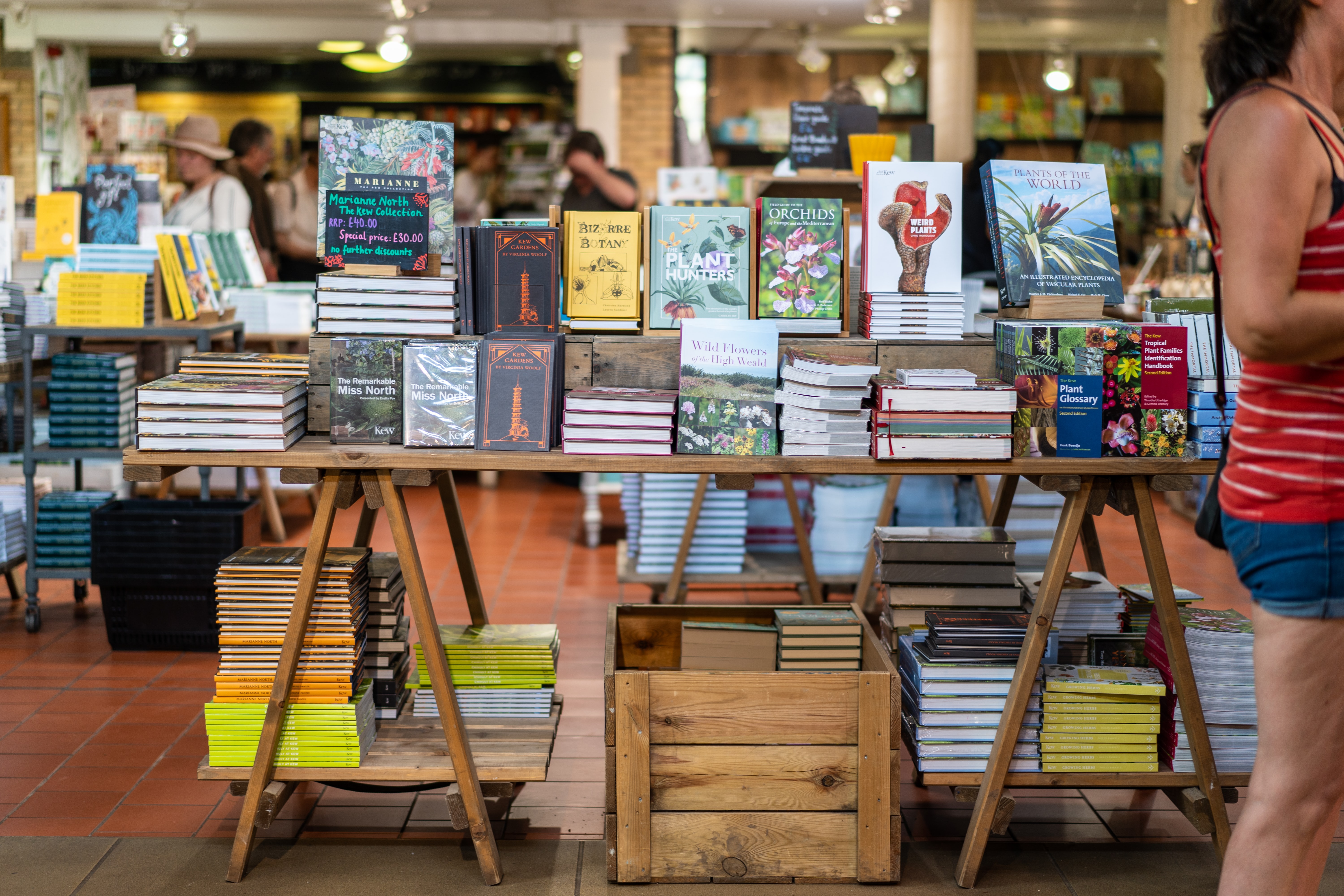
Portland, Oregon has a well-deserved reputation as a bookish city. Its literary climate springs, in part, from its actual climate. During the months of interminable rain it is natural to retreat to bookstores and libraries, or curl up at home with a favorite volume. The city’s creative energy, fueled by coffee, craft beer and local wine, helps foment works of imagination by local writers. Harvest the fruit of their labors at these book stores.

Photo by Rumman Amin on Unsplash

Annie Bloom’s Books

http://www.annieblooms.com

This small but venerable indie bookstore in the heart of Multnomah Village, on the west side, has been dishing out literary goodness since 1978. It sells new books, with a focus on fiction, children’s and young adult, travel, current events, and cooking. Plus it is a great space to browse for magazines, art supplies, puzzles, and cards.

Broadway Books

http://www.broadwaybooks.net

503-284-1726

This Northeast Portland stalwart is particularly strong on stocking local writers. Subject matter is wide open, with offerings of fiction, non-fiction, poetry, graphic novels and more. You will find personalized material from local authors like Cheryl Strayed, who has the honor of a section dedicated to signed copies of her work.

Powell’s City of Books

http://www.powells.com

No mention of the PDX literary scene would be complete without a nod to Powells’s, City of Books. As the biggest thing in local literary retail it is a huge draw for both writers and readers alike, who can spend happy hours browsing its immense color-coded collections. I’ve been hanging out at Powell’s since I was a kid (when I gravitated to Nancy Drew mysteries and Marguerite Henry horse stories). Whatever you go looking for, you generally come out with something different, which is most of the fun of it.

Wallace Books

https://www.facebook.com/wallacebooks

The most adorably clapboard, overstuffed used bookshop imaginable, Wallace Books is a throwback to the eclectic, eccentric wonderful bookstores of my childhood. Its charming exterior beckons you in and its sprawling collection rewards languid browsing. Take your time.

What’s your favorite indie bookshop? Big it up in the comments!

21 – Free Thinking in Myanmar

This article about my trip to the 2012 Irrawaddy Literary Festival in Myanmar was written for the Free Word Centre. Recent events there show that freedom is as tenuous as it is precious.

Photo: Cila Warncke

Free Thinking from the Irrawaddy Literature Festival

At the beginning of February 2013, the Irrawaddy Literature Festival drew readers and writers from around the world to the city of Yangon in Myanmar. In a country which has lived under the rule of a repressive military junta for more than half a century, it was a cultural and political landmark that allowed writers to gather, speak and exchange ideas freely for the first time in recent history. Cila Warnke visited the festival to see how a country crippled by censorship is starting to find its voice.

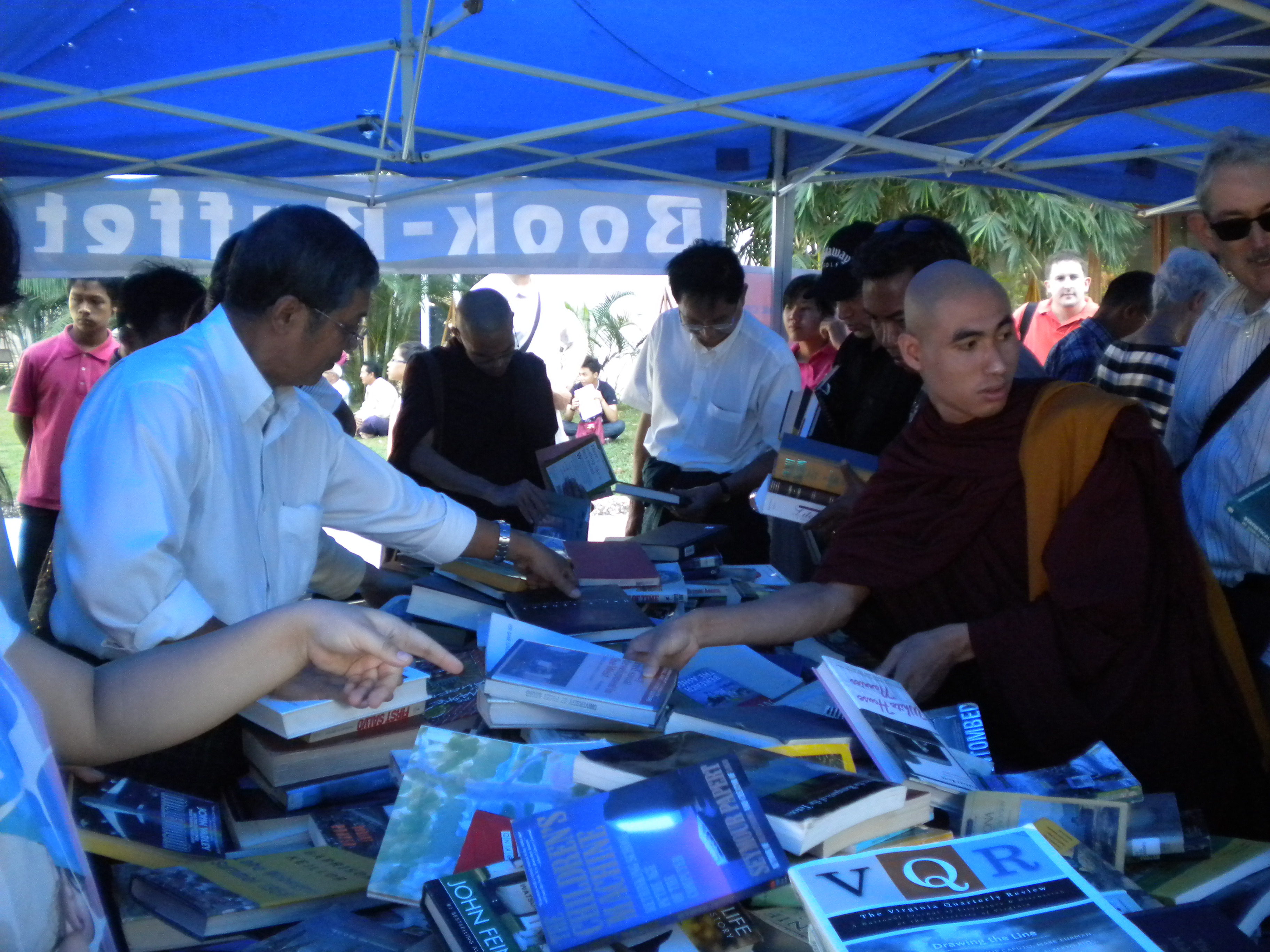
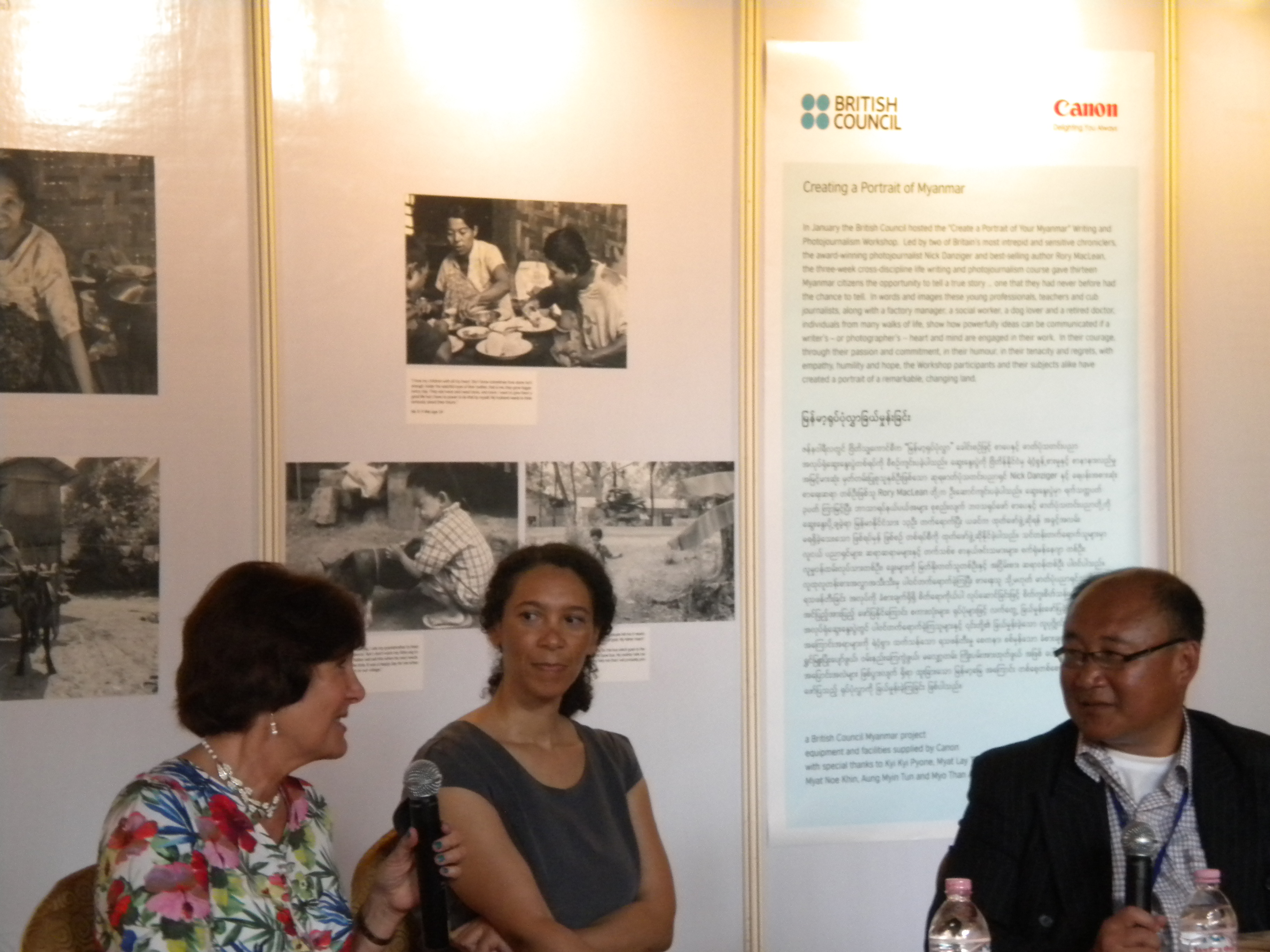
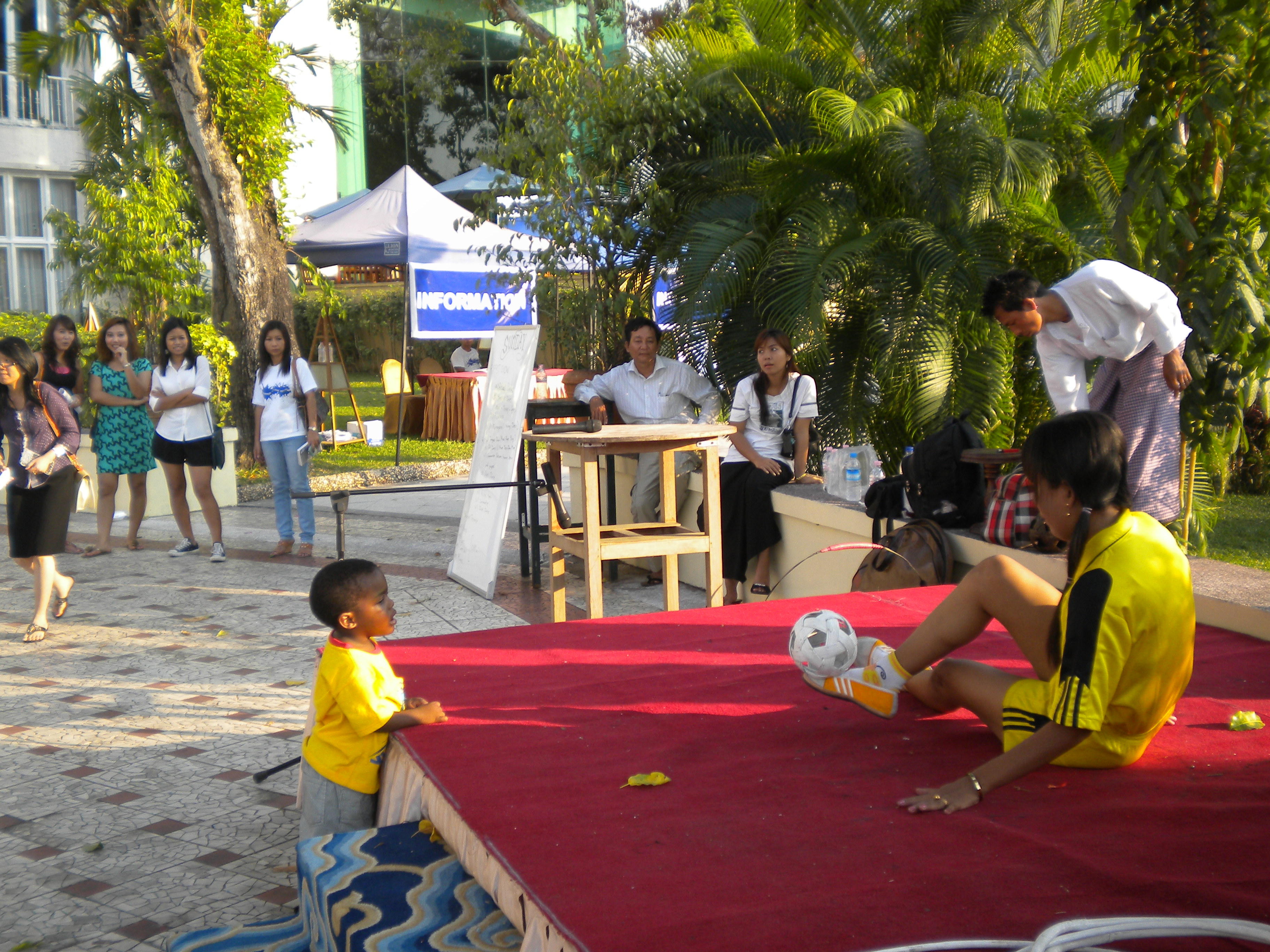
It was, in many respects, a literary festival like any other. There were book signings and a photo exhibition. Puppets for the children and grown-ups drinking lager on the verandah. Book stalls bursting with everything from Beatrix Potter to physics texts. On a sweep of grass between the Inya Lake and the hotel were tents where you could buy journals and newspapers, join charitable organisations or get a bite to eat. There were little differences, though. Buddhist monks in brick-red robes chatted as they sifted through volumes. The food stands offered rice noodle salad sprinkled with pungent dried shrimps. Women and men alike drifted through the heat in the traditional longyi – an ankle-length wrap skirt knotted at the waist.

In the cool interior of the Cold War-era hotel (a gift to the government of Myanmar from Nikita Kruschev) other, subtler, differences became apparent. Prior to the event, co-organiser Giles Fitzherbert voiced his hope that the festival would “open a window that has been half-shut for so long… [and] help turn Burma from an inward looking country into an outward looking country.” This sense of purpose was the thread that linked panel discussions about library usage, memoirs, debates about literary developments, and conversations about how a nation successfully transitions from censorship and repression to freedom of thought.

Democratic political reform has given Myanmar new hope after nearly fifty years under an ugly-minded military junta, but achieving openness is a complex, multi-faceted task . At the Irrawaddy Literary Festival four things emerged as preconditions to lasting change: political freedom, education, economics and international cooperation.

Photo: Cila Warncke

Political Freedom

One of the liveliest speakers at the festival was Jung Chang, author of Wild Swans, which tells of life during China’s Cultural Revolution. Though many of her anecdotes were hilarious (she told of accosting sailors in bars to practice her English – “You can imagine what they were thinking!”) but the bones of her tale are tragic. She was exiled at age 16; her father was forced to burn his beloved library; she was denied education. In the darkest days of Mao’s war on intellectuals there was no reason to hope. It was only when the violence eased and Mao reopened the universities that she was able to study, winning a scholarship to study in Britain.

As Chang’s story vividly illustrates, without political freedom there can be no intellectual or literary liberty. Jean Seaton, director of The Orwell Prize, spoke of being “blessed to live in peace and freedom” – a sentiment shared by the event’s other Western attendees. For those of us accustomed to freedom of expression, censorship is unimaginable. But for many of the authors at the festival it is the only reality they know. The Myanmar government lifted censorship in 2012, meaning that for the first time in 50 years writers and journalists did not have to submit their work for approval prior to publication. In January 2013 the censorship board was disbanded.

That the government could, with the stroke of a pen, abolish this long-standing apparatus of oppression is both heartening and cautionary. What can be done can be undone, and Myanmar writers acknowledged that a true end to censorship lies in the future. “We used to say, ‘the censor has moved into our head with his chair and desk, and lives there,’” said Pe Myint, author of more than 40 books. Silencing their internal censors is a struggle that every writer will face in the coming years. Myint also raised the prospect of tacit or post-publication censorship, even if the letter of the law remains on the side of press freedom.

Photo: Cila Warncke

Education

The late dictator Ne Win banned the teaching of English in the 1960s. He eventually rescinded his ban but not before a generation or two grew up without learning a word. This makes it almost impossible to communicate with ordinary Myanmar.

On the first day of the festival we set off for Inya Lake, armed with a map clearly marked with our destination. Our taxi driver didn’t speak or understand English, but he examined it, nodded and we set off through the sticky morning smog. After twenty minutes, he pulled up in front of a hotel and gestured hopefully. It wasn’t Inya Lake. Another consultation with the map and off we went again. After some quality time in one of Yangon’s ubiquitous traffic jams we arrived at another hotel. Also not Inya Lake. I was fizzing with frustration at this point. Finally, after another turn around the centre of town and several stops for directions wefinally reached our destination. Only later did it occur to me that the English place names on our map were probably as incomprehensible to our driver as Myanmar script is to me.

This was just the first of dozens of encounters, inciting varying levels of frustration, that hammered home the importance of a lingua franca. The woeful state of English language skills is the most obvious manifestation of Myanmar’s overall educational deficit. One of the military junta’s favourite repression tactics was closing the universities. Students were sent to rural areas, or assigned home studies, to supress political action. Writing in The Irrawaddy, Denis D. Gray notes that “Burma is saddled with two generations of chemistry professors who have never conducted a proper laboratory experiment and mechanical engineers yet to handle hands-on equipment.” Another journalist I met remarked there are probably no more than five psychologists in the whole country.

There was much discussion at the literary festival about how to overcome these barriers. Local libraries, such as those attached to the United Nations and the American Centre, are working hard with limited resources. They offer books, journals and space where people can come and use computers. Perhaps more importantly, they give training in how to use libraries and computers. Thant Thaw Kaung, who helps create village libraries, noted that, as in the West, TV, mobile phones and the internet compete for people’s time and attention. In his words, “we have to support the reading habit.”

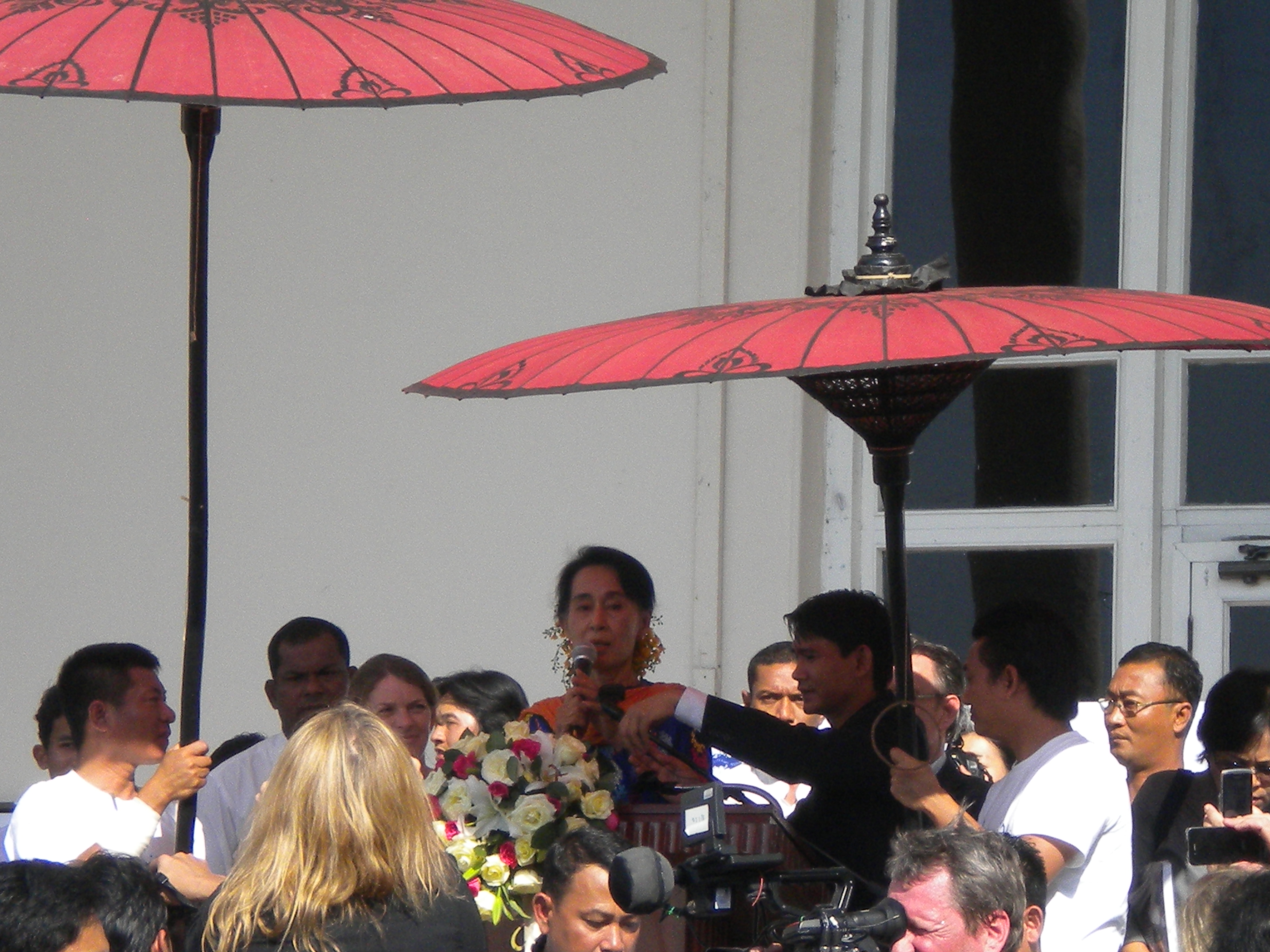
Aung San Suu Kyi speaks at the launch of the Irrawaddy Iterary Festival. Aung San Suu Kyi speaks at the launch of the Irrawaddy Iterary Festival.

Photo: Cila Warncke

Economics

Dr. Thant Myant-U, author of the superb Myanmar history The River of Lost Footsteps, spoke at the festival in his capacity as founder and director of the Yangon Heritage Trust, which aims to preserve the city’s unique Colonial architecture, as well as promote much-needed improvements to planning and infrastructure. Yangon’s crumbling buildings and surreal pavements testify to decades when the military rulers exploited the country’s natural resources for their own benefit and poured up to a quarter of the national budget into arms.

Neglecting the basic needs of their cities and citizens had a predicitable impact on education and welfare, too. Alex Mackenzie, of the British Council, said that poorer children often leave education after primary school to work, a fact attested to by the city’s hordes of awfully young waiters, shop assistants and street vendors. Human infrastructure, even more than the buildings, is crying out for proper investment and planning. Clearly there will not be any improvement in education until the economic barriers are removed, which means legislating school attendance and funding child welfare. Broad, systemtic changes have to come from the goverment but private initiative has a role to play as well. Aung San Suu Kyi and the British Ambassador, Andrew Heyn, announced two scholarships and presented prizes to the winners of an essay contest.

Photo: Cila Warncke

International Exchange

It is easy to look at a patchily-developed country with a rocky history and conclude it needs the wealth and wisdom of the West. After a fortnight in Myanmar, I’m not convinced that they need us more than we need them. Yes, foreign investment is good for the economy, and will hopefully aid development and raise living standards, but it would be arrogant to think of ourselves as benfactors. As Alex Mackenzie put it: “Myanmar doesn’t need things, it needs the exchange of ideas.”

Myanmar is tough and self-sufficient. Many of its citizens have endured suffering we can only imagine. They are under no illusions about who they are or their place in the world, and they are not looking for charity. The literary festival was more than half funded by local businesses, and organisers Jane Heyn and Giles Fitzherbert, as well as patron Aung San Suu Kyi, expressed the hope that future festivals will be run entirely by local organisations.

This is a modest ambition. Despite its political, educational and economic challenges, Myanmar has an air of resiliance. The mere fact that just two years into its transition to democracy it is almost impossible to imagine the previous repression shows a laudable refusal to wallow. The literary festival is a product of this new freedom. It is also testament to hope for the future. According to Daw Suu Kyi, “literature is not just for fun, or to pass the time. It is a learning process.”

If there is a lesson to draw from the Irrawaddy Literary Festival it is that this process takes place in surprising ways, under even the toughest of circumstances, and as long as it does there is always hope for the future.

Photo: Cila Warncke

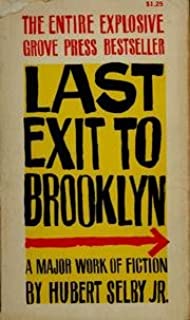
13- Last Exit to Brooklyn Film Review

Though by no means a film buff, I love writing reviews. When the chance to review a DVD release of Last Exit to Brooklyn arose, I took it. Like the novel it is based on, it is harrowing, and worth it because it is.

Roger Ebert said in his 1990 review: “The movie takes place in one of the gloomiest and most depressing urban settings I’ve seen in a movie. These streets aren’t mean, they’re unforgiving. Vast blank warehouse walls loom over the barren pavements, and vacant lots are filled with abandoned cars where mockeries of love take place…. Most people hate movies like this. I think perhaps it is because no attempt is being made to force the characters and stories into comforting endings.”

Last Exit To Brooklyn DVD (18)

Dir: Uli Edel, 1989, USA/UK/Germany, 102 mins

Cast: Stephen Lang, Jennifer Jason Leigh, Peter Dobson, Burt Young

Last Exit To Brooklyn is set during the Korean War, in the early 1950s. The first characters you see are a trio of soldiers, cock-of-the-walking their way back to barracks after a night out. For a few, deceptive seconds this might be a war film, in the conventional sense. Then the real soldiers, fighting the real war, bowl on screen: a gang of roughneck wops, spoiling for action. A brief, brutal, beautifully choreographed beating later you’re in their world, to stay.

Based on the novel by Hubert Selby (author of Requiem For A Dream), the film is a raw, artful, unsparing look at raggle taggle Brooklyn life. The endless parade of soldiers who straggle through the film getting mugged, propositioned, beaten up, or otherwise damaged in their exchanges on this lawless patch are stand-ins for the audience – sucked into a world that is short on narrative arc and long on impulse, where the only constant is violence. At the centre of this universe of quicksand is Tralala (Leigh), a mouthy hooker with a finely tuned survival instinct, and her occasional partners in crime, Vinnie (Dobson) and Sal (Stephen Baldwin). Their buddy, Harry (Lang), is a shop steward, and head of the strike office, making free with his union expense account as the community struggles through a long strike against the bosses of the local metalworks.

Though a stunningly filmed late-night clash between police and strikers provides the visual epicentre of the film, social issues never eclipse the individual. Rather, the big picture stuff (war, labour disputes, family relationships) is backdrop to the intensely felt experiences of the characters. In sharp contrast to films that look back at the ‘50s through a spyglass of modern mores, Last Exit is perfectly self-absorbed. When shop boss Harry falls hard for a fey, selfish little queen called Regina (Bernard Zette) it would be easy for the film to make a statement about contemporary sexuality, or life in the closet. But it doesn’t, because the point is not what we think of Harry, but how he feels. Instead of glib commentary, there is real pathos. A theme that is repeated in the subplot of transvestite Georgette (Alexis Arquette) and her unrequited love for good-looking thug Vinnie (ringleader of the tormenters in the opening scene). Any kind of vulnerability can be fatal in Last Exit’s testosterone-fuelled landscape, especially for dainty queens, which makes Georgette’s flirtation watch-through-fingers stuff.

Frankly, it’s a miserable film. Yet so lovingly shot and acted you can’t help being drawn in. These are characters so small, sharp, closed and ugly they wouldn’t ever get an airing elsewhere, but the strong cast (including an excellent young Sam Rockwell) render them painfully alive. Leigh, in particular, pulls off an extraordinarily difficult role with power and panache. They elicit compassion when they shouldn’t and they provoke empathy at the unlikeliest moments. And while they’re trapped, you can leave, which gives this film its lingering, bittersweet edge.

Last Exit To Brooklyn