On Beginnings with Melissa Madenski, Pt 2

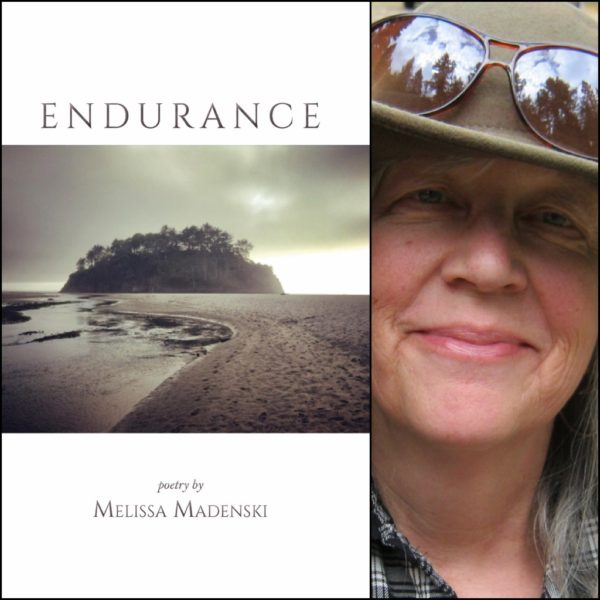
Welcome to ‘Between the Lines’ – interviews with teachers, writers and writing teachers on specific aspects of their craft. This interview was split into two posts to do justice to Madenski’s generous sharing of time and wisdom. Part 1 covered her biography and writer’s origin story. Part 2 focuses on craft and teaching.
How does one identify the seed of a piece of writing?

Surprise. My Achilles heel is that I get too sentimental. The more sentimental writing gets, the greater the distance. When you write universally, describe, and keep those emotions out, you open it up.

What questions should a writer ask themselves at the beginning of a piece?

  • Know?
  • Don’t know?
  • What to know?

It’s about finding [one’s] curiosity.

What should a writer consider, and disregard, when beginning a piece of writing?

The first step is not creating a story. The first writing, what we used to call free writing, is first thoughts. It frees you from having to be worried about the things you might worry about in a final draft.

One of my small rants is that free writing became a thing, and teachers sit children down and make them write. Once something becomes institutionalized, it’s difficult for students to feel safe with it. If you look at writing as a place to explore, to find meaning, it becomes a different thing.

Why is working through first thoughts important?

A student I loved told me she wrote about a problem she had for five days in a row. The first version was awful, full of blame; after five days, she’d narrowed it to what she could change and what she couldn’t. That was never going to be published, but that is the writing process.

As an adult, I started [writing] the first day after [my husband] Mark died. Those journals were useless – they were just questions. In two full journals, there are probably two salvageable sentences. But it helped me to be a better parent, to get through that.

How important is defining an audience?

I never do until the end; maybe not even then. I write what I’m curious about and if I have that intuitive sense, if it feels good, I’ll keep working. After I finish, then I’ll think of where to send it.

How can writers get better at finding seeds? And drafting?

They get better as they practice, as with anything else. Writing, and maybe this is true of dancing and photography, offers lots of rewards when you start to use it across the arc of your life.

What opportunity does writing bring the writer?

The chance to see things more clearly. The opportunity to notice, to slow, to look. I wrote a poem called ‘Ode to Black’, during the Black Lives Matters protests. I was walking one day and there were crows everywhere. And I walked to the creek and the ducks have this black so black it’s almost indigo on their faces. So much of what I love in nature is black – trees in winter – so I wrote this poem.

Writing has given me knowing what I want to get good at; stability, better understanding of myself, much better understanding of students. I love publishing, but it wouldn’t stop me writing if I didn’t publish.

Madenski recommends

The piece of writing that changed your life before age 18?

‘The Raven’ by Edgar Allen Poe, which I memorized in sixth grade. And Robert Frost, ‘The Road Less Taken’, reading them, something shifted in me.

The piece of writing that changed your life as an adult?

Early Morning by Kim Stafford. It’s a very personal book [about his father], but it’s universal. It helped me see people as complex and beautiful. You can struggle with someone or something, but still see the beauty in them.

A classic you would love to teach?

My Antonia by Willa Cather. I don’t go around thinking of myself as a feminist, but I am a feminist. Willa Cather cut her hair, wore pants, got a job as a journalist. It is beautifully written and would be a perfect thing to teach. To have [students] read the book first, and not know about her, then fold in her influences as a woman writer when it wasn’t easy to be one. That would open up some wonderful conversations.

A contemporary work you would love to teach?

Happiness by Aminatta Forna. It’s about two characters in their late adult years, their children are raised. They have experience; they’ve lived hard lives, and that is part of the story too. The book is complicated: it’s about where we are in the world, our relationship to animals, the divisiveness that pulls us apart. It’s about aging, what it means to have loved, to have a long career. It is about a different type of happiness.

A book about writing every writing student should read?

The Crafty Poet: A Portable Workshop Vols I, II & III by Diane Lockwood. I wish I’d found these [books] years ago.

A visual artist/musician/film maker who inspires you?

Greta Gerwig. She’s a great example of how we can come to stories about love, friendship, culture, with a different lens. She started out independent with Lady Bird and Little Women, then the Barbie movie, which I wasn’t going to see because of my assumptions. But I went and I loved it. [Gerwig] has a different voice, a way of storytelling that is the opposite of what I thought it would be.

A book you buy copies of to give to friends?

Who Dies? and Unattended Sorrow, both by Stephan Levine. They are about grief. At this time in my life, people are losing big things – parents, children, partners. Levine writes about compassion, in its true sense. Looking through a lens at the hardest things in our lives. I soak up instruction in how to endure difficult things. It’s not an exercise in denial, it’s an exercise in facing.

What’s next?

Inspired by Ada Lemon’s linked sonnets in The Lucky Wreck, I am working on seven verses that began with a walk on the Columbia River. I saw an asylum of loons and that’s where the poem started. It’s not ready to read aloud yet, but it’s going somewhere good.

I’m also working on an essay about ageing, and pulling together poems for a reading with Andrea Carlisle at Broadway Books on 5 September.

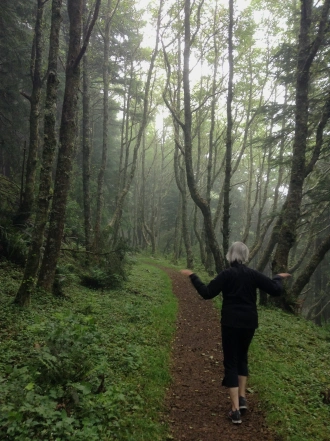
Not least, I walked Neskowin Creek [near my old home] from the headwaters to the coast. I had been teaching all summer, couldn’t afford to travel and needed to do something, so I walked. I collected about 80 pages of field notes. [My daughter] Hallie and I, will go in the fall and she’ll photograph it. Then I’ll publish that, maybe.

Connect

Web:

Books:

Events:

On Beginnings with Melissa Madenski, Pt 1

Welcome to ‘Between the Lines’ – interviews with teachers, writers and writing teachers on specific aspects of their craft. This interview will be split into two posts to do justice to Madenski’s generous sharing of time and wisdom. Part 1 covers her biography and writer’s origin story. Part 2 will focus on craft and teaching.

Full disclosure: Melissa and I have known of each other since I was growing up in Lincoln City, Oregon; her children attended my mother’s day care. About a decade ago, I reached out and shared some of my writing. She responded with characteristic generosity and has become a dear friend, mentor, exemplar.

Photo: Hallie Madenski

“I’ve had everything in my life I wanted, but not one thing went according to plan.”

Melissa Madenski delivers this statement with poise that belies the extraordinariness of the claim.

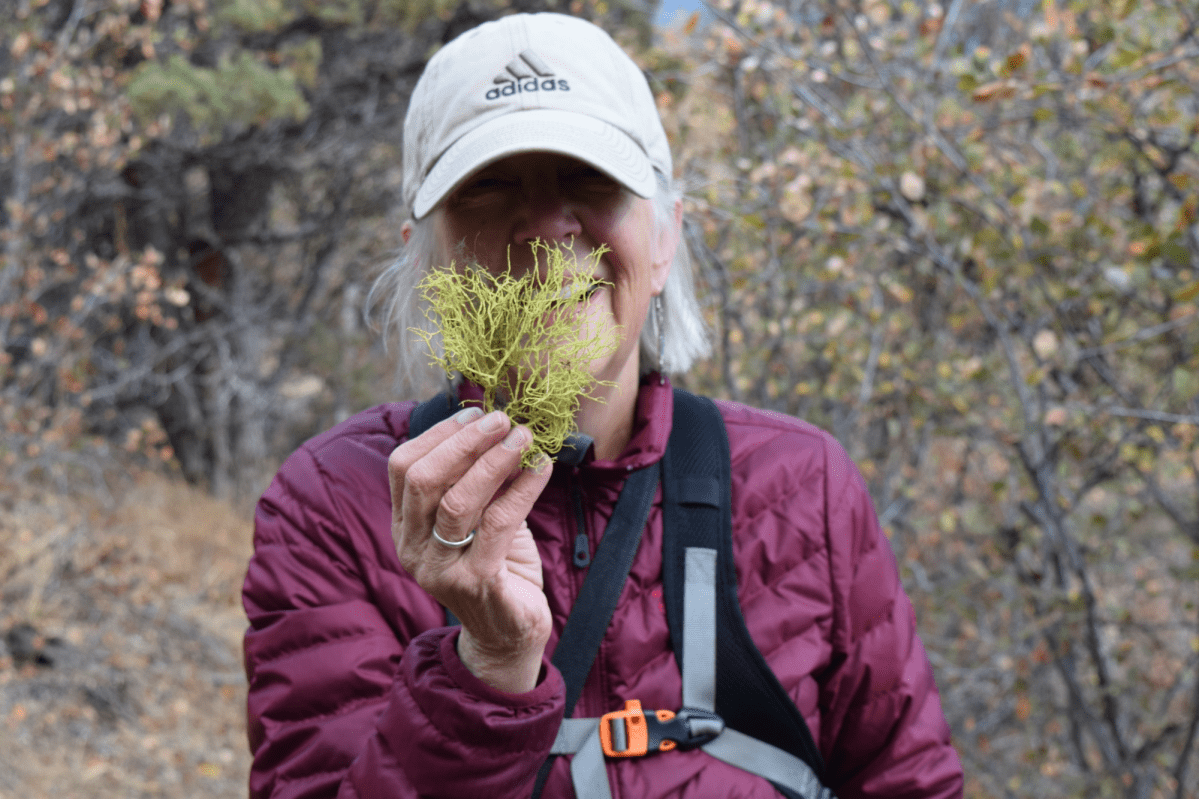
White hair frames dark tortoiseshell glasses and silver hoop earrings. A boho-chic bob to make Anna Wintour green. The kindled joy in her eyes refracts through the the kitchen-dining-living space of her Portland, Oregon home, which is as spare, chic and elegant as she: drip coffee-maker, glass-fronted book shelves, black-and-white prints on crisp white walls.

Elsewhere, these might be bland markers of commodified good taste. But they are Madenski’s tools: functional and essential as carpenter’s adze or blacksmith’s tongs.

Born and raised in Portland, Madenski moved to the Oregon coast as a young woman, taught school, married, had children. One imagines a life rich in the delights of partnership and parenthood: time-poor, perhaps, but abundant in laughter. A time to make one say, “I’ve had everything I wanted.”

But: “Not one thing went according to plan.” The rosy narrative ended in a thunderclap moment when Melissa’s husband, Mark, died, aged 34. Their children, Hallie and Dylan, were one and six years old; their hand-built wooden house in the Siuslaw Forest unfinished.

“My healthy, athletic husband had simply stopped breathing,” she wrote in her 2015 essay, ‘Starting Over.‘ “We would soon learn that an arrhythmia shook his heart until it stopped.”

Such an unthinkable, unspeakable loss can drive unbelievers to their knees and turn Christian soldiers into atheists. How many people, in that crucible, muster the grace to craft an original response?

Madenski mustered — no — created that grace.

“That’s when I started to write every morning,” she recalls. “I missed Mark very, very much; I held onto writing for my sanity. I’m not an early riser, but I’d set my alarm for 4:30. It was a wood-heated house, so, freezing. I’d stick my head under well water – also freezing – make a latte, then shut myself in my office.”

Deep roots

Though Madenski traces her deliberate writing practice to the cataclysm of loss, its roots reach across generations and oceans.

The youngest daughter of a traveling salesman and a homemaker, Madenski grew up in Portland, happy to daydream alone beneath a spruce tree in their yard. Her grandmother, an immigrant from Norway, lived with them. “I credit her with raising me. She told me lots of stories.”

They were the stories of a vibrant and spirited woman who “hiked, rode horses, lived in logging camps.” A woman who knew, too, what it was to be struck by fate.

A burst appendix led to an infection that ruined her grandmother’s hip. In an era before accessible replacement surgery, this irredeemably altered the last 30 years of her life.

“She lost everything that she loved.” Madenski sits with her memories for a moment, then continues. “My grandmother been a seamstress, so my mother would bring her thread and fabric. She sowed until the last three days of her life. It was like writing: the one thing no one can take away.”

Another thing no one can take away: the example of a woman who chose not to be defined by suffering, but to — Penelope-like — stich and unpick, stitch and unpick, until the stitching and the unpicking became a new tale.

Meandering path

Though “drawn to stories,” Madenski didn’t want to be a writer. “As a kid, I only wanted to imagine. I would go to bed early, lay there and create stories where I was always the heroine.”

Madenski was a voracious reader. But it wasn’t until high school that writing began to glow as an idea.

“I had a magnificent teacher, Ruth Strong. She was a botanist as well, who after she retired wrote Seeking Western Waters – the Lewis and Clark Trail from the Rockies to the Pacific.

She was the first person who said I was a writer; the first person to believe in me as a writer. There was no big lineage: I kept a boring diary, which thankfully was lost in a house fire, but what I’ve come to believe is that so much of writing is story. We are wired for narrative. We’re wired for beginning middle and end.”

Despite the brush with inspiration, Madenski began “a traditional path”, earning a degree in elementary and special education from Portland State University.

Her first job, age 22, was teaching second grade in a public elementary school. “It was hell,” she says. Disadvantaged students. A teachers’ strike. The inevitable tribulations of being green and unschooled. “It was trial by fire. I witnessed things I’d never seen. I had to learn to report abuse. Teaching wasn’t teaching, it was trying to keep people’s head above water.”

The steeliness of her working-class Scandinavian ancestry flashed when she refused to sign a contract for the following year until the principal promised things would change.

After fulfilling her childhood dream of moving to the beach, Madenski taught at Oceanlake Elementary in Lincoln City and at a private school in Neskowin. Although she calls the freedom and miniscule class sizes of independent schools “heaven,” she is quick to say, “I believe in public schools.” Only there did she find the diversity that stretches and challenges.

Photo by Chris Henry on Unsplash

Beginning (Again)

Mark’s death precipitated her out of conventional classrooms. “There are single women who could raise kids and teach, but I couldn’t. I had some insurance money and the house, and thought, I’m going to piece things together.”

Her next first job was driving to Hebo Ranger Station to teach English to migrants employed in the local dairy industry. “It was a good time to not be alone. I was in grief, but so were they,” she muses. “Dairy milking is a hard job, they were sending money home to Mexico, but they had the most wonderful stories.”

Teaching English became one of the legs of the “three-legged stool” required to stay afloat in the Oregon Coast’s parlous tourist economy.

It was then, too, Madenski began the cold-water morning writing practice that she maintains to this day (“I wake up at 5AM, come to the table and write. It’s home to me. It’s stability”).

Her most lucrative year as a writer brought in $6,000. (“It wasn’t enough, but it was a leg.”)

Other legs included teaching at the NW Writing Institute at Lewis & Clark College, founded by friend and fellow author Kim Stafford; running adult literacy programs in libraries; leading writing programs for children; teaching citizenship classes to immigrants; mentoring young authors; and creating her own writing workshops.

“These jobs I pieced together didn’t give me a big retirement or benefits,” she says, matter-of-fact, “but they gave me a lot of experience.”

To anyone who says, experience don’t pay the bills, Madenski’s life is an emphatic beg to differ.

Experience can make the difference between between resilience and collapse.

A couple of years ago, Madenski had hip surgery, then broke her femur in a fall. Cue months of pain, compromised mobility, physical therapy; Covid and long Covid. A downward-rushing torrent that could sweep a person away.

“I was trying to keep going as before, and I kept falling. So I learned to say ‘no’ so I could say ‘yes’… yes to friends, family, writing. I don’t expect to grow old without pain; it doesn’t shock me or surprise me.”

The simple lucidity of the statement is a gong.

It doesn’t surprise me.

The voice of experience.

“I am at peace,” Madenski adds, stating what shines in every plane of her face and every gesture. “That’s a skill for life: not to take things personally that are not. Life teaches you what is personal. Death is not. It happens to everybody. The world is completely sorrow woven with happiness. I’ve learned not to forget that all day long.”

Connect

Web:

Books:

Look out for Part 2 of the interview, where Melissa shares her insights on teaching writing.

Elements: Attention

Storytelling is the essence of communication. The elements of storytelling are like letters of the alphabet. When you know how to use them, you can tell your best story.

Element 15: Attention

Great stories come from creators who are passionately attentive to everything.

Case study: Jack Gilbert jack-gilbert

What it is:

Jack Gilbert was an American poet who turned life’s most banal, excruciating moments into heart-shattering art.

After twenty hours in bed with no food, I decided
I should have at least tea. Got up to light the lamp,
but the sweating and shivering started again
and I staggered backwards across the room. Slammed
against the stone wall. Came to with blood on my head
and couldn’t figure out which way the bed was.

from ‘What I’ve Got’

Why it matters:

Storytellers often aim too high. They want to convey love, terror, excitement, or despair. So they write about love, terror, etc. The thing is, when you write about love, you get a Hallmark card. The bigger the theme, the harder it is to write straight; it’s like looking at the sun.

That’s where attention comes in. Great storytellers know the little stuff reveals the big. In the excerpt above, Gilbert doesn’t tell the reader that it is scary to be sick and alone. He pays attention. In the throes of it, he is alert to every small, true detail: the slow passage of time, the dark room, the fever (only he uses clearer, closer words: sweating, shivering), the disorientation, the abject sense of failure as the body falls.

If you want magic, prop your eyelids open with toothpicks. Pay attention. Especially to boring, mundane, every day things.

In his own words:

“He explained that somebody wanted to give me the Yale prize. I didn’t know what to do, how to express it. I took him out with my two friends and we had milkshakes.

The next day I roamed about trying to find a way to feel about what had happened. I finally lay down under the Brooklyn Bridge to try to feel something. I lay there all afternoon, and then I called the people at Yale.” Read more

Practice: “Be awake to the details around you, but don’t be self-conscious. ‘Okay. I’m at a wedding. The bride has on blue. The groom is wearing a red carnation. They are serving chopped liver on doilies.’ Relax, enjoy the wedding, be present with an open heart. You will naturally take in your environment, and later, sitting at your desk, you will be able to recall just how it was dancing with the bride’s redheaded mother, seeing the bit of red lipstick smeared on her front tooth when she smiled.” Natalie Goldberg in Writing Down the Bones

Remember: “As a writing man, or secretary, I have always felt charged with the safekeeping of all unexpected items of worldly and unworldly enchantment, as though I might be held personally responsible if even a small one were to be lost.” ~E. B. White

Elements of Storytelling 11: Imagery

Storytelling is the essence of communication. The elements of storytelling are like letters of the alphabet. When you know how to use them, you can tell your best story.

Element 11: Imagery

Deft use of imagery creates indelible images and provokes powerful emotions.

Case study: Maggie Smith Poet

What it is:

Maggie Smith’s poem ‘Let’s Not Begin’ is a meditation on life, death and courage. These are dangerous topics (Rilke, no less, advised against such broad themes) but Ms Smith nails it with an unforgettable simile: “My heart’s galloping hell / and gone from the paddock…. But let’s not end / with the heart as horse, / fear-lathered, spooked deaf.” The use of a figurative phrase transforms the cliche of a racing heart into a concrete image so vivid I can see the horse’s flared nostrils and flying sweat.

Why it matters:

For millennia poetry was entertainment, education and historical record. Spoken or sung, it had to make an instant, lasting impression on its audience. So poets got very good at painting word pictures. They learned to compare unlike things in a way that seized people’s imaginations and seared images into their brains. Now, we’re drowning in a sea of information. Metaphors are life-rings; similes shine like beacons. From poetry to advertising, the most imaginative, compelling, memorable use of imagery always win.

In her own words:well

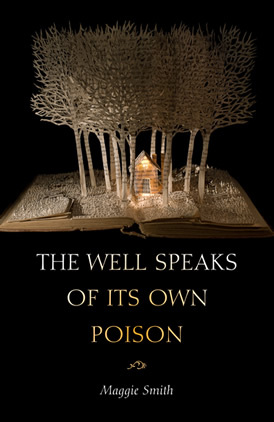
Maggie Smith is the author of three books of poetry: Weep Up (Tupelo Press, forthcoming 2018); The Well Speaks of Its Own Poison (Tupelo Press, 2015), winner of the 2012 Dorset Prize and the 2016 Independent Publisher Book Awards Gold Medal in Poetry; and Lamp of the Body (Red Hen Press, 2005), winner of the 2003 Benjamin Saltman Award.

A 2011 recipient of a Creative Writing Fellowship from the National Endowment for the Arts, Smith has also received fellowships from the Ohio Arts Council, the Sustainable Arts Foundation, and elsewhere. She works as a freelance writer and editor, and is a Consulting Editor to the Kenyon Review. Read more

Practice: Complete these sentences with vivid images. To really get the most of the exercise, don’t worry about coming up with something good, just write. The whole idea is to get your subconscious to make connections in a new, more creative way.

  1. Blue paint spilled on the road like___________________________.
  2. Canceled checks in the abandoned subway car

    seemed___________________________.

  3. A spider under the rug is like___________________________.
  4. Graffiti on the abandoned building like___________________________.”

via The Balance

Remember: “A metaphor is a kind o’ lie to help people understand what’s true.”
~Terry Pratchett

Poem of the Month: Bliss

A beautiful poem to complete the year, from Nobel prize-winning Indian poet Rabindranath Tagore. The briefest of the poems I memorised in 2015, it is a profound reminder that how one lives is always a choice.

DSC02607

Bliss

Remain in bliss in this world,
Fearless, pure in heart.
Wake up in bliss every morning,
Carry out your duties in bliss.
Remain in bliss in weal and woe.
In criticism and insult,
Remain in bliss unaffected.
Remain in bliss, pardoning everybody.

Poem of the Month – Dulce et Decorum Est by Wilfred Owen

Wilfred Owen’s World War I poem Dulce et Decorum Est speaks for itself.

Bent double, like old beggars under sacks,
Knock-kneed, coughing like hags, we cursed through sludge,
Till on the haunting flares we turned our backs
And towards our distant rest began to trudge.
Men marched asleep. Many had lost their boots
But limped on, blood-shod. All went lame; all blind;
Drunk with fatigue; deaf even to the hoots
Of tired, outstripped Five-Nines that dropped behind.

Gas! Gas! Quick, boys!—An ecstasy of fumbling,
Fitting the clumsy helmets just in time;
But someone still was yelling out and stumbling
And flound’ring like a man in fire or lime...
Dim, through the misty panes and thick green light,
As under a green sea, I saw him drowning.

In all my dreams, before my helpless sight,
He plunges at me, guttering, choking, drowning.

If in some smothering dreams you too could pace
Behind the wagon that we flung him in,
And watch the white eyes writhing in his face,
His hanging face, like a devil’s sick of sin;
If you could hear, at every jolt, the blood
Come gargling from the froth-corrupted lungs,
Obscene as cancer, bitter as the cud
Of vile, incurable sores on innocent tongues,—
My friend, you would not tell with such high zest
To children ardent for some desperate glory,
The old Lie: Dulce et decorum est
Pro patria mori.

Poem of the Month – A Brief for the Defense by Jack Gilbert

I first encountered Jack Gilbert’s poetry in The Sun (American literary magazine, not British tabloid). A sentence from ‘A Brief for the Defense’ stuck with me, nagged me through summer: “We must have the stubbornness to accept our gladness in the ruthless furnace of this world”.

As one blessed with much comfort and satisfaction, I wonder at my privileges, wonder at the randomness of life, wonder why millions suffer through no fault of their own, and others live in shocking luxury through no virtue of their own. Gilbert’s taut, evocative, defiant poem comes the closest of anything I’ve read to elucidating the tension between grief and high delight. Gilbert doesn’t moralise or draw conclusions. Though he refers to both God and the Devil, for me the poem is Zen. Ultimately, none of us is in control. The secret, if there is one, is to laugh anyway, to listen for sound of oars in the silence and watch the island sleep. And to refuse to allow our lives to be defined by the worst of times.

DSC01218

A Brief for the Defense by Jack Gilbert

Sorrow everywhere. Slaughter everywhere. If babies
are not starving someplace, they are starving
somewhere else. With flies in their nostrils.
But we enjoy our lives because that’s what God wants.
Otherwise the mornings before summer dawn would not
be made so fine. The Bengal tiger would not
be fashioned so miraculously well. The poor women
at the fountain are laughing together between
the suffering they have known and the awfulness
in their future, smiling and laughing while somebody
in the village is very sick. There is laughter
every day in the terrible streets of Calcutta,
and the women laugh in the cages of Bombay.
If we deny our happiness, resist our satisfaction, we lessen the importance of their deprivation.
We must risk delight. We can do without pleasure,
but not delight. Not enjoyment. We must have
the stubbornness to accept our gladness in the ruthless
furnace of this world. To make injustice the only
measure of our attention is to praise the Devil.
If the locomotive of the Lord runs us down,
we should give thanks that the end had magnitude.
We must admit that there will be music despite everything.
We stand at the prow again of a small ship
anchored late at night in the tiny port
looking over the sleeping island: the waterfront
is three shuttered cafes and one naked light burning.
To hear the faint sound of oars in the silence as a rowboat
comes slowly out and then goes back is truly worth
all the years of sorrow that are to come.

DSC01416

Poem of the Month – If by Rudyard Kipling

If is the poetic equivalent of “…Baby One More Time”: it’s naff, simplistic, brash and its politics don’t bear examination but Christ it’s catchy. I can’t remember when I first read or heard the poem, but fragments of it are buried in my brain like shrapnel.

Kipling was a jingoistic racist. If is patronising hooey. Still, the line “if you can fill the unforgiving minute with sixty seconds worth of distance run…” has gotten me up more hills than I can count. So there’s that.

Why memorise If? In part because I think it’ll come in handy over the next couple of months in Ibiza (“If you can keep your head when all about you/ are losing theirs…”) and partly to acknowledge the fact that bad poetry can be as useful, or meaningful, in the right context, as the most exquisite sonnet.

What’s your favourite bad poem? Share in the comments.
run

If

If you can keep your head when all about you
Are losing theirs and blaming it on you,
If you can trust yourself when all men doubt you,
But make allowance for their doubting too;
If you can wait and not be tired by waiting,
Or being lied about, don’t deal in lies,
Or being hated, don’t give way to hating,
And yet don’t look too good, nor talk too wise:

If you can dream—and not make dreams your master;
If you can think—and not make thoughts your aim;
If you can meet with Triumph and Disaster
And treat those two impostors just the same;
If you can bear to hear the truth you’ve spoken
Twisted by knaves to make a trap for fools,
Or watch the things you gave your life to, broken,
And stoop and build ’em up with worn-out tools:

If you can make one heap of all your winnings
And risk it on one turn of pitch-and-toss,
And lose, and start again at your beginnings
And never breathe a word about your loss;
If you can force your heart and nerve and sinew
To serve your turn long after they are gone,
And so hold on when there is nothing in you
Except the Will which says to them: ‘Hold on!’

If you can talk with crowds and keep your virtue,
Or walk with Kings—nor lose the common touch,
If neither foes nor loving friends can hurt you,
If all men count with you, but none too much;
If you can fill the unforgiving minute
With sixty seconds’ worth of distance run,
Yours is the Earth and everything that’s in it,
And—which is more—you’ll be a Man, my son!

Treed

IMG_20150130_172200481_HDR

A poem in progress

TREED

Suspended in your limbs the
sky shatters to dancing fractals.
Height makes me dizzy.
Pressed by gravity to your
contours
corpuscles shriek.
My heart screeches
out of control.
Refusing to
fall
I
will
climb
(down).

Wood against flesh.
Taut, anxious;
mute and clumsy; bones
rattle against every
branch on the way. Till I

f
a
l
l

and tangle in your roots.

Bruises rise like
sap. Sunshine
sears the skin your fingers warmed.
Wind dips to kindly whisper:
Let go.