On Beginnings with Melissa Madenski, Pt 2

Welcome to ‘Between the Lines’ – interviews with teachers, writers and writing teachers on specific aspects of their craft. This interview was split into two posts to do justice to Madenski’s generous sharing of time and wisdom. Part 1 covered her biography and writer’s origin story. Part 2 focuses on craft and teaching.
How does one identify the seed of a piece of writing?

Surprise. My Achilles heel is that I get too sentimental. The more sentimental writing gets, the greater the distance. When you write universally, describe, and keep those emotions out, you open it up.

What questions should a writer ask themselves at the beginning of a piece?

  • Know?
  • Don’t know?
  • What to know?

It’s about finding [one’s] curiosity.

What should a writer consider, and disregard, when beginning a piece of writing?

The first step is not creating a story. The first writing, what we used to call free writing, is first thoughts. It frees you from having to be worried about the things you might worry about in a final draft.

One of my small rants is that free writing became a thing, and teachers sit children down and make them write. Once something becomes institutionalized, it’s difficult for students to feel safe with it. If you look at writing as a place to explore, to find meaning, it becomes a different thing.

Why is working through first thoughts important?

A student I loved told me she wrote about a problem she had for five days in a row. The first version was awful, full of blame; after five days, she’d narrowed it to what she could change and what she couldn’t. That was never going to be published, but that is the writing process.

As an adult, I started [writing] the first day after [my husband] Mark died. Those journals were useless – they were just questions. In two full journals, there are probably two salvageable sentences. But it helped me to be a better parent, to get through that.

How important is defining an audience?

I never do until the end; maybe not even then. I write what I’m curious about and if I have that intuitive sense, if it feels good, I’ll keep working. After I finish, then I’ll think of where to send it.

How can writers get better at finding seeds? And drafting?

They get better as they practice, as with anything else. Writing, and maybe this is true of dancing and photography, offers lots of rewards when you start to use it across the arc of your life.

What opportunity does writing bring the writer?

The chance to see things more clearly. The opportunity to notice, to slow, to look. I wrote a poem called ‘Ode to Black’, during the Black Lives Matters protests. I was walking one day and there were crows everywhere. And I walked to the creek and the ducks have this black so black it’s almost indigo on their faces. So much of what I love in nature is black – trees in winter – so I wrote this poem.

Writing has given me knowing what I want to get good at; stability, better understanding of myself, much better understanding of students. I love publishing, but it wouldn’t stop me writing if I didn’t publish.

Madenski recommends

The piece of writing that changed your life before age 18?

‘The Raven’ by Edgar Allen Poe, which I memorized in sixth grade. And Robert Frost, ‘The Road Less Taken’, reading them, something shifted in me.

The piece of writing that changed your life as an adult?

Early Morning by Kim Stafford. It’s a very personal book [about his father], but it’s universal. It helped me see people as complex and beautiful. You can struggle with someone or something, but still see the beauty in them.

A classic you would love to teach?

My Antonia by Willa Cather. I don’t go around thinking of myself as a feminist, but I am a feminist. Willa Cather cut her hair, wore pants, got a job as a journalist. It is beautifully written and would be a perfect thing to teach. To have [students] read the book first, and not know about her, then fold in her influences as a woman writer when it wasn’t easy to be one. That would open up some wonderful conversations.

A contemporary work you would love to teach?

Happiness by Aminatta Forna. It’s about two characters in their late adult years, their children are raised. They have experience; they’ve lived hard lives, and that is part of the story too. The book is complicated: it’s about where we are in the world, our relationship to animals, the divisiveness that pulls us apart. It’s about aging, what it means to have loved, to have a long career. It is about a different type of happiness.

A book about writing every writing student should read?

The Crafty Poet: A Portable Workshop Vols I, II & III by Diane Lockwood. I wish I’d found these [books] years ago.

A visual artist/musician/film maker who inspires you?

Greta Gerwig. She’s a great example of how we can come to stories about love, friendship, culture, with a different lens. She started out independent with Lady Bird and Little Women, then the Barbie movie, which I wasn’t going to see because of my assumptions. But I went and I loved it. [Gerwig] has a different voice, a way of storytelling that is the opposite of what I thought it would be.

A book you buy copies of to give to friends?

Who Dies? and Unattended Sorrow, both by Stephan Levine. They are about grief. At this time in my life, people are losing big things – parents, children, partners. Levine writes about compassion, in its true sense. Looking through a lens at the hardest things in our lives. I soak up instruction in how to endure difficult things. It’s not an exercise in denial, it’s an exercise in facing.

What’s next?

Inspired by Ada Lemon’s linked sonnets in The Lucky Wreck, I am working on seven verses that began with a walk on the Columbia River. I saw an asylum of loons and that’s where the poem started. It’s not ready to read aloud yet, but it’s going somewhere good.

I’m also working on an essay about ageing, and pulling together poems for a reading with Andrea Carlisle at Broadway Books on 5 September.

Not least, I walked Neskowin Creek [near my old home] from the headwaters to the coast. I had been teaching all summer, couldn’t afford to travel and needed to do something, so I walked. I collected about 80 pages of field notes. [My daughter] Hallie and I, will go in the fall and she’ll photograph it. Then I’ll publish that, maybe.

Connect

Web:

Books:

Events:

On Beginnings with Melissa Madenski, Pt 1

Welcome to ‘Between the Lines’ – interviews with teachers, writers and writing teachers on specific aspects of their craft. This interview will be split into two posts to do justice to Madenski’s generous sharing of time and wisdom. Part 1 covers her biography and writer’s origin story. Part 2 will focus on craft and teaching.

Full disclosure: Melissa and I have known of each other since I was growing up in Lincoln City, Oregon; her children attended my mother’s day care. About a decade ago, I reached out and shared some of my writing. She responded with characteristic generosity and has become a dear friend, mentor, exemplar.

Photo: Hallie Madenski

“I’ve had everything in my life I wanted, but not one thing went according to plan.”

Melissa Madenski delivers this statement with poise that belies the extraordinariness of the claim.

White hair frames dark tortoiseshell glasses and silver hoop earrings. A boho-chic bob to make Anna Wintour green. The kindled joy in her eyes refracts through the the kitchen-dining-living space of her Portland, Oregon home, which is as spare, chic and elegant as she: drip coffee-maker, glass-fronted book shelves, black-and-white prints on crisp white walls.

Elsewhere, these might be bland markers of commodified good taste. But they are Madenski’s tools: functional and essential as carpenter’s adze or blacksmith’s tongs.

Born and raised in Portland, Madenski moved to the Oregon coast as a young woman, taught school, married, had children. One imagines a life rich in the delights of partnership and parenthood: time-poor, perhaps, but abundant in laughter. A time to make one say, “I’ve had everything I wanted.”

But: “Not one thing went according to plan.” The rosy narrative ended in a thunderclap moment when Melissa’s husband, Mark, died, aged 34. Their children, Hallie and Dylan, were one and six years old; their hand-built wooden house in the Siuslaw Forest unfinished.

“My healthy, athletic husband had simply stopped breathing,” she wrote in her 2015 essay, ‘Starting Over.‘ “We would soon learn that an arrhythmia shook his heart until it stopped.”

Such an unthinkable, unspeakable loss can drive unbelievers to their knees and turn Christian soldiers into atheists. How many people, in that crucible, muster the grace to craft an original response?

Madenski mustered — no — created that grace.

“That’s when I started to write every morning,” she recalls. “I missed Mark very, very much; I held onto writing for my sanity. I’m not an early riser, but I’d set my alarm for 4:30. It was a wood-heated house, so, freezing. I’d stick my head under well water – also freezing – make a latte, then shut myself in my office.”

Deep roots

Though Madenski traces her deliberate writing practice to the cataclysm of loss, its roots reach across generations and oceans.

The youngest daughter of a traveling salesman and a homemaker, Madenski grew up in Portland, happy to daydream alone beneath a spruce tree in their yard. Her grandmother, an immigrant from Norway, lived with them. “I credit her with raising me. She told me lots of stories.”

They were the stories of a vibrant and spirited woman who “hiked, rode horses, lived in logging camps.” A woman who knew, too, what it was to be struck by fate.

A burst appendix led to an infection that ruined her grandmother’s hip. In an era before accessible replacement surgery, this irredeemably altered the last 30 years of her life.

“She lost everything that she loved.” Madenski sits with her memories for a moment, then continues. “My grandmother been a seamstress, so my mother would bring her thread and fabric. She sowed until the last three days of her life. It was like writing: the one thing no one can take away.”

Another thing no one can take away: the example of a woman who chose not to be defined by suffering, but to — Penelope-like — stich and unpick, stitch and unpick, until the stitching and the unpicking became a new tale.

Meandering path

Though “drawn to stories,” Madenski didn’t want to be a writer. “As a kid, I only wanted to imagine. I would go to bed early, lay there and create stories where I was always the heroine.”

Madenski was a voracious reader. But it wasn’t until high school that writing began to glow as an idea.

“I had a magnificent teacher, Ruth Strong. She was a botanist as well, who after she retired wrote Seeking Western Waters – the Lewis and Clark Trail from the Rockies to the Pacific.

She was the first person who said I was a writer; the first person to believe in me as a writer. There was no big lineage: I kept a boring diary, which thankfully was lost in a house fire, but what I’ve come to believe is that so much of writing is story. We are wired for narrative. We’re wired for beginning middle and end.”

Despite the brush with inspiration, Madenski began “a traditional path”, earning a degree in elementary and special education from Portland State University.

Her first job, age 22, was teaching second grade in a public elementary school. “It was hell,” she says. Disadvantaged students. A teachers’ strike. The inevitable tribulations of being green and unschooled. “It was trial by fire. I witnessed things I’d never seen. I had to learn to report abuse. Teaching wasn’t teaching, it was trying to keep people’s head above water.”

The steeliness of her working-class Scandinavian ancestry flashed when she refused to sign a contract for the following year until the principal promised things would change.

After fulfilling her childhood dream of moving to the beach, Madenski taught at Oceanlake Elementary in Lincoln City and at a private school in Neskowin. Although she calls the freedom and miniscule class sizes of independent schools “heaven,” she is quick to say, “I believe in public schools.” Only there did she find the diversity that stretches and challenges.

Photo by Chris Henry on Unsplash

Beginning (Again)

Mark’s death precipitated her out of conventional classrooms. “There are single women who could raise kids and teach, but I couldn’t. I had some insurance money and the house, and thought, I’m going to piece things together.”

Her next first job was driving to Hebo Ranger Station to teach English to migrants employed in the local dairy industry. “It was a good time to not be alone. I was in grief, but so were they,” she muses. “Dairy milking is a hard job, they were sending money home to Mexico, but they had the most wonderful stories.”

Teaching English became one of the legs of the “three-legged stool” required to stay afloat in the Oregon Coast’s parlous tourist economy.

It was then, too, Madenski began the cold-water morning writing practice that she maintains to this day (“I wake up at 5AM, come to the table and write. It’s home to me. It’s stability”).

Her most lucrative year as a writer brought in $6,000. (“It wasn’t enough, but it was a leg.”)

Other legs included teaching at the NW Writing Institute at Lewis & Clark College, founded by friend and fellow author Kim Stafford; running adult literacy programs in libraries; leading writing programs for children; teaching citizenship classes to immigrants; mentoring young authors; and creating her own writing workshops.

“These jobs I pieced together didn’t give me a big retirement or benefits,” she says, matter-of-fact, “but they gave me a lot of experience.”

To anyone who says, experience don’t pay the bills, Madenski’s life is an emphatic beg to differ.

Experience can make the difference between between resilience and collapse.

A couple of years ago, Madenski had hip surgery, then broke her femur in a fall. Cue months of pain, compromised mobility, physical therapy; Covid and long Covid. A downward-rushing torrent that could sweep a person away.

“I was trying to keep going as before, and I kept falling. So I learned to say ‘no’ so I could say ‘yes’… yes to friends, family, writing. I don’t expect to grow old without pain; it doesn’t shock me or surprise me.”

The simple lucidity of the statement is a gong.

It doesn’t surprise me.

The voice of experience.

“I am at peace,” Madenski adds, stating what shines in every plane of her face and every gesture. “That’s a skill for life: not to take things personally that are not. Life teaches you what is personal. Death is not. It happens to everybody. The world is completely sorrow woven with happiness. I’ve learned not to forget that all day long.”

Connect

Web:

Books:

Look out for Part 2 of the interview, where Melissa shares her insights on teaching writing.

Flashback: My 2016 Reading Highlights

Joan Didion said it was a good idea to stay acquainted with the people you used to be, even if you don’t much like them anymore.

It’s good advice.

In 2016, life was changing so fast my head spun. I met my now-husband in December 2015 and the next year was spent jumping on planes to get to him, culminating in a move from Ibiza to Memphis, Tennessee. Small wonder it was a year of comfort-reading favorite books in snatched moments.

Here’s what I read, and why I read it.

***

If, like me, you have a voice in your head that tells you off for paying attention to your own life, for saving boarding passes and scribbled-upon napkins, for stopping to write love letters in the sand, ignore it.

img_20161113_151120

Happiness and creativity depend on valuing our lives. They depend on listening, watching, recording, remembering. It is easy to envy other people’s lives — so exciting! Such superior children/holidays/houses/jobs/wardrobes/sex lives! Such a torrent of fabulous Instagram photos and witty Facebook status updates. We get so caught up peering through the virtual window of our neighbours’ lives we forget to look at our own. We don’t see the pathos, adventure, and pleasure of our own existence because we’re not looking.

Two years ago I started a keeping a list of all the books I read. It seemed like a self-indulgent tic indicative of an unhealthy level of ego. Or, worse, a pointless exercise (who cares?) My delight in list-making narrowly trumped these niggles. Now a blue virtual post-it on my home screen contains a list of all the books I read in 2016.

The list reminds me not only what I’ve read, but how I read. It is a snapshot of the ebb and flow of time and energy. January 2016 was a book-heavy month, gobbling up a glut of Christmas goodies and biding a lot of time until my second date with the soon-to-be boyfriend. February was a respectable showing. March, the month I spent between London, Dominican Republic and Brussels, I read almost nothing. The next two months were spent in a miserable, unsuccessful attempt to assimilate into a receptionist job at an overrated luxury agrotourismo in Ibiza — it was bad enough I only read a book and a half. Finishing Anna Karenina took me through June. The rest of the year I read in fits and starts. What jumped out, reviewing the list, was how many books I reread. And, with the exception of High Tide in Tucson and Jane Eyre, not just for the second time.

Looking over my top ten rereads reminds me what I value and crave. The books on this list all offer, directly or through illustration, wisdom and encouragement to those trying hard to live by their own lights. From the esoteric musings of the Glass siblings to the tough-love advice of Cheryl Strayed, each book is, in its own way, a tonic. They were rocks in the fast-moving stream of a year where everything changed, stepping stones to a new life.

Franny & Zooey, JD Salinger

franny

The summer I was 15 I lived with my older sister and worked at Wendy’s. Every day on my break I hunkered down in store cupboard and read Franny & Zooey. To this day I’m not sure where I got the book, or why it grabbed me. What I do know is I’ve read it somewhere between 30-50 times, can quote entire sections of it verbatim, and reread it at least twice a year. In part it’s the reflection of myself I see in Zooey who says “I’m sick to death of waking up furious every morning and going to bed furious at night”, an echo of my relationship with my siblings in the narrator’s aside that the Glass siblings share a “semantic geometry where the shortest distance between two points is a fullish circle”, or descriptions like, “the Jewish-Irish Mohican scout who died in your arms at the roulette table in Monte Carlo.” In part, because the wildly verbose, witty, strangely timeless sentences still reveal new flashes of character. The narrator says it is a “compound or multiple love story, pure and complicated” which is a fine description of the writing, too.

Bird by Bird, Anne Lamott

Ostensibly a book about writing, Bird by Bird is a wise, funny, heart-rending guide to living life when you don’t fit in a box. The combination of Lamott’s acerbic yet self-deprecating turns of phrase coupled with her palpable compassion is almost unbearable. I cry every time I read it, even though I’ve read it so many times I well up in anticipation. It makes me want to walk around hugging everyone and at the same time makes me want to be a blazing good writer. Every chapter is a gem, but “Jealousy” and “KFKD” are maybe the best things you’ll ever read on, respectively, the eponymous emotion and self-doubt. And her advice about avoiding libel charges is hilarious, priceless, and involves the memorable comparison of a penis to a baby bird in its nest.

letters

Letters to a Young Poet, Rilke

This I plucked off a library shelf in Tigard, OR on the strength of the fact that Lady Gaga has a Rilke quote tattooed on her upper arm — it reads in part, “confess to yourself that you would die if you were forbidden to write”. The line, it transpires, is from Letters To A Young Poet which is so rich in exquisitely worded wisdom it flays me. Rilke’s advice on sex, solitude, and seeking ones calling is so incisive it takes my breath away. And, as a poet, he makes every word count, crafting artful sentences that blow my mind on both a philosophical and aesthetic basis. I love it so much, I read it aloud and sent the recording as a gift to a friend.

A Room of One’s Own, Virginia Woolf

Woolf’s trenchant analysis of what women writers need is as relevant today as when she delivered the lectures from which it was drawn in 1928. We may have “come a long way, baby” but women are still underpaid, overworked, and too often cut off from the privileges that enrich men’s prospects. Sexism may not be as crude as the beadle who ordered her out of the Oxford library, but it thrives in a thousand insidious ways that women internalise or ignore at their own risk. I also love Woolf’s dazzling prose, which gave us, “one can not think well, love well, sleep well, if one has not dined well.”

Tiny Beautiful Things, Cheryl Strayed

This collection of Strayed’s advice columns written for The Rumpus’s Dear Sugar column breaks my heart wide open. I’m sobbing by the time I get through the second or third letter, whichever it is that is from the women who suffered a late-term miscarriage. It is hard to put my finger exactly on what it is about Tiny Beautiful Things that makes me gasp. Mostly, it’s Strayed’s unflinching willingness to examine the hardest things in her own life. She doesn’t rush through awfulness, or glide past suffering, she stays, unafraid to study it and claim who and what she is in the wake of it. This solipsism is unexpectedly comforting. By inhabiting and sharing her experience she makes it okay to inhabit and unpick my experience. Line by line, she demonstrates the potential for growth and change in every life. If one is willing to embrace an almost Stoic determination to live well by doing what’s right.

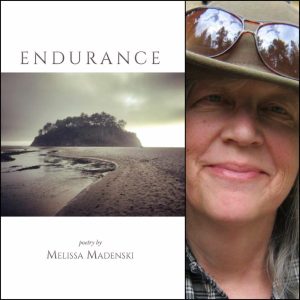
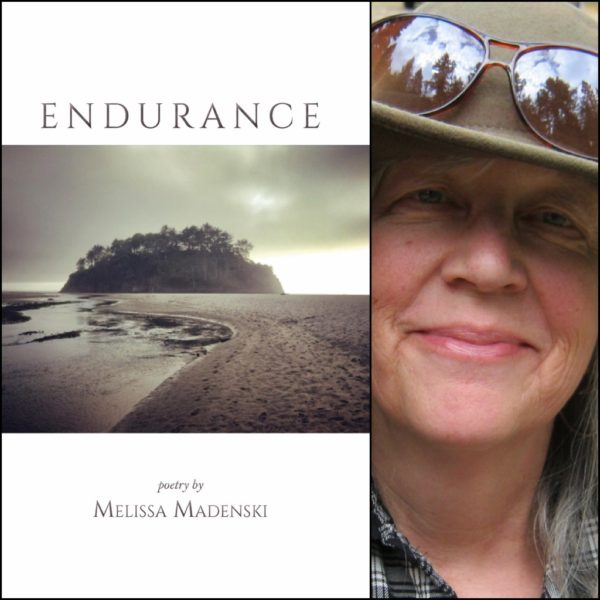
Endurance, Melissa Madenski

endurance

In 2015 I committed to memorising a poem per month, and did. Not all of them have remained word-perfect in my head, but it was an incredible experience with language. When you learn something by heart, you discover things. Cadence, repetition, punctuation, imagery all become vivid in an unpredictable way. I didn’t set out to memorise poetry in 2016 but I read a lot of it — including fantastic collections by Jack Gilbert and CP Cavafy. My favourite reread, though, was this slender chapbook by an Oregon writer. She lost her husband to an unexpected heart attack when she was in her 30s with two young children and the grief of that loss reverberates through Endurance. These are poems about learning to live with the worst case, not with resignation but with courage and, ultimately, joy. It’s another one I can’t make it through without tears, but they’re cathartic.

Jane Eyre, Charlotte Bronte

Of all the my rereads, this was the most fun because it was so different from my memory of it. I must have been 12 or 13 when I read Jane Eyre and I was bored witless. Years later, I read Wuthering Heights and hated it, confirming my prejudice against their weird, masochistic and wildly overrated Brontë sisters. Then on a whim I read Anne Brontë’s Tenant of Wildfell Hall and liked it. And somewhere I heard that Jane Eyre was feminist. So I gave it another shot and fell in love. Bold feminism plus a terrific yarn? Brilliant. Free Kindle edition

Long Quiet Highway, Natalie Goldberg

I reread at least one or two of Goldberg’s books each year. Most often Writing Down the Bones or Wild Mind, but this time I went for The Long Quiet Highway which is mostly about her study of Zen Buddhism over the years. Which of course means it is about writing, being, meaning, truth, acceptance, and everything else that matters. Writing is Zen; Zen is writing. Whatever we do is meditation if we allow it to be. The subtitle is Waking Up in America which is  nearly what I named this blog because that’s what I’m trying to do: wake up in a country I left 16 years ago; figure out what it means to be me in America in 2017, and how to do something good here.

Treasure Island, Robert Louis Stevenson

Treasure Island has been a staple of my literary diet since I was 15 or so. I was a precocious reader, but not above devouring whatever I could get my hands on, and this yarn of seafaring and daring-do always hit the spot. Years later, when I moved to Ibiza, I started to think of it as treasure island — a supposed paradise guarded by dead men’s bones and half-crazed exiles. Overly dramatic personal parallels aside, it is a fantastically fun book and an excellent template for writers looking to craft a fast-paced, unforgettable story. Free Kindle edition

High Tide in Tucson, Barbara Kingsolver

Kingsolver is the most recent addition to my pantheon of southern American writers (Carson McCullers, Hunter S Thompson, Eudora Welty, Truman Capote, etc.) and possibly the one I’d Most Like To Meet. Writing implacably reveals character and every word I’ve read of Kingsolver makes me think she is a Good Person, smart as hell, and cracking company on a night out. Her fiction boggles me and this book of essays is one of the finest, sharpest, most humane collections I’ve had the pleasure of reading. The title essay alone is worth the price of admission; Buster the stranded hermit crab may change your life.

What books to you read over and over? Share in the comments or Tweet @CilaWarncke

10 Sex Affirmative Books for English Language Arts

Following on from my previous post on the importance of affirmative sex education, here are 10 books English Language Arts teachers can reach for to open conversations about love, relationships, gender and sexuality.

These works were chosen because they treat sex with the openness, thoughtfulness, honesty and sensitivity it merits.

Photo by CHUTTERSNAP on Unsplash

Letters to a Young Poet by Rainer Maria Rilke

This brief, moving book touches an many aspects of life: education, self-discovery, solitude, family relationships, etc. but Rilke’s comments about love and sex shine. Don’t be satisfied with conventional definitions of what a relationship ‘should’ look like, he advises. Instead, seek to develop yourself as an individual so you can truly respect and cherish the individuality of another person. It is humane, wise, timely wisdom framed in sublime prose.

Get it here

Frankly In Love by David Yoon

This YA novel centers on Frank Li, the teenage son of Korean immigrants, who finds himself trying to navigate the challenges of new love while wrestling with contradictory cultural expectations. Fast, good-humored and, well, frank, it highlights the importance of being honest with oneself and others — in life and in love.

Get it here

Cool for the Summer by Dahlia Adler

With a nod to Demi Lovato, this novel explores how issues of class and privilege complicate the already complicated issues of love and sexual identity. Are Lara and Jasmine really falling in love, or are they just cool for the summer? And what happens if Lara chases the hunky Chase…? A touch frothy, but heartfelt and affirmative of love, wherever one finds it.

Get it here

Lawn Boy by Jonathan Evison

This Bildungsroman set in a well-to-do Pacific Northwest community hit home with me (though the community I grew up in wasn’t quite so well-to-do). In addition to being a welcome, thoughtful discussion of class, poverty and family tension, it has a romantic twist that is sure to get students talking.

Get it here

A Tree Grows in Brooklyn by Betty Smith

Smith’s beloved coming-of-age tale set in early 20th century Brooklyn is refreshingly forthright about sex. It handles both positive and negative aspects of love and sexuality (including an attempted sexual assault) with a calm directness that can set the tone for open, non-judgmental classroom conversations.

Get it here

Giovanni’s Room by James Baldwin

Baldwin is perhaps my favorite writer on sex; certainly, the rare (American) author who understands and treats sex as the physical act of love. This short novel is appropriate for older teenagers, say 16-18, and explores the tragic consequences of prioritising social conventions over human relationships. To paraphrase Baldwin, the protagonist’s problem isn’t his homosexuality, it’s that his capacity for love has been crippled by his anxiety about what people might think.

Get it here

Genderqueer: A Memoir by Maia Kobabe

Contemporary writers are creating a robust canon of books about gender identity and nonconformity. I love this graphic memoir for its matter-of-fact tone and authenticity. It highlights that gender identity is fluid and finding one’s path isn’t necessarily a linear journey — nor does it need to be.

Get it here

Persepolis 2: The Story of a Return by Marjane Satrapi

Lest you get the wrong impression about the back-to-back graphic memoir recommendations, let me quote one of my students when asked if he liked graphic texts: ‘No!’

He and I share the view that other people’s pictures get in the way of the (superior) moving pictures in our heads.

That notwithstanding, Persepolis 2 is an evocative, eye-level portrait of Satrapi’s struggles with language, culture, love and sexuality after she moved from Iran to Germany. This is a particularly strong choice for children who have immigrated or come from a cultural/familial context that distinguishes them from their classmates.

Get it here

Zenobia July by Lisa Bunker

For younger readers, this is a charming, uplifting novel about a trans girl coming into her own. Details like Zenobia stressing out about which restroom to use add verisimilitude and the plot touches on vital issues like deadnaming, cyberbullying and the importance of community without ever feeling preachy.

Get it here

When I Grow Up I Want to Be a List of Further Possibilities by Chen Chen

Sometimes, I read a book and think, wow, that was brilliant.

Sometimes, I read a book and think, wow, that was brilliant and I really want to be friends with the author.

When I Grow Up… is in the latter category. His poems about growing up as the child of immigrants, cultural tension, sexual identity, homophobia and the search for love are surpassingly deft, raw, funny, tragic, playful and defiant. They also communicate (don’t ask me how) a deep, fundamental good-personness. In a perfect parallel universe, Chen and I would go for drinks.

Get it here

What texts would you add to a literary discussion of love, gender and sexuality? Share in the comments or Tweet @CilaWarncke

36 – Audre Lorde

This brief tribute to poet and activist Audre Lord was originally published on Medium.

Image for post
Lorde’s essays and non-fiction

Bio:

Audre Lorde blazed into my consciousness, a star whose light reached my world after she was dead. Only, she’s not dead. Lorde lives in her resounding words; lives in her multiple consciousnesses as a “black, lesbian, mother, warrior, poet”; lives as an embodiment of unflinching personal and political courage.

My first approach to her was slant — the final line Ta-Nehisi Coates’ “Acting French” in which he declared “Sometimes you do need the master’s tools to dismantle his house.” I scribbled it down, the pearl amidst the sludge of half-developed ideas.

Months later, when I realise he’d cribbed Lorde’s “the master’s tools will never dismantle the master’s house” I was ashamed of my ignorance, ashamed I had accidentally attributed to a man the words of a wiser and more powerful woman. I was angry, too. He should have acknowledged her, not assumed (or pretended to assume) that a white audience would recognise the words of a black, lesbian, mother, warrior, poet.

It’s the kind of slight (mine, his) that Lorde knew all too well. The kind of diminishing by accident or design that she wrote about with immaculate precision and righteous anger.

Lorde knew all about injustice but never let herself accept or become accustomed to it. This shines in her writing and the boldness of her life. She refused categories, as an artist or a human being. She married a (white) man, had two children, left her marriage and had a long-term partnership with a (white) woman. Her poetry can be excoriating, her prose comforting, her voice demanding.

What remains, along with her words, is the sense that she was a whole woman — undivided from herself, despite the complexities that other, less aware (less courageous?) people compartmentalize. Humming like a live wire through her work is this message: live your life, as yourself.

Image for post
Lorde’s poems

In her own words:

“Those of us who stand outside the circle of this society’s definition of acceptable women; those of us who have been forged in the crucibles of difference — those of us who are poor, who are lesbians, who are Black, who are older — know that survival is not an academic skill. It is learning how to stand alone, unpopular and sometimes reviled, and how to make common cause with those others identified as outside the structures in order to define and seek a world in which we can all flourish. It is learning how to take our differences and make them strengths. For the master’s tools will never dismantle the master’s house. They may allow us temporarily to beat him at his own game, but they will never enable us to bring about genuine change. And this fact is only threatening to those women who still define the master’s house as their only source of support.” — “The Master’s Tools Will Never Dismantle the Master’s House”

“A policeman who shot down a ten year old in Queens
stood over the boy with his cop shoes in childish blood
and a voice said “Die you little motherfucker” and
there are tapes to prove it. At his trial
this policeman said in his own defense
“I didn’t notice the size nor nothing else
only the color”. And
there are tapes to prove that, too.

Today that 37 year old white man
with 13 years of police forcing
was set free
by eleven white men who said they were satisfied
justice had been done”
– from “Power

“The quality of light by which we scrutinize our lives has direct bearing upon the product which we live, and upon the changes we hope to bring about in those lives… As we learn to bear the intimacy of scrutiny and to flourish within it, as we learn to use the products of that scrutiny for power within our living, those fears which rule our lives and form our silences begin to lose their control over us.” — from Sister Outsider

“I have been woman
for a long time
beware my smile
I am treacherous with old magic
and the noon’s new fury
with all your wide futures
promised
I am
woman
and not white.
– from “A Woman Speaks”

Further reading:

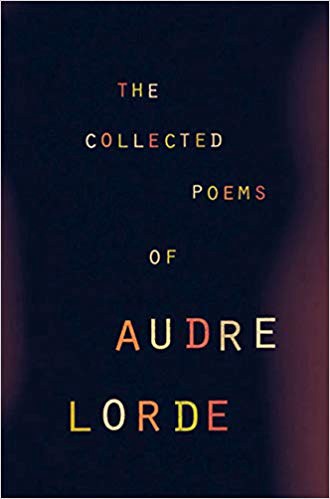
The Collected Poems of Audre Lorde
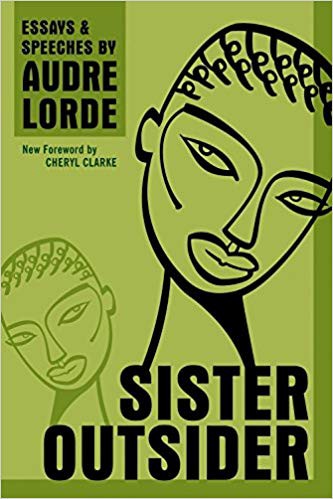
Sister Outsider: Essays and Speeches
The Cancer Journals

Sleep hygiene for superheroes

Superheroes are vigilant and alert, always ready to leap into action. If, like me, you are blessed with the gift of hypervigilance – but not the cape and outside-in underwear habit – you probably struggle to sleep. Most nights, maybe every night, your mind will churn with plans, tasks, appointments, retreads of your day, ambitions, regrets. As the world lies quiet around you the pressure builds: to be better, do more, to make tomorrow a better day.

Needless to say, this anxiety fouls the spark-plugs of your brain. In the morning, it sputters and farts, never quite catching even as your pulse races in high gear.

Those of us who are, to quote Didion’s immaculate phrase: “lonely and resistant rearrangers of things, anxious malcontents, children afflicted apparently at birth with some presentiment of loss” often fight a losing battle to get the rest we need to stay sane and keep our feet on the ever-precarious ground.

feet.jpg

Photo by Nadine Shaabana on Unsplash

Sleep hygiene, defined by the National Sleep Foundation as “practices and habits that are necessary to have good nighttime sleep quality and full daytime alertness”, is as essential to us as tight-fitting spandex and avoiding Kryptonite.

The following seven strategies are essential to my sleep hygiene; your precise recipe may vary. What matters is that you identify things that help you rest at night, and ruthlessly protect the sanctity of sleep. Trust me, it makes saving the world the next day much easier.

Exercise in the morning

Studies show that exercise improves sleep. However, I know from personal experience it can also throw a spanner in the (clock) works. Running is one of my favorite activities: it clears my head, tones my body, and tunes my emotions. But the last time I ran in the evening, I tossed and turned for hours. The endorphin kick that lifts my spirits in the morning totally sabotaged my sleep. Lesson: beware of when and how you exercise.

Eat more carbs

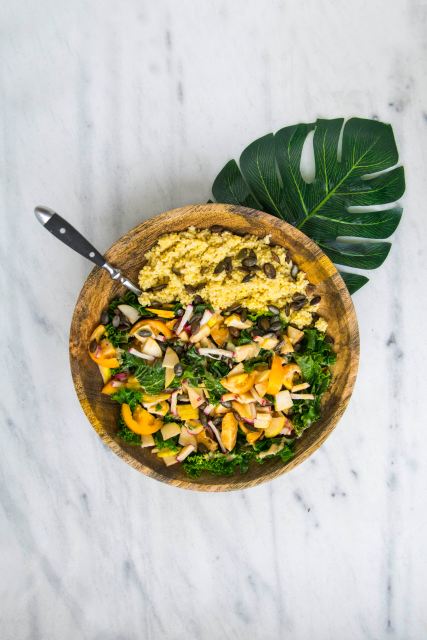
A survey of scientific literature on the relationship between diet and sleep quality found that lower carbohydrate consumption negatively effected sleep, as did higher fat intake. The same study found that kiwi fruit, cherries, fatty fish and milk all had sleep-enhancing effects. Personally, I find that an evening meal of rice, beans, vegetables and greens is satisfying and sets me up for a good night’s rest.

carbs.jpg

Photo by Jo Sonn on Unsplash

Don’t watch things in bed

There are some people who can unwind by watching TV or films in bed. I am not one of them. The speed of moving images, plus drama or pathos, plus my overactive imagination, means that if I watch something in bed it replays in my head long after the lights are out. Moving viewing to the living room creates a clearer divide between alertness and rest.

Read poetry

You know what does help me unwind? Poetry. My dear friend and mentor Paul Hendrickson once advised me to keep a book on the nightstand and read a poem or two every night. The density of language, the clarity of the images, the imagination and empathy imbued in each line, promote tranquility – an almost meditative state. If you’re not sure where to start, try Jack Gilbert or Mary Oliver.

Yoga nidra or meditation

Sometimes, the chatter in my head simply won’t let up. In these instances, replacing my own mental monologue with someone else’s words can be hugely helpful. Yoga teacher Paul Dobson recommends yoga nidra, a specific meditative practice designed to foster restful sleep.

I also love Positive Magazine Guided Meditations – the presenter has the loveliest, most soothing voice imaginable and the 10-15 minute guided meditations are the perfect length for dropping off to sleep.

sheets.jpg

Photo by Annie Spratt on Unsplash

Cotton bedding

What you sleep on matters. After living in Spain, where polyester is considered a legitimate fabric for bedding, I refuse to purchase anything other than 100% cotton – the finer the weave the better. Nice linen can be ridiculously expensive, which is its own sort of worry-making, so I gravitate towards shops like TK Maxx, Ross or Nordstrom Rack. At a push, Target does decent all-cotton sheets and covers. If there is absolutely nothing else available, Amazon Basics are an option.

Lavender essential oil

Essential oils are touted as the cure for everything from unhappiness to indigestion. In the case of lavender and insomnia, though, there is actually evidence it works. A study reported on in the American Journal of Critical Care found inhaling pure lavender essential oil decreased blood pressure and improved sleep quality in hospital patients. It noted: “Sleep deprivation in hospitalized patients is common and can have serious detrimental effects on recovery from illness. Lavender aromatherapy has improved sleep in a variety of clinical settings.”

In a randomized control trial of healthy subjects, including lavender essential oil as part of a sleep hygiene routine got better results than the sleep hygiene practices alone, according to the Journal of Alternative and Complementary Medicine.

Dabbing lavender essential oil on my wrists just before I switch out the light is a welcome signal that it is time to relax.

Orgasms

Getting off is an almost guaranteed way to drift off. Remember, our bodies need sex like they need food and sleep. Neglecting our sexual self is easy when we are worried or stressed (not to mention that anxiety is a stone mood killer) so then, more than ever, is the time to love yourself.

Sex is wonderful, but it it isn’t always available. Or it can come with expectations, hang-ups and emotional entanglement (happily married or not). Masturbation gives you total control which is, in itself, relaxing and empowering. I keep a bottle of lube in the nightstand by the lavender oil and a folder of photos on my phone for inspiration.

orgasm.jpg

Photo by Taras Chernus on Unsplash

Superheroes need shut-eye. Though it may be fashionable to brag about how little sleep you get, stinting on rest is a shortcut to long-term physical and mental fatigue – and worse.

Prioritizing routines and habits that promote sleep increases our personal well-being, and gives us the mental, physical and emotional energy to be better friends, lovers, creators, citizens and human beings

This is what the Odyssey means

As we bid farewell to 2017 I’d like to share a favourite poem: ‘Trouble’ by Jack Gilbert,  and some snapshots.

Trouble | Jack Gilbert

That is what the Odyssey means.
Love can leave you nowhere in New Mexico
raising peacocks for the rest of your life.
The seriously happy heart is a problem.
Not the easy excitement, but summer
in the Mediterranean mixed with
the rain and bitter cold of February
on the Riviera, everything on fire
in the violent winds. The pregnant heart
is driven to hopes that are the wrong
size for this world. Love is always
disturbing in the heavenly kingdom.
Eden cannot manage so much ambition.
The kids ran from all over the piazza
yelling and pointing and jeering
at the young Saint Chrysostom
standing dazed in the church doorway
with the shining around his mouth
where the Madonna had kissed him.

This slideshow requires JavaScript.

Elements: Attention

Storytelling is the essence of communication. The elements of storytelling are like letters of the alphabet. When you know how to use them, you can tell your best story.

Element 15: Attention

Great stories come from creators who are passionately attentive to everything.

Case study: Jack Gilbert jack-gilbert

What it is:

Jack Gilbert was an American poet who turned life’s most banal, excruciating moments into heart-shattering art.

After twenty hours in bed with no food, I decided
I should have at least tea. Got up to light the lamp,
but the sweating and shivering started again
and I staggered backwards across the room. Slammed
against the stone wall. Came to with blood on my head
and couldn’t figure out which way the bed was.

from ‘What I’ve Got’

Why it matters:

Storytellers often aim too high. They want to convey love, terror, excitement, or despair. So they write about love, terror, etc. The thing is, when you write about love, you get a Hallmark card. The bigger the theme, the harder it is to write straight; it’s like looking at the sun.

That’s where attention comes in. Great storytellers know the little stuff reveals the big. In the excerpt above, Gilbert doesn’t tell the reader that it is scary to be sick and alone. He pays attention. In the throes of it, he is alert to every small, true detail: the slow passage of time, the dark room, the fever (only he uses clearer, closer words: sweating, shivering), the disorientation, the abject sense of failure as the body falls.

If you want magic, prop your eyelids open with toothpicks. Pay attention. Especially to boring, mundane, every day things.

In his own words:

“He explained that somebody wanted to give me the Yale prize. I didn’t know what to do, how to express it. I took him out with my two friends and we had milkshakes.

The next day I roamed about trying to find a way to feel about what had happened. I finally lay down under the Brooklyn Bridge to try to feel something. I lay there all afternoon, and then I called the people at Yale.” Read more

Practice: “Be awake to the details around you, but don’t be self-conscious. ‘Okay. I’m at a wedding. The bride has on blue. The groom is wearing a red carnation. They are serving chopped liver on doilies.’ Relax, enjoy the wedding, be present with an open heart. You will naturally take in your environment, and later, sitting at your desk, you will be able to recall just how it was dancing with the bride’s redheaded mother, seeing the bit of red lipstick smeared on her front tooth when she smiled.” Natalie Goldberg in Writing Down the Bones

Remember: “As a writing man, or secretary, I have always felt charged with the safekeeping of all unexpected items of worldly and unworldly enchantment, as though I might be held personally responsible if even a small one were to be lost.” ~E. B. White

Elements of Storytelling 11: Imagery

Storytelling is the essence of communication. The elements of storytelling are like letters of the alphabet. When you know how to use them, you can tell your best story.

Element 11: Imagery

Deft use of imagery creates indelible images and provokes powerful emotions.

Case study: Maggie Smith Poet

What it is:

Maggie Smith’s poem ‘Let’s Not Begin’ is a meditation on life, death and courage. These are dangerous topics (Rilke, no less, advised against such broad themes) but Ms Smith nails it with an unforgettable simile: “My heart’s galloping hell / and gone from the paddock…. But let’s not end / with the heart as horse, / fear-lathered, spooked deaf.” The use of a figurative phrase transforms the cliche of a racing heart into a concrete image so vivid I can see the horse’s flared nostrils and flying sweat.

Why it matters:

For millennia poetry was entertainment, education and historical record. Spoken or sung, it had to make an instant, lasting impression on its audience. So poets got very good at painting word pictures. They learned to compare unlike things in a way that seized people’s imaginations and seared images into their brains. Now, we’re drowning in a sea of information. Metaphors are life-rings; similes shine like beacons. From poetry to advertising, the most imaginative, compelling, memorable use of imagery always win.

In her own words:well

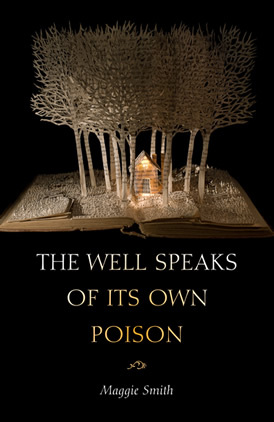
Maggie Smith is the author of three books of poetry: Weep Up (Tupelo Press, forthcoming 2018); The Well Speaks of Its Own Poison (Tupelo Press, 2015), winner of the 2012 Dorset Prize and the 2016 Independent Publisher Book Awards Gold Medal in Poetry; and Lamp of the Body (Red Hen Press, 2005), winner of the 2003 Benjamin Saltman Award.

A 2011 recipient of a Creative Writing Fellowship from the National Endowment for the Arts, Smith has also received fellowships from the Ohio Arts Council, the Sustainable Arts Foundation, and elsewhere. She works as a freelance writer and editor, and is a Consulting Editor to the Kenyon Review. Read more

Practice: Complete these sentences with vivid images. To really get the most of the exercise, don’t worry about coming up with something good, just write. The whole idea is to get your subconscious to make connections in a new, more creative way.

  1. Blue paint spilled on the road like___________________________.
  2. Canceled checks in the abandoned subway car

    seemed___________________________.

  3. A spider under the rug is like___________________________.
  4. Graffiti on the abandoned building like___________________________.”

via The Balance

Remember: “A metaphor is a kind o’ lie to help people understand what’s true.”
~Terry Pratchett

WineRev: Nyetimber Classic Cuvee

Wine reviews by an appreciative amateur.

IMG_20160604_191459[1].jpg


Sweet gold grass spikes my ankles as I walk through the makeshift car park. “A hay field full of Range Rovers,” I text my boyfriend. “Couldn’t be more Ibiza if it tried.”

At the top of the dusty camino a villa looms: eye-stretching expanses of white surrounding a massive stone tower. Jasmine bushes leak perfume over the steps to the entrance. “This is what the south of France smells like,” the woman ahead of me says, a small blonde child hanging from each hand. “I wish I had a camera that could capture smells.”

Palm fronds shiver against the enamel sky, magenta bougainvillea splashes a wall.

Through an open door lies a vaulted central room with corridors running away in three directions. Someone has stuck an expensive astronomical telescope casually in a corner. Perhaps the same person who parked the double-suspension white carbon fibre mountain bike on the stairs. Down a corridor, past a door marked “Sniper” I emerge into a courtyard. A Moroccan-style tiled pool shimmers. Gleaming white Funktion One speaker stacks guard the DJ booth. At one end of the lawn women in striped jumpsuits and scarlet lipstick mix Grey Goose cocktails and pour lemonade for the kids careening between emerald grass and turquoise infinity pool.

This is an Ibiza that rarely makes the travel section, much less TV specials. It’s an atavistic yet hypermodern melange of bohemianism and raw capitalism. Psychics, ex-soldiers, acupuncturists and entrepreneurs mingle poolside. Naked children dash past women whose faces fed Harley Street retirement funds. A seal-coloured whippet takes a graceful piss on a gold pouf.

nyetimber.png

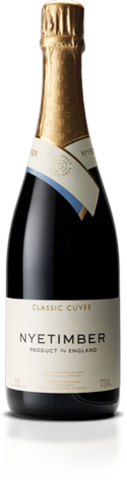
Nyetimber Classic Cuvee bubbles palely in my glass. The afternoon sun softens by degrees. Strangers strike conversations. If all goes to plan, Daniel will be the 58th person to make a commercial space flight. While he waits, he’ll sell you a seat on the shuttle, or a speedboat he designed. “Get rid of public transport,” he advises. “Only allow Formula One.” His other proposal for cutting carbon emissions? “Buy me this house. I promise to not heat it. That will reduce my footprint.” He sparks a Marlboro Light with an unapologetic grin.

I compliment Victoria on her Omega watch, a gift from her days as an employee. “Omega is owned by Swatch,” she adds. “When you work there, you always have to wear two watches. The higher-end one on your left wrist; Swatch on the right.”

From her I also learn that Calvin Klein employees are contractually required to have straight hair and nude manicures.

Lotta catches this: “I play tennis. I can never get my nails short enough.”

She was poached out of sporty early retirement (sold her restaurant in Chamonix) by Nyetimber CEO Eric Hareema. Because “you can’t ski every day” she now lives in France and is the brand’s European business development manager.

Selling English sparkling wine in the home territories of Cava, Prosecco and Champagne is an ambitious, even ridiculous venture. Yet Nyetimber makes oddly perfect sense in a tableau that calls to mind the Exile on Main Street sessions, minus the heroin. It’s posh, eccentric, rebellious and privileged, like the Stones. Too polished wouldn’t cut it but Nyetimber neatly strikes the note between luxe and louche. As Victoria remarks, there’s no competition when you’re being yourself.

Song: Rolling Stones ‘Loving Cup’

Quote: “Everything itself. / The sea is water. Stones are made of rock. / The sun goes up and goes down. A success / without any enhancement whatsoever.” ~ Jack Gilbert ‘The Other Perfection’