This is the debut post of ‘Between the Lines’ – interviews with teachers, writers and writing teachers on specific aspects of their craft.
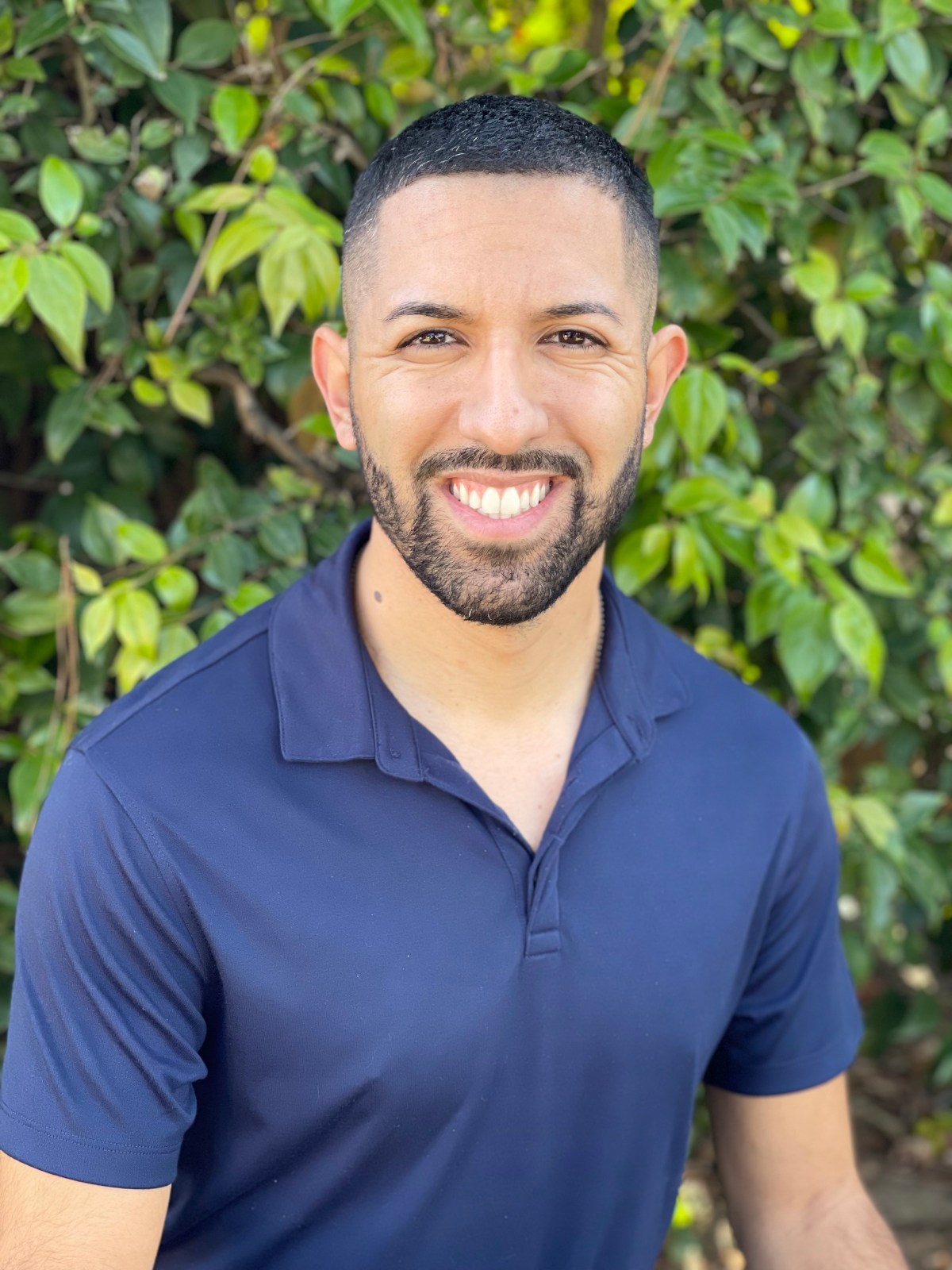
This week’s interview is with Anthony Lince, per his online bio ‘a Latinx educator and scholar who teaches first-year writing courses at UC San Diego and local community colleges.’

Writing: From ‘terrified’ to teacher
In conversation, Lince has a ready beam and belies several notions of what a scholar of writing looks like. Figuratively, anyway. The dun-colored, round-neck sweater is classic English teacher chic, but he is quick to undercut the notion that he is a born wordsmith.
Growing up, San Diego, California Lince was happiest on the basketball court, running plays as a point guard through his high school years.
‘I was terrified of writing,’ he confesses, still smiling. ‘I loved to read, but as far as writing went, I never felt confident.’
Writing at all, much less teaching writing was so far out of mind as to be out of sight. After high school, Lince joined the Army and served as a military police officer. When he enrolled in college, aged 25, he planned to study criminal justice.
So where did writing come in?
‘Professor Bustos, who taught my first-year writing course. There were texts by Mexican-American writers like Pat Mora and Sandra Cisneros, which I connected with as a Mexican-American. And the Professor let me know he enjoyed my work.’
Despite struggling with imposter syndrome at the unexpected praise, Lince trusted his teacher enough to take a job at the writing center, at Bustos’ recommendation. There, he discovered he liked helping peers. His confidence in his own writing grew; he became an English major.
Lince didn’t set aside his thirst for justice, though: ‘As I started to get an education in the humanities, I saw a lot of injustices that needed work.’
Towards more equitable education
Lince is passionate about opening doors. One of the reasons he practices ungrading is to ‘create a positive, less-anxious, equitable, and antiracist learning environment’ (more on all that in a moment).
Lince was the first in his family to complete college. He understands the challenges and subtle (or blatant) inequities that non-traditional students, or those from marginalized communities, face. ‘It was unfamiliar terrain,’ he recalls of undergraduate study. ‘Take office hours – I had no idea you could go talk to professors. Things like figuring out a financial aid are hard if you don’t know anyone who’s done it before.’
After finishing his BA in English with an emphasis on Teaching, Lince qualified as a teacher and spent a year working in a high school before completing an MA in English with an emphasis on Rhetoric and Writing Studies. He graduated in 2022 with a thesis on labor-based grading.
Though peer-reviewed articles and conference proceedings sprout like kudzu on Lince’s academic CV, his primary goal is to lead by example. ‘I try teach from the perspective of authentic writing practices and share with students from the point of authorial expertise. If someone were a dance teacher, you’d expect them to be a dancer, right? So when I go into a classroom, I let them know I write academic articles, book chapters, blog posts, that I’m working on a book. By bringing this into the classroom, they see how writing works outside the classroom.’
Though he doesn’t use the word, Lince’s teaching practice is grounded in respect. Addressing students as fellow-practitioners of the craft is mark of respect. Seeking to ‘be equitable in my assessment and grading practices so students know they are having a fair education,’ is another mark of respect.
‘I want students to see that they are important. That they matter,’ he says. ‘I want them to be confident at writing. And to be able to spot potential injustices or biases that play out in writing.’
On Ungrading
- What is ‘ungrading’?
Moving away from traditional numbers and letters and moving towards authentic ways of assessment. Take my own experiences as reference points; when I write for publication, or even for fun, I don’t receive numbers or letter grades, assessment happens through feedback.
- Your Master’s thesis is on ‘labor-based grading’ – what is that?
There are a lot of sections under the umbrella of ungrading, one of which is labor-based grading. This method only uses a student’s labor to calculate their final course grade.
At the start of the course, students sign up for the grade they want. I tell them, you want a B, you need to do these things. If you want an A, you have to do all the B labor, plus more, to get the A.
All the activities [they complete] are based on the writing process: peer review, conferencing, visiting the writing center, drafting, revision. Students can complete more elements, or go more in depth, to get a higher grade.
- How did you become interested in ungrading?
When I taught high school, students were primarily focused the grade. I’d give feedback and they would just ask for a grade. During my Master’s, when I was teaching first-year students, I didn’t want them to be so focused on grades so started looking for an alternative. I was the first at San Diego State to implement ungrading, but it’s started to spread. It was great to see students come to conferences and listen to feedback, not just ask for a grade.
- Which student demographics does this technique best suit?
If the conditions are right, it could work for high school students. College [university], for sure.

- How do students respond to ungrading?
Sometimes there is confusion in terms of not seeing a grade, they’ll ask ‘how do I know how I’m really doing?’
But most students don’t like grades, so we discuss it. They start to see how this can work for them. And I check in throughout the term to see how they’re doing.
- How does ungrading promote an antiracist environment?
Biases can enter into grading practices and, even if unconscious, negatively impact students. A study was done of two students in 2nd grade, one called Johnny and the other Malik. Their papers were given to various teachers and Malik’s paper was consistently marked lower. The twist was the papers were identical; the only difference was the name.
If this happens in second grade, third, fifth, high school and into college it can negatively impact that student. With labor-based grading, that sort of judgement goes away because if the student does the work, they get the credit. The classroom becomes a space where students don’t have to worry about biases or subjectivities.
- What other benefits do you see in the classroom?
The hierarchy of A student/C student breaks down, it becomes a place of collaboration. When students ask for feedback, they’ll ask about specific parts of the writing, which is a very different conversation from talking about a grade.
- How do students get a grade for their GPA?
They get a letter grade at the end of the semester, per college rules. If someone signs up for a B, I’m checking throughout the term to see if they complete the agreed work. If they do, they get the grade they signed up for.
Lince recommends
- The piece of writing that changed your life before age 18?
The Fellowship of the Ring. I read it when I was nine and was so taken by the way the world was created, the multitude of characters, the important quest. It ignited my love of reading.
- The piece of writing that changed your life as an adult?
Anne Lamott on first drafts [in Bird by Bird: Some Notes on Writing and Life]. It let me know that all writers struggle, and that struggle is perfectly normal. I assign it to my students to show that they aren’t alone.
- A classic you love to teach?
George Orwell’s 1984. I teach a unit on surveillance and I like showing students this idea of a surveillance state.
- A contemporary work you love to teach?
I bring poetry into my classes, just to share. Shel Silverstein has some fantastic poems that are applicable to the writing classroom. Also, Percival Everett [a novelist The New Yorker describes as having ‘one of the best poker faces in contemporary American literature’]. He just won the PEN/Jean Stein Award for Doctor No, a satire on the James Bond trope.
- A book about writing every writing student should read?
Writing With Style by John R Trimble. It isn’t really well-known but he writes in a conversational tone students can relate to it.
- A book + film adaptation combo you love?
Peter Jackson’s Lord of the Rings trilogy was phenomenal. It was true to the essence of the books.
- A living writer you’d love to hang out with?
Percival Everett. I’d love to pick his brain, get a sense of his process and writing style. It also seems, from interviews, we have somewhat similar personalities.
- A writing tool?
Scrivener. It takes everything away from the screen so you’re only focused on the text. With so many distractions, its cool to have everything fade in the background.
Looking forward
Lince is at work on his first book, a writing guide tentative titled Questions to Ask for Becoming a Better Writer. Look for it in autumn 2024.
Connect
- Website: anthonylince.com
- Twitter: @LinceAnthony




 Cila Warncke Writer