On World Building with Rosanna Leo

Welcome to ‘Between the Lines’ – interviews with teachers, writers and writing teachers on aspects of their craft. This week, a conversation with lauded paranormal and contemporary romance writer Rosanna Leo that explores the intricacies of world building.

All images courtesy Rosanna Leo

In magical realms

It is Sunday afternoon. Outside Rosanna Leo’s home (not far from Toronto, Ontario) the leaves have turned. “Just a couple of weeks till the beginning of winter,” she remarks. “It’s long here: cold, snowy.”

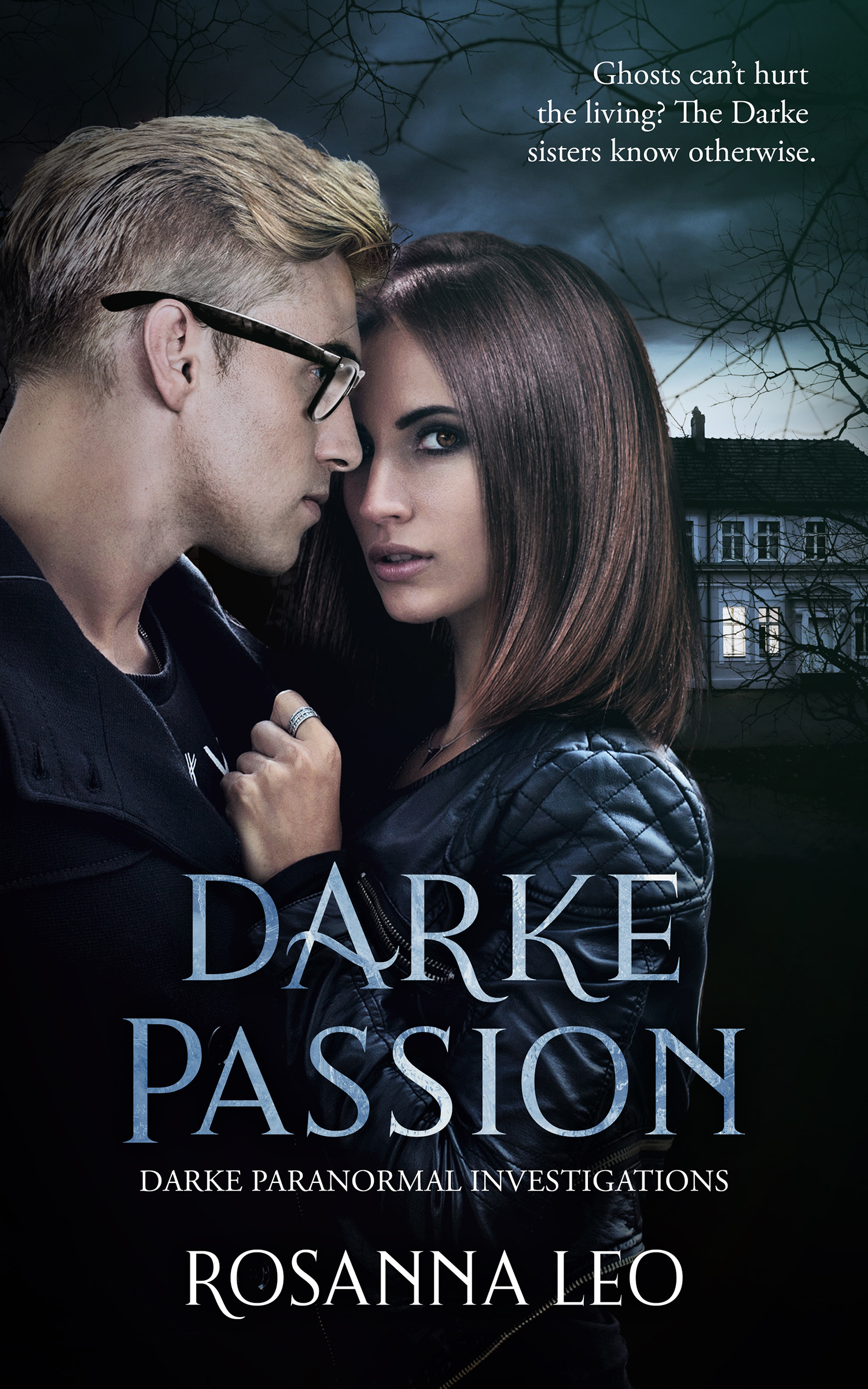
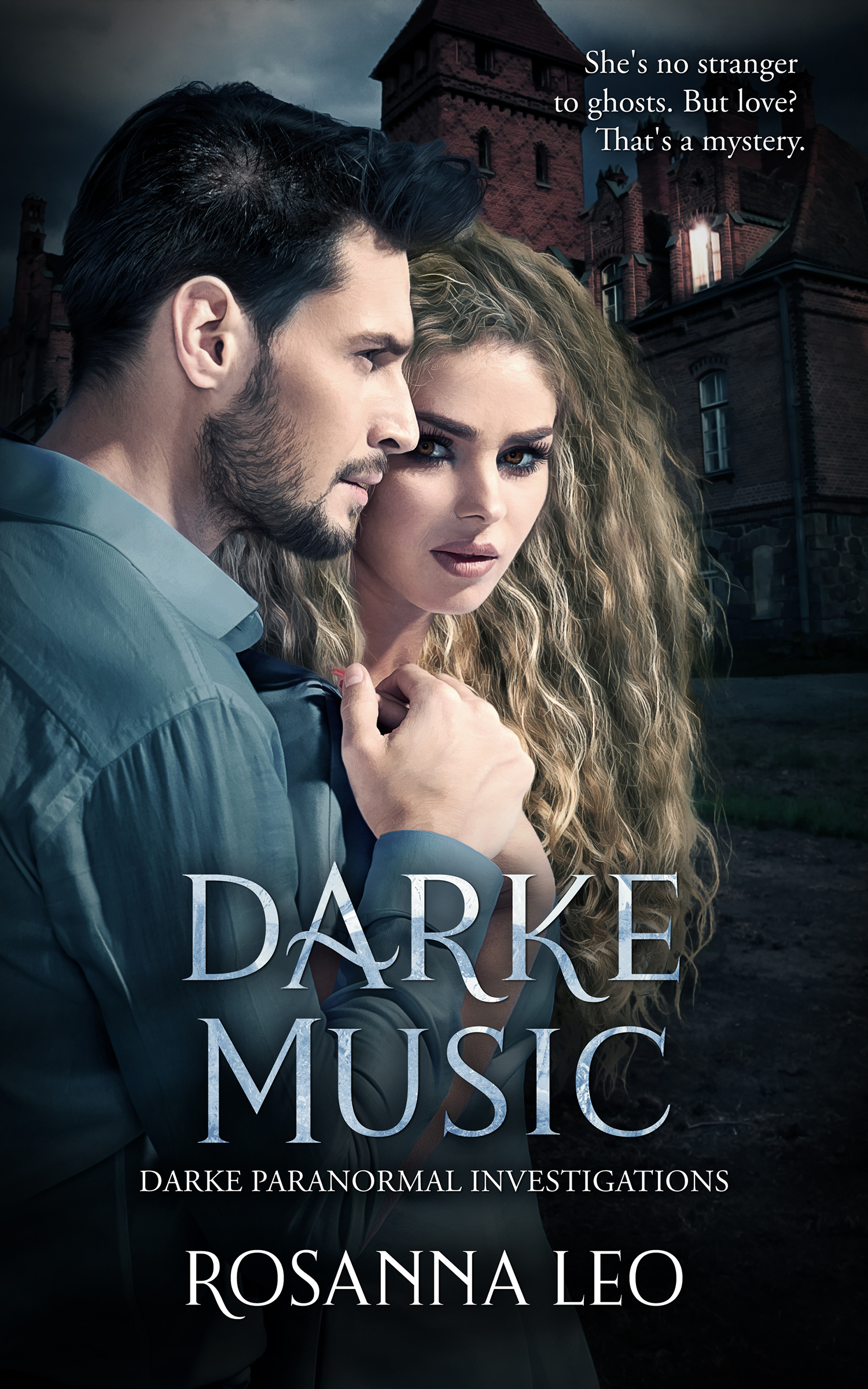
Perfect weather, that is, for staying indoors with a good book: perhaps a volume or two of Leo’s Darke Paranormal Investigations or Handyman trilogies; or her Vegas Sins series.

Leo writes to transport her readers into magical realms. As a child, she whiled away hours daydreaming in her bedroom. “I thought I could get to Narnia through the back of the wardrobe,” she chuckles.

Although no longer so literal-minded about the power of fiction, Leo still believes a story can and should be transcendent.

“As a kid, I reread the Chronicles of Narnia every year, which entrenched my love of mythological figures and fantastical creatures. Classic ghost stories were my bedtime stories. Once I started exploring the world of romance — Robyn Carr, Erin McCarthy, Kathy Love — something clicked: romance, that’s where I wanted to be.”

The path to writing

Bookworm though she was, Leo had only a brief brush with writing in her school days. On a teacher’s prompting, she entered a Royal Legion contest with a story about her veteran grandfather’s post-traumatic stress disorder: “The family would say, ‘he’s having his nightmares’.”

She won.

“I was the only person in my family, up till now, who has ever shown any interest in writing,” she muses. Which may account for the Royal Legion story being the “first — and for quite a few years the last” time she wrote with intent.

Leo earned a BA in English literature, but another art form won her over. After her undergraduate degree, she completed a three-year diploma in a classical singing and spent several years performing with a chamber ensemble, in addition to her day job.

It was while on maternity leave with her first child that Leo began to write again. “My son was a good napper, so I started scribbling, then, after plugging away for a while, I had a novel in front of me. It was terrible,” she laughs. “This sprawling, epic story with ghosts, demons, the kitchen sink.

“I sent the manuscript to Harlequin then waited many, many months for the form rejection letter to come in the mail. It was good to get. It was important to know I could move on from there.”

After a few years of working and re-working, Leo submitted another manuscript. This one was accepted. “It was the biggest high I’ve ever experienced.

Since then, she has combined her full time job as an acquisitions assistant at a local library with writing award-winning romance novels. “It’s the stories that keep me going. I love coming up with characters. I love creating worlds.”
On world building

What is world building?

You are creating the backdrop to your story. You might think of the Game of Thrones series, with different countries and mythologies. But world building can be simpler than that; it doesn’t have to have a fantastical element.

I often write about places I know and historical moments. I think of world building even if I’m writing something with no paranormal or fantasy aspects. It’s what brings that book to life.

What is essential for creating a coherent world?

When you’re creating a new world, even the tiny details have to be vivid. You don’t have to go on for pages talking about what the curtains look like, but you need details to put the reader in that world. Also, if there is anything about the people who inhabit the world, especially in the case of fantasy, you have to break that down. What do animals look like? How do people speak?

What tools do you use to plan?

Research is vital. The basis of the Darke stories’ worlds is: what moments had repercussions that lasted into the future? They are based on historical incidents, so I’m researching those periods, what happened, what impact things had on the current time-frame and modern characters.

How do you research?

It’s handy I work in the library and have a lot of resources at my fingertips. Inter-library loan is my best friend. You can find materials from other systems, things that are very specific. There is [also] a lot of great stuff via Google. For me, researching Canadian historical moments, there are great archives online.

To maintain consistency across your novels?

At the beginning of a series, I determine who the characters are going to be, write thorough character sketches and carry them from book to book. If I mention something about a character, I make sure I can access it throughout the story. Readers are savvy. They will remember [errors] and call you out! You need to get it right.

How does world-building interact with characterization?

It’s huge. There will be things a character can or can’t do, depending on the world they live in. Even in realistic worlds, you have to think about what will make sense.

What are common mistakes authors make in world building?

As we talked about, not keeping track of certain types of information – changing things down the road could be jarring for the reader.

Are writers over- or under-ambitious?

There is a fine line between providing the right amount of detail and too much. If I open up a book and the author goes on for 12 pages about the curtains, I’ll get out.

Who are a couple of writers who world build well?

Scarlett Peckham, who writes historical romance. Catherine Stein: great steam-punk/sci-fi/paranormal. Paulette Kennedy and Hester Fox – both Gothic writers – do world building really well: great attention to detail, very immersive.
Leo recommends

The piece of writing that changed your life before age 18?

Jane Eyre by Charlotte Bronte. When I was 12 I thought it was very romantic. I don’t look at it through the same lens any longer, but it started my love of romance.

The piece of writing that changed your life as an adult?

The Tenant by Katrina Jackson. It’s a wonderful ghost story with all the creepy elements, a gothic feel, but she also talks about racism in an effective and moving way. It’s a short novel, but she packs so much in. Everyone should read her work.

A book about writing every aspiring writer should read?

On Writing by Stephen King was very helpful. Leigh Michaels’ Writing the Romance Novel – I keep a copy in my basement and have reread it many, many times.

A living writer you’d love to hang out with?

Anise Eden. We’ve been friends online for years, but we’ve never been able to meet up. Her books are fantastic. We became mutual fans before we got to know each other. Now, I’m honoured to say she’s my friend.

Your perfect writing space?

I like silence. I won’t go to a coffeeshop, don’t like a playlist in the background. Just a room in my house where I can get into mischief in my head.

What non-writing pursuits feed your writing?

My husband and I like to explore the small towns around us. I love walking around an old cemetery trying to figure out, who were these people? That starts a lot of stories in my mind. For writers, it is easy to be solitary, to retreat, but it’s important for me to get out there, experience life, ask questions.

What’s next?

My series Darke Paranormal Investigations – which is set here in Ontario. It stars three sisters who are all paranormal investigators; the first two [novels] are out and have been really well received. The third book is out in March 2024.

Connect

On Generous Writing

Photo by Ben White on Unsplash

Life never ceases to be difficult, to paraphrase Rilke. Amidst its slings and arrows, there is often little to comfort and guide.

Without generous writers, there would be almost nothing.

Among recent difficulties faced by myself, or someone I love: bereavement, major surgery, significant medical diagnoses, divorce, conflict with parents, conflict with children, unemployment.

These are not remarkable events, statistically. Yet, to the individual, they are as life-altering as Krakatoa. If anything, the cognitive dissonance of knowing the event to be universal versus the all-consuming personal experience of trauma makes it harder to cope.

We need wise friends to walk these dark halls. But unless we’re lucky, and our friends unlucky, we are not likely to find the necessary wisdom in our immediate social circle. Shared experience can as easily drive a wedge as forge a bond.

Into this gap step writers whose words offer perspective without judgment, comfort without reciprocity and infinite patience. They sit at our bedside in the small hours, walk with us, accompany us raging, glum, drunk, frustrated or frightened.

Their generosity lies in a willingness to delve into the most difficult parts of their lives and, through grit and creativity, distill their thumb-screwed wisdom into something readers can use.

Photo by Wai Siew on Unsplash

Imagine being lost at sea on a leaky boat. Most of us would consider feel heroic merely staying alive. But a writer would be thinking: how can I help the next person who finds themselves out here?

They would be jotting notes about tides and winds, describing how to make a fishing line out of dental floss, giving tips on bailing and load-balancing.

Although this sense of purpose may be sustaining, it does not mean the work is easy. The generosity of writers lies in their willingness to labor during their most difficult experiences to give hope to those caught in similar currents.

The following are seven books that exemplify this generosity: all by women, whose emotional work is routinely undervalued, on the page and elsewhere.

Seven Generous Books

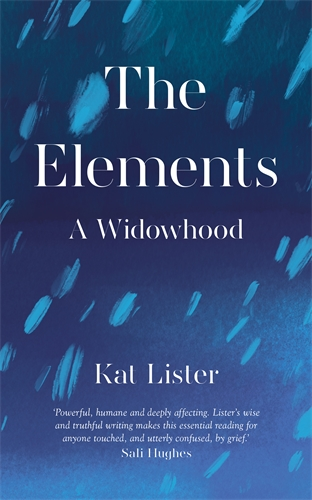
The Elements by Kat Lister

Most couples in their 30s are settling into their first homes, thinking about kids; Kat Lister and her husband, Pat Long, did those against the ticking clock of his brain tumor, which was discovered before their wedding. They lived the few years they had together with uplifting, illuminating grace. When he died, Lister was left to navigate the anachronisms of young widowhood, a trial by water she recounts here with bold, Didion-esque honesty.

Buy

Transcendent Kingdom by Yaa Gyasi

Generosity is not constrained by genre. While we may assume that memoir has the most to teach, the ruthless craft required of good fiction offers equal — or even greater — opportunities. This novel, which begs to be described by its titular adjective, unpicks grief, addiction, survivor’s guilt, and the complicated strands of rejection, assimilation, belonging and othering woven into immigration, racism and religion.

Buy

A Three Dog Life by Abigail Thomas

Perhaps the only thing more appalling than the death of a partner is losing a partner in mind, not body. Thomas’s memoir invites the reader into the Kafka-couldn’t-dream it surreality of life following her husband’s traumatic brain injury (TBI). Along with grief, come care decisions, guilt, frustration, and no one to share the challenges.

Buy

Why be Happy When You Could be Normal? by Jeanette Winterson

Read this with its fictional counterpart, Winterson’s debut novel, Oranges Are Not the Only Fruit, to fully appreciate her generosity and courage. By the time she wrote this memoir, Winterson was a revered literary figure and bona fide success story. To admit, from that height, to the haunting power of childhood trauma could have seemed an admission of weakness. Her vulnerability is potent and empowering.

Buy

Nomadland: Surviving American in the 21st Century by Jessica Bruder

Please read the book; the film (brilliance of Frances McDormand notwithstanding) does it no justice. Nomadland exhibits another form of authorial generosity: the willingness to put one’s life aside to bear witness to the lives of others that would otherwise go unrecorded. The crushing, mechanistic cruelty of late capitalism comes to vivid life through Bruder’s painstakingly reported account of life on the dusty, bald-tire fringes of the so-called American dream.

Buy

A Manual for Cleaning Women by Lucia Berlin

Every time I pick up A Manual, I wind up reading it all the way through. Berlin’s autofiction is enthralling, terrifying, devastating on multiple levels. The writing is almost too sharp and bright to look at (forget window pane, this is prose as emergency flare) which is necessary magic given the gut-punch tales it tells. Stuff that in lesser hands, or played straight, would be unendurable, is transmuted into stories that soar and hover on the thermals of your mind.

Buy

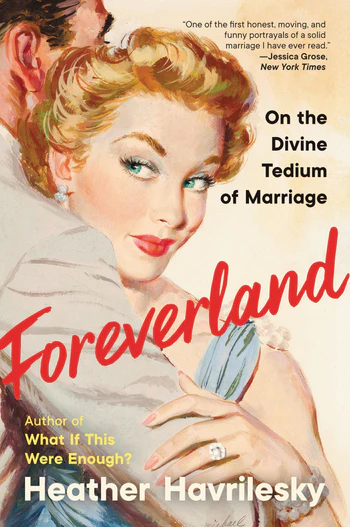
Foreverland: On the Divine Tedium of Marriage by Heather Havrilesky

It is one of life’s slipperiest tricks that the things we’re taught to crave and cherish are (surprise!) headaches too. Marriage, at least happy marriage, is perhaps the quintessential sacred cow; the immutable good thing one should pursue without question. Thank goddess, then, for Havrilesky who seems to operate from the position that sacred cows are best served medium-rare. Her brave assertion of the inconvenient truth that true love and explosive exasperation are not mutually exclusive is a pinpoint of light in what might otherwise be a suffocating dimness.

Buy

What are your life-boat books? Share in the comments!

On The Unexpected

‘What’s happening?’

Two weeks ago, I signed the papers to buy my first house.

One week ago, Le Sallay called, said they couldn’t afford two literature teachers, and that I was not it.

This week, I’m moving my cats to their new home.

Let’s just say none of this was foreseen.

But it has reminded me to hold fast to what Michael Downs remarked: “The unexpected doesn’t have to be dread inducing. The unexpected can also be the reason you get up in the morning.

***

Though I’m prickly about getting the sack barely six weeks out from the start of the school year, the words of Epictetus come to mind: “Everything has two handles, one by which you can carry it, the other by which you cannot.”

The cannot handle holds the unpleasantness, loss, unsaid goodbyes to my lovely students. All of which are real things.

What I can hold this reality by is trust that there are other opportunities, gratitude for those heartbreakingly great kids who shared their stories with me, affection for the colleagues who enriched my life in many ways.

Goodbye to all that

What’s next?

Who knows

Not I.

I’ve got cats to move, pictures to hang, boxes to unpack.

Everything is open. Anything is possible.

What I can say is the blogging will continue. The learning will continue. Once the moment is right, the teaching will continue.

Coming up soon on the blog, an interview I am thrilled to share, with the poet, educator, gardener, creator, wise woman and dear friend Melissa Madenski. She is a hero; one of the most generous, warm, fully alive human beings I have the privilege to know.

It is a huge honor to share her words and stories.

Stay tuned!

How do you face the unexpected? All advice welcome! Hit me in the comments please — I deleted my Twitter account because, X.

Flashback: My 2016 Reading Highlights

Joan Didion said it was a good idea to stay acquainted with the people you used to be, even if you don’t much like them anymore.

It’s good advice.

In 2016, life was changing so fast my head spun. I met my now-husband in December 2015 and the next year was spent jumping on planes to get to him, culminating in a move from Ibiza to Memphis, Tennessee. Small wonder it was a year of comfort-reading favorite books in snatched moments.

Here’s what I read, and why I read it.

***

If, like me, you have a voice in your head that tells you off for paying attention to your own life, for saving boarding passes and scribbled-upon napkins, for stopping to write love letters in the sand, ignore it.

img_20161113_151120

Happiness and creativity depend on valuing our lives. They depend on listening, watching, recording, remembering. It is easy to envy other people’s lives — so exciting! Such superior children/holidays/houses/jobs/wardrobes/sex lives! Such a torrent of fabulous Instagram photos and witty Facebook status updates. We get so caught up peering through the virtual window of our neighbours’ lives we forget to look at our own. We don’t see the pathos, adventure, and pleasure of our own existence because we’re not looking.

Two years ago I started a keeping a list of all the books I read. It seemed like a self-indulgent tic indicative of an unhealthy level of ego. Or, worse, a pointless exercise (who cares?) My delight in list-making narrowly trumped these niggles. Now a blue virtual post-it on my home screen contains a list of all the books I read in 2016.

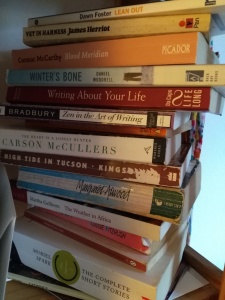
The list reminds me not only what I’ve read, but how I read. It is a snapshot of the ebb and flow of time and energy. January 2016 was a book-heavy month, gobbling up a glut of Christmas goodies and biding a lot of time until my second date with the soon-to-be boyfriend. February was a respectable showing. March, the month I spent between London, Dominican Republic and Brussels, I read almost nothing. The next two months were spent in a miserable, unsuccessful attempt to assimilate into a receptionist job at an overrated luxury agrotourismo in Ibiza — it was bad enough I only read a book and a half. Finishing Anna Karenina took me through June. The rest of the year I read in fits and starts. What jumped out, reviewing the list, was how many books I reread. And, with the exception of High Tide in Tucson and Jane Eyre, not just for the second time.

Looking over my top ten rereads reminds me what I value and crave. The books on this list all offer, directly or through illustration, wisdom and encouragement to those trying hard to live by their own lights. From the esoteric musings of the Glass siblings to the tough-love advice of Cheryl Strayed, each book is, in its own way, a tonic. They were rocks in the fast-moving stream of a year where everything changed, stepping stones to a new life.

Franny & Zooey, JD Salinger

franny

The summer I was 15 I lived with my older sister and worked at Wendy’s. Every day on my break I hunkered down in store cupboard and read Franny & Zooey. To this day I’m not sure where I got the book, or why it grabbed me. What I do know is I’ve read it somewhere between 30-50 times, can quote entire sections of it verbatim, and reread it at least twice a year. In part it’s the reflection of myself I see in Zooey who says “I’m sick to death of waking up furious every morning and going to bed furious at night”, an echo of my relationship with my siblings in the narrator’s aside that the Glass siblings share a “semantic geometry where the shortest distance between two points is a fullish circle”, or descriptions like, “the Jewish-Irish Mohican scout who died in your arms at the roulette table in Monte Carlo.” In part, because the wildly verbose, witty, strangely timeless sentences still reveal new flashes of character. The narrator says it is a “compound or multiple love story, pure and complicated” which is a fine description of the writing, too.

Bird by Bird, Anne Lamott

Ostensibly a book about writing, Bird by Bird is a wise, funny, heart-rending guide to living life when you don’t fit in a box. The combination of Lamott’s acerbic yet self-deprecating turns of phrase coupled with her palpable compassion is almost unbearable. I cry every time I read it, even though I’ve read it so many times I well up in anticipation. It makes me want to walk around hugging everyone and at the same time makes me want to be a blazing good writer. Every chapter is a gem, but “Jealousy” and “KFKD” are maybe the best things you’ll ever read on, respectively, the eponymous emotion and self-doubt. And her advice about avoiding libel charges is hilarious, priceless, and involves the memorable comparison of a penis to a baby bird in its nest.

letters

Letters to a Young Poet, Rilke

This I plucked off a library shelf in Tigard, OR on the strength of the fact that Lady Gaga has a Rilke quote tattooed on her upper arm — it reads in part, “confess to yourself that you would die if you were forbidden to write”. The line, it transpires, is from Letters To A Young Poet which is so rich in exquisitely worded wisdom it flays me. Rilke’s advice on sex, solitude, and seeking ones calling is so incisive it takes my breath away. And, as a poet, he makes every word count, crafting artful sentences that blow my mind on both a philosophical and aesthetic basis. I love it so much, I read it aloud and sent the recording as a gift to a friend.

A Room of One’s Own, Virginia Woolf

Woolf’s trenchant analysis of what women writers need is as relevant today as when she delivered the lectures from which it was drawn in 1928. We may have “come a long way, baby” but women are still underpaid, overworked, and too often cut off from the privileges that enrich men’s prospects. Sexism may not be as crude as the beadle who ordered her out of the Oxford library, but it thrives in a thousand insidious ways that women internalise or ignore at their own risk. I also love Woolf’s dazzling prose, which gave us, “one can not think well, love well, sleep well, if one has not dined well.”

Tiny Beautiful Things, Cheryl Strayed

This collection of Strayed’s advice columns written for The Rumpus’s Dear Sugar column breaks my heart wide open. I’m sobbing by the time I get through the second or third letter, whichever it is that is from the women who suffered a late-term miscarriage. It is hard to put my finger exactly on what it is about Tiny Beautiful Things that makes me gasp. Mostly, it’s Strayed’s unflinching willingness to examine the hardest things in her own life. She doesn’t rush through awfulness, or glide past suffering, she stays, unafraid to study it and claim who and what she is in the wake of it. This solipsism is unexpectedly comforting. By inhabiting and sharing her experience she makes it okay to inhabit and unpick my experience. Line by line, she demonstrates the potential for growth and change in every life. If one is willing to embrace an almost Stoic determination to live well by doing what’s right.

Endurance, Melissa Madenski

endurance

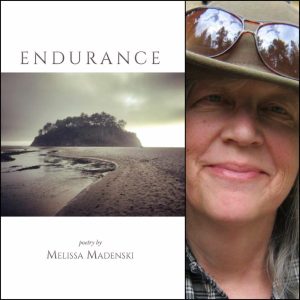
In 2015 I committed to memorising a poem per month, and did. Not all of them have remained word-perfect in my head, but it was an incredible experience with language. When you learn something by heart, you discover things. Cadence, repetition, punctuation, imagery all become vivid in an unpredictable way. I didn’t set out to memorise poetry in 2016 but I read a lot of it — including fantastic collections by Jack Gilbert and CP Cavafy. My favourite reread, though, was this slender chapbook by an Oregon writer. She lost her husband to an unexpected heart attack when she was in her 30s with two young children and the grief of that loss reverberates through Endurance. These are poems about learning to live with the worst case, not with resignation but with courage and, ultimately, joy. It’s another one I can’t make it through without tears, but they’re cathartic.

Jane Eyre, Charlotte Bronte

Of all the my rereads, this was the most fun because it was so different from my memory of it. I must have been 12 or 13 when I read Jane Eyre and I was bored witless. Years later, I read Wuthering Heights and hated it, confirming my prejudice against their weird, masochistic and wildly overrated Brontë sisters. Then on a whim I read Anne Brontë’s Tenant of Wildfell Hall and liked it. And somewhere I heard that Jane Eyre was feminist. So I gave it another shot and fell in love. Bold feminism plus a terrific yarn? Brilliant. Free Kindle edition

Long Quiet Highway, Natalie Goldberg

I reread at least one or two of Goldberg’s books each year. Most often Writing Down the Bones or Wild Mind, but this time I went for The Long Quiet Highway which is mostly about her study of Zen Buddhism over the years. Which of course means it is about writing, being, meaning, truth, acceptance, and everything else that matters. Writing is Zen; Zen is writing. Whatever we do is meditation if we allow it to be. The subtitle is Waking Up in America which is  nearly what I named this blog because that’s what I’m trying to do: wake up in a country I left 16 years ago; figure out what it means to be me in America in 2017, and how to do something good here.

Treasure Island, Robert Louis Stevenson

Treasure Island has been a staple of my literary diet since I was 15 or so. I was a precocious reader, but not above devouring whatever I could get my hands on, and this yarn of seafaring and daring-do always hit the spot. Years later, when I moved to Ibiza, I started to think of it as treasure island — a supposed paradise guarded by dead men’s bones and half-crazed exiles. Overly dramatic personal parallels aside, it is a fantastically fun book and an excellent template for writers looking to craft a fast-paced, unforgettable story. Free Kindle edition

High Tide in Tucson, Barbara Kingsolver

Kingsolver is the most recent addition to my pantheon of southern American writers (Carson McCullers, Hunter S Thompson, Eudora Welty, Truman Capote, etc.) and possibly the one I’d Most Like To Meet. Writing implacably reveals character and every word I’ve read of Kingsolver makes me think she is a Good Person, smart as hell, and cracking company on a night out. Her fiction boggles me and this book of essays is one of the finest, sharpest, most humane collections I’ve had the pleasure of reading. The title essay alone is worth the price of admission; Buster the stranded hermit crab may change your life.

What books to you read over and over? Share in the comments or Tweet @CilaWarncke

On Memoir with Cheryl Strayed

This interview originally appeared on the excellent but now defunct Ideas Tap website. The organization, which was dedicated to supporting young people pursuing creative careers, closed in 2015 due to lack of funding. Plus ca change.

Strayed was a warm, thoughtful and inquisitive subject. A rare working class hero and, rarer still, someone whose giddy ascent to Oprah-adjacent fame hadn’t uncalibrated her ethical compass.

It was a privilege to speak to her, and a pleasure to republish her timeless wisdom.

***

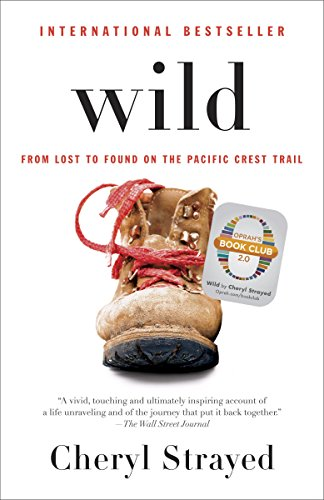
After writing her first novel, Cheryl Strayed turned to memoir and wrote her New York Times bestselling book Wild, about her 1,100-mile hike along the Pacific Crest Trail in the wake of her mother’s death. Here, Cheryl talks about mining memory and sets us to work with a writing exercise…

How does the emotional experience differ between writing fiction and memoir?

It doesn’t. To write fiction well you have to inhabit the consciousness of the characters you’ve created. With non-fiction there’s an extra layer of intensity because the character you’re building is yourself.

When writing memoir, how do you build yourself as a character?

The only way you can build yourself is to dismantle yourself. To take apart who you are, what your assumptions have been, what you hope people think of you. You can’t write: “I’m pretty and cool and awesome and interesting” because everyone would hate you. You have to say: “I’m human. Here are positive things about me. Here are negative things about me. And here are things that don’t make sense, don’t add up, and I’m going to present them to you”. Writing is like the deep work you do in the course of therapy where you take yourself apart.

What memory aids do you use?

I naturally have a very good memory – I think a lot of writers do. I kept a journal through my 20s and 30s. That helped me a lot in writing Wild. I do research where I can, going back and looking at pictures for example. When most people imagine what a memoirist does, they think: “I don’t remember anything from high school, from 20 years ago”. But they do remember – they just think they don’t.

How can writers elicit those memories?

The process of writing is re-conjuring memories. It’s doing things so more memories come to you. Even looking at a photo can allow you to remember something accurately. The process is like running into an old friend from back in the day, somebody you knew 20 years ago. When you first start talking you only know a few things about each other. But as you talk and go deeper into your lives you remember things you thought you had forgotten. Just because you haven’t thought of something for years doesn’t mean you don’t remember it, it just means it takes a little work to access it. When I was writing Wild I’d think, “I don’t remember, I just walked” but once I started writing my mind would open up to specific memories.

Do you draw heavily on your own life for your fiction?

You’ll see a lot of details from my life. My next novel is set in Portland [where I live]. None of the characters in the book are me but there are all these little tendrils of the story that you can trace back to me.

How do you deal with writer’s block?

I never call it “writer’s block” but I always have trouble beginning. Writing is hard. I resist writing. I run from it. If I am left alone with a laptop I flounder for an hour or two, then I sink in and I’m in the zone. When I get stuck I go for a walk, come back and try again. I don’t force it. If something isn’t coming, I move on; that’s a good strategy for me.

How long did it take to write your first book, Torch?

Your first book is so hard because you don’t know how to write a book and there is no way for anyone to tell you. It turns out the only way to learn how to write a book is to write a book. I avoided finishing [Torch] for fear of failure, until the point where the fear of failing to finish was bigger than the fear of finishing a book that was terrible. I worked on it for about ten years in total, three years really diligently.

How did you overcome that fear of failure?

Once I let go of the idea that I was going to write a great book, I was able to write a book. I let go of any ego or fear or shame. That was an important moment in my writing life. None of us really knows what kind of book we’re writing. A lot of people think they’re writing brilliant books and they’re terrible. And the reverse is true too. It isn’t up to us to judge our books; it’s up to the people who read them.

In Focus: Writing exercise using objects

I take random objects out of my handbag like lipstick, a ten-euro note, and a pair of sunglasses, and tell my students to pick one and write a story about it.

To begin writing you begin with an image. You begin with a feeling. I encourage people to start writing and not think about it too much. Even if you have a good idea, usually once you start writing it will become something else.

I could do that same exercise with the world’s Nobel Literature Prize winners and something would come of it. Perhaps what came of it would be better than what comes to my students, but that’s how the [Nobel Prize winners] do it too – they begin with something then they make something else.

Journalism’s Role in Teaching Critical Thinking

This week I’m going to share a podcast recorded last summer (on one very HOT afternoon) for Le Sallay Academy. It features a conversation between myself and the wise, incisive author/journalist/memoirist Kat Lister.

It is shared with the kind permission of Le Sallay, which facilitated and hosted the podcast as part of its Le Sallay Talks series.

Reach Kat Lister on LinkedIn or via Blake Friedmann Literary Agency

***

Here are some highlights from the conversation:

Kat Lister on navigating the media of today

It’s very hard even for those working in the industry to navigate such a fast-changing landscape, and I don’t think there is any one person who is doing it perfectly. And the way that we learn and grow, and familiarize ourselves is by having conversations like this, which have to be very open about the downfalls of social media, but also about what the positives are, and what we can gain from it.

It’s not going anywhere. None of these platforms is going anywhere. The only thing that can change is our relationship with it and that can seem quite chaotic nowadays: it can be a hard place to navigate, it can be a hard place to verify. What is news? What is fake news?

The best way to make our way through this is to think about the original source. You see a video shared a gazillion times on Twitter, and that almost immediately verifies it in your mind, but actually, that’s not the asset to look at. I often have to double-check myself, because I will be almost hitting retweet, and then I’ll be like, hang on a second, where was the video filmed, who filmed it, where was it filmed, are the details correct? Is the date right?
Contextualizing tweets or videos on TikTok or wherever you happen to find yourself, is tremendously important. We’ve all become fact-checkers in a way, and that’s an incredible responsibility not only on the content creators but also the responsibility of the readers, on the audience. As we are saying, look at things more critically, and now, more than ever that’s become quite urgent. And it’s not something any of us are doing in a perfect way, I don’t think.

Cila Warncke on teaching

Yes, these are the traditional 5 W-s: When, Where, When, Who, and Why. And this is something that as a Literature teacher I really emphasize, continually asking students: “Okay, what’s the context of this? Whether it’s an article or a short story, make sure you understand where this is coming from. There is a direct relationship between that kind of critical reading of anything and the ability to navigate the news.”

Click here to listen to the full podcast

On Revision with Elisabeth Dahl

Welcome to ‘Between the Lines’ – interviews with teachers, writers and writing teachers on specific aspects of their craft.

In this week’s conversation, Elisabeth Dahl (no, no relation) discusses the transformative power of words, with a special focus on teaching revision.

Photo courtesy Elisabeth Dahl

‘I worry for people who don’t write’

Author, illustrator, editor, educator: Elisabeth Dahl’s writing experience spans genres and professions. The through line quickly emerges in conversation – a deftness with, and delight in, words that is as contagious as a yawn. And a knack for detail that brimfills anecdotes with life and color.

The Baltimore, Maryland native grew up near Johns Hopkins’ main campus, where she completed her undergraduate degree. She returned to the city as an adult, and lives a few miles from the hospital where she was born.

“As a child, I loved school right from the start,” she writes in her online bio. “By the time I was in ninth or tenth grade, one thing had become clear: Analyzing stories and crafting sentences lit me up in a way that history, math, and the rest did not.”

Speaking on the phone, Dahl credits this to her high school teacher Joyce Brown (with whom she still exchanges emails). “She approached us as if we were college students. When we started [James] Joyce’s Portrait of the Artist as a Young Man, we spent 20-30 minutes talking about his decision to use ‘the artist’ instead of ‘an artist’. To think this was even a question! It would have been one thing to debate writer versus artist, but to look at the article – the versus an – was incredible. As it turns out, [Ms Brown] led us to understand it made quite a big difference.”

Understanding the big differences a small lexical choice can makes is a sine qua non for a writer-educator. “I’m a better writer because I’ve taught writing,” says Dahl, who worked for Johns Hopkins’ Center for Talented Youth for the better part of a decade. “I was still making the same mistakes emerging writers were making: the stakes weren’t high enough, or I was padding the stories. Seeing these problems [as a teacher] was sort of teaching myself at the same time. It helped me incorporate the lessons into my own writing.”

Textures of language

For Dahl, a reciprocal relationship between teaching and literature was established early; her mother and grandmother (with whom they lived until Dahl was eight) were elementary school teachers who made reading a central part of her young life. They also gifted her with a fascination for the stories embedded in artifacts and moments. Her favorite space, as a child, was her grandmother’s walk-in closet. “It smelled like mothballs but had its own, not just aroma – aura. It had a history. It was a special occasion if I got to try on old dresses, like the one my mother wore to her junior prom. There was a scarlet red [dress], like what a Spanish dancer would wear, with tiers, strapless. It didn’t look like any of the other clothes in there. Jane Eyre had her red room; I had this red dress.”

The aural and visual qualities of words beguiled her: “I liked that if you said a word like ‘fork’ or ‘salad’ 25 times to yourself, it became nonsense, weird, you could almost hallucinate about it”. Another female relative, an aunt, was a graphic designer. Tracing pages in her books on hand-lettering introduced Dahl to the “tactile aspect” of language.

These formative experiences of words and stories as real and imaginative, concrete and abstract, primed Dahl to thrill to the challenge when Ms Brown assigned Herman Melville’s Bartleby, the Scrivener. “A light had turned on. I remember standing in her empty classroom, during a free period, talking about it with her, totally energized. I [still] don’t know if I know what the story means,” she says cheerfully. “But I love it. It’s like a Rorschach test.”

Inspired by Ms Brown’s example, Dahl prioritizes space for students to encounter epiphanies by “helping them get a new perspective, become a better observer, or express themselves better. As a teacher, you’re another voice in this person’s head. You have to take it seriously. You don’t know the other voices in their lives, all you can do is be respectful and help them grow.”

But why learn to write any more – aren’t there machines for that?

“Because to have a good relationship with writing is to have a good relationship with your own mind, your history, the world around you,” Dahl responds. “I worry about people who don’t write regularly. The memoir I’m working on has taught me so much about things I’ve been thinking about for 54 years. By laying out the words, revising the words, reconsidering the words, I’ve developed new attitudes towards certain moments, and people. It’s wonderful to be able to do that.”

Photo by Annie Spratt on Unsplash

On Revision

How do you create an open, accepting environment where students think beyond the binary of right/wrong?

One assignment I designed is based on Amelia Gray’s short story ‘Monument’. In it, the people of a town came to clean up a graveyard, then something changes, and they start destroying the graveyard, almost like Shirley Jackson’s ‘The Lottery’. I had students pick a character and rewrite the [third-person] story in the first person. We talked about what that changed, what opportunities it created, what it shut down.

This helped them realize that a piece of writing is many, many choices. It loosened students up. It was an act of playing around, like they might approach improv.

How do you push students beyond ‘good enough’?

Try to present revision as an opportunity. What if you wrote in a different point of view? What if you sprinkled some of these details throughout the story?

For students who are good but could be better, I call upon their sense of a challenge, their curiosity, intrigue. If a student is a tennis player, or pianist, say, I remind them how many hours they spend on the court or at the keyboard. Writing requires the same. It’s a lot of time, a lot of effort, yes.

I always tried to teach that we’re all on the same continuum. We’re writing. We’re writers. Getting started, revising, these things are always challenging.

How can students develop a feel for revision?

They need to be reading, copying out passages as a way of internalizing what good writing is. I encounter people who say, ‘I know I could write a novel’, then you ask what they are reading and they ‘don’t really read’. That’s never going to work.

How does revision differ between fiction and non-fiction?

With non-fiction you have to think about fact checking, accuracy, but the process is not all that different. You’re still asking about tone, voice, consistency, how the narrative is laid out, what is the best way to tell the story, whether you’ve grabbed the reader…

How do you approach teaching revision with different age groups?

With younger students, don’t talk down to them. With all ages, nurture their curiosity about where a piece of writing might go. Again, trying to relate writing to other endeavors, whether playing sports, or working at a grocery story. Remind people that revision isn’t just something we do in writing. We’re always revising things, always being asked to spend more time perfecting or altering, it’s part of being human.

What is a sign that the process is working?

When students say, this went a different direction, or, the character surprised me by doing this. That is exciting. It shows they are engaging on another level, not just trying to bang out the essay or the story.

Dahl recommends:

The piece of writing that changed your life as an adult?

Fun Home: A Family Tragicomic by Alison Bechdel. She explores, in a graphic novel, growing up, the truths that were presented to her and the truths she had to discover later. It was fascinating, her level of honesty. I get most of my books out of the library, but I went straight to the book store and bought that one for full price.

A classic you love to teach?

‘Why I Live at the PO’ by Eudora Welty. It’s an unreliable narrator story, very subtle, hard to pull off. Every time I read it, I see new things.

A book about writing every writing student should read?

On Writing by Stephen King. Although I’m not a King fan, this book is so good, especially if students are interested in writing books and getting into publishing. It is full of good advice, very practical.

A book + film adaptation combo you love?

Ian McEwan’s Atonement – that was a great movie and a very good book.

A living writer you’d love to hang out with?

Ann Patchett. She co-owns a book store called Parnassus Books in Nashville; she has a wonderful personality, she’s smart, she’s a good writer.

Your perfect writing space?

My house, where I live and write, is suburban, there are beautiful trees but always people walking past. I like to have people around.

If you could publish anything, what would it be and why?

It would be nice if the memoir I’m writing eventually becomes a book. What got me started was realizing how much I loved reading memoir. There is something about a well-crafted, honest memoir that stands out; they are always engaging.

Connect

Buy

On Reading Like a Writer

This is an article I wrote several years ago, based on interviews with three brilliant, inspiring writers. It is worth revisiting.

_____________________________________________

boat

“It is impossible to become a writer without reading,” says Paul Hendrickson, writing professor at the University of Pennsylvania and award-winning author of numerous books including Hemingway’s Boat.

novel

There is a relationship between quality of reading and quality of writing. And a distinction between reading for pleasure and reading like a writer. The difference involves attitude, approach and appreciation. Michael Schmidt, poet, professor and author of The Novel: A Biography recommends reading, “with eyes wide open, full of anticipation.”

With this in mind, here are seven ways to read like a writer:

1. Compulsively

“You can’t be a writer unless you have a hunger for print,” says Nick Lezard, Guardian literary critic and author of Bitter Experience Has Taught Me. “I was the kid who sat at the table and read the side of the cereal packet.” In Nick’s case, the lust for literature paved the way for a career as a book reviewer. But regardless of the genre or field to which you aspire, all writers are readers first.  And “it doesn’t matter whether the medium is the side of the cereal packet or a screen,” Nick says.

bitter

2. Slowly

Cereal-packet readers tend to wolf words like they do breakfast. This is a trait writers should train themselves out of – at least sometimes. Paul defines reading like a writer as slow reading: dawdling on the page, delving, soaking in the style and rhythm. Don’t read everything this way, though. “I don’t read the newspaper ‘like a writer’,” he notes. “I don’t have time. Nobody does.”

3. Broadly

farewell-arms

Time is of the essence for the reading writer, but that doesn’t mean you should ignore everything apart from the classics. There are, to borrow Orwell’s term, good bad books. Nick mentions Ian Fleming as an example of compelling though less-than-literary fiction. Paul gives a nod to Raymond Chandler, saying writers can learn from his “hardboiled, imagistic lines.”

4. Selectively

That said, don’t make the mistake of reading widely but not too well. “Reading crap is no good for the eye or ear,” says Michael. “Read only the best, and read it attentively. See how it relates to the world it depicts, or grows out of.”

Nick, who has read his share of bad books as a reviewer, concurs: “If you just read books like 50 Shades of Grey or Dan Brown, you’re going to wind up spewing out a string of miserable clichés.”

 5. Attentively

stein

You get the most out of good writing by reading it with real attention. Michael advises writers to pay heed to metaphor, characters’ voices, how the author develops those voices and how they change. He recommends Christina Stead’s The Man Who Loved Children as a rewarding subject of attentive reading: “There is a strong sense of development, nothing static there. I can think of no better pattern book for a would-be writer.”    

6. Fearlessly

ulysses

Reading like a writer means going out of your comfort zone. When Nick was in his teens he tackled James Joyce’s Ulysses. “It was a struggle,” he recalls. “It took me a year or two. But that’s how you [learn] – you find stuff that’s above your level.”

7. Imaginatively

Reading above your level is valuable, in part, because it challenges your imagination. Paul talks about savoring the terse beauty of poetry and imagining “everything that’s between the spaces of the words, the spaces of the lines.” By observing the work of your own imagination you gain insight into how writers evoke images and emotions.

You don’t have to read every book (or cereal box) like a writer. But the more you immerse yourself in words and cultivate these seven skills, the better your writing will be. “If you are writing a potboiler, imagine how wonderful it will be if the work you produce is actually a proper novel,” says Michael. “Read the best, and read the best in your elected genre.”

lighthouse

Writers’ Recommended Reading:

Ulysses – James Joyce
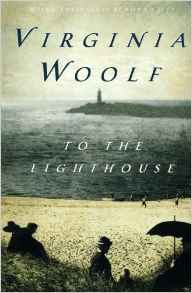
To The Lighthouse –Virginia Woolf
A Farewell to Arms – Ernest Hemingway 
Three Lives – Gertrude Stein
New York Review of Books

26- Portland Women Writers

This was a piece for Frugal Portland.

Photo by Green Chameleon on Unsplash

In an era where you can read yourself blind online without spending a penny, buying books is an act of enlightened frugality. Magazines and newspapers get tossed; websites morph. Books stick around. What’s more, books slow us down. There are no hyperlinks or banner ads, nothing to whisk our mind into the ugly spin cycle of the so-called “post-truth” world.

Truth exists as it ever has but powerful interests want to drown it. Books are an antidote to the noise. Portland is fortunate to have a thriving community of writers whose clear voices remind us of life’s possibilities and responsibilities. These five women share a powerful sense of purpose, justice, and urgency. Their books will open your mind and break your heart.

Lidia Yuknavitch

Yuknavitch writes like we’re all together in a car stalled on the track as the train bears down. Her fearlessness shines in her bold novels like The Small Backs of Children and Dora: A Headcase, as much as in her searing memoir The Chronology of Water. A former competitive swimmer, Yuknavitch always returns to water, preferring to write “anywhere you can see the river.” She’s busy penning a new work of “short fictions” called This is Not a Flag and a novel, Thrust, but found time to share this advice: “If you have money you can move it toward change. if you don’t have money you can use your voice and body.” Or, of course, your pen.

  • Read: The Chronology of Water (Hawthorne Books, 2011)
  • Recommended: The Child Finder, Rene Denfeld (Weidenfeld & Nicolson, Sept. 5, 2017)
  • Website: https://lidiayuknavitch.net Twitter: @LidiaYuknavitch

Karen Karbo

Karbo waltzes between styles and genres, investing them all with wit and the wisdom of experience. Her work includes the superbly titled Kick-Ass Women series featuring Coco Chanel, Katherine Hepburn, Julia Child and Georgia O’Keeffe; fiction like The Diamond Lane and Motherhood Made a Man out of Me, and her memoir The Stuff of Life.

The secret to keeping the words flowing? Write in hospital lobbies. “There are no distractions,” she says. “No roar of the coffee bean grinder, or whoosh of the milk foamer. No other writers tapping out their award-winning novels. People come and go, and they pay no attention to you, because they’re there for more important reasons. There’s nothing to do but write.”

  • Read: In Praise of Difficult Women (National Geographic, Feb 27, 2018)
  • Recommends: The Book of Joan, Lidia Yuknavitch (Canongate, Jan 18, 2018)
  • Website: http://www.karenkarbo.com Twitter: @Karbohemia

Cheryl Strayed

Strayed’s beloved-by-Oprah breakthrough, Wild, her account of solo hiking the Pacific Crest Trail is an archetypal hero’s journey with a twist: the hero is a woman. Reading Wild, I realized how unfamiliar and thrilling it is to read a story of struggle and self discovery by and about a woman. Tiny, Beautiful Things was equally expectation-shattering in a different way. A compilation of advice columns she wrote for The Rumpus, it blends Strayed’s fearless, first-person stories with Stoic wisdom. It’s twin themes are courage + effort. “It didn’t just get better for them,” she writes. “They made it better.”

Here’s hoping a future generation can look back on these years and say the same of us.

  • Read: Tiny, Beautiful Things (Vintage, 2012)
  • Recommends: The Dream of a Common Language, Adrienne Rich (W. W. Norton & Co., 2013)
  • Website: http://www.cherylstrayed.com Twitter: @CherylStrayed

Rene Denfeld

It’s axiomatic that not all writers make a living from writing. Some perform feats of double alchemy that give lustre to both their writing and their profession. Denfeld, a licensed investigator, is one of these alchemists (poet/doctor William Carlos Williams was another). “It’s exciting, fulfilling work,” she says of investigation. “I get to exonerate innocents and help victims of sex trafficking.”

When she’s not working, or “loving on my fantastic kids,” she slips away to Cathedral Park with her laptop to pour her hard-earned understanding of humanity into books like the multi-award-winning novel The Enchanted.

  • Read: The Enchanted (Harper, 2014)
  • Recommends: The Empathy Exams, Leslie Jamison (Greywolf Press, 2014)
  • Website: http://renedenfeld.com Twitter: @ReneDenfeld

Ursula K LeGuin

To call LeGuin, doyenne of the Portland literary scene, a sci-fi writer is reductive. She is an imaginative writer of dazzling talent who conjures new worlds and infuses familiar scenes with fresh possibilities. “In America the imagination is generally looked on as something that might be useful when the TV is out of order,” she writes. “Poetry and plays have no relation to practical politics. Novels are for students, housewives, and other people who don’t work. Fantasy is for children and primitive peoples.” LeGuin has been cheerfully subverting this belief for her entire career –and shows no signs of stopping.

  • Read: Words Are My Matter (Small Beer Press, 2016)
  • Recommends: Tao Te Ching, Lao Tzu trans. Ursula K. LeGuin (Shambhala, 1998)
  • Website: http://www.ursulakleguin.com

18 – Reading Like a Writer

This was another Ideas Tap feature that was mostly an excuse to interview a handful of my favorite people — dear friend and mentor Paul Hendrickson, another beloved writing friend Nick Lezard, and the man who saved my life during my writing Master’s, course director and prolific author Michael Schmidt.

Photo by Eliott Reyna on Unsplash

Want to be a writer? The best way to start is by reading. But how can you make sure you reap the benefits in your own work? Cila Warncke asks writers Paul Hendrickson, Nick Lezard and Michael Schmidt for tips…

“It is impossible to become a writer without reading,” says Paul Hendrickson, writing professor at the University of Pennsylvania and award-winning author of numerous books including, most recently, Hemingway’s Boat.

There is a relationship between quality of reading and quality of writing. And a distinction between reading for pleasure and reading like a writer. The difference involves attitude, approach and appreciation. Michael Schmidt, poet, professor and author of the forthcoming The Novel: A Biography recommends reading, “with eyes wide open, full of anticipation.”

With this in mind, here are seven ways to read like a writer:

1. Compulsively

“You can’t be a writer unless you have a hunger for print,” says Nick Lezard, Guardian literary critic and author of Bitter Experience Has Taught Me. “I was the kid who sat at the table and read the side of the cereal packet.” In Nick’s case, the lust for literature paved the way for a career as a book reviewer. But regardless of the genre or field to which you aspire, all writers are readers first.  And “it doesn’t matter whether the medium is the side of the cereal packet or a screen,” Nick says.

2. Slowly

Cereal-packet readers tend to wolf words like they do breakfast. This is a trait writers should train themselves out of – at least sometimes. Paul defines reading like a writer as slowreading: dawdling on the page, delving, soaking in the style and rhythm. Don’t read everything this way, though. “I don’t read the newspaper ‘like a writer’,” he notes. “I don’t have time. Nobody does.”

3. Broadly

Time is of the essence for the reading writer, but that doesn’t mean you should ignore everything apart from the classics. There are, to borrow Orwell’s term, good bad books. Nick mentions Ian Fleming as an example of compelling though less-than-literary fiction. Paul gives a nod to Raymond Chandler, saying writers can learn from his “hardboiled, imagistic lines.”

4. Selectively

That said, don’t make the mistake of reading widely but not too well. “Reading crap is no good for the eye or ear,” says Michael. “Read only the best, and read it attentively. See how it relates to the world it depicts, or grows out of.”

Nick, who has read his share of bad books as a reviewer, concurs: “If you just read books like 50 Shades of Grey, or Dan Brown, you’re going to wind up spewing out a string of miserable clichés.”

5. Attentively

You get the most out of good writing by reading it with real attention. Michael advises writers to pay heed to metaphor, characters’ voices, how the author develops those voices and how they change. He recommends Christina Stead’s The Man Who Loved Children,” as a rewarding subject of attentive reading: “There is a strong sense of development, nothing static there. I can think of no better pattern book for a would-be writer.”    

6. Fearlessly

Reading like a writer means going out of your comfort zone. When Nick was in his teens he tackled James Joyce’s Ulysses. “It was a struggle,” he recalls. “It took me a year or two. But that’s how you [learn] – you find stuff that’s above your level.”

7. Imaginatively

Reading above your level is valuable, in part, because it challenges your imagination. Paul talks about savouring the terse beauty of poetry and imagining “everything that’s between the spaces of the words, the spaces of the lines.” By observing the work of your own imagination you gain insight into how writers evoke images and emotions.

You don’t have to read every book (or cereal box) like a writer. But the more you immerse yourself in words and cultivate these seven skills, the better your writing will be. “If you are writing a potboiler, imagine how wonderful it will be if the work you produce is actually a proper novel,” says Michael. “Read the best, and read the best in your elected genre.”

In Focus: Writers’ Recommended Reading:

  • UlyssesJames Joyce
  • To The LighthouseVirginia Woolf
  • A Farewell to Arms – Ernest Hemingway 
  • Three Lives – Gertrude Stein
  • New York Review of Books