On Writing Towards Progress

The upcoming release of Lee, Kate Winslet’s film about photographer Lee Miller, got me thinking about how much has changed for women in the past century. And how little.

Lee Miller was one of four women photojournalists accredited by the United States armed forces in World War II. Among the many striking images she created, Miller photographed the liberation of Buchenwald and Dachau: indelible evidence of Nazi atrocities.

She was one of four women allowed to shoot the war.

The issue of Vogue with Winslet on the cover, promoting Lee, also featured a profile of Karine Jean-Pierre, the first Black person and first openly gay person to hold the post of US Press Secretary.

Why, a quarter of the way through the 21st century, are we still tallying firsts?

Progress, such as it is, is non-linear, unpredictable and subject to reversal.

In 1997, I started my BA at University of Pennsylvania.

It was only the 64th year in the university’s 257-year history that women were allowed access to a full-time, four-year undergraduate degree program. 

In 1998, I became a Daily Pennsylvanian reporter. The first woman permitted to join the illustrious school newspaper did so in 1962. Her name was Sharon Lee Ribner. Ms Ribner (later Mrs Schlagel) had a long, successful career in journalism. She passed away in 2022.

It boggles my mind that my opportunity to become a journalist hung on the balance of 35 years. And that the pioneering female journalist at Penn and I shared a lifetime.

Scan any newspaper. It’s plain to see the world is not on an orderly march towards a better future.

This fact affects groups and individuals differently. The more recent one’s rights and privileges, the more parlous.

Women, LGBTQ+ individuals, people of color, immigrants, the poor, the disabled are always the most vulnerable.

In times of economic or social crisis, it is too often their well-being that is considered dispensable.

Progress is parlous because power is not.

When threatened, power does whatever it takes to protect itself. Progress is rarely on that agenda.

As psychologist Mihaly Csikszentmihalyi argues in Flow: The Psychology of Optimal Experience, the best defense against external chaos is internal order. By identifying and pursuing what matters most, people can craft rich, rewarding lives in suboptimal circumstances.

Education is the essential ingredient, here. An untrained mind is a disorderly mind. A mind unaccustomed to effort is a aimless and ineffective.

While education is not a panacea, or substitute for social justice, it is a vital tool for individuals waiting for the moral arc of the universe to budge.

One of the many reasons I’m passionate about teaching writing is that it is yoga for the brain (no Lycra required). Writing hones logic, burnishes imagination and creates structure. And you can do it anywhere.

Structural inequalities are huge barriers to success. We need to dismantle those barriers. We also need to equip individuals to work around them. Writing is a skill that promotes individual success and provides a means to tackle unjust systems.

For more on writing towards success, check out my new Substack newsletter

7 Fun Play-Anywhere Writing Games

Grab a pen and paper and hone your word skills through play!

Photo by Calum MacAulay on Unsplash

Native English speakers only need to learn around 9,000 words to read proficiently (Nation, 2014; Qian & Lin, 2019). This, out of a lexis of over 170,00 words (and growing!)

Hence most of us walk, eat and talk on a daily basis rather than shuffle, feast or murmur.

We’re creatures of habit. The words we use frequently become top-of-mind, and therefore likely to be used again. Our routine vocabulary shrinks like a puddle in the sun.

One way to prevent, indeed, reverse, this trend is to play with words.

Reading, crossword puzzling, etc., can build our word banks but having a fine working vocabulary means being able to summon novel words and express ourselves in new ways. Like play piano, or basketball, this skill requires practice.

The following drills are designed to be pen-and-paper; no reference to outside sources required. Use the back of an envelope, a napkin, scribble on your hand like a teenager, draw in sand on the shoreline.

The goal is to tap your linguistic aquafer. If you feel inspired to augment your vocabulary through reading or dictionary browsing, all to the good, but no pressure.

Grab your quill and parchment and let’s away.

_________________________________________________________________________________

Pre-root-ixes: Prefixes, root words and suffixes

Straightforward: choose a prefix, root word or suffix and list as many words containing it as you can.

  • Prefix suggestions: ex, dis, im, dis, pre, un
  • Root suggestions: auto, corp, derm, lum, tele
  • Suffix suggestions: ism, ity, ment, ness, tion/sion

Word transformation

This is a game I designed to improve upper-level ESL students awareness of parts of speech (POS) and the flexibility of English vocabulary. It’s simple, take a noun or verb, then come up with all the permutations of it you can, including words that contain it, collocations or sayings.

It works best when you think systematically about POS. Let’s use like as an example.

  • Verbs: to like, to dislike
  • Nouns: like, likelihood, liking, dislike
  • Adjectives: like, likeable, likely
  • Adverbs: like, likely, unlikely
  • Preposition: like
  • Conjunction: like
  • Collocations/sayings: eat like a horse, go over like a lead balloon, off like a shot, like water off a ducks back, look like a million dollars, etc.
Photo by Hannah Olinger on Unsplash

CAS – colloquialisms, aphorisms and sayings

Here, the goal is to list informal language terms that either

  • contain a particular word (as in the example above)
  • relate to a particular subject (e.g., work, money, travel)

Take ‘time’ as an example. The first category might include

  • time and tide way for no man
  • a stitch in time saves nine
  • once upon a time
  • time is (not) on their side
  • time out of mind

The second

  • to take a rain check
  • down to the wire
  • from here to eternity
  • jump the gun
  • Rome wasn’t built in a day

Single-word prompts

This drill was the result of being bored of my journal. Left to itself, my squirrelly brain chews over the same topics like its storing fat for winter. So I wrote a random word at the top of each page then, each day, wrote something inspired by it.

Try this for five, seven, 10, 14 days. See what fun your mind has.

Alphabets

Another fast, fun list drill. Jot the alphabet vertically on a sheet of paper then fill it in with words from a given category: adverbs, cities, animals, desserts, compound nouns.

Warm up with a big category like plants or household objects then get esoteric: can you complete the alphabet with shades of blue, pre-20th century literary heroines or 80s song titles?

What do you see?

Prior to writing my novel Ibiza Noir, I wrote 700 words of pure description a day for 30 days. No attempt at narrative, simply drew the most vivid word-pictures possible.

  1. Set a time or word-count goal, e.g., write for 10 minutes without stopping, or write 500 words.
  2. Choose an object of reasonable complexity, a flower, or your living room, and describe it in as much detail as you can muster. Imagine you are describing it to an artist; you want their rendering to be as close to reality as possible.
  3. Challenge yourself to apply this descriptive writing practice to real-world scenes. Go sit in the park, or on a bench at the mall, and write your allotted words. But remember, no narrative, just images.
Photo by Markus Winkler on Unsplash

Daily ledes

This drill is perfect for pre-bedtime journaling.

  1. Choose three events/moments from your day.
  2. Jot down the 5Ws: when, where, who, what and why.
  3. Write a lede (the first sentence or paragraph of a news article) that contains all 5Ws.

Example:

  1. You went to the dentist and got your teeth cleaned.
  2. When: 11:30AM, where: dentist office (43 Main Street), who: hygienist David, what: tooth cleaning, why: six months since last appointment
  3. Lede: At 11:30 this morning, dental hygienist David Smith faced off with a six-month old plaque formation on Patient X’s right rear molar, a struggle that resounded through the office at 43 Main Street.

Bonus game! #semanticfieldgoals

Yes, I just wanted to write #semanticfieldgoals.

It’s also a good game.

A semantic field is a set of words related by meaning, for example colors, plants, foods, senses, etc. For the sake of this drill, any category will do.

Choose a category

  • List all the words you can think of related to that category.
  • Choose one of those words as the starter for a new list.
  • Repeat as often as you like.

Let’s try chemistry:

  1. Chemistry: periodic table, ion, Madam Curie, Nobel Prize, beaker, lab, Bunsen burner, ion, orbital, atom, atomic weight, electron, proton, neutron, bond, reaction, element, carbon, organic
  2. Atom: ancient Greece, Democritus, particle, bomb, Oppenheimer,
  3. Ancient Greece: philosophy, alphabet, city-states, wine, Homer, Sparta, etc.

___________________________________________________________________________________________

Play a round or two of one of the games and post your results in the comments!

On Memoir with Cheryl Strayed

This interview originally appeared on the excellent but now defunct Ideas Tap website. The organization, which was dedicated to supporting young people pursuing creative careers, closed in 2015 due to lack of funding. Plus ca change.

Strayed was a warm, thoughtful and inquisitive subject. A rare working class hero and, rarer still, someone whose giddy ascent to Oprah-adjacent fame hadn’t uncalibrated her ethical compass.

It was a privilege to speak to her, and a pleasure to republish her timeless wisdom.

***

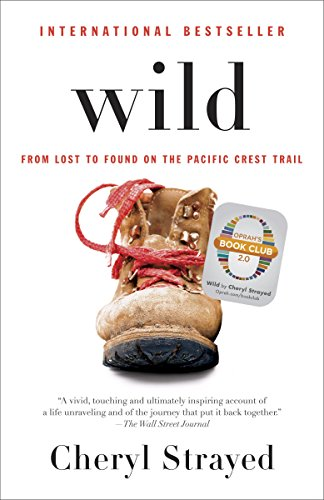
After writing her first novel, Cheryl Strayed turned to memoir and wrote her New York Times bestselling book Wild, about her 1,100-mile hike along the Pacific Crest Trail in the wake of her mother’s death. Here, Cheryl talks about mining memory and sets us to work with a writing exercise…

How does the emotional experience differ between writing fiction and memoir?

It doesn’t. To write fiction well you have to inhabit the consciousness of the characters you’ve created. With non-fiction there’s an extra layer of intensity because the character you’re building is yourself.

When writing memoir, how do you build yourself as a character?

The only way you can build yourself is to dismantle yourself. To take apart who you are, what your assumptions have been, what you hope people think of you. You can’t write: “I’m pretty and cool and awesome and interesting” because everyone would hate you. You have to say: “I’m human. Here are positive things about me. Here are negative things about me. And here are things that don’t make sense, don’t add up, and I’m going to present them to you”. Writing is like the deep work you do in the course of therapy where you take yourself apart.

What memory aids do you use?

I naturally have a very good memory – I think a lot of writers do. I kept a journal through my 20s and 30s. That helped me a lot in writing Wild. I do research where I can, going back and looking at pictures for example. When most people imagine what a memoirist does, they think: “I don’t remember anything from high school, from 20 years ago”. But they do remember – they just think they don’t.

How can writers elicit those memories?

The process of writing is re-conjuring memories. It’s doing things so more memories come to you. Even looking at a photo can allow you to remember something accurately. The process is like running into an old friend from back in the day, somebody you knew 20 years ago. When you first start talking you only know a few things about each other. But as you talk and go deeper into your lives you remember things you thought you had forgotten. Just because you haven’t thought of something for years doesn’t mean you don’t remember it, it just means it takes a little work to access it. When I was writing Wild I’d think, “I don’t remember, I just walked” but once I started writing my mind would open up to specific memories.

Do you draw heavily on your own life for your fiction?

You’ll see a lot of details from my life. My next novel is set in Portland [where I live]. None of the characters in the book are me but there are all these little tendrils of the story that you can trace back to me.

How do you deal with writer’s block?

I never call it “writer’s block” but I always have trouble beginning. Writing is hard. I resist writing. I run from it. If I am left alone with a laptop I flounder for an hour or two, then I sink in and I’m in the zone. When I get stuck I go for a walk, come back and try again. I don’t force it. If something isn’t coming, I move on; that’s a good strategy for me.

How long did it take to write your first book, Torch?

Your first book is so hard because you don’t know how to write a book and there is no way for anyone to tell you. It turns out the only way to learn how to write a book is to write a book. I avoided finishing [Torch] for fear of failure, until the point where the fear of failing to finish was bigger than the fear of finishing a book that was terrible. I worked on it for about ten years in total, three years really diligently.

How did you overcome that fear of failure?

Once I let go of the idea that I was going to write a great book, I was able to write a book. I let go of any ego or fear or shame. That was an important moment in my writing life. None of us really knows what kind of book we’re writing. A lot of people think they’re writing brilliant books and they’re terrible. And the reverse is true too. It isn’t up to us to judge our books; it’s up to the people who read them.

In Focus: Writing exercise using objects

I take random objects out of my handbag like lipstick, a ten-euro note, and a pair of sunglasses, and tell my students to pick one and write a story about it.

To begin writing you begin with an image. You begin with a feeling. I encourage people to start writing and not think about it too much. Even if you have a good idea, usually once you start writing it will become something else.

I could do that same exercise with the world’s Nobel Literature Prize winners and something would come of it. Perhaps what came of it would be better than what comes to my students, but that’s how the [Nobel Prize winners] do it too – they begin with something then they make something else.

Dr King and Economic Justice

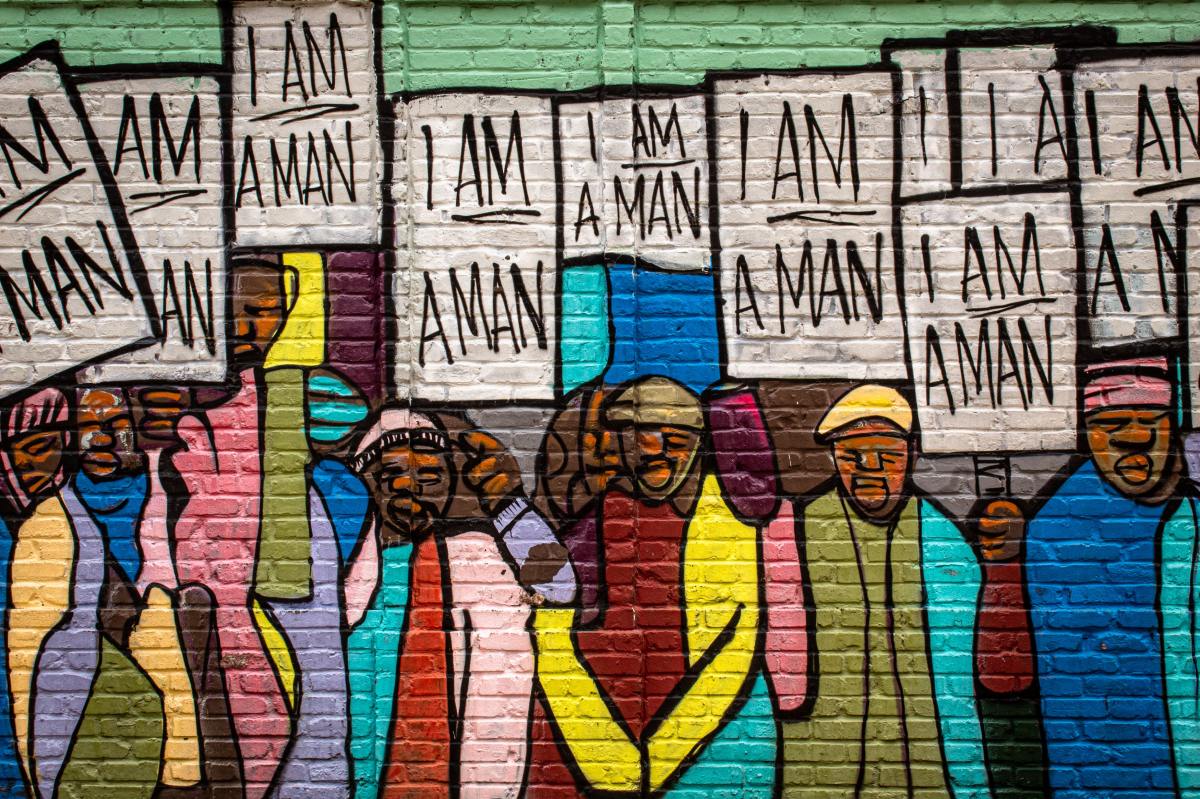
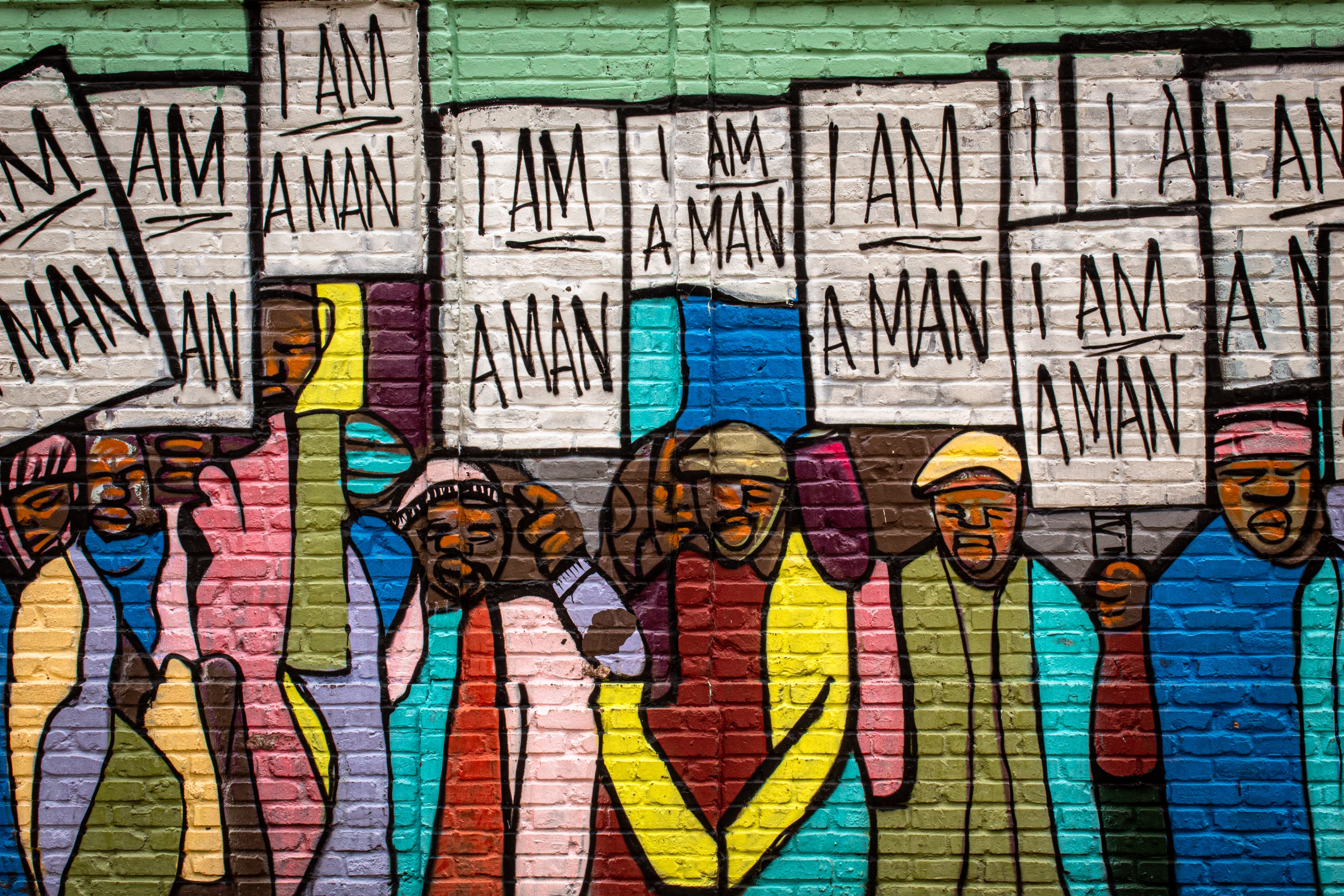
Fifty-three years ago Dr Martin Luther King Jr was assassinated in Memphis. He was in the city to support striking sanitation workers who marched carrying signs that bore a simple statement: I am a man. The slogan was chosen, striker Elmore Nickleberry told NPR, because “most of the time they’d call us boys.”

The night before his death, which was the night before a protest march, Dr King gave a speech famed for its rousing finale: ” I just want to do God’s will. And He’s allowed me to go up to the mountain. And I’ve looked over. And I’ve seen the Promised Land. I may not get there with you. But I want you to know tonight, that we, as a people, will get to the promised land!”

Each term I share this speech with my students as a masterpiece of rhetoric, a master class in persuasive writing. I ask them to listen to the whole speech, including the less-often quoted part that made Dr King’s existence a threat to a certain segment of society.

***

“Now the other thing we’ll have to do is this. Always anchor our external direct action with the power of economic withdrawal…

“We don’t have to argue with anybody. We don’t have to curse and go around acting bad with our words. We don’t need any bricks and bottles. We don’t need any Molotov cocktails. We just need to go around to these stores, and to these massive industries in our country, and say,

“God sent us by here, to say to you that you’re not treating his children right. And we’ve come by here to ask you to make the first item on your agenda fair treatment, where God’s children are concerned. Now, if you are not prepared to do that, we do have an agenda that we must follow. And our agenda calls for withdrawing economic support from you.”

And so, as a result of this, we are asking you tonight, to go out and tell your neighbors not to buy Coca-Cola in Memphis. Go by and tell them not to buy Sealtest milk. Tell them not to buy — what is the other bread? — Wonder Bread. And what is the other bread company, Jesse? Tell them not to buy Hart’s bread. As Jesse Jackson has said, up to now, only the garbage men have been feeling pain; now we must kind of redistribute the pain. We are choosing these companies because they haven’t been fair…

But not only that, we’ve got to strengthen black institutions. I call upon you to take your money out of the banks downtown and deposit your money in Tri-State Bank. We want a “bank-in” movement in Memphis. Go by the savings and loan association. I’m not asking you something that we don’t do ourselves at SCLC. Judge Hooks and others will tell you that we have an account here in the savings and loan association from the Southern Christian Leadership Conference. We are telling you to follow what we are doing. Put your money there. You have six or seven black insurance companies here in the city of Memphis. Take out your insurance there. We want to have an “insurance-in.”

***

Photo by Project 290 on Unsplash

‘I have a dream’? Cool. Black kids and white kids joining hands? Fine.

Black citizens boycotting racist corporations and seeking economic empowerment? That’s dangerous talk.

When we honor Dr King, let’s honor him as a warrior for economic justice. He knew there was no chance of equality, freedom or social justice in a system predicated on economic oppression.

Listen to Dr King’s speech today. The truths and challenges he speaks are still with us.

“We mean business now, and we are determined to gain our rightful place in God’s world,” he said that fateful night. “And that’s all this whole thing is about. We aren’t engaged in any negative protest and in any negative arguments with anybody. We are saying that we are determined to be men. We are determined to be people. We are saying that we are God’s children. And that we are God’s children, we don’t have to live like we are forced to live.”

18 – Reading Like a Writer

This was another Ideas Tap feature that was mostly an excuse to interview a handful of my favorite people — dear friend and mentor Paul Hendrickson, another beloved writing friend Nick Lezard, and the man who saved my life during my writing Master’s, course director and prolific author Michael Schmidt.

Photo by Eliott Reyna on Unsplash

Want to be a writer? The best way to start is by reading. But how can you make sure you reap the benefits in your own work? Cila Warncke asks writers Paul Hendrickson, Nick Lezard and Michael Schmidt for tips…

“It is impossible to become a writer without reading,” says Paul Hendrickson, writing professor at the University of Pennsylvania and award-winning author of numerous books including, most recently, Hemingway’s Boat.

There is a relationship between quality of reading and quality of writing. And a distinction between reading for pleasure and reading like a writer. The difference involves attitude, approach and appreciation. Michael Schmidt, poet, professor and author of the forthcoming The Novel: A Biography recommends reading, “with eyes wide open, full of anticipation.”

With this in mind, here are seven ways to read like a writer:

1. Compulsively

“You can’t be a writer unless you have a hunger for print,” says Nick Lezard, Guardian literary critic and author of Bitter Experience Has Taught Me. “I was the kid who sat at the table and read the side of the cereal packet.” In Nick’s case, the lust for literature paved the way for a career as a book reviewer. But regardless of the genre or field to which you aspire, all writers are readers first.  And “it doesn’t matter whether the medium is the side of the cereal packet or a screen,” Nick says.

2. Slowly

Cereal-packet readers tend to wolf words like they do breakfast. This is a trait writers should train themselves out of – at least sometimes. Paul defines reading like a writer as slowreading: dawdling on the page, delving, soaking in the style and rhythm. Don’t read everything this way, though. “I don’t read the newspaper ‘like a writer’,” he notes. “I don’t have time. Nobody does.”

3. Broadly

Time is of the essence for the reading writer, but that doesn’t mean you should ignore everything apart from the classics. There are, to borrow Orwell’s term, good bad books. Nick mentions Ian Fleming as an example of compelling though less-than-literary fiction. Paul gives a nod to Raymond Chandler, saying writers can learn from his “hardboiled, imagistic lines.”

4. Selectively

That said, don’t make the mistake of reading widely but not too well. “Reading crap is no good for the eye or ear,” says Michael. “Read only the best, and read it attentively. See how it relates to the world it depicts, or grows out of.”

Nick, who has read his share of bad books as a reviewer, concurs: “If you just read books like 50 Shades of Grey, or Dan Brown, you’re going to wind up spewing out a string of miserable clichés.”

5. Attentively

You get the most out of good writing by reading it with real attention. Michael advises writers to pay heed to metaphor, characters’ voices, how the author develops those voices and how they change. He recommends Christina Stead’s The Man Who Loved Children,” as a rewarding subject of attentive reading: “There is a strong sense of development, nothing static there. I can think of no better pattern book for a would-be writer.”    

6. Fearlessly

Reading like a writer means going out of your comfort zone. When Nick was in his teens he tackled James Joyce’s Ulysses. “It was a struggle,” he recalls. “It took me a year or two. But that’s how you [learn] – you find stuff that’s above your level.”

7. Imaginatively

Reading above your level is valuable, in part, because it challenges your imagination. Paul talks about savouring the terse beauty of poetry and imagining “everything that’s between the spaces of the words, the spaces of the lines.” By observing the work of your own imagination you gain insight into how writers evoke images and emotions.

You don’t have to read every book (or cereal box) like a writer. But the more you immerse yourself in words and cultivate these seven skills, the better your writing will be. “If you are writing a potboiler, imagine how wonderful it will be if the work you produce is actually a proper novel,” says Michael. “Read the best, and read the best in your elected genre.”

In Focus: Writers’ Recommended Reading:

  • UlyssesJames Joyce
  • To The LighthouseVirginia Woolf
  • A Farewell to Arms – Ernest Hemingway 
  • Three Lives – Gertrude Stein
  • New York Review of Books

The New Barebacking

I had to go to the village today.

maks

Photo by Kate Trifo on Unsplash

On the short drive to the village a couple of cars passed heading the opposite direction, both drivers wore surgical masks.

In the taxi rank in the village a driver leaned against the hood of his car, mask tucked beneath his chin, smoking.

The receptionist and vet wore blue masks.

The middle-aged man with the shock of dark curly hair who passed me on the sidewalk wore a white N95 mask.

The lady carrying two armloads of groceries wore a mask.

The young dude unlocking his car wore a mask.


Barefaced and bare-handed, I felt like a lowlife misfit.

Appearing in public sans mask is the new barebacking. Socially irresponsible, verging on reprehensible.

On arriving home, I decided it was time to buy masks (Amazon orders are delivering a month out, so thanksthefuckverymuch Jeff Bezos, I’m off elsewhere).

covid 1

Covid Photo by pixpoetry on Unsplash

Why the previous reluctance?

Because I don’t want to walk around thinking the next breath is going to kill me, or someone else. For the first time, I have an inkling how some men feel about condom use. Yeah, sure fine it’s the most appropriate thing to do but goddamn it, who wants to experience the world through a prophylactic shield?

Cherry blossoms are out, yellow wands of broom, did I mention the walnut trees are leafing? The air is pristine, sharp and Atlantic-cold. Our neighbor trundles up and down the road in an old red tractor, moving wine-sweet hay bales.

I do not want to touch the world with rubber fingers and breathe through layers of activated carbon. Why the hell would I sign up for that? Why not just lock myself in a sterile box and wait to die?

Okay, it’s not that dramatic but something important is being (has been?) lost in all this. Our sense of touch is already degraded from devoting too much of it to digital screens. We rarely breathe as deeply as we should. This stupid cunning virus is robbing us not just of too many lives but, sneakily, of things that make life worth living.

I’ll probably end up like wearing a mask for the common good (assuming I can beg borrow or steal one) but I refuse to think it is a Good Thing, in a larger sense.

We cannot do without enjoyment, wrote to Jack Gilbert. The ordinary sensual pleasures of filling our lungs and encountering the world through touch are not dispensable.

bench

Photo by Chris Murray on Unsplash


Elements: Attention

Storytelling is the essence of communication. The elements of storytelling are like letters of the alphabet. When you know how to use them, you can tell your best story.

Element 15: Attention

Great stories come from creators who are passionately attentive to everything.

Case study: Jack Gilbert jack-gilbert

What it is:

Jack Gilbert was an American poet who turned life’s most banal, excruciating moments into heart-shattering art.

After twenty hours in bed with no food, I decided
I should have at least tea. Got up to light the lamp,
but the sweating and shivering started again
and I staggered backwards across the room. Slammed
against the stone wall. Came to with blood on my head
and couldn’t figure out which way the bed was.

from ‘What I’ve Got’

Why it matters:

Storytellers often aim too high. They want to convey love, terror, excitement, or despair. So they write about love, terror, etc. The thing is, when you write about love, you get a Hallmark card. The bigger the theme, the harder it is to write straight; it’s like looking at the sun.

That’s where attention comes in. Great storytellers know the little stuff reveals the big. In the excerpt above, Gilbert doesn’t tell the reader that it is scary to be sick and alone. He pays attention. In the throes of it, he is alert to every small, true detail: the slow passage of time, the dark room, the fever (only he uses clearer, closer words: sweating, shivering), the disorientation, the abject sense of failure as the body falls.

If you want magic, prop your eyelids open with toothpicks. Pay attention. Especially to boring, mundane, every day things.

In his own words:

“He explained that somebody wanted to give me the Yale prize. I didn’t know what to do, how to express it. I took him out with my two friends and we had milkshakes.

The next day I roamed about trying to find a way to feel about what had happened. I finally lay down under the Brooklyn Bridge to try to feel something. I lay there all afternoon, and then I called the people at Yale.” Read more

Practice: “Be awake to the details around you, but don’t be self-conscious. ‘Okay. I’m at a wedding. The bride has on blue. The groom is wearing a red carnation. They are serving chopped liver on doilies.’ Relax, enjoy the wedding, be present with an open heart. You will naturally take in your environment, and later, sitting at your desk, you will be able to recall just how it was dancing with the bride’s redheaded mother, seeing the bit of red lipstick smeared on her front tooth when she smiled.” Natalie Goldberg in Writing Down the Bones

Remember: “As a writing man, or secretary, I have always felt charged with the safekeeping of all unexpected items of worldly and unworldly enchantment, as though I might be held personally responsible if even a small one were to be lost.” ~E. B. White

New Year Resolution

My resolution for 2016…

IMG_20151107_083216330

“To guard what is your own. Not to claim what is another’s. To use what is given you. Not to long for anything if it be not given. If anything be taken away to give it up at once and without a struggle, with gratitude for the time you have enjoyed it”

~Epictetus

Poetry Challenge – East Coker by TS Eliot

Kat & I

Kat & I

Nobel Peace laureate and Burmese democracy campaigner Aung San Suu Kyi spent over 20 years under house arrest. She says that one of the things that kept her together was memorising poetry. Once it’s in your head, she added, nobody can take it away from you. Thinking about that inspired me to set myself a poetry challenge: memorise one poem a month during 2015.

That will give me a stock of a dozen poems to carry with me everywhere, always.

For January I’ve chosen a portion of ‘East Coker’ from TS Eliot’s Four Quartets. My dear friend Kat introduced me to this poem a few years ago and it has become deeply rooted in my psychic landscape, both for itself and because it reminds me of how blessed I am by her friendship. This is for you my love!


East Coker

So here I am, in the middle way, having had twenty years—
Twenty years largely wasted, the years of l’entre deux guerres
Trying to learn to use words, and every attempt
Is a wholly new start, and a different kind of failure
Because one has only learnt to get the better of words
For the thing one no longer has to say, or the way in which
One is no longer disposed to say it. And so each venture
Is a new beginning, a raid on the inarticulate
With shabby equipment always deteriorating
In the general mess of imprecision of feeling,
Undisciplined squads of emotion. And what there is to conquer
By strength and submission, has already been discovered
Once or twice, or several times, by men whom one cannot hope
To emulate—but there is no competition—
There is only the fight to recover what has been lost
And found and lost again and again: and now, under conditions
That seem unpropitious. But perhaps neither gain nor loss.
For us, there is only the trying. The rest is not our business.

Home is where one starts from. As we grow older
The world becomes stranger, the pattern more complicated
Of dead and living. Not the intense moment
Isolated, with no before and after,
But a lifetime burning in every moment
And not the lifetime of one man only
But of old stones that cannot be deciphered.
There is a time for the evening under starlight,
A time for the evening under lamplight
(The evening with the photograph album).
Love is most nearly itself
When here and now cease to matter.

Old men ought to be explorers
Here and there does not matter
We must be still and still moving
Into another intensity
For a further union, a deeper communion
Through the dark cold and empty desolation,
The wave cry, the wind cry, the vast waters
Of the petrel and the porpoise. In my end is my beginning.

Kelly Writers House

A quick trip down memory lane to Kelly Writers House at UPenn. It is where I learned the ropes of non-fiction writing from inimitable, award-winning author, journalist and all-around good guy Paul Hendrickson.

On a campus full of aggressive high rises and smug colonial brickwork it is a delightful clapboard anachronism, complete with creaky stairs and overburdened bookshelves. It was my favourite place at Penn (Mad 4 Mex ran a close second) and I was lucky to be able to pay my respects when I passed through Philly last autumn. Here’s a few snapshots…

This slideshow requires JavaScript.