Welcome to ‘Between the Lines’ – interviews with teachers, writers and writing teachers on aspects of their craft.This week, a conversation with lauded paranormal and contemporary romance writer Rosanna Leo that explores the intricacies of world building.
All images courtesy Rosanna Leo
In magical realms
It is Sunday afternoon. Outside Rosanna Leo’s home (not far from Toronto, Ontario) the leaves have turned. “Just a couple of weeks till the beginning of winter,” she remarks. “It’s long here: cold, snowy.”
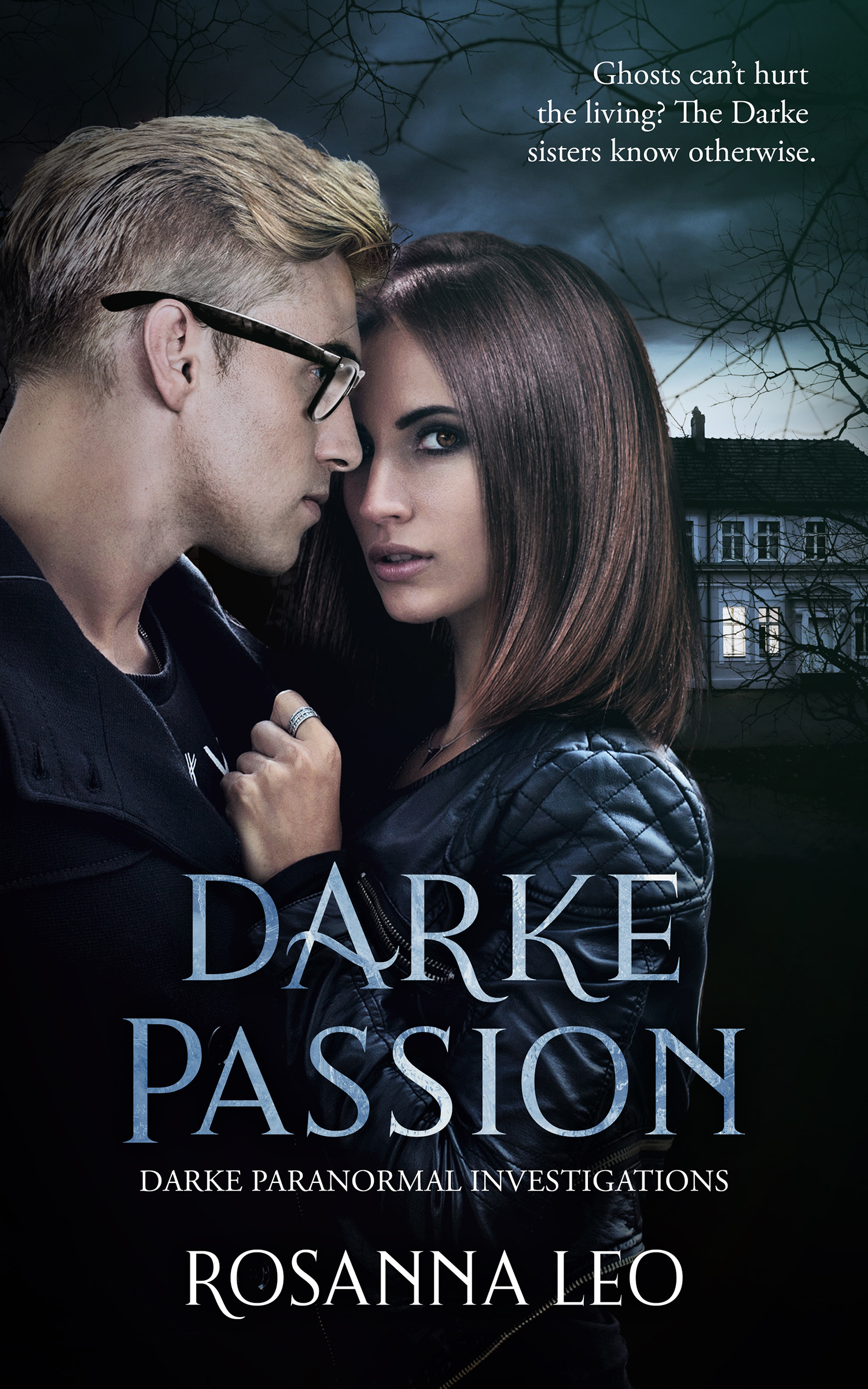
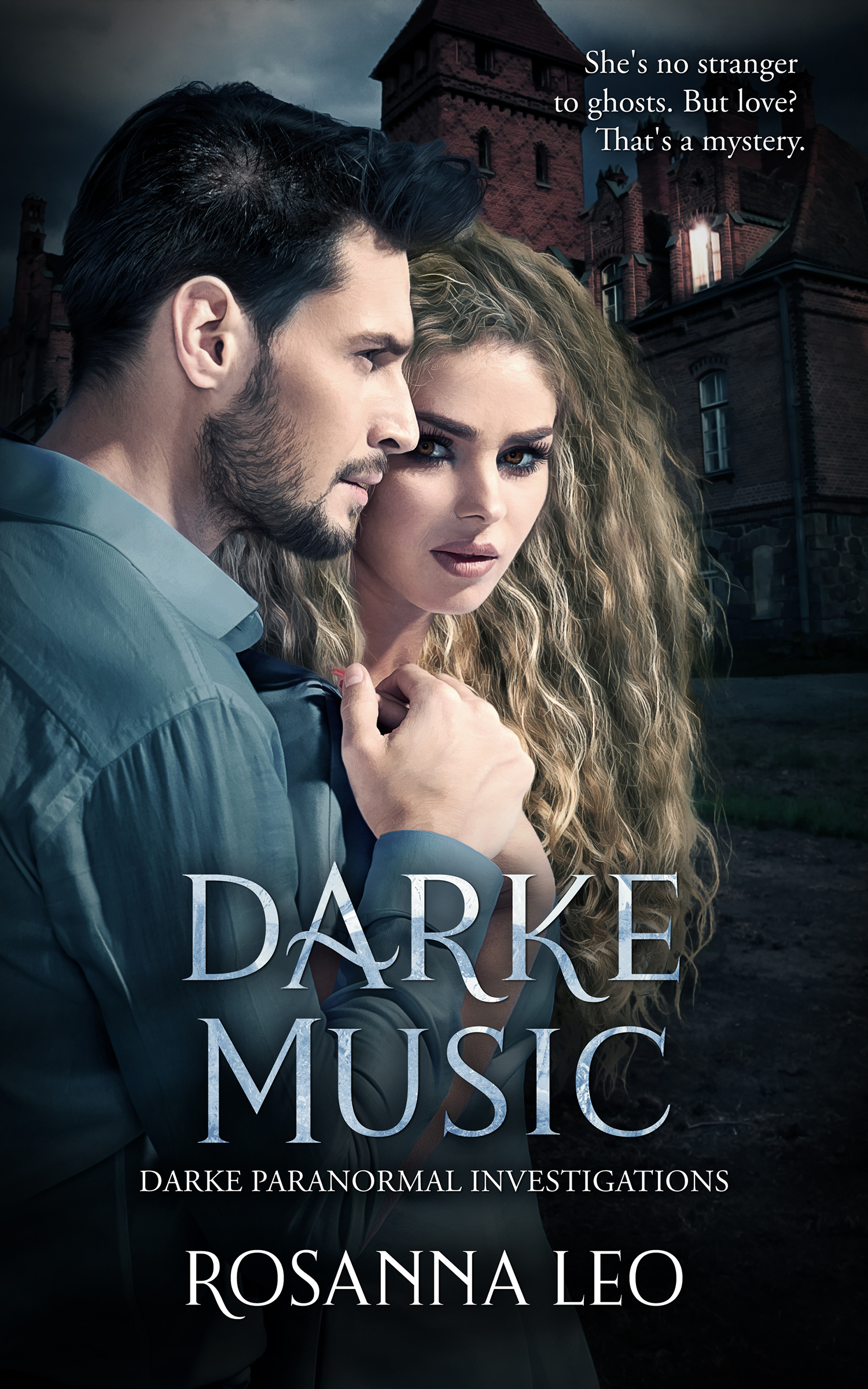
Perfect weather, that is, for staying indoors with a good book: perhaps a volume or two of Leo’s Darke Paranormal Investigations or Handyman trilogies; or her Vegas Sins series.
Leo writes to transport her readers into magical realms. As a child, she whiled away hours daydreaming in her bedroom. “I thought I could get to Narnia through the back of the wardrobe,” she chuckles.
Although no longer so literal-minded about the power of fiction, Leo still believes a story can and should be transcendent.
“As a kid, I reread the Chronicles of Narnia every year, which entrenched my love of mythological figures and fantastical creatures. Classic ghost stories were my bedtime stories. Once I started exploring the world of romance — Robyn Carr, Erin McCarthy, Kathy Love — something clicked: romance, that’s where I wanted to be.”
The path to writing
Bookworm though she was, Leo had only a brief brush with writing in her school days. On a teacher’s prompting, she entered a Royal Legion contest with a story about her veteran grandfather’s post-traumatic stress disorder: “The family would say, ‘he’s having his nightmares’.”
She won.
“I was the only person in my family, up till now, who has ever shown any interest in writing,” she muses. Which may account for the Royal Legion story being the “first — and for quite a few years the last” time she wrote with intent.
Leo earned a BA in English literature, but another art form won her over. After her undergraduate degree, she completed a three-year diploma in a classical singing and spent several years performing with a chamber ensemble, in addition to her day job.
It was while on maternity leave with her first child that Leo began to write again. “My son was a good napper, so I started scribbling, then, after plugging away for a while, I had a novel in front of me. It was terrible,” she laughs. “This sprawling, epic story with ghosts, demons, the kitchen sink.
“I sent the manuscript to Harlequin then waited many, many months for the form rejection letter to come in the mail. It was good to get. It was important to know I could move on from there.”
After a few years of working and re-working, Leo submitted another manuscript. This one was accepted. “It was the biggest high I’ve ever experienced.
Since then, she has combined her full time job as an acquisitions assistant at a local library with writing award-winning romance novels. “It’s the stories that keep me going. I love coming up with characters. I love creating worlds.”
On world building
What is world building?
You are creating the backdrop to your story. You might think of the Game of Thrones series, with different countries and mythologies. But world building can be simpler than that; it doesn’t have to have a fantastical element.
I often write about places I know and historical moments. I think of world building even if I’m writing something with no paranormal or fantasy aspects. It’s what brings that book to life.
What is essential for creating a coherent world?
When you’re creating a new world, even the tiny details have to be vivid. You don’t have to go on for pages talking about what the curtains look like, but you need details to put the reader in that world. Also, if there is anything about the people who inhabit the world, especially in the case of fantasy, you have to break that down. What do animals look like? How do people speak?
What tools do you use to plan?
Research is vital. The basis of the Darke stories’ worlds is: what moments had repercussions that lasted into the future? They are based on historical incidents, so I’m researching those periods, what happened, what impact things had on the current time-frame and modern characters.
How do you research?
It’s handy I work in the library and have a lot of resources at my fingertips. Inter-library loan is my best friend. You can find materials from other systems, things that are very specific. There is [also] a lot of great stuff via Google. For me, researching Canadian historical moments, there are great archives online.
To maintain consistency across your novels?
At the beginning of a series, I determine who the characters are going to be, write thorough character sketches and carry them from book to book. If I mention something about a character, I make sure I can access it throughout the story. Readers are savvy. They will remember [errors] and call you out! You need to get it right.
How does world-building interact with characterization?
It’s huge. There will be things a character can or can’t do, depending on the world they live in. Even in realistic worlds, you have to think about what will make sense.
What are common mistakes authors make in world building?
As we talked about, not keeping track of certain types of information – changing things down the road could be jarring for the reader.
Are writers over- or under-ambitious?
There is a fine line between providing the right amount of detail and too much. If I open up a book and the author goes on for 12 pages about the curtains, I’ll get out.
Who are a couple of writers who world build well?
Scarlett Peckham, who writes historical romance. Catherine Stein: great steam-punk/sci-fi/paranormal. Paulette Kennedy and Hester Fox – both Gothic writers – do world building really well: great attention to detail, very immersive.
Leo recommends
The piece of writing that changed your life before age 18?
Jane Eyre by Charlotte Bronte. When I was 12 I thought it was very romantic. I don’t look at it through the same lens any longer, but it started my love of romance.
The piece of writing that changed your life as an adult?
The Tenant by Katrina Jackson. It’s a wonderful ghost story with all the creepy elements, a gothic feel, but she also talks about racism in an effective and moving way. It’s a short novel, but she packs so much in. Everyone should read her work.
A book about writing every aspiring writer should read?
On Writing by Stephen King was very helpful. Leigh Michaels’ Writing the Romance Novel – I keep a copy in my basement and have reread it many, many times.
A living writer you’d love to hang out with?
Anise Eden. We’ve been friends online for years, but we’ve never been able to meet up. Her books are fantastic. We became mutual fans before we got to know each other. Now, I’m honoured to say she’s my friend.
Your perfect writing space?
I like silence. I won’t go to a coffeeshop, don’t like a playlist in the background. Just a room in my house where I can get into mischief in my head.
What non-writing pursuits feed your writing?
My husband and I like to explore the small towns around us. I love walking around an old cemetery trying to figure out, who were these people? That starts a lot of stories in my mind. For writers, it is easy to be solitary, to retreat, but it’s important for me to get out there, experience life, ask questions.
What’s next?
My series Darke Paranormal Investigations – which is set here in Ontario. It stars three sisters who are all paranormal investigators; the first two [novels] are out and have been really well received. The third book is out in March 2024.
Welcome to ‘Between the Lines’ – interviews with teachers, writers and writing teachers on specific aspects of their craft.This interview will be split into two posts to do justice to Madenski’s generous sharing of time and wisdom. Part 1 covers her biography and writer’s origin story. Part 2 will focus on craft and teaching.
Full disclosure: Melissa and I have known of each other since I was growing up in Lincoln City, Oregon; her children attended my mother’s day care. About a decade ago, I reached out and shared some of my writing. She responded with characteristic generosity and has become a dear friend, mentor, exemplar.
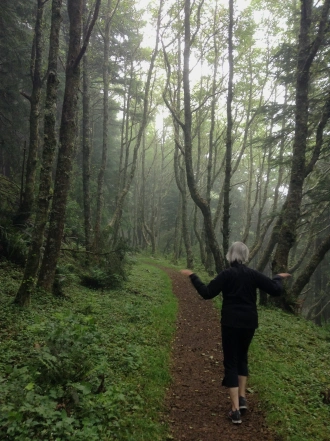
Photo: Hallie Madenski
“I’ve had everything in my life I wanted, but not one thing went according to plan.”
Melissa Madenski delivers this statement with poise that belies the extraordinariness of the claim.
White hair frames dark tortoiseshell glasses and silver hoop earrings. A boho-chic bob to make Anna Wintour green. The kindled joy in her eyes refracts through the the kitchen-dining-living space of her Portland, Oregon home, which is as spare, chic and elegant as she: drip coffee-maker, glass-fronted book shelves, black-and-white prints on crisp white walls.
Elsewhere, these might be bland markers of commodified good taste. But they are Madenski’s tools: functional and essential as carpenter’s adze or blacksmith’s tongs.
Born and raised in Portland, Madenski moved to the Oregon coast as a young woman, taught school, married, had children. One imagines a life rich in the delights of partnership and parenthood: time-poor, perhaps, but abundant in laughter. A time to make one say, “I’ve had everything I wanted.”
But: “Not one thing went according to plan.” The rosy narrative ended in a thunderclap moment when Melissa’s husband, Mark, died, aged 34. Their children, Hallie and Dylan, were one and six years old; their hand-built wooden house in the Siuslaw Forest unfinished.
“My healthy, athletic husband had simply stopped breathing,” she wrote in her 2015 essay, ‘Starting Over.‘ “We would soon learn that an arrhythmia shook his heart until it stopped.”
Such an unthinkable, unspeakable loss can drive unbelievers to their knees and turn Christian soldiers into atheists. How many people, in that crucible, muster the grace to craft an original response?
Madenski mustered — no — created that grace.
“That’s when I started to write every morning,” she recalls. “I missed Mark very, very much; I held onto writing for my sanity. I’m not an early riser, but I’d set my alarm for 4:30. It was a wood-heated house, so, freezing. I’d stick my head under well water – also freezing – make a latte, then shut myself in my office.”
Though Madenski traces her deliberate writing practice to the cataclysm of loss, its roots reach across generations and oceans.
The youngest daughter of a traveling salesman and a homemaker, Madenski grew up in Portland, happy to daydream alone beneath a spruce tree in their yard. Her grandmother, an immigrant from Norway, lived with them. “I credit her with raising me. She told me lots of stories.”
They were the stories of a vibrant and spirited woman who “hiked, rode horses, lived in logging camps.” A woman who knew, too, what it was to be struck by fate.
A burst appendix led to an infection that ruined her grandmother’s hip. In an era before accessible replacement surgery, this irredeemably altered the last 30 years of her life.
“She lost everything that she loved.” Madenski sits with her memories for a moment, then continues. “My grandmother been a seamstress, so my mother would bring her thread and fabric. She sowed until the last three days of her life. It was like writing: the one thing no one can take away.”
Another thing no one can take away: the example of a woman who chose not to be defined by suffering, but to — Penelope-like — stich and unpick, stitch and unpick, until the stitching and the unpicking became a new tale.
Though “drawn to stories,” Madenski didn’t want to be a writer. “As a kid, I only wanted to imagine. I would go to bed early, lay there and create stories where I was always the heroine.”
Madenski was a voracious reader. But it wasn’t until high school that writing began to glow as an idea.
She was the first person who said I was a writer; the first person to believe in me as a writer. There was no big lineage: I kept a boring diary, which thankfully was lost in a house fire, but what I’ve come to believe is that so much of writing is story. We are wired for narrative. We’re wired for beginning middle and end.”
Despite the brush with inspiration, Madenski began “a traditional path”, earning a degree in elementary and special education from Portland State University.
Her first job, age 22, was teaching second grade in a public elementary school. “It was hell,” she says. Disadvantaged students. A teachers’ strike. The inevitable tribulations of being green and unschooled. “It was trial by fire. I witnessed things I’d never seen. I had to learn to report abuse. Teaching wasn’t teaching, it was trying to keep people’s head above water.”
The steeliness of her working-class Scandinavian ancestry flashed when she refused to sign a contract for the following year until the principal promised things would change.
After fulfilling her childhood dream of moving to the beach, Madenski taught at Oceanlake Elementary in Lincoln City and at a private school in Neskowin. Although she calls the freedom and miniscule class sizes of independent schools “heaven,” she is quick to say, “I believe in public schools.” Only there did she find the diversity that stretches and challenges.
Mark’s death precipitated her out of conventional classrooms. “There are single women who could raise kids and teach, but I couldn’t. I had some insurance money and the house, and thought, I’m going to piece things together.”
Her next first job was driving to Hebo Ranger Station to teach English to migrants employed in the local dairy industry. “It was a good time to not be alone. I was in grief, but so were they,” she muses. “Dairy milking is a hard job, they were sending money home to Mexico, but they had the most wonderful stories.”
Teaching English became one of the legs of the “three-legged stool” required to stay afloat in the Oregon Coast’s parlous tourist economy.
It was then, too, Madenski began the cold-water morning writing practice that she maintains to this day (“I wake up at 5AM, come to the table and write. It’s home to me. It’s stability”).
Her most lucrative year as a writer brought in $6,000. (“It wasn’t enough, but it was a leg.”)
Other legs included teaching at the NW Writing Institute at Lewis & Clark College, founded by friend and fellow author Kim Stafford; running adult literacy programs in libraries; leading writing programs for children; teaching citizenship classes to immigrants; mentoring young authors; and creating her own writing workshops.
“These jobs I pieced together didn’t give me a big retirement or benefits,” she says, matter-of-fact, “but they gave me a lot of experience.”
To anyone who says, experience don’t pay the bills, Madenski’s life is an emphatic beg to differ.
Experience can make the difference between between resilience and collapse.
A couple of years ago, Madenski had hip surgery, then broke her femur in a fall. Cue months of pain, compromised mobility, physical therapy; Covid and long Covid. A downward-rushing torrent that could sweep a person away.
“I was trying to keep going as before, and I kept falling. So I learned to say ‘no’ so I could say ‘yes’… yes to friends, family, writing. I don’t expect to grow old without pain; it doesn’t shock me or surprise me.”
The simple lucidity of the statement is a gong.
It doesn’t surprise me.
The voice of experience.
“I am at peace,” Madenski adds, stating what shines in every plane of her face and every gesture. “That’s a skill for life: not to take things personally that are not. Life teaches you what is personal. Death is not. It happens to everybody. The world is completely sorrow woven with happiness. I’ve learned not to forget that all day long.”
Five years ago, author Anise Eden traded the hectic, emotionally demanding life of a mental health social worker in Baltimore, MD for a slower-paced existence in Mallow, County Cork. “The lifestyle here suits me,” she says, a fact evident in her warmth, ready smile and enthusiasm.
The move forced a career adjustment, too, as her US qualifications and role were not transferable. While she navigated retraining and finding a place in the Irish social work system, Eden, who leaned to poetry, began writing prose.
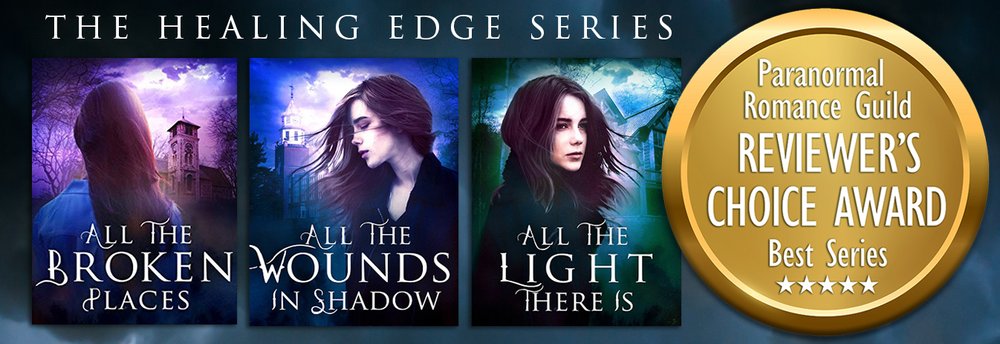
Her debut, The Healing Edge trilogy, won the Paranormal Romance Guild Reviewer’s Choice Award for Best Series.Dead Keen, the second instalment of her second series, The Things Unseen thriller trilogy,is released on 10 August 2023.
The common thread is that all of Eden’s heroines are mental health social workers. “What I’m interested in is exploring the intersections of faith, love, belief and mental health,” she explains, “and how that collides with the real world.”
From the beginning
There were early signs Eden would become a prolific writer: her penchant for “throwing five or six-syllable words I’d heard into a sentence, even though I didn’t know what they meant”; her propensity for drifting through the woods behind her house, making up stories; avid reading. That her work would be driven by caring and curiosity was likewise evident: when developers cleared part of her “sacred” forest, a 10-year-old Eden and her friend shoved sticks into bulldozer treads, hoping to sabotage the operation.
“If I hadn’t had such understanding, loving, accepting parents and teachers I would probably have gotten into a lot of trouble,” she admits. “I was a handful, but a people-pleasing handful.”
Eden was recently diagnosed with ADHD, which “explains a lot of my childhood.” It has also heightened her desire to educate people about mental health and advocate for robust self care and social care.
Life and flow
In addition to addressing mental health themes in fiction, Eden teaches social workers and researches women’s mental health. She sees these as complimentary endeavours, though admits that juggling them is “constant negotiation. It’s like water flowing into different containers; it goes where it needs to go.”
Wherever the water flows, Eden prioritizes her mental well-being. This should be axiomatic for any writer, any person, but writerly misery is a stubborn tradition. As Hemingway may have said: “There is nothing to writing. All you do is sit down at a typewriter and bleed” (the Hemingway Society explains why he probably didn’t) – and the implication that suffering equals significance has proven hard to shake.
Eden resists this, personally and professionally. Her Mac is unsanguineous. Her home writing space comforts and inspires. “I’m looking out into the back of a house across the way, an empty lot with wildflowers, trees and above that sky,” she reports. “The sky is dramatic in Ireland; there is always something going on with the clouds. On my wall, works of art from friends and pictures of my family; when I need to be inspired I can look over and be reminded there are people who love me.”
In career terms, she ignores unhelpful advice. “Anyone who says, ‘you shouldn’t be doing it if you’re not making money,’ knows nothing about writing and publishing. If I pinned my confidence or motivation on money, that would be sad indeed.”
Eden knows from experience that confidence and motivation are hard, and hard won. Far from being dispirited, she relishes the opportunity to make mental health a focal point. It is part of an ethos of care: care for writing, care for readers and care for writers.
On writing & mental health
What mental health challenges can writing pose?
It’s a solitary activity. You are the writer, and you have to do the writing. You can collaborate, you can talk about your plot, you can workshop, but ultimately it’s you with your screen, or notebook.
Also, there is no real mechanism for feedback until you get published. There can be years and years of toil before you get feedback. In other creative fields where you have an audience – music, theatre – you can put out pieces, get feedback, adjust; it gives you confidence. With writing there is more lag time between when you start working and when you get feedback. You won’t get people cheering you on. It’s just you. A lot of writers have imposter syndrome as a result. Passion and grit is required to pull through, which can be asking too much. A lot of people don’t start, or don’t continue.
Once you publish, or are in a workshop, it can be difficult to take feedback. What you write is personal; it’s your heart, brain, mind. It can be hard to take the slings and arrows of criticism if you’re not mentally prepared. It takes learning to develop perspective on what you’re hearing.
What types of writing can be particularly challenging?
Not that the stories are autobiographical, but I draw on my emotional experiences. In my last book, Dead Sound, the protagonist is with her ex-boyfriend. She’s having a flashback to the moment they broke up. He hit her in that scene and he’s now gaslighting her, telling her it didn’t happen. And she’s questioning herself. That is something that happened to me, and I wanted to write about it for the readers who might be wondering if they had suffered abuse. In order to do that, I had to revisit those experiences. Reliving something difficult or painful is difficult and painful. I have to have self-care in place for during and after. While writing, I have my dog, my coffee, my music; afterwards I might need to go out.
How has writing affected your mental health?
I didn’t write prose until I was 39. Before that, I wrote poetry, which is very therapeutic. It is a direct line to heart, soul, mind; it pulls everything together. I’d start a poem with a dilemma or problem, and by the end I’d solve it. Poetry was like mini therapy sessions. I stopped writing when I became a therapist. I was putting all my creative energy into helping my clients.
It was during a period of unemployment that I wrote my first novel, which started as a way to answer a question for myself about mental health, and the challenges of the work. For an ADHD person, [writing] is the perfect hobby. You can go on any adventures you want.
What do you make of the trope that depression and misery spur great writing?
[Reading her work] I got the feeling Sylvia Plath would have loved to be mentally healthy. She was someone who would have loved to be happy. She would never have romanticised [her struggles]. It ended in tragedy.
What can trigger mental health difficulties?
A mental health issue arises from a mixture of factors, not just genetics or circumstance. Political factors, economic factors, physical issues, how resilient individuals are based on genetics and upbringing. For writers in particular, how we deal with isolation and criticism are important.
What resources can writers use to protect their mental health?
Having other writers in your friend group is huge. Being a part of a writing program, a workshop, or reaching out to writers on social media can lead to friendships. There was a Facebook group I joined of 10 debut novelists, all our books were coming out the same year. We were going through the same stuff for the first time, at the same time. We could compare notes, kvetch, problem solve. Nobody apart from other writers really knows what it’s like.
One of the things I tell my students in social work, and I would say to writers: we are the tools of our trade. You have to take good care of your tools. If you don’t, your work isn’t going to be great.
Eden recommends
The piece of writing that changed your life before age 18?
Madeleine L’Engle’s A Wrinkle in Time – it was science, philosophy and faith mixed together in a book that was suspenseful and thrilling, that tapped into emotional truths. I wasn’t being patronized or condescended to. I try to do that with my books: include science, philosophy, relationships; I do a lot of research to make sure it’s right.
The piece of writing that changed your life as an adult?
Wally Lamb, She’s Come Undone changed my life for the better. I was a young woman suffering depression, feeling lost, at a loss, which is the situation the heroine finds herself in at the beginning of the book. Several things [in it] helped me. One was feeling seen in a positive way: the character’s mental health struggles are not stigmatized or romanticized. There was also seeing her recover, seeing there was a point of feeling better.
A classic you could read over and over?
Catch-22 by Joseph Heller. It’s hilarious. It’s insightful. What can I say? It’s reality. With our changing world, it is more and more relevant.
A contemporary book you wish you’d written?
Outlander by Diana Gabaldon. The poetry of it is so unexpected, in a way that only poetry can be. It’s like reading a novel that’s a poem, and a poem that’s a novel. And the love story is massively compelling. The characters are so real and complex that they can carry an incredibly complicated story line.
A book about writing you recommend?
“I Give you my Body…”: How I Write Sex Scenes by Diana Gabaldon. I don’t even write sex scenes, but she gives fantastic advice in general.
Who would you cast as the lead if your forthcoming novel, Dead Keen, were filmed?
Katherine Langford as [the protagonist] Neve. For the main male character, Con, Jason O’Mara; it is important to have an Irish actor.
What’s next?
The 10 August launch of Dead Keen. My writing group, the Mallow Scribes, is going to do a dramatic reading. We’ve been rehearsing for weeks.
This is an article I wrote several years ago, based on interviews with three brilliant, inspiring writers. It is worth revisiting.
_____________________________________________
“It is impossible to become a writer without reading,” says Paul Hendrickson, writing professor at the University of Pennsylvania and award-winning author of numerous books including Hemingway’s Boat.
There is a relationship between quality of reading and quality of writing. And a distinction between reading for pleasure and reading like a writer. The difference involves attitude, approach and appreciation. Michael Schmidt, poet, professor and author of The Novel: A Biography recommends reading, “with eyes wide open, full of anticipation.”
With this in mind, here are seven ways to read like a writer:
1. Compulsively
“You can’t be a writer unless you have a hunger for print,” says Nick Lezard, Guardian literary critic and author of Bitter Experience Has Taught Me. “I was the kid who sat at the table and read the side of the cereal packet.” In Nick’s case, the lust for literature paved the way for a career as a book reviewer. But regardless of the genre or field to which you aspire, all writers are readers first. And “it doesn’t matter whether the medium is the side of the cereal packet or a screen,” Nick says.
2. Slowly
Cereal-packet readers tend to wolf words like they do breakfast. This is a trait writers should train themselves out of – at least sometimes. Paul defines reading like a writer as slow reading: dawdling on the page, delving, soaking in the style and rhythm. Don’t read everything this way, though. “I don’t read the newspaper ‘like a writer’,” he notes. “I don’t have time. Nobody does.”
3. Broadly
Time is of the essence for the reading writer, but that doesn’t mean you should ignore everything apart from the classics. There are, to borrow Orwell’s term, good bad books. Nick mentions Ian Fleming as an example of compelling though less-than-literary fiction. Paul gives a nod to Raymond Chandler, saying writers can learn from his “hardboiled, imagistic lines.”
4. Selectively
That said, don’t make the mistake of reading widely but not too well. “Reading crap is no good for the eye or ear,” says Michael. “Read only the best, and read it attentively. See how it relates to the world it depicts, or grows out of.”
Nick, who has read his share of bad books as a reviewer, concurs: “If you just read books like 50 Shades of Grey or Dan Brown, you’re going to wind up spewing out a string of miserable clichés.”
5. Attentively
You get the most out of good writing by reading it with real attention. Michael advises writers to pay heed to metaphor, characters’ voices, how the author develops those voices and how they change. He recommends Christina Stead’s The Man Who Loved Children as a rewarding subject of attentive reading: “There is a strong sense of development, nothing static there. I can think of no better pattern book for a would-be writer.”
6. Fearlessly
Reading like a writer means going out of your comfort zone. When Nick was in his teens he tackled James Joyce’s Ulysses. “It was a struggle,” he recalls. “It took me a year or two. But that’s how you [learn] – you find stuff that’s above your level.”
7. Imaginatively
Reading above your level is valuable, in part, because it challenges your imagination. Paul talks about savoring the terse beauty of poetry and imagining “everything that’s between the spaces of the words, the spaces of the lines.” By observing the work of your own imagination you gain insight into how writers evoke images and emotions.
You don’t have to read every book (or cereal box) like a writer. But the more you immerse yourself in words and cultivate these seven skills, the better your writing will be. “If you are writing a potboiler, imagine how wonderful it will be if the work you produce is actually a proper novel,” says Michael. “Read the best, and read the best in your elected genre.”
Reading aloud is like breast feeding: everyone agrees it is vital for the very young, but past a certain age it gets side-eye.
There is ample research on how reading aloud supports early literacy (Wiseman, 2010; Lennox, 2013, etc.).
What about reading to older students though?
Should story-time, like nursing, be confined to the earliest stages of life, or should it continue beyond the point kids can autonomously digest texts?
If primary function of reading aloud is to support literacy, research shows that reading to older learners “boosts their reading comprehension, increases their vocabularies, and helps them become better writers. In fact, students who are read to are more motivated to read themselves” (Blessing, 2005).
Zehr (2010) reported that, “teachers found by trial and error that reading aloud worked for adding interesting content or making literature come alive for students. And some educators say they read to their classes to model good reading, such as by asking comprehension questions as they go along.”
It is always gratifying when research supports my predilections, but I’ve been reading to older students — including adult learners — for as long as I’ve been teaching. Partly, it’s a failure of imagination: I loved being read to, cannot imagine anyone disliking it.
To be clear: my childhood pleasure in hearing books aloud had nothing to do with lack of independent reading skills. I could read by age four and would compete with myself to see how many pages I could read in a day. My record was 1,000. It was a 1,000 pages of the Paddington Bear series — not War and Peace — but the point is I read like a my life depended on it.
The pleasure of being read to was something else. Books I could (and did) read myself were still a joy to hear being read by my older sister, or one of my parents. We also tuned in to read-aloud radio programs, memorably The Hitchhiker’s Guide to the Galaxy and Jeeves and Wooster.
***
What makes reading aloud so marvelous? And why should it be part of every literature and language teacher’s repertoire?
To get another perspective, I interviewed Andie Yellott, a lifetime English teacher, former Johns Hopkins Center for Talented Youth Writing Program supervisor and parent of a child with dyslexia.
Should reading aloud be continued beyond reading competence? Yes. Absolutely. When my son was in fourth grade, I would go in for one hour during lunchtime and read to his class. It was the highlight of the week, they told me. They loved it. They always wanted one more chapter.
How did reading aloud support your son with dyslexia? He could not have gotten through school without me reading to him. I read everything, even the godawful high school health book. One of the advantages to reading aloud is you can stop and springboard off into other paths, other conversations, which you wouldn’t do if the kid was reading alone. And if you want a kid to do well on a standardized test, read, read, read.
How did reading to your dyslexic son facilitate his communicative abilities? He’s got a huge vocabulary. I’d read to him, stop, ask what a word meant, try to figure it out contextually. Reading aloud to him made a difference. He thought he couldn’t write; now, he’s one of the best writers I know.
Like Yellott, I’ve had lots of student enthusiasm for reading aloud. It is more than just fun, though. Reading aloud supports specific skills, depending on whether the teacher or learner is reading aloud. Here are six benefits observed in my classrooms.
Native and non-native speakers alike struggle with the whimsy of English pronunciation. In extreme cases, this can lead to students understanding spoken words but not being able to identify them in print, or vice versa. Reading aloud while students follow along in a text is a straightforward way to ensure that kids are matching the right groupings of letters to the sounds they hear. This is especially important for those who struggle with reading and/or are learning English as an additional language.
Build vocabulary
When students are reading independently it is difficult to gauge how well they comprehend individual words. Students may grasp the main idea of a text but miss important vocabulary. As Yellott said, reading aloud is an opportunity to identify and define unfamiliar words in context. While reading to my students, I pause frequently to check comprehension. If they don’t know a word, we search for context clues, then look up the definition to verify our deduction. This is also a great opportunity to reinforce knowledge of parts of speech, e.g. ‘this is the noun fly; what does it mean when we use it as a verb?’
Create community
Reading is too often solitary and functional, the vegetable kids have to eat before dessert. We need to remember: independently reading printed texts is a novelty. For most of homo sapiens‘ time on the planet, stories were oral. People gathered around fires, or beneath fearfully and wonderfully made cathedral ceilings, to listen to a bard/priest/storyteller. Being read to was the only way most people could experience books until the advent of mass public education, which wasn’t all that long ago.
Reading aloud in the classroom reclaims the power of the story to articulate fears, hopes and desires; to delve and reveal. Students who have a chance to respond verbally to a book: express how they feel, ask clarification questions and debate it with their peers, are axiomatically more engaged than those who skim it in lonely silence.
Learner-led Reading
Correct decoding errors
Even competent readers often make decoding errors such as ‘stared’ for ‘started’. If a student is reading silently, there is no chance to identify and correct these slips that, as they accumulate, affect comprehension. Younger and/or less able readers are more likely to make these mistakes, so reading aloud is an ideal tool to support their literacy.
Understand punctuation
If Emily Dickenson was right and “a word is dead./When it is said” then spare a thought for punctuation. Students can learn the function of commas, colons, etc. through direct instruction but that doesn’t automatically translate to competent — much less creative — usage in their writing. One of the best (only?) ways to understand the delicious possibilities of punctuation is to read aloud. By treating the punctuation as a kind of score — lift the voice here, pause, slow down, shout! — students develop the ear for punctuation that every good writer must have.
Improve verbal fluency and confidence
We tend to think of fluency in the context of learning an additional language, but it isn’t just language learners who need to practice this skill. Learning difficulties, lack of a richly verbal home life and shyness are a few of the reasons native speakers may struggle to express themselves fluently in their language. For students who struggle to articulate, whether because they are acquiring the language or for some other reason, reading aloud takes the pressure off of deciding what to say, and allows them to focus on how to say. Reading well-written texts gives students a chance to see how successful communication sounds; they can practice pronunciation, enunciation and tone without the risk of error. Ideally, they can inhabit the voice of the text and, in bringing it to life, experience the possibilities of their own voice.
Parting thought
In Sense and Sensibility the ‘sensible’ (i.e. sensitive) sister Marianne falls in love with Willoughby in part because “he read with all the sensibility and spirit” his rival lacked. In Jane Austen’s time, to read aloud well and fluently was a mark of refinement and good taste. As our world becomes more digitized, text-driven and fragmented, reading aloud is due a renaissance. Anyone can jab out a text; to read a book with eloquence and feeling, though? That’s magic.
How do you feel about reading aloud to older students? What benefits/challenges have you observed? Share in the comments or Tweet @CilaWarncke
Fifty-three years ago Dr Martin Luther King Jr was assassinated in Memphis. He was in the city to support striking sanitation workers who marched carrying signs that bore a simple statement: I am a man. The slogan was chosen, striker Elmore Nickleberry told NPR, because “most of the time they’d call us boys.”
The night before his death, which was the night before a protest march, Dr King gave a speech famed for its rousing finale: ” I just want to do God’s will. And He’s allowed me to go up to the mountain. And I’ve looked over. And I’ve seen the Promised Land. I may not get there with you. But I want you to know tonight, that we, as a people, will get to the promised land!”
Each term I share this speech with my students as a masterpiece of rhetoric, a master class in persuasive writing. I ask them to listen to the whole speech, including the less-often quoted part that made Dr King’s existence a threat to a certain segment of society.
***
“Now the other thing we’ll have to do is this. Always anchor our external direct action with the power of economic withdrawal…
“We don’t have to argue with anybody. We don’t have to curse and go around acting bad with our words. We don’t need any bricks and bottles. We don’t need any Molotov cocktails. We just need to go around to these stores, and to these massive industries in our country, and say,
“God sent us by here, to say to you that you’re not treating his children right. And we’ve come by here to ask you to make the first item on your agenda fair treatment, where God’s children are concerned. Now, if you are not prepared to do that, we do have an agenda that we must follow. And our agenda calls for withdrawing economic support from you.”
And so, as a result of this, we are asking you tonight, to go out and tell your neighbors not to buy Coca-Cola in Memphis. Go by and tell them not to buy Sealtest milk. Tell them not to buy — what is the other bread? — Wonder Bread. And what is the other bread company, Jesse? Tell them not to buy Hart’s bread. As Jesse Jackson has said, up to now, only the garbage men have been feeling pain; now we must kind of redistribute the pain. We are choosing these companies because they haven’t been fair…
But not only that, we’ve got to strengthen black institutions. I call upon you to take your money out of the banks downtown and deposit your money in Tri-State Bank. We want a “bank-in” movement in Memphis. Go by the savings and loan association. I’m not asking you something that we don’t do ourselves at SCLC. Judge Hooks and others will tell you that we have an account here in the savings and loan association from the Southern Christian Leadership Conference. We are telling you to follow what we are doing. Put your money there. You have six or seven black insurance companies here in the city of Memphis. Take out your insurance there. We want to have an “insurance-in.”
‘I have a dream’? Cool. Black kids and white kids joining hands? Fine.
Black citizens boycotting racist corporations and seeking economic empowerment? That’s dangerous talk.
When we honor Dr King, let’s honor him as a warrior for economic justice. He knew there was no chance of equality, freedom or social justice in a system predicated on economic oppression.
Listen to Dr King’s speech today. The truths and challenges he speaks are still with us.
“We mean business now, and we are determined to gain our rightful place in God’s world,” he said that fateful night. “And that’s all this whole thing is about. We aren’t engaged in any negative protest and in any negative arguments with anybody. We are saying that we are determined to be men. We are determined to be people. We are saying that we are God’s children. And that we are God’s children, we don’t have to live like we are forced to live.”
This was one of my all-time most rewarding commissions. The Comedy & Magic Society asked me to write their bio. Mark Phillips, Bob Sheets, Brian Curry and Barry Woodsat for long interviews to make this word-portrait possible. Rereading it, I am struck now, as I was then, by their wit, intelligence, humility and generosity.
Picture a quiet Friday night in Gaithersburg, Maryland. Most of its 60,000 citizens are unwinding in familiar ways: having a drink with friends, going on a date, playing with their kids, or catching a movie. They’ll gossip, kiss, laugh, or maybe get tipsy before they fall into bed and when they wake up on Saturday life will continue as it always has. Tonight, though, 99 people have set aside their usual end-of-the-week rituals to go to the Comedy & Magic Society’s monthly show at the Gaithersburg Arts Barn.
Founded in 2005 the Comedy & Magic Society is the joint project of four hard-working professionals: Mark Phillips, Bob Sheets, Brian Curry and Barry Wood. They have over 100 years of cumulative magic experience and each of them could (if he weren’t too modest) justifiably claim to be one of the world’s finest magicians. But this is only part of the reason why one Friday of every month 99 people turn up at the Arts Barn, eyes popping with anticipation.
Many of them have been before because live magic performed at this level is strangely addictive. You get hooked on the thrill of anticipation and the little adrenaline bursts of surprise. It isn’t something you can DVR, download or Google, so people come back – and bring their friends. First time visitors to the sturdy red-brick former stable building enter a little more cautiously. Some are excited, others are skeptical; some of them want to be entertained, others have notebooks tucked in their pockets. All are curious.
The magic begins as the audience mingles and makes its way to the alternating bright purple and lime green seats. Nick DeCuites and George Woo, the Comedy & Magic Society’s resident close-up men, circulate through the theater picking pockets, popping cards or conjuring the unexpected. Grown-ups laugh and gasp. Kids crane their necks to follow the flying fingers but their eyes can’t move fast enough. Then the lights dim, the curtain rises and the Producer arrives on stage. CMS’s four co-producers take it in turn to host and emcee the shows. Tonight let’s say it is Bob Sheets, the avuncular comedian with a grin as big as the Ritz.
If you want to know anything about magic or, indeed, the history of American popular entertainment in the 20th century, Bob is your man. He was born in California, the land of prospectors, dreamers, and professional make-believers. One of these was Paul Winchell, a ventriloquist who also patented the first artificial heart. Inspired by Winchell’s TV show, Bob taught himself ventriloquism. But when his dad bought him a magic kit he gave up voice-throwing because, at the ripe old age of 10, he thought it was “kid stuff”. Magic, on the other hand, merited study.
The wisecracking schoolboy (“I always had to have the last word,” he chuckles) used to rush home after class to practice new tricks. Unlike most kids, he didn’t mind getting sent to his room because it meant more time to perfect his craft. Bob joined the San Diego Junior Magic Society. At 13 he was performing at parties and clubs; at 15 he was a seasoned performer – as well as being America’s youngest Fuller Brush Man. Door-to-door sales and magic require many similar skills: you have to engage with strangers, win them over, put them at ease, and convince them you have something they need. Bob, with his effervescent enthusiasm, was darn good at it. Academics were a different matter. “I was a D+ student,” he says. “They only let me graduate because they knew there was no point in keeping me.”
Bob finished high school in 1968 when the military was snapping up men to send to Vietnam. He joined the Navy but was discharged 17 days later when they found he was allergic to the regulation wool blankets. Instead, he went down a path trod by many legendary entertainers: he joined the circus. Between pounding tent stakes, driving trucks, and packing down, he polished his performance skills in the main ring and his close-up skills as a sideshow act. Working with the circus was more than a chance to perfect tricks. It was Bob’s initiation into a centuries-old fraternity of itinerant entertainers whose heritage runs from medieval minstrels and court jesters to vaudevillians and, of course, illusionists.
All four of the Comedy & Magic Society co-producers are enmeshed in the traditions and history of magic. This enthusiasm shapes and spurs their careers, and is integral to the CMS ethos. Brian Curry, the youngest member (Mark describes him the D’Artengean of their troupe of magic musketeers) began his education at the renowned Denny & Lee Studio in Baltimore, and was tutored by card wizard Peter Galinskis. “He’d make me rehearse one little move over and over,” Brian says. “He wouldn’t let me start a new one till I learned the last one.” Brian was a young teenager at the time, but magic was already more than a hobby. “It helped me break out of my shell,” he says. “I wasn’t very good at talking to people and it was a way for me to communicate.”
The son of an IBM executive, Brian spent most of his childhood in Tokyo and Paris. Moving between countries on a regular basis fostered independence and resilience – traits that stand him in good stead as a professional magician. As soon as he learned his first trick in sixth grade he was hooked, and regularly spent two or three hours a day practicing. “It was luck,” Brian says of his career. “So much luck.” But, like his co-producers, Brian works ferociously hard for his good luck. When he was 15 he contacted Mark Phillips at a magic convention and asked if he could show him a competition routine. It was a memorable meeting. Mark turned up with a handful of other famous magicians and the youngster promptly bombed. “His act was a disaster,” Mark laughs. “He had problems you wouldn’t wish on your worst enemy.” Still, they took him to dinner afterwards.
Years later that friendship would help form the Comedy & Magic Society but first Brian had to perfect his craft. Luckily (this time it really was luck) Clyde’s, a local restaurant, booked a magician who also happened to be a conman. The conman/magician got busted and his prison sentence was Brian’s big break. The shy 15- year-old went to work doing close-up magic for diners waiting to eat. Seventeen years later Brian still works there, delighting Clyde’s hungry customers. He credits the gig with helping pay his way through college – and honing his skills so he’d never have to use his degree.
None of the Comedy & Magic Society men took for granted that they would be successful as professional magicians. Mark Phillips, a corporate magician who spends most of his time performing at industry trade shows and events, holds a degree in microbiology. “My parents wanted me to have something to fall back on,” he explains. By the time Mark went to university, though, he’d already laid the foundation for a future far from microscopes and laboratories. His father was a career Army officer and Mark was raised in military outposts like Fort Hood, TX; Fort Leavenworth, KS and Fort Huachuca, AZ. As the smallest kid in the class, Mark was a self-professed class clown and discovered that doing magic was a way to get noticed and make people laugh.
Also, you had to make your own entertainment on remote military bases. Fort Huachuca, where they moved when Mark was in eighth grade, is in arid high-plains country 15 miles north of the Mexican border. There isn’t much to do there, or in neighboring Sierra Vista where Mark went to high school. One of his activities was playing trumpet and trombone in the school band, which often performed on base. Mark, ever the over-achiever, would perform magic on stage while the band was taking its break, thus earning his stripes in front of a tough military audience.
By the time he earned his degree Mark knew he wanted to pursue magic full-time and moved to New York to make his way as a corporate entertainer. It was the boom years of Wall Street and Mark dove into his profession with the same gusto as the traders and bankers around him. The dizzy world of high finance has long since spun itself out while Mark, by contrast, has honed his craft and career with discipline that must make his dad proud. He attributes his perfectionism to a lifetime of playing classical and orchestral music (he now plays the French horn, which has a reputation for being fiendishly difficult to master). “I have very high expectations of skill level,” he says. “A performance has to be well-rehearsed.”
These expectations infuse every Comedy & Magic Society show. Ask any of the coproducers what their biggest challenge is, as a magician, and they’ll tell you it is trying to change an audience’s expectations. Most people’s experience of live magic is limited a performer at a kid’s birthday or a friend showing off card tricks. “People don’t see much good magic so winning them over can be an uphill battle,” Bob says. As a result, CMS is incredibly protective of its audience’s experience: “We don’t lower the bar. Our guests are professional magicians and they have to hit a certain level before we let them in front of our audience,” he adds. The Gaithersburg Arts Barn shows usually feature one or two guest performers, in addition to Mark, Barry, Brian or Bob, and these guests are culled from the co-producers extensive contact books.
“Bob’s been a big name in the magic world for a long time and has a lot of friends,” Mark says. “If anyone is passing through he’ll buttonhole them and say ‘come do our show, it’s a lot of fun’.” Fun is one word to describe the CMS shows. Others are: exciting, social, electric, family-friendly and, above all, funny. Most magic shows are about highlighting the dexterity and skill the magicians. Add comedy, though, and the whole dynamic changes. The relationship between audience and performer shifts. Barriers melt away. As a magician, it is tempting to treat the audience like the enemy: you want to fool them, put them on the wrong foot. Mixing comedy and magic, however, requires a different mind-set. “It’s easier when the audience goes with you willingly,” Mark explains. “You need charm and personality. You need to be a good communicator.”
Communication skills don’t come naturally to everyone, though – not even magicians. Barry Wood, the group’s resident actor and improv expert, says he was “kind of a loner at school. Magic was a hobby I could retreat into.” He’d go off to the library and read about the history of magic and the lives of famous performers. “I was fascinated by every aspect of the art,” he recalls. This fascination drew him out of his shell and into Barry Taylor’s legendary magic shop. The elder Barry became his mentor, and Wood credits him with taking an introverted kid and putting him on the path to being a world-class performer. Young Barry learned that communication could help smooth out a less-than-perfect trick. “At first, I was just trying to fool people, but once I learned about presentation the challenge was to weave a story and connect with my audience.”
The best magic is about making connections and a gifted performer with enough tricks up his or her sleeve can weave a spell anywhere. After an apprenticeship that included working weekends at Barry Taylor’s shop, Barry Wood filled in for a friend doing magic at a pizza restaurant. He left his first paying gig “on cloud nine,” with a bellyful of pizza and cash in his pocket. The die was cast. Barry went to college and majored in marketing but he funded his degree by performing magic. “I always enjoyed giving class presentations – maybe in the back of my mind I knew I wanted to do magic,” he recalls. Still, the penny didn’t drop until Barry began looking for a marketing job after graduation. When interviewers found out he did magic they were intrigued; they wanted to talk about shows they’d seen, or tricks they knew. Many asked why he wasn’t doing magic, since it was clearly his passion. “I thought, ‘maybe they’re right.’” To his relief his parents were supportive, and Barry began his professional career in earnest.
One of his formative experiences was working with Bob Sheets at the Brook Farm Inn of Magic, a restaurant/magic haunt in Maryland run by Bob Sheets and partner Steve Spills. At first, Bob and Barry seem like polar opposites: Bob is the bluff, ebullient journeyman firmly rooted in the great American tradition of life on the road. Barry is reserved, thoughtful and precise; he likes bookstores and wineries with nice views. But they have a lot in common when it comes to magic. Both cite street magic as the ultimate challenge. “If people don’t like you, they walk away,” says Bob. “It doesn’t get any tougher, or more honest, than that.” Barry, who taught himself fire-juggling to avoid dead time while doing street performances at Baltimore’s Inner Harbor, agrees. Always eager to develop his skills, Barry began to study acting and improv. He joined an improv group then helped found comedy sketch troupe Dropping The Cow.
“Barry can do anything,” Brian says. “You would never pick him out in a crowd as a professional entertainer. He’s so quiet and humble. Then he gets on stage and destroys. It’s awesome.” Brian jokes that he’d like for Barry to suck at something “because it would make me feel better” but they are more alike than different. Both have a passion for working with kids – which is probably only slightly less demanding than street performing. Brian does school assembly shows, including a magical mathematics review and a book club, while Barry works with a professional counselor doing an anti-bullying show that tours schools in the greater Washington DC region. He is also a long-standing member of the Big Apple Circus Clown Care program. To Barry, cheering up sick children is the apotheosis of his magical art: “I’ve found an audience for all the skills I learned that were inner-focused, that I learned for myself. I don’t know if it’s destiny or what, but now I have an opportunity to use my abilities in a positive way, whether it’s helping school kids dealing with tough situations, or making a child laugh in his hospital bed and seeing the relief on his parents’ faces. I’m lucky to be able to use my abilities in a positive way.”
Ask any of Barry’s colleagues and you’ll hear similar sentiments, in different terms. Brian, along with Mark and Bob, does regular gigs on cruise ships, and delights in the way magic transcends culture and nationality, helping him unify a room full of strangers who don’t even speak the same language. Mark gets a buzz out of magic’s ability to transform the ordinary: “When an audience sees magic, they think about things they don’t usually think about. They have a chance to think about the everyday things they take for granted.”
This passion for making the impossible real fuels all of the Comedy & Magic Society members. Make no mistake: magic is hard work. They travel a lot and pulling together their beloved Arts Barn shows requires commitment and sacrifice. “We work so much we’re rarely in town at the same time,” Bob says. “But when we are it’s a killer show.” In addition to long stints on the road they face the physical and mental rigor of regular performance. One of Mark’s corporate trade-shows, for example, involves eight-hour days of repeat performances to an ice-cold audience that has to be won over; over and over again. And anyone who knows kids can imagine how tough it is to convince school kids to take an interest in math.
In addition to the challenges of the work itself, is the challenge of finding or creating work. “You have to be really self-motivated,” says Brian. “There is no manual telling you how to make a living. You have to constantly evaluate how you run your business, your show, your website….” They each have their own way of thriving: Mark taught himself German so he could work trade shows there; Brian has a crop of entrepreneurial side projects; Bob spent 15 years mixing drinks and conjuring surprises as a bar-tending magician; Barry does everything from one-man shows, to toddler’s birthdays to Presidential inaugurations.
To some it might seem like a hard way to earn a living but Barry, Mark, Bob and Brian brim with joy and enthusiasm for what they do. “I’m grateful to be getting paid to do something I love,” says Barry. “I’m blessed.” This gratitude and energy flows through their work both as individual magicians, and as the Comedy & Magic Society collective. That is what lends the air inside the Arts Barn its sprinkle of magic dust one Friday a month. Magic, as performed by the CMS and friends, is the art of celebrating what’s possible. “Magic can lift people’s feet off the ground, if only for a moment,” says Bob. “You never know what the result will be. You get a kid in front of an audience and he realizes it’s okay to get in front of people, it’s okay for people to laugh at – and with – you. It gives him confidence.”
Children and adults alike leave the Arts Barn wide-eyed and flushed with laughter not just because of the flawless routines and peerless patter, but because Brian, Bob, Barry and Mark are walking, talking, juggling proof that you can fulfill your dreams and that the world is alive with possibilities. “Magic reminds us there are a lot of things in the world we take for granted,” Mark says. “If we experience a moment of magic and wonder in a performance we start paying attention to the wonder in other parts of our lives.”
In 1980, the year I was born, the board of directors of the American Psychiatric Association voted to allow pharmaceutical companies to offer paid symposiums at its annual conference. Thirty years later I was sitting on coarse beige upholstery in a doctor’s surgery in Glasgow. “Are you sure the results are normal?”
He sighed and repeated that my blood, hormones, iron level and thyroid were all fine.
Disappointment lodged in my oesophagus. Please tell me something’s wrong: hypothyroidism, Vitamin D, anaemia, hormone imbalance, anything.
I had moved to the rain-wracked west coast of Scotland to do a Master’s degree in writing but, after a few weeks, I could barely read. Obsessive thoughts snarled and snapped: you’re stupid, you’re hopeless, you’re a failure. Glasses leapt from my hands at my part-time waitress job. Burns crept up my arms as my reflexes slowed. My boss reprimanded me for being “snappish”. I craved sugar, wolfing my flatmate’s ice cream and cereal then slinking out the next morning to replace them. I slept 12, 15 hours a day, exhausted by the weight of my body.
One more test. The doctor gave me a single sheet of paper. I tend to score well on tests; this was no exception. The Beck Depression Inventory1 is a common screening for depression, intended to “identify [its] presence and severity”2. He skimmed my responses about sadness, guilt, irritability, hopelessness, sleep disturbances, and suicidal thoughts.
“I’ll write you a prescription.”
“Is there someone I can talk to?”
Referral in hand, I walked to another basement office.
That doctor cut me off after ten seconds: “Do you want a prescription?”
He huffed audibly. “If you want to talk to someone go to the counselling service. All the other American students are on meds.”
***
In Anatomy of an Epidemic award-winning journalist Robert Whitaker describes how the “notion that [pharmaceutical] ‘magic bullets’… would bring miracle cures”3 became psychiatric dogma — despite the fact no one fully understands the organic processes of mental illness. Do psychotropic “bullets” hit their target? If so, what happens? No responsible physician would prescribe thyroid and hormone treatment without a lab test. But nobody checked my serotonin or dopamine levels. My doctor had never seen me before. He knew nothing of my family, temperament, or situation, but on the basis of 21 questions offered a drug that would dramatically, maybe irreversibly, alter my brain chemistry.
The most common antidepressants are selective serotonin reuptake inhibitors (SSRI)4 like Prozac. As it happens, I spent several years toying with a fast-acting antidepressant. Methylenedioxymethamphetamine, like SSRIs, boosts serotonin levels in the brain. It obliterates unhappiness in a rush of euphoria, confidence, clarity and empathy. Everything is better: music, lights, colour, conversation, friendship, sex, and cigarettes.
Until the comedown.
“Suicide Tuesday” was a semi-serious joke among club kids. We compared notes on nightmares, hallucinations, and memory loss. We counted the days till jaws stopped aching and appetites returned.
Prozac is legal but brain chemistry is no respecter of legislation. Trials on SSRIs show that “rats fed high doses… ended up with neurons that were swollen and twisted like corkscrews”5. The human evidence is compelling: the Food and Drug Administration received 39,000 complaints about Prozac in the nine years following its approval, including reports of suicidal and homicidal outbursts, “psychotic depression, mania, abnormal thinking, hallucinations, hostility, confusion, amnesia, convulsions, tremors and sexual dysfunction.”6
***
Instead of antidepressants I took the second doctor’s advice and went to the student counselling service. Every Friday afternoon between three and four (after dark, for most of those moths) I went to a basement room where a white-faced, gold-rimmed Seth Thomas clock sat in a disused fireplace. A tiny glass pitcher and two small glasses stood on the hearth beside a box of Tork tissues. I had fold them in half to blow my nose.
“I’m scared.”
“Of what?”
“I feel like I’ve lost control.” I threw another fistful of sodden tissues in the bin. “You know the Rolling Stones’ ‘Paint It Black’? It feels like that.”
Words that come to mind now are no less true for being clichéd. Nouns: storm, cloud, void, chasm, maelstrom, black hole. Verbs: choke, crush, frighten, smother, horrify. Adjectives: miserable, catatonic, helpless, damaged, trapped, angry, sad, frustrated, lost.
***
In 1988 the United States Food and Drug Association green-lighted Prozac and America’s National Institutes of Mental Health set up the Depression Awareness Recognition and Treatment (DART) program. Its mission was to promote “greater acceptance of depression as a disorder” and, perhaps not incidentally, spread the word that “antidepressants produced recovery rates of ‘70% to 80% in comparison with 20% to 40% for placebo.”7 Eli Lilly, which held the patent on Prozac, helped pay for eight million DART brochures that highlighted the merits of serotonin-boosting pharmaceuticals.
If you’re trying to dodge the magic bullet you need other weapons. I’ve been running since age 13, hooked on the peace and clarity that follows the effort. In Glasgow I got up at 5:30AM, pulled on ski socks, leggings, sweatshirt, jacket, hat, gloves and battered Sauconys then ran for an hour. I swapped my restaurant job for a coffee shop and found comfort in the routine of making espresso, toasting sandwiches, and gossiping with the regulars. At home I baked caraway rye bread, bagels, and lemon cookies to combat the chill seeping through the single-glazed windows. I bought kilos of oranges and taught myself to make marmalade; experimented with vegan mac-and-cheese and coconut milk smoothies. On black afternoons I tiptoed up the ice-slick hill to the gym and did squats, bench presses and seated rows. I used holiday photos for bookmarks and saved quotes on index cards: “A book must be the axe for the frozen sea inside you,” wrote Kafka.
***
“In a [1998] World Health Organization study of the merits of screening for depression,” writes Whitaker: “Those diagnosed and treated with psychiatric medications fared worse – in terms of their depressive symptoms and their general health – over a one-year period than those who weren’t exposed to the drugs.”
***
One year is 365 days of wondering why am I still breathing? It’s a long time to resist the temptation to drag the tip of a knife down your arm just to see how it feels. I scurried and feinted but depression was a patient cat to my mouse. There were still tears in writing workshops, still mornings huddled beneath the espresso machine gnawing my fingers, still cake binges followed by penitent cups of vegetable broth.
Depression is a black-hearted octopus tenderly, insistently probing for weakness. Resistance is the only secret to survival; fight the beast with every cheap, inadequate weapon at your disposal. Work and running were my best allies. I got better at snatching pleasure and being selfish about delight. When insomnia chipped at my fragile defences, I went to the doctor for sleeping pills. At the end of the year I left Glasgow, bruised but stronger. A magic bullet might have been swift relief. But the grit, patience, and humility I learned on my way are side-effects worth having.
There are two kinds of people who give advice to writers: those who want better writing, and those who want payment.
Teachers, from the unsung heroes singing the ABCs with snotty toddlers to college professors hacking through forests of sophomoric prose, are mostly the former.
Once you venture beyond formal education, though, the search for guidance can lead straight into the slough of despond where some self-proclaimed guru will offer you the keys to the kingdom, on an installment plan. There are also wonderful writing teachers who ought to be paid for their time and expertise.
These five questions will help you to avoid hyenas and find legitimate guides —
1. Do non-writers read their books?
This is important because, if you’re going to take writing advice from someone, it might as well be an actual writer. Not someone who has set him/herself up as an expert on the basis of figuring out MailChimp.
When a writer who is read and loved by millions, like Ray Bradbury, E.B. White or Stephen King dispenses writing advice, I’m happy to pay.
2. Do they tell you how much they earn?
The above mentioned writers never, to my knowledge, sent emails to their readers bragging about their income. If a so-called writing guru leads by telling you how much they earn, it’s a con.
Writers can and do earn great salaries as writers. But if a person’s primary income stream is other writers s/he is a huckster, not a writer.
Writers are wishful thinkers, in the best possible way. We wish to understand, report, illuminate, entertain, and above all connect. This fundamental optimism keeps us at the keyboard. It also makes us susceptible to slicks who claim to have discovered a secret to striking rich as a writer.
This prospect is pure mirage — and enticing as an oasis.
If someone really had the secret to endless, effortless cash from freelance writing clients s/he would simply enjoy the income. If the technique were valid and replicable, teaching it would create competition.
4. Do they try to up-sell you?
A writer who earns a comfortable primary income from writing shouldn’t be hustling. I’ve encountered sales pitches ranging from $199 for an online journalism course to $10,000 for one year of “mentoring”.
The give away, whether at the low or high end of the price scale, is the guru’s insistence that this is great value. Two online courses for the price of one! Access to a “community” (as if there aren’t a gazillion free writers forums and Facebook groups)! Cheaper than college! Cheaper than a weekend in Vegas! Only 20 percent of your annual income!
The people most likely to be tempted by dubious expertise are those worst-placed to pay these rates, which makes fake gurus opportunistic dickwads.
5. Do they tell you it’s all in your head?
Without fail, every single fake writing guru will preach some version of “failure is a mindset”.
Never mind that writer’s median income has dropped by 42 percent since 2009, according to the New York Times, and that royalties and advances are down by 30 percent in that period. Or that more than 1,800 newspapers have closed in the U.S. since 2004. Or that magazines like Glamour, Redbook, Cooking Light and ComputerWorld ceased print publication in 2018.
PayScale data show only 10 percent of all writers earn more than $83,000 per year, meaning even fewer earn above the much-hyped six figure mark.
Failing to earn scads of money as a writer is not a mindset — it’s a reality.
The only people who tell you it’s all in your head are the ones who are ass-covering for the inevitable moment when you realize that over-priced bottle of secret sauce isn’t going to make you a millionaire.
Where to find the real thing
Don’t despair of getting sound, disinterested writing guidance— and don’t pay through the nose for it.
Sites like Funds for Writers and Freedom with Writing are a great way to learn about contests, publishers and grants.If you want advice on the craft of writing, hit the library or bookshop.
My favorite books on writing include:
Zen and the Art of Writing — Ray Bradbury
Bird by Bird — Anne Lamott
Writing Down the Bones and Wild Mind — Natalie Goldberg
On Writing Well — William Zinsser
Steering the Craft — Ursula K. LeGuin
For honest first person advice, join a writing group or workshop, or take a class. Some of the best, wisest writers I know work in community colleges or extension programs, for little reward and less recognition, because they want other people to experience the life-altering power of writing.
Seek the positive
Writing should be a source of joy, even if it’s a job.
A writer worth listening to embraces both its struggles and its delights.
“Writing is survival,” Bradbury wrote. “Any art, any good work, of course, is that. …We must take arms each and every day, perhaps knowing that the battle cannot be entirely won, but fight we must, if only a gentle bout. The smallest effort to win means, at the end of each day, a sort of victory.”
The following excerpt is from an interview I did for Pennyblackmusic in Dec ’01 or Jan ’02. I’d only been in London a couple of months and found the West End as dizzying as did Mr Wratten. Despite being one of my first profiles, this remains one of my favourite pieces. You can read the full feature at Pennyblackmusic.
The first thing you’ll notice about Trembling Blue Stars frontman Bobby Wratten is that, well, nothing stands out. No requisite dangling cigarette, no Mick Jagger sneer, not even any Bono specs, just a very slender, slightly balding man with light hair, blue eyes and a spaniel smile; a thoroughly unprepossessing rock star. Not that Bobby would like the term rock star: too clichéd, too aggressive.
Wratten doesn’t appear to be fond of the hectic or overstated. Even on a weeknight the routine bustle of London’s West End seems to unnerve him slightly. And he only looks marginally more comfortable settled into a low-lit pub. He’s not, it turns out, drinking orange juice in deference to his slight cough; he just doesn’t drink. Most of the nervousness, though none of the soft-spoken courtesy evaporates though as Wratten begins to talk about what really interests him – his music.
Though for someone who has devoted his life to making music, Wratten didn’t have a particularly polished beginning. Wratten confesses that he and [bassist] Michael Hiscock “couldn’t even tune our guitars,” in the early days of his first band, The Field Mice. When asked how their now-cultishly-adored whispery, twee-pop style developed he smiles, “you copy the bands you like and get it wrong, so that’s where you end up.” But press on and ask what bands he liked as a youngster and he rather incongruously names The Jam, The Clash, XTC, and Joy Division.One wonders exactly what strange things have to happen to bass and guitars, etc to get – accidentally – from The Clash to The Field Mice, but then the studied innocence of Wratten’s expression hints that he’s being more than a little disingenuous. And when he adds that, “there was nothing deliberate about any of it” it seems certain that the dim light of the pub is masking a twinkle in his eye.
After all, he insists that his music is neither as sad, nor as obsessive as some might like to believe. The acrimonious break-up of The Field Mice is well documented, as is the subsequent formation of Northern Picture Library by Wratten, and fellow former-Field Mice Annemari Davies and Mark Dobson. Even more legendary is the break-up of Annemari and Bobby’s long-term relationship, which led to the dissolution of Northern Picture Library after just one album and a handful of singles.
A self-professed incurable romantic, Wratten says, “like the idea you have a soul mate,” which goes a considerable way towards explaining the raw sadness captured in many of his lyrics. “I wrote a lot of songs about Annemari,” he says, perhaps understating the case just a little. The Trembling Blue Stars debut ‘Her Handwriting’, released in 1994, is an unabashed hankie-wringer of a CD recording the emotional devastation that came in the wake of the split with Davies. Unsurprisingly, Wratten reports that Davies declined to sing on ‘Her Handwriting’, though by the time he’d written the second Trembling Blue Stars record, ‘Lips That Taste Of Tears’ his ex-girlfriend was ready to rejoin him in the studio.
Which he claims is not at all creepy, in an “Every Breath You Take” kind of way. “I don’t [write songs about Davies] anymore but people still think I am, it’s just kind of funny,” he says. Then by way of supporting evidence points out a lyric from the third TBS record, ‘Broken By Whispers’: “it goes, ‘the way we left it was you would call,’ [from ‘Sometimes I Still Feel The Bruise’] which I thought made it pretty obvious that it was about someone you weren’t in contact with, but Annemari was in the studio with me when I recorded it!” What’s more, he says, they are good friends outside the studio as well; Davies minds his house for him when he’s away. Which, most recently, was on Trembling Blue Stars inaugural tour of the States. Their American label, Sub Pop funded a multi-city junket, which Wratten thoroughly enjoyed. “[We’re] treated more seriously [there]” he says; possibly, one imagines, because Americans prefer to forgo the irony that Britain almost requires of its musicians.
Not that all their tour was spent in front of fawning audiences; in Portland, OR Trembling Blue Stars were booked to play a club called Dante’s – a seedy gay/leather sort of club.“ There were a few people in front who were there to see us, and a lot of people who just looked confused… but there were no disasters” Wratten recalls. Playing bars and clubs also meant that the shows tended to start late, after a long day of driving (the band navigated all the way from New York to San Francisco in the course of their tour), so “you play the first song three times as slow as it should be.” And instead of throwing yourselves a backstage shindig afterwards, apparently, you pack up and climb back into the van for some kip. “We weren’t very rock’n’roll,” Wratten explains, unnecessarily.Though in a world where“quiet is the new loud”, sleeping, chatting, and hanging out at truck stops may be new rock’n’roll.
In any case, returning to Mitchum, South London was a bit of a jolt, “it felt really strange coming home to nothing… we don’t really know what happens next,” he says, betraying for the first time a sense of anxiousness. This has something to do with their bassist leaving the band at the end of the American tour, and perhaps more to do with the fact that Trembling Blue Stars have already far overreached their intended lifespan. Her Handwriting was meant to be a one off record, and now, four albums later Wratten still believes you should “treat each record like it’s the last one you’re ever going to make.” Great for raising the artistic stakes probably, but surely stressful?






























 Cila Warncke Writer