Unexpected

Saturday, 19 December 2015, I plotted a route around Portland’s used book stores. In the back of my sister’s red Wrangler, a box of Oregon Wine Pioneers. In the seat beside me, a show-copy, its gloss paper cover softened with wear. I hoped to sell a few copies, or inspire a few orders.IMG_20161225_115917
On my phone, a string of Tinder messages from some guy who spent Friday evening trying to cajole me out of the house to the some downtown bar. “The feet are up,” I had replied, by way of refusal. He seemed nice, though, so I agreed to meet him in Old Town at 6PM on Saturday.

The day started out sunny. I navigated between bookshops using Google maps print-outs since my phone didn’t have roaming. Clouds gathered in the afternoon. By the time I got lost on my way to my last destination, a wine distributor’s office in north east, it was raining and prematurely dark.

Driving back to the west side, I thought about heading straight home. I could message my excuses from there. Throwing in the towel by 6PM was lame, even for me. Anyway, this guy, Chris, said he had to be at work by eight. No danger of date creep.

We were meeting at the Roseland Theater, a few blocks from my mum’s apartment. I parked near her place, to have a clear line of retreat. The rain had stopped; the air was cold. On my way to the Roseland I passed a small, colourful Mexican dive.

At the theater, I stopped in bafflement. The building, the whole block, was six deep in teenage girls, a barricade of hormones and cheap perfume. How the hell was I supposed to find this guy? No point in checking my phone — no roaming.

After one full lap, I stopped and stared at the red-and-green lights twinkling high on an adjacent skyscraper. If he didn’t magically appear in the next few minutes, I’d call it a night. Almost as soon as the thought formed, someone walked toward me from the corner I just passed. Please don’t talk to me, I thought.

“Hi.”

One drink, to be polite, that’s all.

“Hi,” I replied.

*** IMG_20170228_102453
This morning Chris woke up at 4AM and couldn’t get back to sleep. I dozed, intermittently aware of his restlessness.

I am tempted to say something florid like, I can’t sleep/live/breathe without him, but that would be untrue.

What I thought, as we yielded to wakefulness was, if you don’t have any expectations you won’t be disappointed. 

Anything is possible, even the absence of us. That is what makes this so precious.

I fell for him like rock tossed into a canyon (still falling). One drink, to be polite turned into three margaritas and a long kiss in the middle of that noisy Mexican dive. It turned into a relationship built on air miles: Ibiza, London, Rome, Brussels, New York, DC, Detroit, Denver, Salt Lake City, Milan, Vienna, Manchester, Glasgow.

We got married in Memphis. Adopted a cat, sold a car, moved to Spain.

All of it unexpected, none of it inevitable. Loving was a fact from the outset. What we did about it was a choice. Of all the things I learned, and am still learning, this is the most important. Life is full of surprises. What comes of them is down to us.
IMG_20170317_181351

Storytelling: Suspense

Storytelling is the essence of communication. The elements of storytelling are like letters of the alphabet. When you know how to use them, you can tell your best story.

Element 20: Suspense

If you want to keep an audience hooked, don’t tell them how the story ends.

Case study: Relocating C Warncke Writer

img_20161110_141938

What it is:

After fifteen years in the UK and Europe, C Warncke is moving to the American South, and there is absolutely no telling how things will turn out.

Why it matters:

Successful stories combine action with unforeseen consequences. In this case the action is a person — me — leaving behind her entire life (country, cat, cutlery) to move thousands of miles away and live with someone she met on Tinder.

As for consequences, who knows?

Romance, disaster, or reinvention are all distinct possibilities.

In typical damn the torpedoes fashion I charged into this with minimal consideration for what happens if it goes, as the Brits say, tits up. I’m as curious as anyone to see how things turn out.

If nothing else, it will make a great story. And the perfect conclusion to the Elements of Storytelling series. Thanks for following and stay tuned for more storytelling adventures.

In other words:

“Every life, Transtromer writes, “has a sister ship,” one that follows “quite another route” than the one we ended up taking. We want it to be otherwise, but it cannot be: the peoploe we might have been life a different, phantom life than the people we are.”
~Cheryl Strayed Tiny, Beautiful Things

Practice: “Create characters that live and breathe on the page… I realised I had come to know some of these people so well that the idea that something bad was going to happen to them had become almost unbearable. I was turning each page with a sense of dread and it dawned on me that here was the most satisfying way to create suspense.”
~Mark Billingham via The Guardian

Remember: “We all live in suspense from day to day; in other words, you are the hero of your own story.” ~Mary McCarthy

Storytelling: Lying

Storytelling is the essence of communication. The elements of storytelling are like letters of the alphabet. When you know how to use them, you can tell your best story.

Element 18: Lying

Stories don’t have to be true. Sometimes the most powerful ones are pure fiction.

Case study: Donald Trump

donald-trump

Who he is:

Pathological liar who used exaggeration, hyperbole and outright 24k lies to concoct a shady business empire then successfully campaign for President of the United States.

Why it matters:

Trump is a racist, a misogynist, a xenophobic goon with an ego the size of the wall he promised to build between Mexico and the United States. He is a self-professed business guru who has gone bankrupt four times. He is a self-professed sexual abuser who has said on record he’d like to date his own daughter. He claims to represent the common man but rarely pays taxes.

Despite all this, Trump beat won the electoral vote from under the nose of Hillary Clinton, a experienced, qualified, sane, humane politician.

The only explanation? He told a better story. Because he made it up as he went along.

In their own words:

“In announcing his bid for the Republican presidential nomination this morning, Donald Trump started with what Forbes believes is a whopper. He claimed his net worth was nearly $9 billion. We figure it’s closer to $4 billion — $4.1 billion to be exact.

This discrepancy is noteworthy, since Trump’s financial success – he put his fortune at exactly $8,737,540,000 — is core to his candidacy. “I’m proud of my net worth. I’ve done an amazing job,” said Trump at his circus-like announcement, before referencing his autobiography. “We need a leader that wrote ‘The Art of the Deal.'”

via Forbes

In fact, Trump even lied about that. The Art of the Deal was written by journalist Tony Schwartz. Howard Kaminsky, former head of the book’s publisher Random House said, “Trump didn’t write a postcard for us!”


Practice: “Counterattack. The fact is, just as most of us are uncomfortable telling lies, most are uncomfortable accusing others. This discomfort can be used in the liar’s favor. “You’ll often see politicians respond to accusations with aggression,” says Stan Walters, author of The Truth About Lying: Everyday Techniques for Dealing with Deception. “What they’ll do is drive critics away from the issue, so they’re forced to gather up their resources to fight another scrimmage.” Jeff Wise via Psychology Today

Remember: “If you tell a big enough lie and tell it frequently enough, it will be believed.”
― Adolf Hitler

Storytelling: Character

Storytelling is the essence of communication. The elements of storytelling are like letters of the alphabet. When you know how to use them, you can tell your best story.

Element 17: Character

Characters drive stories. Make yours unforgettable.

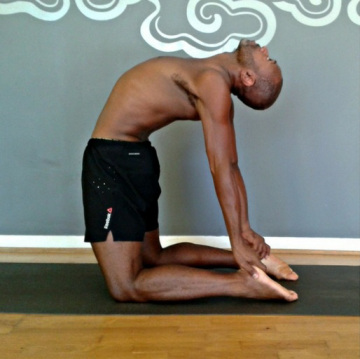
Case study: Yoga With Paul

paul-1

Paul Dobson

What it is:

An umbrella brand for the professional activities of London-based yoga teacher, masseuse and former professional dancer Paul Dobson.

Why it matters:

Yoga teachers are two pence a dozen in London and students typically cram sessions into hectic schedules. In this environment convenience, rather than affinity for a teacher, is often the deciding factor in choosing a yoga class.

Yoga With Paul was created to buck this trend by sharing founder Paul Dobson’s character. Instead of saying why he’s a great teacher it shares what he believes and cares about. Through a blog and social media, Yoga With Paul (#YWP) has built a network of like-minded yogis who share Paul’s interest in yoga, meditation, clean eating, mindfulness, fashion, urban life, and more. The proof is in the success: Paul now teaches several styles of yoga across London, and his annual Yoga Holiday With Paul summer retreats sell out well in advance.

In his own words:

“My life changed radically when I became a Bikram yoga teacher and it made me realise how easy to get locked into a “ladder” mind-set in our careers, relationships, or even hobbies. What I strive to share with my students is the awareness that you grow and become more yourself by challenging your preconceptions and being open to new experiences. It’s never too late for Bikram and never too late to change your life.”
Read more

Practice: “Your readers will live in a house made of their own mental pictures while reading your fiction. Those pictures are based on your words, of course, and you will curate that mental gallery quite closely. And yet the infinite details that your readers will conjure up around the mental pictures suggested by your words are all their own.” via Michael Alexander Chaney

Remember: “Desire is the crucible that forges character. ~Kristen Lamb

paul-backbend

Yoga With Paul


Elements: Attention

Storytelling is the essence of communication. The elements of storytelling are like letters of the alphabet. When you know how to use them, you can tell your best story.

Element 15: Attention

Great stories come from creators who are passionately attentive to everything.

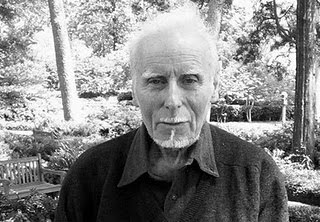
Case study: Jack Gilbert jack-gilbert

What it is:

Jack Gilbert was an American poet who turned life’s most banal, excruciating moments into heart-shattering art.

After twenty hours in bed with no food, I decided
I should have at least tea. Got up to light the lamp,
but the sweating and shivering started again
and I staggered backwards across the room. Slammed
against the stone wall. Came to with blood on my head
and couldn’t figure out which way the bed was.

from ‘What I’ve Got’

Why it matters:

Storytellers often aim too high. They want to convey love, terror, excitement, or despair. So they write about love, terror, etc. The thing is, when you write about love, you get a Hallmark card. The bigger the theme, the harder it is to write straight; it’s like looking at the sun.

That’s where attention comes in. Great storytellers know the little stuff reveals the big. In the excerpt above, Gilbert doesn’t tell the reader that it is scary to be sick and alone. He pays attention. In the throes of it, he is alert to every small, true detail: the slow passage of time, the dark room, the fever (only he uses clearer, closer words: sweating, shivering), the disorientation, the abject sense of failure as the body falls.

If you want magic, prop your eyelids open with toothpicks. Pay attention. Especially to boring, mundane, every day things.

In his own words:

“He explained that somebody wanted to give me the Yale prize. I didn’t know what to do, how to express it. I took him out with my two friends and we had milkshakes.

The next day I roamed about trying to find a way to feel about what had happened. I finally lay down under the Brooklyn Bridge to try to feel something. I lay there all afternoon, and then I called the people at Yale.” Read more

Practice: “Be awake to the details around you, but don’t be self-conscious. ‘Okay. I’m at a wedding. The bride has on blue. The groom is wearing a red carnation. They are serving chopped liver on doilies.’ Relax, enjoy the wedding, be present with an open heart. You will naturally take in your environment, and later, sitting at your desk, you will be able to recall just how it was dancing with the bride’s redheaded mother, seeing the bit of red lipstick smeared on her front tooth when she smiled.” Natalie Goldberg in Writing Down the Bones

Remember: “As a writing man, or secretary, I have always felt charged with the safekeeping of all unexpected items of worldly and unworldly enchantment, as though I might be held personally responsible if even a small one were to be lost.” ~E. B. White

Elements of Storytelling 11: Imagery

Storytelling is the essence of communication. The elements of storytelling are like letters of the alphabet. When you know how to use them, you can tell your best story.

Element 11: Imagery

Deft use of imagery creates indelible images and provokes powerful emotions.

Case study: Maggie Smith Poet

What it is:

Maggie Smith’s poem ‘Let’s Not Begin’ is a meditation on life, death and courage. These are dangerous topics (Rilke, no less, advised against such broad themes) but Ms Smith nails it with an unforgettable simile: “My heart’s galloping hell / and gone from the paddock…. But let’s not end / with the heart as horse, / fear-lathered, spooked deaf.” The use of a figurative phrase transforms the cliche of a racing heart into a concrete image so vivid I can see the horse’s flared nostrils and flying sweat.

Why it matters:

For millennia poetry was entertainment, education and historical record. Spoken or sung, it had to make an instant, lasting impression on its audience. So poets got very good at painting word pictures. They learned to compare unlike things in a way that seized people’s imaginations and seared images into their brains. Now, we’re drowning in a sea of information. Metaphors are life-rings; similes shine like beacons. From poetry to advertising, the most imaginative, compelling, memorable use of imagery always win.

In her own words:well

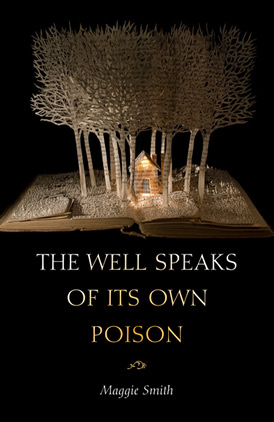
Maggie Smith is the author of three books of poetry: Weep Up (Tupelo Press, forthcoming 2018); The Well Speaks of Its Own Poison (Tupelo Press, 2015), winner of the 2012 Dorset Prize and the 2016 Independent Publisher Book Awards Gold Medal in Poetry; and Lamp of the Body (Red Hen Press, 2005), winner of the 2003 Benjamin Saltman Award.

A 2011 recipient of a Creative Writing Fellowship from the National Endowment for the Arts, Smith has also received fellowships from the Ohio Arts Council, the Sustainable Arts Foundation, and elsewhere. She works as a freelance writer and editor, and is a Consulting Editor to the Kenyon Review. Read more

Practice: Complete these sentences with vivid images. To really get the most of the exercise, don’t worry about coming up with something good, just write. The whole idea is to get your subconscious to make connections in a new, more creative way.

  1. Blue paint spilled on the road like___________________________.
  2. Canceled checks in the abandoned subway car

    seemed___________________________.

  3. A spider under the rug is like___________________________.
  4. Graffiti on the abandoned building like___________________________.”

via The Balance

Remember: “A metaphor is a kind o’ lie to help people understand what’s true.”
~Terry Pratchett

Elements of Storytelling 10: Magic

Storytelling is the essence of communication. The elements of storytelling are like letters of the alphabet. When you know how to use them, you can tell your best story.

Element 10: Magic

Every great story needs a touch of magic: a perfectly conjured sentence or feat of illusion.

Case study: Comedy & Magic Society

comedy-magic-society

What it is:

Four hard-working professional magicians: Mark Phillips, Bob Sheets, Brian Curry and Barry Woods. Together they have over 100 years of cumulative magic experience and each, if modesty allowed, could claim to be one of the world’s finest prestidigitators.

Why it matters:

My acquaintance with Comedy Magic Society began when Mark Phillips commissioned me to write a profile of the quartet. Interviewing and writing about the four magicians was an eye-opener. Dexterity is the smallest fraction of illusion, it turns out. The real magic lies in storytelling.

Magic relies on hooking the audience into a narrative. The story distracts then, holding their attention while the magician does his work. A great magician can tell stories to anyone: Mark uses magic as a tool to help corporate clients communicate and sell; Brian honed his skills doing close-up tricks for restaurant patrons; Bob is a former circus clown who perfected the art of magic bartending; and Barry educates and entertains kids in schools and hospitals.

In their own words:

Barry, Mark, Bob and Brian brim with joy and enthusiasm for what they do. “I’m grateful to be getting paid to do something I love,” says Barry. “I’m blessed.” This gratitude and energy flows through their work both as individual magicians, and as the Comedy & Magic Society collective. Magic, as performed by the CMS and friends, is the art of celebrating what’s possible. “Magic can lift people’s feet off the ground, if only for a moment,” says Bob. “You never know what the result will be. You get a kid in front of an audience and he realises it’s okay to get in front of people, it’s okay for people to laugh at – and with – you. It gives him confidence.” Read more…

Practice: To retain all the “juice” of being in the moment, a writer needs to pull a rabbit out of a hat – to use sleight of hand that moves the reader from a second-hand recounting to feeling present in the scene.

When F. Scott Fitzgerald’s Gatsby is shot, for instance, Nick Carroway, his narrator, is off-stage. Yet he allows Nick to surmise not merely what happened, but also what Gatsby must have felt during those last few minutes of life:

No telephone message arrived, but the butler went without his sleep and waited for it until four o’clock – until long after there was anyone to give it to if it came. I have an idea that Gatsby himself didn’t believe it would come, and perhaps he no longer cared. If that was true he must have felt that he had lost the old warm world, paid a high price for living too long with a single dream. He must have looked up at an unfamiliar sky through frightening leaves and shivered as he found what a grotesque thing a rose is and how raw the sunlight was upon the scarcely created grass.

via Writer’s Circle Workshops

Remember: “We are all magicians. What we see will never coincide with absolute reality. As a result, the human brain must make a narrative.” ~ Frederick Reiken


Elements of Storytelling 9: Research

Storytelling is the essence of communication. The elements of storytelling are like letters of the alphabet. When you know how to use them, you can tell your best story.

Element 9: Research

Research is the foundation upon which compelling stories are built.

Case study: Abacela 

abacela

Abacela Winery

What it is:

An award-winning winery located in Southern Oregon’s Umpqua Valley. It is best known for producing world-class Tempranillo, the grape that makes Spain’s famous Rioja wines.

Why it matters:

Abacela founder Earl Jones was a fan of Spanish wines and a medical research scientist. His wife Hilda was a medical technologist. They are by training and inclination people who study, analyse, test, and investigate. When Earl started wondering why he couldn’t find any good-quality American Tempranillo he didn’t shrug and leave it. He did research.

Earl’s quest to find the secret to great Tempranillo took him across countries and decades. He travelled through Spain and across the States, interviewing winemakers, studying soil and climate records. Reviewing the latter, Earl hypothesised that climate is the secret to growing top notch Tempranillo grapes.

As any good researcher would, Earl put his theory to the test. This meant identifying an American region with a similar climate to Rioja, moving there with his family, buying land, planting grapes, building a winery, and making wine. The initial results were good: Gold medal winning Tempranillo wines that outmatched Spain’s finest. More than 20 years on, Earl and Hilda are still researching, still growing, still writing new chapters of their story.

earl-hilda

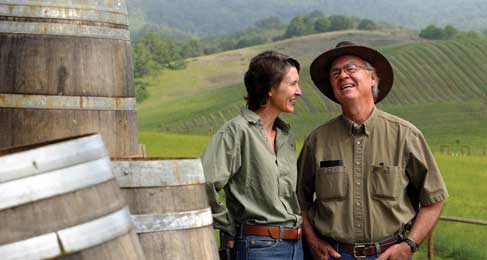
Hilda and Earl Jones, founders

In their own words:

Abacela, in 2016, is a world-class, multi-award winning winery and viticulture success story. But 21 years ago when founders Earl and Hilda Jones planted its first vines they had no way of knowing what the outcome would be. They were scientists with zero winemaking experience who left secure careers and trekked 2700 miles west, kids in tow, to test a hypothesis.

Abacela was an experiment they hoped would answer a question that had puzzled them for years: Why doesn’t America produce any fine varietal Tempranillo wine?

Earl and Hilda probably weren’t the first enophiles to wonder why the great grape of Spain’s famous Rioja wines was mysteriously absent from American fine wine. However they were the first to approach the question with scientific rigor, form a hypothesis, then devote their lives to testing it.

This is the story of how one ordinary family’s curiosity and determination transformed their lives, built one of Oregon’s best-loved wineries and influenced winegrowing not only in Oregon and the Pacific Northwest but across America.

Read the Abacela story 
Practice: “Interview people, if you can, and if it’s relevant (no one who was alive in 1717 was available for me). But I have done interviews that have enlightened me on ballet, horse riding, frogs, injuries and country policing, for example. Prepare good questions beforehand, tape the interview, and take good notes.” via Sherryl Clark

Remember: “Research is formalized curiosity. It is poking and prying with a purpose.”
~Zora Neale Hurston

Elements of Storytelling 7: Belonging

Storytelling is the essence of communication. The elements of storytelling are like letters of the alphabet. When you know how to use them, you can tell your best story.

Element 7: Belonging

Good stories make the audience feel part of something special, feel a sense of kinship.

Case study: Agrotourismo Cas Gasi

1-IMG_20160501_075859

Cas Gasi

What it is:

Cas Gasi is an internationally famous boutique hotel in the heart of Ibiza that bucked the odds to become a success. Its  challenges included a converting an old farmhouse, stables and outbuilding into luxury rooms; and marketing an Ibiza destination located away from the clubs or beaches that are the island’s biggest attractions. It is also, to borrow the Stella Artois slogan, reassuringly expensive. Yet it thrives year-round, catering to a loyal audience of celebrities, aristocracy and captains of industry who come for a simple reason: at Cas Gasi they feel special.

Why it matters:

There are a few things every luxury hotel must do well: exquisite linen, top-of-the-range TVs, delicate room fragrances, weighty bathrobes, fine food and gracious service. Beyond that, success is down to who has the best story. Cas Gasi’s pitch is short and sweet: When you’re here, your family.

Everyone who visits from financiers and minor royalty to Hollywood stars, tax exiles, and well-heeled young couples is treated like part of an extended family. A cultured, urbane, educated family that has superb taste in food, wine and art and the means to indulge these interests.

Cas Gasi nurtures this sense of belonging by eschewing advertising (though friendly write-ups in Vogue, Conde Nast and Harper’s Bazaar are welcome) in favour of word-of-mouth recommendations. Guests are further encouraged to unwind by discreet service and an institutional obsession with privacy and quiet. Cleverly, the owners realised at the start that not everyone will like the hotel, so they created a space that a select group of people love.

In its own words:

Ibiza-born Luis Trigeros Juan grew up between Barcelona and the island, for which he developed a deep love. A lawyer and passionate sailor, Luis sailed around the world in 1986 before making Ibiza his permanent home alongside wife Margaret von Korff, Barcelona-born with German family roots in Baltic nobility and French, Austrian and Russian family connections.

Together they have found their niche, setting up a organic farming project, transforming their home into the beautiful boutique hotel to welcome guests from around the world – the Cas Gasi ‘extended family’ – and promoting their personal philosophy of fusing life’s luxuries with sustainable living.

Read more

1-IMG_20160425_134335

Clara, house dog

Practice: “The concept of a tribe transcends a customer merely liking or being satisfied with your brand or product. Your tribe is made up of your brand’s biggest fans – customers or prospects that will often take to Twitter and Facebook to share your praises or recommend your product….

Remember that word of mouth is still the best marketing. Consider setting up a referral program that rewards customers that deliver leads to your doorstep – in effect, have your existing fans recruit more tribe members.” via Wasp Buzz

Remember: “In writing, your audience is one single reader. I have found that sometimes it helps to pick out one person—a real person you know, or an imagined person and write to that one.” ~John Steinbeck

Elements of Storytelling 5: Accuracy

Storytelling is the essence of communication. The elements of storytelling are like letters of the alphabet. When you know how to use them, you can tell your best story.

Element 5: Accuracy

Good stories create a vivid, believable world. To achieve this, descriptions and details have to be accurate to the context and setting of the tale.

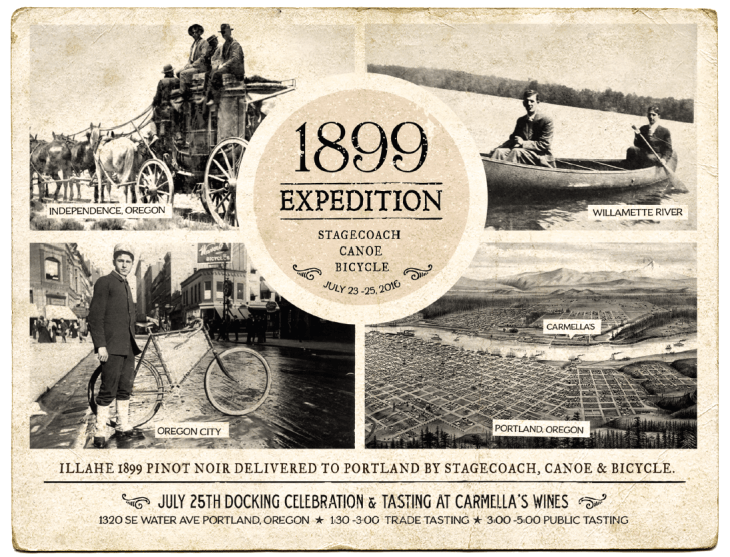
illahe 1899

Case study: Illahe ‘1899’ Pinot Noir

What it is:

Illahe is a small vineyard in Oregon’s Willamette Valley, not far from Salem. Winemaker Brad Ford is a laconic, dedicated experimentalist and a stickler for accuracy. Each year Illahe releases a small batch of ‘1899’ Pinot Noir, so named because it is made without using any modern equipment or electricity.

Why it matters:

Anyone can claim to be “traditional” or “classic” — Illahe delivers by being accurate down to the last detail. From the vine onward, ‘1899’ is made to strict standards. The grapes are tended by hand, horses not tractors are used to work the land, picking, sorting and crushing is done by hand. “No electricity” means “no electricity”: they use candles to light the barrel room or bottling line. When ‘1899’ is ready to go to its distributor in Portland, the cases are transported by stagecoach, bicycle and canoe, ensuring that no modern technology touches it until it leaves the Ford’s care.

The Illahe story:

Brad’s first harvest was in 1986, when he performed the important roles of tractor driver and bucket collector. He took a short break after high school to work as a bartender, carpenter, grant writer, and English instructor. He then returned to wine, taking classes with Barney Watson, Al MacDonald, and Professor Wamser at Chemeketa and PSU.

Brad worked with Earl VanVolkinburg, Joe Dobbes, and Russ Raney, who taught him the practical aspects of the craft and about their love of the product. He also owes a debt to Peter Julian of Nuit-St. Georges, Burgundy, who invited him to attend tastings from Chablis down to Mercurey, hitting all the major towns in between. His experiences there taught him that winemakers can craft incredible wine without huge operations, but not without close attention to the vineyard and vinification. Read more here


Practice: “When you are present at the birth of a child you may find yourself weeping and singing. Describe what you see: the mother’s face, the rush of energy when the baby finally enters the world after many attempts… When you write, stay in direct connection with the sense and what you are writing about. If you are writing from first thoughts — the way your mind first flashes on something before second and third thoughts take over and comment, criticize, and evaluate — you don’t have to worry.” ~Natalie Goldberg in Writing Down The Bones

Remember: “Invention is the finest thing but you cannot invent anything that would not actually happen.” ~ Ernest Hemingway