On Writing and Mental Health with Anise Eden


Welcome to ‘Between the Lines’ – interviews with teachers, writers and writing teachers on specific aspects of their craft.

Photo courtesy Anise Eden. Copyright OC Photography

Five years ago, author Anise Eden traded the hectic, emotionally demanding life of a mental health social worker in Baltimore, MD for a slower-paced existence in Mallow, County Cork. “The lifestyle here suits me,” she says, a fact evident in her warmth, ready smile and enthusiasm.

The move forced a career adjustment, too, as her US qualifications and role were not transferable. While she navigated retraining and finding a place in the Irish social work system, Eden, who leaned to poetry, began writing prose.

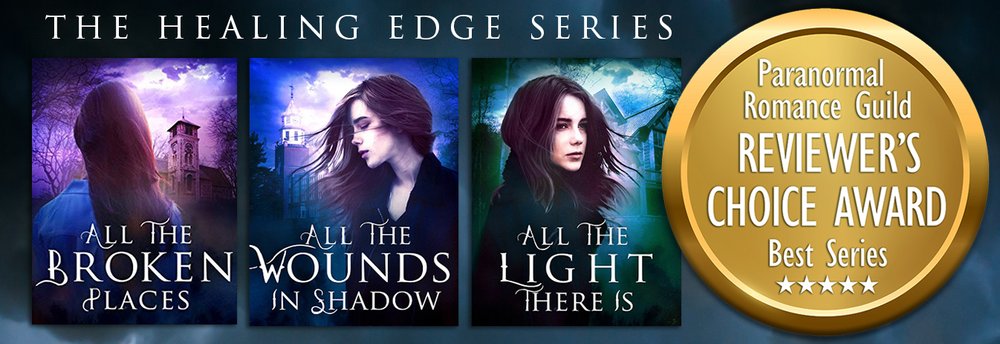
Her debut, The Healing Edge trilogy, won the Paranormal Romance Guild Reviewer’s Choice Award for Best Series.Dead Keen, the second instalment of her second series, The Things Unseen thriller trilogy,is released on 10 August 2023.

The common thread is that all of Eden’s heroines are mental health social workers. “What I’m interested in is exploring the intersections of faith, love, belief and mental health,” she explains, “and how that collides with the real world.”

From the beginning

There were early signs Eden would become a prolific writer: her penchant for “throwing five or six-syllable words I’d heard into a sentence, even though I didn’t know what they meant”; her propensity for drifting through the woods behind her house, making up stories; avid reading. That her work would be driven by caring and curiosity was likewise evident: when developers cleared part of her “sacred” forest, a 10-year-old Eden and her friend shoved sticks into bulldozer treads, hoping to sabotage the operation.

“If I hadn’t had such understanding, loving, accepting parents and teachers I would probably have gotten into a lot of trouble,” she admits. “I was a handful, but a people-pleasing handful.”

Eden was recently diagnosed with ADHD, which “explains a lot of my childhood.” It has also heightened her desire to educate people about mental health and advocate for robust self care and social care.

​Life and flow

In addition to addressing mental health themes in fiction, Eden teaches social workers and researches women’s mental health. She sees these as complimentary endeavours, though admits that juggling them is “constant negotiation. It’s like water flowing into different containers; it goes where it needs to go.”

Wherever the water flows, Eden prioritizes her mental well-being. This should be axiomatic for any writer, any person, but writerly misery is a stubborn tradition. As Hemingway may have said: “There is nothing to writing. All you do is sit down at a typewriter and bleed” (the Hemingway Society explains why he probably didn’t) – and the implication that suffering equals significance has proven hard to shake.

Eden resists this, personally and professionally. Her Mac is unsanguineous. Her home writing space comforts and inspires. “I’m looking out into the back of a house across the way, an empty lot with wildflowers, trees and above that sky,” she reports. “The sky is dramatic in Ireland; there is always something going on with the clouds. On my wall, works of art from friends and pictures of my family; when I need to be inspired I can look over and be reminded there are people who love me.”

In career terms, she ignores unhelpful advice. “Anyone who says, ‘you shouldn’t be doing it if you’re not making money,’ knows nothing about writing and publishing. If I pinned my confidence or motivation on money, that would be sad indeed.”

Eden knows from experience that confidence and motivation are hard, and hard won. Far from being dispirited, she relishes the opportunity to make mental health a focal point. It is part of an ethos of care: care for writing, care for readers and care for writers.
​On writing & mental health

What mental health challenges can writing pose?

It’s a solitary activity. You are the writer, and you have to do the writing. You can collaborate, you can talk about your plot, you can workshop, but ultimately it’s you with your screen, or notebook.

Also, there is no real mechanism for feedback until you get published. There can be years and years of toil before you get feedback. In other creative fields where you have an audience – music, theatre – you can put out pieces, get feedback, adjust; it gives you confidence. With writing there is more lag time between when you start working and when you get feedback. You won’t get people cheering you on. It’s just you. A lot of writers have imposter syndrome as a result. Passion and grit is required to pull through, which can be asking too much. A lot of people don’t start, or don’t continue.

Once you publish, or are in a workshop, it can be difficult to take feedback. What you write is personal; it’s your heart, brain, mind. It can be hard to take the slings and arrows of criticism if you’re not mentally prepared. It takes learning to develop perspective on what you’re hearing.

What types of writing can be particularly challenging?

Not that the stories are autobiographical, but I draw on my emotional experiences. In my last book, Dead Sound, the protagonist is with her ex-boyfriend. She’s having a flashback to the moment they broke up. He hit her in that scene and he’s now gaslighting her, telling her it didn’t happen. And she’s questioning herself. That is something that happened to me, and I wanted to write about it for the readers who might be wondering if they had suffered abuse. In order to do that, I had to revisit those experiences. Reliving something difficult or painful is difficult and painful. I have to have self-care in place for during and after. While writing, I have my dog, my coffee, my music; afterwards I might need to go out.

How has writing affected your mental health?

I didn’t write prose until I was 39. Before that, I wrote poetry, which is very therapeutic. It is a direct line to heart, soul, mind; it pulls everything together. I’d start a poem with a dilemma or problem, and by the end I’d solve it. Poetry was like mini therapy sessions. I stopped writing when I became a therapist. I was putting all my creative energy into helping my clients.

It was during a period of unemployment that I wrote my first novel, which started as a way to answer a question for myself about mental health, and the challenges of the work. For an ADHD person, [writing] is the perfect hobby. You can go on any adventures you want.

What do you make of the trope that depression and misery spur great writing?

[Reading her work] I got the feeling Sylvia Plath would have loved to be mentally healthy. She was someone who would have loved to be happy. She would never have romanticised [her struggles]. It ended in tragedy.

What can trigger mental health difficulties?

A mental health issue arises from a mixture of factors, not just genetics or circumstance. Political factors, economic factors, physical issues, how resilient individuals are based on genetics and upbringing. For writers in particular, how we deal with isolation and criticism are important.

What resources can writers use to protect their mental health?

Having other writers in your friend group is huge. Being a part of a writing program, a workshop, or reaching out to writers on social media can lead to friendships. There was a Facebook group I joined of 10 debut novelists, all our books were coming out the same year. We were going through the same stuff for the first time, at the same time. We could compare notes, kvetch, problem solve. Nobody apart from other writers really knows what it’s like.

One of the things I tell my students in social work, and I would say to writers: we are the tools of our trade. You have to take good care of your tools. If you don’t, your work isn’t going to be great.
Eden recommends

The piece of writing that changed your life before age 18?

Madeleine L’Engle’s A Wrinkle in Time – it was science, philosophy and faith mixed together in a book that was suspenseful and thrilling, that tapped into emotional truths. I wasn’t being patronized or condescended to. I try to do that with my books: include science, philosophy, relationships; I do a lot of research to make sure it’s right.

The piece of writing that changed your life as an adult?

Wally Lamb, She’s Come Undone changed my life for the better. I was a young woman suffering depression, feeling lost, at a loss, which is the situation the heroine finds herself in at the beginning of the book. Several things [in it] helped me. One was feeling seen in a positive way: the character’s mental health struggles are not stigmatized or romanticized. There was also seeing her recover, seeing there was a point of feeling better.

A classic you could read over and over?

Catch-22 by Joseph Heller. It’s hilarious. It’s insightful. What can I say? It’s reality. With our changing world, it is more and more relevant.

A contemporary book you wish you’d written?

Outlander by Diana Gabaldon. The poetry of it is so unexpected, in a way that only poetry can be. It’s like reading a novel that’s a poem, and a poem that’s a novel. And the love story is massively compelling. The characters are so real and complex that they can carry an incredibly complicated story line.

A book about writing you recommend?

I Give you my Body…”: How I Write Sex Scenes by Diana Gabaldon. I don’t even write sex scenes, but she gives fantastic advice in general.

Who would you cast as the lead if your forthcoming novel, Dead Keen, were filmed?

Katherine Langford as [the protagonist] Neve. For the main male character, Con, Jason O’Mara; it is important to have an Irish actor.

What’s next?

The 10 August launch of Dead Keen. My writing group, the Mallow Scribes, is going to do a dramatic reading. We’ve been rehearsing for weeks.

Connect

On Freedom From Religion

Photo by Aaron Burden on Unsplash

BELIEVE AND YE SHALL BE SAVED?

Do parents have the right to indoctrinate their children?

For millennia, most cultures have acted as if the answer is ‘yes’ — using everything from physical violence to threats of damnation to ensure each successive generation followed like sheep.

Now, finally, someone, somewhere has said, ‘no’.

In December 2022, Japan announced a law to protect children from parental religious fanaticism. The law would protect kids from being a) forced to participate in religious activities, b) refused medical treatment, educational or social opportunities based on their parents’ religious beliefs and c) protect them from religious coercion, i.e. being pressured by parents threatening them with hellfire.

My husband, brought up Southern Baptist, and I (Evangelical then Seventh-Day Adventist) raised our eyebrows: if only.

To quote ‘Giest’, discussing the Japanese legislation on r/atheism: “Most Americans would loose their shit over this. Forcing religion on kids is a big part of our culture.”

FREEDOM FOR SOME

The United States gets mentioned a lot in the reddit thread because perhaps no other country so full-throatedly proclaims its hypocrisies. Individual personal freedom, including freedom of religion, is enshrined in the First Amendment to the Constitution but few other nations match the United States’ fanatical zeal for enforcing minority religious practices on everyone.

Texas just passed a law demanding that the Biblical Ten Commandments be posted in a ‘conspicuous place’ in every classroom in the state. Florida wants to ban any mention of menstruation before sixth grade (12 years old), though which chapter of the Bible supports that blend of misogyny, gynophoby and science-loathing is not specified.

As anyone with two brain cells to rub together can see, the US Right believes only in the absolute personal freedom of wealthy, fanatical, embittered, power-drunk, humanity-hating men. The rest of us be dammed.

Hence the chances of laws to protect children from emotional, psychological and physical abuse in the name of God will remain unwritten and unenacted.

PERSON OR PROPERTY?

This isn’t just a United States problem, though; nor is it only a problem of religion in the States.

The real but unarticulated debate is this: are children people, entitled to the rights and privileges of personhood? Or are they, as the American Right, and so many other cultures construct them, property?

How a society answers this question is of existential importance for the simple reason that children become adults.

A culture, religious or national, that views children as property cannot prepare them for a successful adulthood. Responsibility, the ability to carry oneself in the world, cannot be conferred at an arbitrary age: 18, 21, whatever.

Children who are controlled, brain-washed, browbeaten throughout their youth aren’t going to suddenly blossom into self-sufficient, competent adults. Instead, they are turned loose on society as adult-sized toddlers, prone to tantrums and destruction.

I don’t believe it is any coincidence that the United States combines high rates of religious fundamentalism with catastrophic rates of interpersonal violence. Should we be surprised that children denied agency and personhood seek extreme and harmful outlets as older teenagers and adults? Is anyone surprised when a beaten dog bites?

Photo by Artem Kniaz on Unsplash

TOUGHER. BETTER.

The only way to rear children to become full citizens of humanity is to, quelle surprise, treat them like human beings. From their first breath onwards.

“Childhood is a time for gathering and developing the assets necessary for full autonomy,” writes Hollingsworth (2013). Developing the capacity for full autonomy requires independent trial-and-error, in the same way developing the capacity to ride a bike requires time spent wobbling up and down the street.

Adults can screw this up in so many ways: laziness, authoritarianism, over-protectiveness.

It is tougher to co-regulate, discuss, take time to listen to a child than it is to demand compliance, or at least the appearance of it.

But it is better.

Children learn respect by example. If we want them to grow into adults who respect the opinions, privacy and autonomy of others, we had better show them how its done. Treating children as full-fledged human beings is the best way to inoculate them against hateful ideologies that thrive on repression: nationalism, racism, sexism, transphobia, homophobia and the like.

As educators, we have the extra privilege and responsibility of making our classrooms safe for ideas and self-expression. When children express ideas we find difficult (as they will) we have to model an appropriate, adult, respectful response.

Once, I was teaching English to a group of 14-and-15-year-old Spanish kids. One of them came out in support of Vox, the ultra-nationalist, uber-misogynist far-Right party that had formed recently.

My kneejerk response was: ‘We’ll have none of that in here.

But I pulled myself together and asked why he supported them, and we had a class discussion. Who knows whether he changed his mind about Vox, then or later, but at least he had a chance to participate in a respectful debate, instead of being shut down.

Teachers, and parents, have to model the behaviours and responses they hope to see in children. If we want kids to become thoughtful, compassionate, self-respecting, respectful global citizens we better start working on ourselves.

How do you support your students/kids to develop autonomy? Share in the comments or Tweet @CilaWarncke

On ADHD and Exercise

Photo by Markus Spiske on Unsplash

When I was 12 or 13, an older girl at my school taught me to run.

Like any kid, I was familiar with the concept of moving my feet faster when being chased, but she taught me to run with intent, to pick up my knees and let my body slope on uphills, to relax on the downhills, to keep my elbows light and my shoulders back.

Like the givers of most priceless gift, she never got a proper thanks. Thinking of it now, I’m touched and amazed a 15-year-old took the time to hang out with a chubby, socially awkward new kid.

Exercise is more than just a ‘good to have’ — especially for students who struggle. Depression, anxiety, body image issues and low self-esteem are just a few of the struggles running has helped me manage.

It didn’t surprise me, then, when I started reading about the effect of exercise on attention–deficit/hyperactivity disorder (ADHD). My assumption was that ADHD, like so many other physical and mental health challenges, would respond positively to exercise.

Research overwhelmingly bears this out.

Studies on ADHD and Exercise

Silva et al. (2015), who found that “groups of volunteers with ADHD who performed exercise (GE-EF) showed improved performance for the tasks that require attention with a difference of 30.52% compared with the volunteers with ADHD who did not perform the exercise (GE). The (GE-EF) group showed similar performance (2.5% difference) with the volunteers in the (GC) group who have no ADHD symptoms and did not exercise. This study shows that intense exercise can improve the attention of children with ADHD and may help their school performance.”

Haffner et al. (2006) studied yoga as a treatment for children with ADHD: “All children showed sizable reductions in symptoms over time, and at the end of the study, the group means for the ADHD scales did not differ significantly from those for a representative control group.”

Systematic literature reviews

Ng et al. (2017) conducted a review of 30 studies of exercise and ADHD found, “Both short-term and long-term studies support the clinical benefits of physical activity for individuals with ADHD. Cognitive, behavioural and physical symptoms of ADHD were alleviated in most instances… Physical activity, in particular moderate-to-intense aerobic exercise, is a beneficial and well-tolerated intervention for children and adolescents with ADHD.”

Den Heijer et al. (2017) reviewed 29 studies and reported, “the reviewed studies describe acute as well as chronic beneficial effects of cardio exercise on a wide variety of cognitive and behavioral functions in children with ADHD.” For example: “Sibley and Etnier (2003) observed acute as well as chronic effects of various cardio and non-cardio exercises on perceptual skills, intelligence, academic achievement, developmental level and performance on verbal and mathematic tests in children and adolescents (4–18 years). Furthermore, improvements of executive functions of children have been demonstrated following cardio exercise (Best 2010).”

Furthermore, a literature review of 91 studies (Suchert, Hanewinkel, Isensee, 2015) found, “strong evidence that high levels of screen time were associated with more hyperactivity/inattention problems”.

Photo by Rachel on Unsplash

How to Promote Active Education

This should be of particular concern to those of us educators who teach online. For all the benefits and conveniences remote learning offers, we should bear in mind the potential negative effects.

Is it ever fair to ask a child to sit still for six to eight hours a day? No.

But at least in physical schools there are halls to run in, playgrounds, a gym, a playing field. Online schooling asks a lot of kids, in terms of attention, and paradoxically the screen we rely on might make ADHD symptoms worse.

As online teachers, we have a limited influence on students’ activities once they log out of our classroom. This means we need to work with parents and make the most of online opportunities to support student activity. Here’s how that might look:

1. Inform and engage parents

All students benefit from physical activity, so the message should go to all parents. Teachers and administrators can communicate the benefits of sports and exercise through routine conversations, newsletters, blog posts, etc.

Educators should ask what sports students do and offer flexibility for training and competitions. If a kid has to miss class for a clinic, or to travel to a match, we should support that. It is a simple, practical way to commit to holistic wellness and development.

2. Make ‘movement moments’

There are plenty of exercises that can be done in front of a computer. Take a minute at the beginning or end of class to lead students in a yoga pose, do a dozen star jumps (jumping jacks, to my Stateside friends), throw a few jabs or march in place. The kids might think it’s weird at first, but they’re bound to appreciate the chance to bounce around.

3. Talk about exercise and mind-body wellness

Share your positive experiences with exercise (and if you don’t have any, please make time to cultivate some). With younger students you can make straightforward recommendations like, If you’re having trouble concentrating, try running up and down the garden really fast 10 times then go back to your homework. Older students will be able to understand and discuss in greater depth the benefits of exercise and strategize about how to include it in their daily routines.

4. Create opportunities for student sharing and leadership

Be a good example, but don’t hog the floor. Invite students who play sports to give presentations about them, or share their experiences of learning a new physical skill. Ask for volunteers to lead in-class ‘movement minutes’. Encourage students to keep exercise diaries or step counts — you could even make a chart where they can post their weekly totals!

5. Be positive, not preachy

Tone matters. Exercise can easily feel like another demand to over-taxed students. Kids with ADHD are likely more impulsive, more emotional, less able to maintain healthy routines; adding another weight to their shoulders isn’t a kindness, so don’t preach. Model positive wellness behaviors; verbally support students; encourage parents to prioritize physical activity; praise success; praise mistakes. When exercise is a low-risk, fun, habitual activity we all win.

How do you encourage kids to stay active? Share in the comments or Tweet @CilaWarncke

Let’s Talk About Sex Education

Photo by Gaelle Marcel on Unsplash

Last year, for the first time, I taught about gender and sexuality in literature. My kneejerk reaction was, I can’t talk about sex to teenagers. Arrggh!

On reflection, this reaction had everything to do with my hangups (to use a good old-fashioned word) and nothing to do with my students’ needs.

This is a common problem in sex education, with the current brouhaha in the United Kingdom serving as an example.

British prime minister Rishi Sunak has, according to the Guardian, “asked the Department for Education to “ensure schools are not teaching inappropriate or contested content” in the subject of relationships, sex and health education… Sunak confirmed the review… after a Tory MP, Miriam Cates, said children were being exposed to sex education classes that were “age-inappropriate, extreme, sexualising and inaccurate”.”

Numerous Tory MPs are on board, one of their complaints being that young people are being taught about oral sex — a classic case of adult prudishness being prioritized over teen well-being.

Chambers et al. (2004) is quoted by Leung et al., 2019 saying Britain’s “value-led approach [to sex education] merely reflects the interests and principles of stakeholders, while overlooking the actual needs and wellbeing of youths.”

Sex ed in the internet age

Does anyone with two brain cells to rub together think not discussing oral sex, or any other sexual act, proclivity or topic, is going to prevent kids from knowing what it is, discussing it, watching it and even doing it?

Children are handed internet-connected screen devices almost as soon as their chubby baby fingers can hold them, in many cases.

Statista data show that 58% of British children own a smartphone by age 8; by age 12, that jumps to 93%. You can bet the farm they aren’t just using it to watch Sesame Street.

Sexuality isn’t a switch that flips at puberty. Sexual behaviors and curiosity are apparent in early childhood.

This might make grown-ups uncomfortable, but our discomfort isn’t useful. Parents and teachers have a duty to help kids navigate this vital part of life.

If we don’t step up, the internet will.

Student needs versus teacher discomfort

In an op-ed, 25-year-old journalist and editor Sasha Mistlan writes (re: Andrew Tate and the importance of proactive sex education): “My friends and I didn’t get any proper education about sex, consent or relationships until we were 13, by which time we had learned it all from internet porn and lads’ mags.”

How can educators ignore this need?

I am a literature teacher; the biology of the birds and bees are beyond my remit. But it isn’t the birds and bees that students need to know about.

They need models of relationships and ways of relating that affirm sexuality as an important (but not overwhelming), natural part of adult life, and of sex as a source of joy and connection. They need love stories with happy endings. They need, also, stories that are unhappy or ambiguous; stories that show mistakes and heartbreaks as a navigable part of human sexual experience, not reasons to drink poison.

However awkward I may feel, students need a safe space for curiosity and discussion. Because lord only knows, they are talking about sex outside the classroom.

Sex positive education

Does the phrase ‘sex positive education’ make you a little uncomfortable?

It does me.

But what does the alternative imply? Sex negative education doesn’t prevent young people from having sex.

Data from the worryingly puritanical United States show that even students who promise to abstain from premarital sex… don’t.

Research published by the American Academy of Pediatrics peer-reviewed journal Pediatrics found: “Five years after the pledge [to abstain from sex], 82% of pledgers denied having ever pledged. Pledgers and matched nonpledgers did not differ in premarital sex, sexually transmitted diseases, and anal and oral sex variables. Pledgers… did not differ in lifetime sexual partners and age of first sex. Fewer pledgers than matched nonpledgers used birth control and condoms.”

Scaring teenagers away from sex has never worked; ignoring sex in the hope teenagers won’t notice it is ludicrous.

The best, bravest, least-comfortable option is to say: hey, sex is a huge part of life, however whenever wherever and with whomever you do it (or don’t), and it can be one of the most joyous parts of life, or one of the most damaging. Let’s talk about how to make it joyful, empowering, pleasurable, safe and beautiful.

Affirmative literature

As a literature teacher, I can do my part by teaching texts that articulate the delights and challenges of sexuality and sexual identity, and working with my colleagues in health, science and psychology to create a safe, affirmative atmosphere for conversations about love, sex and gender.

This requires making careful choices about what my students read. Many of the canonical ‘love stories’ of European literature are anything but — think Wuthering Heights or Romeo and Juliet where ‘love’ and violence are inextricably mixed.

The search for affirmative literature requires looking beyond the cano and seeking stories that reflect a variety of experiences, cultures, orientations and gender identities.

Next week, I’ll share a list of powerful literature that treats sex with the openness, thoughtfulness, honesty and sensitivity it merits.

Suggest your favorite teen-appropriate, sex-affirmative story, poem or film in the comments or Tweet @CilaWarncke

You Don’t Have to Be Crazy to Study Humanities But…

Photo by Blaz Photo on Unsplash

While I cherish the idea of autonomy, life experience and research argue persuasively that my choices are (while still choices) rooted in the bedrock of where I was born, to whom, how I was raised and what it took to get away from all that.

University majors and mental health

“Students who study humanities, social work and counselling were more likely to report childhood adversities, which are strongly associated with poor mental health” according to McLafferty et al. (2022) in the study ‘Variations in psychological disorders, suicidality, and help-seeking behaviour among college students from different academic disciplines‘.

The authors’ findings are not unique: “A large, cross-sectional study spanning 81 American universities found that students studying art and design presented with the highest rates of mental illness. Almost 45% of art and design students reported at least one disorder, followed closely by humanities (39%). Art and humanities students also had the highest rates of suicidal ideation and over one fifth of students from these disciplines reported having engaged in self-injury” (McLafferty et al., 2022).

This seems entirely plausible.

Unfortunately, it also seems like the sort of thing that could be weaponized against already beleaguered arts and humanities courses and practitioners. Touchy-feely BS for people who can’t hack a real job, etc.

McLafferty et al. (2022) note: “Disciplines demonstrating the lowest rates of mental illness included engineering (31%), public health (28%) nursing (28%) and business (27%). Likewise, a recent study conducted reported that students from arts and humanities, social work, and behavioural, and social sciences, were more likely to report emotional and substance use disorders in comparison to their peers from business or engineering disciplines.”

The bottom line

Observed through a certain lens, this suggests that pragmatic, socially desirable subjects attract composed, socially desirable students; with the obvious, if unarticulated, corollary that arts and humanities are for damaged bohemian types who can’t hold it together long enough to learn quadratic equations, or whatever.

I can see why people might think that, and perhaps they’d be right.

Numerous studies find a strong correlation between parental socioeconomic status (SES) and their children’s academic achievement (Saifi & Mahmood, 2011; Azhar et al., 2014; Lam, 2014, etc.)

Academic disciplines such as engineering and health sciences are resource intensive. Ideally, students will have access to high quality labs and IT equipment from primary school onwards. Ideally, they will also have personal tech — laptops, tablets, etc. — that facilitates connection and learning.

Students from families lower on the socioeconomic scale are less likely to have personal technology, reliable home internet, and so forth. They are also more likely to go to underfunded schools where resources are limited.

When I was in school in the 1990s we were lucky to have Bunsen burners and space to mix hydrogen peroxide and baking soda; my teachers wrote exam questions on the board because the school couldn’t afford Xerox paper. My family could stretch to the graphing calculator required for advanced math classes, but I wouldn’t get my first laptop until 1999.

What I did have access to was books. One thing the United States is blessed with an abundance of is libraries (cheers, Mr Carnegie, I’ll try not to think too hard about how you made your money). Even my home town, pop. 4800, had a substantial, well-stocked library with plenty of cozy reading spaces, stacks of periodicals and regular free activities. It was my refuge, my favorite place, a source of endless bounty.

Having a predilection for reading and writing, I also had a space where these were valued and supported. If I’d had a predilection for trigonometry or building radio cars, there would have been no such space or support.

Steered by circumstances

The Covid-19 pandemic threw learning inequalities into sharp relief: “Children from families with a low SES are less likely to have access to remote learning (UNESCO, 2021), are less often provided with active learning assistance from their schools (Tomasik et al., 2020), and spend less time on learning (Meeter, 2021) than children from families with a high SES. Moreover, parents with a high SES are more likely to provide greater psychological support for their children (OECD, 2019),” reported Hammerstein et al. (2021).

Take an imaginative leap with me: A fourth or fifth grader has a nascent knack for programming. But they don’t have a computer at home, or they do, but share it with several family members and they can only afford a cheap, shaky internet connection. During the pandemic, this kid was out of school for 12, 18, 24 months, with minimal access to educators or learning materials.

They are fortunate that their fascination with the logic of computer language applies to English too. They do still have access to books and reading materials, and they’re sharp enough to learn to craft a strong essay or article by imitation.

They get back to school and the language arts teacher notices their progress, encourages them, makes sure they have access to the school library, gives them extra feedback on their writing.

Meanwhile, they’ve dropped behind their well-to-do peers in IT, simply because they haven’t had the tools or training. The IT teacher, like the language arts teacher, focuses their attention on the strongest students and fails to notice the lost potential of this particular kid.

Naturally, the skillset that gets the most care and attention is the one that flourishes. By the time university rolls around, this student is poised for success in the humanities, perhaps never to realize how financial circumstances subtly but ineluctably shaped their academic trajectory.

Self-fulfilling prophecies

It takes courage and gusto to believe in one’s weaknesses. In my head, I’m terrible at maths and mediocre at science (until math gets involved, then I’m terrible at that too).

This self-perception solidified to fact in my head over years, following the switch from a pre-med track to English Literature in my second year of university. It was wrenching to give up on a long-held goal, but the hard reality was all my English and History professors were encouraging me to major in one or the other, and I was barely scraping by in science.

Telling myself I “couldn’t” hack the math and science was a self-soothing mechanism. However, like many palliatives, it may not have been entirely benign.

I took Algebra I and II, trigonometry and statistics, geometry, and calculus in high school: straight As (though seasoned with tears of frustration); I also took general science, chemistry, physics and biology: A, A, A and A. This rather complicates the “couldn’t” narrative. Sure, I’ve forgotten it all now, but I did learn it — even excelled — at secondary school.

What broke me was the leap to university level, where chemistry became calculus and physics became flat-out terrifying.

If I’d had access to more challenging high school courses, would I have stayed on the pre-med track?

If I’d had greater self-confidence…?

If I’d been aware of the help available…?

The right decision for the wrong reasons

Am I happier as a writer and educator than I would have been as a cog in the moribund US healthcare system? No doubt.

But I wish I’d made that decision from a position of self-confidence and clarity, not an overwhelming fear of failure.

  • When you grow up poor and see an escape route, you really, really don’t want to miss out.
  • When you feel excluded because of how you dress, where you live, what you can’t afford, you will do most anything to blend in.
  • When your financial situation has never not been precarious, you want to stay safe.

Failing classes, tanking your GPA, needing more time to graduate: these have different consequences for well-to-do students and those scraping by on scholarships, loans and work study jobs.

Links in a chain

Difficult circumstances are not always merely socioeconomic; there are certainly young people from affluent backgrounds who have had adverse childhood experiences. It would be wrong, though, to discount the exacerbating effects of poverty on issues like intimate partner violence, child abuse and neglect, substance misuse, incarceration and mental health difficulties.

There are many ways poverty shapes people’s choices and chances, from birth onwards. My hypothetical scenario is just one of many that could shed light on how socioeconomics influence an individual’s choice of study and mental health.

What are your experiences or observations regarding the relationship between study/career choice, mental health and socioeconomics? Please share your reflections in the comments or Tweet @CilaWarncke

16 – Letting Go of Emotional Baggage

Gradually, my writing moved beyond all music, all the time. There is a heart of darkness in Ibiza’s club world; the shadows got long. It was time to look at things differently. This piece was written for Tiny Buddha. You can read the full article here.

Photo by Waldemar Brandt on Unsplash

“Sometimes the past should be abandoned, yes. Life is a journey and you can’t carry everything with you. Only the usable baggage.” ~Ha Jin

You’ve probably heard of the fear of missing out but what about the fear of letting go?

My father was volatile and mentally unstable. Criticism was his preferred method of communication. As a child and teenager, I learned to keep my thoughts and feelings locked away and became an expert at deflecting personal questions.

Without realizing it, I carried this habit into adulthood, avoiding any talk about my feelings or turning them into a joke. When a friend finally called me on it, the shock of self-recognition quickly turned to resistance. This is who I am, I thought. Why should I change?

I plodded on, working as hard as ever to keep my fortress intact. It wasn’t making me happy yet I wasn’t ready to change.

As I struggled with my desire to cling to hurtful memories and self-defeating behaviors, it dawned on me that I was afraid to let go because defensiveness was part of my identity.

The problem wasn’t that I had baggage—everyone has baggage—but that it had come to define me. I didn’t know who I would be without it. At that point it hit me: I had to dig deep, discover the person I wanted to be, and then act on it.

After I identified that I was holding on to the past because it seemed too important to jettison, I discovered that letting go is harder than it sounds. Relaxing a long-held belief isn’t a one-day, one-week, or even a one-year process. However, it is possible.

Read the rest at Tiny Buddha.

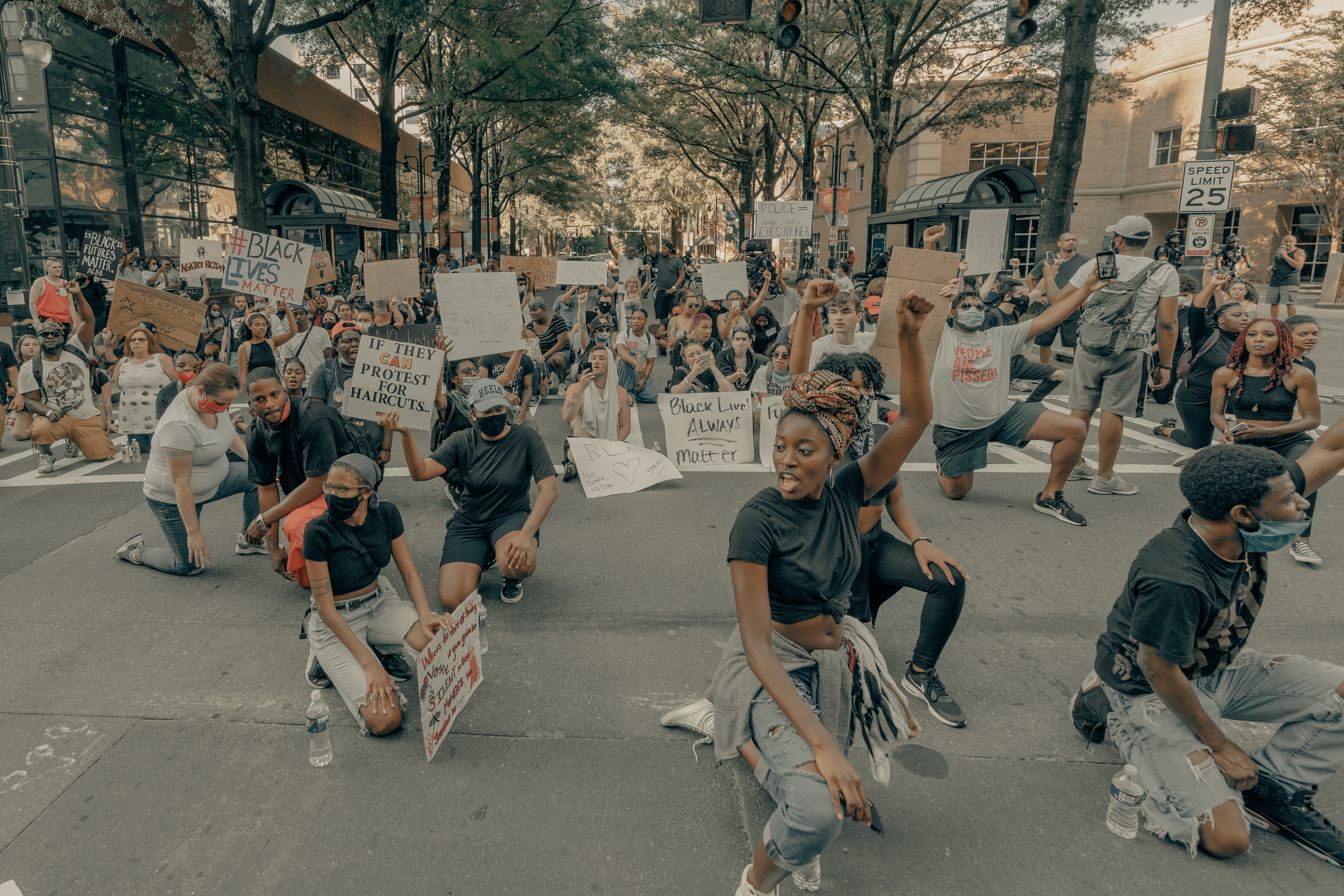
James Baldwin +Black Lives Matter

#BlackLivesMatter
Donate to Black Lives Matter

blm

Photo by Clay Banks on Unsplash


The late literary genius and humanist nonpareil James Baldwin spoke for Black Lives Matter decades before the movement gained a name. And as a gay black man, born poor, he understood intersectionality in a profound sense.

Baldwin’s gifts included the ability to study himself and report, however painful or unflattering the truths that emerged. This spawned an empathy as rare as wise. He didn’t excuse cruelty but he acknowledged and, as a writer, rendered in meticulous detail the pain that (often) underlies it.

The following quotes, from interviews and from his fiction, articulate truths that are as urgent and relevant today as when he uttered them.


“Look, we live in Harlem, let’s say, or we live in Watts. The mother who comes down there with his cap and his own gun in his holster, he doesn’t know what my day is like. He doesn’t know why I get drunk when I do. He doesn’t know anything about me at all. He’s scared shitless of me. Now, what the fuck is he doing there? All he can do is shoot me. He’s a hired concentration-camp keeper…. All you can do is bring in tanks and tear gas—and call the National Guard when it gets too tight. And think you can fight a civil war and a global war at the same time.”

Baldwin speaking to Esquire in 1968

“The black cat in the streets wants to protect his house, his wife and children. And if he is going to be able to do this he has to be given his autonomy, his own schools, a revision of the police force in a very radical way. It means, in short, that if the American Negro, the American black man, is going to become a free person in this country, the people of this country have to give up something. If they don’t give it up, it will be taken from them.”

Baldwin speaking to Esquire in 1968

“The country has got the police force it deserves, and of course if a policeman sees a black cat in what he considers a strange place he’s going to stop him—and you know of course the black cat is going to get angry. And then somebody may die. But it’s one of the results of the cultivation in this country of ignorance. Those cats in the Harlem street, those white cops; they are scared to death and they should be scared to death. But that’s how black boys die, because the police are scared.”

Baldwin speaking to Esquire in 1968


“I’d learned how to get by. I’d learned never to be belligerent with policemen, for instance. No matter who was right, I was certain to be wrong…. I only had one head and it was too easy to get it broken… I figured out what answers he wanted and I gave them to him. I never let him him think he wasn’t king.”

‘Previous Condition’ in Going to Meet the Man

“Those boys, now, were living as we’d been living then, they were growing up with a rush and their heads bumped abruptly against the low ceiling of their actual possibilities. They were filled with rage.”

‘Sonny’s Blues’ in Going to Meet the Man

“For everyone’s life begins on a level where races, armies, and churches stop. And yet everyone’s life is always shaped by races, churches, and armies; races, churches, armies menace, and have taken, many lives.”

‘This Morning, This Evening, So Soon’ in Going to Meet the Man

“To be forced to excavate a history is, also, to repudiate the concept of history, and the vocabulary in which history is written; for the written history is, and must be, merely the vocabulary of power, and power is history’s most seductively attired false witness…. One thing is absolutely certain: one can repudiate, or despise, no one’s history without repudiating or despising one’s own. Perhaps that is what the gospel singer is singing.”

Just Above My Head

“All the years that we spent in and out of the South, I always wanted to say to those poor white people, so busy turning themselves and their children into monsters: Look. It’s not we who can’t forget. You can’t forget. We don’t spend all our waking and sleeping hours tormented by your presence. We have other things to do: don’t you have anything else to do? Maybe you really don’t? Maybe the difference between us is that I never raped your mother, or your sister, or if and when I did, it was out of rage, it was not my way of life… Maybe the difference between us is that I’ve never been afraid of the prick you, like all men, carry between their legs and I never arranged picnics so that I could cut it off of you before large, cheering crowds.”

Just Above My Head


#BlackLivesMatter

Donate to Black Lives Matter

A short quarantine reading list

read

Photo by Lilly Rum on Unsplash

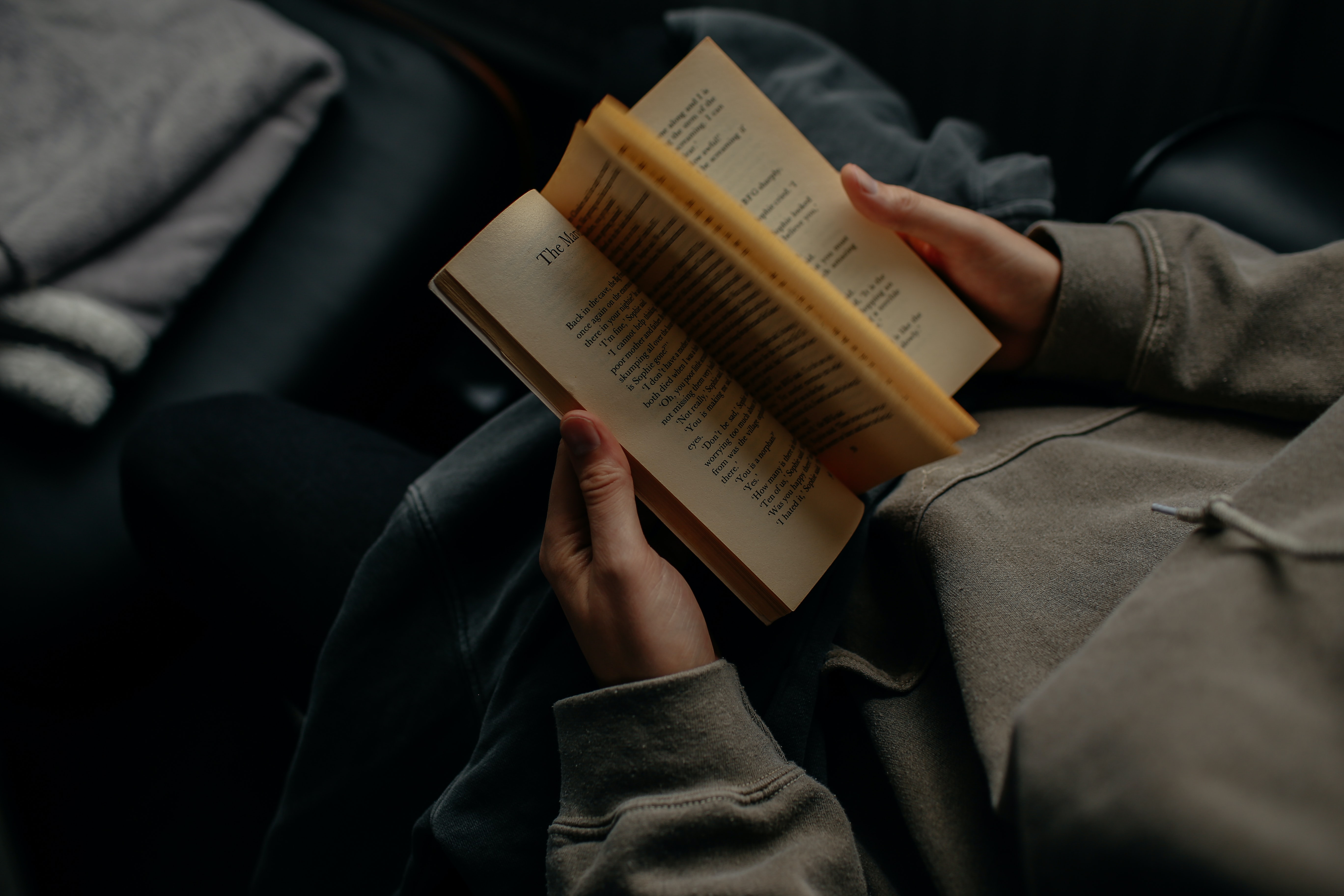
Even before a ton of ordure hit the propeller-style cooling device I’d only read three books this year.

Three. 

Since the age of six or seven I’ve been capable of reading three average-length books a day. Once, when I was about 9, I read 1,000 pages in a day, to see if could.

On another occasion (again, pre-teen) I read The Lord of the Rings trilogy in three days.

The point I’m sidling towards is that it is a sign of spiritual/ emotional/ logistical malaise when my word-consumption dips to such low levels. (The other obvious conclusion is I was backward as a kid, which is fair, but there were reasons.)

Being almost too far gone in anxiety to even read a book is new and unnerving. Books have always been a reliable portal away from the unappetitliche present, but the present present has got me so tied in knots I’m afraid to miss anything.

Initially, I tried to negotiate this in my usual Protestant, eat-your-beet-greens-they’re-good-for-you fashion. That is, I started a book about Palestine. If there is one thing more depressing than coronavirus, it’s the situation of Palestine. Reading about children getting shot with tear-gas canisters and all the other interminable head-fucking brutality of the Israeli occupation was enough to make me think that maybe enough humans are ugly enough that we all deserve to be wiped out by a virus.

Not reading material for these times.

After that failed effort, I didn’t read anything for a few days. Then my friend Nick emailed and it turned out I bought his book (presciently titled It Gets Worse) last year and forgotten to read it. That’s like discovering the bottle at the back of the cupboard you thought was cheap emergency plonk is a fantastic vintage meant for a special occasion.

This is a special occasion.

So, I’m (finally) on my way to having read four books this year. When I finish Nick’s book I may go back and reread his first, Bitter Experience Has Taught Me, because it’s nice to hear a friend’s voice — especially when it is funny, acid, and laden with anecdote.

After that, I’ll try Jane Austen, James Baldwin, Oscar Wilde and Primo Levi.

Disparate, yet equally essential.

All of these writers, including Ms Austen (whose reputation for daintiness is undeserved) exhibit rare levels of integrity, perspicacity and moral clarity. They took the world as it was, but refused to accept the supposed constraints of that relationship.

And they, one and all, write sentences so good I have to pause and let the wave of admiration/envy/admiration pass. Right now, it’s reading for pleasure, or not at all.

book2

Photo by bruce mars on Unsplash


The New Barebacking

I had to go to the village today.

maks

Photo by Kate Trifo on Unsplash

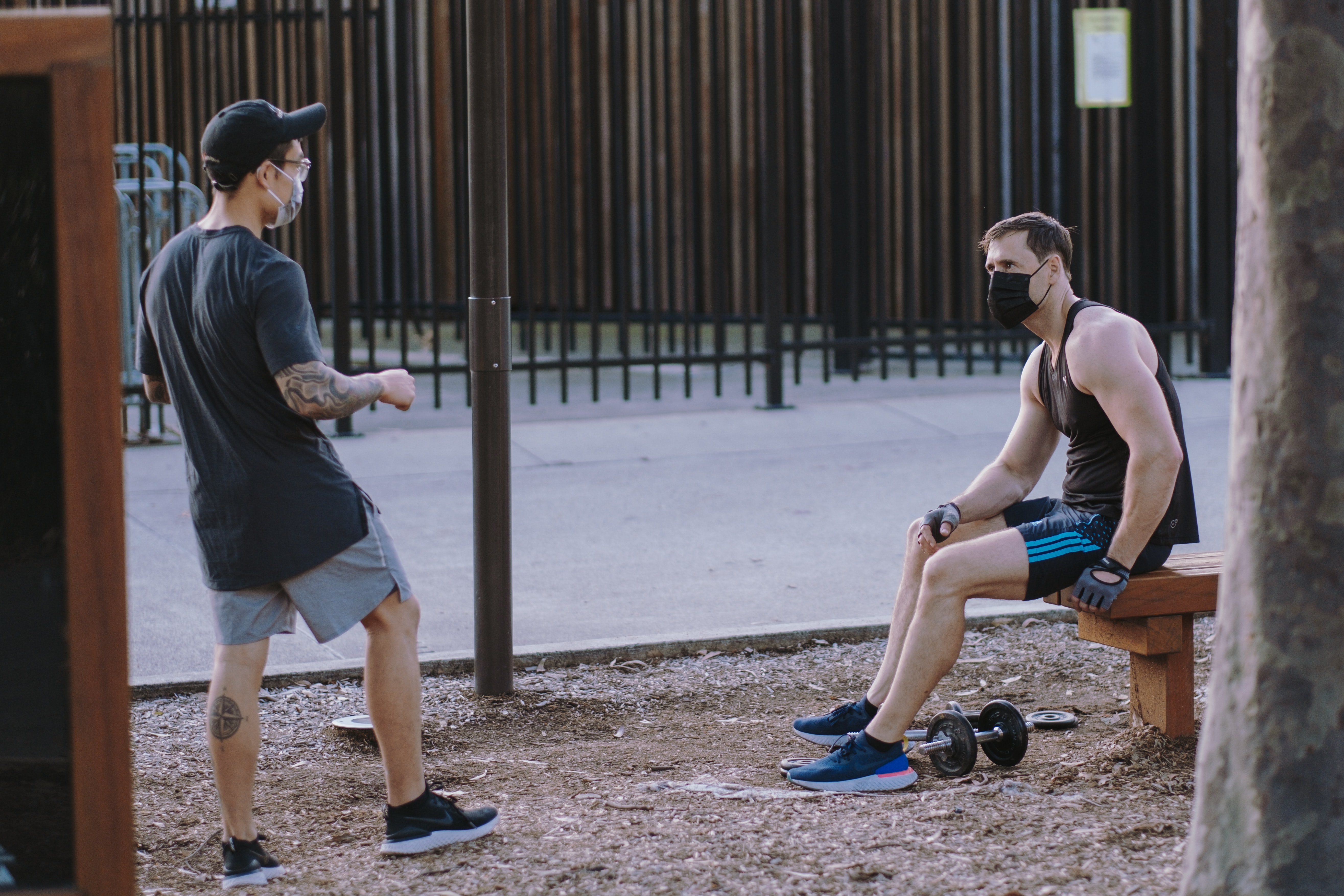
On the short drive to the village a couple of cars passed heading the opposite direction, both drivers wore surgical masks.

In the taxi rank in the village a driver leaned against the hood of his car, mask tucked beneath his chin, smoking.

The receptionist and vet wore blue masks.

The middle-aged man with the shock of dark curly hair who passed me on the sidewalk wore a white N95 mask.

The lady carrying two armloads of groceries wore a mask.

The young dude unlocking his car wore a mask.


Barefaced and bare-handed, I felt like a lowlife misfit.

Appearing in public sans mask is the new barebacking. Socially irresponsible, verging on reprehensible.

On arriving home, I decided it was time to buy masks (Amazon orders are delivering a month out, so thanksthefuckverymuch Jeff Bezos, I’m off elsewhere).

covid 1

Covid Photo by pixpoetry on Unsplash

Why the previous reluctance?

Because I don’t want to walk around thinking the next breath is going to kill me, or someone else. For the first time, I have an inkling how some men feel about condom use. Yeah, sure fine it’s the most appropriate thing to do but goddamn it, who wants to experience the world through a prophylactic shield?

Cherry blossoms are out, yellow wands of broom, did I mention the walnut trees are leafing? The air is pristine, sharp and Atlantic-cold. Our neighbor trundles up and down the road in an old red tractor, moving wine-sweet hay bales.

I do not want to touch the world with rubber fingers and breathe through layers of activated carbon. Why the hell would I sign up for that? Why not just lock myself in a sterile box and wait to die?

Okay, it’s not that dramatic but something important is being (has been?) lost in all this. Our sense of touch is already degraded from devoting too much of it to digital screens. We rarely breathe as deeply as we should. This stupid cunning virus is robbing us not just of too many lives but, sneakily, of things that make life worth living.

I’ll probably end up like wearing a mask for the common good (assuming I can beg borrow or steal one) but I refuse to think it is a Good Thing, in a larger sense.

We cannot do without enjoyment, wrote to Jack Gilbert. The ordinary sensual pleasures of filling our lungs and encountering the world through touch are not dispensable.

bench

Photo by Chris Murray on Unsplash


The Future? Don’t Bet on It

Last year, Chris and I spent Easter week with our dear, long-long-long-standing friends
C & R in Yorkshire. On the edge of the moors. Next door, it transpired, to my ex-boyfriend (who, true to form, was smoking on the front porch as I had my first cup of coffee).

Twelve months ago, someone I’d met and dated in Ibiza turning up next-door in a northern English was cause to murmur, small world.

dav

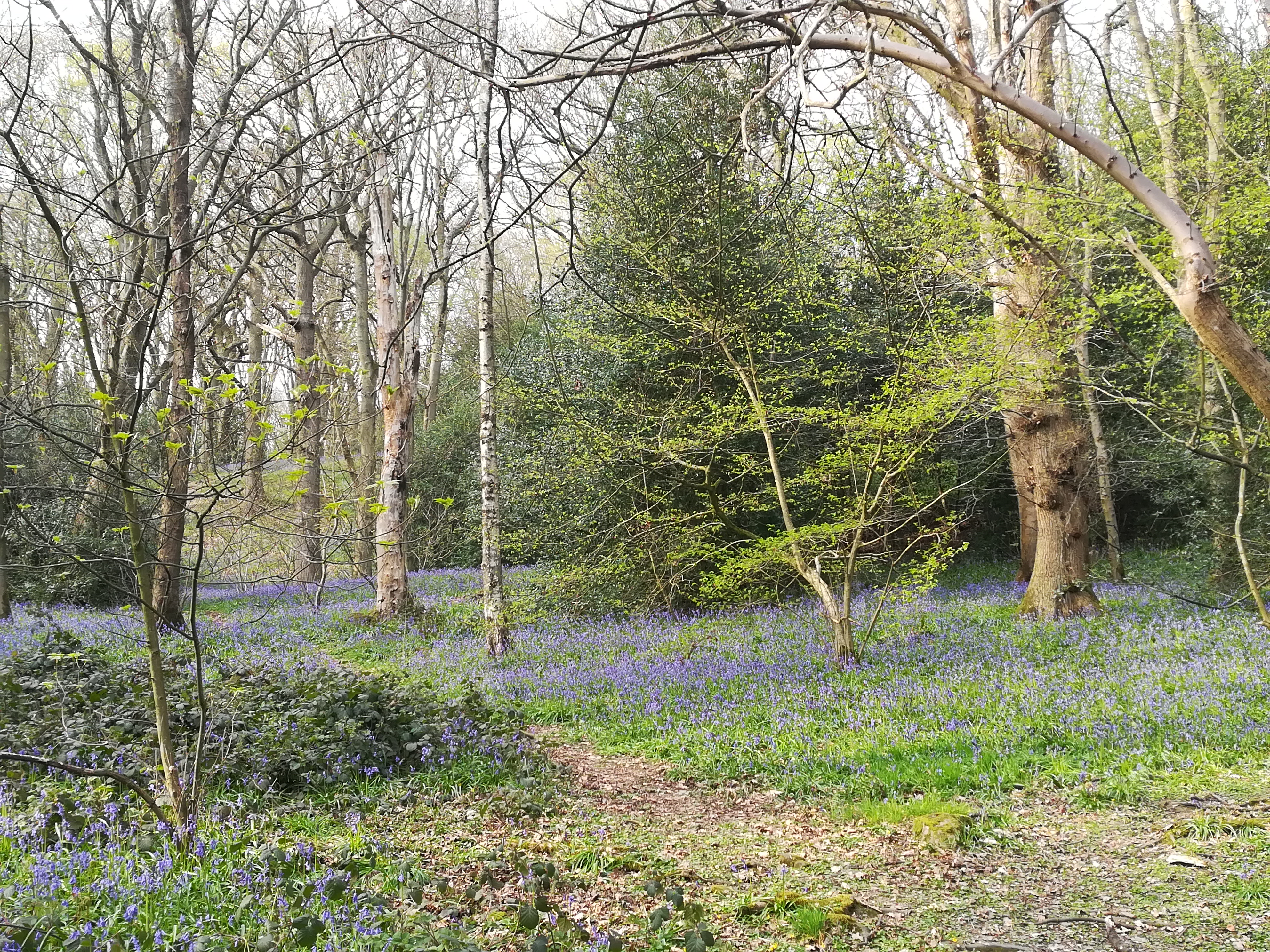
Yorkshire bluebells

Today, proof of the world’s smallness is inescapable and grim. The ticker-tape death toll mounts, the number of official coronavirus cases races towards two million and even the most fortunate of us hunker at home, waiting for a future that might never happen (that’s cribbed from Mavis Gallant, who wrote exquisitely about societies in meltdown and the delusions they cherish on the way to the flames).

There seems to be a split take on COVID-19. Either, it’s going to usher in hitherto unimaginable era of mutual support and higher consciousness or we’re going to be dragged (resisting or not) back into the machine and crushed between the cogs of resurgent capitalism.

The latter argument is ably made by Julio Vincent Gambuto in his viral Medium piece ‘Prepare for the Ultimate Gaslighting‘ in which he writes, plausibly:

What is about to be unleashed on American society will be the greatest campaign ever created to get you to feel normal again. It will come from brands, it will come from government… the all-out blitz to make you believe you never saw what you saw. The air wasn’t really cleaner; those images were fake. The hospitals weren’t really a war zone; those stories were hyperbole. The numbers were not that high; the press is lying. You didn’t see people in masks standing in the rain risking their lives to vote. Not in America.

On the chirpier side of the fence is Rebecca Solnit who writes in ‘The impossible has already happened: what the coronavirus can teach us about hope‘ (published last week in the Guardian):

When a storm subsides, the air is washed clean of whatever particulate matter has been obscuring the view, and you can often see farther and more sharply than at any other time. When this storm clears, we may, as do people who have survived a serious illness or accident, see where we were and where we should go in a new light. We may feel free to pursue change in ways that seemed impossible while the ice of the status quo was locked up. We may have a profoundly different sense of ourselves, our communities, our systems of production and our future.

(To be fair, Solnit is no Pollyanna. Most of her longform piece details how fucked things are and how stacked the cards are against people trying to unfuck them.)

It says something about my own wiring that I feel compelled to take sides, to argue the case. Coronavirus has turned me into armchair experts. Like a sad gambler, I stare at screens, watch the numbers, argue my interpretation of the stats, have opinions about things I zero right to opine about (South Korea’s testing policy! Sweden’s schools!)

This impulse has  to do with lack of control. I value knowing things, having well-formed and well-informed ideas. In other words, I’m an instant relic; a creature who belongs to the bigger yet more predictable world that existed before January 2020.

Taking sides, prognosticating, surmising and supposing are ways to pass the time but little more. (Aside: I was listening to a TED en Espanol talk about coronavirus from 16 March; it felt like  listening to a historical reenactment.)

If this pestilent mess proves anything, it’s that opinion is pretty much beside the point.

Still, if I had place a few bob on an outcome, my money is on business as usual with a twist. Advertisers will come after what’s left of our bank accounts, governments will wrangle for the remaining shreds of our civil liberties, global warming will heat back up and we will not turn into kinder, gentler, better versions of ourselves.

Nonetheless, we may be more attuned to the ludicrousness of the situation, and quicker to say so, to complain or resist. I hope so, anyway.

Above all, a year from now, I hope to be with friends somewhere, drinking, breathing fresh air, gossiping about some minor coincidence. That would be a happy ending.