Elements of Storytelling 7: Belonging

Storytelling is the essence of communication. The elements of storytelling are like letters of the alphabet. When you know how to use them, you can tell your best story.

Element 7: Belonging

Good stories make the audience feel part of something special, feel a sense of kinship.

Case study: Agrotourismo Cas Gasi

1-IMG_20160501_075859

Cas Gasi

What it is:

Cas Gasi is an internationally famous boutique hotel in the heart of Ibiza that bucked the odds to become a success. Its  challenges included a converting an old farmhouse, stables and outbuilding into luxury rooms; and marketing an Ibiza destination located away from the clubs or beaches that are the island’s biggest attractions. It is also, to borrow the Stella Artois slogan, reassuringly expensive. Yet it thrives year-round, catering to a loyal audience of celebrities, aristocracy and captains of industry who come for a simple reason: at Cas Gasi they feel special.

Why it matters:

There are a few things every luxury hotel must do well: exquisite linen, top-of-the-range TVs, delicate room fragrances, weighty bathrobes, fine food and gracious service. Beyond that, success is down to who has the best story. Cas Gasi’s pitch is short and sweet: When you’re here, your family.

Everyone who visits from financiers and minor royalty to Hollywood stars, tax exiles, and well-heeled young couples is treated like part of an extended family. A cultured, urbane, educated family that has superb taste in food, wine and art and the means to indulge these interests.

Cas Gasi nurtures this sense of belonging by eschewing advertising (though friendly write-ups in Vogue, Conde Nast and Harper’s Bazaar are welcome) in favour of word-of-mouth recommendations. Guests are further encouraged to unwind by discreet service and an institutional obsession with privacy and quiet. Cleverly, the owners realised at the start that not everyone will like the hotel, so they created a space that a select group of people love.

In its own words:

Ibiza-born Luis Trigeros Juan grew up between Barcelona and the island, for which he developed a deep love. A lawyer and passionate sailor, Luis sailed around the world in 1986 before making Ibiza his permanent home alongside wife Margaret von Korff, Barcelona-born with German family roots in Baltic nobility and French, Austrian and Russian family connections.

Together they have found their niche, setting up a organic farming project, transforming their home into the beautiful boutique hotel to welcome guests from around the world – the Cas Gasi ‘extended family’ – and promoting their personal philosophy of fusing life’s luxuries with sustainable living.

Read more

1-IMG_20160425_134335

Clara, house dog

Practice: “The concept of a tribe transcends a customer merely liking or being satisfied with your brand or product. Your tribe is made up of your brand’s biggest fans – customers or prospects that will often take to Twitter and Facebook to share your praises or recommend your product….

Remember that word of mouth is still the best marketing. Consider setting up a referral program that rewards customers that deliver leads to your doorstep – in effect, have your existing fans recruit more tribe members.” via Wasp Buzz

Remember: “In writing, your audience is one single reader. I have found that sometimes it helps to pick out one person—a real person you know, or an imagined person and write to that one.” ~John Steinbeck


Elements of Storytelling 1

Storytelling is the essence of communication. Writers, entrepreneurs, corporations, governments and even religions rise and fall by the stories they tell. It’s simple: if you want an audience, customer, or acolyte you better tell a damn good tale.

Think of the elements of storytelling as letters in the alphabet. Once you know them, you can tell any story your want in a way that makes people pay attention.

Element 1: Listening

Great storytelling begins with listening… to stories, people, songs, ideas, waves breaking on rocks, the voice of your intuition

Case study: Boom Earwear

boom headphones

What happened:

My first interaction with @BoomEarwear on Twitter. As a music fiend and serial jogger I go through headphones at an unholy rate. I clicked onto their webpage to order a pair but the site was down. I Tweeted a jokey complaint. To my surprise a response popped up a minute later, thanking me, apologising, and promising to fix things ASAP.

Why it mattered:

Easily distracted, I went back to my crappy generic headphones. When they gave up the ghost I thought of the Twitter exchange, but couldn’t remember the name of the company. The fact they listened and responded was enough to make me search my feed for the name. My post-purchase Tweet received a prompt, friendly response. Once again, giving me the warm fuzzy feeling that comes from being listened to…

boom_1

Their story:

A note from James, founder of Boom Earwear.

Firstly, thank you for checking out Boom Earwear, we’re super excited to have you around. I’ve been asked many times why I set up Boom Earwear, and wanted to tell the story exactly as it is.

I founded Boom Earwear after encountering issues with my headphones when travelling through Asia. I’d gone out for five weeks alone, and took a pair of headphones with me to listen to music – it’s a big part of travel for me.

During the second week, my headphones developed a fault – and naturally, I wanted to get this solved. I contacted the manufacturer and was told that sure, I could have a replacement – but I had to go back to the store I bought them from, or get them shipped to a UK address. When you’re out in the middle of nowhere, thousands of miles from home – that’s not a great answer.

That’s when I started to get super bummed out. Consumer electronics as a whole is a huge industry, and there is a real lack of companies that care enough to help….

Read the rest of the Boom story here

Practice:

“Imagine yourself in the other person’s situation, wanting to have someone listen to them. When they are speaking, make an effort to think of where they are coming from and why. Imagine what their life is like and what struggles they might be facing”
via FastCompany

Remember:

“When people talk, listen completely. Most people never listen.” ― Ernest Hemingway

WineRev: Nyetimber Classic Cuvee

Wine reviews by an appreciative amateur.

IMG_20160604_191459[1].jpg


Sweet gold grass spikes my ankles as I walk through the makeshift car park. “A hay field full of Range Rovers,” I text my boyfriend. “Couldn’t be more Ibiza if it tried.”

At the top of the dusty camino a villa looms: eye-stretching expanses of white surrounding a massive stone tower. Jasmine bushes leak perfume over the steps to the entrance. “This is what the south of France smells like,” the woman ahead of me says, a small blonde child hanging from each hand. “I wish I had a camera that could capture smells.”

Palm fronds shiver against the enamel sky, magenta bougainvillea splashes a wall.

Through an open door lies a vaulted central room with corridors running away in three directions. Someone has stuck an expensive astronomical telescope casually in a corner. Perhaps the same person who parked the double-suspension white carbon fibre mountain bike on the stairs. Down a corridor, past a door marked “Sniper” I emerge into a courtyard. A Moroccan-style tiled pool shimmers. Gleaming white Funktion One speaker stacks guard the DJ booth. At one end of the lawn women in striped jumpsuits and scarlet lipstick mix Grey Goose cocktails and pour lemonade for the kids careening between emerald grass and turquoise infinity pool.

This is an Ibiza that rarely makes the travel section, much less TV specials. It’s an atavistic yet hypermodern melange of bohemianism and raw capitalism. Psychics, ex-soldiers, acupuncturists and entrepreneurs mingle poolside. Naked children dash past women whose faces fed Harley Street retirement funds. A seal-coloured whippet takes a graceful piss on a gold pouf.

nyetimber.png

Nyetimber Classic Cuvee bubbles palely in my glass. The afternoon sun softens by degrees. Strangers strike conversations. If all goes to plan, Daniel will be the 58th person to make a commercial space flight. While he waits, he’ll sell you a seat on the shuttle, or a speedboat he designed. “Get rid of public transport,” he advises. “Only allow Formula One.” His other proposal for cutting carbon emissions? “Buy me this house. I promise to not heat it. That will reduce my footprint.” He sparks a Marlboro Light with an unapologetic grin.

I compliment Victoria on her Omega watch, a gift from her days as an employee. “Omega is owned by Swatch,” she adds. “When you work there, you always have to wear two watches. The higher-end one on your left wrist; Swatch on the right.”

From her I also learn that Calvin Klein employees are contractually required to have straight hair and nude manicures.

Lotta catches this: “I play tennis. I can never get my nails short enough.”

She was poached out of sporty early retirement (sold her restaurant in Chamonix) by Nyetimber CEO Eric Hareema. Because “you can’t ski every day” she now lives in France and is the brand’s European business development manager.

Selling English sparkling wine in the home territories of Cava, Prosecco and Champagne is an ambitious, even ridiculous venture. Yet Nyetimber makes oddly perfect sense in a tableau that calls to mind the Exile on Main Street sessions, minus the heroin. It’s posh, eccentric, rebellious and privileged, like the Stones. Too polished wouldn’t cut it but Nyetimber neatly strikes the note between luxe and louche. As Victoria remarks, there’s no competition when you’re being yourself.

Song: Rolling Stones ‘Loving Cup’

Quote: “Everything itself. / The sea is water. Stones are made of rock. / The sun goes up and goes down. A success / without any enhancement whatsoever.” ~ Jack Gilbert ‘The Other Perfection’


Poem of the Month: Bliss

A beautiful poem to complete the year, from Nobel prize-winning Indian poet Rabindranath Tagore. The briefest of the poems I memorised in 2015, it is a profound reminder that how one lives is always a choice.

DSC02607

Bliss

Remain in bliss in this world,
Fearless, pure in heart.
Wake up in bliss every morning,
Carry out your duties in bliss.
Remain in bliss in weal and woe.
In criticism and insult,
Remain in bliss unaffected.
Remain in bliss, pardoning everybody.

Agents – The Numbers Game

Yesterday I hit 75 on my agent hunt. Seventy-five lines on an excel sheet each with name, website, email, and a note of the date and pitch delivered. I may as well have made 75 copies of my novel, stood at the top of a cliff and chucked them ceremoniously into oblivion. This shouldn’t discourage me (most of the time I know my duty is to write well, and the rest be damned) but it does.

When another brusque rejection arrived I burst into tears. Voices babbled in my head: You are never going to publish a novel. If you do, nobody is going to read it. You are a fake, a flake, a lazy greedy over-educated under-producing parasitic loser who should have gotten a real job before it was too late. You are going to die broke and alone. You suck. Et cetera.

This could be true, if I let it. But after bawling for a few minutes, sense started to leach in. All the sages I respect (dead and living) make the same case:

“You have the right to work, but for the work’s sake only. You have no right to the fruits of work” ~Bhagavad Gita
“[Do] not long for anything if it be not given” ~Epictetus
“For us there is only the trying” ~TS Eliot

Some days, trying is a drag, the last thing I want to do. The alternative, though, is to let all the miserable, mean, self-pitying thoughts turn themselves into reality. As long as the spreadsheet is growing, there’s hope.

effort

Poem of the Month – If by Rudyard Kipling

If is the poetic equivalent of “…Baby One More Time”: it’s naff, simplistic, brash and its politics don’t bear examination but Christ it’s catchy. I can’t remember when I first read or heard the poem, but fragments of it are buried in my brain like shrapnel.

Kipling was a jingoistic racist. If is patronising hooey. Still, the line “if you can fill the unforgiving minute with sixty seconds worth of distance run…” has gotten me up more hills than I can count. So there’s that.

Why memorise If? In part because I think it’ll come in handy over the next couple of months in Ibiza (“If you can keep your head when all about you/ are losing theirs…”) and partly to acknowledge the fact that bad poetry can be as useful, or meaningful, in the right context, as the most exquisite sonnet.

What’s your favourite bad poem? Share in the comments.
run

If

If you can keep your head when all about you
Are losing theirs and blaming it on you,
If you can trust yourself when all men doubt you,
But make allowance for their doubting too;
If you can wait and not be tired by waiting,
Or being lied about, don’t deal in lies,
Or being hated, don’t give way to hating,
And yet don’t look too good, nor talk too wise:

If you can dream—and not make dreams your master;
If you can think—and not make thoughts your aim;
If you can meet with Triumph and Disaster
And treat those two impostors just the same;
If you can bear to hear the truth you’ve spoken
Twisted by knaves to make a trap for fools,
Or watch the things you gave your life to, broken,
And stoop and build ’em up with worn-out tools:

If you can make one heap of all your winnings
And risk it on one turn of pitch-and-toss,
And lose, and start again at your beginnings
And never breathe a word about your loss;
If you can force your heart and nerve and sinew
To serve your turn long after they are gone,
And so hold on when there is nothing in you
Except the Will which says to them: ‘Hold on!’

If you can talk with crowds and keep your virtue,
Or walk with Kings—nor lose the common touch,
If neither foes nor loving friends can hurt you,
If all men count with you, but none too much;
If you can fill the unforgiving minute
With sixty seconds’ worth of distance run,
Yours is the Earth and everything that’s in it,
And—which is more—you’ll be a Man, my son!

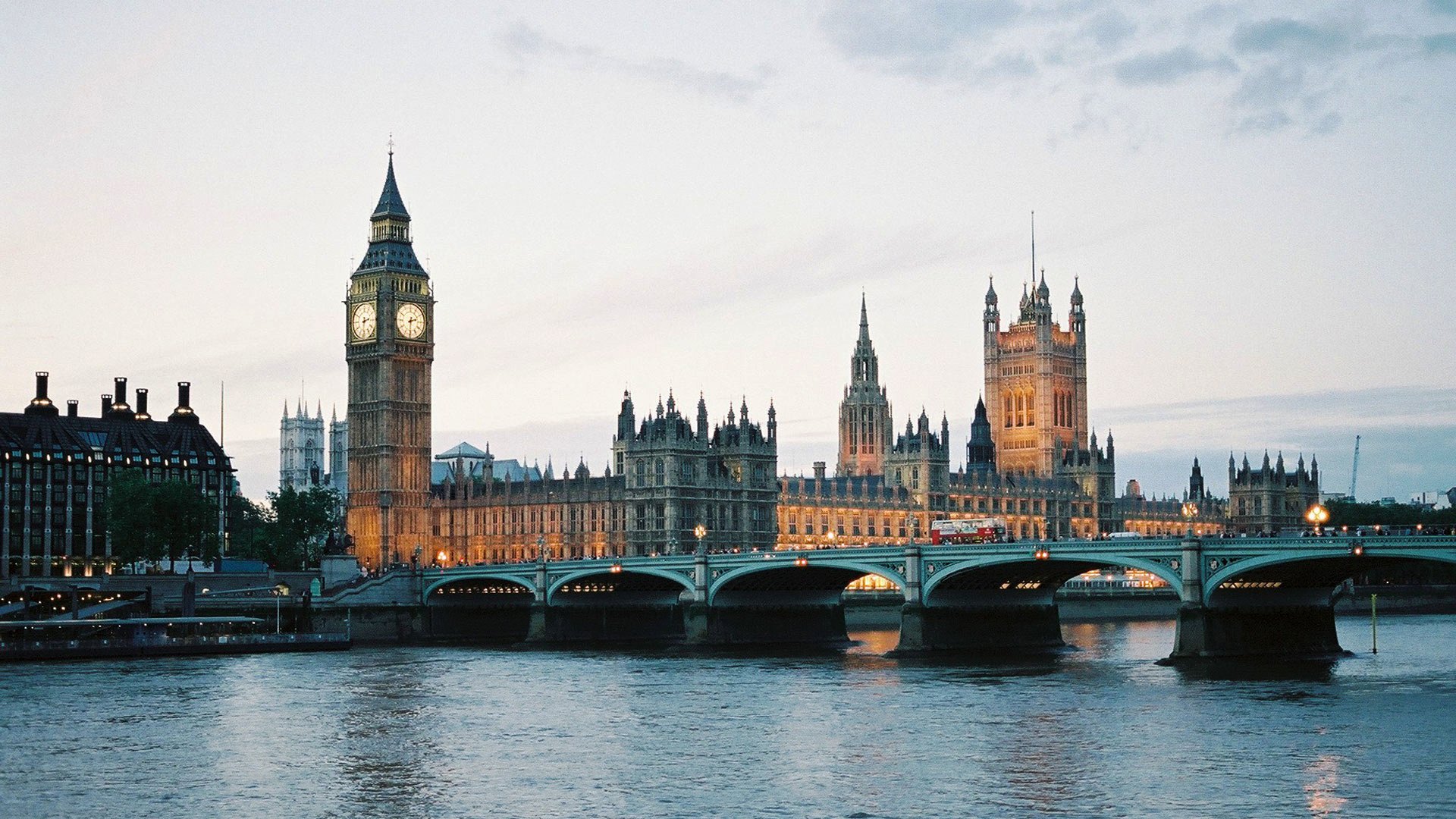
Wordsworth ‘Composed Upon Westminster Bridge’

William Wordsworth’s sublime ode to London. Thanks Alice!

Westminster-Bridge

Composed upon Westminster Bridge, September 3, 1802

Earth has not anything to show more fair:
Dull would he be of soul who could pass by
A sight so touching in its majesty:
This City now doth, like a garment, wear
The beauty of the morning; silent, bare,
Ships, towers, domes, theatres, and temples lie
Open unto the fields, and to the sky;
All bright and glittering in the smokeless air.
Never did sun more beautifully steep
In his first splendour, valley, rock, or hill;
Ne’er saw I, never felt, a calm so deep!
The river glideth at his own sweet will:
Dear God! the very houses seem asleep;
And all that mighty heart is lying still!

Share your favourite ‘place’ poem in the comments!

Moving Words (Rock’n’Roll Shoes)

I moved house this week. For the third time in four months.

“Do you always move that much?”

“Actually,” I confessed. “Three months is a pretty long stint in one place for me.”

This is true. There was the year I moved every eight weeks. The long-haul year spent shuttling between America, Ibiza, London and Myanmar.

There were non-moving years: Glasgow 2010; London 2012. Periods of compression. On release, I tumbled from place to place in a blur of kinetic energy.

Always a spur: Don’t get stuck. Don’t miss out. Don’t settle (for less).

On at least three occasions I left a city with only a suitcase, giving or throwing away everything in excess of 20kg. “It is desirable that a man… live in all respects so compactly and preparedly that, if an enemy take the town he can, like the old philosopher, walk out the gate empty-handed without anxiety,” writes Henry David Thoreau. I came close.

This week, boxes and suitcases went into my car and were joined by my cat. Unprecedented adult privilege and responsibility. Undreamt gratitude. The sun was hot and bright as I ferried boxes. White blossoms lingered amidst the almond trees’ fresh green leaves. When I took a break at the cafe, the owner sat and chatted then wouldn’t let me pay for my tea. The neighbouring farmer lent me fruit-crates to pack my books.

Vague anxiety shrouded me like fog. It always does when I move. This time literal and figurative sunshine burnt it off. The irresistible smile of someone who’s a reason to stay. Unpacking clothes instead of piling them in the donation bin of a charity shop. Restoring my books to their shelves. Running the familiar road to San Carlos.

I wouldn’t miss a single move. Every bounce taught me something (the hard falls in particular). To stay is a new education. I am choosing something now, to paraphrase Adrienne Rich, choosing to live with all my intelligence.

Running, Writing and Creativity

An excerpt from an essay I wrote on my relationship with running, writing, and creativity.

Read the full piece at The Nervous Breakdown

Run time

Run time

I now recognise the two things my soul needs: running and writing. Running, first, because it is obvious, though the less important of the two. Like good grammar, it is essential to my sense of order and well-being, but I only make a fuss in its absence. A nagging pain in my foot warns me to leave my trainers under the bed, unlaced. My brain knows better than to aggravate an injury but the rest of my body is twitchily uninformed. There is nothing wrong with me apart from a sense of abstraction and discontent. Without the discipline of running and long breaths of cold, cleansing air I am inefficient, fretful, soft in a bruised-fruit kind of way.

Without creative activity my brain fidgets and stews. As with running, the longer I go not writing the more I yearn to and, paradoxically, the more difficult it becomes. After a few days off I feel both dread and pleasure at the prospect of a run. Similarly, when I don’t write the idea of writing fills my head, swells to such vast importance that the process grows alien and terrifying. My fractious mind elides twenty-odd years of devotion and discipline and whispers “you can’t,” or “you can, but it won’t be any good.” Absence opens the door and Doubt saunters in carrying a funhouse mirror where past and future crush unbearably against the present. Anxiety ripples through me like a tiny earthquake, shimmying books off shelves and setting my internal crockery a-rattle. The Fear descends: my book will remain unwritten; questions scribbled in notebook margins will remain unexplored; I will tell no stories; never again will I craft a beautiful essay or forget time as I play a private game with my twenty-six favourite toys.


What co-creative activity gets your writing flowing? Share in the comments.

Poetry Challenge – East Coker by TS Eliot

Kat & I

Kat & I

Nobel Peace laureate and Burmese democracy campaigner Aung San Suu Kyi spent over 20 years under house arrest. She says that one of the things that kept her together was memorising poetry. Once it’s in your head, she added, nobody can take it away from you. Thinking about that inspired me to set myself a poetry challenge: memorise one poem a month during 2015.

That will give me a stock of a dozen poems to carry with me everywhere, always.

For January I’ve chosen a portion of ‘East Coker’ from TS Eliot’s Four Quartets. My dear friend Kat introduced me to this poem a few years ago and it has become deeply rooted in my psychic landscape, both for itself and because it reminds me of how blessed I am by her friendship. This is for you my love!


East Coker

So here I am, in the middle way, having had twenty years—
Twenty years largely wasted, the years of l’entre deux guerres
Trying to learn to use words, and every attempt
Is a wholly new start, and a different kind of failure
Because one has only learnt to get the better of words
For the thing one no longer has to say, or the way in which
One is no longer disposed to say it. And so each venture
Is a new beginning, a raid on the inarticulate
With shabby equipment always deteriorating
In the general mess of imprecision of feeling,
Undisciplined squads of emotion. And what there is to conquer
By strength and submission, has already been discovered
Once or twice, or several times, by men whom one cannot hope
To emulate—but there is no competition—
There is only the fight to recover what has been lost
And found and lost again and again: and now, under conditions
That seem unpropitious. But perhaps neither gain nor loss.
For us, there is only the trying. The rest is not our business.

Home is where one starts from. As we grow older
The world becomes stranger, the pattern more complicated
Of dead and living. Not the intense moment
Isolated, with no before and after,
But a lifetime burning in every moment
And not the lifetime of one man only
But of old stones that cannot be deciphered.
There is a time for the evening under starlight,
A time for the evening under lamplight
(The evening with the photograph album).
Love is most nearly itself
When here and now cease to matter.

Old men ought to be explorers
Here and there does not matter
We must be still and still moving
Into another intensity
For a further union, a deeper communion
Through the dark cold and empty desolation,
The wave cry, the wind cry, the vast waters
Of the petrel and the porpoise. In my end is my beginning.