On Beginnings with Melissa Madenski, Pt 1

Welcome to ‘Between the Lines’ – interviews with teachers, writers and writing teachers on specific aspects of their craft. This interview will be split into two posts to do justice to Madenski’s generous sharing of time and wisdom. Part 1 covers her biography and writer’s origin story. Part 2 will focus on craft and teaching.

Full disclosure: Melissa and I have known of each other since I was growing up in Lincoln City, Oregon; her children attended my mother’s day care. About a decade ago, I reached out and shared some of my writing. She responded with characteristic generosity and has become a dear friend, mentor, exemplar.

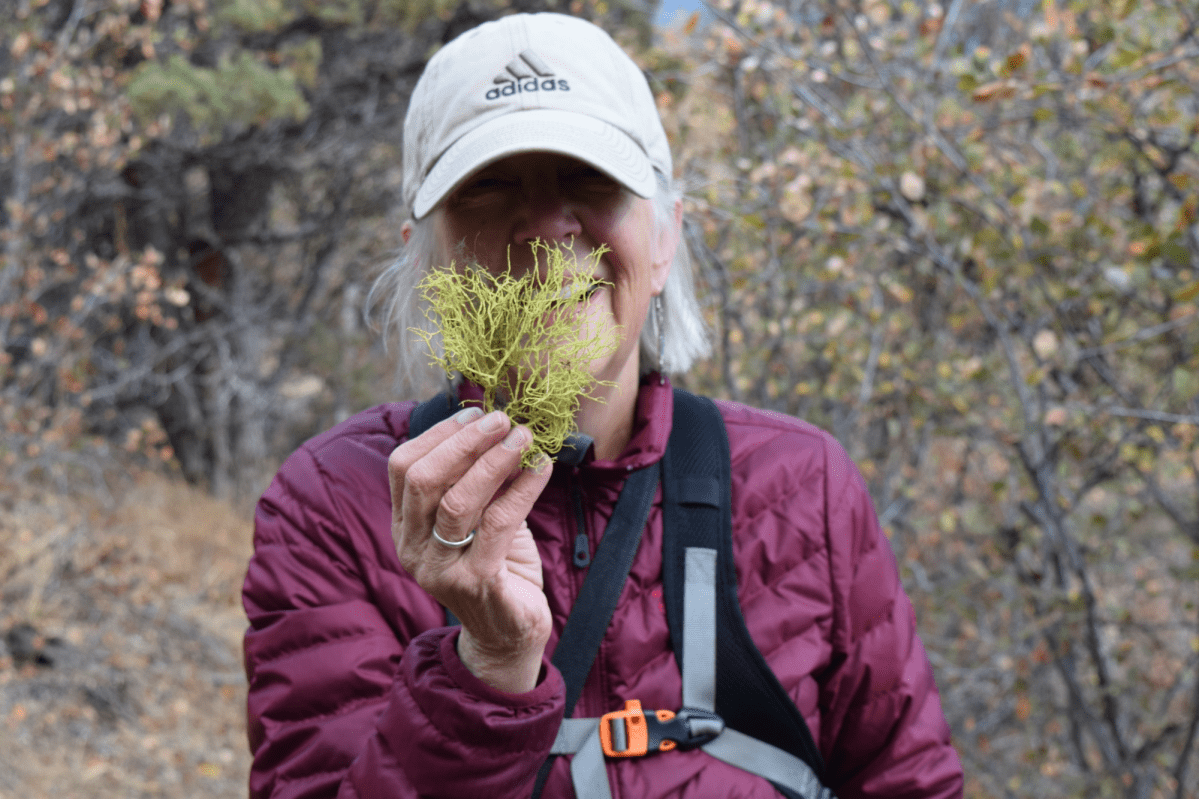
Photo: Hallie Madenski

“I’ve had everything in my life I wanted, but not one thing went according to plan.”

Melissa Madenski delivers this statement with poise that belies the extraordinariness of the claim.

White hair frames dark tortoiseshell glasses and silver hoop earrings. A boho-chic bob to make Anna Wintour green. The kindled joy in her eyes refracts through the the kitchen-dining-living space of her Portland, Oregon home, which is as spare, chic and elegant as she: drip coffee-maker, glass-fronted book shelves, black-and-white prints on crisp white walls.

Elsewhere, these might be bland markers of commodified good taste. But they are Madenski’s tools: functional and essential as carpenter’s adze or blacksmith’s tongs.

Born and raised in Portland, Madenski moved to the Oregon coast as a young woman, taught school, married, had children. One imagines a life rich in the delights of partnership and parenthood: time-poor, perhaps, but abundant in laughter. A time to make one say, “I’ve had everything I wanted.”

But: “Not one thing went according to plan.” The rosy narrative ended in a thunderclap moment when Melissa’s husband, Mark, died, aged 34. Their children, Hallie and Dylan, were one and six years old; their hand-built wooden house in the Siuslaw Forest unfinished.

“My healthy, athletic husband had simply stopped breathing,” she wrote in her 2015 essay, ‘Starting Over.‘ “We would soon learn that an arrhythmia shook his heart until it stopped.”

Such an unthinkable, unspeakable loss can drive unbelievers to their knees and turn Christian soldiers into atheists. How many people, in that crucible, muster the grace to craft an original response?

Madenski mustered — no — created that grace.

“That’s when I started to write every morning,” she recalls. “I missed Mark very, very much; I held onto writing for my sanity. I’m not an early riser, but I’d set my alarm for 4:30. It was a wood-heated house, so, freezing. I’d stick my head under well water – also freezing – make a latte, then shut myself in my office.”
Deep roots

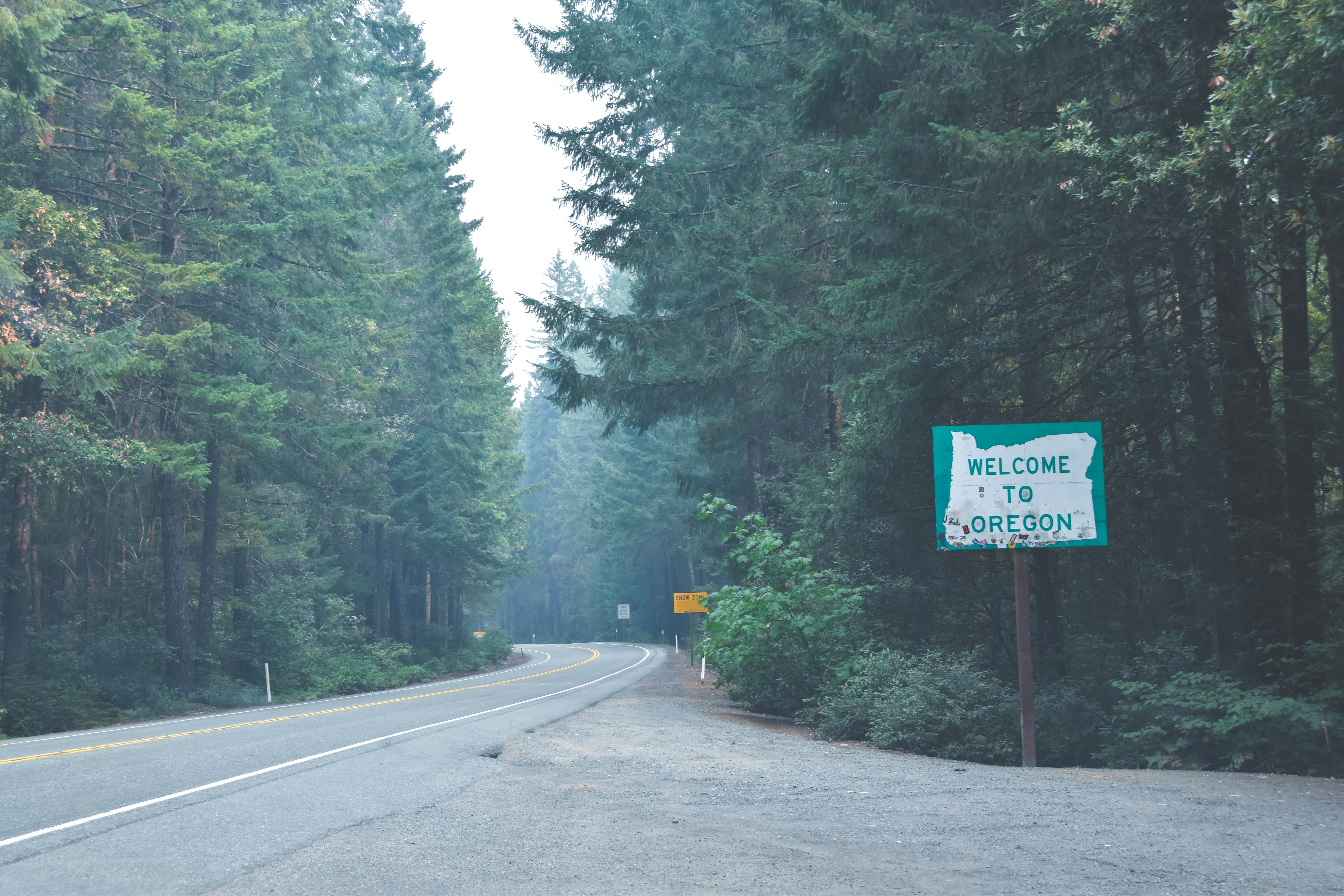
Though Madenski traces her deliberate writing practice to the cataclysm of loss, its roots reach across generations and oceans.

The youngest daughter of a traveling salesman and a homemaker, Madenski grew up in Portland, happy to daydream alone beneath a spruce tree in their yard. Her grandmother, an immigrant from Norway, lived with them. “I credit her with raising me. She told me lots of stories.”

They were the stories of a vibrant and spirited woman who “hiked, rode horses, lived in logging camps.” A woman who knew, too, what it was to be struck by fate.

A burst appendix led to an infection that ruined her grandmother’s hip. In an era before accessible replacement surgery, this irredeemably altered the last 30 years of her life.

“She lost everything that she loved.” Madenski sits with her memories for a moment, then continues. “My grandmother been a seamstress, so my mother would bring her thread and fabric. She sowed until the last three days of her life. It was like writing: the one thing no one can take away.”

Another thing no one can take away: the example of a woman who chose not to be defined by suffering, but to — Penelope-like — stich and unpick, stitch and unpick, until the stitching and the unpicking became a new tale.
Meandering path

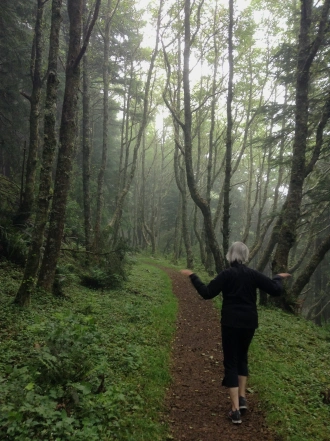
Though “drawn to stories,” Madenski didn’t want to be a writer. “As a kid, I only wanted to imagine. I would go to bed early, lay there and create stories where I was always the heroine.”

Madenski was a voracious reader. But it wasn’t until high school that writing began to glow as an idea.

“I had a magnificent teacher, Ruth Strong. She was a botanist as well, who after she retired wrote Seeking Western Waters – the Lewis and Clark Trail from the Rockies to the Pacific.

She was the first person who said I was a writer; the first person to believe in me as a writer. There was no big lineage: I kept a boring diary, which thankfully was lost in a house fire, but what I’ve come to believe is that so much of writing is story. We are wired for narrative. We’re wired for beginning middle and end.”

Despite the brush with inspiration, Madenski began “a traditional path”, earning a degree in elementary and special education from Portland State University.

Her first job, age 22, was teaching second grade in a public elementary school. “It was hell,” she says. Disadvantaged students. A teachers’ strike. The inevitable tribulations of being green and unschooled. “It was trial by fire. I witnessed things I’d never seen. I had to learn to report abuse. Teaching wasn’t teaching, it was trying to keep people’s head above water.”

The steeliness of her working-class Scandinavian ancestry flashed when she refused to sign a contract for the following year until the principal promised things would change.

After fulfilling her childhood dream of moving to the beach, Madenski taught at Oceanlake Elementary in Lincoln City and at a private school in Neskowin. Although she calls the freedom and miniscule class sizes of independent schools “heaven,” she is quick to say, “I believe in public schools.” Only there did she find the diversity that stretches and challenges.

Photo by Chris Henry on Unsplash

Beginning (Again)

Mark’s death precipitated her out of conventional classrooms. “There are single women who could raise kids and teach, but I couldn’t. I had some insurance money and the house, and thought, I’m going to piece things together.”

Her next first job was driving to Hebo Ranger Station to teach English to migrants employed in the local dairy industry. “It was a good time to not be alone. I was in grief, but so were they,” she muses. “Dairy milking is a hard job, they were sending money home to Mexico, but they had the most wonderful stories.”

Teaching English became one of the legs of the “three-legged stool” required to stay afloat in the Oregon Coast’s parlous tourist economy.

It was then, too, Madenski began the cold-water morning writing practice that she maintains to this day (“I wake up at 5AM, come to the table and write. It’s home to me. It’s stability”).

Her most lucrative year as a writer brought in $6,000. (“It wasn’t enough, but it was a leg.”)

Other legs included teaching at the NW Writing Institute at Lewis & Clark College, founded by friend and fellow author Kim Stafford; running adult literacy programs in libraries; leading writing programs for children; teaching citizenship classes to immigrants; mentoring young authors; and creating her own writing workshops.

“These jobs I pieced together didn’t give me a big retirement or benefits,” she says, matter-of-fact, “but they gave me a lot of experience.”

To anyone who says, experience don’t pay the bills, Madenski’s life is an emphatic beg to differ.

Experience can make the difference between between resilience and collapse.

A couple of years ago, Madenski had hip surgery, then broke her femur in a fall. Cue months of pain, compromised mobility, physical therapy; Covid and long Covid. A downward-rushing torrent that could sweep a person away.

“I was trying to keep going as before, and I kept falling. So I learned to say ‘no’ so I could say ‘yes’… yes to friends, family, writing. I don’t expect to grow old without pain; it doesn’t shock me or surprise me.”

The simple lucidity of the statement is a gong.

It doesn’t surprise me.

The voice of experience.

“I am at peace,” Madenski adds, stating what shines in every plane of her face and every gesture. “That’s a skill for life: not to take things personally that are not. Life teaches you what is personal. Death is not. It happens to everybody. The world is completely sorrow woven with happiness. I’ve learned not to forget that all day long.”

Connect

Web:

Books:

Look out for Part 2 of the interview, where Melissa shares her insights on teaching writing.
Flashback: My 2016 Reading Highlights

Joan Didion said it was a good idea to stay acquainted with the people you used to be, even if you don’t much like them anymore.

It’s good advice.

In 2016, life was changing so fast my head spun. I met my now-husband in December 2015 and the next year was spent jumping on planes to get to him, culminating in a move from Ibiza to Memphis, Tennessee. Small wonder it was a year of comfort-reading favorite books in snatched moments.

Here’s what I read, and why I read it.

***

If, like me, you have a voice in your head that tells you off for paying attention to your own life, for saving boarding passes and scribbled-upon napkins, for stopping to write love letters in the sand, ignore it.

img_20161113_151120

Happiness and creativity depend on valuing our lives. They depend on listening, watching, recording, remembering. It is easy to envy other people’s lives — so exciting! Such superior children/holidays/houses/jobs/wardrobes/sex lives! Such a torrent of fabulous Instagram photos and witty Facebook status updates. We get so caught up peering through the virtual window of our neighbours’ lives we forget to look at our own. We don’t see the pathos, adventure, and pleasure of our own existence because we’re not looking.

Two years ago I started a keeping a list of all the books I read. It seemed like a self-indulgent tic indicative of an unhealthy level of ego. Or, worse, a pointless exercise (who cares?) My delight in list-making narrowly trumped these niggles. Now a blue virtual post-it on my home screen contains a list of all the books I read in 2016.

The list reminds me not only what I’ve read, but how I read. It is a snapshot of the ebb and flow of time and energy. January 2016 was a book-heavy month, gobbling up a glut of Christmas goodies and biding a lot of time until my second date with the soon-to-be boyfriend. February was a respectable showing. March, the month I spent between London, Dominican Republic and Brussels, I read almost nothing. The next two months were spent in a miserable, unsuccessful attempt to assimilate into a receptionist job at an overrated luxury agrotourismo in Ibiza — it was bad enough I only read a book and a half. Finishing Anna Karenina took me through June. The rest of the year I read in fits and starts. What jumped out, reviewing the list, was how many books I reread. And, with the exception of High Tide in Tucson and Jane Eyre, not just for the second time.

Looking over my top ten rereads reminds me what I value and crave. The books on this list all offer, directly or through illustration, wisdom and encouragement to those trying hard to live by their own lights. From the esoteric musings of the Glass siblings to the tough-love advice of Cheryl Strayed, each book is, in its own way, a tonic. They were rocks in the fast-moving stream of a year where everything changed, stepping stones to a new life.

Franny & Zooey, JD Salinger

franny

The summer I was 15 I lived with my older sister and worked at Wendy’s. Every day on my break I hunkered down in store cupboard and read Franny & Zooey. To this day I’m not sure where I got the book, or why it grabbed me. What I do know is I’ve read it somewhere between 30-50 times, can quote entire sections of it verbatim, and reread it at least twice a year. In part it’s the reflection of myself I see in Zooey who says “I’m sick to death of waking up furious every morning and going to bed furious at night”, an echo of my relationship with my siblings in the narrator’s aside that the Glass siblings share a “semantic geometry where the shortest distance between two points is a fullish circle”, or descriptions like, “the Jewish-Irish Mohican scout who died in your arms at the roulette table in Monte Carlo.” In part, because the wildly verbose, witty, strangely timeless sentences still reveal new flashes of character. The narrator says it is a “compound or multiple love story, pure and complicated” which is a fine description of the writing, too.

Bird by Bird, Anne Lamott

Ostensibly a book about writing, Bird by Bird is a wise, funny, heart-rending guide to living life when you don’t fit in a box. The combination of Lamott’s acerbic yet self-deprecating turns of phrase coupled with her palpable compassion is almost unbearable. I cry every time I read it, even though I’ve read it so many times I well up in anticipation. It makes me want to walk around hugging everyone and at the same time makes me want to be a blazing good writer. Every chapter is a gem, but “Jealousy” and “KFKD” are maybe the best things you’ll ever read on, respectively, the eponymous emotion and self-doubt. And her advice about avoiding libel charges is hilarious, priceless, and involves the memorable comparison of a penis to a baby bird in its nest.

letters

Letters to a Young Poet, Rilke

This I plucked off a library shelf in Tigard, OR on the strength of the fact that Lady Gaga has a Rilke quote tattooed on her upper arm — it reads in part, “confess to yourself that you would die if you were forbidden to write”. The line, it transpires, is from Letters To A Young Poet which is so rich in exquisitely worded wisdom it flays me. Rilke’s advice on sex, solitude, and seeking ones calling is so incisive it takes my breath away. And, as a poet, he makes every word count, crafting artful sentences that blow my mind on both a philosophical and aesthetic basis. I love it so much, I read it aloud and sent the recording as a gift to a friend.

A Room of One’s Own, Virginia Woolf

Woolf’s trenchant analysis of what women writers need is as relevant today as when she delivered the lectures from which it was drawn in 1928. We may have “come a long way, baby” but women are still underpaid, overworked, and too often cut off from the privileges that enrich men’s prospects. Sexism may not be as crude as the beadle who ordered her out of the Oxford library, but it thrives in a thousand insidious ways that women internalise or ignore at their own risk. I also love Woolf’s dazzling prose, which gave us, “one can not think well, love well, sleep well, if one has not dined well.”

Tiny Beautiful Things, Cheryl Strayed

This collection of Strayed’s advice columns written for The Rumpus’s Dear Sugar column breaks my heart wide open. I’m sobbing by the time I get through the second or third letter, whichever it is that is from the women who suffered a late-term miscarriage. It is hard to put my finger exactly on what it is about Tiny Beautiful Things that makes me gasp. Mostly, it’s Strayed’s unflinching willingness to examine the hardest things in her own life. She doesn’t rush through awfulness, or glide past suffering, she stays, unafraid to study it and claim who and what she is in the wake of it. This solipsism is unexpectedly comforting. By inhabiting and sharing her experience she makes it okay to inhabit and unpick my experience. Line by line, she demonstrates the potential for growth and change in every life. If one is willing to embrace an almost Stoic determination to live well by doing what’s right.

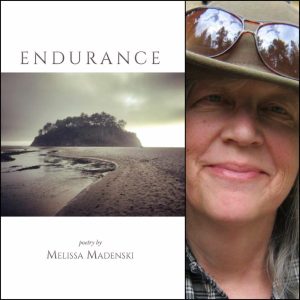
Endurance, Melissa Madenski

endurance

In 2015 I committed to memorising a poem per month, and did. Not all of them have remained word-perfect in my head, but it was an incredible experience with language. When you learn something by heart, you discover things. Cadence, repetition, punctuation, imagery all become vivid in an unpredictable way. I didn’t set out to memorise poetry in 2016 but I read a lot of it — including fantastic collections by Jack Gilbert and CP Cavafy. My favourite reread, though, was this slender chapbook by an Oregon writer. She lost her husband to an unexpected heart attack when she was in her 30s with two young children and the grief of that loss reverberates through Endurance. These are poems about learning to live with the worst case, not with resignation but with courage and, ultimately, joy. It’s another one I can’t make it through without tears, but they’re cathartic.

Jane Eyre, Charlotte Bronte

Of all the my rereads, this was the most fun because it was so different from my memory of it. I must have been 12 or 13 when I read Jane Eyre and I was bored witless. Years later, I read Wuthering Heights and hated it, confirming my prejudice against their weird, masochistic and wildly overrated Brontë sisters. Then on a whim I read Anne Brontë’s Tenant of Wildfell Hall and liked it. And somewhere I heard that Jane Eyre was feminist. So I gave it another shot and fell in love. Bold feminism plus a terrific yarn? Brilliant. Free Kindle edition

Long Quiet Highway, Natalie Goldberg

I reread at least one or two of Goldberg’s books each year. Most often Writing Down the Bones or Wild Mind, but this time I went for The Long Quiet Highway which is mostly about her study of Zen Buddhism over the years. Which of course means it is about writing, being, meaning, truth, acceptance, and everything else that matters. Writing is Zen; Zen is writing. Whatever we do is meditation if we allow it to be. The subtitle is Waking Up in America which is  nearly what I named this blog because that’s what I’m trying to do: wake up in a country I left 16 years ago; figure out what it means to be me in America in 2017, and how to do something good here.

Treasure Island, Robert Louis Stevenson

Treasure Island has been a staple of my literary diet since I was 15 or so. I was a precocious reader, but not above devouring whatever I could get my hands on, and this yarn of seafaring and daring-do always hit the spot. Years later, when I moved to Ibiza, I started to think of it as treasure island — a supposed paradise guarded by dead men’s bones and half-crazed exiles. Overly dramatic personal parallels aside, it is a fantastically fun book and an excellent template for writers looking to craft a fast-paced, unforgettable story. Free Kindle edition

High Tide in Tucson, Barbara Kingsolver

Kingsolver is the most recent addition to my pantheon of southern American writers (Carson McCullers, Hunter S Thompson, Eudora Welty, Truman Capote, etc.) and possibly the one I’d Most Like To Meet. Writing implacably reveals character and every word I’ve read of Kingsolver makes me think she is a Good Person, smart as hell, and cracking company on a night out. Her fiction boggles me and this book of essays is one of the finest, sharpest, most humane collections I’ve had the pleasure of reading. The title essay alone is worth the price of admission; Buster the stranded hermit crab may change your life.

What books to you read over and over? Share in the comments or Tweet @CilaWarncke

On Writing and Mental Health with Anise Eden


Welcome to ‘Between the Lines’ – interviews with teachers, writers and writing teachers on specific aspects of their craft.

Photo courtesy Anise Eden. Copyright OC Photography

Five years ago, author Anise Eden traded the hectic, emotionally demanding life of a mental health social worker in Baltimore, MD for a slower-paced existence in Mallow, County Cork. “The lifestyle here suits me,” she says, a fact evident in her warmth, ready smile and enthusiasm.

The move forced a career adjustment, too, as her US qualifications and role were not transferable. While she navigated retraining and finding a place in the Irish social work system, Eden, who leaned to poetry, began writing prose.

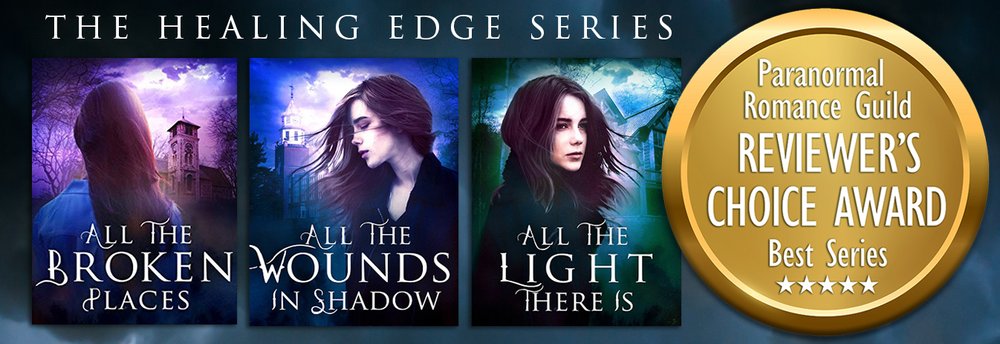
Her debut, The Healing Edge trilogy, won the Paranormal Romance Guild Reviewer’s Choice Award for Best Series.Dead Keen, the second instalment of her second series, The Things Unseen thriller trilogy,is released on 10 August 2023.

The common thread is that all of Eden’s heroines are mental health social workers. “What I’m interested in is exploring the intersections of faith, love, belief and mental health,” she explains, “and how that collides with the real world.”

From the beginning

There were early signs Eden would become a prolific writer: her penchant for “throwing five or six-syllable words I’d heard into a sentence, even though I didn’t know what they meant”; her propensity for drifting through the woods behind her house, making up stories; avid reading. That her work would be driven by caring and curiosity was likewise evident: when developers cleared part of her “sacred” forest, a 10-year-old Eden and her friend shoved sticks into bulldozer treads, hoping to sabotage the operation.

“If I hadn’t had such understanding, loving, accepting parents and teachers I would probably have gotten into a lot of trouble,” she admits. “I was a handful, but a people-pleasing handful.”

Eden was recently diagnosed with ADHD, which “explains a lot of my childhood.” It has also heightened her desire to educate people about mental health and advocate for robust self care and social care.

​Life and flow

In addition to addressing mental health themes in fiction, Eden teaches social workers and researches women’s mental health. She sees these as complimentary endeavours, though admits that juggling them is “constant negotiation. It’s like water flowing into different containers; it goes where it needs to go.”

Wherever the water flows, Eden prioritizes her mental well-being. This should be axiomatic for any writer, any person, but writerly misery is a stubborn tradition. As Hemingway may have said: “There is nothing to writing. All you do is sit down at a typewriter and bleed” (the Hemingway Society explains why he probably didn’t) – and the implication that suffering equals significance has proven hard to shake.

Eden resists this, personally and professionally. Her Mac is unsanguineous. Her home writing space comforts and inspires. “I’m looking out into the back of a house across the way, an empty lot with wildflowers, trees and above that sky,” she reports. “The sky is dramatic in Ireland; there is always something going on with the clouds. On my wall, works of art from friends and pictures of my family; when I need to be inspired I can look over and be reminded there are people who love me.”

In career terms, she ignores unhelpful advice. “Anyone who says, ‘you shouldn’t be doing it if you’re not making money,’ knows nothing about writing and publishing. If I pinned my confidence or motivation on money, that would be sad indeed.”

Eden knows from experience that confidence and motivation are hard, and hard won. Far from being dispirited, she relishes the opportunity to make mental health a focal point. It is part of an ethos of care: care for writing, care for readers and care for writers.

​On writing & mental health

What mental health challenges can writing pose?

It’s a solitary activity. You are the writer, and you have to do the writing. You can collaborate, you can talk about your plot, you can workshop, but ultimately it’s you with your screen, or notebook.

Also, there is no real mechanism for feedback until you get published. There can be years and years of toil before you get feedback. In other creative fields where you have an audience – music, theatre – you can put out pieces, get feedback, adjust; it gives you confidence. With writing there is more lag time between when you start working and when you get feedback. You won’t get people cheering you on. It’s just you. A lot of writers have imposter syndrome as a result. Passion and grit is required to pull through, which can be asking too much. A lot of people don’t start, or don’t continue.

Once you publish, or are in a workshop, it can be difficult to take feedback. What you write is personal; it’s your heart, brain, mind. It can be hard to take the slings and arrows of criticism if you’re not mentally prepared. It takes learning to develop perspective on what you’re hearing.

What types of writing can be particularly challenging?

Not that the stories are autobiographical, but I draw on my emotional experiences. In my last book, Dead Sound, the protagonist is with her ex-boyfriend. She’s having a flashback to the moment they broke up. He hit her in that scene and he’s now gaslighting her, telling her it didn’t happen. And she’s questioning herself. That is something that happened to me, and I wanted to write about it for the readers who might be wondering if they had suffered abuse. In order to do that, I had to revisit those experiences. Reliving something difficult or painful is difficult and painful. I have to have self-care in place for during and after. While writing, I have my dog, my coffee, my music; afterwards I might need to go out.

How has writing affected your mental health?

I didn’t write prose until I was 39. Before that, I wrote poetry, which is very therapeutic. It is a direct line to heart, soul, mind; it pulls everything together. I’d start a poem with a dilemma or problem, and by the end I’d solve it. Poetry was like mini therapy sessions. I stopped writing when I became a therapist. I was putting all my creative energy into helping my clients.

It was during a period of unemployment that I wrote my first novel, which started as a way to answer a question for myself about mental health, and the challenges of the work. For an ADHD person, [writing] is the perfect hobby. You can go on any adventures you want.

What do you make of the trope that depression and misery spur great writing?

[Reading her work] I got the feeling Sylvia Plath would have loved to be mentally healthy. She was someone who would have loved to be happy. She would never have romanticised [her struggles]. It ended in tragedy.

What can trigger mental health difficulties?

A mental health issue arises from a mixture of factors, not just genetics or circumstance. Political factors, economic factors, physical issues, how resilient individuals are based on genetics and upbringing. For writers in particular, how we deal with isolation and criticism are important.

What resources can writers use to protect their mental health?

Having other writers in your friend group is huge. Being a part of a writing program, a workshop, or reaching out to writers on social media can lead to friendships. There was a Facebook group I joined of 10 debut novelists, all our books were coming out the same year. We were going through the same stuff for the first time, at the same time. We could compare notes, kvetch, problem solve. Nobody apart from other writers really knows what it’s like.

One of the things I tell my students in social work, and I would say to writers: we are the tools of our trade. You have to take good care of your tools. If you don’t, your work isn’t going to be great.

Eden recommends

The piece of writing that changed your life before age 18?

Madeleine L’Engle’s A Wrinkle in Time – it was science, philosophy and faith mixed together in a book that was suspenseful and thrilling, that tapped into emotional truths. I wasn’t being patronized or condescended to. I try to do that with my books: include science, philosophy, relationships; I do a lot of research to make sure it’s right.

The piece of writing that changed your life as an adult?

Wally Lamb, She’s Come Undone changed my life for the better. I was a young woman suffering depression, feeling lost, at a loss, which is the situation the heroine finds herself in at the beginning of the book. Several things [in it] helped me. One was feeling seen in a positive way: the character’s mental health struggles are not stigmatized or romanticized. There was also seeing her recover, seeing there was a point of feeling better.

A classic you could read over and over?

Catch-22 by Joseph Heller. It’s hilarious. It’s insightful. What can I say? It’s reality. With our changing world, it is more and more relevant.

A contemporary book you wish you’d written?

Outlander by Diana Gabaldon. The poetry of it is so unexpected, in a way that only poetry can be. It’s like reading a novel that’s a poem, and a poem that’s a novel. And the love story is massively compelling. The characters are so real and complex that they can carry an incredibly complicated story line.

A book about writing you recommend?

I Give you my Body…”: How I Write Sex Scenes by Diana Gabaldon. I don’t even write sex scenes, but she gives fantastic advice in general.

Who would you cast as the lead if your forthcoming novel, Dead Keen, were filmed?

Katherine Langford as [the protagonist] Neve. For the main male character, Con, Jason O’Mara; it is important to have an Irish actor.

What’s next?

The 10 August launch of Dead Keen. My writing group, the Mallow Scribes, is going to do a dramatic reading. We’ve been rehearsing for weeks.

Connect

On Primary Sources with Katherine Cottle

Welcome to ‘Between the Lines’ – interviews with teachers, writers and writing teachers on specific aspects of their craft.

Photo courtesy Katherine Cottle

In this week’s interview, author and Goucher College writing professor Katherine Cottle discusses the practice and possibilities of primary source research in creative and critical projects, which is embodied in several of her five books, including The Hidden Heart of Charm City: Baltimore Letters and Lives, I Remain Yours: Secret Mission Love Letters of My Mormon Great-Grandparents: 1900-1903, and Baltimore Side Show.

According to her bio, she two “feisty” children and a propensity for burning dinner (“I’m a horrible cook,” she assures me cheerfully). Cottle also writes poetry, non-fiction, cultural criticism, essays and reviews.

An Expanding World of Words

Growing up in a “farm-like” conservancy area of Baltimore County, Maryland, Cottle – the eldest of three children – sought out nooks behind rose bushes or slices of space between buildings where she could spin yarns in peace. “I was very quiet, externally. More of a listener,” she recalls. “But I was wordy internally: talking to myself, making observations, telling stories. I was writing, mentally.”

Cottle had the good fortune to attend a public high school which offered creative writing courses (“now, you’re lucky to get a unit, much less a whole class”). Her creative writing teacher, with whom she is still in touch, encouraged students to enter competitions and submit work for publication. This was important for Cottle, who was 14 years old when her first piece appeared in the local paper: “It was a big deal to have readers outside my ninth grade classroom.”

Building on her positive high school experience, Cottle went on to earn a B.A. in English from Goucher College, an M.F.A. in creative writing from the University of Maryland at College Park, and a Ph.D. in English/Professional Writing and American Literature from Morgan State University.

Paths and Possibilities

Asked what steered her toward teaching writing, Cottle chuckles: “It wasn’t, ‘this is what I’m going to do with the rest of my life’. I still don’t know that. But no matter what I’ve done, writing has pulled me in its direction.”

Although she has not always, or exclusively, taught, Cottle has educated writers from early teens to adulthood, in settings ranging from intensive summer programs, to tutoring, to middle and high schools, to her current full-time role at Goucher.

There, she teaches courses including first-year writing, poetry, professional writing and senior capstone courses, allowing Cottle guide students from the beginning to the end of their undergraduate studies. “Every class, every semester is a new experience,” she says. “You are starting a new adventure every time – every class, every day. That requires strength, enthusiasm and a positive attitude.”

Strength, enthusiasm and a positive attitude are rewarded by reciprocal learning. Cottle cherishes interaction with students and colleagues as means to cultivate her own practice. “It allows me to reflect on my own work [at] a helpful disconnect. I have to step back and recognise where I am in that picture.”

Her goal as an educator is to pay forward the “gifts I got from my mentors… to inspire others to develop the command and craft of their work so they feel confident as writers. Whether first year or senior capstone, [I want them] to feel that what they’re learning will help them beyond the classroom. Hopefully they see how writing will play a role in their life, how communication will help them going forward.”

On Primary Source Research in Creative and Critical Projects

Q: What is primary source research in this context?

A: Opening your research lens beyond the standard scholarly essay. It means looking for non-traditional sources, things you won’t find in Google. Some might not be valued by the academy, but provide scope for humanities documentation. For example, my dissertation focused on intimate letters from 1850-1950 in Baltimore. Some [were] online, some I had to go to a physical place to see. Others cannot be found, because they were hidden or destroyed.

Q: Why is this type of research significant in critical and creative contexts?

A: It adds unfiltered content. It allows voices which might not typically be found in public settings to be brought to the surface and validates genres beyond the scope of traditional research.

Q: How does one begin?

A: Think of yourself as your own search engine, and create an algorithm. You can start on the internet, but usually you have to go to physical locations, or call or write people to find out if something is in an archive; you might open your research to living sources.

Q: How did you approach researching the intimate letters?

A: My focus was on historical figures. I asked mentors at my university, then cast a wide net to see what I could find. After that, I decided to focus on a particular time period. There were a variety of ways to go about finding letters. Some were available online. Some were in archives. Others were archived but not accessible to the public. I contacted writers who’d been immersed in particular figures and asked them. Part of the excitement of doing a primary source search is that the process becomes part of the journey. You document the search as much as what you find. I wound up with a chapter on letters that we’ll never find, even if they exist.

Q: How do you avoid drowning in details?

A: Set parameters as you go along: here’s where I am, here’s what I found, here’s what I’m going to continue, here’s what I’m going to put off for another time.

Staying within those parameters is useful, but you need to start the process first. It’s a little messy in the beginning, but human beings are messy.

Q: How might a teacher structure a primary source research assignment?

A: I teach a 200-level writing course with units on sources such as diaries, photographs, maps, children’s books, recipes, oral histories, etc. We focus on one genre a week, look at examples, do some practice.

We usually start with photographs. First, students observe exactly what is in the frame. Next is the reflective lens when the student considers what they bring to the image as a viewer. Then they apply an analytical lens to think about the picture’s social significance.

We apply this metaphorical frame to other types of sources, asking: What’s there? What [do I] bring? Why is this important to our world?

Cottle Recommends

Q: An author who does primary source research well?

A: Rebecca Skloot, author of The Immortal Life of Henrietta Lacks. There’s a set of photographs in the middle, you can start the framing there; but the whole book is full of primary sources, [Skloot] pieces together Lacks’ life through research. Plus [she] has such a connection to Baltimore. I like to use articles or examples connected to place, so if students are local it gives them another perspective.

Q: A piece of writing that changed your life?

A: Good Woman: Poems and a Memoir 1969-1980 by Lucille Clifton. Hers was one of the first readings I went to; she had such humor, her work was so in-depth and thoughtful. But she was also unapologetic about loving The Price is Right. It showed me you could be a writer and be real, you could bring your strengths to writing in a way that was unique to you.

Q: A classic you love to teach?

A: Poets like Lucille Clifton, Anne Sexton, Tyehimba Jess – I’m not sure I could pick just one. A collection of women’s poetry from the late 20th century would be perfect.

Q: A contemporary work you love to teach?

A: I enjoy Billy Collins work. There is a simplicity about it, with a deep foundation, but also wit. He takes the human experience seriously and not seriously at the same time.

Q: A book about writing every writing student should read?

A: Bird by Bird: Some Notes on Writing and Life by Anne Lamott. Students connect with it.

Q: A living writer you’d love to hang out with?

A: Jeanette Winterson. I’ve only read two or three of her books, including Written on the Body and The Passion, but they left a physical feeling. The impact lingers, they are so powerful. She and Toni Morrison have that – they are in a whole ‘nother category. It is hard to find the language to describe, but you feel it at a cellular level.

Q: Your perfect writing space?

A: After going through the pandemic, it’s definitely not being home all the time. I work well in an outside environment, like a coffee shop, where there is human movement or discussion, but in the background. And a comfortable spot to sit.

Q: If you could publish anything, what would it be?

A: Right now, I’m working on [a book of] recipe poems. My brother-in-law is an incredible cook and has everyone over for dinner once a week. But during the pandemic, he couldn’t. We talked about writing a cookbook, but quickly realised it wouldn’t be typical. Each recipe is a tribute to a friend or family member who attends his dinners, so different people, different types of food; each will include a narrative about the person who makes, brings or requests the food.

I like blending genres. For example, my friend and I self-published a book of illustrated poetry. Even my memoir and nonfiction include other genres.

Connect

Shop

36 – Audre Lorde

This brief tribute to poet and activist Audre Lord was originally published on Medium.

Image for post
Lorde’s essays and non-fiction

Bio:

Audre Lorde blazed into my consciousness, a star whose light reached my world after she was dead. Only, she’s not dead. Lorde lives in her resounding words; lives in her multiple consciousnesses as a “black, lesbian, mother, warrior, poet”; lives as an embodiment of unflinching personal and political courage.

My first approach to her was slant — the final line Ta-Nehisi Coates’ “Acting French” in which he declared “Sometimes you do need the master’s tools to dismantle his house.” I scribbled it down, the pearl amidst the sludge of half-developed ideas.

Months later, when I realise he’d cribbed Lorde’s “the master’s tools will never dismantle the master’s house” I was ashamed of my ignorance, ashamed I had accidentally attributed to a man the words of a wiser and more powerful woman. I was angry, too. He should have acknowledged her, not assumed (or pretended to assume) that a white audience would recognise the words of a black, lesbian, mother, warrior, poet.

It’s the kind of slight (mine, his) that Lorde knew all too well. The kind of diminishing by accident or design that she wrote about with immaculate precision and righteous anger.

Lorde knew all about injustice but never let herself accept or become accustomed to it. This shines in her writing and the boldness of her life. She refused categories, as an artist or a human being. She married a (white) man, had two children, left her marriage and had a long-term partnership with a (white) woman. Her poetry can be excoriating, her prose comforting, her voice demanding.

What remains, along with her words, is the sense that she was a whole woman — undivided from herself, despite the complexities that other, less aware (less courageous?) people compartmentalize. Humming like a live wire through her work is this message: live your life, as yourself.

Image for post
Lorde’s poems

In her own words:

“Those of us who stand outside the circle of this society’s definition of acceptable women; those of us who have been forged in the crucibles of difference — those of us who are poor, who are lesbians, who are Black, who are older — know that survival is not an academic skill. It is learning how to stand alone, unpopular and sometimes reviled, and how to make common cause with those others identified as outside the structures in order to define and seek a world in which we can all flourish. It is learning how to take our differences and make them strengths. For the master’s tools will never dismantle the master’s house. They may allow us temporarily to beat him at his own game, but they will never enable us to bring about genuine change. And this fact is only threatening to those women who still define the master’s house as their only source of support.” — “The Master’s Tools Will Never Dismantle the Master’s House”

“A policeman who shot down a ten year old in Queens
stood over the boy with his cop shoes in childish blood
and a voice said “Die you little motherfucker” and
there are tapes to prove it. At his trial
this policeman said in his own defense
“I didn’t notice the size nor nothing else
only the color”. And
there are tapes to prove that, too.

Today that 37 year old white man
with 13 years of police forcing
was set free
by eleven white men who said they were satisfied
justice had been done”
– from “Power

“The quality of light by which we scrutinize our lives has direct bearing upon the product which we live, and upon the changes we hope to bring about in those lives… As we learn to bear the intimacy of scrutiny and to flourish within it, as we learn to use the products of that scrutiny for power within our living, those fears which rule our lives and form our silences begin to lose their control over us.” — from Sister Outsider

“I have been woman
for a long time
beware my smile
I am treacherous with old magic
and the noon’s new fury
with all your wide futures
promised
I am
woman
and not white.
– from “A Woman Speaks”

Further reading:

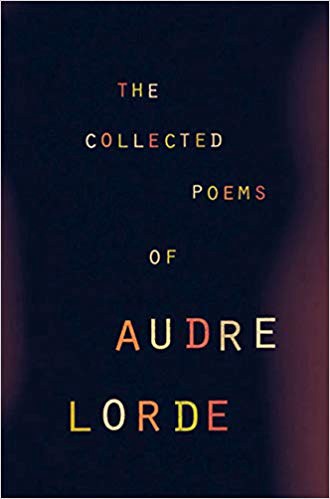
The Collected Poems of Audre Lorde
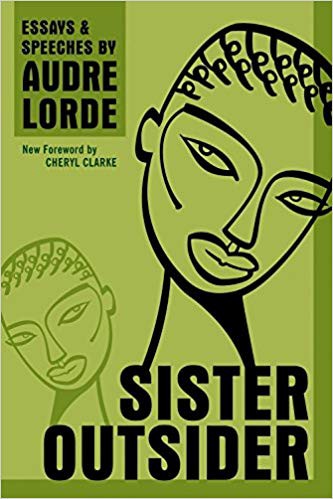
Sister Outsider: Essays and Speeches
The Cancer Journals

26- Portland Women Writers

This was a piece for Frugal Portland.

Photo by Green Chameleon on Unsplash

In an era where you can read yourself blind online without spending a penny, buying books is an act of enlightened frugality. Magazines and newspapers get tossed; websites morph. Books stick around. What’s more, books slow us down. There are no hyperlinks or banner ads, nothing to whisk our mind into the ugly spin cycle of the so-called “post-truth” world.

Truth exists as it ever has but powerful interests want to drown it. Books are an antidote to the noise. Portland is fortunate to have a thriving community of writers whose clear voices remind us of life’s possibilities and responsibilities. These five women share a powerful sense of purpose, justice, and urgency. Their books will open your mind and break your heart.

Lidia Yuknavitch

Yuknavitch writes like we’re all together in a car stalled on the track as the train bears down. Her fearlessness shines in her bold novels like The Small Backs of Children and Dora: A Headcase, as much as in her searing memoir The Chronology of Water. A former competitive swimmer, Yuknavitch always returns to water, preferring to write “anywhere you can see the river.” She’s busy penning a new work of “short fictions” called This is Not a Flag and a novel, Thrust, but found time to share this advice: “If you have money you can move it toward change. if you don’t have money you can use your voice and body.” Or, of course, your pen.

  • Read: The Chronology of Water (Hawthorne Books, 2011)
  • Recommended: The Child Finder, Rene Denfeld (Weidenfeld & Nicolson, Sept. 5, 2017)
  • Website: https://lidiayuknavitch.net Twitter: @LidiaYuknavitch

Karen Karbo

Karbo waltzes between styles and genres, investing them all with wit and the wisdom of experience. Her work includes the superbly titled Kick-Ass Women series featuring Coco Chanel, Katherine Hepburn, Julia Child and Georgia O’Keeffe; fiction like The Diamond Lane and Motherhood Made a Man out of Me, and her memoir The Stuff of Life.

The secret to keeping the words flowing? Write in hospital lobbies. “There are no distractions,” she says. “No roar of the coffee bean grinder, or whoosh of the milk foamer. No other writers tapping out their award-winning novels. People come and go, and they pay no attention to you, because they’re there for more important reasons. There’s nothing to do but write.”

  • Read: In Praise of Difficult Women (National Geographic, Feb 27, 2018)
  • Recommends: The Book of Joan, Lidia Yuknavitch (Canongate, Jan 18, 2018)
  • Website: http://www.karenkarbo.com Twitter: @Karbohemia

Cheryl Strayed

Strayed’s beloved-by-Oprah breakthrough, Wild, her account of solo hiking the Pacific Crest Trail is an archetypal hero’s journey with a twist: the hero is a woman. Reading Wild, I realized how unfamiliar and thrilling it is to read a story of struggle and self discovery by and about a woman. Tiny, Beautiful Things was equally expectation-shattering in a different way. A compilation of advice columns she wrote for The Rumpus, it blends Strayed’s fearless, first-person stories with Stoic wisdom. It’s twin themes are courage + effort. “It didn’t just get better for them,” she writes. “They made it better.”

Here’s hoping a future generation can look back on these years and say the same of us.

  • Read: Tiny, Beautiful Things (Vintage, 2012)
  • Recommends: The Dream of a Common Language, Adrienne Rich (W. W. Norton & Co., 2013)
  • Website: http://www.cherylstrayed.com Twitter: @CherylStrayed

Rene Denfeld

It’s axiomatic that not all writers make a living from writing. Some perform feats of double alchemy that give lustre to both their writing and their profession. Denfeld, a licensed investigator, is one of these alchemists (poet/doctor William Carlos Williams was another). “It’s exciting, fulfilling work,” she says of investigation. “I get to exonerate innocents and help victims of sex trafficking.”

When she’s not working, or “loving on my fantastic kids,” she slips away to Cathedral Park with her laptop to pour her hard-earned understanding of humanity into books like the multi-award-winning novel The Enchanted.

  • Read: The Enchanted (Harper, 2014)
  • Recommends: The Empathy Exams, Leslie Jamison (Greywolf Press, 2014)
  • Website: http://renedenfeld.com Twitter: @ReneDenfeld

Ursula K LeGuin

To call LeGuin, doyenne of the Portland literary scene, a sci-fi writer is reductive. She is an imaginative writer of dazzling talent who conjures new worlds and infuses familiar scenes with fresh possibilities. “In America the imagination is generally looked on as something that might be useful when the TV is out of order,” she writes. “Poetry and plays have no relation to practical politics. Novels are for students, housewives, and other people who don’t work. Fantasy is for children and primitive peoples.” LeGuin has been cheerfully subverting this belief for her entire career –and shows no signs of stopping.

  • Read: Words Are My Matter (Small Beer Press, 2016)
  • Recommends: Tao Te Ching, Lao Tzu trans. Ursula K. LeGuin (Shambhala, 1998)
  • Website: http://www.ursulakleguin.com

17 – Cheryl Strayed on Memoir

This was written for Ideas Tap, an organization (sadly now defunct) that supported young people pursuing the creative arts. Cheryl Strayed, whose Tiny Beautiful Things was my bible for several months, was as generous and gracious by phone as she is on the page. A case of meeting one’s heroes not going wrong.

Photo by Holly Mandarich on Unsplash

After writing her first novel, Cheryl Strayed turned to memoir and wrote her New York Times bestselling book Wild, about her 1,100-mile hike along the Pacific Crest Trail in the wake of her mother’s death. Here, Cheryl tells Cila Warncke about mining memory and sets us to work with a writing exercise…

How does the emotional experience differ between writing fiction and memoir?

It doesn’t. To write fiction well you have to inhabit the consciousness of the characters you’ve created. With non-fiction there’s an extra layer of intensity because the character you’re building is yourself.

When writing memoir, how do you build yourself as a character?

The only way you can build yourself is to dismantle yourself. To take apart who you are, what your assumptions have been, what you hope people think of you. You can’t write: “I’m pretty and cool and awesome and interesting” because everyone would hate you. You have to say: “I’m human. Here are positive things about me. Here are negative things about me. And here are things that don’t make sense, don’t add up, and I’m going to present them to you”. Writing is like the deep work you do in the course of therapy where you take yourself apart.

What memory aids do you use?

I naturally have a very good memory – I think a lot of writers do. I kept a journal through my 20s and 30s. That helped me a lot in writing Wild. I do research where I can, going back and looking at pictures for example. When most people imagine what a memoirist does they think: “I don’t remember anything from high school, from 20 years ago”. But they do remember – they just think they don’t.

How can writers elicit those memories?

The process of writing is re-conjuring memories. It’s doing things so more memories come to you. Even looking at a photo can allow you to remember something accurately. The process is like running into an old friend from back in the day, somebody you knew 20 years ago. When you first start talking you only know a few things about each other. But as you talk and go deeper into your lives you remember things you thought you had forgotten. Just because you haven’t thought of something for years doesn’t mean you don’t remember it, it just means it takes a little work to access it. When I was writing Wild I’d think, “I don’t remember, I just walked” but once I started writing my mind would open up to specific memories.

Do you draw heavily on your own life for your fiction?

You’ll see a lot of details from my life. My next novel is set in Portland [where I live]. None of the characters in the book are me but there are all these little tendrils of the story that you can trace back to me.

How do you deal with writer’s block?

I never call it “writer’s block” but I always have trouble beginning. Writing is hard. I resist writing. I run from it. If I am left alone with a laptop I flounder for an hour or two, then I sink in and I’m in the zone. When I get stuck I go for a walk, come back and try again. I don’t force it. If something isn’t coming, I move on; that’s a good strategy for me.

How long did it take to write your first book, Torch?

Your first book is so hard because you don’t know how to write a book and there is no way for anyone to tell you. It turns out the only way to learn how to write a book is to write a book. I avoided finishing [Torch] for fear of failure, until the point where the fear of failing to finish was bigger than the fear of finishing a book that was terrible. I worked on it for about ten years in total, three years really diligently.

How did you overcome that fear of failure?

Once I let go of the idea that I was going to write a great book, I was able to write a book. I let go of any ego or fear or shame. That was an important moment in my writing life. None of us really knows what kind of book we’re writing. A lot of people think they’re writing brilliant books and they’re terrible. And the reverse is true too. It isn’t up to us to judge our books; it’s up to the people who read them.

In Focus: Writing exercise using objects

I take random objects out of my handbag like lipstick, a ten-euro note, and a pair of sunglasses, and tell my students to pick one and write a story about it.

To begin writing you begin with an image. You begin with a feeling. I encourage people to start writing and not think about it too much. Even if you have a good idea, usually once you start writing it will become something else.

I could do that same exercise with the world’s Nobel Literature Prize winners and something would come of it. Perhaps what came of it would be better than what comes to my students, but that’s how the [Nobel Prize winners] do it too – they begin with something then they make something else.

Holiday Reading 2017

Having been bludgeoned with Christianity from infancy, I’m over the away-in-a-manger stuff. Books, though, are one aspect of childhood Christmas I revisit with joy.

Christmas was prime new book time. The rest of the year my siblings and I got what books our parents could afford, which is to say, we went to the library. December 25th was one of the rare occasions we could count on one or two new volumes for our personal collection.

This year, my holiday reading echoes the old pattern. One library book (digital now), one Kindle purchase, and one old-fashioned paperback from a charity shop in Crouch End.

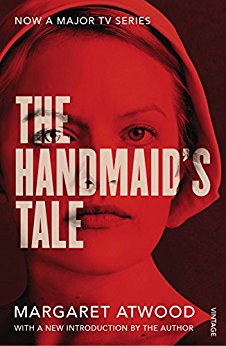
handmaids taleThe Handmaid’s Tale came courtesy of the library. I don’t get Atwood aesthetically in the same way I don’t get, say, Thomas Wolfe or D.H. Lawrence. Her politics are admirable though. Astute women are writing and talking about The Handmaid’s Tale so it seemed like something I should have a first-hand opinion on.
Which (not that you asked) is that the novel puts Atwood perilously close to being the Ayn Rand of the left. Admirable politics, yes. But cardboard characters prodded around a stage so ripe with Symbolism that I wanted the whole damn wooden set-up to burn. I see now why it is being hailed as visionary: it’s dumb enough that even people who didn’t see Trump coming can grasp the Badness of the Bad Things that happen in it.

What’s disappointing is that Atwood can be a fine writer. (I realise, writing these words, that all hell would break loose if anyone read this blog. She has won a thousand awards and sold a million novels. Who the hell am I to criticise? Just a reader.) Her novel Cat’s Eye is rich and absorbing. The Handmaid’s Tale is pure bully pulpit blather, though. She (a woman of intelligence) didn’t trust her readers with anything subtler than a sermon.

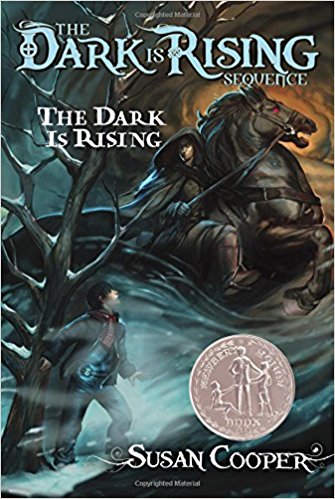
dark is risingTo my delight, Susan Cooper didn’t make the same mistake in The Dark is Rising. Full confession, I’d never heard of it till reading a Guardian column that sang its praise. Normally, I avoid fantasy and children’s books in equal measure, but sometimes it’s good to bend the rules. The Dark is Rising reminds me of many of the books I loved as a kid: The Lord of the Rings, The Hounds of the Morrigan, King Arthur and the Knights of the Round Table, and The Chronicles of Narnia. It is pastoral, charming, and very very English. I blazed through it.

That treat consumed, I picked up Breakfast At Tiffany’s. This is maybe the third copy I’ve owned. It is one of those books I buy, give away, then buy again. I started with the final story in the slim Penguin Modern Classics paperback, “A Christmas Memory”. Capote’s evocative account of his boyhood Christmas made me weep, even though I know the ending. IMG_20171226_182805

Then I flipped back to the beginning and reread Breakfast at Tiffany’s, marveling at his use of language, description, and the curious fact that leggy, stuttering Mag Wildwood is given the full name Margaret Thatcher Fitzhue Wildwood. In 1958, when the book was published, Thatcher was an up-and-coming Tory politician. A Capote in-joke?

IMG_20171226_182814

Breakfast at Tiffany’s was the perfect starter for a Flannery O’Connor short story collection, A Good Man is Hard to Find. The eponymous opening story is deliciously agonising. O’Connor’s genius is that she doesn’t tell you anything. She just lines words up on the page and you hurry along, captivated by their perfect inscrutable order, until you crash face first into the gruesome conclusion.

O’Connor is the anti-Atwood. Nothing in her writing suggests she cared if her readers got it. She wrote. I know which I prefer.

What did you read over the holidays? Share in the comments. 


Treed

IMG_20150130_172200481_HDR

A poem in progress

TREED

Suspended in your limbs the
sky shatters to dancing fractals.
Height makes me dizzy.
Pressed by gravity to your
contours
corpuscles shriek.
My heart screeches
out of control.
Refusing to
fall
I
will
climb
(down).

Wood against flesh.
Taut, anxious;
mute and clumsy; bones
rattle against every
branch on the way. Till I

f
a
l
l

and tangle in your roots.

Bruises rise like
sap. Sunshine
sears the skin your fingers warmed.
Wind dips to kindly whisper:
Let go.

Running, Writing and Creativity

An excerpt from an essay I wrote on my relationship with running, writing, and creativity.

Read the full piece at The Nervous Breakdown

Run time

Run time

I now recognise the two things my soul needs: running and writing. Running, first, because it is obvious, though the less important of the two. Like good grammar, it is essential to my sense of order and well-being, but I only make a fuss in its absence. A nagging pain in my foot warns me to leave my trainers under the bed, unlaced. My brain knows better than to aggravate an injury but the rest of my body is twitchily uninformed. There is nothing wrong with me apart from a sense of abstraction and discontent. Without the discipline of running and long breaths of cold, cleansing air I am inefficient, fretful, soft in a bruised-fruit kind of way.

Without creative activity my brain fidgets and stews. As with running, the longer I go not writing the more I yearn to and, paradoxically, the more difficult it becomes. After a few days off I feel both dread and pleasure at the prospect of a run. Similarly, when I don’t write the idea of writing fills my head, swells to such vast importance that the process grows alien and terrifying. My fractious mind elides twenty-odd years of devotion and discipline and whispers “you can’t,” or “you can, but it won’t be any good.” Absence opens the door and Doubt saunters in carrying a funhouse mirror where past and future crush unbearably against the present. Anxiety ripples through me like a tiny earthquake, shimmying books off shelves and setting my internal crockery a-rattle. The Fear descends: my book will remain unwritten; questions scribbled in notebook margins will remain unexplored; I will tell no stories; never again will I craft a beautiful essay or forget time as I play a private game with my twenty-six favourite toys.


What co-creative activity gets your writing flowing? Share in the comments.