Unexpected

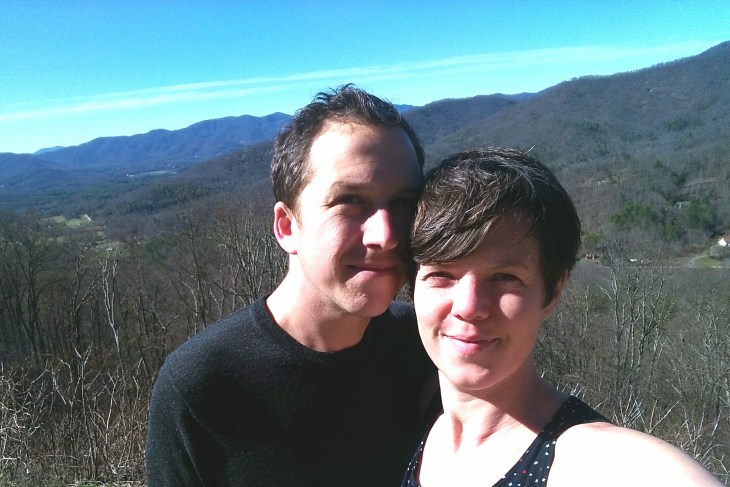
Saturday, 19 December 2015, I plotted a route around Portland’s used book stores. In the back of my sister’s red Wrangler, a box of Oregon Wine Pioneers. In the seat beside me, a show-copy, its gloss paper cover softened with wear. I hoped to sell a few copies, or inspire a few orders.IMG_20161225_115917

On my phone, a string of Tinder messages from some guy who spent Friday evening trying to cajole me out of the house to the some downtown bar. “The feet are up,” I had replied, by way of refusal. He seemed nice, though, so I agreed to meet him in Old Town at 6PM on Saturday.

The day started out sunny. I navigated between bookshops using Google maps print-outs since my phone didn’t have roaming. Clouds gathered in the afternoon. By the time I got lost on my way to my last destination, a wine distributor’s office in north east, it was raining and prematurely dark.

Driving back to the west side, I thought about heading straight home. I could message my excuses from there. Throwing in the towel by 6PM was lame, even for me. Anyway, this guy, Chris, said he had to be at work by eight. No danger of date creep.

We were meeting at the Roseland Theater, a few blocks from my mum’s apartment. I parked near her place, to have a clear line of retreat. The rain had stopped; the air was cold. On my way to the Roseland I passed a small, colourful Mexican dive.

At the theater, I stopped in bafflement. The building, the whole block, was six deep in teenage girls, a barricade of hormones and cheap perfume. How the hell was I supposed to find this guy? No point in checking my phone — no roaming.

After one full lap, I stopped and stared at the red-and-green lights twinkling high on an adjacent skyscraper. If he didn’t magically appear in the next few minutes, I’d call it a night. Almost as soon as the thought formed, someone walked toward me from the corner I just passed. Please don’t talk to me, I thought.

“Hi.”

One drink, to be polite, that’s all.

“Hi,” I replied.

*** IMG_20170228_102453

This morning Chris woke up at 4AM and couldn’t get back to sleep. I dozed, intermittently aware of his restlessness.

I am tempted to say something florid like, I can’t sleep/live/breathe without him, but that would be untrue.

What I thought, as we yielded to wakefulness was, if you don’t have any expectations you won’t be disappointed. 

Anything is possible, even the absence of us. That is what makes this so precious.

I fell for him like rock tossed into a canyon (still falling). One drink, to be polite turned into three margaritas and a long kiss in the middle of that noisy Mexican dive. It turned into a relationship built on air miles: Ibiza, London, Rome, Brussels, New York, DC, Detroit, Denver, Salt Lake City, Milan, Vienna, Manchester, Glasgow.

We got married in Memphis. Adopted a cat, sold a car, moved to Spain.

All of it unexpected, none of it inevitable. Loving was a fact from the outset. What we did about it was a choice. Of all the things I learned, and am still learning, this is the most important. Life is full of surprises. What comes of them is down to us.

IMG_20170317_181351

Elements: Attention

Storytelling is the essence of communication. The elements of storytelling are like letters of the alphabet. When you know how to use them, you can tell your best story.

Element 15: Attention

Great stories come from creators who are passionately attentive to everything.

Case study: Jack Gilbert jack-gilbert

What it is:

Jack Gilbert was an American poet who turned life’s most banal, excruciating moments into heart-shattering art.

After twenty hours in bed with no food, I decided
I should have at least tea. Got up to light the lamp,
but the sweating and shivering started again
and I staggered backwards across the room. Slammed
against the stone wall. Came to with blood on my head
and couldn’t figure out which way the bed was.

from ‘What I’ve Got’

Why it matters:

Storytellers often aim too high. They want to convey love, terror, excitement, or despair. So they write about love, terror, etc. The thing is, when you write about love, you get a Hallmark card. The bigger the theme, the harder it is to write straight; it’s like looking at the sun.

That’s where attention comes in. Great storytellers know the little stuff reveals the big. In the excerpt above, Gilbert doesn’t tell the reader that it is scary to be sick and alone. He pays attention. In the throes of it, he is alert to every small, true detail: the slow passage of time, the dark room, the fever (only he uses clearer, closer words: sweating, shivering), the disorientation, the abject sense of failure as the body falls.

If you want magic, prop your eyelids open with toothpicks. Pay attention. Especially to boring, mundane, every day things.

In his own words:

“He explained that somebody wanted to give me the Yale prize. I didn’t know what to do, how to express it. I took him out with my two friends and we had milkshakes.

The next day I roamed about trying to find a way to feel about what had happened. I finally lay down under the Brooklyn Bridge to try to feel something. I lay there all afternoon, and then I called the people at Yale.” Read more

Practice: “Be awake to the details around you, but don’t be self-conscious. ‘Okay. I’m at a wedding. The bride has on blue. The groom is wearing a red carnation. They are serving chopped liver on doilies.’ Relax, enjoy the wedding, be present with an open heart. You will naturally take in your environment, and later, sitting at your desk, you will be able to recall just how it was dancing with the bride’s redheaded mother, seeing the bit of red lipstick smeared on her front tooth when she smiled.” Natalie Goldberg in Writing Down the Bones

Remember: “As a writing man, or secretary, I have always felt charged with the safekeeping of all unexpected items of worldly and unworldly enchantment, as though I might be held personally responsible if even a small one were to be lost.” ~E. B. White

Storytelling: Education

Storytelling is the essence of communication. The elements of storytelling are like letters of the alphabet. When you know how to use them, you can tell your best story.

Element 14: Education

Great stories do more than just entertain, they teach (in an entertaining way).

Case study: Raw Beet 

raw-beet-coverWhat it is:

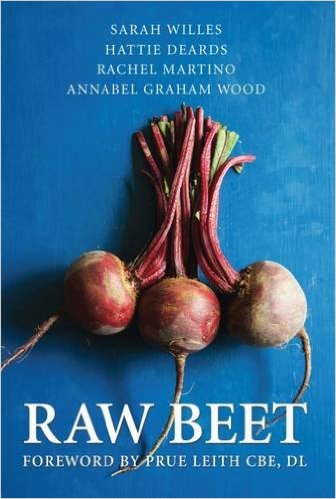
Raw Beet is a cookbook covering four popular ways of eating: gluten free, raw, vegan and low glycemic-index (GI). Based around simple ingredients and straight-forward techniques, it educates people who want to learn more or adopt these nutrition options.

Why it matters:

Publishing a raw, vegan, gluten free or low-GI cookbook is like spooning water into the ocean. The market is glutted with books, most of which are celebrity-led, meaning the potential audience has to like the author. Raw Beet’s genius is pragmatism. Its angle is clean and sharp as a paring knife: Cut through the hype and moralising with clear, easy-to-prepare recipes.

Instead of preaching, it offers practical advice, including dietary descriptions, ingredient tips, and lists of food suppliers, for anyone who wants or needs to eat raw, gluten free, vegan or low-GI. Whether the goal is beating allergies, managing chronic illnesses, losing weight, or experimenting with new dishes, Raw Beet’s emphasis on education makes the process accessible and inclusive.

In their own words:

“With the help of our cooks and other contributors, we have tried to put together a collection of fairly simple recipes that can be served formally or informally, using ingredients that can be bought easily.”

Read more

Practice: “Flowery language can be effective in the right forum; however, overly embellished sentences do not belong in your informative [writing]. Keep your verbiage simple and straightforward, or your reader will pay too much attention to your overuse of adjectives and adverbs.” Angelique Caffrey via Explore Writing

Remember: “Learn the names of everything: birds, cheese, tractors, cars, buildings.”
~Natalie Goldberg

Elements of Storytelling 8: Voice

Storytelling is the essence of communication. The elements of storytelling are like letters of the alphabet. When you know how to use them, you can tell your best story.

Element 8: Voice

A clear, unique, personable voice hooks audiences every time.

Case study: No Meat Athlete

no-meat-athlete-book-cover

What it is:

No Meat Athlete was a blog that became a brand that became a thriving business for Matt Frazier, an applied mathematics PhD student and amateur marathoner. It began as a chronicle of Matt’s quest to qualify for the Boston Marathon after switching to a plant-based diet.

Why it matters:

Nutrition and fitness blogs are rarely sustainable businesses. The sector is over-crowded, trend-driven and audiences are fickle. No Meat Athlete succeeded where most fail thanks to Matt’s inimitable voice. He tells readers everything they need to know in just three sentences:You’re not here to be preached to. And I’m not here to preach. In fact, I’ll come right out and say that a plant-based diet might not be for you. But I’ll also say this: You won’t know until you try.”

The tone is frank, warm, equable, and non-judgemental. Matt makes no apologies for being neither a professional runner nor nutritionist. Instead, he addresses readers as equals and fellow explorers. He writes in the enthusiastic, endearing voice of someone who has discovered something brilliant and can’t wait to tell you about. No Meat Athlete has grown into a brand that includes books, running groups, merchandise and more but Matt’s voice hasn’t changed. He is still the excitable, passionate, chatty guy you want to go running with then hit the pub for a vegan beer ‘n’ burger afterwards.

In his own words:

You can run without being a “runner.” I did it for five years.

Even once I had run a handful of marathons and was close to qualifying for Boston, when I lined up at the start of a race among all these passionate runners, I still felt like an imposter.

I was just a tourist, doing what runners do, but without feeling like I really belonged.

Sometime during the training for my Boston-qualifying race, where I finally succeeded in breaking 3:10:59, something shifted in me.

Shortly after qualifying, when I was in that happy, weirdly cloudlike space you find yourself in after accomplishing something you’ve worked at for so long, I read Born to Run. And damn if I didn’t feel like a runner after that.

For the first time, I could say that I really loved running, not just as a means of staying in shape or for accomplishing goals, but for its own sake.

And so I became a “runner.” Quotes and all.

Read more

Practice: “You can’t recognize and then strengthen your voice if you don’t hear it—and hearing it in your head isn’t the same as hearing it spoken aloud. Get in the habit of reading what you write out loud. I print and read everything before I send something out and also whenever I’m feeling all snarled up in my organization.

Want to accelerate your voice development? Read out loud to another person without any feedback. This is utterly maddening to your inner approval junkie: “But what does she think about my writing?!?” The magic comes because you turn toward yourself and listen for where you are being true to what you wanted to say and where you’re skirting the truth, where you dug deep and where you skimmed the surface, settling for clichés. Of course, there are plenty of times when getting specific feedback from other writers is useful—but not when it comes to honing your voice. via Jane Friedman

Remember: “Style cannot be copied, except by the untalented. It is, finally, the distillation of a lifetime of reading and listening, of selection and rejection. But if it is not a true voice, it is nothing.” ~Mavis Gallant

Elements of Storytelling 5: Accuracy

Storytelling is the essence of communication. The elements of storytelling are like letters of the alphabet. When you know how to use them, you can tell your best story.

Element 5: Accuracy

Good stories create a vivid, believable world. To achieve this, descriptions and details have to be accurate to the context and setting of the tale.

illahe 1899

Case study: Illahe ‘1899’ Pinot Noir

What it is:

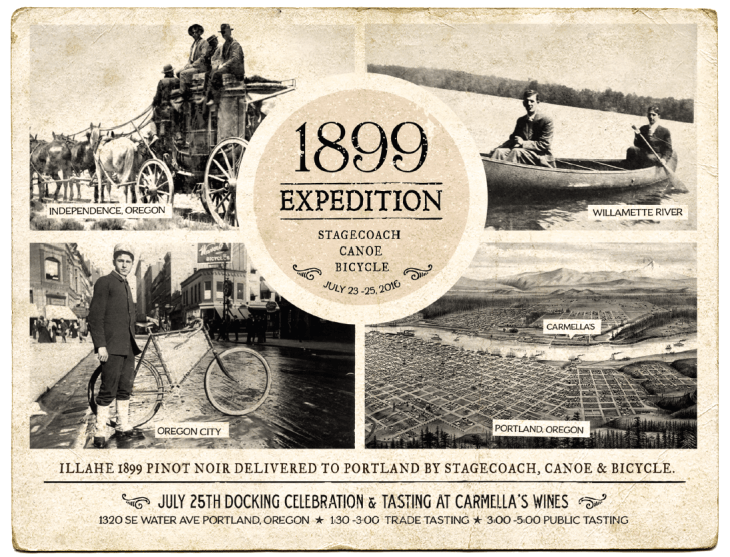
Illahe is a small vineyard in Oregon’s Willamette Valley, not far from Salem. Winemaker Brad Ford is a laconic, dedicated experimentalist and a stickler for accuracy. Each year Illahe releases a small batch of ‘1899’ Pinot Noir, so named because it is made without using any modern equipment or electricity.

Why it matters:

Anyone can claim to be “traditional” or “classic” — Illahe delivers by being accurate down to the last detail. From the vine onward, ‘1899’ is made to strict standards. The grapes are tended by hand, horses not tractors are used to work the land, picking, sorting and crushing is done by hand. “No electricity” means “no electricity”: they use candles to light the barrel room or bottling line. When ‘1899’ is ready to go to its distributor in Portland, the cases are transported by stagecoach, bicycle and canoe, ensuring that no modern technology touches it until it leaves the Ford’s care.

The Illahe story:

Brad’s first harvest was in 1986, when he performed the important roles of tractor driver and bucket collector. He took a short break after high school to work as a bartender, carpenter, grant writer, and English instructor. He then returned to wine, taking classes with Barney Watson, Al MacDonald, and Professor Wamser at Chemeketa and PSU.

Brad worked with Earl VanVolkinburg, Joe Dobbes, and Russ Raney, who taught him the practical aspects of the craft and about their love of the product. He also owes a debt to Peter Julian of Nuit-St. Georges, Burgundy, who invited him to attend tastings from Chablis down to Mercurey, hitting all the major towns in between. His experiences there taught him that winemakers can craft incredible wine without huge operations, but not without close attention to the vineyard and vinification. Read more here


Practice: “When you are present at the birth of a child you may find yourself weeping and singing. Describe what you see: the mother’s face, the rush of energy when the baby finally enters the world after many attempts… When you write, stay in direct connection with the sense and what you are writing about. If you are writing from first thoughts — the way your mind first flashes on something before second and third thoughts take over and comment, criticize, and evaluate — you don’t have to worry.” ~Natalie Goldberg in Writing Down The Bones

Remember: “Invention is the finest thing but you cannot invent anything that would not actually happen.” ~ Ernest Hemingway

Elements of Storytelling 3: Inspiration

Storytelling is the essence of communication. Whether you are a writer, entrepreneur or politician your story is how you connect with people.

The elements of storytelling are like the letters of the alphabet. Once you know them, you can put them together to tell your story in the best way possible.

Element 3: Inspiration

Great stories are not plucked from the air; they grow from the fertile soil of stories that were told before.

Case study: Eivissa: The Ibiza Cookbook by Anne Sijmonsbergen

eivssa cover

What it is:

A cookbook based on, and inspired by Ibiza food. What it isn’t is an attempt to slavishly recreate traditional Ibicenco recipes, or a generic Mediterranean cookbook. The author lived on an organic farm in Ibiza for a dozen years, growing local produce, working with other farmers, and hanging out with rare-breed animal experts, fishermen, and artisan cheesemakers, before she put proverbial pen to paper.


Why it matters:

This long period of absorbing and exploring the food culture freed Anne to create recipes that are unique to her but capture the essence of Ibiza. She transforms stolid island fare like flaó — a dense, old-fashioned cake — into something fresh and suited for a modern palate. Each recipe becomes a story in its own right, revealing the history and origin of its components and the author’s inspiration.

The Evissa story:

Ibiza is on the cusp of a food revolution. The island’s traditional farming and fishing culture has been supplemented with a wave of chefs and producers making artisan products and vibrant food.

Now Eivissa, the first recipe book to showcase the incredible Ibicenco dishes Ibiza cuisine has to offer, reveals how to recreate the tastes of the white island in your own home.

Divided into seasonal chapters to reflect the ingredients in Ibiza, these are gorgeous recipes reflecting the heritage of the cuisine, yet with contemporary twists. Sample a really simply Grilled Courgette Ribbons, Asparagus & Mint Tostada from Spring, for example, or a Grapefruit & Juniper-Encrusted Pork Salad. Try Steamed Mussels with Samphire or Chicken with Roasted Figs from Autumn. Or treat yourself with a Ricotta Pine Nut Cake or Spiced Chocolate Truffles.

Full of stunning photography shot on location in Ibiza, both of the recipes and the island’s beautiful backdrop, these are recipes that are full of energy, warmth and enjoyment.

Read more here

Practice: Plenty of writing ideas are culled from great tales that have been told throughout history. Some of these have been converted into formulas that writers can use as storytelling guidelines.

From the three-act structure to the hero’s journey, formulas have been criticized as making stories dull and predictable yet they have also been credited with providing writers a framework in which to create.” via WritingForward.com

Remember: You can’t wait for inspiration. You have to go after it with a club.” – Jack London

Oregon Wine Pioneers Stockists

Vine Lives: Oregon Wine Pioneers is crossing continents and oceans!
vine-lives-front
In addition to being available online at AMAZON.COM, AMAZON.CO.UK, and VineLiv.es it is in stock at the following independent bookstores:

Portland, OR:
Powell’s City of Books
1005 W Burnside St., Portland, OR 97209 Phone: 503-228-4651

Broadway Books
1714 NE Broadway, Portland, OR 97232 Phone: 503-284-1726

Annie Bloom’s Books
7834 SW Capitol Hwy, Portland, OR 97219 Phone: 503-246-0053

Wallace Books
7241 SE Milwaukie Ave, Portland, OR 97202 Phone: 503-235-7350

Salem, OR:
Escape Fiction
3240 Triangle Dr. SE, Salem Oregon, USA, Phone: (503) 588-5865

Reader’s Guide
735 Edgewater NW, Salem, OR, USA, Phone: (503) 588-3166

Newberg, OR:
The Coffee Cottage
808 E Hancock Street, Newberg, OR. 97132 Phone: 503-538-5126

Chapter’s Books & Coffee
701 E 1st Street, Newberg, OR 97132 Phone: 503-554-0206

McMinnville, OR:
Third Street Books
334 NE 3rd St, McMinnville, OR, USA, Phone: (503) 472-7786

Aloha, OR:
Jan’s Paperbacks
18095 SW Tualatin Valley Hwy, Aloha, OR 97006

Lincoln City, OR:
Bob’s Beach Books
1747 NW Hwy 101, Lincoln City, Oregon, USA, Phone: 541-994-4467

Philadelphia, PA
University of Pennsylvania Official Bookstore
3601 Walnut St, Philadelphia, PA, USA, Phone:(215) 898-7595

London, UK
Books for Cooks

4 Blenheim Crescent, Notting Hill, London, UK, Phone: 020-7221-1992
We’re constantly adding new stockists so please check back for stores in your area. Or contact us to to suggest a local store.

FOR STOCK REQUESTS, PRESS OR AUTHOR INTERVIEWS CONTACT: cila@vineliv.es

Poem of the Month – A Brief for the Defense by Jack Gilbert

I first encountered Jack Gilbert’s poetry in The Sun (American literary magazine, not British tabloid). A sentence from ‘A Brief for the Defense’ stuck with me, nagged me through summer: “We must have the stubbornness to accept our gladness in the ruthless furnace of this world”.

As one blessed with much comfort and satisfaction, I wonder at my privileges, wonder at the randomness of life, wonder why millions suffer through no fault of their own, and others live in shocking luxury through no virtue of their own. Gilbert’s taut, evocative, defiant poem comes the closest of anything I’ve read to elucidating the tension between grief and high delight. Gilbert doesn’t moralise or draw conclusions. Though he refers to both God and the Devil, for me the poem is Zen. Ultimately, none of us is in control. The secret, if there is one, is to laugh anyway, to listen for sound of oars in the silence and watch the island sleep. And to refuse to allow our lives to be defined by the worst of times.

DSC01218

A Brief for the Defense by Jack Gilbert

Sorrow everywhere. Slaughter everywhere. If babies
are not starving someplace, they are starving
somewhere else. With flies in their nostrils.
But we enjoy our lives because that’s what God wants.
Otherwise the mornings before summer dawn would not
be made so fine. The Bengal tiger would not
be fashioned so miraculously well. The poor women
at the fountain are laughing together between
the suffering they have known and the awfulness
in their future, smiling and laughing while somebody
in the village is very sick. There is laughter
every day in the terrible streets of Calcutta,
and the women laugh in the cages of Bombay.
If we deny our happiness, resist our satisfaction, we lessen the importance of their deprivation.
We must risk delight. We can do without pleasure,
but not delight. Not enjoyment. We must have
the stubbornness to accept our gladness in the ruthless
furnace of this world. To make injustice the only
measure of our attention is to praise the Devil.
If the locomotive of the Lord runs us down,
we should give thanks that the end had magnitude.
We must admit that there will be music despite everything.
We stand at the prow again of a small ship
anchored late at night in the tiny port
looking over the sleeping island: the waterfront
is three shuttered cafes and one naked light burning.
To hear the faint sound of oars in the silence as a rowboat
comes slowly out and then goes back is truly worth
all the years of sorrow that are to come.

DSC01416

Agents – The Numbers Game

Yesterday I hit 75 on my agent hunt. Seventy-five lines on an excel sheet each with name, website, email, and a note of the date and pitch delivered. I may as well have made 75 copies of my novel, stood at the top of a cliff and chucked them ceremoniously into oblivion. This shouldn’t discourage me (most of the time I know my duty is to write well, and the rest be damned) but it does.

When another brusque rejection arrived I burst into tears. Voices babbled in my head: You are never going to publish a novel. If you do, nobody is going to read it. You are a fake, a flake, a lazy greedy over-educated under-producing parasitic loser who should have gotten a real job before it was too late. You are going to die broke and alone. You suck. Et cetera.

This could be true, if I let it. But after bawling for a few minutes, sense started to leach in. All the sages I respect (dead and living) make the same case:

“You have the right to work, but for the work’s sake only. You have no right to the fruits of work” ~Bhagavad Gita
“[Do] not long for anything if it be not given” ~Epictetus
“For us there is only the trying” ~TS Eliot

Some days, trying is a drag, the last thing I want to do. The alternative, though, is to let all the miserable, mean, self-pitying thoughts turn themselves into reality. As long as the spreadsheet is growing, there’s hope.

effort

Lit Crit: Tom Wolfe and the Art of Mau-Mau

I wrote this in 2009. Tom Wolfe is still a twit. Hence the re-blog. Enjoy!

The Wolfe in his lair

The Wolfe in his lair

Tom Wolfe’s famous new journalism is nothing but an abdication of the traditional journalistic ideal of objectivity. What makes him so beloved of white, middle-class, status-quo lovers is that he presents the ‘freaks’ of society exactly as they wish to see them. Peering out from his WASP bubble he offers no insight; only his own prejudice, funkily punctuated. Far from being revolutionary he is reactionary.

His 1970 essay Mau-Mauing the Flak Catchers is Wagnerian. He plays every finely tuned instrument of white middle-American fear and loathing with masterful aplomb. It starts with a statement: “the poverty programme encouraged you to go in for mau-mauing.” You don’t know yet what ‘mau-mauing’ is, only that it is encouraged by “the poverty programme” – a vague bureaucratic entity endowed with a definite article. This is a beautiful piece of disinformation. There is not now, nor at any point in American history has there been, anything that could be described, accurately, as the poverty programme. Governmental attempts to succour, redistribute, endow, benefit, aid, or otherwise un-disenfranchise its economic laggards are desultory, peculiar, and limited. Wolfe knows this because he isn’t quite brave enough to give “poverty programme” the initial capitals called for by that “the”.

Over the next few paragraphs a rough sketch of “mau-mauing” begins to emerge. His breathless sentences tap-tap into the brain. The ones doing the mau-mauing are: “hard-to-reach hard-to-hold-hard-core hardrock blackrage badass furious funky ghetto youth.” Not like you and I, whispers beneath the shout. Them. People who mess everything up with their hard-to-hold hard-core hardrock. Hammering chunks out of language itself. I’ll show you how they do it, he beckons.

“There was one man called Chaser. Chaser would get his boys together and he would give them a briefing like the U.S. Air Force wing commander gives his pilots in Thailand before they make the raid over North Vietnam.” This, people, is war. Those furious funky ghetto youth are an invading army, they are braced and coming at you, in your suburban homes and Lay-Z boy recliners and apple-pie-and-ice-cream Sundays. Beware.

Chaser “used to be in vaudeville. At least that was what everybody said.” Old journalism couldn’t get away with substituting “that’s what everybody said” (Who is ‘everybody?’ When and where did they say it?) for fact checking. Did or did not Chaser used to be in vaudeville? Why not ask Chaser? That would ruin the rhythm. What matters is not where Chaser learned his gift of the gab but the image caught up in that word vaudeville. Cheap light entertainment. Minstrel shows. Something tacky, tawdry, archaic. Like Chaser, who “always wore a dashiki, over some ordinary pants and a Ban-lon shirt. He had two of these Ban-lon shirts and he alternated them.” Wolfe pulverises Chaser’s credibility with every phrase. He wears a dashiki over ordinary pants (he’s inauthentic) and he only has two shirts (he’s poor). By the time Wolfe describes him as a “born leader” the words hum mockery. Born leader to dumb ghetto youths too high on their blackrage badass to know you don’t follow men who alternate their shirts and might have been in vaudeville.

The putative ex-vaudevillian wing commander exhorts his troops: “when you go downtown, y’all wear your ghetto rags…see… don’t go down there with your Italian silk jerseys on and your brown suede and green alligator shoes and your Harry Belafonte shirts… And don’t go down there with your hair all done up nice in your curly Afro… you go down with your hair stickin’ out… and sittin’ up… looking like a bunch of wild niggers.”

Wolfe’s phrasing lingers in sweet, heavy warning notes. Ghetto rags are a fiction perpetrated by slick-shod, Italian silk jersey-wearing, chocolate-coloured con artists trying to separate the God-fearing white taxpayer from his money by mau-mauing the poverty programme. Don’t even consider for a minute there might be real poverty down in that ghetto. Turn your back and they’ll all be in their Harry Belafonte shirts sporting nice curly Afros. Be wise to their jiveass. If they look poor it’s because they want to look poor. Don’t be a sucker.

It isn’t just the shifty slick-talking bloods leeching on: “before long everybody in the so-called Third World was into it.” The “so-called” (like “everybody said” before it) permits the double-barrelled phrase: Third World. These people aren’t even from here. You, dear reader, belong to the First World. They come from somewhere else, belong somewhere else. They aren’t your problem, the “Chinese, the Japanese, the Chicanos, the Indians” and especially not the Samoans who “were like the original unknown terrors… everything about them is gigantic…. They’ll have a skull the size of a watermelon, with a couple of little squinty eyes and a little mouth and a couple of nose holes stuck in, and no neck at all. From the ears down, the big yoyos are just one solid welded hulk, the size of an oil burner.” Hang on a second and listen while the nuances whisper out of those words: a skull the size of a watermelon; little squinty eyes – like pigs; not even a nose but nose holes like a fright mask; big yoyos; one solid welded hulk. They might be vegetable, animal, monster, mineral or machine but they definitely ain’t human. Not like you and I.

We know, now, who does the mau-mauing. Enter the flak catcher. This passage calls for subtlety. Tamp down the hard-hitting rhythm section, let the woodwinds carry the next segment through on their modulated breath. The “blacks, Chicanos, Filipinos, and about ten Samoans” confront (in all their oil-burner sized, “Day-Glo yellow and hot-green sweaters and lemon-coloured pants”-wearing glory) a single man who has that “sloppy Irish look like Ed McMahon on TV.” Read between them lines: you’ve never worn hot-green sweaters and lemon-coloured pants, but you sure as hell know what Ed McMahon on TV looks like. That’s someone you can recognise and root for. The levee holding back this colourful flood wears “wheatcolour Hush Puppies [and a] wash’n’dry semi-tab-collar shortsleeves white shirt.”

We know the bloods have “brown suede and green alligator” shoes at home; time to learn that “wheatcolour Hush Puppies… cost about $4.99, and the second time you move your toes, the seams split and the tops come away from the soles.” Don’t feel sorry for them. Don’t be a sucker. Look down again. The Samoans are wearing sandals and the straps “look like they were made from the reins on the Budweiser draft horses.” Dear god. Someone, or something, has to keep a check on these massive animals. Just as white America shifts anxiously on its sofa, half-hearing terrifying trampling feet Wolfe plays a silken note of assurance: “Nobody ever follows it up. You can get everything together once, for the demonstration… to see the people bury some gray cat’s nuts and make him crawl… but nobody ever follows it up.” They, the Third-Worlders. Huge. Threatening. Noisy. Ultimately harmless. Foiled not by the obfuscation of wheatcolour bureaucracy run by gray cats but by their own ineradicable indolence.

There is more to mau-mauing. Plenty more. A virtuoso teardown of sucker whites slices through the: “middle-class white intellectual women… with flat-heeled shoes and big Honest Calves” and their students who “would have on berets and hair down to the shoulders… and jeans, but not Levi’s… jeans of the people, the black Can’t Bust ‘Em brand, hod-carrier jeans that have an emblem on the back of a hairy gorilla” (Wolfe overlooks the subject-object confusion in his rush to hang the words black and hairy gorilla together).

He is wise to it, and he wants you to be wise too. Don’t get hoodwinked by those twinkling alligator shoes. “Boys don’t grow up looking up to the man who had a solid job… because there weren’t enough people who had such jobs.” Don’t think he’s gonna dwell on the whys and wherefores of there not being enough people who had such jobs, though. Your honour, the witness refuses to answer the question in the grounds that it may incriminate him. Slide fast to the details about “$150 Sly Stone-style vest and pants outfit from the haberdasheries on Polk and the $35 Lester Chambers-style four-inch-brim black beaver fedora” and the men wearing them who slid into neighbourhoods peopled by “the bums, the winos, the prostitutes with biscuits & gravy skin, the gay boys, the flaming lulus, the bike riders” and got “a grant of nearly $100,000”. That’s what happens when civilisation gets mau-maued by the Third-World; the ghetto youth get their grasping – “hanging limp at the wrist with the forefinger sticking out like some kind of curved beak” – hands on “a $937,000 grant from the Office of Economic Opportunity.”

Any do-gooder, white middle-class intellectual fool who thinks any of this makes a difference ought to think again. Give them jobs? What for? “The jobs themselves were nothing…. You got $1.35 an hour and ended up as a file clerk or stock-room boy in some federal office… all you learned was how to make work, fake work and malinger out by the Xerox machine.” Moreover, Wolfe can explain why “Nevertheless, there was some fierce mau-mauing that went on over summer jobs”. Not because the community needed those jobs or even wanted those jobs but because “the plain fact was that half the jobs were handed out organisation by organisation, according to how heavy your organisation was. If you could get twenty summer jobs… when the next only got five, then you were four times the aces they were… no lie.” Your taxpayer dollars at work: propping up the egos of pimp-swaggering furious funky ghetto youth.

There is one final movement, a violin-swelling, cymbal-clashing, curtain-call guaranteeing flight of earlicking fancy that makes the Ride of the Valkyries sound like a lullaby. There were so many groups mau-mauing, see, “you had to show some style, show some imagination.” Like Bill Jackson, who calls himself Jomo Yarumba and marches on City Hall with a “children’s army… sixty strong, sixty loud, sixty wild they come swinging into the great plush gold-and-marble lobby… with hot dogs, tacos, Whammies, Frostees, Fudgsicles, French fries, Eskimo Pies, Awful-Awfuls, Sugar-Daddies, Sugar-Mommies, Sugar-Babies, chocolate-covered frozen bananas, malted milks, Yoo-Hoos, berry pies, bubble gums, cotton candy, Space Food sticks, Frescas, Baskin-Robbins boysenberry-cheesecake ice-cream cones, Milky Ways, M&Ms, Tootsie Pops, Slurpees, Drumsticks, jelly doughnuts, taffy apples, buttered Karamel Korn, root-beer floats, Hi-C punches, large Cokes, 7-Ups, Three Musketeer bars, frozen Kool-Aids… a hurricane of little bodies… roaring about with their creamy wavy gravy food and drink held up in the air like the torches of freedom, pitching and rolling at the most perilous angles, a billow of root-beer float here… a Yoo-Hoo typhoon there.. a hurricane of malted milk, an orange blizzard of crushed ice from the Slurpees, with acid red horrors like the red from the taffy apples and the jelly from the jelly doughnuts… every gradation of solubility and liquidity known to syrup – filling the air, choking it, getting trapped gurgling and spluttering in every glottis – ”

The words scamper around like that hurricane of little bodies with their perilously angled food and drink. There is a racing pulse to the rhythm, ecstatic as a sugar high. You feel giddy just reading it. Every name snaps on your synapses like bubblegum popping. Without really knowing why you feel your throat filling with the solubility and liquidity of the syrup filling the air choking it getting trapped. You can feel the tide rising. Enoch Powell’s rivers of blood, only this time the savages are going to drown you in creamy wavy gravy Yoo-Hoo typhoon acid red horrors.

Thirty pages ago you didn’t know to be afraid. Didn’t know how the furious funky born leader pimp true artists of the mau-mau are just waiting to rise up out of the ghetto and wash over your hallowed gold-and-marbled halls in “purple sheets of root-beer” but now you do. Because you “didn’t know where to look…. Didn’t even know who to ask” until Tom Wolfe came rolling through your door in his white pimp-sharp suit with his fedora and silk handkerchief and (probably) Italian-style socks. The man is a “rare artist” of the mau-mau.