Storytelling: Character

Storytelling is the essence of communication. The elements of storytelling are like letters of the alphabet. When you know how to use them, you can tell your best story.

Element 17: Character

Characters drive stories. Make yours unforgettable.

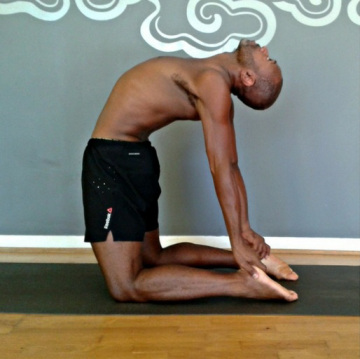
Case study: Yoga With Paul

paul-1

Paul Dobson

What it is:

An umbrella brand for the professional activities of London-based yoga teacher, masseuse and former professional dancer Paul Dobson.

Why it matters:

Yoga teachers are two pence a dozen in London and students typically cram sessions into hectic schedules. In this environment convenience, rather than affinity for a teacher, is often the deciding factor in choosing a yoga class.

Yoga With Paul was created to buck this trend by sharing founder Paul Dobson’s character. Instead of saying why he’s a great teacher it shares what he believes and cares about. Through a blog and social media, Yoga With Paul (#YWP) has built a network of like-minded yogis who share Paul’s interest in yoga, meditation, clean eating, mindfulness, fashion, urban life, and more. The proof is in the success: Paul now teaches several styles of yoga across London, and his annual Yoga Holiday With Paul summer retreats sell out well in advance.

In his own words:

“My life changed radically when I became a Bikram yoga teacher and it made me realise how easy to get locked into a “ladder” mind-set in our careers, relationships, or even hobbies. What I strive to share with my students is the awareness that you grow and become more yourself by challenging your preconceptions and being open to new experiences. It’s never too late for Bikram and never too late to change your life.”
Read more

Practice: “Your readers will live in a house made of their own mental pictures while reading your fiction. Those pictures are based on your words, of course, and you will curate that mental gallery quite closely. And yet the infinite details that your readers will conjure up around the mental pictures suggested by your words are all their own.” via Michael Alexander Chaney

Remember: “Desire is the crucible that forges character. ~Kristen Lamb

paul-backbend

Yoga With Paul


Elements: Attention

Storytelling is the essence of communication. The elements of storytelling are like letters of the alphabet. When you know how to use them, you can tell your best story.

Element 15: Attention

Great stories come from creators who are passionately attentive to everything.

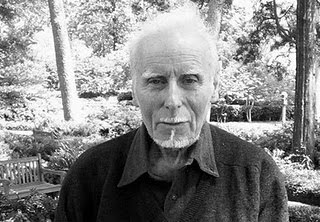
Case study: Jack Gilbert jack-gilbert

What it is:

Jack Gilbert was an American poet who turned life’s most banal, excruciating moments into heart-shattering art.

After twenty hours in bed with no food, I decided
I should have at least tea. Got up to light the lamp,
but the sweating and shivering started again
and I staggered backwards across the room. Slammed
against the stone wall. Came to with blood on my head
and couldn’t figure out which way the bed was.

from ‘What I’ve Got’

Why it matters:

Storytellers often aim too high. They want to convey love, terror, excitement, or despair. So they write about love, terror, etc. The thing is, when you write about love, you get a Hallmark card. The bigger the theme, the harder it is to write straight; it’s like looking at the sun.

That’s where attention comes in. Great storytellers know the little stuff reveals the big. In the excerpt above, Gilbert doesn’t tell the reader that it is scary to be sick and alone. He pays attention. In the throes of it, he is alert to every small, true detail: the slow passage of time, the dark room, the fever (only he uses clearer, closer words: sweating, shivering), the disorientation, the abject sense of failure as the body falls.

If you want magic, prop your eyelids open with toothpicks. Pay attention. Especially to boring, mundane, every day things.

In his own words:

“He explained that somebody wanted to give me the Yale prize. I didn’t know what to do, how to express it. I took him out with my two friends and we had milkshakes.

The next day I roamed about trying to find a way to feel about what had happened. I finally lay down under the Brooklyn Bridge to try to feel something. I lay there all afternoon, and then I called the people at Yale.” Read more

Practice: “Be awake to the details around you, but don’t be self-conscious. ‘Okay. I’m at a wedding. The bride has on blue. The groom is wearing a red carnation. They are serving chopped liver on doilies.’ Relax, enjoy the wedding, be present with an open heart. You will naturally take in your environment, and later, sitting at your desk, you will be able to recall just how it was dancing with the bride’s redheaded mother, seeing the bit of red lipstick smeared on her front tooth when she smiled.” Natalie Goldberg in Writing Down the Bones

Remember: “As a writing man, or secretary, I have always felt charged with the safekeeping of all unexpected items of worldly and unworldly enchantment, as though I might be held personally responsible if even a small one were to be lost.” ~E. B. White

Storytelling: Education

Storytelling is the essence of communication. The elements of storytelling are like letters of the alphabet. When you know how to use them, you can tell your best story.

Element 14: Education

Great stories do more than just entertain, they teach (in an entertaining way).

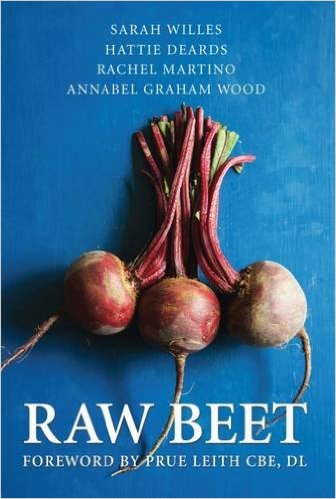
Case study: Raw Beet 

raw-beet-coverWhat it is:

Raw Beet is a cookbook covering four popular ways of eating: gluten free, raw, vegan and low glycemic-index (GI). Based around simple ingredients and straight-forward techniques, it educates people who want to learn more or adopt these nutrition options.

Why it matters:

Publishing a raw, vegan, gluten free or low-GI cookbook is like spooning water into the ocean. The market is glutted with books, most of which are celebrity-led, meaning the potential audience has to like the author. Raw Beet’s genius is pragmatism. Its angle is clean and sharp as a paring knife: Cut through the hype and moralising with clear, easy-to-prepare recipes.

Instead of preaching, it offers practical advice, including dietary descriptions, ingredient tips, and lists of food suppliers, for anyone who wants or needs to eat raw, gluten free, vegan or low-GI. Whether the goal is beating allergies, managing chronic illnesses, losing weight, or experimenting with new dishes, Raw Beet’s emphasis on education makes the process accessible and inclusive.

In their own words:

“With the help of our cooks and other contributors, we have tried to put together a collection of fairly simple recipes that can be served formally or informally, using ingredients that can be bought easily.”

Read more

Practice: “Flowery language can be effective in the right forum; however, overly embellished sentences do not belong in your informative [writing]. Keep your verbiage simple and straightforward, or your reader will pay too much attention to your overuse of adjectives and adverbs.” Angelique Caffrey via Explore Writing

Remember: “Learn the names of everything: birds, cheese, tractors, cars, buildings.”
~Natalie Goldberg

Elements of Storytelling 13: Accessibility

Storytelling is the essence of communication. The elements of storytelling are like letters of the alphabet. When you know how to use them, you can tell your best story.

Element 13: Accessibility

Stories are most effective when they are accessible. Don’t confuse your audience with florid language or complexity for its own sake.

vino-5

Case study: Vino y Co

What it is:

A wine shop in Ibiza run by father-daughter team Jeroen and Rosa Hamersma. The unpretentious oenophile sanctuary is as much an wine-education centre as it is a shop, thanks to its proprietors’ delight in sharing their knowledge. This makes it a magnet for chefs, sommeliers, locals and travelling wine buffs alike.

Why it matters:

Wine is often swathed in mystery, or at least pretension, and many shops actively perpetuate this elitism. Rosa and Jeroen take an opposite tack. The believe in making wine simple so everyone can enjoy and appreciate it. Jeroen taught himself about wine by buying almanacs in the ’80s in his native Amsterdam and drinking his way through vintages and varietals. He has a couple decades head start on Rosa, but she is catching up fast, laptop on the shop counter to answer any questions.

Rather than emphasise the arcane or technical, they focus on the communal, practical aspects of wine culture. Information about grapes, regions, winemakers and techniques are woven into stories, reinforced by generous samples of the wines in question.

Vino y Co grows its business year on year, and has fanatically loyal customers, all thanks to its dedication to making wine accessible.

In their own words:

Wine is all about taste. And about tasting. It’s not difficult.

Who said that wine shops should be boring? Wine is fun! So shopping for wine is fun!

Read more

Practice: “From time to time, all of us make the mistake of sending an email, turning in a paper, or handing a report to the boss without rereading what we’ve written. Raise your right hand and say this aloud: “I promise to reread my writing at least once before I consider it finished. If possible, I’ll read it aloud.” Now that you’ve made the pledge, your ears can help you simplify any unnecessary complexity in your writing.” Ann Edwards via Grammarly

Remember: “Making the simple complicated is commonplace; making the complicated simple, awesomely simple, that’s creativity.” ~Charles Mingus

Elements of Storytelling 11: Imagery

Storytelling is the essence of communication. The elements of storytelling are like letters of the alphabet. When you know how to use them, you can tell your best story.

Element 11: Imagery

Deft use of imagery creates indelible images and provokes powerful emotions.

Case study: Maggie Smith Poet

What it is:

Maggie Smith’s poem ‘Let’s Not Begin’ is a meditation on life, death and courage. These are dangerous topics (Rilke, no less, advised against such broad themes) but Ms Smith nails it with an unforgettable simile: “My heart’s galloping hell / and gone from the paddock…. But let’s not end / with the heart as horse, / fear-lathered, spooked deaf.” The use of a figurative phrase transforms the cliche of a racing heart into a concrete image so vivid I can see the horse’s flared nostrils and flying sweat.

Why it matters:

For millennia poetry was entertainment, education and historical record. Spoken or sung, it had to make an instant, lasting impression on its audience. So poets got very good at painting word pictures. They learned to compare unlike things in a way that seized people’s imaginations and seared images into their brains. Now, we’re drowning in a sea of information. Metaphors are life-rings; similes shine like beacons. From poetry to advertising, the most imaginative, compelling, memorable use of imagery always win.

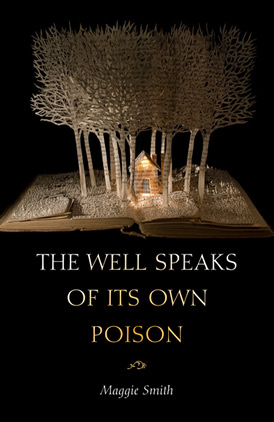
In her own words:well

Maggie Smith is the author of three books of poetry: Weep Up (Tupelo Press, forthcoming 2018); The Well Speaks of Its Own Poison (Tupelo Press, 2015), winner of the 2012 Dorset Prize and the 2016 Independent Publisher Book Awards Gold Medal in Poetry; and Lamp of the Body (Red Hen Press, 2005), winner of the 2003 Benjamin Saltman Award.

A 2011 recipient of a Creative Writing Fellowship from the National Endowment for the Arts, Smith has also received fellowships from the Ohio Arts Council, the Sustainable Arts Foundation, and elsewhere. She works as a freelance writer and editor, and is a Consulting Editor to the Kenyon Review. Read more

Practice: Complete these sentences with vivid images. To really get the most of the exercise, don’t worry about coming up with something good, just write. The whole idea is to get your subconscious to make connections in a new, more creative way.

  1. Blue paint spilled on the road like___________________________.
  2. Canceled checks in the abandoned subway car

    seemed___________________________.

  3. A spider under the rug is like___________________________.
  4. Graffiti on the abandoned building like___________________________.”

via The Balance

Remember: “A metaphor is a kind o’ lie to help people understand what’s true.”
~Terry Pratchett

Elements of Storytelling 10: Magic

Storytelling is the essence of communication. The elements of storytelling are like letters of the alphabet. When you know how to use them, you can tell your best story.

Element 10: Magic

Every great story needs a touch of magic: a perfectly conjured sentence or feat of illusion.

Case study: Comedy & Magic Society

comedy-magic-society

What it is:

Four hard-working professional magicians: Mark Phillips, Bob Sheets, Brian Curry and Barry Woods. Together they have over 100 years of cumulative magic experience and each, if modesty allowed, could claim to be one of the world’s finest prestidigitators.

Why it matters:

My acquaintance with Comedy Magic Society began when Mark Phillips commissioned me to write a profile of the quartet. Interviewing and writing about the four magicians was an eye-opener. Dexterity is the smallest fraction of illusion, it turns out. The real magic lies in storytelling.

Magic relies on hooking the audience into a narrative. The story distracts then, holding their attention while the magician does his work. A great magician can tell stories to anyone: Mark uses magic as a tool to help corporate clients communicate and sell; Brian honed his skills doing close-up tricks for restaurant patrons; Bob is a former circus clown who perfected the art of magic bartending; and Barry educates and entertains kids in schools and hospitals.

In their own words:

Barry, Mark, Bob and Brian brim with joy and enthusiasm for what they do. “I’m grateful to be getting paid to do something I love,” says Barry. “I’m blessed.” This gratitude and energy flows through their work both as individual magicians, and as the Comedy & Magic Society collective. Magic, as performed by the CMS and friends, is the art of celebrating what’s possible. “Magic can lift people’s feet off the ground, if only for a moment,” says Bob. “You never know what the result will be. You get a kid in front of an audience and he realises it’s okay to get in front of people, it’s okay for people to laugh at – and with – you. It gives him confidence.” Read more…

Practice: To retain all the “juice” of being in the moment, a writer needs to pull a rabbit out of a hat – to use sleight of hand that moves the reader from a second-hand recounting to feeling present in the scene.

When F. Scott Fitzgerald’s Gatsby is shot, for instance, Nick Carroway, his narrator, is off-stage. Yet he allows Nick to surmise not merely what happened, but also what Gatsby must have felt during those last few minutes of life:

No telephone message arrived, but the butler went without his sleep and waited for it until four o’clock – until long after there was anyone to give it to if it came. I have an idea that Gatsby himself didn’t believe it would come, and perhaps he no longer cared. If that was true he must have felt that he had lost the old warm world, paid a high price for living too long with a single dream. He must have looked up at an unfamiliar sky through frightening leaves and shivered as he found what a grotesque thing a rose is and how raw the sunlight was upon the scarcely created grass.

via Writer’s Circle Workshops

Remember: “We are all magicians. What we see will never coincide with absolute reality. As a result, the human brain must make a narrative.” ~ Frederick Reiken


Elements of Storytelling 9: Research

Storytelling is the essence of communication. The elements of storytelling are like letters of the alphabet. When you know how to use them, you can tell your best story.

Element 9: Research

Research is the foundation upon which compelling stories are built.

Case study: Abacela 

abacela

Abacela Winery

What it is:

An award-winning winery located in Southern Oregon’s Umpqua Valley. It is best known for producing world-class Tempranillo, the grape that makes Spain’s famous Rioja wines.

Why it matters:

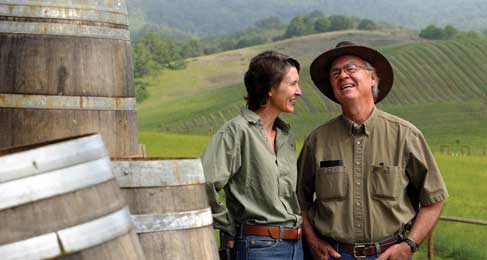
Abacela founder Earl Jones was a fan of Spanish wines and a medical research scientist. His wife Hilda was a medical technologist. They are by training and inclination people who study, analyse, test, and investigate. When Earl started wondering why he couldn’t find any good-quality American Tempranillo he didn’t shrug and leave it. He did research.

Earl’s quest to find the secret to great Tempranillo took him across countries and decades. He travelled through Spain and across the States, interviewing winemakers, studying soil and climate records. Reviewing the latter, Earl hypothesised that climate is the secret to growing top notch Tempranillo grapes.

As any good researcher would, Earl put his theory to the test. This meant identifying an American region with a similar climate to Rioja, moving there with his family, buying land, planting grapes, building a winery, and making wine. The initial results were good: Gold medal winning Tempranillo wines that outmatched Spain’s finest. More than 20 years on, Earl and Hilda are still researching, still growing, still writing new chapters of their story.

earl-hilda

Hilda and Earl Jones, founders

In their own words:

Abacela, in 2016, is a world-class, multi-award winning winery and viticulture success story. But 21 years ago when founders Earl and Hilda Jones planted its first vines they had no way of knowing what the outcome would be. They were scientists with zero winemaking experience who left secure careers and trekked 2700 miles west, kids in tow, to test a hypothesis.

Abacela was an experiment they hoped would answer a question that had puzzled them for years: Why doesn’t America produce any fine varietal Tempranillo wine?

Earl and Hilda probably weren’t the first enophiles to wonder why the great grape of Spain’s famous Rioja wines was mysteriously absent from American fine wine. However they were the first to approach the question with scientific rigor, form a hypothesis, then devote their lives to testing it.

This is the story of how one ordinary family’s curiosity and determination transformed their lives, built one of Oregon’s best-loved wineries and influenced winegrowing not only in Oregon and the Pacific Northwest but across America.

Read the Abacela story 
Practice: “Interview people, if you can, and if it’s relevant (no one who was alive in 1717 was available for me). But I have done interviews that have enlightened me on ballet, horse riding, frogs, injuries and country policing, for example. Prepare good questions beforehand, tape the interview, and take good notes.” via Sherryl Clark

Remember: “Research is formalized curiosity. It is poking and prying with a purpose.”
~Zora Neale Hurston

Elements of Storytelling 8: Voice

Storytelling is the essence of communication. The elements of storytelling are like letters of the alphabet. When you know how to use them, you can tell your best story.

Element 8: Voice

A clear, unique, personable voice hooks audiences every time.

Case study: No Meat Athlete

no-meat-athlete-book-cover

What it is:

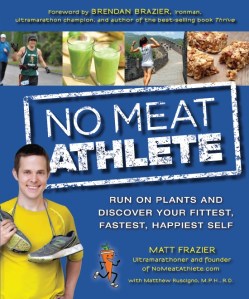
No Meat Athlete was a blog that became a brand that became a thriving business for Matt Frazier, an applied mathematics PhD student and amateur marathoner. It began as a chronicle of Matt’s quest to qualify for the Boston Marathon after switching to a plant-based diet.

Why it matters:

Nutrition and fitness blogs are rarely sustainable businesses. The sector is over-crowded, trend-driven and audiences are fickle. No Meat Athlete succeeded where most fail thanks to Matt’s inimitable voice. He tells readers everything they need to know in just three sentences:You’re not here to be preached to. And I’m not here to preach. In fact, I’ll come right out and say that a plant-based diet might not be for you. But I’ll also say this: You won’t know until you try.”

The tone is frank, warm, equable, and non-judgemental. Matt makes no apologies for being neither a professional runner nor nutritionist. Instead, he addresses readers as equals and fellow explorers. He writes in the enthusiastic, endearing voice of someone who has discovered something brilliant and can’t wait to tell you about. No Meat Athlete has grown into a brand that includes books, running groups, merchandise and more but Matt’s voice hasn’t changed. He is still the excitable, passionate, chatty guy you want to go running with then hit the pub for a vegan beer ‘n’ burger afterwards.

In his own words:

You can run without being a “runner.” I did it for five years.

Even once I had run a handful of marathons and was close to qualifying for Boston, when I lined up at the start of a race among all these passionate runners, I still felt like an imposter.

I was just a tourist, doing what runners do, but without feeling like I really belonged.

Sometime during the training for my Boston-qualifying race, where I finally succeeded in breaking 3:10:59, something shifted in me.

Shortly after qualifying, when I was in that happy, weirdly cloudlike space you find yourself in after accomplishing something you’ve worked at for so long, I read Born to Run. And damn if I didn’t feel like a runner after that.

For the first time, I could say that I really loved running, not just as a means of staying in shape or for accomplishing goals, but for its own sake.

And so I became a “runner.” Quotes and all.

Read more

Practice: “You can’t recognize and then strengthen your voice if you don’t hear it—and hearing it in your head isn’t the same as hearing it spoken aloud. Get in the habit of reading what you write out loud. I print and read everything before I send something out and also whenever I’m feeling all snarled up in my organization.

Want to accelerate your voice development? Read out loud to another person without any feedback. This is utterly maddening to your inner approval junkie: “But what does she think about my writing?!?” The magic comes because you turn toward yourself and listen for where you are being true to what you wanted to say and where you’re skirting the truth, where you dug deep and where you skimmed the surface, settling for clichés. Of course, there are plenty of times when getting specific feedback from other writers is useful—but not when it comes to honing your voice. via Jane Friedman

Remember: “Style cannot be copied, except by the untalented. It is, finally, the distillation of a lifetime of reading and listening, of selection and rejection. But if it is not a true voice, it is nothing.” ~Mavis Gallant

Elements of Storytelling 5: Accuracy

Storytelling is the essence of communication. The elements of storytelling are like letters of the alphabet. When you know how to use them, you can tell your best story.

Element 5: Accuracy

Good stories create a vivid, believable world. To achieve this, descriptions and details have to be accurate to the context and setting of the tale.

illahe 1899

Case study: Illahe ‘1899’ Pinot Noir

What it is:

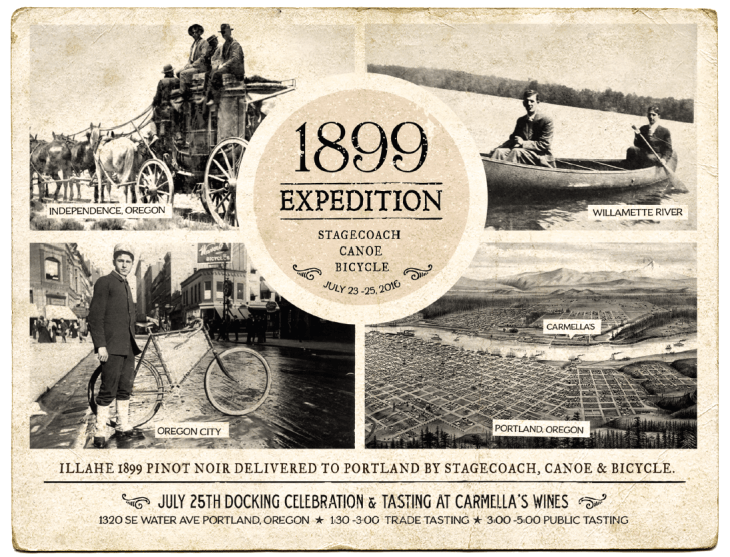
Illahe is a small vineyard in Oregon’s Willamette Valley, not far from Salem. Winemaker Brad Ford is a laconic, dedicated experimentalist and a stickler for accuracy. Each year Illahe releases a small batch of ‘1899’ Pinot Noir, so named because it is made without using any modern equipment or electricity.

Why it matters:

Anyone can claim to be “traditional” or “classic” — Illahe delivers by being accurate down to the last detail. From the vine onward, ‘1899’ is made to strict standards. The grapes are tended by hand, horses not tractors are used to work the land, picking, sorting and crushing is done by hand. “No electricity” means “no electricity”: they use candles to light the barrel room or bottling line. When ‘1899’ is ready to go to its distributor in Portland, the cases are transported by stagecoach, bicycle and canoe, ensuring that no modern technology touches it until it leaves the Ford’s care.

The Illahe story:

Brad’s first harvest was in 1986, when he performed the important roles of tractor driver and bucket collector. He took a short break after high school to work as a bartender, carpenter, grant writer, and English instructor. He then returned to wine, taking classes with Barney Watson, Al MacDonald, and Professor Wamser at Chemeketa and PSU.

Brad worked with Earl VanVolkinburg, Joe Dobbes, and Russ Raney, who taught him the practical aspects of the craft and about their love of the product. He also owes a debt to Peter Julian of Nuit-St. Georges, Burgundy, who invited him to attend tastings from Chablis down to Mercurey, hitting all the major towns in between. His experiences there taught him that winemakers can craft incredible wine without huge operations, but not without close attention to the vineyard and vinification. Read more here


Practice: “When you are present at the birth of a child you may find yourself weeping and singing. Describe what you see: the mother’s face, the rush of energy when the baby finally enters the world after many attempts… When you write, stay in direct connection with the sense and what you are writing about. If you are writing from first thoughts — the way your mind first flashes on something before second and third thoughts take over and comment, criticize, and evaluate — you don’t have to worry.” ~Natalie Goldberg in Writing Down The Bones

Remember: “Invention is the finest thing but you cannot invent anything that would not actually happen.” ~ Ernest Hemingway

Elements of Storytelling 4: Heritage

Storytelling is the essence of communication. Whether you are a writer, entrepreneur or politician your story is how you connect with people.

The elements of storytelling are like the letters of the alphabet. Once you know them, you can put them together to tell your story in the best way possible.

Element 4: Heritage

Stories are how we connect to the past and make sense of the present. Heritage gives us a sense of shared lives, experiences, and memories.

pickle-stjohn-dolly

Case study: St. John & Dolly Smith’s Pickles

What it is:

Possibly Britain’s best pickles, sauces and chutneys. The first time I tried St. John & Dolly Smith’s ‘Scotch Bonnet Pickle’ my taste buds lit up like someone put 1000 volts through them. It was a blistering simultaneous hit of taste and sensation. The heat-wave receded leaving two questions: Who made this? And: Where can I get some more?

I tracked down founder and self-styled Pickleman Chris Smith and discovered a backstory as flavourful as his creations.

Why it matters:

The sauces, pickles and chutneys would be extraordinary, with or without the story of St. John and Dolly Smith. But by connecting his product to its heritage, Chris taps into a primal hunger for stories about love, belonging, success and navigating an ever-changing world. His heritage touches on history, empire, education, immigration, death, and the inevitable march of time. The details of our stories are different, but every one of us experiences equally big, scary, life events. I fell in love with the pickle and its promise that change can be beautiful and there is always another chapter to be written.

The St. John & Dolly Smith story:

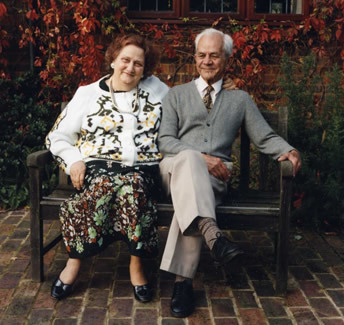
St. John Smith taught at some of India’s best schools, some of which were boarding schools where Dolly’s role was that of house matron. When their two older sons left university they moved to England with 13-year-old Chris. It was the first time he’d left India and his abiding memory is of coming off the boat to see frost so thick on the ground it looked like snow. The utter foreignness of his new home was assuaged by the familiar foods of Bangalore.

“Friends were crazy about my parent’s cooking. They would come around with a list of requests for their favourites but my mum and dad were very modest,” Chris recalls fondly. “They always thought ‘oh, they’re just being polite.’”

As the son of gifted cooks, he admits to never doing much in the kitchen. “Why would I, when they could do it better?” One of Dolly’s traditions was taking jars of pickle to school reunions, a flavoursome evocation of shared memories. After his mother passed away, a chance meeting with one of her old friends encouraged Chris to dig out her recipes and revisit his culinary heritage.

Read more here

Practice: “Write down everything you can remember about every birthday or Christmas or Seder or Easter or whatever, every relative who was there. Write down all the stuff you swore you’d never tell another soul. What can you recall about your birthday parties — the disasters, the days of grace, your relatives’ faces lit up by birthday candles? Scratch around for details: what people ate, listened to, wore — those terrible petaled swim caps, the men’s awful trunks, the cocktail dress your voluptuous aunt wore that was so slinky she practically needed the Jaws of Life to get out of it.” ~Anne Lamott in Bird By Bird

Remember: Even if you were in a prison whose walls allowed none of the sounds of the world to reach your senses — would you not still have always your childhood, that precious, royal richness, that treasure house of memories?” ~ Rainer Maria Rilke