On World Building with Rosanna Leo

Welcome to ‘Between the Lines’ – interviews with teachers, writers and writing teachers on aspects of their craft. This week, a conversation with lauded paranormal and contemporary romance writer Rosanna Leo that explores the intricacies of world building.

All images courtesy Rosanna Leo

In magical realms

It is Sunday afternoon. Outside Rosanna Leo’s home (not far from Toronto, Ontario) the leaves have turned. “Just a couple of weeks till the beginning of winter,” she remarks. “It’s long here: cold, snowy.”

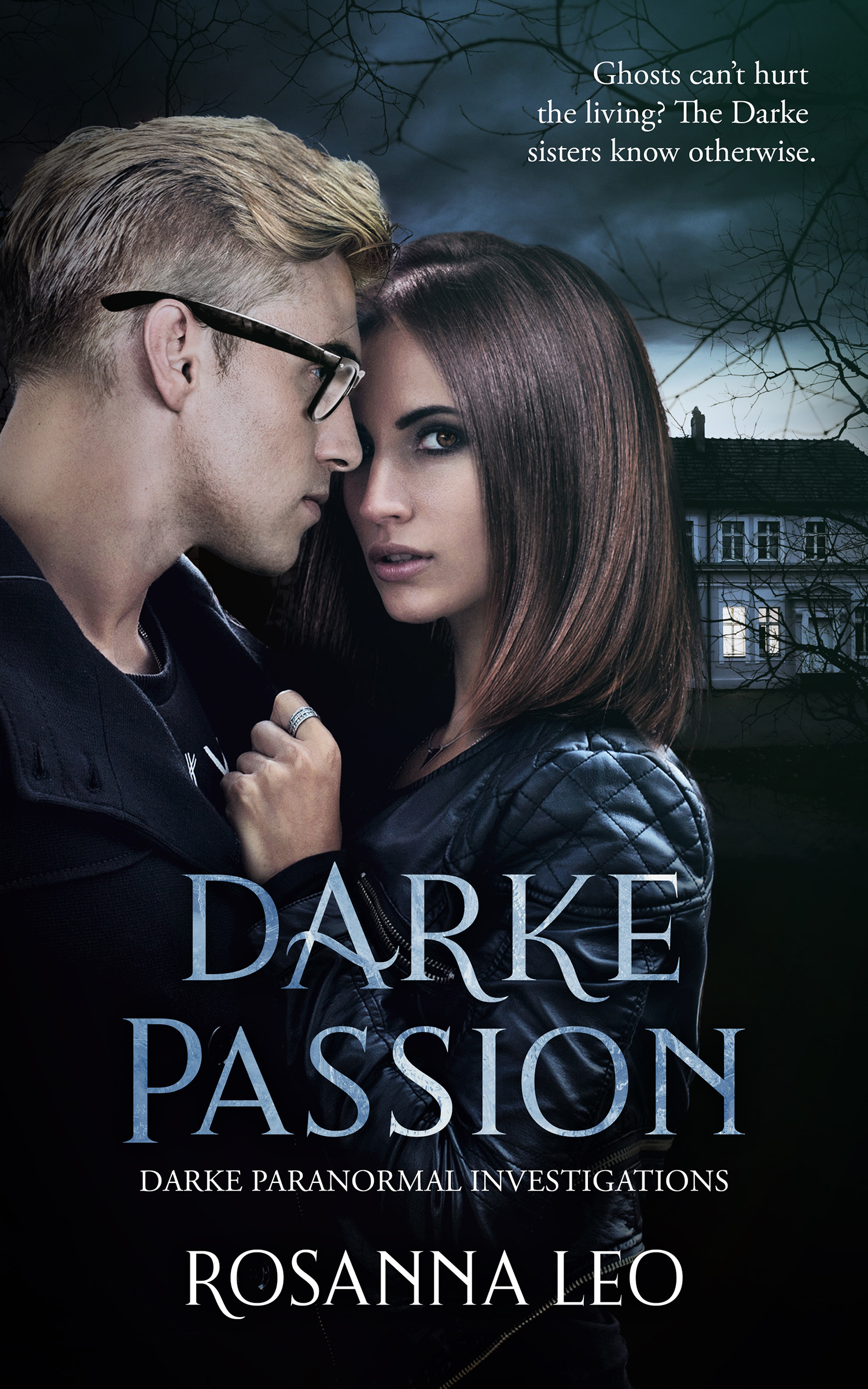
Perfect weather, that is, for staying indoors with a good book: perhaps a volume or two of Leo’s Darke Paranormal Investigations or Handyman trilogies; or her Vegas Sins series.

Leo writes to transport her readers into magical realms. As a child, she whiled away hours daydreaming in her bedroom. “I thought I could get to Narnia through the back of the wardrobe,” she chuckles.

Although no longer so literal-minded about the power of fiction, Leo still believes a story can and should be transcendent.

“As a kid, I reread the Chronicles of Narnia every year, which entrenched my love of mythological figures and fantastical creatures. Classic ghost stories were my bedtime stories. Once I started exploring the world of romance — Robyn Carr, Erin McCarthy, Kathy Love — something clicked: romance, that’s where I wanted to be.”

The path to writing

Bookworm though she was, Leo had only a brief brush with writing in her school days. On a teacher’s prompting, she entered a Royal Legion contest with a story about her veteran grandfather’s post-traumatic stress disorder: “The family would say, ‘he’s having his nightmares’.”

She won.

“I was the only person in my family, up till now, who has ever shown any interest in writing,” she muses. Which may account for the Royal Legion story being the “first — and for quite a few years the last” time she wrote with intent.

Leo earned a BA in English literature, but another art form won her over. After her undergraduate degree, she completed a three-year diploma in a classical singing and spent several years performing with a chamber ensemble, in addition to her day job.

It was while on maternity leave with her first child that Leo began to write again. “My son was a good napper, so I started scribbling, then, after plugging away for a while, I had a novel in front of me. It was terrible,” she laughs. “This sprawling, epic story with ghosts, demons, the kitchen sink.

“I sent the manuscript to Harlequin then waited many, many months for the form rejection letter to come in the mail. It was good to get. It was important to know I could move on from there.”

After a few years of working and re-working, Leo submitted another manuscript. This one was accepted. “It was the biggest high I’ve ever experienced.

Since then, she has combined her full time job as an acquisitions assistant at a local library with writing award-winning romance novels. “It’s the stories that keep me going. I love coming up with characters. I love creating worlds.”
On world building

What is world building?

You are creating the backdrop to your story. You might think of the Game of Thrones series, with different countries and mythologies. But world building can be simpler than that; it doesn’t have to have a fantastical element.

I often write about places I know and historical moments. I think of world building even if I’m writing something with no paranormal or fantasy aspects. It’s what brings that book to life.

What is essential for creating a coherent world?

When you’re creating a new world, even the tiny details have to be vivid. You don’t have to go on for pages talking about what the curtains look like, but you need details to put the reader in that world. Also, if there is anything about the people who inhabit the world, especially in the case of fantasy, you have to break that down. What do animals look like? How do people speak?

What tools do you use to plan?

Research is vital. The basis of the Darke stories’ worlds is: what moments had repercussions that lasted into the future? They are based on historical incidents, so I’m researching those periods, what happened, what impact things had on the current time-frame and modern characters.

How do you research?

It’s handy I work in the library and have a lot of resources at my fingertips. Inter-library loan is my best friend. You can find materials from other systems, things that are very specific. There is [also] a lot of great stuff via Google. For me, researching Canadian historical moments, there are great archives online.

To maintain consistency across your novels?

At the beginning of a series, I determine who the characters are going to be, write thorough character sketches and carry them from book to book. If I mention something about a character, I make sure I can access it throughout the story. Readers are savvy. They will remember [errors] and call you out! You need to get it right.

How does world-building interact with characterization?

It’s huge. There will be things a character can or can’t do, depending on the world they live in. Even in realistic worlds, you have to think about what will make sense.

What are common mistakes authors make in world building?

As we talked about, not keeping track of certain types of information – changing things down the road could be jarring for the reader.

Are writers over- or under-ambitious?

There is a fine line between providing the right amount of detail and too much. If I open up a book and the author goes on for 12 pages about the curtains, I’ll get out.

Who are a couple of writers who world build well?

Scarlett Peckham, who writes historical romance. Catherine Stein: great steam-punk/sci-fi/paranormal. Paulette Kennedy and Hester Fox – both Gothic writers – do world building really well: great attention to detail, very immersive.
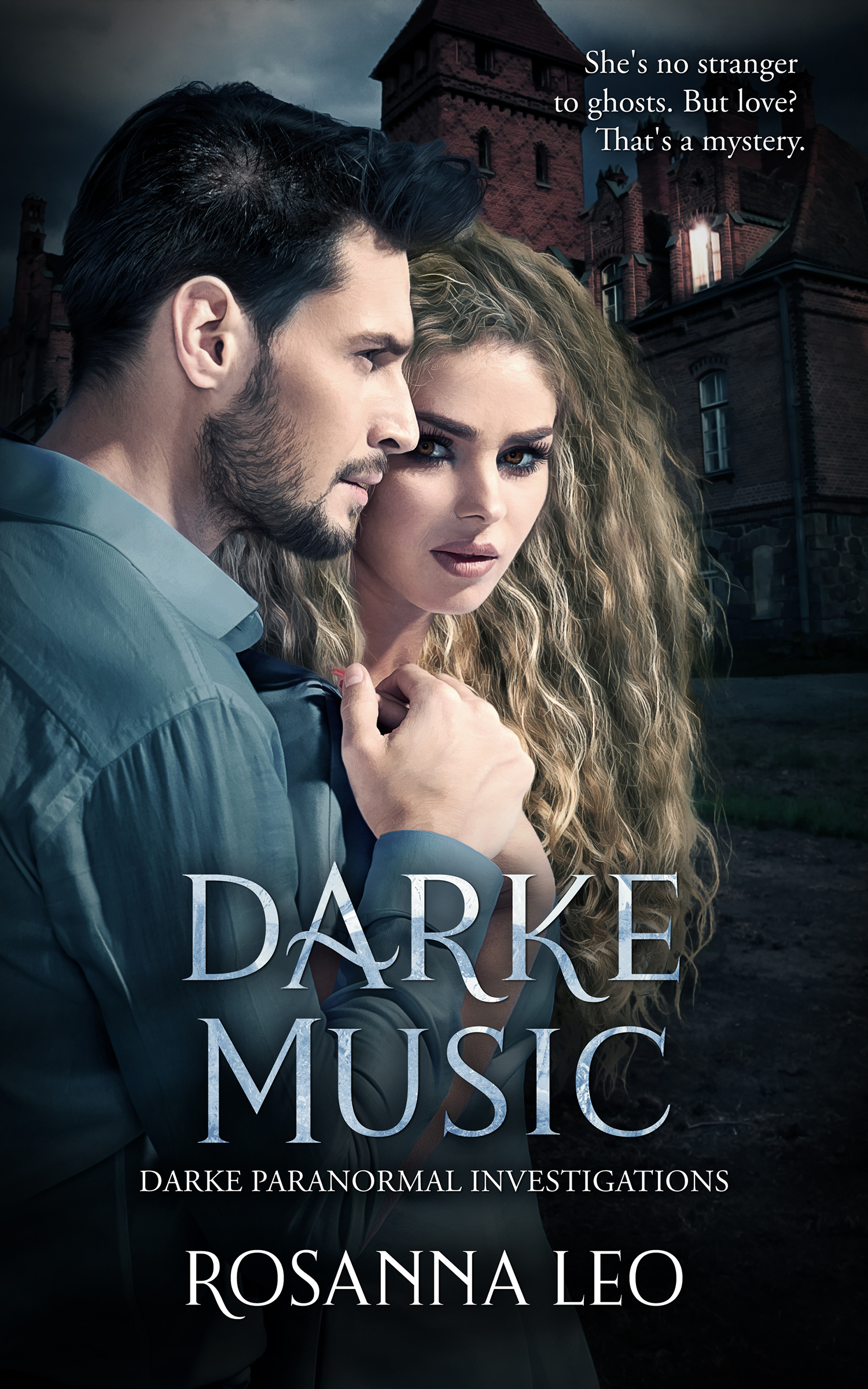
Leo recommends

The piece of writing that changed your life before age 18?

Jane Eyre by Charlotte Bronte. When I was 12 I thought it was very romantic. I don’t look at it through the same lens any longer, but it started my love of romance.

The piece of writing that changed your life as an adult?

The Tenant by Katrina Jackson. It’s a wonderful ghost story with all the creepy elements, a gothic feel, but she also talks about racism in an effective and moving way. It’s a short novel, but she packs so much in. Everyone should read her work.

A book about writing every aspiring writer should read?

On Writing by Stephen King was very helpful. Leigh Michaels’ Writing the Romance Novel – I keep a copy in my basement and have reread it many, many times.

A living writer you’d love to hang out with?

Anise Eden. We’ve been friends online for years, but we’ve never been able to meet up. Her books are fantastic. We became mutual fans before we got to know each other. Now, I’m honoured to say she’s my friend.

Your perfect writing space?

I like silence. I won’t go to a coffeeshop, don’t like a playlist in the background. Just a room in my house where I can get into mischief in my head.

What non-writing pursuits feed your writing?

My husband and I like to explore the small towns around us. I love walking around an old cemetery trying to figure out, who were these people? That starts a lot of stories in my mind. For writers, it is easy to be solitary, to retreat, but it’s important for me to get out there, experience life, ask questions.

What’s next?

My series Darke Paranormal Investigations – which is set here in Ontario. It stars three sisters who are all paranormal investigators; the first two [novels] are out and have been really well received. The third book is out in March 2024.

Connect

On Generous Writing

Photo by Ben White on Unsplash

Life never ceases to be difficult, to paraphrase Rilke. Amidst its slings and arrows, there is often little to comfort and guide.

Without generous writers, there would be almost nothing.

Among recent difficulties faced by myself, or someone I love: bereavement, major surgery, significant medical diagnoses, divorce, conflict with parents, conflict with children, unemployment.

These are not remarkable events, statistically. Yet, to the individual, they are as life-altering as Krakatoa. If anything, the cognitive dissonance of knowing the event to be universal versus the all-consuming personal experience of trauma makes it harder to cope.

We need wise friends to walk these dark halls. But unless we’re lucky, and our friends unlucky, we are not likely to find the necessary wisdom in our immediate social circle. Shared experience can as easily drive a wedge as forge a bond.

Into this gap step writers whose words offer perspective without judgment, comfort without reciprocity and infinite patience. They sit at our bedside in the small hours, walk with us, accompany us raging, glum, drunk, frustrated or frightened.

Their generosity lies in a willingness to delve into the most difficult parts of their lives and, through grit and creativity, distill their thumb-screwed wisdom into something readers can use.

Photo by Wai Siew on Unsplash

Imagine being lost at sea on a leaky boat. Most of us would consider feel heroic merely staying alive. But a writer would be thinking: how can I help the next person who finds themselves out here?

They would be jotting notes about tides and winds, describing how to make a fishing line out of dental floss, giving tips on bailing and load-balancing.

Although this sense of purpose may be sustaining, it does not mean the work is easy. The generosity of writers lies in their willingness to labor during their most difficult experiences to give hope to those caught in similar currents.

The following are seven books that exemplify this generosity: all by women, whose emotional work is routinely undervalued, on the page and elsewhere.

Seven Generous Books

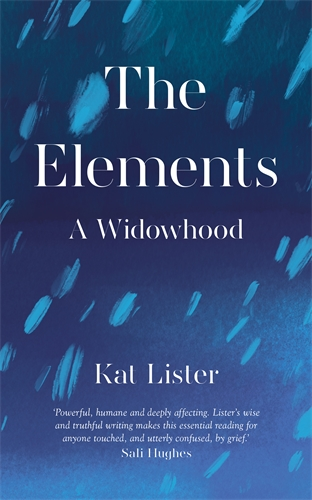
The Elements by Kat Lister

Most couples in their 30s are settling into their first homes, thinking about kids; Kat Lister and her husband, Pat Long, did those against the ticking clock of his brain tumor, which was discovered before their wedding. They lived the few years they had together with uplifting, illuminating grace. When he died, Lister was left to navigate the anachronisms of young widowhood, a trial by water she recounts here with bold, Didion-esque honesty.

Buy

Transcendent Kingdom by Yaa Gyasi

Generosity is not constrained by genre. While we may assume that memoir has the most to teach, the ruthless craft required of good fiction offers equal — or even greater — opportunities. This novel, which begs to be described by its titular adjective, unpicks grief, addiction, survivor’s guilt, and the complicated strands of rejection, assimilation, belonging and othering woven into immigration, racism and religion.

Buy

A Three Dog Life by Abigail Thomas

Perhaps the only thing more appalling than the death of a partner is losing a partner in mind, not body. Thomas’s memoir invites the reader into the Kafka-couldn’t-dream it surreality of life following her husband’s traumatic brain injury (TBI). Along with grief, come care decisions, guilt, frustration, and no one to share the challenges.

Buy

Why be Happy When You Could be Normal? by Jeanette Winterson

Read this with its fictional counterpart, Winterson’s debut novel, Oranges Are Not the Only Fruit, to fully appreciate her generosity and courage. By the time she wrote this memoir, Winterson was a revered literary figure and bona fide success story. To admit, from that height, to the haunting power of childhood trauma could have seemed an admission of weakness. Her vulnerability is potent and empowering.

Buy

Nomadland: Surviving American in the 21st Century by Jessica Bruder

Please read the book; the film (brilliance of Frances McDormand notwithstanding) does it no justice. Nomadland exhibits another form of authorial generosity: the willingness to put one’s life aside to bear witness to the lives of others that would otherwise go unrecorded. The crushing, mechanistic cruelty of late capitalism comes to vivid life through Bruder’s painstakingly reported account of life on the dusty, bald-tire fringes of the so-called American dream.

Buy

A Manual for Cleaning Women by Lucia Berlin

Every time I pick up A Manual, I wind up reading it all the way through. Berlin’s autofiction is enthralling, terrifying, devastating on multiple levels. The writing is almost too sharp and bright to look at (forget window pane, this is prose as emergency flare) which is necessary magic given the gut-punch tales it tells. Stuff that in lesser hands, or played straight, would be unendurable, is transmuted into stories that soar and hover on the thermals of your mind.

Buy

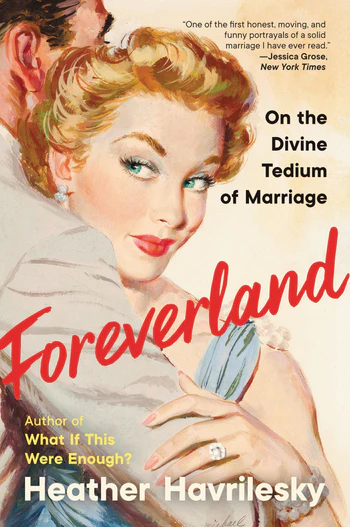
Foreverland: On the Divine Tedium of Marriage by Heather Havrilesky

It is one of life’s slipperiest tricks that the things we’re taught to crave and cherish are (surprise!) headaches too. Marriage, at least happy marriage, is perhaps the quintessential sacred cow; the immutable good thing one should pursue without question. Thank goddess, then, for Havrilesky who seems to operate from the position that sacred cows are best served medium-rare. Her brave assertion of the inconvenient truth that true love and explosive exasperation are not mutually exclusive is a pinpoint of light in what might otherwise be a suffocating dimness.

Buy

What are your life-boat books? Share in the comments!

On Writing and Mental Health with Anise Eden


Welcome to ‘Between the Lines’ – interviews with teachers, writers and writing teachers on specific aspects of their craft.

Photo courtesy Anise Eden. Copyright OC Photography

Five years ago, author Anise Eden traded the hectic, emotionally demanding life of a mental health social worker in Baltimore, MD for a slower-paced existence in Mallow, County Cork. “The lifestyle here suits me,” she says, a fact evident in her warmth, ready smile and enthusiasm.

The move forced a career adjustment, too, as her US qualifications and role were not transferable. While she navigated retraining and finding a place in the Irish social work system, Eden, who leaned to poetry, began writing prose.

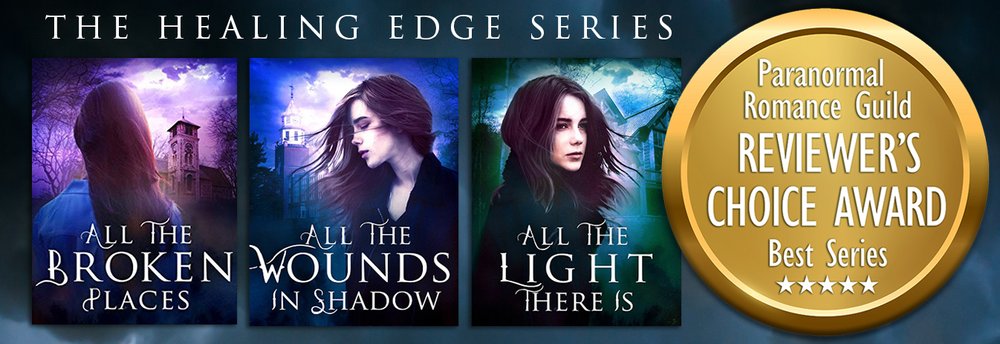
Her debut, The Healing Edge trilogy, won the Paranormal Romance Guild Reviewer’s Choice Award for Best Series.Dead Keen, the second instalment of her second series, The Things Unseen thriller trilogy,is released on 10 August 2023.

The common thread is that all of Eden’s heroines are mental health social workers. “What I’m interested in is exploring the intersections of faith, love, belief and mental health,” she explains, “and how that collides with the real world.”

From the beginning

There were early signs Eden would become a prolific writer: her penchant for “throwing five or six-syllable words I’d heard into a sentence, even though I didn’t know what they meant”; her propensity for drifting through the woods behind her house, making up stories; avid reading. That her work would be driven by caring and curiosity was likewise evident: when developers cleared part of her “sacred” forest, a 10-year-old Eden and her friend shoved sticks into bulldozer treads, hoping to sabotage the operation.

“If I hadn’t had such understanding, loving, accepting parents and teachers I would probably have gotten into a lot of trouble,” she admits. “I was a handful, but a people-pleasing handful.”

Eden was recently diagnosed with ADHD, which “explains a lot of my childhood.” It has also heightened her desire to educate people about mental health and advocate for robust self care and social care.

​Life and flow

In addition to addressing mental health themes in fiction, Eden teaches social workers and researches women’s mental health. She sees these as complimentary endeavours, though admits that juggling them is “constant negotiation. It’s like water flowing into different containers; it goes where it needs to go.”

Wherever the water flows, Eden prioritizes her mental well-being. This should be axiomatic for any writer, any person, but writerly misery is a stubborn tradition. As Hemingway may have said: “There is nothing to writing. All you do is sit down at a typewriter and bleed” (the Hemingway Society explains why he probably didn’t) – and the implication that suffering equals significance has proven hard to shake.

Eden resists this, personally and professionally. Her Mac is unsanguineous. Her home writing space comforts and inspires. “I’m looking out into the back of a house across the way, an empty lot with wildflowers, trees and above that sky,” she reports. “The sky is dramatic in Ireland; there is always something going on with the clouds. On my wall, works of art from friends and pictures of my family; when I need to be inspired I can look over and be reminded there are people who love me.”

In career terms, she ignores unhelpful advice. “Anyone who says, ‘you shouldn’t be doing it if you’re not making money,’ knows nothing about writing and publishing. If I pinned my confidence or motivation on money, that would be sad indeed.”

Eden knows from experience that confidence and motivation are hard, and hard won. Far from being dispirited, she relishes the opportunity to make mental health a focal point. It is part of an ethos of care: care for writing, care for readers and care for writers.

​On writing & mental health

What mental health challenges can writing pose?

It’s a solitary activity. You are the writer, and you have to do the writing. You can collaborate, you can talk about your plot, you can workshop, but ultimately it’s you with your screen, or notebook.

Also, there is no real mechanism for feedback until you get published. There can be years and years of toil before you get feedback. In other creative fields where you have an audience – music, theatre – you can put out pieces, get feedback, adjust; it gives you confidence. With writing there is more lag time between when you start working and when you get feedback. You won’t get people cheering you on. It’s just you. A lot of writers have imposter syndrome as a result. Passion and grit is required to pull through, which can be asking too much. A lot of people don’t start, or don’t continue.

Once you publish, or are in a workshop, it can be difficult to take feedback. What you write is personal; it’s your heart, brain, mind. It can be hard to take the slings and arrows of criticism if you’re not mentally prepared. It takes learning to develop perspective on what you’re hearing.

What types of writing can be particularly challenging?

Not that the stories are autobiographical, but I draw on my emotional experiences. In my last book, Dead Sound, the protagonist is with her ex-boyfriend. She’s having a flashback to the moment they broke up. He hit her in that scene and he’s now gaslighting her, telling her it didn’t happen. And she’s questioning herself. That is something that happened to me, and I wanted to write about it for the readers who might be wondering if they had suffered abuse. In order to do that, I had to revisit those experiences. Reliving something difficult or painful is difficult and painful. I have to have self-care in place for during and after. While writing, I have my dog, my coffee, my music; afterwards I might need to go out.

How has writing affected your mental health?

I didn’t write prose until I was 39. Before that, I wrote poetry, which is very therapeutic. It is a direct line to heart, soul, mind; it pulls everything together. I’d start a poem with a dilemma or problem, and by the end I’d solve it. Poetry was like mini therapy sessions. I stopped writing when I became a therapist. I was putting all my creative energy into helping my clients.

It was during a period of unemployment that I wrote my first novel, which started as a way to answer a question for myself about mental health, and the challenges of the work. For an ADHD person, [writing] is the perfect hobby. You can go on any adventures you want.

What do you make of the trope that depression and misery spur great writing?

[Reading her work] I got the feeling Sylvia Plath would have loved to be mentally healthy. She was someone who would have loved to be happy. She would never have romanticised [her struggles]. It ended in tragedy.

What can trigger mental health difficulties?

A mental health issue arises from a mixture of factors, not just genetics or circumstance. Political factors, economic factors, physical issues, how resilient individuals are based on genetics and upbringing. For writers in particular, how we deal with isolation and criticism are important.

What resources can writers use to protect their mental health?

Having other writers in your friend group is huge. Being a part of a writing program, a workshop, or reaching out to writers on social media can lead to friendships. There was a Facebook group I joined of 10 debut novelists, all our books were coming out the same year. We were going through the same stuff for the first time, at the same time. We could compare notes, kvetch, problem solve. Nobody apart from other writers really knows what it’s like.

One of the things I tell my students in social work, and I would say to writers: we are the tools of our trade. You have to take good care of your tools. If you don’t, your work isn’t going to be great.

Eden recommends

The piece of writing that changed your life before age 18?

Madeleine L’Engle’s A Wrinkle in Time – it was science, philosophy and faith mixed together in a book that was suspenseful and thrilling, that tapped into emotional truths. I wasn’t being patronized or condescended to. I try to do that with my books: include science, philosophy, relationships; I do a lot of research to make sure it’s right.

The piece of writing that changed your life as an adult?

Wally Lamb, She’s Come Undone changed my life for the better. I was a young woman suffering depression, feeling lost, at a loss, which is the situation the heroine finds herself in at the beginning of the book. Several things [in it] helped me. One was feeling seen in a positive way: the character’s mental health struggles are not stigmatized or romanticized. There was also seeing her recover, seeing there was a point of feeling better.

A classic you could read over and over?

Catch-22 by Joseph Heller. It’s hilarious. It’s insightful. What can I say? It’s reality. With our changing world, it is more and more relevant.

A contemporary book you wish you’d written?

Outlander by Diana Gabaldon. The poetry of it is so unexpected, in a way that only poetry can be. It’s like reading a novel that’s a poem, and a poem that’s a novel. And the love story is massively compelling. The characters are so real and complex that they can carry an incredibly complicated story line.

A book about writing you recommend?

I Give you my Body…”: How I Write Sex Scenes by Diana Gabaldon. I don’t even write sex scenes, but she gives fantastic advice in general.

Who would you cast as the lead if your forthcoming novel, Dead Keen, were filmed?

Katherine Langford as [the protagonist] Neve. For the main male character, Con, Jason O’Mara; it is important to have an Irish actor.

What’s next?

The 10 August launch of Dead Keen. My writing group, the Mallow Scribes, is going to do a dramatic reading. We’ve been rehearsing for weeks.

Connect

37 – Atropos

A short story originally published on Medium. Atropos is one of the three Fates in Greek mythology, the one whose decision is final — her name means ‘inflexible’.

“First, I want to thank you for the invitation. All the invitations. Thank you for asking until I said yes.

“The first year, I was too angry. The second year, I was too angry. Last year, I was afraid of what I might say. My gratitude to the faculty and administration — especially Dr. Harnett and Dr. Walsh — who persisted in asking without expectation. They were close friends of my father, meshed in their own grief, but they reached out again and again.

“I didn’t appreciate it to begin with — and by that I mean, for years. I was angry with this school, with them, with the students who survived, even — a little — with the ones who didn’t. I wanted my father. If I couldn’t have him,
I wanted to hoard all the grief in the world.

“But the world is adept at delivering low blows. Even in my depths of my deepest wallows, it was hard not to know how easy it is to be sucker-punched by fate.

“It has taken four years since that day, which some of you remember all too-vividly, for me to be able to stand here and hope to say something that is not untrue. Many of you, mercifully, only know what happened second-hand — as do I.

“You didn’t see the gun. You didn’t hear the shots. Didn’t smell — as I’m told they would have — the propellant. It wasn’t your hair that stood on end, or your body that shook with the adrenaline rush. You didn’t have to make a life-or-death decision, without knowing which was which.

“Dammit. I’m still angry. At everybody, everything, every minute that added up to the moment my Dad died because some warped asshole had a bad day.

“Forgive me, fellow family members, survivors. I mean no disrespect. But let’s not give what happened more credit that it deserves. We lost our loved ones to an act of madness. I don’t want to credit their killer with reasons.

“Sorry — I should stick to my notes.

“I thought hard before saying ‘yes’. I didn’t want to come here and pretend to have reached a resolution. Yet, it was time. Those of you who were lucky enough to know my Dad, to study with him, know the only thing he loved more than making wine was teaching future winemakers.

“He treasured education and when he retired from his first career as research scientist to start the winery, it was the teaching he missed. This program gave him a chance to combine the two great loves of his life. I wanted to honor that. It’s what he would have wanted.

“So I said ‘yes’, not knowing what came next. Knowing what to say was one of Dad’s gifts. It’s not one of mine. But my mind kept turning back to one story — one pivotal moment.

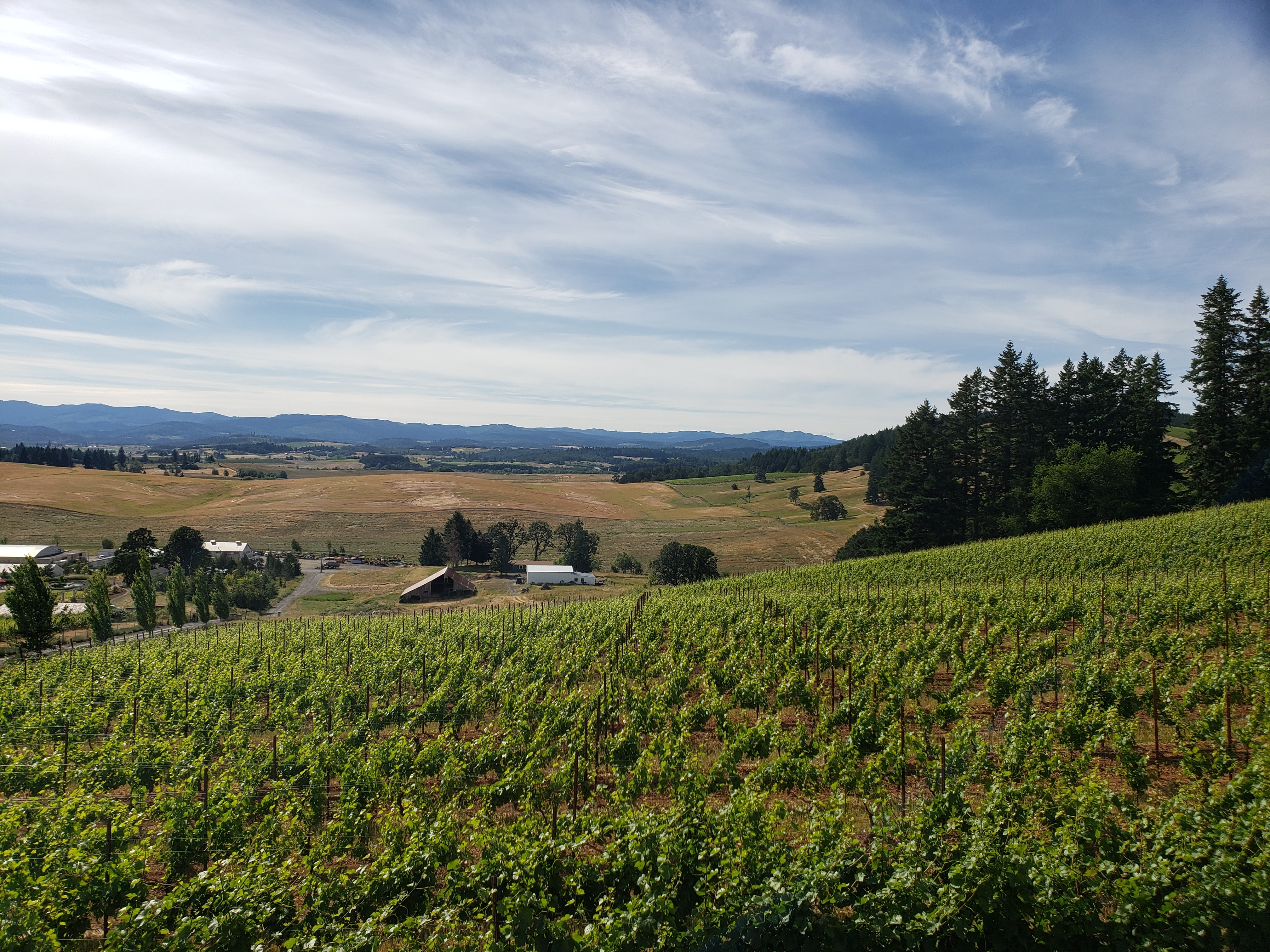
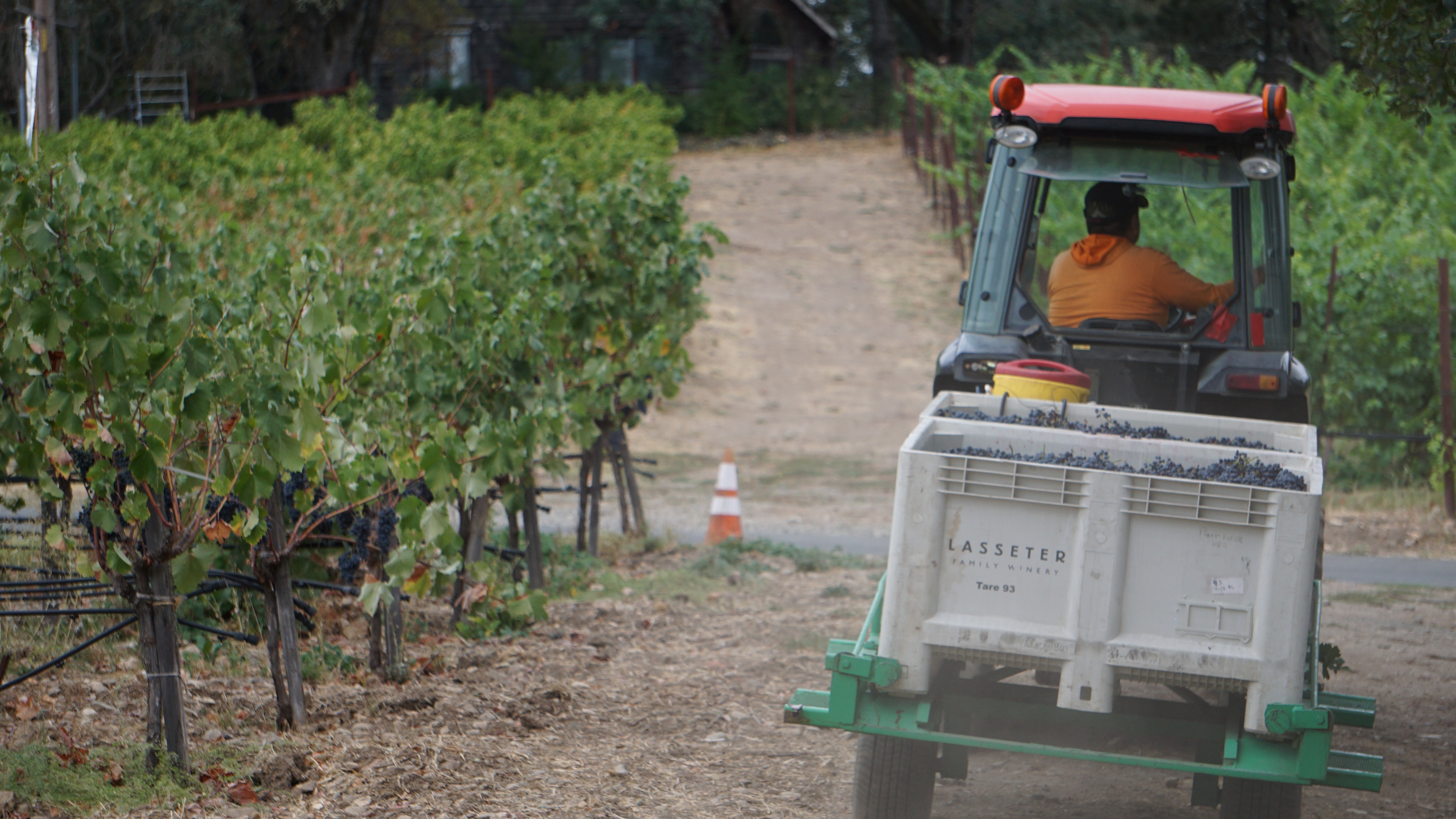
“Most of you know the winery, or will have at least driven past and seen the acres of vineyards spread across the hills. If you can, erase all that. Picture those hills with nothing but brambles and stones. Picture a decrepit clapboard house with clothes on a line out front, and a tractor parked next to a beat pick-up truck. Picture my Dad, humping that rusty machine along those hills ten hours a day. My Mom tending hundreds of tiny scraps of vine nestled in cardboard milk cartons. After school, my brother and I put to work planting, watering, propping, tying.

“It takes about four years to get a crop, as you know. I was 15 by then, sick of the dirt, convinced nothing was going to come of this stupid experiment. That first year changed my mind. We didn’t get a lot of grapes but they were good. And the wine Dad made was great — award-winning, in fact. Suddenly, my pea-sized teenage brain saw the potential.

“I was almost excited for the second harvest. A handful of friends from schol were coming to help pick at the weekend. The Friday night was warm and hazy. Sunset hung on forever — the sky turning from fuchsia to rose to powder pink. Mom and Dad were on the porch, drinking wine. Toby and I were playing checkers, which is this weird old thing that was invented before the internet. I was completely content — a rare emotion for me at 16 — everything was right.

“The next morning I woke up to Dad shouting, crying really, roaring. I was terrified, I’d never heard anything like it. There was something else, this sort of whirring, rustling noise in the background. Running out of my room, I collided with Toby, and we both staggered into the living room.

“That house overlooked the main, the only, vineyard. Through the open front door I saw this dark thing — this moving mass. Dad was running towards the vines, arms flailing like a Laurel & Hardy skit. Mom on his heels. After a confused minute we realized it was birds.

“Hundreds, thousands, who knows. More birds than we’d ever imagined. Hitchcockian levels, swarming our ripe grapes.

“That was break point for Dad. He had an academic job on offer. He had no harvest. We were broke. You’re familiar with the taut economy of wine-making so you can imagine…. I, in my adolescent wisdom, was convinced, determined this was a sign. Like, “Dad, we tried, we failed, now can we please go back to the city and a job where you can afford to buy me a car?”

“Instead, he remortgaged the property on terrifying terms, and went back to planting and pruning. I was furious, livid. What was going to stop it happening again? What were we going to do then?

“‘We can always start again,’ Dad said.

“It was a few years before I forgave him. My last two years of high school I wore clothes from Salvation Army and ate packed lunches. If a person could die of embarrassment, I wouldn’t be here.

“By the time I went to college, though, things were on an upswing, and just kept swinging. Suddenly, it was the coolest thing in the world to bring friends and boyfriends to visit. Mom and Dad built the new house and I had this huge, beautiful room and studio space overlooking the vineyards. They were winning awards, hosting dinners, giving lectures, appearing in magazines.

“They threw me a 21st birthday dinner at the newly built winery. I sat at the head of the long oak table in the library, surrounded by my friends, drinking amazing vintages Dad had saved especially for the day. I remember hugging him and saying, ‘Daddy, I was wrong when I told you to quit. I’m so glad you didn’t listen to me.’

“Rightfully, that should be where the story ends. The triumph of courage over cowardice, optimism over pessimism, fortitude over adversity.

“I lived with that smug, comfortable morality tale for my whole adult life — until four years ago. When I heard the news, I literally fell over. My legs gave out. Lying there, howling, I thought, ‘Why didn’t he just quit?

“Once again, I was furious with Dad. If only he’d heeded the warning, if only he weren’t so stubborn, if only he’d given up. I didn’t give a shit about the winery, his accomplishments, his pleasure in it, I just wanted him back.

“I still want him back. But I’m no longer sure he should have quit after the birds. However, I’m also not sure he shouldn’t have.

“God knows, I’ve tried to weigh it up. Tried to find some scale to balance my Dad’s pride, joy and satisfaction in the winery against the fact of his absence. Increasingly, I don’t think such a scale exists. His life was infinitely precious. Missing him is wound that doesn’t heal. But his life was inextricable from what he loved, and how he chose to live.

“Would he do things differently, if he could have seen the future? I don’t know.

“Not knowing, I can’t offer you a comfortable morality tale. Doing what you love can save your life. It can also cost your life. Every day, you make life-and-death decisions without knowing which is which.

“So you may as well follow the deepest, truest impulse of your heart. You don’t know when or where the journey will end, but you can choose your path…”

10 Things I Love about “The Bold Type”

I’ve just finished binge watching all three series of The Bold Type. The only thing between me and mourning is the news that it’s been renewed for a fourth season.

Because this show won me over like no glossy American TV drama ever has. (I loved The Wire but glossy that ain’t).

For someone who veers inflexibly towards cynicism, The Bold Type might seem an odd affection. It is relentlessly, almost Pollyanna-ishly upbeat. Every problem is solvable with a bit of elbow grease and woman power, within the span of 41 minutes.

That should annoy me. Or I feel like it should annoy me. But it doesn’t. In a world where basically all news is bad news, and humanity is collectively excavating to find a new rock bottom, believing problems can be solved is a radical notion.

Believing that, as The Bold Type holds, love, friendship, integrity, hard work and learning from your mistakes is enough to craft a meaningful life verges on revolutionary.

I love me some revolution.

So here, in no particular order, are 10 things I love about The Bold Type.

  1. Sisters doing it for themselves

    Praise be: A show with three female leads whose priorities are A) career and B) friendships; and who are actually making a go of it. Disaster comedy is a dime a dozen (though, Fleabag…) but I cannot think of another female-focused show where the main characters are so functional. Jane, Sutton and Kat have their moments of doubt and despair but mostly, they have their shit together. And when it gets out of hand, they huddle in the fashion closet and figure out how to fix it. And do.

  2. Sisters doing it with each other (oh, and Lesbian. Muslim. Artist.)

    The Kat-who-thinks-she’s-straight-figures-out-she’s-not-by-falling-in-love-with-a-lesbian-Muslim-artist story-line makes me happier than a hamper of spaniel puppies. Everything about this is amazing, from how hard Adena rocks a turban to Kat’s punching a racist guy in the face for hassling her. The scene where Adena calls her out for not going down on her, followed by a conversation where cunnilingus is not a punch line should be required viewing.

    kissing.jpg

    Photo by Juliette F on Unsplash

  3. The powerful lady boss is not a bitch

    As a newbie journalist, I would have given my left leg for a boss as wise, fierce, insightful and supportive as Jacqueline Carlyle. I still would. Scarlet’s editor is an ideal we’re too rarely shown: a take charge, takes-no-prisoners woman who is also compassionate, self-aware and able to admit her mistakes. Oh, and she has a handsome, adoring husband and a couple of cute kids. Hey, girls, you can have it all.

  4. Old white guys are the enemy

    When trouble comes to Scarlet it’s usually because of the board. A coterie of aging white men who don’t understand women, media, or social media — yet hold disproportionate sway over all three. Since forever, unless you were a rich white due, rich white dudes were there to do you harm. The Bold Type accurately reflects this universal experience, yet holds out hope.

  5. They say “I love you” a lot

    Kat, Sutton and Jane are always saying: “I love you” — to each other. Which I love. How often do we hear platonic female friends say, “I love you”? Not often enough. How often do we say it to our platonic female friends? Not often enough. If you take nothing else from The Bold Type, take this: Say “I love you” to the people you love, say it when you’re happy or sad, when they’re happy or sad. There is nothing going on in the world that won’t be improved by sharing the love.

    love you

    Photo by Ali Yahya on Unsplash

  6. Nobody runs to mommy & daddy

    Sutton, Kat and Jane are each other’s biggest support. Kat’s therapist parents pay bills, but not much more. Sutton’s mom is an alcoholic with money issues. Jane’s mom is dead. This feels a lot more real than shows where benign parents lurk in the background, waiting to pick up the pieces. For me, and most people I know, parents ranged from merely absent to active liabilities. That reality shaped our lives, and it’s nice to see it reflected on screen.

  7. Supportive boyfriends

    Shows about asshole guys and terrible dating experiences are amusing. For a while. Then they are just discouraging. The Bold Type skips this trope entirely. Jane has an a douchey ex but in no time she gets over him with a gorgeous, clever man who proceeds to become a better person, fall in love with her and write a hit novel. Sutton is dating a company lawyer, 15 years her senior, who is respectful, supportive, and worships the ground she walks on (as he should!) Loving, equal, communicative, positive on-screen partnerships are the hens’ teeth in popular entertainment. The Bold Type is poultry dentures.

    love hands

    Photo by Kristina Litvjak on Unsplash

  8. Open relationships

    Speaking of positive relationship portrayals — Kat and Adena’s open relationship story-line is just. so. fucking.cool. A mainstream TV show portraying an open lesbian relationship as intimate, wholesome, and empowering? Yes!
    Honestly, if I hadn’t seen it, I wouldn’t have believed.

  9. Body positivity

    This one is almost there. Kat, Jane and Sutton are all conventionally slender and feminine with curves in the approved places. Nevertheless, the show makes a point to discuss body positivity in so many words, with a story where the girls pose for a fashion shoot showing off their scars, freckles, stretchmarks. Better still, their colleague, Scarlet’s sex columnist is heavyset and mousy — a face and figure that would relegate her to “fat friend” status in a standard rom-com. Instead, she’s the one having the hottest sex and dishing the most divine gossip.

    wine.jpg

    Photo by Matthieu Joannon on Unsplash

  10. Booze

    When the going get tough, the tough knock back some white wine. Or tequila. Or mix a little whisky into their ice cream. America is stupidly puritanical about alcohol, and especially about women drinking. It is refreshing to see characters who can raise a glass to commiserate, or celebrate, without the next plot point involving rehab. They’re young, fun, gorgeous women who like a drink. And that’s cool. Gorgeous Muslim lesbian artist Adena doesn’t drink, and that’s cool too. Which makes the whole thing extra fucking cool.

Go on then, what’s your latest televisual delight? 


Storytelling: Lying

Storytelling is the essence of communication. The elements of storytelling are like letters of the alphabet. When you know how to use them, you can tell your best story.

Element 18: Lying

Stories don’t have to be true. Sometimes the most powerful ones are pure fiction.

Case study: Donald Trump

donald-trump

Who he is:

Pathological liar who used exaggeration, hyperbole and outright 24k lies to concoct a shady business empire then successfully campaign for President of the United States.

Why it matters:

Trump is a racist, a misogynist, a xenophobic goon with an ego the size of the wall he promised to build between Mexico and the United States. He is a self-professed business guru who has gone bankrupt four times. He is a self-professed sexual abuser who has said on record he’d like to date his own daughter. He claims to represent the common man but rarely pays taxes.

Despite all this, Trump beat won the electoral vote from under the nose of Hillary Clinton, a experienced, qualified, sane, humane politician.

The only explanation? He told a better story. Because he made it up as he went along.

In their own words:

“In announcing his bid for the Republican presidential nomination this morning, Donald Trump started with what Forbes believes is a whopper. He claimed his net worth was nearly $9 billion. We figure it’s closer to $4 billion — $4.1 billion to be exact.

This discrepancy is noteworthy, since Trump’s financial success – he put his fortune at exactly $8,737,540,000 — is core to his candidacy. “I’m proud of my net worth. I’ve done an amazing job,” said Trump at his circus-like announcement, before referencing his autobiography. “We need a leader that wrote ‘The Art of the Deal.'”

via Forbes

In fact, Trump even lied about that. The Art of the Deal was written by journalist Tony Schwartz. Howard Kaminsky, former head of the book’s publisher Random House said, “Trump didn’t write a postcard for us!”


Practice: “Counterattack. The fact is, just as most of us are uncomfortable telling lies, most are uncomfortable accusing others. This discomfort can be used in the liar’s favor. “You’ll often see politicians respond to accusations with aggression,” says Stan Walters, author of The Truth About Lying: Everyday Techniques for Dealing with Deception. “What they’ll do is drive critics away from the issue, so they’re forced to gather up their resources to fight another scrimmage.” Jeff Wise via Psychology Today

Remember: “If you tell a big enough lie and tell it frequently enough, it will be believed.”
― Adolf Hitler

Agents – The Numbers Game

Yesterday I hit 75 on my agent hunt. Seventy-five lines on an excel sheet each with name, website, email, and a note of the date and pitch delivered. I may as well have made 75 copies of my novel, stood at the top of a cliff and chucked them ceremoniously into oblivion. This shouldn’t discourage me (most of the time I know my duty is to write well, and the rest be damned) but it does.

When another brusque rejection arrived I burst into tears. Voices babbled in my head: You are never going to publish a novel. If you do, nobody is going to read it. You are a fake, a flake, a lazy greedy over-educated under-producing parasitic loser who should have gotten a real job before it was too late. You are going to die broke and alone. You suck. Et cetera.

This could be true, if I let it. But after bawling for a few minutes, sense started to leach in. All the sages I respect (dead and living) make the same case:

“You have the right to work, but for the work’s sake only. You have no right to the fruits of work” ~Bhagavad Gita
“[Do] not long for anything if it be not given” ~Epictetus
“For us there is only the trying” ~TS Eliot

Some days, trying is a drag, the last thing I want to do. The alternative, though, is to let all the miserable, mean, self-pitying thoughts turn themselves into reality. As long as the spreadsheet is growing, there’s hope.

effort

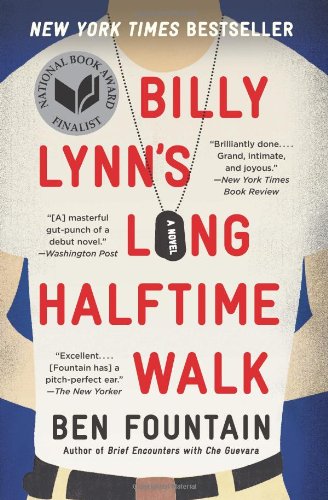
Recommended – Billy Lynn’s Long Halftime Walk

The first time I read ‘Billy Lynn’s Long Halftime Walk’ was last week. It is so incandescently brilliant I started buying copies for the right people. Then I worried that maybe I read it too quick, that it wasn’t as good as I thought. So I’m re-reading it and holy jesus, it is even better.
billy lynn
Quick summary: The novel chronicles one day in the life of 19-year-old soldier Billy Lynn, who’s on leave from Iraq. It’s Superbowl Sunday. He and his squad are completing a ‘Victory Tour’ as honored guests of the Dallas Cowboys.

America. Money. Grief. Sex. War. Love. Death. Booze. Cheerleaders. Religion. Football. Guns. Loss.
Billy has to navigate it all with nothing more than his instinctive dignity and the brute education of Army life.

I don’t know how Fountain does it but it’s done. The characters leap off the page. The plot is fast and tight. The writing is coruscating. It’s a novel Hunter S Thompson might have written if he kept his shit together (it does for the Superbowl what ‘The Kentucky Derby is Decadent and Depraved’ did for that legendary sporting event).

Here’s a sampling of Fountain’s astonishing prose:

“She was still capable of sad, skewed smiles from time to time, forcing the cheer like Christmas lights in the poor part of town.”

“The Look, his gaze so frank and open-ended that Billy can’t help but wonder, Why me? At first he feared it was the start of some hideous gay thing, gay thing being virtually his sole reference point for prolonged eye contact from a fellow male, but lately he doubts it, a conclusion which required no small broadening of his view of human nature.”

“Okay, so maybe they aren’t the greatest generation by anyone’s standards, but they are surely the best of the bottom third percentile of their own somewhat muddled and suspect generation.”

“‘I’ll say this for nina leven,’ a man confides to him, ‘it shut the feminists up.’
‘Ah.’ Billy consults his drink. The feminists?
‘You bet,’ the man says. ‘They aren’t so interested in being ‘liberated’ now that we’re under attack. There’s certain tings a man can do that woman just can’t. Combat, for one. A lot of life boils down to physical strength.'”

“The money vibe can be felt at once, a faint hum, a kind of menthol tingling of the lips.”

Why the New Website?

IMG_20140215_194542911For reasons known only to the gods of the internet my trusty site cilawarncke.com disappeared. The former digital diary of my professional accomplishments is now white space. It’s a 21st century Ozymandias thing.

Rather than snuffle over spilt milk or, indeed, try to grasp the whims of the www I decided to start afresh. New year, blank slate etc. Thankfully there is minimal competition for domain names including Warncke.

I’ll be piecing this site together gradually, highlighting the various things I write and do, plus posting the odd blog.

Thanks for stopping by. If you need some words written, or just want to chew the fat, email cilawarncke@gmail.com.