Childless for Sleep’s Sake

There is a scene in J. D. Salinger’s Franny & Zooey where Zooey tells his mother that he doesn’t want to get married because he likes to sit by the window on the train, and once you’re married, you never get to sit by the window.

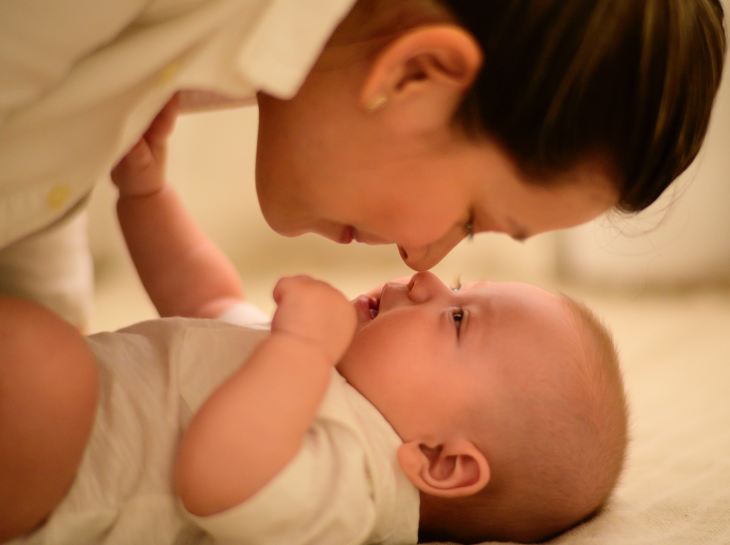
It expresses, rather beautifully, how my thoughts on children. To paraphrase, I don’t want to have a baby because I like to sleep, and once you have a baby you don’t sleep.

baby1

Photo by Michal Bar Haim on Unsplash

To have or not to have: the baby question

Throughout my adult life I vacillated between wanting and not wanting children. Aged 18 I started a list of baby names. In my early 20s, immersed in London’s club scene, I barely had time to sleep, much less think about kids. Then it kicked through my senses like a police battering-ram. One of our friends fell pregnant and a crazed, logic-free longing rushed through me: I want a baby.

The only problem was, as I said to my then boyfriend in so many words, was I didn’t want his baby. In my defense, I was skunk drunk; which is no defense at all. It was a terrible thing to say and he should have dumped me on the spot.

Whether to it’s his credit, he didn’t, and our relationship stumbled along for a few months. Then I gathered my courage, said what had to be said, and moved to out of the country. At the time, it seemed necessary; now, it suggests a penchant for self-dramatization that does me no credit.

Absorbed in a new life in Ibiza, I didn’t think much about getting into another relationship. The undertone hum of wanting a baby remained, though, reinforced by the Noughties cult of the yummy mummy, epitomized by Kate Moss. Ibiza’s beaches were dotted with plenty of stunning taut, topless mamas romping with catalog-cute toddlers. Even if I hadn’t wanted kids sheer lifestyle envy would have gotten me.

Still, with no potential baby daddy, and a freelance journalist’s intermittent wage, having a child remained an abstraction.

At 32, in a relationship, the baby name list I had been cultivating for over a decade took on new significance. I tried names out with my partner’s surname, and mine, and double-barreled. The only grain of sand in this oyster was my boyfriend’s horror of procreation. As a 30-year-old who lived on Fanta and pizza, and spent hours at a time playing Mario Kart, he felt their was enough youthful energy in the house.

Once again, a case of not your baby.
baby2

Photo by Ana Tablas on Unsplash

The allure of old wounds

For the next couple of years friends and I discussed, semi-seriously, having children as lone parents. One dear friend said she’d nearby and help out (unlike most of these offers, I think she meant it). Another, already a mother, promised me it would be worth it. My ever-supportive sister said she thought I’d be a good mother.

It was this idea, perhaps, more than anything, that kept me hooked – the chance to be a good mother. My sister and I were not blessed with good parents. We, and our brothers, had to find our way through a fog of repression and emotional abuse. In a practical sense, we were on our own from adolescence, working minimum wage jobs while going to school, trying to secure our escape.

Time, distance and my father’s death had helped me be a bit philosophical. Finally, I could see my parents as wounded souls whose sins of omission and commission were grounded in unhealed traumas. Part of wanting to have a baby was wanting to prove it is possible to overcome a crappy childhood. Being a good mother would give me license to keep a little of the familiar old anger.

Axiomatically, this is a poor motive, but no worse than any other reason to have a child.

The right man

When I met my now-husband, one of the first things he told me was he never wanted to have kids. This conversation unsettled me but I figured he would be persuadable.

As our relationship developed, it was me who was persuaded.

Strands wove together, revealing a pattern unseen in earlier years.

Having a child is marketed (particularly to women) as a shortcut to fulfillment, an elevator ride to realms of higher purpose. Having a child is a route to social approbation, as long as you’re a well-educated, middle-class (passing) white cis-woman, as I am. Having a child is supposed to buy entry to some Rockwellian fantasy of family harmony.

couple

Photo by Clem Onojeghuo on Unsplash

Why sleep matters

What I found in the affection, intimacy and adventure of our partnership is that these things thrive in the presence of freedom, resources and – above all – sleep.

The toughest moments of our relationship have been when work and travel schedules left us bone-tired. I learned the hard way that it is obscenely difficult to be a nice person when you’re exhausted. And when you can’t be nice to your partner, things get rough.

Going through relatively mild sleep disruption warned me, vividly, that I’m not built for protracted sleep deprivation. More than a night or two of curtailed sleep is a kick in the face of my mental health in the face. My moods start swinging like a clobbered piñata, my sense of humor vanishes, and my self-control withers – freeing the snider, sadder parts of my personality to wreck havoc. This is consistent with studies that show insomnia is a causal factor in mental health problems.

The idea of chronic sleep deprivation – recent research published in the journal Sleep shows that women’s quality and quantity of sleep suffer for six years after having their first child – is terrifying.

Perhaps choosing to not have children because I like to sleep sounds as petty as not marrying for the sake of sitting by the window. If so, I’m okay with that.

To be a good parent, you have to know yourself – and that includes knowing your limits and being realistic about your resources. It would be a disfavor to a hypothetical child, and to my real and cherished marriage, to do something that would irrevocably change the basis on which it operates.

***

Do Less, Accomplish More

Sleeping in

sleep1.jpg

Photo by Zohre Nemati on Unsplash

Over the holiday period I’ve fallen into the habit of sleeping till 9 or 9:30 – some 90 minutes longer than my usual routine. For the pats few days, I set my alarm for the normal hour, but hit the off-button and go back to sleep. This feels indulgent, borderline sinful, most certainly lazy.

On the night of 1 January, my husband and I settled in to watch The Big Lebowski.

It was an individual favorite when we met; since then, it has become a totem for our relationship – a source of private idiom and in-jokes on loop.

The opening voice-over informs us that the Dude was a lazy man. What a contrast, I thought, to the expectations a new year brings.

Resolutions

New Year arrives with a cultural imperative to improve. What are your new year’s resolutions?

The noun resolution, in this sense, alludes to a determined wish, or decision.

It is worth remembering that another definition of resolution is ending, or conclusion.

Linguistically, all unwitting, we start the new year by demanding conclusions.

Is it any wonder they fail to materialize?

If there is one thing writing teaches it is that you cannot force a conclusion. They are reached by patience, effort and serendipity.

Let it be

The Big Lebowski is a tale of serendipity.

Sheer coincidence brings together two characters who clumsily try to exploit their chance encounter. The lostness of this cause is what makes the film funny; the universality of the impulse to connive and manipulate makes it poignant.

That The Dude comes off better in the end has nothing to do with effort and everything to do with his ability to, in moments of crisis, tune out and go bowling.

The other foot

As a stone type A, with a self-perpetuating to-do list I love Jeff Bridge’s character because The Dude is my antithesis.

Worry… it’s how I stay in shape, poet Maggie Smith writes in ‘Let’s not begin’.

Me too.

I crave resolutions – the conclusion kind – and if one isn’t plain I’ll fret all day and toss and turn all night, trying to wrestle one into being. If I can’t see how a thing will turn out, I’ll manufacture an ending, toss a match to see what sparks.

Wearing out

This leads to plenty of fractured nights, followed by days where tiredness clouds my senses like swamp gas. The demons of weariness are legion: irritability, forgetfulness, poor hand-eye coordination, binge eating, anxiety, tearfulness. If I get less than eight or, preferably, nine hours, they swarm – shattering my mood, judgment and productivity.

Given my love of ticking items off a list, you’d think that alone would be enough to ensure I got enough rest, but something in my wiring (Puritan genes + protestant upbringing perhaps) gibes me to try harder.

One of the first rational things lost when I’m tired is the ability to admit I need a break.

Instead, I try to fix myself by doing more.

I’m almost done…”

My husband has heard these words too many times to count. They are always a lie. He’s learned to spot them for what they are: a self-sabotaging effort to put my life and spirit in order by crossing off one more line on my to-do list.

Being the partner of a perpetual fixer must be a massive drag. The nearest I got was a long-running infatuation with a man who refused to date me because he had to much to do. At the time, I thought it was a terrible, bogus excuse. We stayed friends, though, and now I’m grateful to have someone who understands the ridiculous compulsion to seek solace in busy-ness.

Even The Dude falls into this trap, lamenting that his thinking had gotten very uptight.

corridor.jpg

Photo by Tiago B on Unsplash

Corridors without doors

When I get tired, my brain ceases to create and wallows in endless grooves. Instead of romping through fields of possibility, it marches along grim, fluorescent-lit corridors without doors. Inspiration and joy are things that happen to other people, in other places; for me, the grindstone, the factory clock; the slow treadmill.

This is lethal for my writing, and sense of self.

As someone who struggles to stay ahead of clinical depression, self-care is essential. Skimping on sleep is the first domino; next come exercise, eating, socializing, work, creating. Then the need to do more panic kicks in and flattens what is left of a painstakingly built structure.

Do less, accomplish more

My guilt at “over”-sleeping is rooted in a real fear that it’ll turn me lazy, like my good friend The Dude. Life is no movie, my brain chides. In the real world, the other Lebowski was right – you gotta get a job.

Yet this fixation with being busy is, as many wise souls have remarked, antithetical to actual accomplishment. Presenteeism is malingering for suck-ups. Most of the things I busy myself with, from house cleaning to answering email, have little bearing on the things that bring me satisfaction and joy. These things – reading, writing, time with my husband – get shoved into corners and fed scraps of my energy and attention.

Fail again

Instead of resolutions, I made a list of new year’s goals. It felt good to write them down, better to fantasize about completing them.

The next day, I woke under a cloud: sad, drained, mind blank. After drinking coffee, I got back into bed and cried for no explicable reason.

It felt like I’d put too much of myself on that page. Once again, I was looking for validation in tasks, instead of being open to what a new year might bring.

cows.jpg

Photo by Stijn te Strake on Unsplash

Start simple

Later, my husband and I went for a walk. The sky was bright and the air smelled of wood smoke and bales of sweet straw. We said hello to cows and picked windfall apples. The world began to resume its correct proportions. Cresting another hill, I realized it was time to edit the new year’s goals: sleep, move, eat, love. Everything else will come.

How will you honor yourself this year? 

On Integrity

Jenny Odell, in her manifesto: How to do nothing: Resisting the attention economy (the book), quotes Mark Zuckerberg saying: “The days of you having a different image for your work friends or co-workers and the other people you know are probably coming to an end… having two identities for yourself is an example of a lack of integrity.”

Integrity is a word that means a lot to me, so this claim caught my eye.

A few years ago I sat down to work out what attracts me to my (superficially) disparate friends. Most them to I met as an adult, so childhood bonds weren’t it. Apart from the odd freelance collaboration, none are or were colleagues. We’re scattered across continents and time zones, so it isn’t proximity. And we don’t always see eye to eye on culture and aesthetics. So what is it I look for in a friend?

Three things, it turns out: integrity, generosity, and curiosity.

wheat.jpg

Photo by ricke 76 on Unsplash

Integrity can be hard to define. Joan Didion writes (in On Self-respect) that the word “character” has been unfairly relegated to describing homely children and unsuccessful political candidates. Similarly, “integrity” has been softened into a synonym for ‘honesty’, a bloodless approbation for people who don’t fiddle their taxes.

My guess is Zuckerberg used it in this sense. In his two-dimensional, blue-bordered world, having more than one way of relating is dishonest. By his definition, Zuckerberg has mounds of integrity as his smug, Bond-villain-bland facade rarely flickers.

That’s not my idea of integrity. Nor a quality any of my friends share – nor one I’d value.

Integrity, the kind that makes my synapses pop when I get near someone who has it, is internal consistency. People who have it are like those wobbly toys you can shove over in any direction and they always right themselves. Integrity is the weight in the centre, the internal gravity that keeps a person true to themselves.

Plants are a wonderful example of internal consistency that is not rigid. Let’s take wheat. When I left southern Spain a few weeks ago the wheat fields were already dry and bleached to pale gold. In the north, they are still fresh, damp, and bright green. Neither gold nor green is dishonest, it is simply responding to its environment according to the mandates of its deeper purpose: which is to grow and ripen.


My friends have grown. They’ve changed careers, faiths, relationships, locations, hobbies. They are not the people they were. Yet, they are. Because – integrity.

They have internal consistency. All the external changes, however far-reaching, arise from deep roots of character (in the full, Didion-endorsed sense of the word). The qualities of their integrities (which are legion) include self-awareness, critical thinking, dark humour and responsibility. Whatever they do, or don’t, I can count on them to be true to these fundamentals.

My husband often admiringly quotes a friend who said: “I may have low morals but I have high ethics.” This gets to the heart of why integrity matters.

Morals are something imposed from outside; one obeys out of fear or a desire to please. Ethics, though, are a manifestation of integrity. Internal consistency creates an intrinsic framework for relating to others, which is expressed as ethics.

“Ah!” you say. “But without morality, what will police integrity? Are you saying that serial killers and child abusers should be allowed their internal consistency?”

Right. That.

Needless to say: of course not. The point of integrity is that it is internal – a relationship to oneself. People who exploit and abuse have relinquished the relationship to self in favour of externalising their anger, disappointment, etc. They have traded the possibility of integrity for the ugly, fleeting gratification of brutality. They are ethical failures. Though, tellingly, they may not be moral failures. Just look at the Catholic church cheer-leading for Fascism during and after the Spanish Civil War, or the fundamentalist Christians murdering doctors.

Letting someone else think for you, even in the name of “morality” makes violence more, not less, likely. As Germaine Greer wrote in The Female Eunuch:

To abdicate one’s own moral understanding, to tolerate crimes against humanity, to leave everything to someone else, the father-ruler-king-computer, is the only irresponsibility. To deny that a mistake has been made when its results are chaos visible and tangible on all sides, that is irresponsibility.

One’s own moral understanding is an important phrase. It implies that we have to be aware of our fundamental beliefs. It isn’t enough to have internal consistency, we need to interrogate it. It isn’t enough to know what we do; we need to know why we do it. Self-study is a safety mechanism. It helps us articulate who we are, which then determines how we relate to others.

Self-knowledge is what prevents internal consistency from becoming routine. Without it, we can mistake superficial interests or habits for something intrinsic. When we know our foundations, we can build, tear down, rebuild. If we mistake décor for structural support, we get trapped in an unchanging space.

forest.jpg

Photo by Daniel Peters on Unsplash

What does it matter, integrity? (Who cares how I choose my friends?)

It matters because we live in uncertain times. I’m going to go not-very-far-out on a limb and say that many of us are, or will be, in political situations where personal integrity may be the only way to avoid abetting crimes against humanity.

I cannot look at what is happening at the U.S. southern border, specifically; or American prisons, generally; or the farce that is British “democracy”; and believe that things will work out. We may yet halt the slide to full-blown Fascism, but it won’t be by chance.

Odell also quotes from “On the Duty of Civil Disobedience” by Henry David Thoreau: “If [the law] is of such a nature that it requires you to be the agent of injustice to another, then, I say, break the law. Let your life be a counter-friction to stop the machine.”

One person of integrity can’t stop the machine. But, if we band together, our collective friction might just be enough.

This is what the Odyssey means

As we bid farewell to 2017 I’d like to share a favourite poem: ‘Trouble’ by Jack Gilbert,  and some snapshots.

Trouble | Jack Gilbert

That is what the Odyssey means.
Love can leave you nowhere in New Mexico
raising peacocks for the rest of your life.
The seriously happy heart is a problem.
Not the easy excitement, but summer
in the Mediterranean mixed with
the rain and bitter cold of February
on the Riviera, everything on fire
in the violent winds. The pregnant heart
is driven to hopes that are the wrong
size for this world. Love is always
disturbing in the heavenly kingdom.
Eden cannot manage so much ambition.
The kids ran from all over the piazza
yelling and pointing and jeering
at the young Saint Chrysostom
standing dazed in the church doorway
with the shining around his mouth
where the Madonna had kissed him.

This slideshow requires JavaScript.

Unexpected

Saturday, 19 December 2015, I plotted a route around Portland’s used book stores. In the back of my sister’s red Wrangler, a box of Oregon Wine Pioneers. In the seat beside me, a show-copy, its gloss paper cover softened with wear. I hoped to sell a few copies, or inspire a few orders.IMG_20161225_115917

On my phone, a string of Tinder messages from some guy who spent Friday evening trying to cajole me out of the house to the some downtown bar. “The feet are up,” I had replied, by way of refusal. He seemed nice, though, so I agreed to meet him in Old Town at 6PM on Saturday.

The day started out sunny. I navigated between bookshops using Google maps print-outs since my phone didn’t have roaming. Clouds gathered in the afternoon. By the time I got lost on my way to my last destination, a wine distributor’s office in north east, it was raining and prematurely dark.

Driving back to the west side, I thought about heading straight home. I could message my excuses from there. Throwing in the towel by 6PM was lame, even for me. Anyway, this guy, Chris, said he had to be at work by eight. No danger of date creep.

We were meeting at the Roseland Theater, a few blocks from my mum’s apartment. I parked near her place, to have a clear line of retreat. The rain had stopped; the air was cold. On my way to the Roseland I passed a small, colourful Mexican dive.

At the theater, I stopped in bafflement. The building, the whole block, was six deep in teenage girls, a barricade of hormones and cheap perfume. How the hell was I supposed to find this guy? No point in checking my phone — no roaming.

After one full lap, I stopped and stared at the red-and-green lights twinkling high on an adjacent skyscraper. If he didn’t magically appear in the next few minutes, I’d call it a night. Almost as soon as the thought formed, someone walked toward me from the corner I just passed. Please don’t talk to me, I thought.

“Hi.”

One drink, to be polite, that’s all.

“Hi,” I replied.

*** IMG_20170228_102453

This morning Chris woke up at 4AM and couldn’t get back to sleep. I dozed, intermittently aware of his restlessness.

I am tempted to say something florid like, I can’t sleep/live/breathe without him, but that would be untrue.

What I thought, as we yielded to wakefulness was, if you don’t have any expectations you won’t be disappointed. 

Anything is possible, even the absence of us. That is what makes this so precious.

I fell for him like rock tossed into a canyon (still falling). One drink, to be polite turned into three margaritas and a long kiss in the middle of that noisy Mexican dive. It turned into a relationship built on air miles: Ibiza, London, Rome, Brussels, New York, DC, Detroit, Denver, Salt Lake City, Milan, Vienna, Manchester, Glasgow.

We got married in Memphis. Adopted a cat, sold a car, moved to Spain.

All of it unexpected, none of it inevitable. Loving was a fact from the outset. What we did about it was a choice. Of all the things I learned, and am still learning, this is the most important. Life is full of surprises. What comes of them is down to us.

IMG_20170317_181351

Storytelling: Suspense

Storytelling is the essence of communication. The elements of storytelling are like letters of the alphabet. When you know how to use them, you can tell your best story.

Element 20: Suspense

If you want to keep an audience hooked, don’t tell them how the story ends.

Case study: Relocating C Warncke Writer

img_20161110_141938

What it is:

After fifteen years in the UK and Europe, C Warncke is moving to the American South, and there is absolutely no telling how things will turn out.

Why it matters:

Successful stories combine action with unforeseen consequences. In this case the action is a person — me — leaving behind her entire life (country, cat, cutlery) to move thousands of miles away and live with someone she met on Tinder.

As for consequences, who knows?

Romance, disaster, or reinvention are all distinct possibilities.

In typical damn the torpedoes fashion I charged into this with minimal consideration for what happens if it goes, as the Brits say, tits up. I’m as curious as anyone to see how things turn out.

If nothing else, it will make a great story. And the perfect conclusion to the Elements of Storytelling series. Thanks for following and stay tuned for more storytelling adventures.

In other words:

“Every life, Transtromer writes, “has a sister ship,” one that follows “quite another route” than the one we ended up taking. We want it to be otherwise, but it cannot be: the peoploe we might have been life a different, phantom life than the people we are.”
~Cheryl Strayed Tiny, Beautiful Things

Practice: “Create characters that live and breathe on the page… I realised I had come to know some of these people so well that the idea that something bad was going to happen to them had become almost unbearable. I was turning each page with a sense of dread and it dawned on me that here was the most satisfying way to create suspense.”
~Mark Billingham via The Guardian

Remember: “We all live in suspense from day to day; in other words, you are the hero of your own story.” ~Mary McCarthy

Storytelling: Framing

Storytelling is the essence of communication. The elements of storytelling are like letters of the alphabet. When you know how to use them, you can tell your best story.

Element 19: Framing

What a story is about, and the conclusion it reaches, depends on how you frame it.

Case study:

Hillary Clinton and Donald Trump

hill-trump

Who they are:

Respectively, the Democratic and Republican candidates in the 2016 American presidential election. Clinton won the popular vote by an unprecedented margin. Trump won the majority of Electors and is slated to become the next President of the United States.

Why it matters:

The bitter, split decision presidential election highlighted the fact that there is no single “story”. What we think a thing means and what we believe about people and events, is drawn from a rich mass (or mess) of facts, ideas, information and preconception.

After last week’s storytelling post a reader rebutted my assertion that Hillary Clinton is “a experienced, qualified, sane, humane politician”:

Surely this must be qualified as “by comparison?” Isn’t it a fact that Hillary Clinton:

1) Supported the Iraq War forcefully and was a key proponent as an opposition pol from NY

2) Supported overthrow of Libya forcefully

3) Supported overthrow of Syria forcefully

4) Was endorsed by entire Bush family and most of GWB cabinet officials

5) Received 100s of millions from wall street banks and multi-national corporations

So, if Hillary Clinton wasn’t positioned against Trump and you judged her by her policies she would be a rightwing neo-con Republican.

I think perhaps you should also consider the story telling of the Clinton campaign which would argue that perceived racism and sexism are more important than real policies that have killed hundreds of thousands of Muslims in Iraq, Afghanistan, and other countries.


This is a perfect example of framing. My narrative frames Hillary’s experience and views as a positive; my reader highlights different, but equally legitimate, information that casts her in a different light. Trump can, likewise, be any number of things depending on how you frame him. He is either a robust example of American iconoclasm or a racist shit. He went bankrupt and made billions; the story depends on what facts you put in the picture.

In other words:

“While reality itself does partly determine the meaning we assign to it, it doesn’t insist on any one specific meaning. So, while we all live in the same reality, we interpret it differently. Most of the time, the differences are negligible: at the day-to-day level, we agree sufficiently about most things. But some differences are radical. And that’s what politics is about.

Politics is a colossal magnification of the differences in how we perceive the world around us. And an election is a simplified, brief magnification of that. In an election, time stops, and a complex, gradually evolving jumble of differences of opinion is frozen in a single statistical figure.” Rob Wijnberg via The Correspondent

Practice: “All I have to do is to write down as much as I can see through a one-inch picture frame. This is all I have to bite off for the time being. All I am going to do right now, for example, is write that one paragraph that sets the story in my hometown, in the late fifties, when the trains were still running. I am going to paint a picture of it, in words, on my word processor.” Anne Lamott, Bird By Bird

Remember: “One person’s craziness is another person’s reality.” ~ Tim Burton

Storytelling: Lying

Storytelling is the essence of communication. The elements of storytelling are like letters of the alphabet. When you know how to use them, you can tell your best story.

Element 18: Lying

Stories don’t have to be true. Sometimes the most powerful ones are pure fiction.

Case study: Donald Trump

donald-trump

Who he is:

Pathological liar who used exaggeration, hyperbole and outright 24k lies to concoct a shady business empire then successfully campaign for President of the United States.

Why it matters:

Trump is a racist, a misogynist, a xenophobic goon with an ego the size of the wall he promised to build between Mexico and the United States. He is a self-professed business guru who has gone bankrupt four times. He is a self-professed sexual abuser who has said on record he’d like to date his own daughter. He claims to represent the common man but rarely pays taxes.

Despite all this, Trump beat won the electoral vote from under the nose of Hillary Clinton, a experienced, qualified, sane, humane politician.

The only explanation? He told a better story. Because he made it up as he went along.

In their own words:

“In announcing his bid for the Republican presidential nomination this morning, Donald Trump started with what Forbes believes is a whopper. He claimed his net worth was nearly $9 billion. We figure it’s closer to $4 billion — $4.1 billion to be exact.

This discrepancy is noteworthy, since Trump’s financial success – he put his fortune at exactly $8,737,540,000 — is core to his candidacy. “I’m proud of my net worth. I’ve done an amazing job,” said Trump at his circus-like announcement, before referencing his autobiography. “We need a leader that wrote ‘The Art of the Deal.'”

via Forbes

In fact, Trump even lied about that. The Art of the Deal was written by journalist Tony Schwartz. Howard Kaminsky, former head of the book’s publisher Random House said, “Trump didn’t write a postcard for us!”


Practice: “Counterattack. The fact is, just as most of us are uncomfortable telling lies, most are uncomfortable accusing others. This discomfort can be used in the liar’s favor. “You’ll often see politicians respond to accusations with aggression,” says Stan Walters, author of The Truth About Lying: Everyday Techniques for Dealing with Deception. “What they’ll do is drive critics away from the issue, so they’re forced to gather up their resources to fight another scrimmage.” Jeff Wise via Psychology Today

Remember: “If you tell a big enough lie and tell it frequently enough, it will be believed.”
― Adolf Hitler

Elements: Attention

Storytelling is the essence of communication. The elements of storytelling are like letters of the alphabet. When you know how to use them, you can tell your best story.

Element 15: Attention

Great stories come from creators who are passionately attentive to everything.

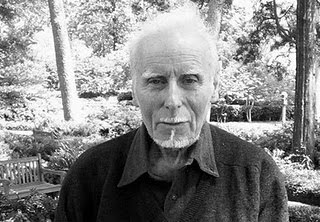
Case study: Jack Gilbert jack-gilbert

What it is:

Jack Gilbert was an American poet who turned life’s most banal, excruciating moments into heart-shattering art.

After twenty hours in bed with no food, I decided
I should have at least tea. Got up to light the lamp,
but the sweating and shivering started again
and I staggered backwards across the room. Slammed
against the stone wall. Came to with blood on my head
and couldn’t figure out which way the bed was.

from ‘What I’ve Got’

Why it matters:

Storytellers often aim too high. They want to convey love, terror, excitement, or despair. So they write about love, terror, etc. The thing is, when you write about love, you get a Hallmark card. The bigger the theme, the harder it is to write straight; it’s like looking at the sun.

That’s where attention comes in. Great storytellers know the little stuff reveals the big. In the excerpt above, Gilbert doesn’t tell the reader that it is scary to be sick and alone. He pays attention. In the throes of it, he is alert to every small, true detail: the slow passage of time, the dark room, the fever (only he uses clearer, closer words: sweating, shivering), the disorientation, the abject sense of failure as the body falls.

If you want magic, prop your eyelids open with toothpicks. Pay attention. Especially to boring, mundane, every day things.

In his own words:

“He explained that somebody wanted to give me the Yale prize. I didn’t know what to do, how to express it. I took him out with my two friends and we had milkshakes.

The next day I roamed about trying to find a way to feel about what had happened. I finally lay down under the Brooklyn Bridge to try to feel something. I lay there all afternoon, and then I called the people at Yale.” Read more

Practice: “Be awake to the details around you, but don’t be self-conscious. ‘Okay. I’m at a wedding. The bride has on blue. The groom is wearing a red carnation. They are serving chopped liver on doilies.’ Relax, enjoy the wedding, be present with an open heart. You will naturally take in your environment, and later, sitting at your desk, you will be able to recall just how it was dancing with the bride’s redheaded mother, seeing the bit of red lipstick smeared on her front tooth when she smiled.” Natalie Goldberg in Writing Down the Bones

Remember: “As a writing man, or secretary, I have always felt charged with the safekeeping of all unexpected items of worldly and unworldly enchantment, as though I might be held personally responsible if even a small one were to be lost.” ~E. B. White

Elements of Storytelling 13: Accessibility

Storytelling is the essence of communication. The elements of storytelling are like letters of the alphabet. When you know how to use them, you can tell your best story.

Element 13: Accessibility

Stories are most effective when they are accessible. Don’t confuse your audience with florid language or complexity for its own sake.

vino-5

Case study: Vino y Co

What it is:

A wine shop in Ibiza run by father-daughter team Jeroen and Rosa Hamersma. The unpretentious oenophile sanctuary is as much an wine-education centre as it is a shop, thanks to its proprietors’ delight in sharing their knowledge. This makes it a magnet for chefs, sommeliers, locals and travelling wine buffs alike.

Why it matters:

Wine is often swathed in mystery, or at least pretension, and many shops actively perpetuate this elitism. Rosa and Jeroen take an opposite tack. The believe in making wine simple so everyone can enjoy and appreciate it. Jeroen taught himself about wine by buying almanacs in the ’80s in his native Amsterdam and drinking his way through vintages and varietals. He has a couple decades head start on Rosa, but she is catching up fast, laptop on the shop counter to answer any questions.

Rather than emphasise the arcane or technical, they focus on the communal, practical aspects of wine culture. Information about grapes, regions, winemakers and techniques are woven into stories, reinforced by generous samples of the wines in question.

Vino y Co grows its business year on year, and has fanatically loyal customers, all thanks to its dedication to making wine accessible.

In their own words:

Wine is all about taste. And about tasting. It’s not difficult.

Who said that wine shops should be boring? Wine is fun! So shopping for wine is fun!

Read more

Practice: “From time to time, all of us make the mistake of sending an email, turning in a paper, or handing a report to the boss without rereading what we’ve written. Raise your right hand and say this aloud: “I promise to reread my writing at least once before I consider it finished. If possible, I’ll read it aloud.” Now that you’ve made the pledge, your ears can help you simplify any unnecessary complexity in your writing.” Ann Edwards via Grammarly

Remember: “Making the simple complicated is commonplace; making the complicated simple, awesomely simple, that’s creativity.” ~Charles Mingus