Elements of Storytelling 12: Ethics

Storytelling is the essence of communication. The elements of storytelling are like letters of the alphabet. When you know how to use them, you can tell your best story.

Element 12: Ethics

Great storytellers hook their audience with a clear ethos, worldview, or proposition.

Case study: Kat Lister

kat-lister

What it is:

Freelance journalist Kat Lister has carved a successful career writing for publications including Marie Clare, The Telegraph, Huff Post, InStyle, Vice, and Broadly by championing the ever-contentious cause of women’s equality.

Why it matters:

Journalists have flirted with starvation since at least 1891 (the year George Gissing published New Grub Street*). Modern multimedia journalism is unapologetically fuelled by celebrity and sensation. To survive journalists must be inimitable. Lister nails it. Everything she writes, from investigative pieces on Syria, to reportage on young Muslims, to think pieces on Brexit, “glass cliffs” and IVF is examined through lens of her feminism. Lister’s cohesive, provocative ethical stance, plus ferociously good writing, whets editors’ appetites, and has prompted 40K shares and 140K Facebook Likes (and counting).

In her own words:

I write about women and culture

Read more / Follow @Madame_George on Twitter

Practice: “Put yourself at the center [of your stories], you and what you believe to be true or right. The core, ethical concepts in which you most passionately believe are the language in which you are writing.” ~ Anne Lamott

Remember: “There may be times when we are powerless to prevent injustice, but there must never be a time when we fail to protest.” ― Elie Wiesel

*Free on Kindle: Amazon.com  and Amazon.co.uk

Elements of Storytelling 11: Imagery

Storytelling is the essence of communication. The elements of storytelling are like letters of the alphabet. When you know how to use them, you can tell your best story.

Element 11: Imagery

Deft use of imagery creates indelible images and provokes powerful emotions.

Case study: Maggie Smith Poet

What it is:

Maggie Smith’s poem ‘Let’s Not Begin’ is a meditation on life, death and courage. These are dangerous topics (Rilke, no less, advised against such broad themes) but Ms Smith nails it with an unforgettable simile: “My heart’s galloping hell / and gone from the paddock…. But let’s not end / with the heart as horse, / fear-lathered, spooked deaf.” The use of a figurative phrase transforms the cliche of a racing heart into a concrete image so vivid I can see the horse’s flared nostrils and flying sweat.

Why it matters:

For millennia poetry was entertainment, education and historical record. Spoken or sung, it had to make an instant, lasting impression on its audience. So poets got very good at painting word pictures. They learned to compare unlike things in a way that seized people’s imaginations and seared images into their brains. Now, we’re drowning in a sea of information. Metaphors are life-rings; similes shine like beacons. From poetry to advertising, the most imaginative, compelling, memorable use of imagery always win.

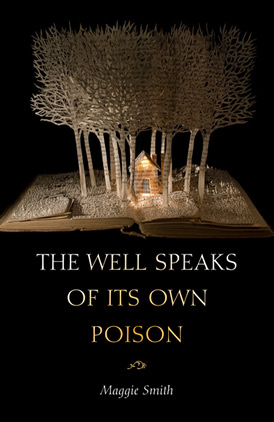
In her own words:well

Maggie Smith is the author of three books of poetry: Weep Up (Tupelo Press, forthcoming 2018); The Well Speaks of Its Own Poison (Tupelo Press, 2015), winner of the 2012 Dorset Prize and the 2016 Independent Publisher Book Awards Gold Medal in Poetry; and Lamp of the Body (Red Hen Press, 2005), winner of the 2003 Benjamin Saltman Award.

A 2011 recipient of a Creative Writing Fellowship from the National Endowment for the Arts, Smith has also received fellowships from the Ohio Arts Council, the Sustainable Arts Foundation, and elsewhere. She works as a freelance writer and editor, and is a Consulting Editor to the Kenyon Review. Read more

Practice: Complete these sentences with vivid images. To really get the most of the exercise, don’t worry about coming up with something good, just write. The whole idea is to get your subconscious to make connections in a new, more creative way.

  1. Blue paint spilled on the road like___________________________.
  2. Canceled checks in the abandoned subway car

    seemed___________________________.

  3. A spider under the rug is like___________________________.
  4. Graffiti on the abandoned building like___________________________.”

via The Balance

Remember: “A metaphor is a kind o’ lie to help people understand what’s true.”
~Terry Pratchett

Elements of Storytelling 8: Voice

Storytelling is the essence of communication. The elements of storytelling are like letters of the alphabet. When you know how to use them, you can tell your best story.

Element 8: Voice

A clear, unique, personable voice hooks audiences every time.
Case study: No Meat Athlete

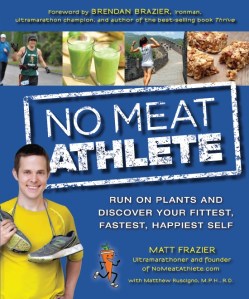
no-meat-athlete-book-cover

What it is:

No Meat Athlete was a blog that became a brand that became a thriving business for Matt Frazier, an applied mathematics PhD student and amateur marathoner. It began as a chronicle of Matt’s quest to qualify for the Boston Marathon after switching to a plant-based diet.

Why it matters:

Nutrition and fitness blogs are rarely sustainable businesses. The sector is over-crowded, trend-driven and audiences are fickle. No Meat Athlete succeeded where most fail thanks to Matt’s inimitable voice. He tells readers everything they need to know in just three sentences:You’re not here to be preached to. And I’m not here to preach. In fact, I’ll come right out and say that a plant-based diet might not be for you. But I’ll also say this: You won’t know until you try.”

The tone is frank, warm, equable, and non-judgemental. Matt makes no apologies for being neither a professional runner nor nutritionist. Instead, he addresses readers as equals and fellow explorers. He writes in the enthusiastic, endearing voice of someone who has discovered something brilliant and can’t wait to tell you about. No Meat Athlete has grown into a brand that includes books, running groups, merchandise and more but Matt’s voice hasn’t changed. He is still the excitable, passionate, chatty guy you want to go running with then hit the pub for a vegan beer ‘n’ burger afterwards.

In his own words:

You can run without being a “runner.” I did it for five years.

Even once I had run a handful of marathons and was close to qualifying for Boston, when I lined up at the start of a race among all these passionate runners, I still felt like an imposter.

I was just a tourist, doing what runners do, but without feeling like I really belonged.

Sometime during the training for my Boston-qualifying race, where I finally succeeded in breaking 3:10:59, something shifted in me.

Shortly after qualifying, when I was in that happy, weirdly cloudlike space you find yourself in after accomplishing something you’ve worked at for so long, I read Born to Run. And damn if I didn’t feel like a runner after that.

For the first time, I could say that I really loved running, not just as a means of staying in shape or for accomplishing goals, but for its own sake.

And so I became a “runner.” Quotes and all.

Read more

Practice: “You can’t recognize and then strengthen your voice if you don’t hear it—and hearing it in your head isn’t the same as hearing it spoken aloud. Get in the habit of reading what you write out loud. I print and read everything before I send something out and also whenever I’m feeling all snarled up in my organization.

Want to accelerate your voice development? Read out loud to another person without any feedback. This is utterly maddening to your inner approval junkie: “But what does she think about my writing?!?” The magic comes because you turn toward yourself and listen for where you are being true to what you wanted to say and where you’re skirting the truth, where you dug deep and where you skimmed the surface, settling for clichés. Of course, there are plenty of times when getting specific feedback from other writers is useful—but not when it comes to honing your voice. via Jane Friedman

Remember: “Style cannot be copied, except by the untalented. It is, finally, the distillation of a lifetime of reading and listening, of selection and rejection. But if it is not a true voice, it is nothing.” ~Mavis Gallant

Elements of Storytelling 5: Accuracy

Storytelling is the essence of communication. The elements of storytelling are like letters of the alphabet. When you know how to use them, you can tell your best story.

Element 5: Accuracy

Good stories create a vivid, believable world. To achieve this, descriptions and details have to be accurate to the context and setting of the tale.

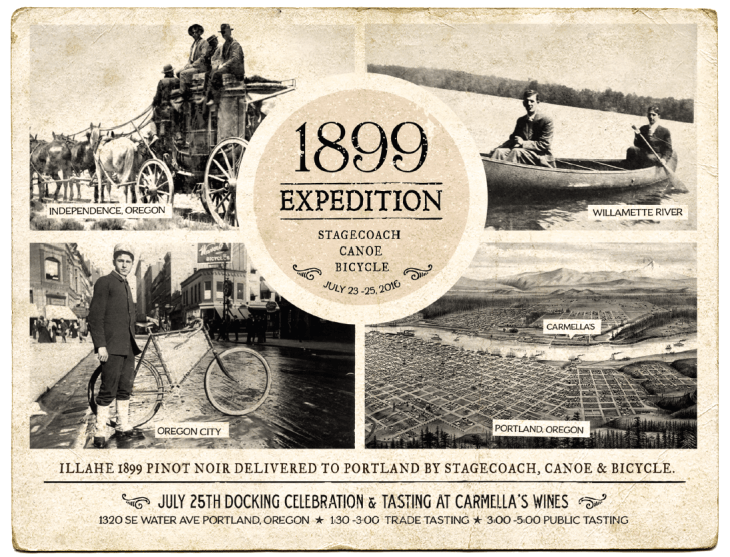
illahe 1899

Case study: Illahe ‘1899’ Pinot Noir

What it is:

Illahe is a small vineyard in Oregon’s Willamette Valley, not far from Salem. Winemaker Brad Ford is a laconic, dedicated experimentalist and a stickler for accuracy. Each year Illahe releases a small batch of ‘1899’ Pinot Noir, so named because it is made without using any modern equipment or electricity.

Why it matters:

Anyone can claim to be “traditional” or “classic” — Illahe delivers by being accurate down to the last detail. From the vine onward, ‘1899’ is made to strict standards. The grapes are tended by hand, horses not tractors are used to work the land, picking, sorting and crushing is done by hand. “No electricity” means “no electricity”: they use candles to light the barrel room or bottling line. When ‘1899’ is ready to go to its distributor in Portland, the cases are transported by stagecoach, bicycle and canoe, ensuring that no modern technology touches it until it leaves the Ford’s care.

The Illahe story:

Brad’s first harvest was in 1986, when he performed the important roles of tractor driver and bucket collector. He took a short break after high school to work as a bartender, carpenter, grant writer, and English instructor. He then returned to wine, taking classes with Barney Watson, Al MacDonald, and Professor Wamser at Chemeketa and PSU.

Brad worked with Earl VanVolkinburg, Joe Dobbes, and Russ Raney, who taught him the practical aspects of the craft and about their love of the product. He also owes a debt to Peter Julian of Nuit-St. Georges, Burgundy, who invited him to attend tastings from Chablis down to Mercurey, hitting all the major towns in between. His experiences there taught him that winemakers can craft incredible wine without huge operations, but not without close attention to the vineyard and vinification. Read more here


Practice: “When you are present at the birth of a child you may find yourself weeping and singing. Describe what you see: the mother’s face, the rush of energy when the baby finally enters the world after many attempts… When you write, stay in direct connection with the sense and what you are writing about. If you are writing from first thoughts — the way your mind first flashes on something before second and third thoughts take over and comment, criticize, and evaluate — you don’t have to worry.” ~Natalie Goldberg in Writing Down The Bones

Remember: “Invention is the finest thing but you cannot invent anything that would not actually happen.” ~ Ernest Hemingway

Elements of Storytelling 3: Inspiration

Storytelling is the essence of communication. Whether you are a writer, entrepreneur or politician your story is how you connect with people.

The elements of storytelling are like the letters of the alphabet. Once you know them, you can put them together to tell your story in the best way possible.

Element 3: Inspiration

Great stories are not plucked from the air; they grow from the fertile soil of stories that were told before.

Case study: Eivissa: The Ibiza Cookbook by Anne Sijmonsbergen

eivssa cover

What it is:

A cookbook based on, and inspired by Ibiza food. What it isn’t is an attempt to slavishly recreate traditional Ibicenco recipes, or a generic Mediterranean cookbook. The author lived on an organic farm in Ibiza for a dozen years, growing local produce, working with other farmers, and hanging out with rare-breed animal experts, fishermen, and artisan cheesemakers, before she put proverbial pen to paper.


Why it matters:

This long period of absorbing and exploring the food culture freed Anne to create recipes that are unique to her but capture the essence of Ibiza. She transforms stolid island fare like flaó — a dense, old-fashioned cake — into something fresh and suited for a modern palate. Each recipe becomes a story in its own right, revealing the history and origin of its components and the author’s inspiration.

The Evissa story:

Ibiza is on the cusp of a food revolution. The island’s traditional farming and fishing culture has been supplemented with a wave of chefs and producers making artisan products and vibrant food.

Now Eivissa, the first recipe book to showcase the incredible Ibicenco dishes Ibiza cuisine has to offer, reveals how to recreate the tastes of the white island in your own home.

Divided into seasonal chapters to reflect the ingredients in Ibiza, these are gorgeous recipes reflecting the heritage of the cuisine, yet with contemporary twists. Sample a really simply Grilled Courgette Ribbons, Asparagus & Mint Tostada from Spring, for example, or a Grapefruit & Juniper-Encrusted Pork Salad. Try Steamed Mussels with Samphire or Chicken with Roasted Figs from Autumn. Or treat yourself with a Ricotta Pine Nut Cake or Spiced Chocolate Truffles.

Full of stunning photography shot on location in Ibiza, both of the recipes and the island’s beautiful backdrop, these are recipes that are full of energy, warmth and enjoyment.

Read more here

Practice: Plenty of writing ideas are culled from great tales that have been told throughout history. Some of these have been converted into formulas that writers can use as storytelling guidelines.

From the three-act structure to the hero’s journey, formulas have been criticized as making stories dull and predictable yet they have also been credited with providing writers a framework in which to create.” via WritingForward.com

Remember: You can’t wait for inspiration. You have to go after it with a club.” – Jack London

Oregon Wine Pioneers Stockists

Vine Lives: Oregon Wine Pioneers is crossing continents and oceans!
vine-lives-front
In addition to being available online at AMAZON.COM, AMAZON.CO.UK, and VineLiv.es it is in stock at the following independent bookstores:

Portland, OR:
Powell’s City of Books
1005 W Burnside St., Portland, OR 97209 Phone: 503-228-4651

Broadway Books
1714 NE Broadway, Portland, OR 97232 Phone: 503-284-1726

Annie Bloom’s Books
7834 SW Capitol Hwy, Portland, OR 97219 Phone: 503-246-0053

Wallace Books
7241 SE Milwaukie Ave, Portland, OR 97202 Phone: 503-235-7350

Salem, OR:
Escape Fiction
3240 Triangle Dr. SE, Salem Oregon, USA, Phone: (503) 588-5865

Reader’s Guide
735 Edgewater NW, Salem, OR, USA, Phone: (503) 588-3166

Newberg, OR:
The Coffee Cottage
808 E Hancock Street, Newberg, OR. 97132 Phone: 503-538-5126

Chapter’s Books & Coffee
701 E 1st Street, Newberg, OR 97132 Phone: 503-554-0206

McMinnville, OR:
Third Street Books
334 NE 3rd St, McMinnville, OR, USA, Phone: (503) 472-7786

Aloha, OR:
Jan’s Paperbacks
18095 SW Tualatin Valley Hwy, Aloha, OR 97006

Lincoln City, OR:
Bob’s Beach Books
1747 NW Hwy 101, Lincoln City, Oregon, USA, Phone: 541-994-4467

Philadelphia, PA
University of Pennsylvania Official Bookstore
3601 Walnut St, Philadelphia, PA, USA, Phone:(215) 898-7595

London, UK
Books for Cooks

4 Blenheim Crescent, Notting Hill, London, UK, Phone: 020-7221-1992
We’re constantly adding new stockists so please check back for stores in your area. Or contact us to to suggest a local store.

FOR STOCK REQUESTS, PRESS OR AUTHOR INTERVIEWS CONTACT: cila@vineliv.es

Poem of the Month – A Brief for the Defense by Jack Gilbert

I first encountered Jack Gilbert’s poetry in The Sun (American literary magazine, not British tabloid). A sentence from ‘A Brief for the Defense’ stuck with me, nagged me through summer: “We must have the stubbornness to accept our gladness in the ruthless furnace of this world”.

As one blessed with much comfort and satisfaction, I wonder at my privileges, wonder at the randomness of life, wonder why millions suffer through no fault of their own, and others live in shocking luxury through no virtue of their own. Gilbert’s taut, evocative, defiant poem comes the closest of anything I’ve read to elucidating the tension between grief and high delight. Gilbert doesn’t moralise or draw conclusions. Though he refers to both God and the Devil, for me the poem is Zen. Ultimately, none of us is in control. The secret, if there is one, is to laugh anyway, to listen for sound of oars in the silence and watch the island sleep. And to refuse to allow our lives to be defined by the worst of times.

DSC01218

A Brief for the Defense by Jack Gilbert

Sorrow everywhere. Slaughter everywhere. If babies
are not starving someplace, they are starving
somewhere else. With flies in their nostrils.
But we enjoy our lives because that’s what God wants.
Otherwise the mornings before summer dawn would not
be made so fine. The Bengal tiger would not
be fashioned so miraculously well. The poor women
at the fountain are laughing together between
the suffering they have known and the awfulness
in their future, smiling and laughing while somebody
in the village is very sick. There is laughter
every day in the terrible streets of Calcutta,
and the women laugh in the cages of Bombay.
If we deny our happiness, resist our satisfaction, we lessen the importance of their deprivation.
We must risk delight. We can do without pleasure,
but not delight. Not enjoyment. We must have
the stubbornness to accept our gladness in the ruthless
furnace of this world. To make injustice the only
measure of our attention is to praise the Devil.
If the locomotive of the Lord runs us down,
we should give thanks that the end had magnitude.
We must admit that there will be music despite everything.
We stand at the prow again of a small ship
anchored late at night in the tiny port
looking over the sleeping island: the waterfront
is three shuttered cafes and one naked light burning.
To hear the faint sound of oars in the silence as a rowboat
comes slowly out and then goes back is truly worth
all the years of sorrow that are to come.

DSC01416

Agents – The Numbers Game

Yesterday I hit 75 on my agent hunt. Seventy-five lines on an excel sheet each with name, website, email, and a note of the date and pitch delivered. I may as well have made 75 copies of my novel, stood at the top of a cliff and chucked them ceremoniously into oblivion. This shouldn’t discourage me (most of the time I know my duty is to write well, and the rest be damned) but it does.

When another brusque rejection arrived I burst into tears. Voices babbled in my head: You are never going to publish a novel. If you do, nobody is going to read it. You are a fake, a flake, a lazy greedy over-educated under-producing parasitic loser who should have gotten a real job before it was too late. You are going to die broke and alone. You suck. Et cetera.

This could be true, if I let it. But after bawling for a few minutes, sense started to leach in. All the sages I respect (dead and living) make the same case:

“You have the right to work, but for the work’s sake only. You have no right to the fruits of work” ~Bhagavad Gita
“[Do] not long for anything if it be not given” ~Epictetus
“For us there is only the trying” ~TS Eliot

Some days, trying is a drag, the last thing I want to do. The alternative, though, is to let all the miserable, mean, self-pitying thoughts turn themselves into reality. As long as the spreadsheet is growing, there’s hope.

effort

Poem of the Month – Barter by Sara Teasdale

For August’s poem of the month I wanted something fresh, something by a woman, something I wasn’t familiar with. Browsing a poetry anthology, ‘Barter’ hooked me. Sara Teasdale’s imagery reminds me of home (“blue waves whitened on a cliff… scent of pine trees in the rain”) and I like its two-fold charge: find beauty in the quotidian and be brave enough to grab it.

DSCN5208

Barter

Life has loveliness to sell,
All beautiful and splendid things,
Blue waves whitened on a cliff,
Soaring fire that sways and sings
And children’s faces looking up
Holding wonder like a cup.

Life has loveliness to sell,
Music like a curve of gold,
Scent of pine trees in the rain,
Eyes that love you, arms that hold,
And for your spirit’s still delight,
Holy thoughts that star the night.

Spend all you have for loveliness,
Buy it and never count the cost;
For one white singing hour of peace
Count many a year of strife well lost,
And for a breath of ecstasy
Give all you have been, or could be.

Treed

IMG_20150130_172200481_HDR

A poem in progress

TREED

Suspended in your limbs the
sky shatters to dancing fractals.
Height makes me dizzy.
Pressed by gravity to your
contours
corpuscles shriek.
My heart screeches
out of control.
Refusing to
fall
I
will
climb
(down).

Wood against flesh.
Taut, anxious;
mute and clumsy; bones
rattle against every
branch on the way. Till I

f
a
l
l

and tangle in your roots.

Bruises rise like
sap. Sunshine
sears the skin your fingers warmed.
Wind dips to kindly whisper:
Let go.