On Memoir with Cheryl Strayed

This interview originally appeared on the excellent but now defunct Ideas Tap website. The organization, which was dedicated to supporting young people pursuing creative careers, closed in 2015 due to lack of funding. Plus ca change.

Strayed was a warm, thoughtful and inquisitive subject. A rare working class hero and, rarer still, someone whose giddy ascent to Oprah-adjacent fame hadn’t uncalibrated her ethical compass.

It was a privilege to speak to her, and a pleasure to republish her timeless wisdom.

***
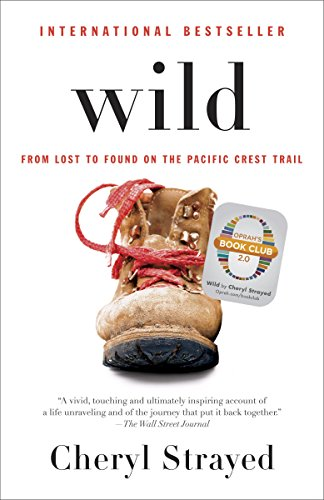
After writing her first novel, Cheryl Strayed turned to memoir and wrote her New York Times bestselling book Wild, about her 1,100-mile hike along the Pacific Crest Trail in the wake of her mother’s death. Here, Cheryl talks about mining memory and sets us to work with a writing exercise…

How does the emotional experience differ between writing fiction and memoir?

It doesn’t. To write fiction well you have to inhabit the consciousness of the characters you’ve created. With non-fiction there’s an extra layer of intensity because the character you’re building is yourself.

When writing memoir, how do you build yourself as a character?

The only way you can build yourself is to dismantle yourself. To take apart who you are, what your assumptions have been, what you hope people think of you. You can’t write: “I’m pretty and cool and awesome and interesting” because everyone would hate you. You have to say: “I’m human. Here are positive things about me. Here are negative things about me. And here are things that don’t make sense, don’t add up, and I’m going to present them to you”. Writing is like the deep work you do in the course of therapy where you take yourself apart.

What memory aids do you use?

I naturally have a very good memory – I think a lot of writers do. I kept a journal through my 20s and 30s. That helped me a lot in writing Wild. I do research where I can, going back and looking at pictures for example. When most people imagine what a memoirist does, they think: “I don’t remember anything from high school, from 20 years ago”. But they do remember – they just think they don’t.

How can writers elicit those memories?

The process of writing is re-conjuring memories. It’s doing things so more memories come to you. Even looking at a photo can allow you to remember something accurately. The process is like running into an old friend from back in the day, somebody you knew 20 years ago. When you first start talking you only know a few things about each other. But as you talk and go deeper into your lives you remember things you thought you had forgotten. Just because you haven’t thought of something for years doesn’t mean you don’t remember it, it just means it takes a little work to access it. When I was writing Wild I’d think, “I don’t remember, I just walked” but once I started writing my mind would open up to specific memories.

Do you draw heavily on your own life for your fiction?

You’ll see a lot of details from my life. My next novel is set in Portland [where I live]. None of the characters in the book are me but there are all these little tendrils of the story that you can trace back to me.

How do you deal with writer’s block?

I never call it “writer’s block” but I always have trouble beginning. Writing is hard. I resist writing. I run from it. If I am left alone with a laptop I flounder for an hour or two, then I sink in and I’m in the zone. When I get stuck I go for a walk, come back and try again. I don’t force it. If something isn’t coming, I move on; that’s a good strategy for me.

How long did it take to write your first book, Torch?

Your first book is so hard because you don’t know how to write a book and there is no way for anyone to tell you. It turns out the only way to learn how to write a book is to write a book. I avoided finishing [Torch] for fear of failure, until the point where the fear of failing to finish was bigger than the fear of finishing a book that was terrible. I worked on it for about ten years in total, three years really diligently.

How did you overcome that fear of failure?

Once I let go of the idea that I was going to write a great book, I was able to write a book. I let go of any ego or fear or shame. That was an important moment in my writing life. None of us really knows what kind of book we’re writing. A lot of people think they’re writing brilliant books and they’re terrible. And the reverse is true too. It isn’t up to us to judge our books; it’s up to the people who read them.

In Focus: Writing exercise using objects

I take random objects out of my handbag like lipstick, a ten-euro note, and a pair of sunglasses, and tell my students to pick one and write a story about it.

To begin writing you begin with an image. You begin with a feeling. I encourage people to start writing and not think about it too much. Even if you have a good idea, usually once you start writing it will become something else.

I could do that same exercise with the world’s Nobel Literature Prize winners and something would come of it. Perhaps what came of it would be better than what comes to my students, but that’s how the [Nobel Prize winners] do it too – they begin with something then they make something else.
On Ungrading with Anthony Lince

This is the debut post of ‘Between the Lines’ – interviews with teachers, writers and writing teachers on specific aspects of their craft.

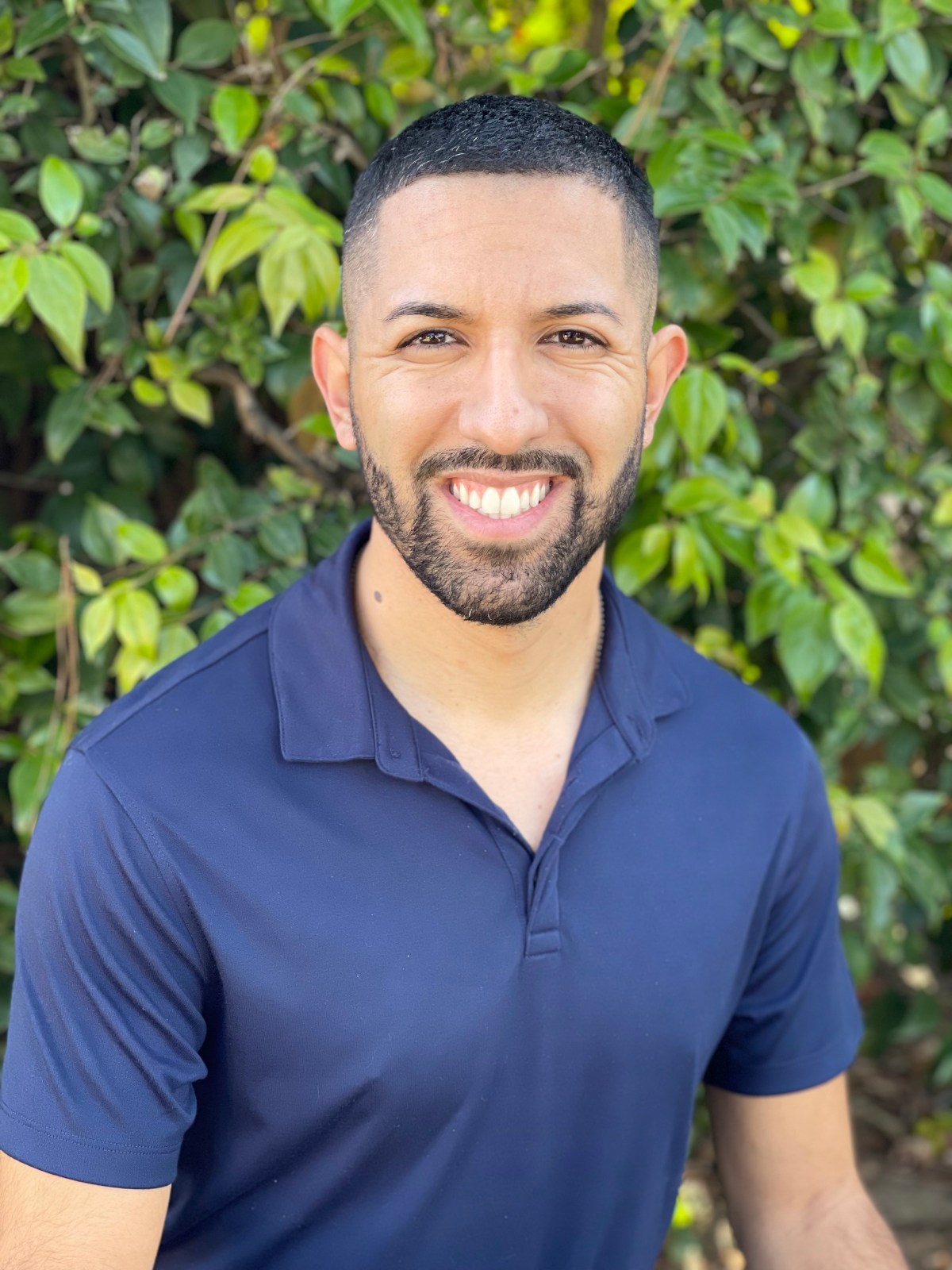
This week’s interview is with Anthony Lince, per his online bio ‘a Latinx educator and scholar who teaches first-year writing courses at UC San Diego and local community colleges.’

Photo courtesy Anthony Lince

Writing: From ‘terrified’ to teacher

In conversation, Lince has a ready beam and belies several notions of what a scholar of writing looks like. Figuratively, anyway. The dun-colored, round-neck sweater is classic English teacher chic, but he is quick to undercut the notion that he is a born wordsmith.

Growing up, San Diego, California Lince was happiest on the basketball court, running plays as a point guard through his high school years.

‘I was terrified of writing,’ he confesses, still smiling. ‘I loved to read, but as far as writing went, I never felt confident.’

Writing at all, much less teaching writing was so far out of mind as to be out of sight. After high school, Lince joined the Army and served as a military police officer. When he enrolled in college, aged 25, he planned to study criminal justice.

So where did writing come in?

‘Professor Bustos, who taught my first-year writing course. There were texts by Mexican-American writers like Pat Mora and Sandra Cisneros, which I connected with as a Mexican-American. And the Professor let me know he enjoyed my work.’

Despite struggling with imposter syndrome at the unexpected praise, Lince trusted his teacher enough to take a job at the writing center, at Bustos’ recommendation. There, he discovered he liked helping peers. His confidence in his own writing grew; he became an English major.

Lince didn’t set aside his thirst for justice, though: ‘As I started to get an education in the humanities, I saw a lot of injustices that needed work.’

Towards more equitable education

Lince is passionate about opening doors. One of the reasons he practices ungrading is to ‘create a positive, less-anxious, equitable, and antiracist learning environment’ (more on all that in a moment).

Lince was the first in his family to complete college. He understands the challenges and subtle (or blatant) inequities that non-traditional students, or those from marginalized communities, face. ‘It was unfamiliar terrain,’ he recalls of undergraduate study. ‘Take office hours – I had no idea you could go talk to professors. Things like figuring out a financial aid are hard if you don’t know anyone who’s done it before.’

After finishing his BA in English with an emphasis on Teaching, Lince qualified as a teacher and spent a year working in a high school before completing an MA in English with an emphasis on Rhetoric and Writing Studies. He graduated in 2022 with a thesis on labor-based grading.

Though peer-reviewed articles and conference proceedings sprout like kudzu on Lince’s academic CV, his primary goal is to lead by example. ‘I try teach from the perspective of authentic writing practices and share with students from the point of authorial expertise. If someone were a dance teacher, you’d expect them to be a dancer, right? So when I go into a classroom, I let them know I write academic articles, book chapters, blog posts, that I’m working on a book. By bringing this into the classroom, they see how writing works outside the classroom.’

Though he doesn’t use the word, Lince’s teaching practice is grounded in respect. Addressing students as fellow-practitioners of the craft is mark of respect. Seeking to ‘be equitable in my assessment and grading practices so students know they are having a fair education,’ is another mark of respect.

‘I want students to see that they are important. That they matter,’ he says. ‘I want them to be confident at writing. And to be able to spot potential injustices or biases that play out in writing.’

On Ungrading

  1. What is ‘ungrading’?

Moving away from traditional numbers and letters and moving towards authentic ways of assessment. Take my own experiences as reference points; when I write for publication, or even for fun, I don’t receive numbers or letter grades, assessment happens through feedback.

  1. Your Master’s thesis is on ‘labor-based grading’ – what is that?

There are a lot of sections under the umbrella of ungrading, one of which is labor-based grading. This method only uses a student’s labor to calculate their final course grade.

At the start of the course, students sign up for the grade they want. I tell them, you want a B, you need to do these things. If you want an A, you have to do all the B labor, plus more, to get the A.

All the activities [they complete] are based on the writing process: peer review, conferencing, visiting the writing center, drafting, revision. Students can complete more elements, or go more in depth, to get a higher grade.

  1. How did you become interested in ungrading?

When I taught high school, students were primarily focused the grade. I’d give feedback and they would just ask for a grade. During my Master’s, when I was teaching first-year students, I didn’t want them to be so focused on grades so started looking for an alternative. I was the first at San Diego State to implement ungrading, but it’s started to spread. It was great to see students come to conferences and listen to feedback, not just ask for a grade.

  1. Which student demographics does this technique best suit?

If the conditions are right, it could work for high school students. College [university], for sure.

Photo by Unseen Studio on Unsplash
  1. How do students respond to ungrading?

Sometimes there is confusion in terms of not seeing a grade, they’ll ask ‘how do I know how I’m really doing?’

But most students don’t like grades, so we discuss it. They start to see how this can work for them. And I check in throughout the term to see how they’re doing.

  1. How does ungrading promote an antiracist environment?

Biases can enter into grading practices and, even if unconscious, negatively impact students. A study was done of two students in 2nd grade, one called Johnny and the other Malik. Their papers were given to various teachers and Malik’s paper was consistently marked lower. The twist was the papers were identical; the only difference was the name.

If this happens in second grade, third, fifth, high school and into college it can negatively impact that student. With labor-based grading, that sort of judgement goes away because if the student does the work, they get the credit. The classroom becomes a space where students don’t have to worry about biases or subjectivities.

  1. What other benefits do you see in the classroom?

The hierarchy of A student/C student breaks down, it becomes a place of collaboration. When students ask for feedback, they’ll ask about specific parts of the writing, which is a very different conversation from talking about a grade.

  1. How do students get a grade for their GPA?

They get a letter grade at the end of the semester, per college rules. If someone signs up for a B, I’m checking throughout the term to see if they complete the agreed work. If they do, they get the grade they signed up for.

Lince recommends

  1. The piece of writing that changed your life before age 18?

The Fellowship of the Ring. I read it when I was nine and was so taken by the way the world was created, the multitude of characters, the important quest. It ignited my love of reading.

  1. The piece of writing that changed your life as an adult?

Anne Lamott on first drafts [in Bird by Bird: Some Notes on Writing and Life]. It let me know that all writers struggle, and that struggle is perfectly normal. I assign it to my students to show that they aren’t alone.

  1. A classic you love to teach?

George Orwell’s 1984. I teach a unit on surveillance and I like showing students this idea of a surveillance state.

  1. A contemporary work you love to teach?

I bring poetry into my classes, just to share. Shel Silverstein has some fantastic poems that are applicable to the writing classroom. Also, Percival Everett [a novelist The New Yorker describes as having ‘one of the best poker faces in contemporary American literature’]. He just won the PEN/Jean Stein Award for Doctor No, a satire on the James Bond trope.

  1. A book about writing every writing student should read?

Writing With Style by John R Trimble. It isn’t really well-known but he writes in a conversational tone students can relate to it.

  1. A book + film adaptation combo you love?

Peter Jackson’s Lord of the Rings trilogy was phenomenal. It was true to the essence of the books.

  1. A living writer you’d love to hang out with?

Percival Everett. I’d love to pick his brain, get a sense of his process and writing style. It also seems, from interviews, we have somewhat similar personalities.

  1. A writing tool?

Scrivener. It takes everything away from the screen so you’re only focused on the text. With so many distractions, its cool to have everything fade in the background.

Looking forward

Lince is at work on his first book, a writing guide tentative titled Questions to Ask for Becoming a Better Writer. Look for it in autumn 2024.

Connect

Elements of Storytelling 8: Voice

Storytelling is the essence of communication. The elements of storytelling are like letters of the alphabet. When you know how to use them, you can tell your best story.

Element 8: Voice

A clear, unique, personable voice hooks audiences every time.

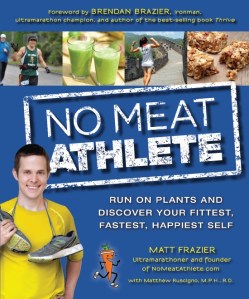
Case study: No Meat Athlete

no-meat-athlete-book-cover

What it is:

No Meat Athlete was a blog that became a brand that became a thriving business for Matt Frazier, an applied mathematics PhD student and amateur marathoner. It began as a chronicle of Matt’s quest to qualify for the Boston Marathon after switching to a plant-based diet.

Why it matters:

Nutrition and fitness blogs are rarely sustainable businesses. The sector is over-crowded, trend-driven and audiences are fickle. No Meat Athlete succeeded where most fail thanks to Matt’s inimitable voice. He tells readers everything they need to know in just three sentences:You’re not here to be preached to. And I’m not here to preach. In fact, I’ll come right out and say that a plant-based diet might not be for you. But I’ll also say this: You won’t know until you try.”

The tone is frank, warm, equable, and non-judgemental. Matt makes no apologies for being neither a professional runner nor nutritionist. Instead, he addresses readers as equals and fellow explorers. He writes in the enthusiastic, endearing voice of someone who has discovered something brilliant and can’t wait to tell you about. No Meat Athlete has grown into a brand that includes books, running groups, merchandise and more but Matt’s voice hasn’t changed. He is still the excitable, passionate, chatty guy you want to go running with then hit the pub for a vegan beer ‘n’ burger afterwards.

In his own words:

You can run without being a “runner.” I did it for five years.

Even once I had run a handful of marathons and was close to qualifying for Boston, when I lined up at the start of a race among all these passionate runners, I still felt like an imposter.

I was just a tourist, doing what runners do, but without feeling like I really belonged.

Sometime during the training for my Boston-qualifying race, where I finally succeeded in breaking 3:10:59, something shifted in me.

Shortly after qualifying, when I was in that happy, weirdly cloudlike space you find yourself in after accomplishing something you’ve worked at for so long, I read Born to Run. And damn if I didn’t feel like a runner after that.

For the first time, I could say that I really loved running, not just as a means of staying in shape or for accomplishing goals, but for its own sake.

And so I became a “runner.” Quotes and all.

Read more

Practice: “You can’t recognize and then strengthen your voice if you don’t hear it—and hearing it in your head isn’t the same as hearing it spoken aloud. Get in the habit of reading what you write out loud. I print and read everything before I send something out and also whenever I’m feeling all snarled up in my organization.

Want to accelerate your voice development? Read out loud to another person without any feedback. This is utterly maddening to your inner approval junkie: “But what does she think about my writing?!?” The magic comes because you turn toward yourself and listen for where you are being true to what you wanted to say and where you’re skirting the truth, where you dug deep and where you skimmed the surface, settling for clichés. Of course, there are plenty of times when getting specific feedback from other writers is useful—but not when it comes to honing your voice. via Jane Friedman

Remember: “Style cannot be copied, except by the untalented. It is, finally, the distillation of a lifetime of reading and listening, of selection and rejection. But if it is not a true voice, it is nothing.” ~Mavis Gallant

Elements of Storytelling 3: Inspiration

Storytelling is the essence of communication. Whether you are a writer, entrepreneur or politician your story is how you connect with people.

The elements of storytelling are like the letters of the alphabet. Once you know them, you can put them together to tell your story in the best way possible.

Element 3: Inspiration

Great stories are not plucked from the air; they grow from the fertile soil of stories that were told before.

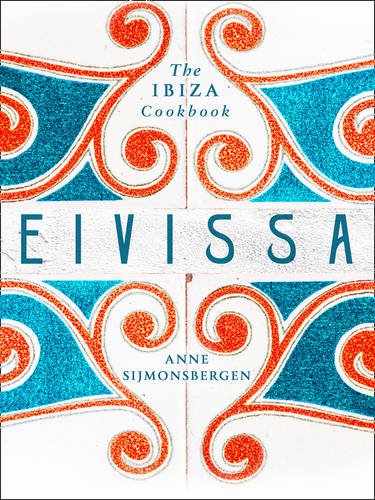
Case study: Eivissa: The Ibiza Cookbook by Anne Sijmonsbergen

eivssa cover

What it is:

A cookbook based on, and inspired by Ibiza food. What it isn’t is an attempt to slavishly recreate traditional Ibicenco recipes, or a generic Mediterranean cookbook. The author lived on an organic farm in Ibiza for a dozen years, growing local produce, working with other farmers, and hanging out with rare-breed animal experts, fishermen, and artisan cheesemakers, before she put proverbial pen to paper.


Why it matters:

This long period of absorbing and exploring the food culture freed Anne to create recipes that are unique to her but capture the essence of Ibiza. She transforms stolid island fare like flaó — a dense, old-fashioned cake — into something fresh and suited for a modern palate. Each recipe becomes a story in its own right, revealing the history and origin of its components and the author’s inspiration.

The Evissa story:

Ibiza is on the cusp of a food revolution. The island’s traditional farming and fishing culture has been supplemented with a wave of chefs and producers making artisan products and vibrant food.

Now Eivissa, the first recipe book to showcase the incredible Ibicenco dishes Ibiza cuisine has to offer, reveals how to recreate the tastes of the white island in your own home.

Divided into seasonal chapters to reflect the ingredients in Ibiza, these are gorgeous recipes reflecting the heritage of the cuisine, yet with contemporary twists. Sample a really simply Grilled Courgette Ribbons, Asparagus & Mint Tostada from Spring, for example, or a Grapefruit & Juniper-Encrusted Pork Salad. Try Steamed Mussels with Samphire or Chicken with Roasted Figs from Autumn. Or treat yourself with a Ricotta Pine Nut Cake or Spiced Chocolate Truffles.

Full of stunning photography shot on location in Ibiza, both of the recipes and the island’s beautiful backdrop, these are recipes that are full of energy, warmth and enjoyment.

Read more here

Practice: Plenty of writing ideas are culled from great tales that have been told throughout history. Some of these have been converted into formulas that writers can use as storytelling guidelines.

From the three-act structure to the hero’s journey, formulas have been criticized as making stories dull and predictable yet they have also been credited with providing writers a framework in which to create.” via WritingForward.com

Remember: You can’t wait for inspiration. You have to go after it with a club.” – Jack London

Oregon Wine Pioneers Stockists

Vine Lives: Oregon Wine Pioneers is crossing continents and oceans!
vine-lives-front
In addition to being available online at AMAZON.COM, AMAZON.CO.UK, and VineLiv.es it is in stock at the following independent bookstores:

Portland, OR:
Powell’s City of Books
1005 W Burnside St., Portland, OR 97209 Phone: 503-228-4651

Broadway Books
1714 NE Broadway, Portland, OR 97232 Phone: 503-284-1726

Annie Bloom’s Books
7834 SW Capitol Hwy, Portland, OR 97219 Phone: 503-246-0053

Wallace Books
7241 SE Milwaukie Ave, Portland, OR 97202 Phone: 503-235-7350

Salem, OR:
Escape Fiction
3240 Triangle Dr. SE, Salem Oregon, USA, Phone: (503) 588-5865

Reader’s Guide
735 Edgewater NW, Salem, OR, USA, Phone: (503) 588-3166

Newberg, OR:
The Coffee Cottage
808 E Hancock Street, Newberg, OR. 97132 Phone: 503-538-5126

Chapter’s Books & Coffee
701 E 1st Street, Newberg, OR 97132 Phone: 503-554-0206

McMinnville, OR:
Third Street Books
334 NE 3rd St, McMinnville, OR, USA, Phone: (503) 472-7786

Aloha, OR:
Jan’s Paperbacks
18095 SW Tualatin Valley Hwy, Aloha, OR 97006

Lincoln City, OR:
Bob’s Beach Books
1747 NW Hwy 101, Lincoln City, Oregon, USA, Phone: 541-994-4467

Philadelphia, PA
University of Pennsylvania Official Bookstore
3601 Walnut St, Philadelphia, PA, USA, Phone:(215) 898-7595

London, UK
Books for Cooks

4 Blenheim Crescent, Notting Hill, London, UK, Phone: 020-7221-1992
We’re constantly adding new stockists so please check back for stores in your area. Or contact us to to suggest a local store.

FOR STOCK REQUESTS, PRESS OR AUTHOR INTERVIEWS CONTACT: cila@vineliv.es

Poem of the Month – Dulce et Decorum Est by Wilfred Owen

Wilfred Owen’s World War I poem Dulce et Decorum Est speaks for itself.

Bent double, like old beggars under sacks,
Knock-kneed, coughing like hags, we cursed through sludge,
Till on the haunting flares we turned our backs
And towards our distant rest began to trudge.
Men marched asleep. Many had lost their boots
But limped on, blood-shod. All went lame; all blind;
Drunk with fatigue; deaf even to the hoots
Of tired, outstripped Five-Nines that dropped behind.

Gas! Gas! Quick, boys!—An ecstasy of fumbling,
Fitting the clumsy helmets just in time;
But someone still was yelling out and stumbling
And flound’ring like a man in fire or lime...
Dim, through the misty panes and thick green light,
As under a green sea, I saw him drowning.

In all my dreams, before my helpless sight,
He plunges at me, guttering, choking, drowning.

If in some smothering dreams you too could pace
Behind the wagon that we flung him in,
And watch the white eyes writhing in his face,
His hanging face, like a devil’s sick of sin;
If you could hear, at every jolt, the blood
Come gargling from the froth-corrupted lungs,
Obscene as cancer, bitter as the cud
Of vile, incurable sores on innocent tongues,—
My friend, you would not tell with such high zest
To children ardent for some desperate glory,
The old Lie: Dulce et decorum est
Pro patria mori.

Poem of the Month – A Brief for the Defense by Jack Gilbert

I first encountered Jack Gilbert’s poetry in The Sun (American literary magazine, not British tabloid). A sentence from ‘A Brief for the Defense’ stuck with me, nagged me through summer: “We must have the stubbornness to accept our gladness in the ruthless furnace of this world”.

As one blessed with much comfort and satisfaction, I wonder at my privileges, wonder at the randomness of life, wonder why millions suffer through no fault of their own, and others live in shocking luxury through no virtue of their own. Gilbert’s taut, evocative, defiant poem comes the closest of anything I’ve read to elucidating the tension between grief and high delight. Gilbert doesn’t moralise or draw conclusions. Though he refers to both God and the Devil, for me the poem is Zen. Ultimately, none of us is in control. The secret, if there is one, is to laugh anyway, to listen for sound of oars in the silence and watch the island sleep. And to refuse to allow our lives to be defined by the worst of times.

DSC01218

A Brief for the Defense by Jack Gilbert

Sorrow everywhere. Slaughter everywhere. If babies
are not starving someplace, they are starving
somewhere else. With flies in their nostrils.
But we enjoy our lives because that’s what God wants.
Otherwise the mornings before summer dawn would not
be made so fine. The Bengal tiger would not
be fashioned so miraculously well. The poor women
at the fountain are laughing together between
the suffering they have known and the awfulness
in their future, smiling and laughing while somebody
in the village is very sick. There is laughter
every day in the terrible streets of Calcutta,
and the women laugh in the cages of Bombay.
If we deny our happiness, resist our satisfaction, we lessen the importance of their deprivation.
We must risk delight. We can do without pleasure,
but not delight. Not enjoyment. We must have
the stubbornness to accept our gladness in the ruthless
furnace of this world. To make injustice the only
measure of our attention is to praise the Devil.
If the locomotive of the Lord runs us down,
we should give thanks that the end had magnitude.
We must admit that there will be music despite everything.
We stand at the prow again of a small ship
anchored late at night in the tiny port
looking over the sleeping island: the waterfront
is three shuttered cafes and one naked light burning.
To hear the faint sound of oars in the silence as a rowboat
comes slowly out and then goes back is truly worth
all the years of sorrow that are to come.

DSC01416

Agents – The Numbers Game

Yesterday I hit 75 on my agent hunt. Seventy-five lines on an excel sheet each with name, website, email, and a note of the date and pitch delivered. I may as well have made 75 copies of my novel, stood at the top of a cliff and chucked them ceremoniously into oblivion. This shouldn’t discourage me (most of the time I know my duty is to write well, and the rest be damned) but it does.

When another brusque rejection arrived I burst into tears. Voices babbled in my head: You are never going to publish a novel. If you do, nobody is going to read it. You are a fake, a flake, a lazy greedy over-educated under-producing parasitic loser who should have gotten a real job before it was too late. You are going to die broke and alone. You suck. Et cetera.

This could be true, if I let it. But after bawling for a few minutes, sense started to leach in. All the sages I respect (dead and living) make the same case:

“You have the right to work, but for the work’s sake only. You have no right to the fruits of work” ~Bhagavad Gita
“[Do] not long for anything if it be not given” ~Epictetus
“For us there is only the trying” ~TS Eliot

Some days, trying is a drag, the last thing I want to do. The alternative, though, is to let all the miserable, mean, self-pitying thoughts turn themselves into reality. As long as the spreadsheet is growing, there’s hope.

effort

Poem of the Month – Barter by Sara Teasdale

For August’s poem of the month I wanted something fresh, something by a woman, something I wasn’t familiar with. Browsing a poetry anthology, ‘Barter’ hooked me. Sara Teasdale’s imagery reminds me of home (“blue waves whitened on a cliff… scent of pine trees in the rain”) and I like its two-fold charge: find beauty in the quotidian and be brave enough to grab it.

DSCN5208

Barter

Life has loveliness to sell,
All beautiful and splendid things,
Blue waves whitened on a cliff,
Soaring fire that sways and sings
And children’s faces looking up
Holding wonder like a cup.

Life has loveliness to sell,
Music like a curve of gold,
Scent of pine trees in the rain,
Eyes that love you, arms that hold,
And for your spirit’s still delight,
Holy thoughts that star the night.

Spend all you have for loveliness,
Buy it and never count the cost;
For one white singing hour of peace
Count many a year of strife well lost,
And for a breath of ecstasy
Give all you have been, or could be.

Poem of the Month – If by Rudyard Kipling

If is the poetic equivalent of “…Baby One More Time”: it’s naff, simplistic, brash and its politics don’t bear examination but Christ it’s catchy. I can’t remember when I first read or heard the poem, but fragments of it are buried in my brain like shrapnel.

Kipling was a jingoistic racist. If is patronising hooey. Still, the line “if you can fill the unforgiving minute with sixty seconds worth of distance run…” has gotten me up more hills than I can count. So there’s that.

Why memorise If? In part because I think it’ll come in handy over the next couple of months in Ibiza (“If you can keep your head when all about you/ are losing theirs…”) and partly to acknowledge the fact that bad poetry can be as useful, or meaningful, in the right context, as the most exquisite sonnet.

What’s your favourite bad poem? Share in the comments.
run

If

If you can keep your head when all about you
Are losing theirs and blaming it on you,
If you can trust yourself when all men doubt you,
But make allowance for their doubting too;
If you can wait and not be tired by waiting,
Or being lied about, don’t deal in lies,
Or being hated, don’t give way to hating,
And yet don’t look too good, nor talk too wise:

If you can dream—and not make dreams your master;
If you can think—and not make thoughts your aim;
If you can meet with Triumph and Disaster
And treat those two impostors just the same;
If you can bear to hear the truth you’ve spoken
Twisted by knaves to make a trap for fools,
Or watch the things you gave your life to, broken,
And stoop and build ’em up with worn-out tools:

If you can make one heap of all your winnings
And risk it on one turn of pitch-and-toss,
And lose, and start again at your beginnings
And never breathe a word about your loss;
If you can force your heart and nerve and sinew
To serve your turn long after they are gone,
And so hold on when there is nothing in you
Except the Will which says to them: ‘Hold on!’

If you can talk with crowds and keep your virtue,
Or walk with Kings—nor lose the common touch,
If neither foes nor loving friends can hurt you,
If all men count with you, but none too much;
If you can fill the unforgiving minute
With sixty seconds’ worth of distance run,
Yours is the Earth and everything that’s in it,
And—which is more—you’ll be a Man, my son!