Elements of Storytelling 12: Ethics

Storytelling is the essence of communication. The elements of storytelling are like letters of the alphabet. When you know how to use them, you can tell your best story.

Element 12: Ethics

Great storytellers hook their audience with a clear ethos, worldview, or proposition.

Case study: Kat Lister

kat-lister

What it is:

Freelance journalist Kat Lister has carved a successful career writing for publications including Marie Clare, The Telegraph, Huff Post, InStyle, Vice, and Broadly by championing the ever-contentious cause of women’s equality.

Why it matters:

Journalists have flirted with starvation since at least 1891 (the year George Gissing published New Grub Street*). Modern multimedia journalism is unapologetically fuelled by celebrity and sensation. To survive journalists must be inimitable. Lister nails it. Everything she writes, from investigative pieces on Syria, to reportage on young Muslims, to think pieces on Brexit, “glass cliffs” and IVF is examined through lens of her feminism. Lister’s cohesive, provocative ethical stance, plus ferociously good writing, whets editors’ appetites, and has prompted 40K shares and 140K Facebook Likes (and counting).

In her own words:

I write about women and culture

Read more / Follow @Madame_George on Twitter

Practice: “Put yourself at the center [of your stories], you and what you believe to be true or right. The core, ethical concepts in which you most passionately believe are the language in which you are writing.” ~ Anne Lamott

Remember: “There may be times when we are powerless to prevent injustice, but there must never be a time when we fail to protest.” ― Elie Wiesel

*Free on Kindle: Amazon.com  and Amazon.co.uk

Elements of Storytelling 8: Voice

Storytelling is the essence of communication. The elements of storytelling are like letters of the alphabet. When you know how to use them, you can tell your best story.

Element 8: Voice

A clear, unique, personable voice hooks audiences every time.

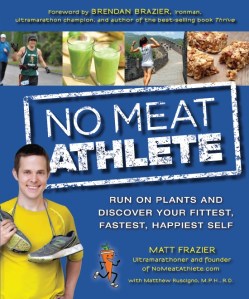
Case study: No Meat Athlete

no-meat-athlete-book-cover

What it is:

No Meat Athlete was a blog that became a brand that became a thriving business for Matt Frazier, an applied mathematics PhD student and amateur marathoner. It began as a chronicle of Matt’s quest to qualify for the Boston Marathon after switching to a plant-based diet.

Why it matters:

Nutrition and fitness blogs are rarely sustainable businesses. The sector is over-crowded, trend-driven and audiences are fickle. No Meat Athlete succeeded where most fail thanks to Matt’s inimitable voice. He tells readers everything they need to know in just three sentences:You’re not here to be preached to. And I’m not here to preach. In fact, I’ll come right out and say that a plant-based diet might not be for you. But I’ll also say this: You won’t know until you try.”

The tone is frank, warm, equable, and non-judgemental. Matt makes no apologies for being neither a professional runner nor nutritionist. Instead, he addresses readers as equals and fellow explorers. He writes in the enthusiastic, endearing voice of someone who has discovered something brilliant and can’t wait to tell you about. No Meat Athlete has grown into a brand that includes books, running groups, merchandise and more but Matt’s voice hasn’t changed. He is still the excitable, passionate, chatty guy you want to go running with then hit the pub for a vegan beer ‘n’ burger afterwards.

In his own words:

You can run without being a “runner.” I did it for five years.

Even once I had run a handful of marathons and was close to qualifying for Boston, when I lined up at the start of a race among all these passionate runners, I still felt like an imposter.

I was just a tourist, doing what runners do, but without feeling like I really belonged.

Sometime during the training for my Boston-qualifying race, where I finally succeeded in breaking 3:10:59, something shifted in me.

Shortly after qualifying, when I was in that happy, weirdly cloudlike space you find yourself in after accomplishing something you’ve worked at for so long, I read Born to Run. And damn if I didn’t feel like a runner after that.

For the first time, I could say that I really loved running, not just as a means of staying in shape or for accomplishing goals, but for its own sake.

And so I became a “runner.” Quotes and all.

Read more

Practice: “You can’t recognize and then strengthen your voice if you don’t hear it—and hearing it in your head isn’t the same as hearing it spoken aloud. Get in the habit of reading what you write out loud. I print and read everything before I send something out and also whenever I’m feeling all snarled up in my organization.

Want to accelerate your voice development? Read out loud to another person without any feedback. This is utterly maddening to your inner approval junkie: “But what does she think about my writing?!?” The magic comes because you turn toward yourself and listen for where you are being true to what you wanted to say and where you’re skirting the truth, where you dug deep and where you skimmed the surface, settling for clichés. Of course, there are plenty of times when getting specific feedback from other writers is useful—but not when it comes to honing your voice. via Jane Friedman

Remember: “Style cannot be copied, except by the untalented. It is, finally, the distillation of a lifetime of reading and listening, of selection and rejection. But if it is not a true voice, it is nothing.” ~Mavis Gallant

Elements of Storytelling 7: Belonging

Storytelling is the essence of communication. The elements of storytelling are like letters of the alphabet. When you know how to use them, you can tell your best story.

Element 7: Belonging

Good stories make the audience feel part of something special, feel a sense of kinship.

Case study: Agrotourismo Cas Gasi

1-IMG_20160501_075859

Cas Gasi

What it is:

Cas Gasi is an internationally famous boutique hotel in the heart of Ibiza that bucked the odds to become a success. Its  challenges included a converting an old farmhouse, stables and outbuilding into luxury rooms; and marketing an Ibiza destination located away from the clubs or beaches that are the island’s biggest attractions. It is also, to borrow the Stella Artois slogan, reassuringly expensive. Yet it thrives year-round, catering to a loyal audience of celebrities, aristocracy and captains of industry who come for a simple reason: at Cas Gasi they feel special.

Why it matters:

There are a few things every luxury hotel must do well: exquisite linen, top-of-the-range TVs, delicate room fragrances, weighty bathrobes, fine food and gracious service. Beyond that, success is down to who has the best story. Cas Gasi’s pitch is short and sweet: When you’re here, your family.

Everyone who visits from financiers and minor royalty to Hollywood stars, tax exiles, and well-heeled young couples is treated like part of an extended family. A cultured, urbane, educated family that has superb taste in food, wine and art and the means to indulge these interests.

Cas Gasi nurtures this sense of belonging by eschewing advertising (though friendly write-ups in Vogue, Conde Nast and Harper’s Bazaar are welcome) in favour of word-of-mouth recommendations. Guests are further encouraged to unwind by discreet service and an institutional obsession with privacy and quiet. Cleverly, the owners realised at the start that not everyone will like the hotel, so they created a space that a select group of people love.

In its own words:

Ibiza-born Luis Trigeros Juan grew up between Barcelona and the island, for which he developed a deep love. A lawyer and passionate sailor, Luis sailed around the world in 1986 before making Ibiza his permanent home alongside wife Margaret von Korff, Barcelona-born with German family roots in Baltic nobility and French, Austrian and Russian family connections.

Together they have found their niche, setting up a organic farming project, transforming their home into the beautiful boutique hotel to welcome guests from around the world – the Cas Gasi ‘extended family’ – and promoting their personal philosophy of fusing life’s luxuries with sustainable living.

Read more

1-IMG_20160425_134335

Clara, house dog

Practice: “The concept of a tribe transcends a customer merely liking or being satisfied with your brand or product. Your tribe is made up of your brand’s biggest fans – customers or prospects that will often take to Twitter and Facebook to share your praises or recommend your product….

Remember that word of mouth is still the best marketing. Consider setting up a referral program that rewards customers that deliver leads to your doorstep – in effect, have your existing fans recruit more tribe members.” via Wasp Buzz

Remember: “In writing, your audience is one single reader. I have found that sometimes it helps to pick out one person—a real person you know, or an imagined person and write to that one.” ~John Steinbeck

Elements of Storytelling 4: Heritage

Storytelling is the essence of communication. Whether you are a writer, entrepreneur or politician your story is how you connect with people.

The elements of storytelling are like the letters of the alphabet. Once you know them, you can put them together to tell your story in the best way possible.

Element 4: Heritage

Stories are how we connect to the past and make sense of the present. Heritage gives us a sense of shared lives, experiences, and memories.

pickle-stjohn-dolly

Case study: St. John & Dolly Smith’s Pickles

What it is:

Possibly Britain’s best pickles, sauces and chutneys. The first time I tried St. John & Dolly Smith’s ‘Scotch Bonnet Pickle’ my taste buds lit up like someone put 1000 volts through them. It was a blistering simultaneous hit of taste and sensation. The heat-wave receded leaving two questions: Who made this? And: Where can I get some more?

I tracked down founder and self-styled Pickleman Chris Smith and discovered a backstory as flavourful as his creations.

Why it matters:

The sauces, pickles and chutneys would be extraordinary, with or without the story of St. John and Dolly Smith. But by connecting his product to its heritage, Chris taps into a primal hunger for stories about love, belonging, success and navigating an ever-changing world. His heritage touches on history, empire, education, immigration, death, and the inevitable march of time. The details of our stories are different, but every one of us experiences equally big, scary, life events. I fell in love with the pickle and its promise that change can be beautiful and there is always another chapter to be written.

The St. John & Dolly Smith story:

St. John Smith taught at some of India’s best schools, some of which were boarding schools where Dolly’s role was that of house matron. When their two older sons left university they moved to England with 13-year-old Chris. It was the first time he’d left India and his abiding memory is of coming off the boat to see frost so thick on the ground it looked like snow. The utter foreignness of his new home was assuaged by the familiar foods of Bangalore.

“Friends were crazy about my parent’s cooking. They would come around with a list of requests for their favourites but my mum and dad were very modest,” Chris recalls fondly. “They always thought ‘oh, they’re just being polite.’”

As the son of gifted cooks, he admits to never doing much in the kitchen. “Why would I, when they could do it better?” One of Dolly’s traditions was taking jars of pickle to school reunions, a flavoursome evocation of shared memories. After his mother passed away, a chance meeting with one of her old friends encouraged Chris to dig out her recipes and revisit his culinary heritage.

Read more here

Practice: “Write down everything you can remember about every birthday or Christmas or Seder or Easter or whatever, every relative who was there. Write down all the stuff you swore you’d never tell another soul. What can you recall about your birthday parties — the disasters, the days of grace, your relatives’ faces lit up by birthday candles? Scratch around for details: what people ate, listened to, wore — those terrible petaled swim caps, the men’s awful trunks, the cocktail dress your voluptuous aunt wore that was so slinky she practically needed the Jaws of Life to get out of it.” ~Anne Lamott in Bird By Bird

Remember: Even if you were in a prison whose walls allowed none of the sounds of the world to reach your senses — would you not still have always your childhood, that precious, royal richness, that treasure house of memories?” ~ Rainer Maria Rilke

Elements of Storytelling 3: Inspiration

Storytelling is the essence of communication. Whether you are a writer, entrepreneur or politician your story is how you connect with people.

The elements of storytelling are like the letters of the alphabet. Once you know them, you can put them together to tell your story in the best way possible.

Element 3: Inspiration

Great stories are not plucked from the air; they grow from the fertile soil of stories that were told before.

Case study: Eivissa: The Ibiza Cookbook by Anne Sijmonsbergen

eivssa cover

What it is:

A cookbook based on, and inspired by Ibiza food. What it isn’t is an attempt to slavishly recreate traditional Ibicenco recipes, or a generic Mediterranean cookbook. The author lived on an organic farm in Ibiza for a dozen years, growing local produce, working with other farmers, and hanging out with rare-breed animal experts, fishermen, and artisan cheesemakers, before she put proverbial pen to paper.


Why it matters:

This long period of absorbing and exploring the food culture freed Anne to create recipes that are unique to her but capture the essence of Ibiza. She transforms stolid island fare like flaó — a dense, old-fashioned cake — into something fresh and suited for a modern palate. Each recipe becomes a story in its own right, revealing the history and origin of its components and the author’s inspiration.

The Evissa story:

Ibiza is on the cusp of a food revolution. The island’s traditional farming and fishing culture has been supplemented with a wave of chefs and producers making artisan products and vibrant food.

Now Eivissa, the first recipe book to showcase the incredible Ibicenco dishes Ibiza cuisine has to offer, reveals how to recreate the tastes of the white island in your own home.

Divided into seasonal chapters to reflect the ingredients in Ibiza, these are gorgeous recipes reflecting the heritage of the cuisine, yet with contemporary twists. Sample a really simply Grilled Courgette Ribbons, Asparagus & Mint Tostada from Spring, for example, or a Grapefruit & Juniper-Encrusted Pork Salad. Try Steamed Mussels with Samphire or Chicken with Roasted Figs from Autumn. Or treat yourself with a Ricotta Pine Nut Cake or Spiced Chocolate Truffles.

Full of stunning photography shot on location in Ibiza, both of the recipes and the island’s beautiful backdrop, these are recipes that are full of energy, warmth and enjoyment.

Read more here

Practice: Plenty of writing ideas are culled from great tales that have been told throughout history. Some of these have been converted into formulas that writers can use as storytelling guidelines.

From the three-act structure to the hero’s journey, formulas have been criticized as making stories dull and predictable yet they have also been credited with providing writers a framework in which to create.” via WritingForward.com

Remember: You can’t wait for inspiration. You have to go after it with a club.” – Jack London

Elements of Storytelling 2: Urgency

Storytelling is the essence of communication. Whether you are a writer, entrepreneur or politician your story is how you connect with people.

The elements of storytelling are like the letters of the alphabet. Once you know them, you can put them together to tell your story in the best way possible.

Element 2: Urgency

Great stories say things that matter. They aren’t just entertainment, they have an urgent message.

Case study: CALMZine

calmzine

What it is: CalmZINE is a by-men/for-men magazine published by the Campaign Against Living Miserably (CALM). CALM is a British charity that works to prevent male suicide (in 2014 men accounted for 76% of UK suicides and it is the leading cause of death in men under 45).

Brash as the captain of a five-a-side team after six pints, CALMZine hums with the urgent message: You’re not alone. In another context its laddishness, #Mandictionary, its jocular tone, would be gratingly juvenile. But it works because it is fuelled by urgency. Life and death. Every article whether news, interviews, fashion features, sport or entertainment, is twined with the message: It’s okay to struggle. You’re not alone. We’re here to listen.


Why it matters: Nothing comes close to being as awful as suicide. I’ve seen friends, family, shattered by it and there is nothing to say. Not a single word of comfort. No, “everything will be all right,” no “it was for the best,” no “at least he didn’t suffer,” no no no. None of the platitudes we salve ourselves with in the face of ordinary death. You can always find mercy if you look hard enough. But not in the vortex of suicide. You can stare into that pit all day, until your eyes burn at the blackness. You can cry enough tears to fill the ocean and that hole stays dry and dead as a slice of outer space.

The hopelessness of words after the fact gives utmost urgency to every word spoken or written to prevent it. There are no second chances. Any comfort or stumbling block, anything that helps one person make the choice to live, matters more than art.

Their story:

CALM works to prevent male suicide by:-

  • Offering support to men in the UK, of any age, who are down or in crisis via our helpline and website.
  • Pushing for changes in policy and practice so that suicide is better prevented via partnerships such as The Alliance of Suicide Prevention Charities (TASC), the National Suicide Prevention Alliance (NSPA). CALM also hosts the Suicide Bereavement Support Partnership (SBSP), which aims to ensure that everyone bereaved or affected by suicide is offered and receives timely and appropriate support.

Read the rest of the CALM story here

Practice: “Rather than daydreaming about what you’d like to write, sit down for fifteen minutes, keep your hand moving, begin with “I want to write about,” and go. Stay specific and concrete. Not ‘I want to write about truth, democracy, honesty,’ but ‘I want to write about the time my father lied right to my face and I could taste it all through dinner. It tasted like hot gasoline.’ ~Natalia Goldberg (Wild Mind)

Remember: “The one I felt pulsing in my chest [was] like a second heart… the story I couldn’t live without telling.” ― Cheryl Strayed


Elements of Storytelling 1

Storytelling is the essence of communication. Writers, entrepreneurs, corporations, governments and even religions rise and fall by the stories they tell. It’s simple: if you want an audience, customer, or acolyte you better tell a damn good tale.

Think of the elements of storytelling as letters in the alphabet. Once you know them, you can tell any story your want in a way that makes people pay attention.

Element 1: Listening

Great storytelling begins with listening… to stories, people, songs, ideas, waves breaking on rocks, the voice of your intuition

Case study: Boom Earwear

boom headphones

What happened:

My first interaction with @BoomEarwear on Twitter. As a music fiend and serial jogger I go through headphones at an unholy rate. I clicked onto their webpage to order a pair but the site was down. I Tweeted a jokey complaint. To my surprise a response popped up a minute later, thanking me, apologising, and promising to fix things ASAP.

Why it mattered:

Easily distracted, I went back to my crappy generic headphones. When they gave up the ghost I thought of the Twitter exchange, but couldn’t remember the name of the company. The fact they listened and responded was enough to make me search my feed for the name. My post-purchase Tweet received a prompt, friendly response. Once again, giving me the warm fuzzy feeling that comes from being listened to…

boom_1

Their story:

A note from James, founder of Boom Earwear.

Firstly, thank you for checking out Boom Earwear, we’re super excited to have you around. I’ve been asked many times why I set up Boom Earwear, and wanted to tell the story exactly as it is.

I founded Boom Earwear after encountering issues with my headphones when travelling through Asia. I’d gone out for five weeks alone, and took a pair of headphones with me to listen to music – it’s a big part of travel for me.

During the second week, my headphones developed a fault – and naturally, I wanted to get this solved. I contacted the manufacturer and was told that sure, I could have a replacement – but I had to go back to the store I bought them from, or get them shipped to a UK address. When you’re out in the middle of nowhere, thousands of miles from home – that’s not a great answer.

That’s when I started to get super bummed out. Consumer electronics as a whole is a huge industry, and there is a real lack of companies that care enough to help….

Read the rest of the Boom story here

Practice:

“Imagine yourself in the other person’s situation, wanting to have someone listen to them. When they are speaking, make an effort to think of where they are coming from and why. Imagine what their life is like and what struggles they might be facing”
via FastCompany

Remember:

“When people talk, listen completely. Most people never listen.” ― Ernest Hemingway

Poem of the Month: Bliss

A beautiful poem to complete the year, from Nobel prize-winning Indian poet Rabindranath Tagore. The briefest of the poems I memorised in 2015, it is a profound reminder that how one lives is always a choice.

DSC02607

Bliss

Remain in bliss in this world,
Fearless, pure in heart.
Wake up in bliss every morning,
Carry out your duties in bliss.
Remain in bliss in weal and woe.
In criticism and insult,
Remain in bliss unaffected.
Remain in bliss, pardoning everybody.

Poem of the Month – Dulce et Decorum Est by Wilfred Owen

Wilfred Owen’s World War I poem Dulce et Decorum Est speaks for itself.

Bent double, like old beggars under sacks,
Knock-kneed, coughing like hags, we cursed through sludge,
Till on the haunting flares we turned our backs
And towards our distant rest began to trudge.
Men marched asleep. Many had lost their boots
But limped on, blood-shod. All went lame; all blind;
Drunk with fatigue; deaf even to the hoots
Of tired, outstripped Five-Nines that dropped behind.

Gas! Gas! Quick, boys!—An ecstasy of fumbling,
Fitting the clumsy helmets just in time;
But someone still was yelling out and stumbling
And flound’ring like a man in fire or lime...
Dim, through the misty panes and thick green light,
As under a green sea, I saw him drowning.

In all my dreams, before my helpless sight,
He plunges at me, guttering, choking, drowning.

If in some smothering dreams you too could pace
Behind the wagon that we flung him in,
And watch the white eyes writhing in his face,
His hanging face, like a devil’s sick of sin;
If you could hear, at every jolt, the blood
Come gargling from the froth-corrupted lungs,
Obscene as cancer, bitter as the cud
Of vile, incurable sores on innocent tongues,—
My friend, you would not tell with such high zest
To children ardent for some desperate glory,
The old Lie: Dulce et decorum est
Pro patria mori.

Poem of the Month – A Brief for the Defense by Jack Gilbert

I first encountered Jack Gilbert’s poetry in The Sun (American literary magazine, not British tabloid). A sentence from ‘A Brief for the Defense’ stuck with me, nagged me through summer: “We must have the stubbornness to accept our gladness in the ruthless furnace of this world”.

As one blessed with much comfort and satisfaction, I wonder at my privileges, wonder at the randomness of life, wonder why millions suffer through no fault of their own, and others live in shocking luxury through no virtue of their own. Gilbert’s taut, evocative, defiant poem comes the closest of anything I’ve read to elucidating the tension between grief and high delight. Gilbert doesn’t moralise or draw conclusions. Though he refers to both God and the Devil, for me the poem is Zen. Ultimately, none of us is in control. The secret, if there is one, is to laugh anyway, to listen for sound of oars in the silence and watch the island sleep. And to refuse to allow our lives to be defined by the worst of times.

DSC01218

A Brief for the Defense by Jack Gilbert

Sorrow everywhere. Slaughter everywhere. If babies
are not starving someplace, they are starving
somewhere else. With flies in their nostrils.
But we enjoy our lives because that’s what God wants.
Otherwise the mornings before summer dawn would not
be made so fine. The Bengal tiger would not
be fashioned so miraculously well. The poor women
at the fountain are laughing together between
the suffering they have known and the awfulness
in their future, smiling and laughing while somebody
in the village is very sick. There is laughter
every day in the terrible streets of Calcutta,
and the women laugh in the cages of Bombay.
If we deny our happiness, resist our satisfaction, we lessen the importance of their deprivation.
We must risk delight. We can do without pleasure,
but not delight. Not enjoyment. We must have
the stubbornness to accept our gladness in the ruthless
furnace of this world. To make injustice the only
measure of our attention is to praise the Devil.
If the locomotive of the Lord runs us down,
we should give thanks that the end had magnitude.
We must admit that there will be music despite everything.
We stand at the prow again of a small ship
anchored late at night in the tiny port
looking over the sleeping island: the waterfront
is three shuttered cafes and one naked light burning.
To hear the faint sound of oars in the silence as a rowboat
comes slowly out and then goes back is truly worth
all the years of sorrow that are to come.

DSC01416